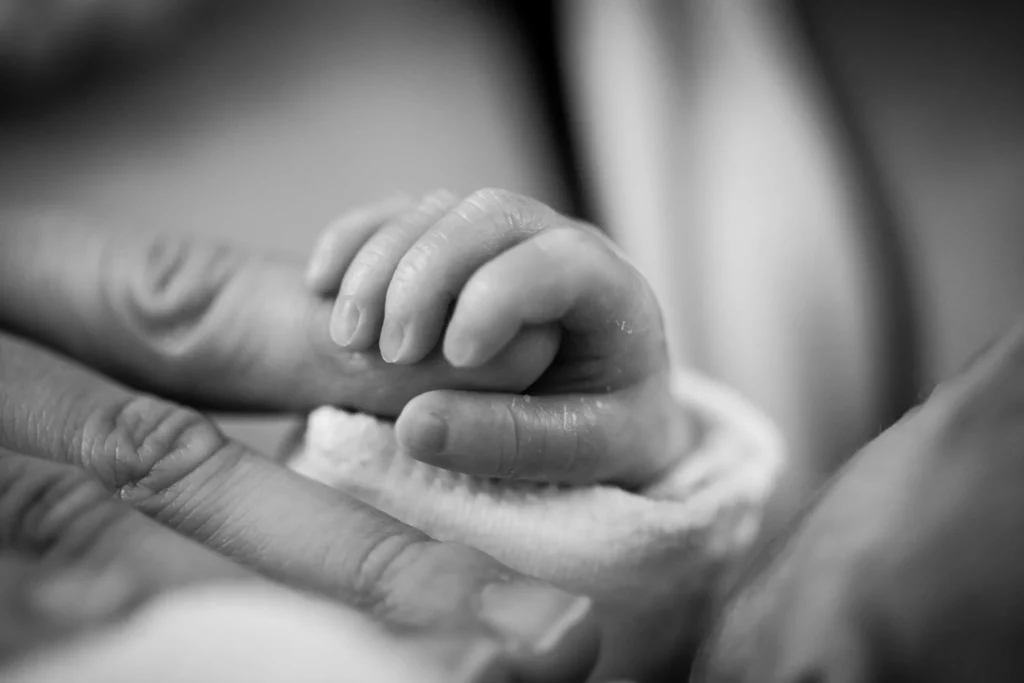
President Donald Trump has launched what he dubs one of the most visionary policies of his presidency: “Trump Accounts,” a plan to invest $1,000 of government funds into stock market–linked accounts for all US babies born within a four-year window — from late 2024 to early 2029.
Top business leaders who will contribute to billions more to an initiative tied to “the big beautiful bill,” backed up the baby funds by Trump, the Guardianreports.
“For every US citizen born after December 31, 2024, before January 1, 2029, the federal government will make a one-time contribution of $1,000 into a tax-deferred account that will track the overall stock market,” Trump told the CEOs of major companies gathered at a White House roundtable.
Among the business owners and executives were Michael Dell, Dara Khosrowshahi of Uber, David Solomon of Goldman Sachs and Vladimir Tenev of Robinhood.
Speaking of their contributions, Trump praised them as “really the greatest business minds we have today” who are “committed to contributing millions of dollars to the Trump account.”
Further, President Trump said of the plan, “It’s a pro-family initiative that will help millions of Americans harness the strength of our economy to lift up the next generation, and they’ll really be getting a big jump on life.”
To qualify for the program, the baby must be a US-born citizen whose both parents have Social Security numbers.
Families and others can contribute to the accounts as long as the the total number doesn’t exceed $5,000 annually. There will only be exceptions for the non-profit organizations.
The funds, which the children won’t have access to until they turn 18, will be invested in a diversified, low-cost U.S. stock index fund or equivalent.
REUTERS via NewYork Post
Once they turn 18, they will be able to use the money in purchasing a first home, higher education expenses, other qualifying post-secondary credentialing, or mall business or small farm expenses only.
Only when the account beneficiary turns 30 would they gain full control of all the funds for any purpose, according to Time.
House speaker Mike Johnson shared his thoughts on the program, saying,: “It’s a bold, transformative policy that gives every eligible American child a financial head start from day one. Republicans are proud to be the party we always have been. It supports life and families, prosperity and opportunity.”
“Trump Accounts” is just one component of his administration’s ambitious “big, beautiful bill” that intends to reshape American economic relationships.
Please SHARE this article with your family and friends on Facebook.
Homeland Security Secretary Kristi Noem was in Portland this week and met with Mayor Keith Wilson. During the visit, she said the federal government could send in more officers if the city does not cooperate more closely with federal law enforcement. The warning was tied to protests and security around federal buildings.
Noem also toured the ICE facility in Portland’s South Waterfront area. The building has been the site of protests and ongoing disputes between federal officials and city leaders since mid-2025.
Her comments come as disagreements continue between Portland officials and the federal government over how protests are handled, how public safety is managed, and how much cooperation the city should provide to federal agencies, KATV reported.
During a live interview on Fox News, Noem dubbed the meeting with Wilson as “extremely disappointing.” She added that if local officials failed to adopt enhanced security measures, the federal government stood ready to drastically expand its presence in the city. According to her remarks, the Department of Homeland Security (DHS) could deploy up to four times as many federal officers to Portland to secure federal facilities and support law enforcement operations if cooperation did not improve.
Earlier, Noem stopped outside the ICE facility to take photos with federal agents. She accused city officials of failing to protect federal buildings and the officers assigned there.
According to Noem, political hesitation slowed the response, even as security concerns around the facility continued.
Her remarks repeated claims from federal officials that a small number of protesters were responsible for vandalism and other crimes near the ICE center. Local leaders and protest groups reject that view. They say most protests have been peaceful and argue that federal crowd-control tactics, including tear gas, have sometimes escalated tensions rather than reduced them.
Mayor Wilson’s office declined to comment on camera and instead issued a written statement describing the meeting as “cordial but deeply concerning” in response to Noem’s remarks. According to him, Portland has continued to manage public safety professionally and responsibly, a reality he said stands in contrast to portrayals of chaos and disorder used by federal officials to justify an increased presence.
Wilson pushed back against claims that Portland is “out of control,” saying it remains unclear what a larger federal presence would actually mean for the city. He questioned how additional federal officers would operate and why local officials have not been given clearer answers. Wilson said he plans to use every legal and civic option available to protect constitutional rights, including the right to peaceful protest, while keeping public safety decisions at the local level.
The dispute remains part of a broader fight over federal involvement in Portland. In October, a federal judge temporarily blocked the Trump administration’s attempt to deploy National Guard troops to the city, ruling that the move lacked a solid legal foundation. That decision remains in effect as the administration continues to appeal.
Please SHARE this article with your family and friends on Facebook.
In a landmark ruling that will have far-reaching effects on workplaces across the country, the U.S. Supreme Court issued a unanimous decision reinforcing protections for employees pursuing religious accommodations under federal law.
The ruling, which sets out how employers should assess such requests, is one of the most significant interpretations of religious liberty at work in decades.
The case, Groff v. DeJoy, opened the question of whether an employer can require employees to perform work that violates their religious beliefs, and what level of accommodation for those beliefs is mandated in the workplace under Title VII of the Civil Rights Act of 1964. The Court’s June 29, 2023, 9–0 decision in favor of a Pennsylvania postal worker marked a somewhat unusual alignment of justices from opposing ends of the ideological spectrum.
The controversy involved the experience of Gerald E. Groff, a former U.S. Postal Service rural letter carrier in Lancaster County, Pennsylvania. Groff is a practicing Evangelical Christian and observes Sunday as a Sabbath day of rest and worship. For many years his position enabled him not to work on Sundays with little trouble, and his employer had been accommodating his religious beliefs. That changed once the Postal Service signed on with Amazon in 2013, obligating it to deliver packages on Sundays as part of a larger push to stay financially viable.
Groff was constantly assigned to Sunday shifts which would break his Sabbath as Sunday work became the norm. He pleaded to make up for the lost time by working more weekdays or holiday shifts, but he wasn’t allowed. In 2019, Groff resigned and sued, claiming that the Postal Service did not reasonably accommodate his religious beliefs.
At the center of the case was the meaning of “undue hardship” under Title VII of the Civil Rights Act. For decades, courts relied on a 1977 Supreme Court ruling that allowed employers to deny religious accommodations if they imposed more than a minimal cost. Critics argued this standard weakened protections for religious workers and made it too easy for employers to reject accommodation requests.
Groff’s lawyers that particular reading of the statute to be re-evaluated, contending that “undue hardship” should turn on a showing of substantial cost or significant operational disruption. Their argument was supported by numerous religious and civil rights groups, which expressed concern that the current standard places a burden on workers whose religious practices are different than the commonly accepted workplace norms.
Rejecting the long-held “more than de minimis” standard, the Supreme Court clarified that employers must point to more than “ordinary” increased costs when seeking to deny religious accommodations. Temporary chaos in a work schedule or coworker dissatisfaction are not undue hardships, the Court ruled.
The decision bolsters religious protections in the workplace and sets a precedent for employers to apply a more individualized approach to accommodation requests. While not guaranteeing Groff a particular result, it does give his claims for consideration under an interpretation of legal standards that more fully captures the purpose of federal civil rights law and further advances the understanding that workers should not be made to choose between their faith and their ability to make a living.
Please SHARE this article with your family and friends on Facebook.
The death of Renee Nicole Good, the 37-year-old mother of three killed by an ICE agent in Minneapolis, sparked rage across the country.
Good was shot in the head at point blank range. Tricia McLaughlin, assistant secretary for public affairs at the Department of Homeland Security, claimed Good had “weaponized her vehicle, attempting to run over our law enforcement officers in an attempt to kill them,” calling the act “an act of domestic terrorism.”
However, actual footage of the scene shows otherwise. Those who have seen the video of the fatal shooting claim Renee could be seen attempting to drive away from the officers, including the one who pointed the gun at her. So it’s simply an attempt to flee rather than a deliberate attack at the officer.
AP
The footage captures an officer attempting to enter Good’s vehicle, after which she reverses, turns her wheels to the right, and tries to pull away. Another officer is positioned in front of the SUV, though the tires are angled away from him. As the vehicle moves, it strikes the officer lightly, not enough to knock him to the ground. He then fires a shot through the windshield, followed by two more through the side window as she continues to drive off.
Her vehicle then careens roughly 100 feet before crashing into a parked white car.
Public response remains intense days after the tragic incident.
“Murder. Plain and simple. There are times we can no longer stay silent. This is the time. This is murder,” one person wrote.
“That wasn’t self defence. That was retaliation/anger that she was getting away. They should all prosecuted,” another added.
One Reddit user pointed out to a crucial detail, observing, “THE WHEELS ARE FULLY TURNED AWAY FROM THE OFFICER. Watch in SLOW MO. No intention IMO to hit anyone. Sole intention based on wheel/steering wheel to LEAVE the scene NOT A THREAT. Look at the wheel.”
A number of officials and lawmakers condemned ICE and their poor explanation of why the shooting happened.
Rep. Alexandria Ocasio-Cortez dubbed the shooting “a public murder,” saying: “What we saw today was a criminal murder a woman and shoot her in the head while she was trying to escape and flee for her life.” She then described the killing as “the manifestation of every American’s worst nightmare.”
Jacob Frey, the mayor of Minneapolis and a former civil rights attorney, strongly refuted Trump’s claims that Good was a “professional agitator” who “violently, willfully [sic], and viciously” ran over an ICE officer. As per The Hill, Frey said: “Having seen the video myself, I want to tell everybody directly, that is bullsh*t.
“This was an agent recklessly using power that resulted in somebody dying, getting killed.”
In a press conference shortly after Good’s death, Frey demanded that ICE ‘get the f**k out of Minneapolis’, adding: “They are not here to cause safety in this city. What they are doing is not to provide safety in America. What they are doing is causing chaos and distrust.”
Renee Nicole Good, whose life was cut short in a senseless act, was described as a kind and compassionate person devoted to her family. She was also a creative soul, a poet, and a writer.
Please SHARE this article with your family and friends on Facebook.
The night I told Charles I wanted a divorce, the house felt too quiet—like it already knew something I didn’t. His eyes didn’t flash with anger or confusion; they simply softened, as if he had anticipated my words long before I found the courage to speak. I convinced myself he was manipulating me with that calmness, but deep down, a strange unease took root. Something about his silence didn’t feel like surrender—it felt like a goodbye.
After fifty years of marriage, I never imagined I’d be the one asking to leave.
At seventy-five, the desire for independence hit me harder than expected—not because Charles had mistreated me, but because somewhere along the decades, my identity had dissolved into his. We were young when we married. He was patient, reliable, gentle… and together, we built what everyone called an ideal life.
But as the years slowed and routines settled, a quiet longing stirred inside me. It whispered that I had never truly lived for myself. Little frustrations grew into bitterness, and even our everyday conversations became barbed.
When I finally told him I wanted a divorce, he didn’t fight. “If freedom is what your heart aches for,” he murmured, “I won’t stop you.” After the papers were finalized, our lawyer suggested one last meal together. Charles lowered the lights because they irritated my eyes and ordered the salad I always preferred. Instead of feeling seen, I felt suffocated. I snapped and walked out, leaving him alone at the table.
That night, he tried to call, but I dismissed it, convinced he wanted to pull me back through guilt. By morning, he had suffered a heart attack. Rushing to the home we had shared for decades, I discovered the letter he had written for me: “I have loved you through every stage of life. I dim the lights because they hurt your eyes. I order your favorites because I care. That’s all I ever wanted—to take care of you.”
At his bedside, I broke down, pleading for another chance. It became painfully clear that I had confused devotion for imprisonment. The freedom I had been chasing had always existed—held gently within his love. Now, with whatever time remained, I chose to love him with clarity, gratitude, and the tenderness he had always shown me.
Conclusion
I realized the cage I felt trapped in was never built by him—it was built by my own fears, regrets, and misunderstandings. Charles had never tried to own my life; he had only ever loved me the best way he knew how. His final letter opened my eyes to a truth I had been too blinded by resentment to see. True freedom wasn’t found in leaving—it lived in the quiet, steady love he had offered all along. For the days we still have, I choose to hold onto that love instead of running from it.
Please SHARE this article with your family and friends on Facebook.
The morning after the funeral—when I finally allowed myself to believe the hardest part was over—a call came that pulled me right back into the center of it all. Her voice was unsteady, thick with emotion, nothing like the composed woman I had seen at the service. She had found something, she said—something tucked away in a place no one had thought to check. And whatever it was had shaken her understanding of her father’s final years… and of me.
When my stepfather collapsed from a heart attack, I didn’t hesitate. I got him to the hospital, stayed through the long nights, and handled what needed to be done. His daughter lived far away and couldn’t be there; I understood completely. I never resented her, nor did I expect gratitude or recognition. At the funeral, she was quiet, polite, and careful with her words as she reminded me that her father’s belongings—and his legacy—belonged to her alone. I accepted it without bitterness. In my heart, I believed my place in his life didn’t need to be validated on paper.
But three days later, her trembling voice changed everything.
She explained that while sorting through old albums, she had found a sealed envelope tucked behind a faded photograph.
Inside was a letter—one my stepdad had written during one of his hospital stays.
She began reading parts of it to me, her voice softening as the words filled the space between us.
In the letter, he reflected on the people who had stood by him during his final years. He wrote of me with sincerity I never expected: how my presence had given him calm when everything else felt uncertain, how he felt supported, understood, and—above all—cared for. He wrote that family wasn’t limited to lineage, but shaped by those who choose to stand beside you when life becomes heavy.
Hearing his words changed something in both of us. She paused several times, gathering herself, then apologized for keeping her distance. She admitted she had never realized how deeply he valued our bond. That call didn’t erase the past, but it loosened the knots of misunderstanding that had tied us apart.
We agreed to meet later in the week—not to revisit the pain, but to step into something new with openness and respect. What had begun in grief slowly eased into clarity. His letter, written quietly and tucked away, became the unexpected spark that helped us both heal.
Conclusion
In the end, the letter was more than a final message—it was a bridge. It revealed truths left unspoken, eased tensions left unaddressed, and gently reminded us that family can be chosen, shaped, and strengthened by love rather than blood. His last words didn’t just illuminate his gratitude; they gave us the chance to see each other differently. And long after the sorrow fades, the connection he helped create will continue as the truest part of his legacy.
Please SHARE this article with your family and friends on Facebook.
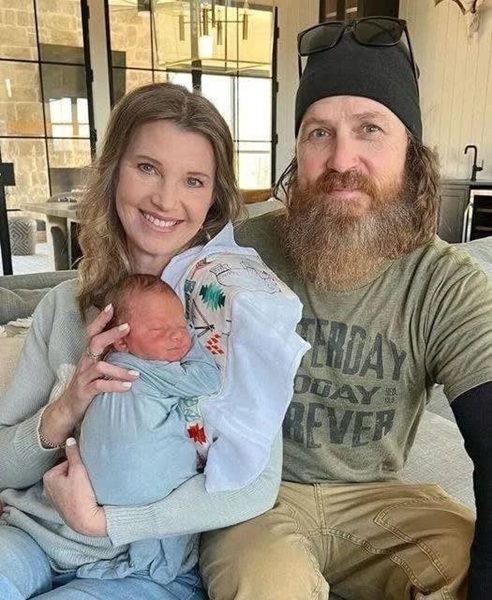
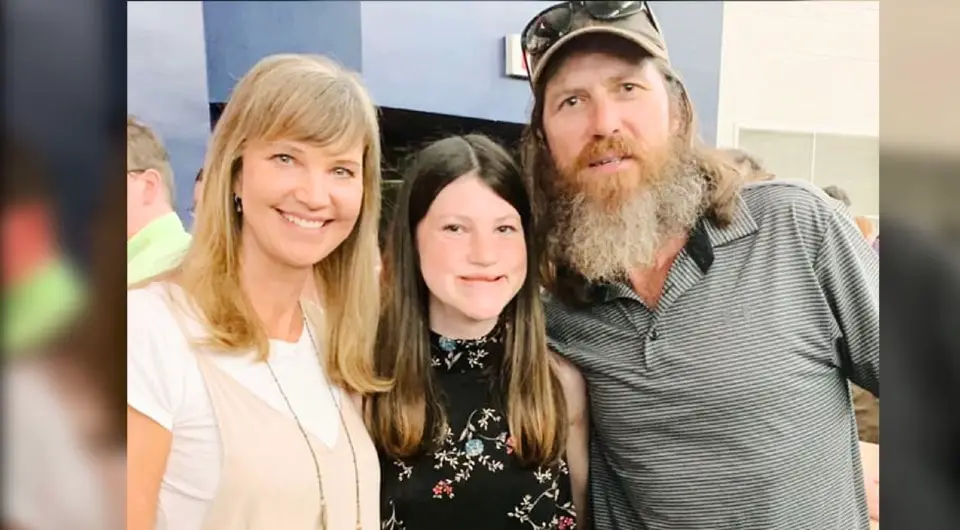
Mia Robertson, the youngest daughter of Duck Dynasty’s Jase & Missy Robertson, has been born with a condition known as cleft lip and palate, a gap in the upper lip that can involve the gum as well.
The U.S. Centers for Disease Control and Prevention shares that about one in every 1,600 babies is born with a cleft lip with a cleft palate in the U.S.
Because of her condition, sweet Mia, who is now 18 years old, has been forced to undergo 13 surgeries, with the 14th taking place just recently. The family truly hopes this would be Mia’s last procedure before her problem is finally solved.
Throughout every surgery, the young girl remains positive. What’s most, she hopes she serves as inspiration for other young children who are born with the same condition. On her own initiative and with the help of her family, Mia established the Mia Moo Fund in order to assist in making certain that each and every child wears a smile on their face.
“One of the functions of the Mia Moo Fund is to spread awareness of the cleft lip and palate journey,” Missy Robertson told Christian Post. “The other one is to help with medical funds for the parents and the families living right here in America.”
On his podcast Unashamed, Jase Robertson shared an update on Mia’s condition and said that his daughter is recovering well.
“She’s doing great. She’s turned a corner,” he said, and then added, “Everything seems great, seems to be fine.”
“Surgery went a little longer than expected, but she is home and recovering,” the loving father told his podcast listeners. “Thank you for praying for her and for our family. She is a champion!”
Before the surgery took place, Missy spoke of her daughter’s condition and explained that she had been constantly asked about the number of procedures Mia would need to undergo in the future. “There is never any other response than ‘We just don’t know,’” Missy said. She then added that they rely on God for assistance. “Since she is 18 now, she is taking the lead in all the discussions and medical forms. It’s been a little strange,” Missy wrote. “But it’s just another reminder to lean on the Lord and that I’m not in control.”
Mia also hopes that she’s at “the finish line.”
“Hopefully the last time I’ll see my doctors in this setting! It’s been a long road but we are at the finish line,” brave Mia said.
Sadly, in the past, 2002 to be exact, the family suffered the loss of their unborn child. Missy suffered miscarriage between eight and ten weeks into her second pregnancy and that loss deeply affected them, both physically and emotionally. Mia was welcomed into the world shortly after.
The Robertson’s have now been preparing for a new addition to the family as they open the doors to their hearts and home for a child whose mother was unfit to take care of.
We wish Mia speedy recovery.
Please SHARE this article with your family and friends on Facebook.
It all started innocently enough—a casual first date, a charming man, and a bouquet of flowers. My brother Marcus had been raving about Andy for weeks, insisting he was polite, successful, and “different from all the other guys” I’d dated. Normally, I would have rolled my eyes and retreated to my Netflix-and-Chinese-food routine, but something about Marcus’s persistence wore me down. Perhaps it was his personal investment, or maybe just fatigue from being the perpetually single sibling. Whatever the reason, I agreed to meet Andy. One date—no pressure—if it ended in disaster, I swore it would be the last time I ever took Marcus’s matchmaking advice.
On the night of the date, I stood in front of the mirror adjusting my navy dress for the fifteenth time, wondering why we voluntarily torture ourselves in the name of romance. When the doorbell rang at exactly 7 PM, punctuality or obsession, I couldn’t tell, but the sight of Andy holding a small bouquet of wildflowers made me forget all my skepticism. Tall, dark-haired, and effortlessly put together, he greeted me warmly, handing over the flowers with a smile that nearly erased memories of my past disastrous dates. Dinner at a small Italian restaurant downtown went surprisingly well; he held doors, pulled out chairs, asked thoughtful questions about my work and hobbies, and even debated the merits of mountain versus coastal hikes. For the first time in months, I felt hope—maybe this could be someone real, sane, and kind.
The evening ended with Andy insisting on driving me home, his reasoning simple and old-fashioned: a gentleman ensures his date’s safety. I should have refused, my instincts whispered, but his charm was persuasive, and I allowed it. Twenty minutes later, he walked me to my door, waved goodbye, and that was that—or so I thought.
The next morning, I woke with coffee in hand to a PayPal notification that made me blink twice. Andy had sent me an itemized bill for last night’s date. Gas from the restaurant to my place, car depreciation, downtown parking, even a cleaning fee for “puddle splash marks”—the total came to $37.25. The message read, cheerfully: “Thank you for a wonderful evening! Please find attached the expenses for your safe transport home. Looking forward to our next date! – Andy.” I laughed until tears streamed down my face. The man who had seemed perfect the night before had transformed courtesy into a business transaction. I couldn’t help but picture him at a desk meticulously logging every door held, chair pulled, and mile driven, balancing spreadsheets titled “Chivalry Expenses Q1 2025” and “Door-Holding Costs by Location.”
Once I stopped laughing, I realized he deserved a response that matched his own creativity. If romance could be an invoice, I could make customer service just as ridiculous. I sent him $50 via PayPal, including a note: $37.25 for his listed expenses, plus a $12.75 tip for door-opening, chair-pulling, and overall chivalry, signed, “Please rate your customer experience five stars!
Looking forward to never seeing you again! – Sarah.” Then I blocked his number and texted my brother: “UPDATE: Mystery solved about why your pickleball friend Andy is still single!” Word of the incident spread among friends, and soon “Ava’s invoice” became the joke of our social circle. People shared their own absurd dating stories—men who charged for concert tickets after breakups, women whose emotional labor had been inexplicably monetized—and my tale fit right in. I even peeked at Andy’s social media and saw that the man truly lived in spreadsheets: budgets for every life scenario, photos of him hugging a calculator, LinkedIn articles pinned like sacred texts about “optimizing dates for maximum ROI.”
While some might view Andy as a cautionary tale, I saw humor and an important lesson in boundaries. I realized that too often, I had excused odd behavior in dating and bent over backward to please others. Andy’s invoice was a grotesque exaggeration, sure, but it reminded me that kindness should never be treated as a commodity and that emotional labor has real value—even if you invoice it sarcastically.
In the weeks that followed, I shared the story at brunches and parties, laughing with friends until tears ran down our cheeks. My brother Marcus admitted defeat: no more matchmaking experiments, especially with accountants disguised as gentlemen. Life went on. I continued dating, met people who didn’t send invoices for being polite, and cherished ordinary human interactions. Andy’s absurd audacity became a symbol of survival: a reminder that humor, self-respect, and a little clever defiance could turn even the strangest dating misadventures into stories of empowerment.
In the end, the invoice was never really about $37.25. It was about asserting boundaries, reclaiming my voice, and finding laughter amidst absurdity. Some people leave your life quietly; others leave you laughing until your stomach hurts while shaking your head in disbelief. Andy, in all his spreadsheet glory, was in the latter category. And that, I realized, was exactly the lesson I needed to learn about dating, audacity, and keeping your sense of humor intact.
Please SHARE this article with your family and friends on Facebook.
I always imagined our wedding day as the beginning of a perfect chapter — a day where love would feel invincible, and trust and shared dreams would carry us into a future we both envisioned. I pictured laughter, tears of joy, and quiet moments of connection that would anchor us through life’s inevitable challenges.
But just hours after saying “I do,” a seemingly small detail — a plane ticket — revealed fissures I hadn’t noticed, challenging everything I thought I knew about partnership, pride, and self-respect.
The wedding itself was beautiful, filled with friends, family, and an overwhelming sense of possibility. I stood beside my wife, certain that love could bridge any divide. She came from a wealthy family, and though I admired her independence and admired the way she navigated the world she was born into, there was always an unspoken expectation — subtle but heavy — that I would fit seamlessly into a world that wasn’t mine. I told myself that love could smooth over these differences. I believed it could.
Then came the honeymoon. What should have been a joyful continuation of the day’s promises quickly became a lesson in humility and self-worth. At check-in, I noticed something odd: her plane ticket was for first class, while mine was economy. I tried to dismiss it at first, thinking it must be an airline error. I asked casually, almost joking, “Did you notice we’re in different classes?”
Her response was calm, almost matter-of-fact: “Dad said he’s not your bank.” The words landed like a hammer, echoing in the sudden silence around me. What I had initially interpreted as care or thoughtfulness revealed itself as a subtle assertion: wealth could be used to dictate comfort, but dignity and equality could not be assumed. It wasn’t generosity — it was a quiet humiliation, a reminder that some boundaries couldn’t be crossed simply by love or intention. Pride surged, mixing with hurt, and I realized I had to act. I walked away from the plane, from appearances, from a honeymoon that suddenly felt more like a test I hadn’t agreed to take.
It wasn’t an act of defiance against her, nor a refusal to share joy. It was a refusal to let my sense of self be compromised. I had spent years preparing for love, for partnership, for compromise, but this moment reminded me that some sacrifices demand a cost I wasn’t willing to pay: the cost of my own dignity.
Later, after hours had passed and tempers cooled, we had our hardest conversation yet. It wasn’t about airline seats, or first-class comfort, or the subtle inequalities that money can enforce. It was about respect, empathy, and understanding. We spoke for hours — sometimes in silence, sometimes in tears — about the unspoken expectations that had existed between us, about pride and vulnerability, and about what equality truly means in a marriage. We faced uncomfortable truths: that love without mutual respect is fragile, and that even the most romantic vows cannot replace the basic human need to be seen, valued, and treated as an equal.
Through that conversation, I came to understand that love and money run on entirely different scales.
Wealth can buy luxury, experiences, and the trappings of a perfect life. But it cannot buy compassion, humility, or fairness. It cannot erase the invisible walls that privilege sometimes constructs between hearts. That realization, painful as it was, became a turning point.
In the days that followed, we rebuilt our understanding of one another. Small gestures became meaningful: listening without judgment, acknowledging inequalities we had ignored, and committing to a partnership where mutual respect outweighed social expectation or material comfort. The honeymoon eventually continued, not as a showcase of extravagance, but as a quiet exploration of what we truly wanted from each other — trust, empathy, and a shared life that honored both of our values.
This experience left an indelible mark. I learned that love is fragile but resilient, that true partnership requires courage, and that standing up for oneself is sometimes the most profound act of love one can offer. Luxuries can be shared, but dignity cannot. Respect cannot be purchased; it must be earned and freely given. That plane ticket, small as it seemed, revealed more about our marriage than any ceremony, any vow, or any grand gesture ever could.
✅ Conclusion
True love isn’t measured by wealth, gifts, or first-class seats. It is measured in empathy, equality, and the courage to protect your sense of self while honoring another. Sometimes, the most important acts in a relationship happen not in grand declarations, but in quiet choices — choices that define boundaries, assert dignity, and reaffirm mutual respect. My honeymoon began with heartbreak, but it became a lesson: luxury can be temporary, but respect, understanding, and self-worth are the foundations upon which enduring partnerships are built.
Please SHARE this article with your family and friends on Facebook.
Jennifer Lawrence attended the Golden Globes 2026 in her most naked look to date, and the reactions are mixed.
The actress, who was nominated for Best Performance by a Female Actor for her portrayal of Grace, a young mother in rural Montana battling postpartum depression and psychosis in Die My Love, appeared in a delicate, see-through gown.
Jennifer Lawrence’s “naked dress” was designed by Givenchy creative director Sarah Burton and featured delicate floral embroidery in soft shades of pink, ivory, and green, lending the sheer fabric a romantic, almost vintage charm.
Needless to say, the daring choice of dress showed off her incredible figure. The gown featured subtle cut-outs along the mesh, which she complemented with towering nude heels, simple jewelry, and a matching wrap loosely draped over her arms.
Monica Schipper/Getty Images
It’s certain that her stunning look turned heads, but not everybody approved.
“Maybe they should have a dress code or put the award shows on after the kids are in bed,” one person wrote.
“Someone tell Jennifer Lawrence she’s not 25 anymore,” another said of the mother-of-two.
However, having in mind how much Lawrence is loved by the public, others came to her defence.
“The only acceptable return of the naked dress. Classy and elegant,” one fan wrote on X.
“True. I actually like it,” another agreed.
People not only praised her fashion choice but also her level of confidence.
”When you think about it, we are all naked underneath our clothes. She looks great and the dress it’s not as revealing as people make it out to be. People complain too much about the little things, enjoying our lives to the fullest is the best part of freewill,” one person commented.
“It is a naked dress, but it’s the most beautiful naked dress I’ve ever seen! And she has the body to wear it. So stunning!” another fan added.
Frazer Harrison/WireImage
According to another fan, “This is the type of a naked dress that’s socially acceptable, aesthetically appealing, and imagination igniting just as intended. Jennifer Lawrence looks tastefully sexy yet romantic at the same time in this sheer Givenchy dress that reminds me of Halle Berry’s Ellie Saab dress for Oscars in 2002. Excellent colour palette for Jennifer. My favorite look so far.”
Lawrence herself commented her style of the night when asked about the after-parties.
“I’m going to hang. I’m naked, I might as well,” she told Entertainment Tonight, before laughing about her children’s reaction. “They would prefer I not be here.”
The actress also spoke about filming Die My Love, revealing that shooting the intimate scenes wasn’t as difficult because she and her on-screen partner, Robert Pattinson, didn’t know each other before production began.
“It was actually easier that way, because Rob and I did not know each other. Which is kind of better, you know?” she told People. “Imagine it! So yeah, doing it with a stranger is preferable.”
Amy Sussman/Getty Images
These days, Jennifer Lawrence is stepping into an exciting new chapter both on screen and off. Her upcoming slate features The Hunger Games: Sunrise on the Reaping, which sees her reprise her iconic role as Katniss Everdeen, as well as What Happens at Night, a chilling new horror project from Martin Scorsese, co-starring Leonardo DiCaprio.
Please SHARE this article with your family and friends on Facebook.
What started as an ordinary day in the lives of the Hart family ended in an unimaginable tragedy.
Michael Hart, a nature lover who spent his days hiking and exploring the nearby woods and trails, took his young son, Daniel, with him. The father and son had much fun while outdoors, witnesses who spotted them hiking said.
They were running, playing, and Daniel seemed really interested in every tree and every insect the two stumbled upon.
This wasn’t the first time the father and son to be spending their days in the woods, but sadly, it was the last.
As time passed by, young Daniel started feeling exhausted, with his face becoming pale. Michael though the boy was just tired of the walking, but then, all of a sudden, Daniel collapsed.
Two people, a man and a woman, who were also there, rushed to help. They called the emergency services, and at the point help arrived, Daniel was still breathing. Sadly, however, he passed away shortly after getting to the hospital despite the help medics provided.
Michael was out of his mind. His son was a perfectly healthy young boy who never complained of any pain.
However, autopsy revealed that the young boy suffered from an undiagnosed heart condition.
Something his family wasn’t aware of because it didn’t show any symptoms. On the contrary, Daniel was vibrant and involved in sports.
“If I had known… if there had been even one warning sign… he would still be here. I would have taken him to every doctor in the world,” his devastated father said.
The boy’s mother was as shocked and as devastated. “It was supposed to be a happy moment,” she said. “Michael adored him. He would never have imagined this could happen.”
A small memorial now sits near the entrance to the nature trail, with people stopping by to leave flowers, drawings, and handwritten notes for the happy little boy who brightened every room he was in. While mourning their loss, the Hart family hopes that remembering Daniel’s kindness, curiosity, and infectious smile will help them begin to heal.
Please SHARE this article with your family and friends on Facebook.
No matter what people say, truth is that being a single parent is never easy. My daughters, Bella and Lily, are tiny hurricanes who fill every inch of our home with constant motion and joy.
Sticky fingerprints mar the counters, the walls, and even the TV, and I’ve accepted that my beige couch will never be beige again. It’s never quiet at home, and for a long time, I told myself I could manage it.
Their mother left when the twins were still babies. There was no fight or a dramatic farewell. She simply packed her things one day and said, “This isn’t me.”
What followed after my wife left was a blur of diapers, sleepless nights, meltdowns, frantic trips to the doctor, and a near-constant sense of fear. I was working full-time in IT, barely making enough to get by, telling myself that exhaustion was normal and that fear was only temporary. I thought being tough meant simply hanging in there.
For a time, or so I thought, it was fine. Then everything began to fall apart.
I received an email from work that said there had been budget cuts and my pay was reduced by a fifth. On top of that, the daycare the girls visited closed after the owner retired, and I found myself balancing work and being a dad, only this time, it was even more difficult than before.
At that point, sleep became a luxury and my patience was running out because my stability disappeared. And if that wasn’t enough, my mother, the only person who was there for me, was diagnosed with a heart condition that required surgery. She needed me, and I had nothing left to give.
My world had narrowed to our apartment, and then the washing machine broke, making things even worse.
It was old but reliable—until it wasn’t. It broke midway through the cycle, leaving clothes soggy and useless. I stood there feeling defeated, like something inside me had finally cracked.
For days, I washed everything by hand, but clothes wouldn’t dry quickly, and Bella and Lily cried for their pajamas and blankets. As I stood over the sink, cold water numbing my wrists, I thought: this is where I fail them.
Next, I found myself at a dusty secondhand appliance shop on the edge of town hoping to find a working washing machine that wouldn’t cost much. The woman working there, Margaret, seemed really kind, and before I knew it, I shared my whole life with her, with a total stranger.
“Let’s find something that helps,” she said, and showed me a washing machine that I bought.
When I got home, all I prayed for was for that machine to be working. But no, I did everything right, and it wouldn’t start. I nearly broke when I noticed something inside the drum. There was a small box inside with two keys and a note that read, “For you. —M.”
In the morning, I followed the address and got to a house. Margaret was there, waiting for me. She explained that the house once belonged to her sister who wanted to give it to a family in need, and according to Margaret, that family was my family.
I couldn’t believe what I was hearing. I only thought things like that happen in the movies. But there I was, holding the keys to our new place, a small house that marked the beginning of something beautiful.
Who knew that a broken machine could lead to such a change in my life.
Please SHARE this article with your family and friends on Facebook.
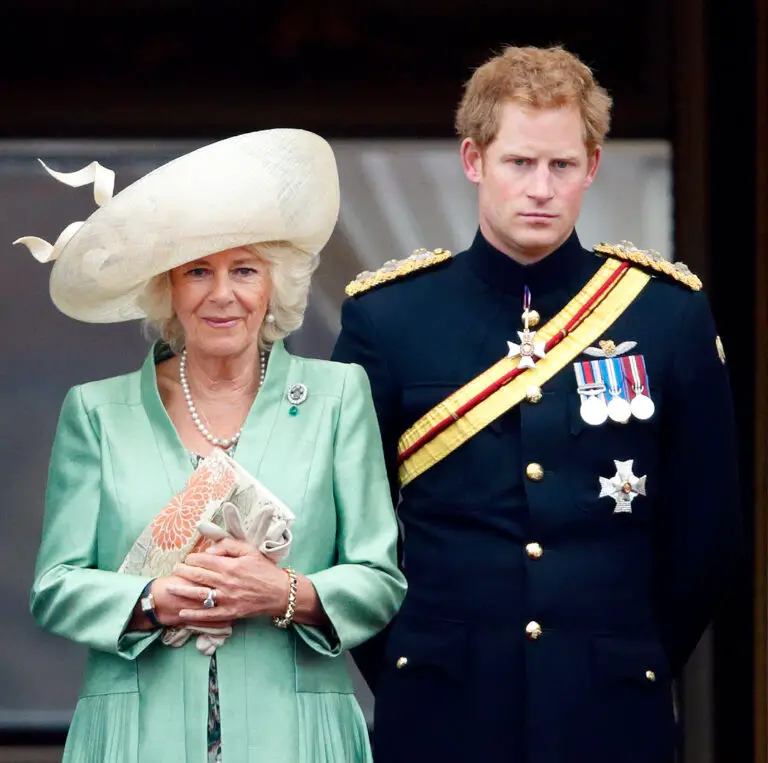
Prince Harry’s actions following his departure from his family have affected his relationship with the Firm. In an attempt to protect his wife from the pressure and the scrutiny from the British media and prevent the history from repeating itself, referring to his late mother, he and Meghan settled in California, but they didn’t stay silent or out of the limelight.
On the contrary, both Harry and Meghan were eager to share details about the members of the British royalty and gave a number of interviews in which they revealed plenty of things that were taking place behind closed doors.
Among the rest, Harry opened up about his step-mother, Queen Camilla. In his all-tell memoir, Spare, Harry wrote that his first meeting with Camilla was “awkward and tense,” adding that his brother William had “long harbored suspicions about the Other Woman.”
“I think the relationship between them all is warm now but if I’m honest, it wasn’t then. I think they found it hard,” a palace source told royal biographer Penny Junor, author of Prince William: Born to be King. “To be fair to Camilla, she never tried to be mummy but she was the ‘other woman’ and she was there and taking daddy’s time.”
Indigo/Getty Images
The relationship between William and Camilla improved significantly over the years and they are said to be close, which can’t be said for Harry’s relationship with his father’s wife.
In her book The Palace Papers, royal author Tina Brown wrote that Harry “unnerved” Camilla.
“When the younger boy was eventually prevailed upon to be in the presence of Mrs Parker Bowles, he unnerved her with long silences and smouldering, resentful stares,” she quoted a courtier saying.
“William has accepted Camilla in terms of what she means to his father. He’s been grown-up about it.
“My father loves this woman, I can’t fight it, so I won’t,” Brown shared with Telegraph.
“Harry, on the other hand, can’t stand Camilla, he doesn’t want Camilla to be Queen, he’s very angry that it’s happening. He has not made his peace with it, and he probably never will.”
Max Mumby/Indigo/Getty Images
When Harry was informed of his father’s cancer diagnosis, he went to Britain and the two met briefly. Camilla, however, was said to be unhappy with her step-son meeting her husband without the Palace’s approval.
“Her Majesty was furious Harry flew in from his ritzy California home without getting palace approval — and came with an attitude,” a source is said to have told the National Enquirer, via RadarOnline.
The same report stated that Harry asked from Camilla to leave the room because he wanted to talk to his father in private.
“I’m told Camilla was outraged,” the source went on. “She’s taken a lot of bile from Harry for years and couldn’t wait to let him have it.”
Daniel Leal – WPA Pool/Getty Images
Harry’s writings about Camilla enraged Charles and further affected the relationship between them.
“I think people have to realize that the one thing that Charles finds unforgivable is criticism of Camilla,” royal expert Christopher Andersen told Fox.
“There’s no criticism of Camilla,” Andersen added. “And unfortunately for Harry… Harry said some pretty devastating things about her. He made it clear that he felt she was… the villain in the piece. I think that still bothers the king, and I don’t know that it will be easy for him to [forgive]. I don’t think they’ll ever forgive Harry for that.”
Tim Rooke – Pool /Getty Images
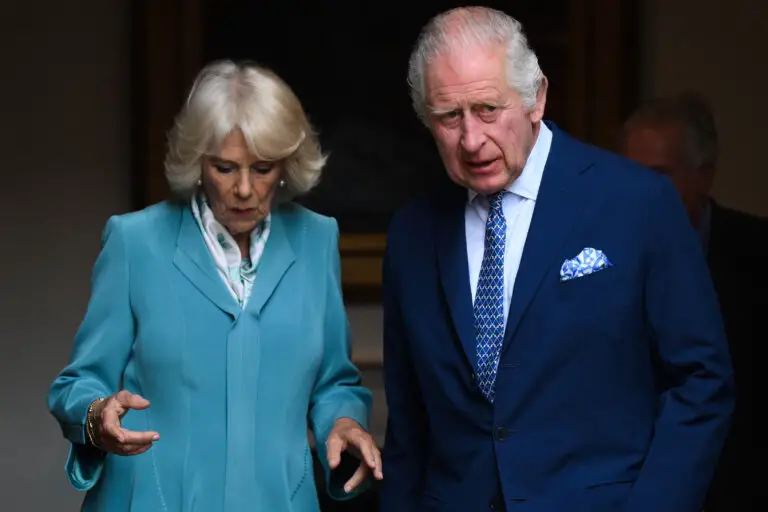
Following Charles’ cancer diagnosis, Camilla stepped in and took a lot of responsibilities regarding royal engagements. She certainly doesn’t want Charles to be distracted, and one of those distractions is Prince Harry.
“Camilla dislikes Harry and doesn’t want Charles to get stressed while he’s undergoing treatment, so she tries to limit interaction,” a source told OK Magazine.
One thing is certain, the feud between the Sussexes and the rest of the royals is still ongoing. We are yet to witness if things between them would improve in the time to come.
Please SHARE this article with your family and friends on Facebook.
Days before my wedding to the person that meant the world to me, I learned he was cheating on me. My world collapsed and I felt like there was a no way out of the situation I found myself in.
It was a betrayal that couldn’t be explained away with apologies, nor brushed aside. Yet, I didn’t cancel dress fittings, I didn’t stop answering calls, and I didn’t tell anyone. Well, until I couldn’t stay silent any longer and told my father everything. How hurt I was, and how ashamed I was to cancel the wedding.
Everything was ready for the wedding. Our plane tickets were paid for and hotel was booked for our honeymoon. The guests had already rearranged their lives for that day.
My dad didn’t judge me and didn’t try to fix anything. He listened to me without interrupting me and then said, “Some days are meant to look like endings, but they’re actually crossroads.”
Unsplash
Honestly, I wasn’t entirely sure what he meant with that, but I trusted his judgement. At that point, he was the only person in my life that I actually trusted.
On the wedding day, everything looked picture perfect. The venue was exactly like I had always imagined it to be. My dress was equally perfect, and the guests were all smiling.
I walked next to my father and my heart was racing under the dress. Every step towards the aisle felt heavier than it should have. I didn’t fully understand why yet, but something felt off.
Halfway down the aisle, I noticed it. The aisle didn’t lead straight to the altar.
It was curved, but not sharply, just enough to matter. There was no clear end point, no moment waiting for vows. Instead, it slowly turned toward a side doorway filled with light, one I’d never noticed before.
The day that was supposed to be the best day of my life, the day I gave birth to five babies, turned into a nightmare. Instead of laughter, the hospital room was filled with screams, and it was all because my babies were black.
I am María Fernández, and my story started some thirty years ago.
When my husband saw our babies, he got scared and accused me of being unfaithful. He then decided to leave me, disappearing from our lives for good, or at least that’s what I thought.
“They’re not mine!” he shouted. “You lied to me!”
The nurses tried to calm him down, telling him that there had to be an explanation, that medical reviews were still pending. But he wouldn’t listen. “I won’t live with this humiliation,” he yelled.
All of a sudden, I was left with five newborn babies and left the hospital after several days in strollers I borrowed from family and friends.
The days that followed were the hardest I’ve ever experienced. There were judgments and people saying I betrayed my husband and was unfaithful to him. And it was enough for my husband, Javier, to never look back.
I named my children Daniel, Samuel, Lucía, Andrés, and Raquel. On the first night at home, I made a promise that I would uncover the truth. Not because of Javier, who wouldn’t even listen to me, but for my children.
When my children grew older, they started asking questions. “Mom, why do we look different?” “Where is our father?”
And I had no answers.
When they turned eighteen, we did family DNA tests. The results confirmed they were all mine, but questions remained. A geneticist suggested further testing, and that’s when the truth came out.
I carried a rare genetic mutation that can cause children to be born with African-descended features even when the mother is white. It was real and scientific.
I tried to contact Javier but he never replied.
Then, one day, thirty years after our black babies were born, he appeared at my door. His hair was gray, and he was ill. It turned out he found us with the help of a private investigator. Javier needed a compatible transplant.
I told the kids and they agreed to meet him. He studied their faces until Daniel placed the DNA and medical records on the table.
Javier went pale. “So… they were mine?”
No one answered at first, but looking at the documents, Javier broke down. He blamed the fear and the pressure he felt at the time. My children listened calmly, but none of them felt the need to provide forgiveness or accept him as part of their life. They’ve done just great without a father figure for thirty years.
Unsplash
Lucía said they didn’t need his apologies. Andrés added that they weren’t there to judge him, but they weren’t there to save him either.
I told Javier the truth. I didn’t hate him, but I never kept a place for him.
That meeting didn’t open old wounds but helped us heal.
Javier left, and honestly, he simply didn’t belong with any of us.
Please SHARE this article with your family and friends on Facebook.
If chicken is part of your diet, you have probably noticed that some pieces of this meat are rather light in color, being almost pink, while other slices come in rich yellow hue. This probably makes you wonder what is the reason behind this and whether the color actually has to do anything with the quality of the chicken you buy.
Is one more delicious than the other? Or maybe one is treated with additives and the other one isn’t?
At first glance, color can feel like a useful clue. Consumers often rely on appearance when judging food, and chicken is no exception. In practice, however, color is a poor indicator of quality since it offers more insight into the bird’s diet, living conditions, and farming methods rather than freshness or taste.
Pale chicken is most often associated with industrial farming
These birds are bred to grow quickly and are fed carefully controlled diets. They are also kept indoors with limited space to move. This approach allows producers to supply cheap chicken in huge volumes, which is why light-colored meat dominates supermarket shelves. While the color alone doesn’t necessarily mean the meat is unsafe, it does point to a system built around speed rather than natural living conditions.
Yellow chicken usually suggests a different background
This color indicates that the chickens were fed plants containing carotenoids, such as corn and marigold. The color also comes from spending time outdoors and feeding on grass and insects.
When chickens grow more slowly and move around more, the meat tends to be firmer and more flavorful, similar to how chicken used to taste years ago.
The thing is, however, that some producers enhance the yellow color by feeding the chickens with foods that help achieve that yellowish color even though they are raised under intensive conditions, just packaged to look more natural.
This is one of the reasons why color shouldn’t be the sole indicator of how healthy or tasty the chicken meat is.
Now, while color isn’t the best guide, the labels are. Words like pasture-raised, organic, or free-range offer insight into a chicken’s diet, living conditions, and overall quality.
Fresh chicken should smell neutral and feel firm. If it smells off, the color doesn’t matter. Ultimately, the best choice depends on what you care about most. Is it the price, the taste, or how the animal was raised.
Please SHARE this article with your family and friends on Facebook.
Don Ricardo Alarcón was a very wealthy man who had built his fortune from the ground up. He admired ambition and respected hard work, but above all else, he valued integrity. And lately, he sensed something was off, and it involved his son’s girlfriend, Sofia.
To everyone else, Sofia was a perfect woman. She was graceful, stylish, and confident. Alejandro, Don Ricardo’s only son, was completely smitten with her.
“She loves me, not the money,” Alejandro insisted whenever his father raised concerns.
Don Ricardo had heard similar words many times before, and they all came from men who later lost everything. He didn’t want to confront Sofia directly. He wanted to choose another approach in order to get to the truth. What he wanted to learn was how Sofia acted when no one was watching.
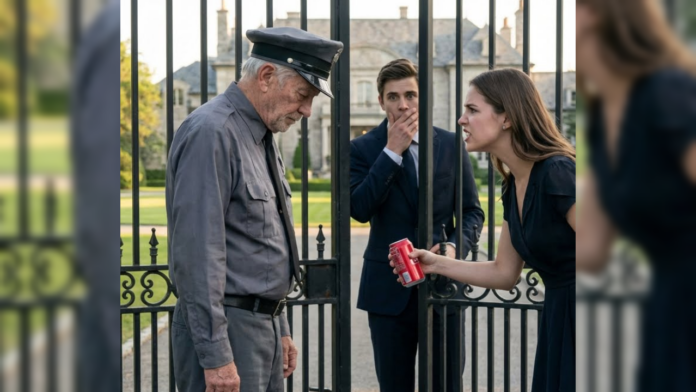
The opportunity came on the night Alejandro and Sofía went to celebrate their engagement at El Dorado, one of the city’s most exclusive restaurants. Don Ricardo arranged something unusual. Don Ricardo disguised in a worn waiter’s uniform and waited at the entrance.
When Sofía arrived in a luxury dress, with the diamonds catching the light, she passed him without a glance. To her, he was invisible.
Inside the restaurant, Don Ricardo waited. When he approached their table to adjust Sofía’s chair, he deliberately stumbled. A few drops of soda splashed onto the corner of her designer handbag. What followed told him everything.
Sofía exploded. She shouted, insulted him, and publicly humiliated him in front of the rest of the guests. He tried to apologize, but that wasn’t enough. Sofia wouldn’t stop insulting him, and if that wasn’t enough, she grabbed a can of Coca-Cola and flung it straight at him.
Alejandro said nothing.
What hurt Don Ricardo more than Sofia’s words was his son’s silence. He didn’t defend him because he hadn’t recognized he was his father. So Alejandro, just like his girlfriend, didn’t stand up for the “waiter” Sofia insulted mercilessly.
The following morning, Don Ricardo called his son to his office and told him the truth about the previous night. He revealed that he was the waiter he and Sofia mistreated.
Alejandro was shocked. He tried to defend his girlfriend, saying she didn’t mean to treat him that way and that she had never treated anyone that way before. But Don Ricardo wouldn’t listen. He learned the truth firsthand, and that was all he needed.
“A person’s true character,” he told his son, “is revealed in how they treat those they believe are beneath them.”
Then came the consequence. Don Ricardo informed Alejandro that his will would be changed. If Alejandro married Sofía, he wouldn’t inherit any of the money or his possession.
When Sofia learned that, she went crazy. She accused Don Ricardo of being manipulative and a bad father.
“I didn’t sign up for that,” she snapped.
For the first time, Alejandro realized his father was right.
Still uncertain, he decided to test what his father had seen. He invited Sofía to visit a local orphanage his family supported. There were no cameras, no luxury, no social status to gain.
Sofía was visibly uncomfortable. When a small child approached her with a handmade paper flower, she brushed him off with open disgust.
That was the moment Alejandro’s doubts disappeared. It didn’t take long before he decided to end the engagement, and Don Ricardo finally found peace. That was the end of the millionaire’s son’s girlfriend.
Please SHARE this article with your family and friends on Facebook.
A discussion started by a Reddit user about the worst physical pain in the universe went viral, with hundreds joining the fray and emotions running high. What surprised a lot of people was that there was a consensus on the answer, which outraged some and left many feeling invalidated.
The response also underscored an inconvenient truth, that pain is not universal and everyone experiences it differently. Even if an online consensus emerges, that doesn’t negate the fact that pain is deeply personal, influenced by the bodies, thresholds, and experiences.
When people talk about pain, the answers are usually predictable. For men, it’s often a kick to the groin; for women, childbirth is usually mentioned. But this discussion took an unexpected turn.
According to many Reddit users, the worst physical pain imaginable wasn’t childbirth at all, but something far less talked about — IUD insertion.
NHSexplains that an IUD (intrauterine device), also called a copper coil, is a small plastic T-shape placed inside the uterus to prevent pregnancy. It does not use hormones but helps stop pregnancy by releasing copper into the womb. Also, IUDs are about 99% effective but not suitable for every woman. After the device is removed, the fertility returns to previous levels right away.
Many of the women who got involved in the online discussion recounted their own IUD insertion experiences, describing intense pain and anger over how little information they were given in advance. Several reported that the process was understated by the doctors and nurses, and they were surprised at how much pain they felt.
Some even argued that stronger pain relief should be standard during the procedure in order to ease the pain and make it more bearable.
“I’ll preface this by saying that I’ve broken my femur, arm, and hand. I’ve broken a molar in half. I sliced my eyeball. I suffered a third degree burn on my hand. I’ve had two reconstructive surgeries on my shoulder. I had 3 holes drilled in my skull and underwent brain surgery,” one user wrote.
“Yes! I’ve broken my ankle to the point only tendons were holding it together, 2 C sections one after hours and hours of labouring, but that IUD is the worst! At one point he was twisting it to get better placement, I thought I was going to barf,” another woman added.
“Same for me. They didn’t give me any warning either, ‘just a pinch’ they said. Yeah, a pinch so bad I kicked the doctor in the face to get her to stop, threw up, and blacked out. I had to drive myself home afterwards, pulling over every couple of minutes to puke from the pain. That went on for days,” a third wrote.
Another comment said, “They’ve known for decades many women are under medicated when getting an IUD, and their complaints of pain are often dismissed. If you’re obese, or a smokier, or a minority, or whatever the trigger may be, you’ll tend to be treated even worse.
“This is why I constantly compliment and write thank-you notes to my good providers – mostly for treating me like a human and listening to my needs.”
What is the worst physical pain you have ever experienced?
Please SHARE this article with your family and friends on Facebook.
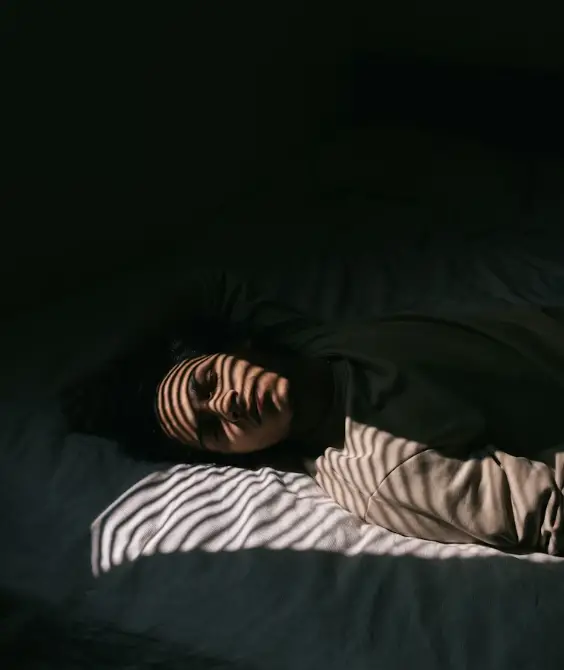
If you’ve ever woken up and realized you couldn’t move or speak, even though you were fully conscious, you’ve likely experienced a rather strange and mysterious phenomenon known as sleep paralysis.
Contrary to the common belief, sleep paralysis is actually more common than many believe. However, since it is an experience that feels surreal, many hesitate to talk about it.
My Cleveland Clinicstates that sleep paralysis happens “when your body is in between stages of sleep and wakefulness. An episode is temporary and only lasts for a few seconds to a couple of minutes. It’s a type of parasomnia.”
Although an episode of this phenomenon can cause nervousness and anxiety, leaving those who experienced it scared and puzzled, it is actually harmless.
Some of this episodes are related to sleep disorders, so if they happen often, it would be best to consult a doctor and avoid the emotional stress that comes with them.
According to research, around 30 percent of people experience sleep paralysis at least once during their lifetime.
You can experience it either right before falling asleep or as you’re waking up. Some of the symptoms include: inability to move your arms and legs, inability to speak, sensations of pressure against your chest (suffocation) or moving out of your own body, hallucination, and daytime sleepiness. It can least from a few seconds to up to 20 minutes and is accompanied with feelings of fear, panic, and helplessness.
Sleep paralysis is actually the result of normal biological processes. During REM sleep, which is the stage when most dreaming occurs, our brain switches off our muscles so we don’t physically act out what we see in our dreams. A paralysis episode happens when the mind wakes up before the body does. The outcome is that you’re conscious, but your body is still “asleep.”
This brief mismatch is usually set off by things like high stress, poor sleep, anxiety, irregular schedules, or severe exhaustion. Essentially, anything that disrupts the rhythm and quality of your sleep can act as a trigger. Having said that, this phenomenon can also be a result of inability to adjust between time zones when you are traveling to another country away from from your home, and even sleeping on your back.
In order to avoid it from happening, try getting regular sleep, avoid screen time right before going to bed, try to manage your stress, and create a quiet and comfortable sleeping environment.
In case it still happens, focus on your breathing and try to move just one finger or toe. Bit by bit, your body will loosen up and movement will return.
The thing about sleep paralysis is that it is one of those experiences where biology and belief collide in a powerful way.
Across cultures and centuries, people rarely thought of sleep paralysis as of a neutral bodily glitch. Instead, people tried to interpret it through the system of beliefs they already relied on to make sense of danger, mystery, and things they couldn’t see or explain.
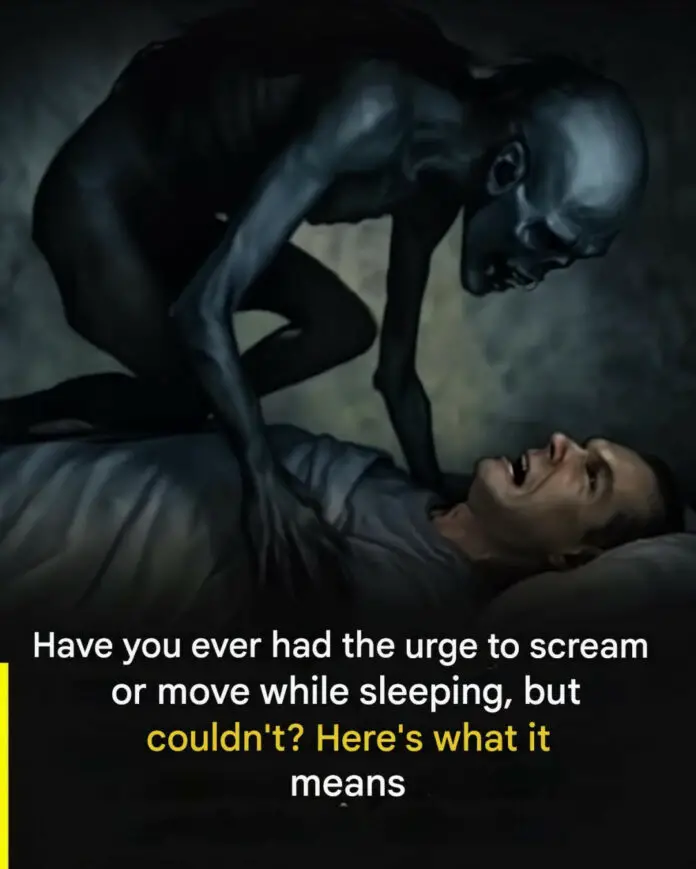
Before modern sleep science became available, this experience was just too intense to be written off as imagination. People would wake up fully aware but frozen in place, struggling to breathe, and feeling like someone or something was present in the room with them. It was then that they turned to their system of beliefs.
In medieval Europe, superstition and religion were simply a huge part of daily life, and this particular phenomenon became wrapped into tales of witches and demons. The feeling of being held down at night and unable to scream was taken as evidence that evil entities were visiting the person during sleep. Stories of the “night hag”—a dark, witch‑like figure that sat on people’s chests as they slept—were common in England, Scandinavia, and other regions of Europe.
Church documents and folklore narratives describe the night hag coming in the night, pressing down her prey with an unseen weight and blowing fear into their ear.
People didn’t think, “Oh, maybe this is my nervous system misfiring.” They thought something truly supernatural had entered their bedroom without warning and that it was there to cause them harm. The night hag wasn’t just a metaphor but a real creature in the shared imagination of the time, a being that explained why good, ordinary people could wake up feeling hunted and powerless.
Unsplash
Travel a little farther south and east, and you see similar experiences told in entirely different terms and it wasn’t because the core experience changed, but because the interpretive lens was shaped by different cultural beliefs.
In the Middle East, where the lines of science were blurred with Islamic cultural tradition and ancient mythology, sleep paralysis was most often blamed on jinn. The jinn are believed to be invisible creatures, made of “smokeless fire” that live parallel to humans, but in the spiritual domain. They can be mischievous, malevolent, or benign according to their species and mood. As averse to jinn as his faith was, the jinn were understood as spirits, and to be roused at night and confronted by a spirit that had taken leave of its senses or was moving between corporeal and incorporeal states was a common experience. This explanation was perfectly reasonable in that cultural context, for people were already convinced that spirits could secretly affect everyday life. For these people living in these times, this was simply a rational explanation.
Unsplash
In Japan, sleep paralysis has long been known as kanashibari, which literally means “to be bound” or “tied up.” People who experienced it would wake up completely aware but unable to move, often feeling a heavy presence pressing down on them. In traditional Japanese belief, this was seen as the work of restless or angry spirits attaching themselves to a person’s body while they slept. It was not just a strange quirk of the body; but a sign that a spirit was there and wanted to cause illness.
These interpretations grew out of a worldview where spirits, ancestors, and the balance between the living and the dead were deeply important. Many stories tie kanashibari to unresolved grudges, skipped rituals, or spiritual imbalances, turning what might otherwise be a confusing or frightening experience into one with clear moral and emotional meaning. People did not just feel trapped in their own bodies, also they felt caught in a spiritual web that demanded attention and respect.
In some rural parts of Italy, especially in Abruzzo, people explained sleep paralysis using the figure of the pandafeche. This creature was said to have a scary face, claws, or other frightening features, and it was believed to sit on a person’s chest at night, especially if they had upset a witch or broken a local rule. The stories are different from village to village, but the idea is the same. People didn’t see the paralysis as random or just in the mind. They believed something real and scary was causing it. Even today, some Italians will joke about the pandafeche when someone feels “held down” while half-asleep, and the story is still passed down as part of local tradition.
Unsplash
It’s somewhat astonishing when you consider what sleep paralysis looks like at different points in history and geography. The phenomenon itself hardly varies. People wake up in the middle of the night fully conscious they are awake, but they can’t move. They have a pressure on their chest as if something is lying on it. They feel a presence in the room. Sometimes they even hear or see things that are, to all appearances, completely real. You just turn on the part of the same whether you’re in Europe hundreds of years ago or living in a modern city today, and you’re fine. What differs is the way people describe it.
Different cultures have different narratives, different names, different significances to the experience. Beliefs don’t merely provide a post-hoc label for what is happening. They literally influence what people think they are seeing, how they think they are feeling, and what they think they are remembering later. The contemporary examples are really fascinating too. Even in cultures that we know about REM sleep and the science around it, these beliefs have not disappeared. They have only evolved. Instead of witches and demons, there are now stories of shadow people at the foot of the bed, intruders in the room, or aliens. Movies and TV and stories online give people images to put themselves in line with what they’re feeling. A teenager watching horror movies late at night might wake up and see a dark shape at the room’s corner.
Conclusion
Centuries ago, someone would have called it a night hag, but the sensation is pretty much identical. This reveals something important about the human mind. The biological portion – how the brain skews consciousness and muscle control – is the same for everyone. But the interpretation of the experience is derived from culture, upbringing, and belief. People who believe in spirits tend to have more vivid and terrifying episodes.
Those who know the science are less frightened, and recall the experience differently. Sleep paralysis isn’t just a quirk of the brain. It expresses the fears, narratives, and social attitudes that we harbor. A momentary malfunction of the brain can snowball into a fully flesh-and-blood experience that feels entirely real and deeply personal.
Please SHARE this article with your family and friends on Facebook.
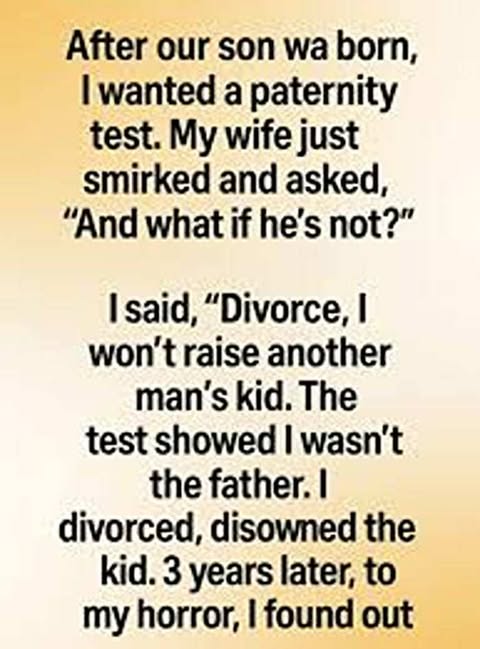
When our son was born, I told myself I was being “responsible,” just making sure everything in our new life was solid. But beneath that excuse was a quiet insecurity I never admitted — not to my wife, not even to myself. That insecurity grew until I finally demanded a paternity test.
She didn’t yell or break down. She just went still. Her eyes softened in a way I didn’t understand then, and she asked me one simple question: “And what if you’re wrong?”
I answered with a cold certainty I didn’t deserve: “If he isn’t mine, I’m gone.”
I took her silence as proof of guilt rather than the deep hurt it really was. I took the faint, shaky smile on her face as arrogance instead of the pain of watching her husband doubt her most deeply.
When the results came back — wrong results, as I’d later learn — saying he wasn’t mine, I didn’t hesitate. I left.
Lawyers, signatures, arguments that felt final — I walked out of the home we built, convinced I was protecting my pride. I thought I was sparing myself humiliation, but in truth, I was running from trust, responsibility, and love.
Three years later, I ran into an old family friend. As I told him my story, expecting validation, he looked at me with a grief I didn’t understand. “Your wife never cheated,” he said quietly. “That look you thought was guilt — it was heartbreak. And paternity tests aren’t perfect.”
Those words hit harder than anything I’d ever felt. I ordered a second test. And when it confirmed he was my son, the floor beneath me felt like it gave out. Everything I had walked away from… was mine. My family. My child. My wife — who had never betrayed me.
I tried to repair what I’d broken. I wrote letters, made calls, apologized until the words felt empty even to me. But she had rebuilt her world without me — a world where our son was safe, loved, and unburdened by my fear.
The last time I saw him, he was laughing, tiny hand wrapped around hers, running across a park path I once imagined taking him down myself. I watched from a distance, understanding — fully, painfully — that some doors close forever the moment you walk out of them.
Conclusion:
I learned too late that trust is not something you test; it’s something you protect. Fear disguised as logic cost me my family. And while time moves forward, regret stays — quiet, heavy, and honest. One day, I hope my son learns the truth, not to absolve me, but to know that he was never the mistake. I was.
Please SHARE this article with your family and friends on Facebook.
Nearly three decades have passed since a quiet Colorado morning turned into one of the most haunting mysteries in American history. The death of six-year-old JonBenét Ramsey captivated the nation, blending heartbreak, confusion, and relentless media scrutiny. Now, 28 years later, her older brother Burke Ramsey has shared rare reflections on a tragedy that has shaped his entire life.
In December 1996, the Ramsey family’s world was shattered. JonBenét, a lively six-year-old beauty queen from Boulder, Colorado, was reported missing the day after Christmas. A lengthy ransom note demanding $118,000—matching her father’s recent bonus—deepened the mystery. Tragically, JonBenét was later found dead in her family’s basement, transforming a holiday into one of the nation’s most shocking moments.
Friends and family remember JonBenét as vibrant, joyful, and creative, with a love for singing and dancing. Her innocence, captured in countless photographs, became both a symbol of grief and a national fascination, turning private tragedy into public obsession.
The investigation faced immediate challenges. Evidence was mishandled, the home wasn’t secured properly, and early DNA testing lacked today’s precision. Investigators split between two main theories: an outside intruder or someone within the household. The ransom note and unusual monetary demand added to the confusion, while relentless media coverage blurred facts and fueled speculation.
At just nine years old, Burke Ramsey grew up under the unyielding glare of public attention. For decades, he avoided the media, keeping his pain private. In a rare televised appearance on Dr. Phil, Burke recounted the confusion, heartbreak, and scrutiny of those early years. His calm, restrained demeanor reminded viewers that trauma manifests in quiet, often subtle ways.
JonBenét’s parents, John and Patsy, endured years of suspicion and criticism. Patsy passed away in 2006, while John continues advocating for modern forensic analysis to uncover the truth. Advances such as touch DNA, genealogical tracing, and AI-assisted techniques offer hope, though legal and procedural caution has slowed official progress, leaving the case unresolved.
The media’s role in shaping public perception cannot be understated. From documentaries to online debates, JonBenét’s story has been retold countless times. Yet Burke’s interview emphasized the human side of the tragedy: the family’s grief and the importance of remembering JonBenét as a person, not just a case.
Even after 28 years, questions remain unanswered: Who wrote the ransom note? Was there an intruder, or did something happen within the home? While time complicates matters, advances in forensic science and ongoing public interest keep hope alive for resolution.
JonBenét’s legacy also inspires advocacy. The family has championed child protection and victim rights, striving to turn tragedy into purpose. Her story remains a lesson in empathy, the complexities of justice, and the enduring human quest for understanding.
Conclusion
The JonBenét Ramsey case endures as one of America’s most captivating and heartbreaking mysteries. Burke Ramsey’s reflections provide a rare window into a life shaped by trauma and resilience. While definitive answers remain elusive, the family’s determination and scientific advances keep the search for truth alive. JonBenét’s memory persists—not just as a symbol of mystery, but as a reminder of innocence, love, and the enduring human quest for understanding.
Please SHARE this article with your family and friends on Facebook.
When President Donald Trump issued an executive order targeting two former officials, it felt like opening old wounds. Conflicts from the aftermath of the 2020 election, which had never been fully put to rest, became the center of attention yet again.
The executive order targeted Chris Krebs and Miles Taylor, two former senior officials who became lightning rods during Trump’s first term.
Now neither man serves in government, but they are both still deeply enmeshed in questions about election integrity, dissent from within, and the boundaries of executive power.
Krebs, who was head of the Cybersecurity and Infrastructure Security Agency, became a key player in the post-2020 election period when his agency publicly stated that the election infrastructure had functioned securely. His statement that the election was “the most secure in U.S. history” was broadly quoted at the time and accepted by state election officials and many in the press. But for Trump and his followers, the statement became emblematic of what they took to be an establishment reassuring itself too soon during a period of contestation.
Taylor followed a different path into controversy. Namely, while working at the Department of Homeland Security, he anonymously wrote a highly critical opinion piece about the administration. After he later revealed his identity, supporters called his actions principled dissent from within government. Detractors had a different take: they said the anonymous attack from a senior official was a breach of trust.
Trump’s order canceled the men’s security clearances and ordered a review of their conduct. It did not bring new evidence, but it rekindled unresolved debates about responsibility and dissent. Advocates of the decision characterized it as belated but necessary scrutiny, saying the public can only place its trust so far in decisions that helped construct the nation’s narratives in moments of crisis.
“This isn’t punishment,” one former administration official said in defense of the action. “It’s about accountability. Officials who influence public confidence during historic events shouldn’t be beyond review.”
Critics pushed back sharply. Civil service advocates warned that the decision risked sending a chilling message to career officials, particularly those tasked with providing candid assessments that may conflict with political leadership. One former federal employee described the order as “symbolic but powerful,” noting that “you don’t need mass firings to discourage dissent — you just need examples.”
Legal scholars largely agree that presidents have broad authority over security clearances. Still, several noted that how that authority is used can matter as much as whether it is lawful. Even symbolic actions, they said, can affect perceptions of institutional neutrality, especially when disputes appear rooted in long-standing political grievances.
Contributing to the tension are faint echoes of internal analysis and warnings that never fully came to light. Some analysts say that restraint was shown in 2020 so as not to destabilize the environment. Others argue that such forbearance fostered lingering insecurity through the opacity inherent in it. None of these assertions have been definitively proven.
What is clear, however, is that the 2020 election is still shaping political and institutional behavior years later. Measures once broadly accepted as stabilizing are now being re-evaluated through a transformed political prism. For civil servants, the effects are indirect but tangible. Government institutions depend on professionals willing to speak truth to power. If past decisions can later be turned against them, critics say, caution may replace candor.
Supporters argue that independence does not mean immunity. In their view, holding individuals to account for past behavior is a necessary part of democratic accountability, even when it proves uncomfortable.
In the end, the episode underscores a larger issue that remains unresolved: how a democracy manages internal dissent without dissolving into institutional rupture. It does not settle that debate, but it makes clear that the battles of the 2020 era are not behind us.
Please SHARE this article with your family and friends on Facebook.
Princess Diana truly was a very special person who touched the hearts of many with her spontaneous behavior and the love she had for everyone around her, rich or poor, young and old. At the time of her death, her sons, Prince William and Prince Harry, were still very young and the news of the tragic car accident in which their loving mother was killed shook their world.
The moment Princess Diana and Prince Charles got engaged back in 1981, they instantly became one of the most famous and most powerful couples. Many women wanted to be in Diana’s place, not knowing that the relationship and the marriage were doomed from the start, and the future King was to be blamed for that.
Tim Graham Photo Library via Getty Images
People close to the late Princess, among which Diana’s astrologer, Penny Thornton, claim that the problems between Diana and Charles didn’t start when she learned he was having an affair with Camilla, who later became his wife, but way before that.
Shortly after they announced their engagement, Charles and Diana sat in front of the cameras. Charles said he was “delighted and frankly amazed” that Diana wanted a royal life with him and the then-soon-to-be princess noted that Charles was “pretty amazing.” But then, a question followed, and Charles’ answer to it traumatized young Diana. When the reported asked them in they were in love, Diana said yes, and Charles answered, “Whatever ‘in love’ means.”
Jayne Fincher/Princess Diana Archive/Getty Images
“We had this ghastly interview the day we announced our engagement,” Princess Diana said, as quoted in her authorized biography, Diana: In Her Own Words.
“And this ridiculous [reporter] said, ‘Are you in love?’ I thought, what a thick question. So I said, ‘Yes, of course, we are,’ and Charles turned round and said, ‘Whatever love means.’ And that threw me completely. I thought, what a strange answer. It traumatized me.”
While still married to Diana, Charles started an affair with Camilla Parker Bowles, his current wife and Queen Consort. The two fell in love even before he met Diana but after leaving to serve in the Navy, Camilla got engaged to another man.
TIM GRAHAM/Getty Images
When Diana learned of the affair, she confronted Camilla. And then, in 1995, Diana stepped into the spotlight with the infamous BBC interview. “There were three of us in this marriage, so it was a bit crowded,” Diana told interviewer, Martin Bashir, before admitting to having had her own affair.
“It was shocking because this was Diana in her own words and what she was saying was incredibly explosive,” royal expert and author of The New Royals Queen Elizabeth’s Legacy and the future of The Crown, Katie Nicholl, told History.
“It was Diana taking control of the narrative in front of the camera for the very first time.”
What was dubbed “the wedding of the century” ended in a painful separation which eventually led to divorce, after Queen Elizabeth urged her son and her daughter-in-law to officially call their relation quits.
Anwar Hussein/WireImage
When she announced the separation back in 1992, Diana, who held the tiles Her Royal Highness and Princess of Wells, continued to perform her royal duties. However, the divorce wasn’t finalized until 1996, one year prior to Diana’s death, because they couldn’t reach an agreement regarding her titles. She wanted to keep HRH because losing it would mean having to follow strict royal protocols when around her sons, including curtseying to them.
Sadly, in 1997, Diana lost her life after she and her partner Dodi Fayed, the son of Egyptian billionaire Mohamed Al-Fayed, her driver Henri Paul, and her bodyguard Trevor Rees-Jones crashed the Mercedes in the Pont de I’Alma tunnel in Paris while trying to escape the paparazzi.
Tim Graham Photo Library via Getty Images
Now, years after her passing, Princes Diana’s letters showing the true devastation she experienced because of the divorce emerged.
As per The Mirror, 32 letter written by Diana to her friends, Susie and Tarek Kasseem reveal her true feelings.
In one of the letters written on April 28, 1996, she explains that she was forced to cancel a trip to Italy and apologize to her friends because of her mental state.
“I am having a very difficult time, and pressure is serious and coming from all sides. It’s too difficult sometimes to keep one’s head up, and today I am on my knees and just longing for this divorce to go through as the possible cost is tremendous,” Diana wrote.
In another letter written a week later, the late Princess wrote, “As I don’t have a mobile, it is difficult to discuss personal issues as my lines here are constantly recorded and passed on.”
“If I’d known a year ago what I’d experience going through this divorce I never would have consented. It’s desperate and ugly.”
Tim Graham Photo Library via Getty Images
Diana also thanked the couple for letting her spend Christmas with them in 1995, while Harry and William stayed with Charles at Sandringham.
Mimi Connell-Lay, of Lay’s Auctioneers, said that the letters are “frankly astonishing.”
“Susie met Diana at the Royal Brompton Hospital, and it is obvious that they clicked straight away, Diana says as much in one of her letters,” she told the Mirror.
“They had a very strong connection, and what is clear is how much Diana valued their friendship and support and advice at a time of great emotional turmoil for her.
Mark Cuthbert/UK Press via Getty Images
Connell-Lay added, “She wrote a lot about what was going on in her life at the time, especially her divorce, and repeatedly referred to not having the support from the Royal family.”
The letters have now been sold at auction for $169,663.
We are so sorry for everything Princess Diana was forced to go through during her life.
Please SHARE this article with your family and friends on Facebook.
Attraction is never one-size-fits-all. The reality is that while some men are drawn to curves, others tend to favor slim women, and that’s perfectly fine. Slim women have long been admired in certain cultures and social circles, but preferences don’t develop in a vacuum. So who is more likely to prefer slim women, and what influences that attraction?
Younger Men Influenced by Media
Social media has changed how beauty is seen. What once felt normal now often feels edited, filtered, and harder to reach.
All those beauty trends pushed by influencers don’t just affect confidence, they slowly shape what people start to find attractive or likable.
Since younger generations tend to be exposed to social media more than the rest of the people, many of them associate slim women with style, elegance, and attractive. Many celebs, models, and influencers impose the idea that slimness is “modern beauty,” forcing young men to be more attracted to women who fit this image.
Men who live in major cities or move within professional circles such as business, fashion, or entertainment are often exposed to certain beauty expectations. In those environments, being slim is almost always associated with looking put-together, disciplined, and successful. For some of these men, choosing a slim partner simply feels in line with the lifestyle and image they’re used to seeing around them.
Men Highly Focused on Appearance
Ask someone about their taste in women and you’ll usually end up getting a quick answer. However, attraction is more complex than that. It’s shaped by timing, experience, and the nuanced interactions that can’t be just boiled down to a list of boxes to check. But this isn’t true for every men out there. On the contrary, a lot of men are guided simply by appearance when choosing a partner.
While some men tend to engage in meaningful relationships, others only seek short-term involvement. The latter usually choose their dates based on appearance and opt for slim women since slimness may act as an immediate cue of attractiveness.
Please SHARE this article with your family and friends on Facebook.