
List of items you should be stockpiling as WWIII fears grow

0

It’s fair to say that humanity is living through a time of uncertainty. The rising tensions between countries has led many to believe that WWIII is around the corner.

And it’s not just ordinary humans who fear this scenario, but world leaders, former and current, too.

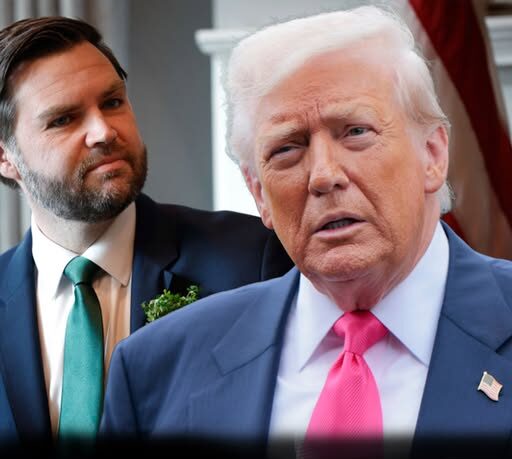
Dmitry Medvedev, the former president of Russia, said World War III “will undoubtedly begin “if [President Donald] Trump continues his insane course of criminally changing political regimes.”

“And any event could be the trigger. Any event,” Medvedev, who served as Russia’s president from 2008 to 2012 and prime minister from 2012 to 2020, warned.

During an interview with Russian media on March 3, the deputy chairman of Russia’s Security Council argued that “Trump made a grave mistake” by launching a large-scale attack on Iran, calling the country “an ancient civilization” that understands “how to wait,” according to The Express Tribune.

“With his decision, he put all Americans under potential threat,” he said, describing the move as “a war by the US and its allies to preserve global dominance.”

Anadolu Agency

The comments followed after The United States of America and Israel launched joint strikes on Iran on Feb. 28, killing the country’s Supreme Leader, Ayatollah Ali Khamenei.

“Now he is also a martyr. You can imagine the rest. And now there is no doubt that Iran will pursue the creation of nuclear weapons with redoubled energy,” Medvedev said.

According to President Donald Trump, the attack served the purpose of preventing Iran from obtaining nuclear weapon.

Iran didn’t stay silent. In response, they launched missiles and drones across the region, striking US assets and allied nations including Israel, Bahrain, Kuwait, Qatar, Jordan, and the United Arab Emirates.

With the global stability getting shaky, governments are calling on citizens to think ahead. They are not trying to cause panic, but to ensure that in case of conflict or disaster, households can be self-sufficient for a while.

We saw a clear example of this last year when the European Commission advised that households across the European Union have a 72-hour kit. This means stocking up on essentials such as water, food, and meds, along with items such as flashlights, batteries, and important paperwork.

These guidelines are a key piece of the Preparedness Union Strategy, a wide-reaching plan to toughen up the EU’s crisis response. Whether it’s a sudden cyber-outage or a natural disaster, the goal is for people and governments to pivot quickly. By making sure households are self-sufficient for a short window, authorities can focus on the heavy lifting—like repairing infrastructure and coordinating large-scale relief—without the immediate system-wide panic.

According to leaders, this is part of what they refer to as “culture of preparedness,” where knowing what to do in cases of emergency becomes second nature. Since the first three days following a disaster are most chaotic, being able to look after yourself during that period allows governments to get organized and reach the hardest-hit areas first without letting the entire system to collapse.

According to EuroNews, this plan also pushes to better teamwork across EU borders. By improving coordination between member states and beefing up early-warning tech, the EU is trying to stay ahead of the curve. Leaders say that if COVID19 taught us something is that crisis rarely happen one at a time, so we need a system that would allow us to juggle multiple crisis simultaneously.

“In the EU we must think different because the threats are different, we must think bigger because the threats are bigger too,” Hadja Lahbib, the Commissioner for humanitarian aid and crisis management, told reporters.

Roxana Mînzatu, the Commission for preparedness, speaking alongside her, added that the bloc is “not starting from scratch.”

Further, Lahbib posted on X, “Ready for anything – this must be our new European way of life.”

European Commission President Ursula von der Leyen also emphasized the importance of stronger preparedness measures.

“New realities require a new level of preparedness in Europe. Our citizens, our Member States, and our businesses need the right tools to act both to prevent crises and to react swiftly when a disaster hits,” von der Layen said in a statement.

While officials state that these guidelines weren’t issued in response to the crisis at the Middle East, they are relevant during times when global tensions rise.

According to an emergency preparedness plan by the Committee on Security and Defence drafted Feb. 25, 2026, large-scale crises – including armed aggression – could lead to “shortages and supply chain disruptions.”

The document states: “The Union should be prepared for large-scale, cross-sectoral incidents and crises, including the potential for armed aggression affecting one or more Member States.”

The plan continues, “In the event of armed aggression and hybrid warfare, military forces would need civilian assistance, including to ensure the continuous functioning of the state and society.”

In the video she posted on X, Lahbib highlighted some of the must-haves for a home emergency kit. Basically, she pointed to the items you need in order to survive on your own for several days in case emergency can’t reach to you right away in times of crisis.

While the emergency preparedness list can vary depending on the location, most include the same core essentials designed to provide food, water, safety, and communication.

Experts recommend stockpiling the following:

  • ID in waterproof casing
  • Canned food and energy bars
  • Bottled water
  • Matches
  • First-aid kit
  • Flashlight and extra batteries
  • Swiss army knife
  • Cash
  • Playing cards
  • Medication

These emergency supplies are meant to help households stay safe and self-sufficient during the initial phase of a crisis, when access to essential services such electricity, transport, or grocery stores may be disrupted. These items can help families cope independently while governments try to restore normal conditions.

While global tensions have people on edge about possible political conflicts, experts and leaders are quick to point out that being prepared shouldn’t be misunderstood as panicking. The goal isn’t to spread fear, but to build common-sense habits that would allow communities hdle a curveball without spiraling.

Keeping a stash of water, non-perishable food, meds, and batteries just ensures your family stays safe and comfortable during those first confusing hours of a blackout or emergency.

The hope is that households will never have to use these emergency kits, but having it means that if a disaster does strike, you will be ready to handle it calmly and won’t be caught off guard.

Please SHARE this article with your family and friends on Facebook.

Bored Daddy

Love and Peace
Risk of prostate cancer increases by 45% in men due to a common practice

0

In its early stage, prostate cancer typically causes no symptoms in the vast majority of men. The reason why is because this type of cancer tends to move slow and remains confined to the prostate for years, meaning it can progress quite a bit while being practically invisible to the person who has it. Sadly, this is a bit of a biological trick because you can feel 100% healthy while the cancer is already present.

This is the reason why doctors emphasize the importance of screening for prostate cancer, which could help catch the “silent” phase before it turns into a bigger problem.

Eventually, symptoms may appear, and they are mainly related to the person’s bathroom habits. You may notice a weaker flow, troubles getting started or stopping, or getting up multiple times during the night to use the bathroom. However, even if you are experiencing these symptoms, take a deep breath, because they don’t necessarily mean you are affected by prostate cancer.

More often than not, these symptoms are also related to Benign Prostatic Hyperplasia (BPH), which is just a fancy way of saying that your prostate got enlarged with age. This is a non-cancerous and non-life-threatening part of getting older. However, although BHP is not life-threatening, it’s still worth getting out checked by a professional.

It’s important to remember that urinary changes can be a result of a whole range of issues, including simple urinary tract infection (UTI), to bladder issues or even prostatitis (an inflamed prostate).

Since many different conditions mimic one another, when you experience symptoms like the ones described above, it’s best to consult a medical professional instead of trying to diagnose yourself. In case you notice persistent changes when it comes to your bathroom habits, the worst thing you can do is to ignore them and hope they would go away on their own.

Even when there is a perfectly harmless explanations for the symptoms, it’s always smart to grab a quick appointment with your doctor.

Health professionals can run tests, sort through the symptoms you have been experiencing, and rule out anything serious as prostate cancer. When you get medical advice early, it leads to two major things: it gives you a piece of mind if the cause is benign, and it ensures that if the condition is more serious, you caught it in its early stage when the chances of fighting against it are highest.

According to the American Cancer Society, the numbers tell a pretty sobering story, that one in eight men will be diagnosed with prostate cancer at some point in their life. While the good news is that most cases of prostate cancer are highly treatable, the disease is still a major health hurdle. In fact, prostate cancer is the second-leading cause of cancer death in men, following lung cancer. This statistic should serve as a reminder that being proactive isn’t just a suggestion but a necessity.

Lately, researchers have noticed a worrying trend. Recent studies show that the likelihood of a diagnosis has jumped by nearly 45% in some populations, and the main reason is because many men either delay or entirely skip their screening appointments. When you avoid these tests, you also avoid the opportunity to catch the disease early and increase your chances of fighting against it successfully.

This is why medical experts and professionals urge men, especially those over 50 and those with a family history of prostate cancer, to stay on top of their screenings.

The doctor’s appointment usually starts with a simple PSA blood test that looks for prostate-specific antigens. If your levels are high, it could point to a group of health issues, including prostate cancer. Of course, these high levels don’t always mean a definite “yes” to a prostate cancer diagnosis, but they do tell doctors where to look next.

Medical professionals argue that a structured, nationwide approach to screening could help drastically improve how early we detect prostate cancer. When it’s caught early, it doesn’t only increase the survival rate, but also provide the patient with more options when it comes to treatment. It’s the most effective way to “bottleneck” the disease, preventing it from migrating beyond the prostate to other organs, according to Zero Cancer.

The confidence doctors have in the process of screening comes from massive, long-term research. The ERSPC study is the gold standard here. By tracking men for two decades across seven different countries, this study provided the long-term perspective needed to understand the true impact of screening. As one of the largest studies in medical history, its findings continue to shape how doctors approach prostate health today.

The results show that detecting prostate cancer in its early stage is the single most important factor in survival. Men whose cancer was detected early through screening had a much higher success rate for treatment and recovery than those who detected it in the later stages.

Early detection doesn’t only mean surviving. It also means you can skip aggressive and expensive treatments that are needed once the cancer spreads.

When you look at the bigger picture, the data suggests that regular screening can reduce the risk of dying from prostate cancer by about 20%.

While screening isn’t a preventative measure in a sense that it stops cancer from forming, it is the most effective tool doctors have for catching it when treatment works best.

This is why the medical community is so focused on encouraging men to stay on top of their check-ups and have honest conversations with their doctors about their personal health history

Getty Stock Image

The research was led by the scientists from Erasmus MC Cancer Institute at the University Medical Centre in the Netherlands. It included 72,460 men.

The results showed that around one in six men never attended their regular screening appointments. Those who did had a 23% lower chance of dying from prostate cancer.

“It may be that men who opted not to attend a screening appointment are care avoiders, meaning they’re less likely to engage in healthy behaviours and preventative care in general. This is the opposite behaviour of people who are perhaps more health conscious and are more likely to attend a screening appointment,” lead study author, Renée Leenen, M.D., Ph.D. explained.

“Our study identifies that men who were invited for screening, but do not attend screening appointments are at significantly higher risk of dying from prostate cancer compared to men who were not offered screening or accepted an invitation for screening.

“We need to better understand who these men are, why they choose not to attend appointments, and how to motivate them. This will help us to design population-based prostate cancer screening programmes that encourage higher rates of informed participation.

“Tackling attendance rates in this way could be a big factor in the long-term success of a national prostate screening programme.”

She emphasized the need to get to the reasons why men avoid these screenings.

Many European nations are now coordinating their population-wide prostate cancer screening programmes to boost attendance.

The new analysis also indicates that the overall benefits of prostate cancer screening may be greater than previously believed, with Dr Tobias Nordström, a Clinical Urologist at the Karolinska Institute in Sweden and a member of the EAU Scientific Congress Office, explaining:

“For countries around Europe that are planning to introduce a national prostate screening programme, this analysis focusing on attendance shows that men who participate in screening have a much-improved long-term benefit than what we’ve seen from previous studies.

“But it highlights a group of men who need our attention, as they’re more at risk of developing advanced prostate cancer and dying from it.

“We need to better understand why these men might actively choose not to participate in screening, despite being invited to attend, and how this behaviour is linked to worse outcomes when they get a diagnosis.”

Please SHARE this article with your family and friends on Facebook.

Bored Daddy

Love and Peace

Sudden confusion or difficulty speaking: when it’s more than just fatigue

0

A stroke occurs without warning. It happens “when blood flow to the brain stops, and brain cells in the area begin to die,” as per Healthline.

When a stroke happens, the clock is your worse enemy. It’s a situation when the blood flow to the brain is either abruptly cut or severely restricted, which basically starves the brain cells of oxygen and nutrients they need in order to survive. Since the cells start dying in mere minutes, one of the most important things to do in case of a stroke is to seek medical help as soon as possible. The faster you get treatment, the better the chances of preventing brain damage and actually making a full recovery. When it comes to strokes, there is no “wait and see” period, and time and speed are the only things that matter.

According to the guidelines for the Early Management of Patients With Acute Ischemic Stroke published by the American Heart Association (AHA) and American Stroke Association (ASA) in 2018, people treated with “a blood clot-dissolving drug within 4.5 hours of symptoms have a greater chance of recovering without major disability.”

In order to be able to act quickly in case you or someone else experiences stroke, you need to know what you are looking for. You need to recognize the red flags before they start happening.

As per the Stroke Association, some of those signs are:

Face Weakness: Check if the person can smile and whether their face and eyes drop.

Arm Weakness: Can the person raise both their arms and keep them in that position?

Speech Problems: Is their speech slurred? Do they speak clearly and understand what you say to them?

Time to call 999: If you notice any of this signs, seek medical help.

This test is known as FAST.

Although there are no warning signs that may indicate a stroke will happen, a 2020 study published in The Journal of Headache and Pain suggests that around 15% of 550 adult participants who had suffered an ischemic stroke experienced sentinel headache before.

Transient ischemic attack (TIA), often called a “mini-stroke” occurs when blood flow to the brain is temporarily blocked, causing stroke-like symptoms that typically last for a few minutes or hours. TIAs should never be ignored.

As per the research, these headaches started within seven days of a stroke and lasted until the stroke happened.

One-third of individuals who have experienced TIA will suffer a more serious stroke in the future.

Although a TIA can be considered a warning sign for a stroke, the number of people who suffer an acute stroke within 90 days after a TIA has decreased in recent years, as per a recent research published in Jama Network. This may be an indicator that the actions taken after a TIA help in reducing the risks.

Other symptoms that can help determine if a person had a stoke are:

Sudden Numbness or Weakness

One of the most telling signs that someone is experiencing a stroke is when one side of the body suddenly stops cooperating. This usually affects an arm, a leg, or the face. You might notice the person’s smile looks lopsided or one side of their face is dropping. When the person tries to lift their arms, one may feel heavy like lead, and just drifts back down. This happens because the stroke is “starving” the specific part of the brain that sends “move” signals to the muscles. In simple words, what happens is a localized power outage in the nervous system.

Confusion or Difficulty Speaking

Since the brain is the center that controls communication, a stroke can make language feel like a foreign territory. A person may suddenly start slurring their words in a way people do when they are intoxicated. They may also experience a situation where the words they use are real but their sentences don’t make any sense. Also, they may experience trouble to understand you, looking completely blank and puzzled at even the most simple questions. What happens is a disconnection between what they try to say and what their brain allows them to process.

Vision Problems

The fact that vision problems are a huge red flag is something that people often overlook, thinking that it is simply an issue with their eyes or that it is simply a migraine. However, a sudden “gray out,” blurred vision, or double vision in one or both eyes, is often an indication that something is going on with the brain’s visual center. It is not an issue with their eyes; it is an issue with their brain being unable to process what it is seeing. If an individual suddenly does not recognize someone they know or is unable to read what is on a screen in front of them, it is a major warning sign.

Difficulty Walking

Lastly, pay attention to sudden clumsiness or a loss of balance. A person having a stroke may experience dizziness, vertigo, or difficulty coordinating movements, which can make walking suddenly difficult. They may stumble, sway, or need to hold onto nearby objects to remain upright. If someone who was walking normally moments earlier suddenly cannot maintain their balance, it may indicate that the brain regions responsible for coordination and movement have been affected.

Why Immediate Action Matters

Recognizing these symptoms is the first step. Stroke is a medical emergency and once the symptoms appear, every second counts, so the prompt action that follows is crucial for saving the life of the person who has experienced a stroke. The sooner a patient is given medical attention, the better the chances of limiting the damage to the brain and preventing long-term disability.

Health experts often use the phrase “time is brain” to highlight the urgency. Since the interrupted blood flow to the brain leads to brain cells dying due to the lack of oxygen and nutrients, the more the treatment is delayed, the greater the risk of permanent damage of brain areas responsible for speech, movement, memory, and other essential functions.

Prompt medical treatment enables medical professionals to identify the type of stroke and immediately begin the appropriate treatment. In some types of stroke, medication can dissolve the blood clot responsible for the stroke and re-establish blood flow to the brain. In other types, medical procedures may be necessary to relieve the blockage and prevent further brain damage.

That is why health experts recommend that people should not take any stroke symptoms lightly and should not delay seeking medical attention, even if the symptoms seem minor and disappear within a short time. They may be indicative of a serious problem that needs urgent attention.

Making an emergency call immediately provides medical personnel with the best opportunity to act promptly. Quick treatment not only saves life but also increases the prospects of full recovery and return to normal life.

Conclusion

Understanding your risk factors and being prepared ensures you’re ready to handle an emergency.

Please SHARE this article with your friends and family on Facebook!

Bored Daddy

Love and Peace

*Disclaimer: Please fact-check with your doctor before acting on any of the information provided.

*This post is an update to a previous one, as some of the information shared earlier was found to be misleading such as the writing that the body sends signals of a stoke a month before it happens.

Actor James Ransone dies of suicide aged 46 as police release new heartbreaking details

0

James Ransone, best known for playing Ziggy Sobotka in The Wire, one of the most acclaimed series of all time, has died aged 46.

According to the Los Angeles Medical Examiner, James Ransone died of suicide.

Ransone also appeared in a number of films and series, including Prom Night, The Black Phone, Law & Order and CSI: Crime Scene Investigation, the 2008 miniseries Generation Kill, 2019’s It Chapter Two, and Poker Face among the rest. He was married to Jamie McPhee with whom he had two children.

McPhee took to Instagram to honor her husband. She posted a photo of her and Ransone captioned, “I told you I have loved you 1000 times before and I know I will love you again. You told me – I need to be more like you and you need to be more like me – and you were so right.

The post added: “Thank you for giving me the greatest gifts – you, Jack and Violet. We are forever.”

Mario Anzuoni/Reuters

McPhee also shared a link to a GoFundMe page for the National Alliance on Mental Illness.

During his life, he spoke openly of the sexual abuse he suffered from a tutor while growing up in Maryland. In an Instagram post from 2021, he wrote of the abuse and said it led to “a lifetime of shame and embarrassment.” According to the actor, the incident triggered his addictions to alcohol and heroin, according to the BBC.

Fans and friends honored Ransone on the social media.

Wendell Pierce posted on X, “Sorry I couldn’t be there for you, brother. Rest in Peace James Ransone.”

Director Spike Lee shared a photo of them together and wrote on Instagram: “Rest In Peace To My Dear Brother, MR. JAMES RANSONE. We Rocked Together On RED HOOK SUMMER And INSIDE MAN.”

Sean Baker, the Oscar-winning director of Anora who worked with Ransone on the films Starlet (2012) and Tangerine (2015), wrote, “I’ll miss you dearly my friend.”

Patrick McMullan/Avalon

Madeleine McGraw, who starred with Ransone in The Black Phone and its sequel, remembered Ransone as “such a beautiful soul” and “so genuinely supportive.”

“I’m struggling to put into words the profound emptiness I’m feeling since learning of James Ransone’s passing,” she wrote on her Instagram story. “My heart is absolutely shattered.”

Natasha Lyonne, who starred alongside Ransone in Poker Face, wrote, “Love you with everything I got and holding our beloved brilliant peejo with grace gratitude and cosmic peace into this life and the next – family forever.”

A GoFundMe has been established to assist Ransone’s wife and two children.

Rest in peace, James Ransone.

Please SHARE this article with your family and friends on Facebook.

Bored Daddy

Love and Peace

Kicked out of home at 14, teen bought a rundown house for $5 and refused to be defeated

0

The teenage years are supposed to be one of the best years in a person’s life. Aren’t those the times when we should be carefree, make friends, hang out with those we love, and simply enjoy life the best we can? In theory, yes. But in reality? Teenage years can be extremely difficult for some people, and I’m sure most of us are well-aware of that. The reasons are various. The inability to make friends, to be accepted by the peers, or simply being part of a dysfunctional family.

For a fourteen-year-old teen named Tommy Reed, it was the later.

The moment he reached this milestone, his stepfather decided he no longer belonged in the home. Not only there was no birthday cake, no celebration, no family or friends invited, but he was also delivered the news that changed his life forever. His stepdad told he he needed to move out, right there and then.

The worst part was that Tommy never deserved to be treated like that. He was an incredible young man who did chores around the house, had good grades, and was well-behaved. But because of some reason, sometimes a minor thing like a broken plate, his stepfather despised him. And now that he reached 14, his stepdad believed he could do alone in life, because he was old enough to figure his life out all by himself.

And just like that, Tommy Reed found himself standing behind a slammed door on a cold night in a tiny town in Ohio.

Tommy looked to his mother and prayed for a miracle, a last-minute intervention from the woman who gave birth to him. But she didn’t say anything, not even a single word. And at that moment, her silence hurt him more than his stepfather’s shouting.

Was it even possible for a mother to let her child be treated that way?

What Tommy was left with that night was his backpack, a small flashlight, and $12.63 in his pocket.

He was scared, alone, and had nowhere to go.

He wandered through the streets of the small town for hours.

He walked past the humming gas stations where weary night-shift workers manned the counters. He walked past empty parking lots and the skeletal remains of old factories.

Out of the blue, he was homeless.

Tommy reached the outskirts of his hometown where streetlights became less frequent and weeds began to sprout through the cracked sidewalks.

And that’s when he saw it.

A small house sat by itself at the end of a street no one walked through. The house looked as though it had been abandoned for years. Its roof was sagging in the middle in a rather dangerous way, and the porch itself appeared to lean forward.

All of the windows were already boarded up, and the yard looked like it hadn’t been touched in years.

But something caught Tommy’s eye.

In the yard, there was this piece of wood that said the house was city property, condemned, and the the fee was just $5.

Tommy read that more than once, because he thought it was a joke. How can a house cost just $5?

Well, it turned out it wasn’t a joke after all.

Apparently, the city had this program to try to get rid of houses that are abandoned or whatever. If you’re “insane” enough to take one on and fix it up, you can transfer it for five bucks.

I guess most people would have seen that sign and thought it was like a disaster waiting to happen.

But Tommy didn’t. All this teenager saw at that point was a roof, and more importantly, a place he couldn’t get kicked out of.

Tommy walked into City Hall the first thing in the morning.

He waited in line, and when he reached the front of the line, he took out $5 from his pocket and said, “I want that house.”

The woman behind the counter laughed, and she probably waited for a punchline, but Tommy was dead serious.

She starred at him for a while and then went through the forms of the government program. She read the papers over and over again, and it didn’t say that the person who wanted to buy the place needed to be of certain age as long as they signed the liability waiver.

She then started making phone calls, a bunch of them, and then other people working in the City Hall came. They all went through the forms once again. Some of them questioned if a 14-year-old could in fact buy that house, but others seemed to be relieved someone was even willing to take that old ruin off the city’s hands.

And just like that, Tommy got himself a house. If you could even call it that.

He was excited, but what he didn’t know was that this purchase won’t fix his problems, at least not right away.

When he returned to the house, he started realizing that it was called a house just on paper, since it definitely didn’t resemble one. At least not one suitable for a human to live in.

The roof leaked, and when it rained, it filled with water, so Tommy had buckets all over the place.

The only place that wasn’t wet was a tiny corner, so Tommy slept there during the night.

The thing about Tommy, however, was that he knew how to fix things. And it wasn’t because he wanted to know it, but because he was the one who did it back home. So, the first thing he did was to try and fix the windows with the scrap wood that was all over the room.

He became obsessed with fixing the place as much as he could.

But then there was another problem. He didn’t attend school during the time, so when the school noticed he was missing, a truant officer came to the house with the school counselor, Mrs. Patterson.

Mrs. Patterson probably believed that she would be dealing with a runaway kid from a bad neighborhood.

What she got, however, was a skinny fourteen-year-old kid doing his best to fix up a house.

There were stacks of salvageable wood, tools that he apparently borrowed from somewhere, and scuff marks on the walls.

Once she realized what was going on, Mrs. Patterson sat down and talked with Tommy instead of contacting child services right away.

Before she knew it, she got him into a vocational work-study program.

He would go to school in the mornings, and then he would be able to learn from real-life wood workers.

Being as bright and as determined as he was, Tommy said yes, and it wasn’t long before he learned a bunch of skills, including carpentry, plumbing, and even some basic electric work. He was willing to learn everything as long as there was someone to teach him.

It did take some time, but things finally started to change for the better. Tommy tried and failed, because he wasn’t that skillful yet, but he did manage to fix some of the basics in the house.

Out of nowhere, the people who lived nearby and knew that house existed but never did anything about it, wanted to help Tommy.

One day, an older man, Mr. Jenkins, approached Tommy. He was carrying a toolbox and said he worked as a carpenter in the past. When he learned about Tommy from a neighbor, he wanted to see it himself how a teenage boy was trying to fix a house on his own.

Mr. Jenkins started visiting Tommy almost daily, and helped him with the work.

For the next four years, Tommy’s place resembled more like a construction site than a real home. There were always tools around, and always something to be fixed. But for Tommy, it was the only place in the world where he felt safe.

Little by little, things fell into place. By the time he was sixteen, he’d managed to get the plumbing working well enough to have running water in the house. A year later, he figured out the electrical system, and the lights stayed on for the first time in his life.

When he graduated from high school at the age of eighteen, he surprised many people by graduating at the top of his class. In his valedictorian speech, he said something that everyone in the room remembered: some people were given a future, but some people had to build one for themselves.

When the city inspectors came in, for who knows which time, they finally gave Tommy thumbs-up. Some of them couldn’t even believe it was the same house they had written off.

Tommy didn’t stop there. Over time, he became one of the youngest licensed foster parents in the state.

Over the years, dozens of teenage boys came and went in that house. Many of them had nowhere else to turn, but Tommy gave them a place to stay. Why? Because he knew firsthand what it was like to be homeless and not loved.

Please SHARE this story with your family and friends on Facebook.

Bored Daddy

Love and Peace

Jim Carrey addresses conspiracy theory he was replaced by a ‘clone’ after a man claimed to impersonate him

0

When it comes to the world of celebrities, it’s safe to say it’s filled with glamour, luxury, and… plenty of rumors and conspiracy theories.

Most recently, a wild clone conspiracy theory has been circulating around the social media and it involves Jim Carrey and his recent appearance at the 51st César Awards in Paris. Carrey received an honorary award for his contributions to the film and television industry and gave his acceptance speech entirely in French. He also thanked his partner, Min Ah, in a rare joint appearance.

However, while many found the moment adorable, others claimed it wasn’t Carrey himself who accepted the award, but a clone.

People were quick to share their opinion and many did agree that the actor didn’t resemble himself, sharing side-by-side photos of him from the ceremony and his older days.

One fan wrote on X: “Yeah… umm NO! This is NOT Jim Carrey! Jim Carrey has dark brown eyes for one… this copycat/clone creature has light eyes.”

Another person said he believed that the actor was actually cloned years ago. “I’ve been talking about human cloning for a long time and I’m glad to see it finally gain some traction,” they wrote. “Jim Carrey was cloned years ago. Something has changed behind the scenes to allow us to see unfinished and malfunctioning clones.”

Someone, who also agreed that the Mask star didn’t resemble himself, said it could be just a stunt for an upcoming movie. “That’s not Jim Carrey and its all a publicity stunt for a movie he’s in soon or a documentary.”

The conspiracy theory spread like a wildfire, and I’m sure you’ve stumbled upon it, because it was practically all over the Internet, that it triggered a reaction from the actor himself.

Speaking to Variety, Gregory Caulier, the general delegate of France’s César Awards, said, “Jim Carrey’s visit has been planned since this summer. From the outset, he was extremely touched by the Academy’s invitation.”

Caulier added: “Eight months of ongoing, constructive discussions. He worked on his speech in French for months, asking me about the exact pronunciation of certain words. He came with his partner, his daughter, his grandson and 12 close friends and family members. His longtime publicist accompanied him. His old friend Michel Gondry, who has made a film and two series with him, was there, and they were delighted to see each other again.”

Addressing Carrey’s physical appearance, Caulier said, “For me, it’s a non-issue. Just remember his generosity, his kindness, his benevolence, his elegance.”

Carrey’s representative also confirmed that the actor attended the ceremony in person. In a statement to People, they wrote, “Jim Carrey attended the César Awards, where he accepted his Honorary César Award.”

Jane Erin Carrey, Jim Carrey, Min Ah and Riley Jackson at the César Awards on Feb. 26, 2026. Credit: Francois Durand/Getty

What triggered the rumors in the first place, according to the netizens, was the lighter color of his eyes, and the fact he signed autographs with his right hand, although he’s reportedly left-handed.

What added fuel to the fire was drag queen Alexis Stone, known for celebrity impersonations.

The British makeup artist, whose real name is Elliot Rentz, has carried out many similar stunts over the years, famously attending fashion week events disguised as some of Hollywood’s most beloved stars.

In an Instagram post on Sunday, Alexis claimed to have been at the Cesars, sharing a photo of Jim with the caption: “Alexis Stone as Jim Carrey in Paris,” the Mail reported.

Stone also posted an image of a prosthetic face mask and false teeth which, although seemingly AI-generated, managed to fool many celebrities.

A number of celebs commented on Alexi’s post. Meghan Fox wrote, “I can’t handle any more stress right now I need to know if this is real.”

Lisa Rinna wrote: “You blow me away.”

Fans of Stone also commented on the post he shared about impersonating Jim Carrey at the awards.

“We demand proof of life from Jim Carrey !!!!” one person wrote.

Other people weren’t buying it. “Are you telling me that the Cesar Awards gave Jim Carrey a Honorífic Award, and The person who went to receive it was a some random Guy, no offense, that’s bull… That’s disrespectful and i Don’t believe it as the truth…” another person wrote.

Carrey attended the ceremony with his daughter Jane, 38, her teenage son Jackson, and his companion, Min Ah. He mentioned each of them in his acceptance speech.

“Thank you to my wonderful family, my daughter Jane, and my grandson Jackson. I love you now and forever. Thank you to my sublime companion, Min Ah,” he said, as his daughter, his grandson, and his partner received standing ovations. “I love you, Min Ah. And finally, thank you to the funniest man I have ever known: my father, Percy Joseph Carrey who taught me the value of love, generosity, and laughter.”

Please SHARE this article with your family and friends on Facebook.

Bored Daddy

Love and Peace

I lost one of my twin sons during childbirth – and then one day, my son saw a boy who looked exactly like him

0

Maybe I’m just biased because I’m a mother myself, but I believe it’s true when people say that there is no greater joy in life of that of becoming a parent. The little bundle of you you welcome into your life simply changes it forever, and it’s always for the best. yes, there are sleepless night, dealing with tantrums… and then come the moody teenagers. But at the end of the day, it’s all worth it.

When I learned I was pregnant, I felt like the happiest person alive. Then came the news that I was carrying twins, and just like that, the happiness doubled. However, my joy didn’t last long.

Only one of the babies survived during childbirth, and although I became a mother and it was supposed to be the happiest day in my life, my heart was aching at the same time.

There were people who tried to console me by saying that my son was still a baby, and that I didn’t even get the chance to hold him, but what they didn’t know was that it didn’t make my pain any easier to bear.

For five long years I went to sleep wondering how my son would look like. Was he going to be identical to Stefan? They were twins, so I guess he would, but I somehow learnt to leave with the thought that I would never learn that.

Whenever I had Stefan in my arms, I somehow tried to make piece with the absence of my other child. But I simply got used to mothering around the missing piece. You’d be surprised at what the human heart can get used to, because grief, when it doesn’t have another choice, turns into routine.

And then, on an ordinary Sunday at the local playground we visited each week, everything I thought I knew unraveled.

The Day They Told Me

My pregnancy was complicated from the start. By the time I was twenty-eight weeks pregnant, my blood pressure was so high that my doctor advised bed rest. I mostly spent my days lying on my side and talking to my unborn babies. I somehow knew they could sense me and hear my words.

“Hold on, boys. Mommy’s right here.”

I wanted them to know that despite everything, I was fighting for them.

I had my boys three weeks premature in what felt like whirlwind of white lights and doctors running around me. At that moment, I felt like I was part of some medical drama, because honestly, the experience was far less peaceful than I had ever imagined. The nurses were rushing, and there was a doctor who told me how to breath and another one who told me not to push yet.

Then out of the blue, I heard one of the doctors say, “We’re losing one.”

After that, everything dissolved.

When I opened my eyes, the room was silent. My body was hurting, but I didn’t care. I was quick to look at the bassinets and noticed there was only one child.

Dr. Perry was in the room, and from what his face looked like, I knew he was going to deliver devastating news. Sadly, I was right. He said that everything moved too fast and they did everything to save my son, but they failed.

I remembered I started crying, and then my family entered the room one by one. I don’t think there was a single person who didn’t try to comfort me, but you don’t comfort a mother who had just lost a baby.

I never saw my other son. In those moments, I am not even sure if they offered me to see him. I just signed some paperwork, and that was it. I don’t know why, maybe because I was confused and affected by the loss, but I never questioned anything. I simply trusted them when they said my boy was gone.

Stefan became the center of my world and I did my best not to raise him in the shadow of the brother he never met. It was hard, but I never let Stefan notice I was still grieving.

Learning to Live With Half

Raising Stefan was both joy and ache. He was a curious little boy who loved trucks and dinosaurs, and whenever he played with some, I wondered if my other child would love those same toys, or maybe he would be into something entirely different.

Whenever Stefan’s birthday rolled around and I saw him blow out the candles, I couldn’t stop thinking that there were supposed to be two children celebrating. I knew that imagining those scenarios was making my life even harder, but it wasn’t something I could fight against easily.

What I tried to convince myself was that in order to finally heal, I shouldn’t have looked back.

The Playground

One Sunday morning, I took Stefan to the nearby playground. We visited it often, since it was always filled with kids his age he could make friends with and have some fun. Honestly, nothing seemed out of the ordinary, but it turned out everything about that day was all but ordinary.

At one point, Stefan was on the swing, laughing and having a blast, when his little face turned serious all of a sudden. He looked at a boy around his age at the opposite side of the playground.

“He was in your belly with me,” Stefan said.

I knew kids say funny things sometimes since their imagination is running wild, but he never knew I was carrying twins. He was just too young to understand that. But, something about Stefan’s excitement over that boy made me look.

The boy had curls, just like Stefan’s, but many children do. But there was also a slight arch on his right eyebrow that felt too familiar. And just like Stefan, this boy kept biting his lower lip. However, it wasn’t until he turned fully to us that my heart dropped.

The boy had a crescent-shaped birthmark curved along his collarbone, identical to the one Stefan had.

There were too many similarities between these boys to think it was just accidental.

Was my mind going crazy because even five years after his death I couldn’t come to terms with the loss?

The boys stood next to each other, looked at one another, and then started laughing all of a sudden. To me, no matter how crazy it sounded, it felt like they recognized each other.

In the meantime, a woman in her forties, who was with the other boy, was watching from the bench. I started walking towards her, and then it hit me. I’d seen that woman before.

“You worked at St. Matthew’s,” I said as I approached her. “I delivered twins there. Five years ago.”

And then, a long, long silence between us two.

“My son had a twin,” I said. “They told me he died.”

After a few moments that felt like an eternity to me, the woman looked straight into my eyes and said, “He wasn’t stillborn. He survived.”

The world didn’t end as anyone would assume it would. No explosion, no dizziness, just the plain truth.

For five long years I was grieving for a child who was alive. He and his brother lived in the same city, and unaware of each other.

It was strange to me that the woman spilled the truth just like that, but maybe, just maybe, she knew there was no way to hide it.

“I want a DNA test,” I said, and to my surprise, she nodded.

What Was Stolen

From that moment on, everything felt surreal, and why wouldn’t it.

We hired a lawyer who requested hospital record to be reopened. There were plenty of questions, and I felt guilty of not asking them when I should have. Authorities started an investigation, which is still ongoing, and in the meantime, the DNA results came, and as I knew already, they just confirmed that Eli was my son.

I felt mix of emotions. I don’t think there are words that can ever describe that feeling of having your child returned to you after years of believing he was dead. At the same time, I was angry about the years they stole from me and him.

The system failed us. What we received as an answer was a bunch of legal jargon, something about gaps in the hospital procedures, and a lot of phrases used to make the unthinkable sound scientific and clinical.

The next time I saw Eli was in a small room. I didn’t hold him, because there were lawyers there, explaining things to me, and a social worker who sat at the back of the room and just watched. I wasn’t certain what was to be seen. The truth was there, and those legal things bothered me.

Even when I found my son, nothing was as simple as I thought it would be. To me, he was my lost son, but to him, I wasn’t his mother. He spent the first five years around another woman he called mom. We all went through long therapy sessions, court sessions, and custody arrangements that lasted like forever.

It did take some time, but we finally took Eli home.

When I think about it, I realize that the encounter at the playground was pure serendipity. And no, my story isn’t about loss, but about the ways life works, and most times, those ways are simply incredible.

Please SHARE this article with your family and friends on Facebook.

Bored Daddy

Love and Peace

The father who wouldn’t let go: Love and loss in the Vargas tragedy of 1999

0

It was in December of 1999 when the Vargas State (today La Guaira), Venezuela, witnessed a catastrophic tragedy that claimed the lives of tens of thousands of people, destroyed thousands of homes, and led to the complete collapse of the state’s infrastructure.

Between December 14th and 16th, the entire area experienced heavy rainfall. It mainly affected the north-central coast of Venezuela, especially the state of Vargas. Experts argued that more than 911 millimeters of rain fell during this period, which is more than the usual annual rainfall for the region.

Unfortunately, this led the to the already unstable slopes of the coastal mountains to become saturated. This also included the Sierra de Avila. The area had already been known to be highly prone to landslides because of the steep mountains and the unstable clay soil. Since the heavy rains wouldn’t stop for 48 hours, they soaked the ground and it gave way for thousands of small slides to quickly turn into fast-moving rivers of mud, rocks, trees, and massive boulders, according to reports from the tragic day.

Vargas state in Venezuela seen devastated by a landslide in December 1999, from a video posted on August 2, 2022 | Source: YouTube/Journeyman Pictures

The first major flows were recorded on the night of December 15. Through the night and into the morning, there was a series of waves of mud and floodwater surged towards the sea. Entire hillsides liquefied. Rivers overflowed, carving new channels several meters deep into the alluvial fan deltas along the coastline and covering them with thick layers of sediment. Later, less dense floodwaters inundated the region, cutting even deeper into the newly created flood deposits. In fact, geologists later calculated that some of these floodwaters traveled at the speed of up to 14.5 meters per second.

Leidy Crespo, a survivor from the Llano Adentro neighborhood, recalled the morning of December 16. “It was like being in a movie. I’ll never forget it,” she said of the massive waves of mud and debris that swept everything away.

The aftermath was dead bodies buried under the mud. “You would be walking, and a buried body would appear. I can still remember the cries of people looking for their family members,” she recounted.

In the aftermath of the Vargas tragedy, thousands of people were left homeless, from a video posted on August 2, 2022 | Source: YouTube/Journeyman Pictures

One story from this horrific event broke the hearts of millions of people worldwide.

Rescue operations started immediately, but the conditions were overwhelming. Communication network was down, the roads were all covered in mud, and a number of places couldn’t be reached at all. Firefighters, soldiers, volunteers, and local residents did all in their power to save as many people as possible with the limited resources they had. Many recalled using only their bare hands to dig through the mud, which was still highly unstable, in desperate attempts to spot any signs of life.

Among the survivors was a desperate father buried in the mud almost up to his neck. When rescuers rushed to assist him, he refused to be safe. According to the firefighter who rushed to his rescue, the father said, “Don’t take me out.”

He then uttered something heartbreaking: “It’s just that I’m holding my two daughters by the hands.” 

His daughters were dead under the mud, and he just couldn’t let go of them, although he knew they were gone.

@bbcnewsmundo

“El día que la montaña se tragó al mar…” 🇻🇪 Hace 25 años Venezuela vivió una de las peores catástrofes de su historia. Luego de un período prolongado de lluvias torrenciales, una serie de aludes arrasó con poblaciones enteras en el estado costero de La Guaira (antes estado Vargas) a finales de 1999. Hubo más de 240 mil afectados y el número oficial de fallecidos nunca llegó a conocerse. El país quedó profundamente marcado por este suceso que además coincide con el aniversario de la fundación de la República Bolivariana de Venezuela. #BBCMundo #Venezuela #Vargas #LaGuaira #TragediadeVargas

♬ sonido original – BBC News Mundo

His story touched the hearts of many, and reminded everyone that father’s love is greater than life.

Eventually, the father was taken out to safety, but his story serves as a reminder of the sacrifice a parent is willing to do for their children.

The National Housing Council (Conavi) reported that rebuilding costs reached $830 million, though some official sources suggest the true figure may be nearly double. The financial damage was huge, and today, nearly 26 years after the tragedy took place, residents of Vargas state still live with the emotional aftermath.

The documentary Cuando El Cerro Se Vino Abajo (“When the Hill Came Down”), by photographer Daril Jiménez, who directed it, honors the survivors. During filming, he captured moving stories, including that of a man who lost his wife and son, and Crespo, still a resident of Vargas, who reflected, “We had to start over from scratch, but we’re still here.”

What happened in Vargas was a wake-up call. It reminded many, especially governments, that extreme weather and vulnerable landscapes make a deadly combination. Without proper planning, monitoring, an preparedness, natural hazards can turn catastrophic in the blink of an eye.

Please SHARE this article with your family and friends on Facebook.

Bored Daddy

Love and Peace