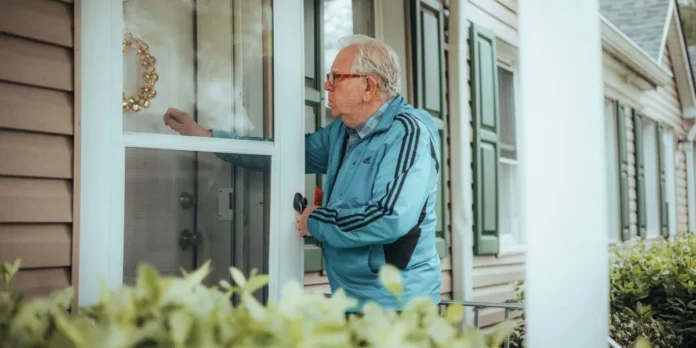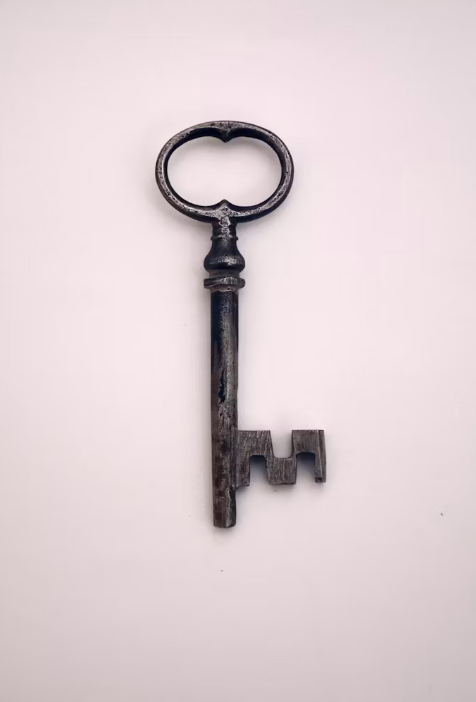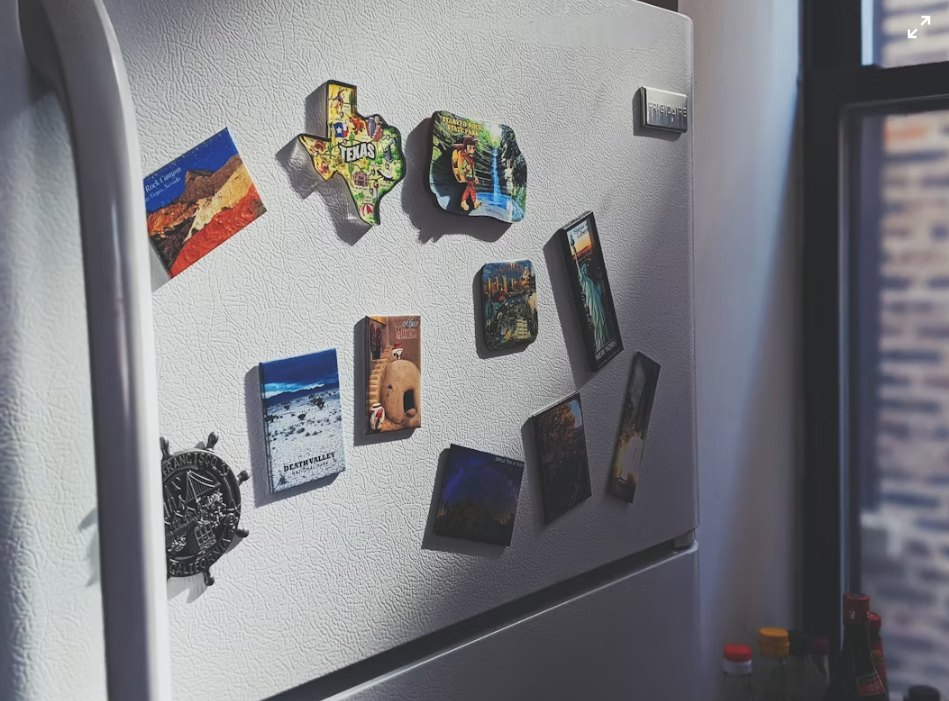

This kind of visual puzzle is a good test to prove whether you really are observant or not. Looking at the picture presented below, one may assume that there is nothing peculiar about it, since it depicts what seems to be an ordinary elderly couple relaxing in bed against the background of the regular bedroom interior. It does not seem to pose any mystery; however, there is something interesting to discover for those who look closely enough.
The task itself sounds rather simple. You only need to spot four objects in the picture: a lamp, a comb, a nail, and a pill. Some may manage to notice one or two, but it takes some time to identify all four objects.
The lamps are definitely the easy ones to find in the group; they’re already sitting right next to the bed, so you don’t really have to do any searching. The comb isn’t so hard to spot either, after you start looking around the area below the bed. Most people can cross those items off their checklist in a matter of seconds.
However, the nail is probably going to be much more difficult to spot, as it blends so perfectly into the design of the illustration that you’re likely to skip straight past it unless you pay careful attention to what you see. It certainly won’t jump out at you the way other objects would.
Finally, we have the pill.
This tiny little detail is usually why people end up stuck for several minutes. he pill is placed within the picture in such a way that it almost goes unnoticed by your brain because it tends to filter out the irrelevant details as just background elements. Though you may already know the general area where it is hiding, you can’t help but fail at identifying it, as it camouflages with the other shapes and colors surrounding it.
This is what makes this kind of puzzle so cool. It exploits our natural tendency to process information in a certain way. Naturally, our mind goes for the “big picture” at first – we see faces, furniture, and vibrant colors. Because of this fact, our brain filters out all small details, which seem irrelevant against bigger shapes.
Those who create the puzzles have perfected this art form. They understand the best ways to hide an object is by nesting it within a pattern or positioning it next to an identical color so that it blends seamlessly with other parts of the image. In theory, it was always there in front of you; however, your mind considered it irrelevant and blocked it from your consciousness.
If you are someone who has trouble with these kinds of puzzles, there are some techniques that can come in handy.
The first thing to do is slow down when scanning. Your eyes are likely to jump aimlessly all over the place if you’re moving too quickly, which will cause you to overlook the details. Instead, try slowing yourself down and looking at the picture one section at a time.
Another trick is to stop looking for “objects” and start looking for “shapes.” Instead of asking yourself, “Where’s a pill?” look for anything that looks just a little bit “off” or out of place compared to the lines around it.
You must also consider that sometimes, these objects will not always appear as their “ideal” form. It is possible that they could be partially obscured, distorted, or even drawn from an unusual perspective. In the case of the pill, you may not even recognize it as a pill until your brain “clicks.”
If you’re still stuck and just want the answer, here’s the breakdown.
The lamps are right there on the tables next to the couple. You’ll find the comb down by the foot of the bed. The nail is worked into the furniture or the trim of the room. As for that pesky pill? Check the right side near the bedside table, right by the glass or the cup.
Once you finally spot it, the reaction is always the same: “How on earth did I not see that?”
So, did you get all four without help?
Please SHARE this article with your family and friends on Facebook.
Ivanka Trump has always been one of the closest associates and allies of her father Donald Trump. During his first presidency, she joined him in his endeavors as a senior advisor.
After many years in politics, Ivanka chose to completely withdraw herself from the Washington life altogether. In fact, one of her books revealed that Donald Trump requested help with a political issue post her exit, but she refused to get involved.
Throughout the campaign years, Ivanka remained deeply involved in her father’s political efforts. She traveled alongside him during the election trail and became one of the campaign’s most recognizable voices, including during the Republican National Convention in 2016. Managing such a public role while under constant scrutiny proved demanding.
“My life is chaotic right now,” Ivanka told People Magazine in 2020. “I’m exhausted 90 percent of the time … Being a mother is the most rewarding experience, but also the most wild and stressful.”
Despite the fact that this job required long working hours and frequent media appearances, both Ivanka and several other family members from the Trump clan volunteered to become senior advisors without being paid anything for their work. However, in the meantime, she received negative feedback from those who felt she could have taken a stand against certain policies promoted by her father.
As the administration moved forward, some relationships from her previous social circle reportedly began to disappear.
Shutterstock/ mark reinstein
Among them was Chelsea Clinton, who had once been seen attending events and social gatherings with Ivanka. However, once the Trump administration took office, the friendship appeared to end, despite Ivanka previously identifying as a Democrat herself.
In 2018, Clinton, speaking with Stephen Colbert, explained: “I have not spoken to her in a long time. It’s clear that she has supported policies and decisions that I don’t agree with. I’ve been very vocal about my opposition to President Trump.”
She added: “I think anyone who works for the president certainly should expect to be scrutinized for not only whatever decisions she or he is making, but also for whatever decisions the White House is making on any given day.”
Chelsea Clinton told Watch What Happens Now in 2020 how she really felt. She said, “I have not spoken to her since 2016 and I have no interest in being friends with [her]. We were in touch at the beginning of the [2016] campaign but it’s just really hard when there’s someone who’s actively embracing their candidate — whether it’s their father or not … I don’t want to be friends with someone like that,” Clinton added.
Ivanka Trump reportedly struggled with the way some friendships changed during her White House years. According to the New York Post, she felt disappointed that several people she once considered close friends distanced themselves from her while she worked in her father’s administration.
“Ivanka hated all the criticism and the threats and was unhappy about how a lot of their friends turned their back on them,” an unnamed source said. “She feels it’s bad for her family … and negative in general in her circle of friends. She wants as normal a life as she can arrange for her and her family.”
Instagram/IvankaTrump
On the other hand, her business interests also met with backlash. Some of the biggest brands that carried her brand, such as Nordstrom, Burlington, and Neiman Marcus, withdrew their support following her father’s election. The fashion brand, established by Ivanka in 2011, emphasized professional yet affordable clothes for women; however, due to the ongoing controversy, Ivanka decided to terminate her brand in 2018.
Further controversy was unleashed through Stephanie Grisham, White House Press Secretary at the time, who released her memoir, I’ll Take Your Questions Now. In her memoirs, she described Ivanka and Jared’s relationship in the administration rather negatively, suggesting that they frequently behaved like royalty in the White House.
One of the most discussed episodes was connected with the state visit to the United Kingdom where Ivanka and Jared were trying to force an official meeting with Queen Elizabeth II despite protocol regulations. As stated by Grisham, Ivanka and Jared wanted to attend the meeting with the President and his wife, but certain difficulties made it impossible.
Grisham later wrote that the incident made her feel as though “Jared and Ivanka thought they were the royal family of the United States.”
In the memoir, Grisham also claimed Ivanka frequently referred to Donald Trump as “my father” during official meetings, while describing Kushner as someone who inserted himself into projects but distanced himself whenever problems emerged.
Michael Kovac/Getty Images
Currently, Ivanka resides in Florida with her husband Jared Kushner and their three children, concentrating on their family life. Those familiar with the family maintain that although Ivanka’s ties with her father are very tight, any guidance or views on politics are expressed privately.
In 2025, author Michael Wolff offered new details about the relationship between Donald Trump and his daughter Ivanka Trump in his book All or Nothing. Wolff, who has written several books about Trump and his political career, suggested that Ivanka is no longer willing to publicly support her father in every controversy.
One of the book’s most discussed claims revolves around accusations of antisemitism directed at Trump following the October 7, 2023 Hamas attack on Israel. According to Wolff, Trump struggled to give what many considered a clear and unwavering show of support for Israel, which reportedly created concern within his campaign team.
The author claims Trump then turned to Ivanka and her husband, Jared Kushner, both of whom are Jewish, hoping they would publicly defend him. Wolff alleged that the campaign initially wanted Kushner to issue a statement backing Trump and rejecting accusations that he was antisemitic.
However, according to the book, Kushner repeatedly avoided becoming publicly involved. Wolff wrote that campaign officials eventually lowered their expectations and sought a simpler statement declaring that Trump was not antisemitic.
As quoted in reports about the book, Kushner allegedly responded: “No, Ivanka and I aren’t going to do that. We’re not going to go and put our names on something and get in the middle of things. That’s just not what we’re going to do this time.”
The episode reportedly highlighted how much Ivanka and Jared have stepped back from direct political involvement compared to Trump’s first term in office. While the couple still maintains a relationship with him privately, Wolff’s account suggests they are far more cautious about attaching themselves to political battles publicly.
According to The Guardian, the publisher described All or Nothing as a broad inside look at Trump’s political comeback, covering everything from legal troubles and assassination attempts to campaign drama and his eventual victory.
Please SHARE this article with your family and friends on Facebook.
The nurse had just handed me my baby, and it was supposed to be a magical moment, you know, like the one every new mother tells you it should be, but at the time, I could barely keep my eyes open. My entire body ached and I felt like I had been ran over by a train. Honestly, I even felt a bit disappointed in myself for feeling that way. The room still had that sharp, sterile smell of a delivery ward, my hands were shaking from the adrenaline, and I was so exhausted that all I wanted right there and then was a hand to hold.
When I looked over at Daniel, however, it was clear he didn’t even occupy the same planet as I did at that point. He sat there staring into the bluish glow of his cell phone screen, mindlessly scrolling.
I just watched silently for a few minutes as his thumb was in motion. After a while, he placed his mobile in his pocket and stood up, rattling with his car keys in his hands. No peck on the cheek; no, he simply stood near the door and announced, “Listen, tomorrow morning, you’ll be discharged. You will have to take the bus back home. I’m taking my family out for hotpot tonight to celebrate.”
I smiled because I though he was joking, or at least hallucinating, because who in their right mind would say something like that moments after his baby was welcomed into the world?
“What did you just say?” I asked.
Well, before he could even answer, there she was, his mother Elaine. She stormed into the room straight from the hallway. What was most devastating of all, I guess, is that she didn’t even look for the baby. She just stood there with her hands on her hips. “Claire, for God’s sake, don’t make a scene,” she said, shaking her head. “Your home is right next door to the hospital. It’s a quick run. There’s no need for Daniel to skip out on celebrating with his family just to take you ten minutes down the road.”
I looked at her, then back at my husband. “Elaine,” I said, “I gave birth six hours ago. I can barely walk to the bathroom.”
Daniel just shrugged. “My parents came all this way,” he said, as if talking to a five-year-old. “We already booked the table. You really expect us to cancel because you’re tired? It’s a celebration for the baby, Claire. You should be happy we’re excited.”
And then his sister, Melissa, came in. Not even bothering to take her eyes off of her own cell phone, she said, “Women have babies all the time, Claire. It’s no longer an emergency. Get a grip.”
As I glanced at the trio, I noted their finery – Daniel’s brand new button down shirt, and Elaine, wearing her pearls. They all seemed to be prepared for some fancy occasion. Meanwhile, I stood there in my blood-splattered hospital gown, cradling my baby in my arms.
The keys in Daniel’s hands were the keys to the SUV I had purchased. It was the vehicle that he used each day.
“Daniel,” I asked, one last time. “You’re really leaving us here?”
He walked over, leaned down, and lowered his voice. “Don’t look at me like I’m the villain,” he muttered. “You should be grateful my family even accepted you after everything. Don’t ruin this night with your moods.”
“After everything.” It was his catchphrase. You see, Daniel’s family thought of me as a poor soul who could use some help since I was an unassuming and uncaring individual who does not give a damn about designer brands.
What they didn’t know was that I wasn’t just an employee at a firm; I owned the majority of it.
That company was created by my mother and handed down to me. My net worth would be enough to purchase an entire neighborhood where they lived, yet I kept things low-key.
Or, at least, I believed I had. In recent months, I had begun to notice some differences in our accounts. Thousands here, tens of thousands there. It was after the due date I’d found that Daniel had been using my personal business accounts as his private piggy bank to pay off gambling debts and “work trips,” which were actually trips to Las Vegas with his buddies. Again, he thought I was too “traditional” or too “stupid” to notice.
Elaine approached my diaper bag, took out the blanket that my grandmother had hand-knitted, and put it back. “Cheap,” she commented. “We’ll get him real things when he grows up if this child is really one of us.”
It was then that my marriage died completely. I wasn’t feeling sad anymore; rather, an icy clarity dawned on me. Daniel gave the baby a quick, half-hearted kiss and left the room. “I’m going to celebrate today.”
There was complete silence after he closed the door. Without wasting a minute, I picked up my mobile phone and dialed two people whom Daniel did not even know worked for me.
First, I contacted my lawyer, Martin. “Daniel has just left,” I told him, trying to sound as calm as possible. “He’s told me that I should get the bus tomorrow. Lock down all his accounts immediately. Put in place any necessary emergency financial restraining orders tonight. Have the passwords for the house changed and the keys to the car withdrawn.”
“You got it,” said Martin.
While Daniel and his family enjoyed the dinner at the restaurant posting pictures that said “Family First,” their lives were falling apart right before their eyes. I observed their photos posted on Instagram: Elaine smiling, Daniel lifting a glass. No wife. No child. I even saved their texts that had been exchanged months ago where Elaine had instructed me to transfer ownership of the house to Daniel in order to “prove I was a good wife.”
At exactly 8:15 PM, I got a notification from our banking app. An attempt to use the joint card: Declined. Then another. Then the remote link to the SUV was severed.
As soon as that happened, my phone started buzzing. It was Daniel calling me. Four rings, and then I picked up the phone.
“Claire!” he hissed, “What’s going on here? They keep declining all my cards!”
“Sounds weird,” I replied. “Why don’t you go talk to the bus driver? They are very reliable, you know?”
“Just stop joking around and help!”
“But I didn’t break it, Daniel,” I explained. “It’s just that I’m not going to pay anymore for a life you haven’t earned. I have made my choice, tonight. Eat it up because it’s the last thing of mine that you’ll ever get your greedy little hands on.”
They all came into my room the next morning. They had clearly not been sleeping. Daniel looked like he was drained of color, while Elaine vibrated with anger. In their arms, they held some sickening bouquet of supermarket flowers.
“Claire, darling,” Elaine began in her most insincere tone. “There must have been a mistake at the bank—”
I made a gesture towards Martin, who was seated in a corner. He got up and gave the document to Daniel. “This is your official notice of divorce and a request for a full forensic audit of the missing money in my company,” Martin told him.
Daniel seemed to have been struck by a fist. “You’re ruining our family because of… dinner? It was hotpot!” Daniel exclaimed.
“It wasn’t about hotpot, Daniel,” I replied. “It was about the fact that I only realized who you really are now that I can give you nothing more.
“The car has already been towed from the restaurant parking lot. You should probably call an Uber, or there’s the good old bus route.”
Five minutes later, they were shown the door by the security guards.
It has been six months since then. Our divorce was nasty, but you don’t want a judge to see you taking money from your pregnant wife and leaving her in the hospital. Things are pretty peaceful for me right now. It’s just me and my kid. No tiptoeing around, no one saying that I am “cheap” or “emotional.”
This morning, I was standing on my balcony, watching the sunrise, and I realized that the hardest thing about leaving wasn’t leaving, but staying.
Please SHARE this article with your family and friends on Facebook.
Identifying the warning signs of brain aneurysm can be challenging even for experienced medical professionals because these silent health threats can develop without any warning signs until they leak or rupture. Because they can be so sneaky, it is not just important to know what to look for, it is literally lifesaving.
That is the reason why doctors are trying to raise awareness of the consequences by discussing some of the symptoms of this life-threatening condition.
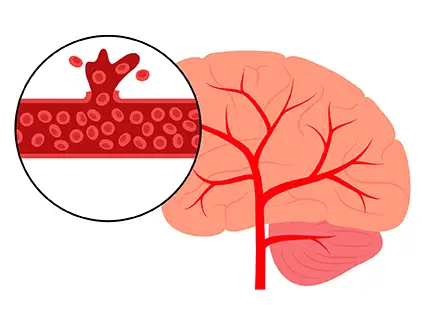
The Mayo Clinic states that “A brain aneurysm is a bulge or ballooning in a blood vessel in the brain. It often looks like a berry hanging on a stem. Some remain small and never become a problem, but others become so large that they become a ticking time bomb. The actual problem comes in the form of a rupture, which leads to a hemorrhagic stroke, or bleeding in the brain. Most often, the rupture occurs in the space between the brain and the tissues that cover it (subarachnoid hemorrhage).
These subarachnoid hemorrhages are extremely dangerous and have a high potential for causing permanent neurological damage or even death; that is why it is so important to catch these signs early.
The difficulty in detecting an aneurysm before it ruptures is that, in many instances, there is no “preview” of this happening. However, if a person’s body is indicating that something is wrong, these signs tend to be strong. According to the Mayo Clinic, some signs that may indicate that an aneurysm is present or that it is leaking include:
A brain aneurysm can leak or rupture, causing bleeding into the brain (hemorrhagic stroke).
According to the Mayo Clinic, some signs that may indicate that an aneurysm is present or that it is leaking include:
A sudden and severe headache (often described as “the worst headache of my life”)
Blurred or double vision
Confusion
One dilated pupil
One drooping eyelid
Fainting
Nausea/vomiting
Pain around one eye
Stiffness in the neck
Sensitivity to light
Seizures
Weakness and/or numbness
It is important to note that it is not necessarily true that having one or two of these symptoms means you have an aneurysm. Nevertheless, it is very important to seek immediate medical attention if several of these symptoms strike you at once, especially the “thunderclap” headache.
Shutterstock
According to the Brain Aneurysm Foundation, a headache is always the first symptom that a person with a leaking or bursting aneurysm will experience. But it isn’t just a run-of-the-mill headache that goes away in a few minutes or after taking a pill. This kind of headache is sudden, extremely severe, and just won’t go away on its own. When a person has a leaking or bursting aneurysm that starts leaking a small amount of blood, it is called a sentinel bleed. This may produce a severe headache that may last for a few days.
According to medical experts, it is never a good idea to “tough out” a headache like this. It is a literal shot across the bow, a warning that a full rupture could be just around the corner. If you or the person you are with has a sudden, blinding headache accompanied by nausea or vision problems, it is a good idea to call for emergency help at once. But whatever you do, don’t even think about driving yourself to the hospital, as a rupture could cause you to pass out behind the wheel in a split second.
Shutterstock
Who is most at risk?
While we can’t pinpoint the “why” behind each aneurysm, we can identify several risk factors that increase the likelihood of developing one. First, demography plays a role; older adults and women are more at risk. Then there are lifestyle and medical conditions, which can increase the workload on your body over time. Some of the key risk factors are:
Smoking: Tobacco is a major contributor in the development of aneurysms. It has been shown that smoking can cause the walls of the vessels to weaken and can cause the formation of aneurysms.
High Blood Pressure (Hypertension): High blood pressure is like a hose with a small pipe. Eventually, the pipe would bulge under the increased pressure.
Excessive Alcohol: It is known that excessive alcohol can cause damage to the vessels over a long period of time.
Drug Use: Stimulants such as cocaine are particularly dangerous because they can cause a huge spike in blood pressure.
Some people may develop aneurysms after receiving head trauma or after contracting certain types of infection. Others may simply be born with a predisposition to developing this condition, due to defects in their blood vessels. There are a small number of people who may be more prone to developing this condition if they suffer from a genetic disorder such as polycystic kidney disease or a connective tissue disorder, such as Ehlers-Danlos syndrome.
Because the stakes are so high, doctors use advanced imaging techniques to get a clear picture of what’s going on inside the skull. Some of the most common tools in the doctor’s kit include:
CT Scan (Computed Tomography): This is usually the first line of defense to determine if there’s active bleeding in the brain.
MRI (Magnetic Resonance Imaging): This gives a highly detailed view of the structures in the brain and the plumbing of the blood vessels.
Cerebral Angiography: In this test, a special dye is injected into the bloodstream so that doctors can determine the exact shape and size of the aneurysm on an X-ray.
Treatment options
The treatment isn’t “one size fits all.” It’s determined by where the aneurysm is located, how large it has become, and the likelihood that it will burst. There are a number of different treatment options, and the most common ones include:
Surgical Clipping: This involves a neurosurgeon making a small incision in the skull and placing a small metal clip at the base of the aneurysm to “pinch it off” from the bloodstream.
Endovascular Coiling: This is a less invasive treatment that involves a doctor inserting a catheter into the artery in the groin that leads up to the brain and inserting small wire coils into the aneurysm to block it off.
Flow Diversion: This involves the placement of a stent that diverts the flow of the blood around the bulge in the artery, allowing the artery to heal itself.
There are also some cases in which a doctor may suggest “watchful waiting,” in which the aneurysm is small and the doctor feels that it has a low likelihood of bursting in the near future.
Pexels
Living with a diagnosis
Receiving the diagnosis of having an unruptured aneurysm can be an emotional rollercoaster. In most cases, the doctor will tell the patient that the best things they can do is manage the things they can control, such as maintaining healthy blood pressure levels, stopping smoking if they are a smoker, and consuming a healthy diet. Another thing that is huge is stress management. This is where meditation and other forms of exercise can help manage stress levels and keep the strain on the vessels minimal. Education is the best way to empower oneself rather than being fearful.
The medical community is working harder than ever to educate the public because the key to the ultimate life-saver is early detection. “Warning leaks” are felt by many as a headache or a change in their vision, but it is usually dismissed as a migraine headache or exhaustion. The first step in avoiding a catastrophe is to learn how to take “unusual” symptoms seriously.
Conclusion
Brain aneurysms are scary because they are so silent, but they don’t have to be a death sentence. By being aware of the signs and symptoms—pain, vision changes, and neurological changes—you can ensure the best possible outcome in the event of a brain aneurysm. Whether it’s controlling your blood pressure or knowing when to call 911, being educated is the strongest weapon against the unexpected.
*Medical Disclaimer: This article is for informational purposes only and is not intended as medical advice. Always consult a qualified healthcare professional for diagnosis, treatment, or questions regarding any medical condition. Do not disregard or delay seeking medical attention based on the information provided here. In the event of a medical emergency, call your local emergency services immediately.
Please SHARE this article with your family and friends on Facebook.
While it may be tempting to think of your nails as merely an accessory to paint with colorful polish or something that needs weekly trimming, there’s a lot more to them than meets the eye. As your nails continue to grow, they need constant nourishment in terms of nutrients, oxygen, and blood flow. When something disrupts the system, whether due to a lack of nutrients or an underlying medical issue, your nails are usually one of the first places where these changes appear.
According to naturopathic doctor Sara Norris, nail growth reflects how well your body digests and absorbs the necessary nutrients from your diet. Should disruptions occur in this process or in heart function, they may eventually show up through the appearance of your nails. The good news is that you can learn to recognize these changes and possibly address them before further complications develop.
Beau’s Lines: A Warning Sign
Beau’s lines, characterized by deep grooves or ridges across the nails, often signal a temporary halt in nail growth due to a severe illness or infection. “These lines can appear after illnesses such as COVID-19 or stressful events like chemotherapy or high fevers,” says Dr. Bhavini Shah of Lloyds Pharmacy Online Doctor. In severe cases, the nail may stop growing altogether, resulting in onychomadesis. While Beau’s lines are not always a cause for concern, persistent or recurring instances warrant a visit to your GP. Monitoring for such health issues hidden in your nails could provide critical insights into your body’s response to stress or illness.
Clubbing: Linked to Heart Health
When nails curve downward and fingertips swell, this condition, called clubbing, may signal heart disease. Dr. Shah explains that clubbing develops gradually, making it difficult to notice until significant changes occur. Associated symptoms include swollen ankles, extreme fatigue, and chest pain. While some people naturally have clubbed nails, it’s important to consult a doctor if you notice significant changes in nail shape alongside other health concerns. Detecting health issues hidden in your nails early can make a difference in managing heart conditions.
Spoon-Shaped Nails: A Sign of Iron Deficiency
Spoon-shaped nails curve inward and are often linked to iron-deficiency anemia. Common after pregnancy, this condition can also result from poor nutrition, digestive issues, or celiac disease. Symptoms may include pale skin, headaches, and shortness of breath. Dr. Shah advises booking a GP appointment if spooning occurs, as a blood test can confirm anemia. Treatment typically involves iron supplements and dietary changes. Paying attention to such health issues hidden in your nails can improve your overall well-being.
Pitting or Denting: A Sign of Skin Disorders
Small dents or pits on the surface of your nails may be more than a cosmetic issue. These imperfections are often associated with skin conditions like psoriasis, eczema, or alopecia areata, a type of hair loss. Dr. Bhavini Shah explains that these conditions typically present other symptoms alongside nail pitting. For instance, psoriasis causes scaly, dry patches on the skin, while eczema leads to redness, itching, and cracked skin. Alopecia areata, on the other hand, results in patchy hair loss. While mild nail pitting may not require treatment, severe cases often benefit from corticosteroids or vitamin D3 therapy, used alongside treatments for the underlying skin condition. If you notice dents on your nails, consulting a dermatologist can provide clarity and help you manage the issue effectively.
Melanoma: The Hidden Danger Beneath Your Nails
Nail changes can sometimes signal life-threatening conditions, such as melanoma, the most serious form of skin cancer. A dark streak running vertically along the nail can be an early sign. While not all dark lines indicate cancer, it’s crucial to seek a dermatologist’s evaluation. Melanoma on the nails, also known as subungual melanoma, is relatively rare but can spread rapidly if left untreated. Early detection and treatment are key to successful outcomes. If you notice unexplained discoloration or dark streaks on your nails, especially if they seem to grow or change over time, don’t ignore them. Your vigilance could make a significant difference in your health.
Terry’s Nails: A Potential Indicator of Liver Disease
Terry’s nails, named after the doctor who first described the condition, occur when the majority of the nail bed turns white, leaving only a small red or pink strip at the tip. While Terry’s nails can sometimes be part of the natural aging process, they are more commonly linked to serious health conditions such as liver disease, diabetes, or heart disease. Additional symptoms like jaundice (yellowing of the skin), fatigue, and loss of appetite often accompany liver-related cases. If you notice this discoloration on your nails, it’s essential to consult a healthcare professional to identify the underlying cause and address it promptly.
Yellow Nails: More Than a Cosmetic Issue
Yellow nails are often caused by fungal infections, but they can also point to more severe health concerns like thyroid disease, diabetes, psoriasis, or even lung disease. Fungal infections usually cause the nail to thicken, crumble, or detach from the nail bed, and while they can be treated over time, they often require patience. If your nails turn yellow without an apparent cause, such as nail polish use or a fungal infection, it’s worth consulting a doctor. Treating the underlying condition early can prevent complications and restore your nails’ natural appearance. Persistent yellowing is a sign that your body may be alerting you to an internal issue that requires attention.
Take Action for Better Nail Health
All in all, it would be safe to assume that the fingernails serve as a mini-monitoring system for the internal functions of your body. In many cases, abnormalities associated with the fingernails may become the first visible sign of some deficiency, low oxygen levels, increased stress, and more. It is tempting to shrug off any peculiarities you notice on your fingernails as harmless idiosyncrasies; however, paying attention to these changes may help you stay ahead when it comes to your health.
Again, there is no need to become overly concerned about minor spots or changes on your fingernails, as many of them may mean absolutely nothing. However, whenever you notice changes that cannot be easily explained and persist over time, visiting a doctor is probably the wisest thing to do. In general, checking your fingernails regularly can turn into a simple five-minute habit that helps you stay aware of what may be going on with your health.
Please SHARE this article with your family and friends on Facebook.
No matter how much some of us hate the idea of entering the later stages of our life, we should have in mind that aging is a privilege. However, this period of life it comes with changes that some people have a hard time accepting.
Once a person turns 70, their body enters a “unique phase.” The changes don’t happen over night, but gradually, and most of them almost always appear together.
Understanding these changes can help people over 70 prepare and adjust all for the sake of maintaining their quality of life.
One of the first changes many people notice as they get older is that sleep becomes lighter. This happens because after 70, melatonin, the hormone that supports deep sleep, is not produced as much as before. As a result, the body’s internal clock reacts more strongly to light and noise.
Light sleep comes with more frequent waking up during the night , difficulty falling back asleep, and feeling tired the following morning.
It’s important to understand that at people over 70, this condition isn’t insomnia but a normal change that comes with age. Simple habits like getting natural light in the morning, avoiding bright screens late in the evening, and keeping regular sleep and wake times can help make rest a little easier.
2. Temperature regulation becomes less reliable
After 70, the body slowly loses the ability to control temperature as well as it once did. As a result, the pace of adapting to changes slows down, and this explains why older adults generally feel colder, get hotter faster, and sweat less.
Sadly, this can raise the risk of heat stroke or hypothermia. What helps is dressing in layers (even at home), avoiding temperature extremes, and drinking plenty of fluids.
Digestion also slows with age, meaning the stomach produces less acid, the intestines are less efficient at moving food along, and the body doesn’t absorb nutrients as well as it once did.
As a result, the person feels full faster, may experience issues with constipation, or may develop deficiencies in nutrients like B12, iron, or calcium.
This can be improved by eating small, frequent meals, getting fiber from whole foods, and drinking water consistently throughout the day.
4. Balance declines
One of the most serious changes that comes with aging is the loss of balance. It’s not unusual for people over 70 to experience muscle loss, as well as issues with their vision, the inner ear, or slowed reactions.
The good news is that this can be improved by practicing simple exercises such as standing on one foot while holding onto a chair, walking heel to toe in a straight line, or doing gentle movements.
Balance mostly comes down to coordination and awareness, with some muscle helping along the way.
Sarcopenia, a type of muscle loss that occurs with aging and/or immobility, is another issue many seniors face. What is important in order to slow down or avoid this condition is consuming enough protein and keeping the muscles “busy” with regular movement.
Foods like eggs, fish, dairy, beans, lentils, and lean meats are all good options to help support muscle health.
These changes happen to nearly everyone after 70. They’re a normal part of how the body ages, and what makes the real difference is how people respond and adjust to them.
6. The “internal processor” is just taking its time
Remember that instance when you entered a room and completely forgot what you came in for? Or when you’re trying to recall someone’s name, which you can almost feel on the tip of your tongue? Frustrating, indeed, but it is not necessarily a sign of mental deterioration.
Consider your brain to be comparable to an ancient hard disk; it’s crammed with over 70 years of amazing information. As a result, it requires slightly more time to search for the correct file. At times, multitasking becomes a nuisance, and it may be preferable to perform tasks sequentially. The finest software update available in such cases is maintaining curiosity. Reading, brain teasers, or debating with a buddy for a prolonged period are all fantastic options.
This process occurs so gradually that you don’t realize it until you have to strain to read small print or ask someone to repeat what they said three times already. Your eyesight and hearing capabilities will deteriorate over time. Tiny font sizes become your worst enemy, and the ambient noise of a crowded restaurant might leave you feeling completely out of touch with the discussion.
The potential threat is not the physiological shift but the risk of withdrawing because of inability to fully participate in conversations due to hearing or sight problems. Do not allow your ego to take over your decisions. High-quality corrective lenses or contemporary hearing aids should not be regarded as “old-age markers”; instead, these devices should be viewed as instruments allowing you to stay active and socially engaged.
8. You have to drink water even when you aren’t thirsty
This is perhaps the most “invisible” of all changes. With advancing age, the body’s “thirst reflex” becomes less reliable. Even when you are suffering from dehydration, your brain fails to send out signals indicating your need for hydration.
For this reason, many seniors suffer from inexplicable episodes of exhaustion, dizziness, or “brain fog.” In reality, half the time they are simply thirsty! The trouble is, you cannot depend upon the feeling of thirst any longer; therefore, you must turn hydration into a ritual habit. Place a bottle of water beside your favorite seat or resolve to consume at least a glassful with each meal.
The skin changes drastically when we hit the age of 70, having lost most of its protective layers and elasticity. In essence, it becomes thin and fragile – like parchment. This means that you become more likely to suffer bruises, and any scratches you get take significantly longer to heal.
This also means that your skin will be prone to dryness and irritation far quicker. This is the time when harsh “industrial” soap should go away forever, being replaced with a nice moisturizer. The protection from the sun is no longer a cosmetic issue but something that will literally defend your skin.
10. The “battery life” is a little shorter
You may notice that things that took you an hour before now take twice as long or that you need to rest for a good while after spending a morning in your garden. This is not due to laziness nor poor health—it is simply a result of a metabolic and muscular system in transition.
Your “fuel capacity” has dropped slightly. The solution? Stop trying to fight it and begin pacing yourself. Rest is perfectly alright. It is better to do your chores in three days than try to do it all on one day. You will preserve your energy much more effectively if you listen to your body and rest before you burn out.
Please SHARE this article with your family and friends on Facebook.
The idea that reaching thirty, forty, or fifty years old immediately transforms one into an “adult” is just a misconception. The truth is that emotional maturity and chronological maturity can belong to two entirely separate worlds. Have you ever come across a man who is successful and responsible in his professional and personal life, yet acts like a child when confronted with even the slightest conflict?
Emotional immaturity is a complex issue because it does not necessarily mean someone is a “bad person”; rather, it reflects a lack of emotional skills. It is often a collection of defense mechanisms such as avoidance, projection, and impulsiveness that may have developed during childhood and were never replaced with healthier coping strategies.
1. He treats serious conversations like a dental appointment
Perhaps the most obvious sign of immaturity is a complete lack of “conversational endurance.” As soon as he realizes that he is expected to discuss emotions, aspirations, or problems in the relationship, he tries to leave the room. This may appear in the form of “stonewalling,” where he chooses not to say anything or attempts to defuse the situation by making a joke or cracking a smile.
The emotionally immature partner does not see an in-depth discussion as an opportunity to learn and grow, but rather as a personal attack meant to harm his integrity and reputation. For him, a disagreement is always either a win or a loss, and because he does not know how to endure the discomfort that comes with being wrong or admitting vulnerability, he avoids discussions altogether.
2. He is the “Eternal Victim” of his own life
Listening to an emotionally immature man speak about his history, notice the pattern. Is he consistently the victim who was “screwed over”? Every time he loses his job, it is because the boss was jealous. Every accident he was involved in happened because it was “somebody else’s fault.” And every failed relationship ended because his former lover was “unstable” or “crazy.”
Being accountable for one’s actions is a sign of maturity. It takes a certain kind of inner courage to admit, “I made that mistake, and this is how I will correct it.” For the emotionally immature man this isn’t possible because his sense of self is too fragile to admit that anything could possibly be his fault. Hence, he creates a world where he is nothing more than a piece of paper blowing in the wind at the mercy of other people.
Empathy means the willingness to move beyond one’s own perspective and genuinely care about how another person feels. This is difficult for emotionally immature people, but not because they are sociopaths. Rather, their entire worldview revolves around themselves.
If you are in tears, he may become irritated by your “mood” because it interferes with his enjoyment of the evening. Should you mention being under stress at work, he will simply tell you to “get over it.” He finds it hard to sympathize because your emotions disturb his peace of mind. To him, if he isn’t feeling the pain, then it doesn’t really exist anyway.

4. He is looking for a “Manager,” not a partner
This is the infamous man-child phenomenon, but it’s more than just being sloppy – it’s a complete dependency on someone else to run the show and take charge of the logistical and emotional responsibilities. He may expect his partner to arrange everything in his social life, pay the bills, remind him of birthdays, and do all the emotional work for him.
To this person, his partner is a combination of an executive assistant and a mother. Whenever something goes wrong, he expects his partner to fix it for him. He doesn’t step up because somebody else is the adult in the picture. The consequence of such behavior is resentment, as the partner will eventually start thinking of herself as caring for a child who refuses to grow up instead of a lover.
5. His temper is either a “short fuse” or a “deep freeze”
Emotional maturity refers basically to the skill of experiencing a strong emotion without it taking over your actions. The immature man doesn’t get that distinction between the two; when he gets frustrated, he may have what is known as a “meltdown” for reasons so insignificant as having misplaced his keys or the internet connection being too slow.
At other times, he uses “passive aggression” as a form of intimidation. He may sulk, play the silent treatment, or even deploy “coldness” in order to intimidate you after having been insulted. All these strategies are indicative of a lack of control over himself, and thus of seeking to control the surroundings since he cannot manage himself.
6. He is a slave to immediate gratification
Being an adult involves saying no to something you desire now so that you will eventually get something better at a future date. Men who have not reached emotional maturity find it difficult to do so. They are very impulsive; whether it is about using money that they lack to satisfy their desires, leaving a job without proper reasoning due to some perceived disrespect or making decisions of an entire lifetime based on emotions of a fleeting nature.
What he does is chase his dopamine rush. He is after the excitement, the thrill and the convenience of “right now,” expecting that “future him” or probably his partner will sort everything out. As a result, he ends up living an unstable life with people in his surrounding always waiting for another crisis.
If a mature person makes a commitment, then he adds value to his life. But if an immature person commits to something, then he considers it to be a trap. It is the reason he is so perfect during the honeymoon period but begins flaking once things become too serious.
Labels, planning for the future, and joint responsibilities mean “confinement” for him. He always has one foot out the door and never makes plans that exceed a week at a time. He calls it independence when, in reality, he is just scared of becoming responsible.
8. He is a “Validation Junkie”
Underneath all emotional immaturity lies a fundamental feeling of insecurity. Since he lacks any sense of self-worth inside himself, he must seek it out elsewhere. To feel worthy as a “man,” he requires continuous validation in the form of compliments and reassurances.
It may be seen in him acting like a “people pleaser” toward strangers but ignoring his partner, or it may appear as a frantic craving for validation on the internet via likes. He depends on the world to remind him how special he is, since he doesn’t remind himself. The consequence is a bottomless pit of neediness.
Rather than solving the conflict and closing the chapter, he “files” the disagreement away. He keeps track of all your screw-ups, your being late, and anything else wrong you’ve done. Then, if he’s backed into a corner during the current fight, he throws the entire file at you.
He uses “emotional ammunition” since he does not have any clue on how to deal with his emotions. The use of his “scorecard” helps give him some power because it means that there is no need to move forward with the current discussion since both parties are flawed.
10. He puts “Play” before “Purpose”
Everybody requires leisure, but for an emotionally immature individual, “play” comes first, whereas “work” is merely an obstruction. He is that person who would spend eight hours playing video games while ignoring the mess around him, or even going out with his friends when he realizes that his significant other needs him.
He considers obligations to be a “weight” forced upon him by external forces, not the inevitable consequence of being alive. Men like this wish to enjoy all of the pleasures of adulthood (freedom, sexual relations, independence) without having to bear the burden of “responsibility” associated with such a lifestyle. Ultimately, there will be someone else who must shoulder the load, and this imbalance always results in disaster.
The simple answer is yes, but the more complex answer is that he will only change if he wants to. Emotional maturity is a skill set that must be developed, and like any skill set, it is completely learnable. It takes self-awareness, quite a bit of therapy, and an incredible amount of discomfort while learning how to stop any toxic behaviors.
But there is one important caveat here: Do not “mother” him into maturity. If you do, you’ll end up with the opposite result, because you are rewarding his immaturity by making sure that he never experiences the consequences of his behavior.
Growth is possible, but first, he needs to look in the mirror and realize that he’s done playing the role of the “eternal boy.”
Please SHARE this article with your family and friends on Facebook.
Tens of thousands of people gathered together at the State Farm Stadium in Glendale, Arizona, for the memorial service of Charlie Kirk.
Kirk was a right-wing activist and co-founder of Turning Point USA. He was shot in the neck on Wednesday, September 10, 2025, during a debate event while speaking before a large crowd at Utah Valley University (UVU).
His alleged assassin, Tyler Robinson, has since been arrested and “faces single counts of aggravated murder, felony discharge of a firearm, and violent offense in the presence of a child, along with two counts each of obstruction of justice and witness tampering,” People reported at the time.
Charlie Kirk and Erika shared two children, a daughter and a son.
Ever since his tragic passing, Erika has been in the spotlight.
Instagram
During the memorial service, she addressed the crowd and thanked many for their support, including President Donald Trump who shared a close connection with late Charlie Kirk.
“Mr President, my husband loved you. And he knew that you loved him too. He did. Your friendship was amazing. You supported him so well, as did he for you,” she said.
Trump also addressed the crowd while Erika Kirk stood beside him. As he wrapped up his speech, he pulled her into an embrace while the crowd erupted in applause.

Online, however, attention quickly shifted, with many social media users commenting on Trump’s facial expression during the moment. And as it turns out, it wasn’t the tragedy that brought these two close together. In fact, the paths of Trump and Erika Kirk crossed long ago.
Win McNamee/Getty Images
A social media user found a photo of Erika from the time she competed at a beauty pageant. He reshared the photo, writing, “Oooooh. Erika Kirk competed in the 2012 Miss USA competition, which was owned by Trump. Her talent portion for the Miss Arizona contest was performing a dribbling exhibition with two balls. Her website still lists contact info to book her for modeling and acting.”
Erika Kirk was crowned Miss Arizona in 2011, earning her a spot in the 2012 Miss USA pageant. During that period, Kirk, who was competing under her maiden name Frantzve, said, “What really matters is making a difference, and I want to change the world. The bling is just a bonus.”
Kirk also competed in Miss Teen USA pageants. Speaking to The New Yorker, preliminary judges said Trump was involved behind the scenes, pointing out winners and making comments about contestants.
“They told us not to share how we voted with each other, but we did anyway,” one judge told the publication, adding that they were “shocked” when winners were announced, although they hadn’t been selected.
“I didn’t know what had happened. I felt ridiculous,” they added.
Please SHARE this article with your family and friends on Facebook.
Let’s cut to the chase: attraction is a mess! If you are on the social media as much as I am, you’ve likely stumbled upon those so called “dating gurus” who try to boil human chemistry down to a series of rigid formulas or “alpha” checklists. But let’s get real here. The real world isn’t that simple. Truth is that attraction is complex and ever-changing, a cocktail of biological, temporal, personality-based, and emotional factors.
For decades, psychologists tried to unravel this mystery. While there is no universal standard of appearance and personality, there are some specific characteristics that repeatedly prove to be strong attractors both in the short term and long-term relationship perspective.

Here’s a breakdown of the qualities that tend to drive attraction, ranked from the high-impact heavyweights to the subtle details that matter more than you’d think.
The power players: High influence traits
1. Social status and recognition
This is not about fame on TikTok or having a corner office as a CEO. The real significance of status in society can be seen simply as an indicator of “value.” There is this natural tendency for women to gravitate towards men who have a reputation among their peers. You could be the captain of the community sports team, a recognized mentor in your workplace, or simply “the cool guy at parties.”
2. Confidence
Yes! This is the big one, for sure. But let’s make one thing perfectly clear. To be confident doesn’t mean to be loud, and definitely not being arrogant. It’s more about being totally comfortable in your own skin, being able to handle difficult situations without spiraling, and to take a “no” without losing your cool.
To be able to keep your cool in an otherwise chaotic world is definitely a trait women find attractive. Many women prefer men who manage to solve problems without withdrawing emotionally or exploding. According to The Gottman Institute, the way a man controls his emotions is one of the strongest predictors of whether a relationship will actually go a long way.
4. Physical appearance
We can only pretend that physical appearance doesn’t play a huge role when it comes to choosing a partner. However, “attractive” doesn’t necessarily mean a “male model.” More often than not, it relates to the man’s overall health condition, grooming habits, body language, and self-presentation. Moreover, as a woman learns the personality of a man, her perceptions of his physical attractiveness tend to change accordingly.
5. Humor
Laughter is an emotional shortcut. Once you’ve got someone laughing at something you’ve said, it means you are smart, socially adept, and not taking yourself too seriously. According to studies conducted by theSage Journals, humor is not only about being witty; it’s about creating an “inside world” between two individuals.
6. Social skills
This is the “EQ” or Emotional Quotient. Do you have a way with people? Are you really listening to what the other person is saying, or are you simply waiting for your own chance to talk? Knowing how to connect and make women feel appreciated is a huge turn-on.
It’s hard to ignore a man who really gives a damn. It needn’t be anything lucrative or prestigious; you may be passionate about your art or trade, your cause, or your own goals. The notion of having a “North Star” implies that you’re self-disciplined enough to create your own destiny rather than drifting through life aimlessly, something women love, it seems.
8. Lifestyle and energy
People are indeed attracted to vitality, and when you have an active social life filled with friends and interests, women can tell that you aren’t searching for your next hobby in your partner.
9. Height
It’s the elephant in the room of modern dating. While many women claim they prefer taller men, especially on dating sites, in the real world, this is often a secondary trait. The moment chemistry and personality enter the mix, height usually takes a backseat to how a man makes a woman feel.
10. Masculinity
This is less about “tough guy” stereotypes and more about having a protective aura, being decisive, and being reliable. Being a manly male involves being a “safe space.”
A little bit of mystery goes a long way. Not giving away everything about your past within the first few minutes of meeting a woman would make her curious. Just remember not to mix up mysteriousness with being “flaky” since the former is intriguing and the latter is annoying.
12. Competence
There is a particular type of appeal to watch a man who is skilled at his craft. Whether it be repairing a car, negotiating the intricacies of human relations, or delivering an outstanding speech, being competent is a significant green flag for a number of women.
13. patience and emotional maturity
Willingness to give the relationship time to develop and not force things forward or seek validation is indicative of a valuable partner. Maturity is an indicator that you’ve grown out of the “game playing” phase.
14. Fitness and physique
Just like with appearance, this is often about what it signals: discipline, energy, and self-respect. It’s not really that women look for a six-pack when they think of fitness and physique, they likely think of a man who takes care of his body.
15. Intelligence
“Sapiosexuality” is real. Being able to hold a deep conversation, offer a new perspective, or explain something complex with ease is a major draw provided it isn’t paired with “know-it-all” energy.
Unsplash
The essentials
16. Romantic behavior
Be thoughtful. Small things, like remembering details she once casually mentioned or showing genuine care and attention, can help build a real connection. However, it doesn’t work when it feels like you’re trying too hard, almost as if you’re “bribing” her with actions.
17. Independence
Men who have their own lives and don’t come across as desperate are generally far more attractive than those who don’t. Having your own interests and being comfortable in your own company naturally makes the time you spend with her feel more meaningful and enjoyable.
18. Kindness and character
This may not be the most exciting thing to think about, but there is nothing better than being kind. It is compassion and dependability that hold people together once the “excitement “initial spark” starts fading.
19. Financial stability
It’s rarely about the size of the bank account but about responsibility. Being financially stable suggests you are reliable and that a future together won’t be defined by constant stress and crisis. At least that’s how women see it.
Unsplash
20. Unpredictability (in moderation)
While “edgy” or “rebellious” behavior often wears thin because it lacks stability, a touch of unpredictability keeps things fresh. It keeps the “mystery” alive without sacrificing the safety of the relationship, something women find attractive.
21. Shared values
You can be the most attractive guy in the world, but if your core beliefs about life, family, and ethics don’t align, the attraction will eventually hit a wall.
22. Religion and spirituality
For some, this is a non-issue. For others, it’s everything. Shared spiritual ground can create a deep, immediate sense of trust and “home.”
23. Reputation
A man’s character is judged by the way he treats his date, yes, but also the waiter, his mother, and his friends. A man with a “good name” has a huge advantage.
24. Authenticity
The “secret sauce.” All the traits above work best when they feel like the real you. There is nothing less attractive than someone “performing” attraction. When you’re comfortable being yourself—flaws and all—it gives women permission to do the same.
Unsplash
Conclusion
Attraction isn’t a vending machine where you put in “Confidence + Humor” and get a relationship. It is a complex, real-life thing. Even though certain qualities are more important, the best way to go is not by trying to “trick” someone, but rather become the kind of guy that she would want to be with.
The internet wants you to think it is a game with rules. Reality shows it is a game of connections.
Please SHARE this article with your family and friends on Facebook.
Respect is earned, and if people don’t respect you, they shouldn’t receive any respect in return. Honestly, it’s as simple as that.
However, if you strive to earn the respect from those around you, you should stop doing things that invite disrespect.
Below are five powerful changes that can completely reshape how others perceive and relate to you.
1. Stop giving excessive explanations
When it comes to the decisions we make during our lifetime, we don’t owe everyone a justification. For when we feel the need to justify our actions by providing multiple reasons, it unintentionally tells others that we crave their validation.
As we try to convince others why we did something, we appear less reasonable and logical. In fact, it only makes us look more insecure.
Studies show that over-justification of actions can decrease confidence, knowledge, and credibility.
Hence, if there is no genuine need for any justification, a simple response like “because I decided to” is enough.
Answering in such manner may feel awkward initially, but it would definitely change the dynamic entirely.
The instant we realize that being silent is not a sign of weakness but a conscious decision, we cease trying to justify ourselves to everybody and begin reacting deliberately rather than impulsively.
In reality, if one is talking down to us, they do not deserve our response instantly—or even ever. Responding straight away means that we seem to be responding emotionally rather than with confidence.
Silence might communicate better than words do in certain instances, and it can set a boundary without creating an argumentative environment.
If you really think about it, this is what it is all about.
When we do not see fit to turn our back on relationships in which we are treated with a lack of respect, it shows that we place greater value on those relationships than our self-respect.
It is not an issue of taking flight at the first sign of adversity but about drawing a line in the sand that does not shift just because it is tested.
Respect becomes apparent in the understanding that there will be a price to pay for crossing that line.
4. Stop trying to change how they feel and focus on what you accept
Do you ever find yourself preoccupied with the wrong questions, for example, “How do I make them respect me?” or “How do I make them see things from my perspective?”
In reality, it’s not within our capacity to control that.
But what we can control is what behavior we tolerate. If someone puts us down, ignores us, or disrespects us, we can choose to walk away without offering any excuses or creating a scene.
Truth is we don’t need to prove our worth to anyone. All we need is show, through our actions, the kind of treatment we won’t tolerate.
Here’s the hard truth: those who have genuine self-respect don’t allow themselves to be surrounded by constant disrespect in their lives.
It’s not that disrespectful people don’t exist, they do, but people with self-respect won’t linger where it’s present. They don’t rationalize, wait for someone to change, or give up their dignity.
When you catch yourself in the same cycle, ask yourself, “Why am I still here?” and “What fear, dependency, or hope is keeping me here?”
Being honest with ourselves can be painful, but also liberating.
You could repeat the phrase “I need you to respect me” all day, yet if you do not follow through with your demands, they fall on deaf ears. The concept of respect is all about actions. You could be faced with rude behavior, yet if you just sit there and take it, then that tells them that it is acceptable.
Respect is not something that is debated; it is the atmosphere you create through consistent behavior. People are constantly testing where your boundaries lie. When you say you can’t tolerate the silent treatment anymore, but still respond warmly at the door, holding hands and acting normal while they ignore you for days, your words lose their weight.
Unsplash
7. Being “nice” isn’t the same as being a 24/7 hotline
Because of some reason, most of us have been taught to believe that being “kind” means being available at all times. We feel bad if we fail to reply to a text immediately or if we say no to a favor we don’t have the energy for. However, the truth is that when you keep yourself available for everyone, then your time is no longer seen as something precious but as a routine that is expected. People do not appreciate things which are readily available to them. When kindness doesn’t include “no” in your vocabulary, then it ceases to be kindness and becomes emotional exhaustion.
Unsplash
8. Trust your gut, not just their “good days”
Don’t be fooled by the fact that they treated you nicely last Tuesday. Instead, take into account the bigger picture. Every single time after you finish talking with them, if you walk away feeling as though you’ve been run over by a bus – tired, worried, or even just “small” – this is your red flag.
Having good moments occasionally should not be the ticket out of a relationship that constantly leaves you feeling unappreciated or devalued.
Unsplash
9. Don’t chase people who won’t meet you halfway
Many of us have this tendency to give and give to people who are giving nothing of their own in return. We feel like, if we just try harder, understand better, and be more caring, then the person we’re with will finally come around and appreciate how amazing we are. This is a misconception about respect.
Respect is built upon reciprocity—the exchange of effort. When you’re the only one putting in any effort, then you aren’t creating any type of bond, but rather carrying the weight of someone else’s laziness. There’s absolutely nothing wrong with stepping back and seeing who rises to meet you there.
Unsplash
10. You have to be okay with being the “villain” in someone else’s story
One of the toughest aspects of self-respect is acknowledging that you will always encounter individuals who do not understand—or respect—the lines you draw in the sand. In the moment you no longer allow yourself to be “nice” and start demanding what you need, some people will label you as selfish, distant, or difficult. But you have to accept that as well.
If you are constantly trying to convince those who criticize your decisions to accept your point of view, you are essentially allowing them to have control over whether you act in accordance with your best judgment.
Unsplash
The big takeaway
Respect is not something you go out seeking or begging for. It is the standard you set through what you are willing to tolerate and what you are not. Once you understand that your time and effort have value, you are no longer bargaining with people who act as if theirs does not. Over time, everything in your life—from friendships to relationships and even your work—begins to align with the standards you have set.
Please SHARE this article with your family and friends on Facebook.
Does this sound familiar? It’s time to get out of bed, but the alarm is screaming at you, and even the idea of stepping onto the ground seems utterly impossible. You’re not simply tired; you’re “done.” All you can think about is staying under the covers, ignoring the numerous pings coming from your phone, and letting the rest of the world revolve without you for a while.
This might be quite natural when taken in small doses. Life never stops, and between the pressures of your job, the difficulties in managing your interpersonal relationships, and the ever-present noise of modern-day technology, your body and mind need to take some time off.
The issue is that we live in a society where everything revolves around “the grind.” We are often raised to believe that not working constantly is somehow wrong. You are either productive and doing something useful, or you are labeled as “lazy.” You either have goals you are actively chasing, or people assume you are making excuses for yourself. Under this kind of constant social pressure, many people begin believing something deeply damaging — that they are lazy when, in reality, they may be struggling with their mental well-being.
Depression is perhaps one of the most misunderstood conditions there are. It does not always present itself as somebody crying in their bedroom. At times, it can be a neat house and a smiley face with zero energy from within; other times, it could be a messy kitchen and unwashed hair after days of no shower.
If you’ve been feeling sorry for yourself because of your lack of “willpower,” now is the time to realize that there could be a deeper problem going on. Here are the top six reasons why you might just be dealing with depression.
When you are depressed, a lack of motivation is not your preference to just sit in comfort because you have become paralyzed both physically and mentally. You are sitting on your sofa looking at piles of laundry you wish to fold but you are disgusted by its presence, however, you feel your limbs weigh about a ton.
All the advice, productivity tips, motivational quotes and color coded to-do lists become irrelevant when someone is dealing with a legitimate medical condition where they cannot find any motivation or willingness to do anything. In fact, all those tips only add an unnecessary feeling of guilt to an already difficult situation. As stated on National Institute of Mental Health, depression is a condition which changes the way the human brain works especially the function related to the secretion of neurotransmitters, which make people feel reward and motivation.
If you want to move but you literally feel like you can’t, that isn’t a lack of discipline. It’s a symptom.
Normally, if someone is simply feeling “lazy” or just having a bad day, certain things can still improve their mood. The smell of their favorite meal, watching a comforting movie, or spending time with a close friend can usually help brighten their day. Even during difficult moments, there is often a sense that things will eventually get better.
One of the defining characteristics of depression, however, is the lack of that relief.
What makes depression so painful is that the emotional heaviness often remains no matter what a person tries to do. They may go for a walk, eat their favorite food, spend time with loved ones, or sleep for hours, yet still wake up feeling just as emotionally exhausted and weighed down as before.
This is usually expressed in terms of a lack of emotions. Being “sad” does not mean that you feel bad like other people do – you are simply “blank.” That means that you feel no connection with yourself, as if you are watching someone else’s life behind a misty window. This can make it even more annoying when everyone around you thinks that you are lazy because of how you sit around doing nothing.
Pexels
3. You’ve lost interest in almost everything
Think about what it used to be that would make you forget about everything else. Whether it was painting, playing video games, gardening, or getting absorbed in a good book.
When you’re simply feeling lazy, you will still choose fun activities over your household responsibilities. However, when you’re depressed, you lose the drive to do these activities too. The condition in which you can no longer enjoy activities that once brought you pleasure is calledanhedonia.
If you have lost touch with what you love, then your world becomes smaller. You will not answer the phone because you no longer have the strength to pretend that you are “alive.” You will not go to the gym because the effort is simply too much when compared to the reward. This is not procrastination but rather withdrawal from life altogether. A lazy person seeks “fun.” A depressed person realizes it may never come.
Our mental well-being is often measured by how we handle major life events such as tragedy, changing jobs, or ending a relationship. However, depression often becomes most noticeable in everyday activities.
When you are experiencing depression, even simple tasks can feel overwhelming. Answering a text message can feel as mentally exhausting as writing a thesis paper. Taking a shower requires immense energy and willpower. Even cleaning a single plate may seem impossible.
This is often where self-hatred begins to creep in. You look at other people managing full-time jobs, exercising, and maintaining social lives, and you start viewing yourself as worthless because you cannot even bring yourself to check your mail.
But, of course, this very “functional impairment” is what distinguishes a depressive state from mere unhappiness. This is more than just the “mood” itself; it is the mental confusion and disorganization that impacts your capacity to think clearly, remember things, and concentrate. In effect, the mind is working in an economical manner so as to save energy.
Procrastination is almost always situational in nature. You procrastinate due to the grey skies, or the tedious work in accounting that you have to complete, or due to exhaustion from working hard for the entire week. Cause and effect exist.
Depression, on the other hand, is quite perplexing because it often strikes at times when everything seems to be going well in life.
Even though you have a secure job, an understanding partner, and enough food in the refrigerator, there’s an overwhelming feeling of despondency and lack of motivation within you. Consequently, you experience extreme amounts of guilt, as you tell yourself that you have no reason whatsoever to feel that way; hence, you tell yourself, “I have no reason to feel this way, so I must just be lazy and ungrateful.”
However, mental well-being doesn’t involve a calculation of the positive externalities in your life. It’s more of an internal ecosystem. Things such as your chemical makeup, genetics, or previous emotional experiences could cause depression irrespective of how “perfect” your life seems to others. Realizing that you don’t necessarily have a “reason” to be depressed is a good starting point for self-love.
Unsplash
6. It doesn’t feel like a choice
At the end of the day, the biggest difference between laziness and depression is agency.
Being lazy is a sort of passive state, while depression is like carrying a burden. Laziness makes one feel comfortable enough at the moment, while depression makes you regret not having accomplished enough at work. Depression means being critical of yourself and unable to perform.
Those suffering from depression tend to be extremely hard-working, since they have to put twice the amount of effort into their actions than everyone else does in order to seem normal. But once the burden becomes too much, they collapses because of the exhaustion.
As the American Psychiatric Association explains, depression is a complex condition that significantly impacts every facet of a person’s existence. It is a health crisis, not a character flaw.
*Medical Disclaimer: This article is intended for informational and educational purposes only and should not be considered medical or mental health advice. It is not a substitute for professional diagnosis, treatment, or guidance from a qualified healthcare provider. If you are struggling with your mental health or believe you may be experiencing depression, please consult a licensed medical or mental health professional.
Please SHARE this article with your family and friends on Facebook.
Vice President JD Vance and wife Usha Vance have three children together, and while their father is a public figure, they are kept away from the spotlight.
The couple met during their university days at Yale Law School in the early 2010s. Usha comes from a well-educated family of Indian immigrants. Her father worked as an aerospace engineer and university lecturer, while her mother was a professor of molecular biology.
Speaking of Usha, Vance said in 2020, “She instinctively understood the questions I didn’t even know to ask and she always encouraged me to seek opportunities that I didn’t know existed.
“I’m one of those guys who really benefits from having sort of a powerful female voice over his left shoulder saying, ‘Don’t do that, do that.’”
Their Yale classmate, Charles Tyler, told the BBC that “they were always this match of very dissimilar people.” In his memoir, Hillbilly Elegy: A Memoir of a Family and Culture in Crisis, J.D. Vance wrote that he had “never felt out of place” in his life, but “did at Yale.”
Scott Olson/Getty Images
Because of this, Usha Vance became an especially important source of support during his academic journey and pursuit of a law degree. Usha earned a Bachelor of Arts degree from Yale University and later attended University of Cambridge as a Gates Scholar, where she completed a Master of Philosophy in early modern history.
The two tied the knot a year following Usha’s graduation and held two ceremonies, a traditional ceremony and a Hindu ceremony led by a Hindu priest in honor of Usha’s heritage.
Although they come from different religious backgrounds, their beliefs have ultimately brought them closer together. In an interview with Fox News, J.D. Vance shared that his wife’s Hindu faith has played an important role in his life, helping him navigate both personal and professional challenges while also shaping his relationship with Catholicism. Vance explained that he was raised in a Christian household, although he “was never baptized.”
“I was first baptized in 2018. Usha was actually raised non-Christian. But I remember when I started to re-engage with my faith, Usha was very supportive,” he added.
In the same Fox interview, Usha explained she had been brought up in a “religious household.” She agreed that her faith had helped her husband navigate his life.
“My parents are Hindu and that’s one of the things that made them such good parents and good people. And I have seen the power of that in my own life,” she said. “And I knew that JD was searching for something. This just felt right for him.”
“We just talk a lot,” she added, concluding that they agree on many values and principles.
Antoine Gyori – Corbis/Corbis via Getty Images
When Vance was nominated for vice president, she put her career on hold in order to support her husband. When Trump won the elections, she appeared on stage next to him.
Being a second lady, Usha accompanies her husband to a number of events.
The couple welcomed their first child in 2017. During a talk on the Senate Floor, JD referred to his oldest child, Ewan, as a “6-year-old baby boy,” but he quickly corrected himself, saying that “he’s not so much of a baby anymore.”
Their second son, Vivek, was born in 2020, and their daughter, Mirabel, was welcomed in December, 2021. Her parents announced her birth on the social media, calling her an “early Christmas present.”
“We were blessed with an early Christmas present this year. Everyone please meet Mirabel Rose Vance, our first girl. Mama and baby both doing great, and we’re feeling very grateful this Christmas season.” Vance wrote on Instagram.
Because of his work schedule, JD Vance has missed a number of big moments. For example, he once missed his son’s birthday due to work engagements, but he managed to send a message to him from the Senate Floor. Vance first read a passage from the Dr. Seuss book Oh, the Places You’ll Go, and then added: “I’m sorry, Vivek, that I can’t be with you for your birthday dinner, but I want you to know that Daddy loves you very much and I’m going to read this into the record because maybe you can watch it at home.”
Of course, his children are still very young to be able to fully understand how important their dad’s position in the country is. What they know, however, according to the vice president, is his code name given to him by the Secret Service, “Bobcat,” and it seems they love it, and well, have fun with it at times.
“We have code names now. Our kids had a lot of fun with that,” Usha Vance said.
Please SHARE this article with your family and friends on Facebook.
Reaching that milestone of 70 years doesn’t mean falling off a cliff; it certainly isn’t the “beginning of the end,” even though all those infuriating commercials will try to convince you otherwise. On the contrary, for most individuals, reaching seventy means that it’s finally time to take a breath and get a hold of yourself. After all, the kids have left the nest, and your work-related pressures are largely over. Seventy years of age represent that stage in life filled with moments of clarity when you learn which distractions you can afford to ignore.
But there is a harsh truth in this regard that needs to be acknowledged since it is a rather depressing topic: The people who surround you during this phase of your life can affect your physical well-being significantly. This statement does not imply making friends or being sociable. Your body and nervous system cannot handle stress as efficiently at 70+ as they could at 30. Living with someone who is toxic for you or living alone poses a health risk to you.
It should not be taken as cynicism and rejection of everyone. Instead, it is essential to acknowledge that certain people in your life make you feel comfortable, whereas others slowly but surely suck all the energy out of you.
When you are young, you often feel like you can handle almost anything life throws at you. You can put up with stressful people or difficult situations because your ability to recover is stronger. But as you get older, bouncing back from emotionally draining experiences can take longer. It is no longer just about having a bad day — stress can linger, affect your sleep, and even have a noticeable impact on your physical well-being, such as your heart rate.
Believe it or not, the science behind this is quite amazing! According to research by theNational Institute on Aging, being lonely and isolated all the time can actually be just as harmful as smoking. This includes an increased risk of diseases such as heart disease, depression, and mental decline. Conversely, having a stable source of support will protect you physically. It really matters whom you spend your Tuesdays with.
The relationships that keep you going
If you want to live well after 70, you don’t need a massive social calendar. You just need the right kind of connection.
1. A partner who actually lets you breathe
If you have a partner in life, then this is when the small stuff really becomes important. What makes for a good relationship after 70 years? The answer isn’t big romantic gestures but mutual respect and the sense that you both feel safe emotionally. It’s having a companion who never judges but always listens and who respects your boundaries.
If your home is a haven of peace and not a battleground, your body isn’t constantly on red alert. Your stress level lowers, you sleep better, and your mind stays sharp. Being with a person who doesn’t trigger your insecurities or try to manipulate you is what you need at this age.

2. Friends who show up (without the pressure)
There are always going to be those friends who require more work than they’re worth. You have to mind your words, or else you must constantly try to control their emotional state. At 70 years old, you don’t need that kind of distraction anymore. What really matters are the relationships that provide presence rather than pressure.
It might be the person who walks with you two times a week or even the one who will listen to you vent your frustrations with current events for ten minutes over the phone. It’s these consistent, low-stress relationships that ensure the brain stays active. They help you avoid that creeping feeling that the rest of the world is progressing without you.
3. Being part of something bigger
It may seem slightly cliché, but community saves lives. If you are part of a book group, gardeners’ club or simply a place that knows you by name, the simple need to get away from your four walls makes all the difference in your week.

As explained by the World Health Organization, social engagement is one of the most effective ways to fight cognitive decline. It doesn’t mean you have to be an outgoing person, just participating counts.

While a lot of “negative” relations are characterized by conflicts and arguments, there are instances with damaging relationships that occur after the age of 70 that seem “helpful” in their nature but in reality, are extremely controlling.
1. The “control” trap
Sometimes, close family members or even your partner begin to consider you unable to make decisions and take control of everything in your life. Even when they have noble intentions, such actions are extremely negative because they lower your self-confidence. Once you start believing yourself unable to manage things, your body will follow that line. Independence is not an option here but a necessity.
2. The stress of constant conflict
Tensions, whether they arise from living with an adult son or daughter, a neighboring household, or a spouse, can be draining. When you feel like you are constantly “walking on eggshells,” your body is likely producing higher levels of cortisol — the main stress hormone — throughout the day. Over time, this kind of constant stress can take a toll on both your physical and emotional well-being. When a relationship consistently makes you anxious, it is worth considering what it is costing you.
3. The “at your age” mindset
It is a subtle one indeed. Do not listen to people saying, “Why would you want to start something like this when everything is fine?” or “For someone of your age, it is okay to just relax.” Though it seems as if they are giving you the right to relax, what they are doing is setting you up for stagnancy.
One’s quality of life is dependent upon remaining curious and active. In case of being around a lot of people who have resigned from life itself, it is only too natural that one is likely to get influenced by their negative attitude. Instead, what one requires is encouragement towards self-care and activity.
There’s no magic pill, but there are certain behaviors that the people who “age well” tend to have in common. There are only a few key things to consider:
Prioritize calm: When dealing with someone who consistently makes waves, put space between you and them. Your nervous system will thank you.
Keep moving: Even if it’s just for 15 minutes. Movement works as medicine.
Be curious: Continue learning, asking questions, and meeting new people.
Audit Your Circle: It sounds cold, but it’s okay to spend less time with people who drain your battery.
Conclusion
Life after 70 is all about ensuring that what you do each day makes it worth waking up in the morning. You have worked for years to reach this stage, and there is no need to waste your precious time cleaning up everyone else’s mess.
The people you allow into your life and those you speak to shape your reality. In essence, by forming relationships based on mutual respect, love, and care, you are not only protecting your emotional well-being but also enhancing your overall experience of life. This has nothing to do with being “old” and everything to do with wisdom.
Please SHARE this article with your family and friends on Facebook.
Do we take trust for granted? I’d say most of us do. We don’t really think about how important this aspect of our relationship is until it starts cracking. Well, when those cracks do appear, you don’t necessarily have to have any sort of evidence to tell you that things are starting to fall apart. It’s simply an intuition or gut reaction that tells you something is just “off.” For example, when our partner becomes absent even though they are standing right there. This is usually the phase when the overthinking kicks in, and before you know it, you’re spiraling.
Human behavior is rather messy, and that’s what makes things even harder. Wouldn’t it be nice if all those “clues” came with an explanation? Sadly, things don’t work that way. People get burned out at work. They fall into depressive episodes. They go through weird identity crises that have absolutely nothing to do with their partner.
Relationship experts warn us to refrain from becoming our own detectives the moment our partners show indifference as this can ruin a relationship that is completely worth saving.
But that does not mean that you should engage in self-gaslighting either. Indeed, there are real signs which imply that the connection is losing its breath. The key to detecting these patterns is not to be paranoid about what is happening but simply aware. Here are the signs according to Psychology Today and Verywell Mind, and the reasons behind them.
One of the most agonizing ways a relationship can change is through emotional withdrawal. It is often referred to as “roommate syndrome.” Conversations that were once intimate and effortless become limited to routine exchanges like, “Did you pay the electricity bill?” or “What’s for dinner?” Physical affection may change as well; sexual intimacy declines, and even something as simple as holding hands can start to feel awkward.
When two people have lived together for a long time, they naturally learn each other’s emotional “baseline.” The difference between what feels normal and what feels different becomes noticeable, even in silence. However, as the Mayo Clinic explains, emotional withdrawal can sometimes be a coping mechanism. A person overwhelmed by anxiety, stress, or resentment may pull away because they struggle to engage emotionally.
Here, the red flag is not necessarily the distance itself, but rather the unwillingness to close it. If you make an effort to get closer only for them to reject your effort to connect, then things have taken a turn for the worse. Couples who are able to endure the “dry spell” of passion will eventually fall apart if they cannot understand their partner’s reasons for doing so.
We have all watched the movies where the unfaithful spouse has a sudden change in fashion or hits the gym for three hours. While it may not always be as obvious, changes in your partner’s routines should not be overlooked. They may become overly concerned with appearance, wear a different scent, or stay up late “working” for a change.
While none of these individually pose any threat to you or your relationship, they can signal trouble when combined with secrecy. They may guard their phones as if it were the Crown Jewels or avoid explaining why they have been gone for hours when you know very well that no important work can take place during this period.
As noted by Healthline, it is not really the gym and the new attire, but the secrecy. Where a relationship is healthy, your partner would be more than happy to show off their “new self” with you. When they’re storing that “new self” away into a compartment, you need to know why you aren’t part of that world.
One of the most draining symptoms of a failing relationship is when your partner turns into a prickly pear suddenly. Even the slightest thing you do – from breathing, driving, to asking a question – becomes a reason for a quarrel.
It can be one of the psychological mechanisms known as projection. If a person is guilty or unhappy with the relationship, yet lacks the guts to part ways, they may provoke arguments in order to place the blame on you. It becomes simpler to detach if they can justify that you are the irritating person to be around.
The Gottman Institute has dedicated many years to such studies and discovered that “contempt” and “defensiveness” were the top two factors that destroy a relationship. In cases when people spend their days being in the process of defending themselves, there cannot be any emotional security. There may not even be an extra individual, but it clearly shows that the “team spirit” has been lost.
There is a great deal of discussion regarding privacy in this modern world. One does not “own” their partner’s emails, and everyone needs some level of privacy in their lives. The difference between privacy and secrecy is immense. It’s one thing to say “I’m communicating with my mother about a very personal issue,” but it’s completely another to say “I’m clearing out my call history so that you will never know who I called.”
Humans inherently recognize incongruencies, whether a story makes sense or the names being discussed have never been mentioned before. “Glitches” like these often activate the anxiety response, according to the American Psychological Association, although individuals may be unable to identify their cause.
The worst thing you can do here is start snooping. The minute that you decide to get involved in any of their business by searching drawers or locating places, that relationship has been sealed up forever, as you have now given up trusting for surveillance. And if you find yourself unable to look your partner in the eye to ask about what’s going on, the problem is just as bad.
Ultimately, love is a verb; it is about putting the time in. When you feel you are no longer considered an important piece in your partner’s puzzle, something must be amiss. Perhaps your partner always seems too tired for you, yet has the energy for friends and leisure activities. Perhaps they have ceased planning for your future together.
Everyone leads a hectic life. It never ends. However, there is a huge difference between being busy and being apathetic. Emotional neglect can be just as devastating as emotional cheating. When you feel that you are the only party putting in any effort to maintain the flame, the other simply watching and waiting for it to extinguish, this is a clear indication of a problem.
People who have nothing to do with your life can say things like “Just get out,” but it’s not always that simple. We remain because of the history, the children, the joint bank accounts, and because this might be a “phase.” Denial is a nice place to be because reality can completely destroy your life.
However, there’s something known as intuition, which we cannot deny. We know that the frequency of our beloved one changes, but we cannot allow our mind to be dominated by paranoia.
Closing the gap
If you find yourself recognizing any of this, then it’s time for that talk you’ve been putting off. Rather than blaming them, be vulnerable. Try saying, “I sense that we’ve been at cross purposes for some time now, and I’m frightened. Could we please sit down and discuss what’s happening?”
In most cases, the truth lies somewhere between the two extremes. Perhaps they are not cheating, but they are deeply unsatisfied with the relationship. Or perhaps all they want is excitement, but they can’t articulate it. The one thing you can do is tell the truth; nothing else will solve the problem. Regardless of whether the relationship succeeds or fails, you should be entitled to live in reality rather than in a paranoid world of your own creation. Listen to what they say, and even more importantly, to what they are not saying.
Please SHARE this article with your family and friends on Facebook.
The death toll from a hantavirus outbreak that erupted aboard a cruise ship registered under the flag of the Netherlands is currently at three. Nine individuals have been infected by the virus through this ship, according to the CBS.
Hantaviruses are a rare group of viruses that are typically transmitted through contact with infected rodent droppings, urine, or saliva. According to the Centers for Disease Control and Prevention, these types of viral infections can lead to severe pulmonary complications. The strain of hantavirus identified aboard the M/V Hondius cruise ship is known as the Andes virus, which is the only hantavirus currently known to spread from person to person. Health officials say transmission generally requires prolonged close contact.
The World Health Organization confirmed that contact tracing operations and isolation protocols are currently taking place in several countries connected to passengers who left the M/V Hondius in April. Authorities are also investigating possible exposure involving a commercial flight tied to one infected traveler.
Oceanwide Expeditions said Thursday that no passengers or crew members currently on the ship are showing signs of illness, though experts warn the outbreak investigation is still ongoing.
DrTedros via X / Handout/Anadolu via Getty Images, Emin Yogurtcuoglu/Anadolu via Getty Images
Health officials who are investigating the outbreak believe they may have identified where the infection began; during a birdwatching excursion near a landfill site in Ushuaia — the southernmost city in the country.
According to an Associated Press report citing Argentine officials, investigators believe a Dutch couple may have contracted the virus during a visit to an area near Ushuaia’s landfill site, which reportedly had a large rodent population. It is believed they may have unknowingly brought the infection onboard the ship.
With growing fears that the situation could echo the beginning of the COVID-19 pandemic, WHO expert Maria Van Kerkhove addressed the issue during a recent press conference, as reported by ABC News, saying, “This is not the next Covid, but it is a serious infectious disease. If people get infected, and infections are uncommon, they can die. People on the ship who are hearing this are very scared, rightly so.
“The general public might be scared as well. Accurate information is critical. Knowing what your actual exposure might be – most people will never be exposed to this.”
According to Tedros Adhanom Ghebreyesus, at least 12 countries are currently receiving support from the World Health Organization to monitor people who came home after leaving the cruise ship in Saint Helena. The countries include Canada, Denmark, Germany, Netherlands, New Zealand, Saint Kitts and Nevis, Singapore, Sweden, Switzerland, Turkey, United Kingdom, and United States.
Reuters
Five US states have reported that they are monitoring persons who were aboard the vessel. According to reports, two individuals are under observation in Georgia, two others in Texas, one person in Arizona, and another in Virginia. The number of people being observed in California was not provided. It was also noted that no one among the subjects showed symptoms. On the other hand, the New Jersey Department of Health is monitoring two individuals who did not board the vessel but may have come into contact with a confirmed case on their plane, as per CBS.
On Friday morning, a WHO official confirmed to CBS News that a KLM Royal Dutch Airlines flight attendant who had contact with cruise passengers — and was hospitalized in the Netherlands for observation — tested negative for hantavirus.
Please SHARE this article with your family and friends on Facebook.
When it comes to the ashes of a loved one, it hits close to home for a lot of people. Truth is that a number of people get overwhelmed when they think about where and how to keep the ashes, and it seems like this question isn’t just a single box to tick.
There is no definitive answer and as more people opt for cremation, there has been an enormous change in dealing with the tangible aspects of death.
Some people feel comforted knowing that they can have the ashes of their loved ones kept in the house while others view it as being spiritually inappropriate or even a hindrance to their own grieving process. How they answer the question “Should I keep them at home?” generally depends on upbringing, beliefs, and their own nature.
The traditional funeral, at least in Western societies such as the United States and Europe, is changing rapidly. We have shifted from ritualized and formal funeral practices to those that seem more personalized. It is now considered perfectly acceptable to find an urn sitting on one’s bookshelf or nightstand, amid photographs and candles.
The presence of those ashes serves as consolation in saying that final farewell. It is not uncommon to see a person conversing with the urn while enjoying a cup of coffee in the morning or taking it out during the festive period since it brings about the feeling of wholeness within the family.
At the same time, we do witness a lot of customization. In some instances, the ashes are shared among family members such that every person close to the deceased ends up getting a share, whereas in other cases, the ashes get turned into jewelry and even pieces of art made of glass. However, this isn’t something everyone agrees on in the West either.
Sacred spaces: The Catholic and religious perspective
The Catholic Church’s position on the matter is quite definitive. Although the Church permits cremation, it is quite rigid about where the ashes are kept. From the Catholic perspective, even if cremated, the body remains sacred and ought to be placed somewhere holy such as a cemetery or columbarium.
In this respect, it becomes clear why the Church does not encourage placing ashes in the home. The reasoning behind this is that, unlike other places, the house is a secular and domestic environment. The urn may thus lose its religious importance over time. Furthermore, scattering or dividing the ashes is not allowed by the Church because the remains must stay united as a sign of faith in the resurrection.
Both Hindu and Buddhist traditions view ashes in terms of what happens spiritually to the deceased soul.
Buddhism: In countries like Japan, having an altar at home with pictures and incense is very common practice. While ashes may remain at home initially during the period of mourning, there is great importance put on the idea of “impermanence” and “nothingness.” There is even a warning from many Buddhist masters that attachment to bodily relics prevents the living from overcoming grief and hinders the dead from their onward journey.
Hinduism: On the other hand, Hindus believe that ashes should be released. Most often, they get immersed into water as a ritual which purifies the spirit for its further development. Water symbolizes purity and rebirth. To hold ashes in one’s home is to hold a soul back while it ought to be wandering freely through the spirit.
Chinese traditions and the energy of the home
The discussion on ashes in Chinese culture has a lot to do with Feng Shui and ancestor worship. Honor for your ancestors does not end when they die; indeed, it becomes even more critical.
As pointed out by China Highlights, many people will choose to store the ashes in temples or memorial halls as opposed to keeping them at home. There is a popular idea in Chinese culture that the “spirit energy” of the dead requires its own place. An urn kept in the living space of the family members, especially where the funeral ceremony was not done properly, can lead to imbalance within the premises.
Mexican culture offers one of the liveliest and most welcoming outlooks on death. During the Día de los Muertos celebration, death is not viewed as something taboo or horrifying to be feared. Instead, it is seen as an ongoing connection between the living and the dead.
The ofrenda, or altar, is the complete opposite of something sad or depressing. Rather, it is decorated with colorful flowers such as marigolds, the deceased’s favorite foods, sweets like sugar skulls, and family photographs. According to the Smithsonian Institution, not all families keep the ashes of loved ones inside the home. However, the deceased are always welcomed as part of the family. The altar becomes a bridge connecting both worlds. Whether the remains are buried elsewhere or kept nearby, the emotional and cultural connection remains strong.
Why the debate never truly ends
Ultimately, what is happening is that there is a tremendous increase in cremation because it makes sense. It costs less than a conventional burial, it is more environmentally friendly, and in today’s global society, it gives us the ability to bring our deceased relatives with us if we move places.
But even as the “how” of funerals changes, the “why” stays the same. Everyone deals with their grief in different ways. Some people see an urn as inspiration; others see it as a burden.
This issue remains relevant because it reflects one of humanity’s most basic struggles — learning how to honor the people we love while continuing to live in their absence. Whether someone chooses the guidance of religious tradition, the flowing waters of a sacred river, or a quiet corner of their own home, the goal is often the same: to find peace before saying a final goodbye. No matter the culture or belief system, respect and dignity for the deceased remain at the center of these choices.
Please SHARE this article with your family and friends on Facebook.
In life, we all tend to find “our people” because things get a lot easier when you have a crew that has your back. In reality, however, things don’t always go as smoothly as we imagine. Why? Because the social world can be a bit of a minefield. Just when you though you’ve finally stumbled upon a meaningful connection with someone who calls themselves your “soul sister,” tagging you in every “bestie” social media post there is, you realize they aren’t who they claim to be.
Fake friends are masters of first impressions and incredibly amazing at that “honeymoon phase” when they are loud, fun to be around, and seem like they are totally in your corner.
While genuine friendships are built on mutual trust and support, the fake ones are built on the favors you can do for them.
It’s a tough pill to swallow, but not everyone who’s nice with you or smiles at you is your friend. Some people only stick around until everything is convenient for them, perhaps your car or your connections.
Knowing how to spot these warning signs is not about paranoia but about keeping yourself safe from becoming exhausted and caught off guard by individuals who only see you as someone to vent to.
Here are seven warning signs that someone in your life is only there to fill space.
We’ve all gone through this, I guess. You confide in a friend about something private – perhaps about an issue at home or your secret crush – but then, a week down the line, an acquaintance brings it up as if everyone knows about it.
A true friend is akin to a vault. They will protect your honor even in your absence. But a fake friend will consider your private life as “content.” They can use your issues to gain favor with others and be seen as interesting by other groups of people.
When you discover that your personal conversations are being whispered about by others, this is a grave violation of your trust. Mostly, it happens when they seek attention or try to please someone else. They leave you feeling exposed and unprotected, which is what a good friendship isn’t meant to do. Your best friend will never put you down publicly just to have some gossiping material at parties.
Unsplash
2. They disappear the second things get real
It’s not really that hard to be a friend when things are going great, when the drinks flow, and everyone’s happy. It’s the “trench test” that helps the fakes get weeded out. Genuine friendships thrive amid chaos. Fake friends, on the other hand, seem to mysteriously disappear once you start needing anything from them.
They will go silent when you’re going through difficult times or become super busy, but it gets even more frustrating if they are in front of you and choose not to say a single thing. Just imagine that they trash-talk you in front of a whole bunch of people while your best friend does nothing but sit quietly, lest they damage their social status.
Such silence can be deafening. A true friend need not agree with every move you make, but they will stand by you when others are trying to get their way. People remember who stayed when it was dark, not just who showed up for the after-party.
Unsplash
3. The “last-minute” flake
We’re all busy with work, family, life—whatever the case may be. However, there is a significant difference between being busy and being disrespectful. Fake friends tend to make plans and then cancel them right before the meeting happens, coming up with a bunch of lame excuses.
Perhaps, you had been counting the days for their meet-up, and even rejected other invitations, only to receive the “Sorry, but I can’t make it.” This is an indirect way of telling you that your time is not as important as you think it is.
It is even worse when you catch them on social media an hour after the missed meet-up hanging out with another person. It means that you are not that important; you are simply an alternative. True friendship is based on commitment. A true friend values your time and gives honest answers. False friends make promises that they never intend to keep.
Unsplash
4. You’re consistently left off the guest list
There is a specific kind of sting that comes from scrolling through Instagram and seeing all your “friends” hanging out together at a spot you would have loved, and realizing nobody even bothered to shoot you a text.
Exclusion is a classic fake-friend move. They will include you when it suits their needs; for example, when they require a ride or need someone to complain about things to. However, as soon as some fun activities are involved, you are instantly excluded. In a healthy friendship, there should be some balance. When you are the one always calling or including them but not getting anything in return, there is an issue.
Real friends want you there. They don’t want to have a great time and realize later that you were missing; they’re the ones texting you “Where are you?” or making sure you’re in the loop from the start.
Unsplash
5. They only call when they need a favor
Isn’t there a person that calls you only when they need you? It can be anything from needing help with moving, needing money, wanting your notes because they didn’t take any, or they got through a break-up and want someone to talk to for 3 hours.
Here, the friendship is nothing but an exchange. You are being paid for services rather than being a friend. The best test for this would be checking whether or not they care enough about you to check up on you. Does that ever happen without demanding anything in return?
The conversations will keep revolving around the problems and the issues they face, which will emotionally exhaust you. Support should be reciprocal in nature, and if they come to you only because they know that they’ll get something out of you, it means that they respect you for your utility.
Unsplash
6. The “ouch” wrapped in a compliment
False friends will always be competing with you behind your back. They cannot just congratulate you on your achievement. Instead, they must try their hardest to deflate your pride by delivering what is known as a backhanded compliment – an insult disguised as praise.
Examples like “I was really shocked that you got that job,” or “That’s one bold dress,” can only be considered an attempt to put you down. In other words, they will use your accomplishments in order to prove that they feel superior while trying to pretend to be nice at the same time. Should you react negatively, they will just say that you are “too sensitive” or “they were only kidding.”
However, a joke is funny only if everyone laughs about it. A true friend will actually be happy that you succeeded.
Unsplash
7. It’s all about them, all the time
The interaction with a fake friend is similar to being part of a monologue in a play. While they spend hours discussing the drama they experienced, their new pair of shoes, or their opinion, you are barely given the chance to speak. The moment you do, they quickly shift the focus back to themselves because they always want to remain the center of attention.
In such friendships, you are expected to play the role of a supporting character. You feel drained from constantly listening to them talk about themselves. True friendship involves balance and mutual effort. Genuine interest lies at its core. A real friend remembers the things you shared with them the week before and follows up because they truly care about your life and feelings as well.
Conclusion
Dealing with the reality of knowing that someone is fake can be hard. After all, you could have spent years getting to know that person. However, holding on to them is even worse than letting them go.
The true friends are those who lighten your load. These are the people who cheer for you during your successes, stick around when you’ve messed up, and help you see that you truly do matter.
Sometimes we outgrow people, and that is okay. In order to make a real garden, we need to get rid of the weeds. It is far better to be alone than be surrounded by people who make you feel like you aren’t there at all. The good people won’t ever make you question where you stand.
Please SHARE this article with your family and friends on Facebook.
President Donald Trump and First Lady Melania Trump have been married for 20 years. The couple welcomed their only child together in 2006, the same year when they tied the knot.
Barron Trump grew up in the Trump Tower in Manhattan, where he is reported to have an entire floor for himself.
Although he has lived surrounded by luxury, he never had a traditional nanny while growing up. Instead, Melania took all the care of him, and that included preparing him breakfast and lunch every day.
In the past, she spoke of him as a very creative child. In a 2015 Peopleinterview, she said: “Barron is 9 years old. He needs somebody as a parent there, so I am with him all the time as you know my husband is traveling all the time.”
“We keep it down to a minimum,” Trump added. “If you have too much help, you don’t get to know your children.”
Shutterstock/ carrie-nelson
They let his creativity grow and never limited him when it came to his interests. Speaking to Parenting, as quoted by Metro, Melania said: “In his space, the décor style of the rest of our home is mixed with what he is into: planes and helicopters.
“We let him be creative; let his imagination fly and do whatever he wants. Whatever he wants to do with his own room later on, he can do it. Whatever he wants to do with his own room he can do it. He draws on the walls, we can paint it over.
“When he was smaller, he started drawing on the walls,” she added. “His imagination is growing and important. He draws on the walls in his playroom, we can paint it over. One day he was playing bakery and he wrote ‘Barron’s Bakery’ on the wall with crayons. He is very creative, if you say to a child ‘no, no, no,’ where does the creativity go?”
While studying, Barron is not staying in a dorm like most students, in fact, he’s living at home, a decision both him and his parents believed to be in his best interest.
“Living in a dorm in a college town isn’t in the stars for him at this point,” a source told People. “Barron already has his own political ideas. It all needs to be monitored in light of the situation.
“Whether or not others think he is capable of being on his own, Melania feels it’s better to be around him as much as possible,” that source said. “I see that continuing.”
Barron is Melania’s only child, while Donald Trump has more children from his previous marriages to Ivana Trump and Marla Maples.
Chip Somodevilla/Getty Images
Barron is his youngest child, but if it was up to him to decide, he and Melania would have more children.
In an interview with Fox & Friends last year, Melania Trump shared that after Barron’s birth, Donald wanted to have more kids, but she was happy with one.
“I was always perfectly fine with one. And Donald was encouraging [us] to have more,” Melania recalled. “And I said, like, ‘I’m completely fine with one because it’s [a] very busy life.’”
Melania describes her son as an incredible young man.
“I raised Barron as [his] own person and gave him his own yes and nos. I respect that. It was his decision to come here that he wants to be in New York and study in New York and live in his home, and I respect that,” Melania wrote in her memoir.
“He’s [an] incredible young man. I’m very proud… His strength, his intelligence, his knowledge, his kindness. It’s admirable. He’s enjoying his college days. I hope he will have a great experience because his life is very different than any other 18, 19 year old child.”
Please SHARE this article with your family and friends on Facebook.
When someone tells you that you need to “get out more,” socialize more, or spend less time at home, it is not hard to begin questioning yourself. In today’s world, where people constantly emphasize the importance of being outgoing, it becomes difficult for individuals who enjoy solitude to be fully understood. When people remain at home, they are perceived negatively, and people who are quiet and reserved are labeled as not happy with their lives.
However, this assumption couldn’t be further from the truth.
To many individuals, particularly introverts and those who are highly sensitive, the term “home” does not mean prison. It is where the nervous system finally relaxes after hours of processing noise, social interaction, pressure, and stimulation. Choosing solitude is not always avoidance; sometimes, it is emotional intelligence.
There has been growing recognition among psychologists that loneliness and solitude are not the same thing. Loneliness refers to the emotional distress that comes from feeling isolated or disconnected, whereas solitude can be deeply restorative when it is chosen willingly. A study published in the Journal of Personality found that people with higher levels of introversion and sensory sensitivity were more likely to intentionally seek solitude, particularly during stressful periods. The researchers also noted that voluntary solitude can support emotional recovery and self-regulation.
One of the reasons why many people yearn for staying at home is because the present age is characterized by over-stimulation. It’s always one notification after another, emotions must be managed every time you engage in conversation, public places are noisy and busy and full of unpredictability. For those who have a sensitive nervous system, it is easy to get overwhelmed quite quickly.
This is particularly applicable to those who have been raised in environments characterized by stress and chaos. If an individual has spent years treading on thin ice, navigating tension, and being emotionally vulnerable, it only makes sense that they would be more inclined to preserve their peace later in life. From this perspective, staying at home is neither a sign of weakness nor cowardice.
Research into solitude has revealed that spending time alone can actually be beneficial for one’s mental well-being. Studies have shown that positive solitude is associated with emotional regulation, creativity, self-reflection, and reduced emotional overstimulation. People also tend to feel more at peace and autonomous when they choose to spend time alone.
The misconception about introverts being shy needs to be addressed. There is a significant distinction between introversion and shyness. The former is associated with the process of energy gain and loss. While extroverts energize themselves by interacting with others, introverts gain energy from alone time and peaceful environments. Shyness, on the other hand, is linked to fear of judgment.
It is critical to understand the distinction.
There are those who truly enjoy social interactions but find themselves exhausted after doing so. Such individuals can actually be fond of their peers and revel in lengthy discussions but would require several hours to rejuvenate on their own. This does not mean that they are anti-social.
Moreover, recent psychological studies have investigated the phenomenon of sensory processing sensitivity, which is related to deep emotional and sensory processing. People who are highly sensitive are known to perceive emotions, changes in the tone, surroundings, and social interactions more profoundly. Although such perceptions help people become more empathic and creative, they might be psychologically overwhelming in an overstimulating environment. That is why being alone becomes refreshing rather than isolating for highly sensitive individuals.
“Home” can even have an additional connotation: that of control and comfort.
Many individuals, particularly those who had a turbulent past and did not experience emotional stability, see home as their first step toward feeling truly free and autonomous. It is the one place where people can actually be in charge of everything that happens there: from the lighting to the background music, from complete silence to the visitors they choose to let inside.
Finally, another aspect we can observe in everyday life has to do with people’s ability to feel comfortable being alone. In this highly stimulating modern age, most people find it difficult to simply sit in silence and enjoy their own company.
One of the things that some of the greatest minds in history have cherished immensely is the ability to be alone, which provides them with the space and time to reflect. Excessive interaction does not necessarily mean one is happy.
Unsplash
The Difference Between Solitude and Isolation
Nonetheless, there is a significant balance that needs to be considered.
Even though being at home can be rejuvenating, it would be wise to ask yourself whether you stay at home because you are restored by it or simply because you fear being judged or rejected.
The difference is crucial.
Solitude that comes from a place of health and well-being is a peaceful experience. When your actions are driven by fear, you may instead feel heaviness or emotional discomfort. Being protective of your peace is healthy, but retreating into fear and away from the rest of the world might eventually confine your world. Emotional intelligence is more than knowing when to retreat.
You do not have to become the loudest person in the room to live a meaningful life. You do not need to attend every party, constantly socialize, or force yourself into environments that drain you just to prove you are “normal.” Some people thrive in crowds. Others thrive in quiet spaces, meaningful conversations, creative projects, and peaceful routines.
Neither way is inherently better.
You Are Not “Missing Out”
In fact, studies suggest that solitude can support identity formation and self-discovery when it is engaged in purposefully. This means that being alone is not necessarily harmful. More often than not, it becomes a way to reconnect with ourselves amid all the stimuli the world constantly throws at us.
Therefore, if home brings you comfort, this does not immediately mean that you are lazy, flawed, antisocial, or a failure at life. It may simply mean that your nervous system favors peace over chaos. Or perhaps that you are self-aware enough to recognize when to take a break rather than push yourself further.
You are not necessarily “missing out.” You might be doing something different that feels better for you.
But maybe the more important question isn’t really: “Why don’t I want to go out?”
The more important question would be: “What do my brain and nervous system really need?”
Please SHARE this article with your family and friends on Facebook.
Despite having a full night’s rest, many people still get up feeling sleepy and lacking energy. One possible cause is mouth dryness, a seemingly minor issue that can impact the entire body.
Waking up with your mouth feeling like parched paper isn’t just a matter of discomfort, it can signal that something might be wrong.
This problem usually presents itself in the latter stage of sleep and is due to many interrelated factors, and while it’s not something that should be ignored, many people take little notice when their mouth becomes dry at night.
Being aware of the causes and dealing correctly with it can significantly improve both sleep quality and general health.
1. Digestive Issues
What you eat before you sleep can affect how well your digestive system works. Some foods are particularly a bad choice for nighttime snacks, including greasy, spicy, and salty foods. The reason to avoid them before bed is that they irritate your digestive system and make it harder for the body to process meals while you’re sleeping.
These types of foods use the water of the body and can also increase fat and blood pressure, further exacerbating digestion. As the body continues to process food while you sleep, it will take fluids from other areas, which can lead to a dry mouth in the morning.
The liver is responsible for filtering toxins from your body. When it becomes inflamed or doesn’t work properly, toxins can accumulate in the system. A subtle sign of liver trouble is waking up with a dry mouth during sleep. If it happens often and for no obvious reason, it’s important to seek medical advice.
3. Dehydration
One very common reason for dry mouth at night comes down to not drinking enough water throughout the day. Even while you sleep, your body still uses and loses water via respiration, among other basic functions. Low hydration can result in a dry mouth, so drink water consistently throughout the day to avoid this from happening.
4. Oral Diseases
Unsplash
Diseases like gingivitis, periodontitis, and cavities are signs of poor oral hygiene and can cause harmful bacteria to multiply in the mouth. Over the course of the night, these bacteria can accumulate and lead to inflammation and dryness.
This can be prevented with regular brushing, flossing, and visits to the dentist to prevent oral infections from developing.
5. Diabetes
People with diabetes often experience dry mouth, especially at night. High blood sugar levels make your kidneys work harder to eliminate excess sugar through urine. This leads to fluid loss and dehydration. As a result, your mouth may feel unusually dry during sleep.
Bile reflux can also contribute to dry mouth at night, along with other digestive discomforts. Supporting and maintaining liver health is important for managing this problem.
7. Fever
When you have a fever, your body temperature rises, causing you to lose more fluids than usual. This can lead to a dry mouth and a burning or itchy sensation. Drinking water and reducing the fever through rest or medication can help relieve these symptoms.
8. Hyperthyroidism
An overactive thyroid speeds up metabolism, which increases the body’s need for water and overstimulates the nervous system. As a result, the mouth may feel extremely dry, even during sleep.
The Surprising Link Between Stress and Dry Mouth
You might not realize it, but stress and anxiety can actually do a number on your saliva production. When you’re under prolonged stress, your body goes into “fight or flight” mode, releasing a rush of cortisol and adrenaline. While these hormones help you deal with the situation, they can also temporarily dry up your mouth.
For a lot of people, this stress-related dry mouth is most noticeable at night. Racing thoughts, anxiety, or tossing and turning can seriously interfere with how your body rests and recovers overnight.
Even the National Institutes of Health have considered the correlation between chronic stress and xerostomia, which is the scientific name for dry mouth. One study published in Clinical Oral Investigations found that perceived stress was significantly associated with several aspects of dry mouth, including the sensation of oral dryness and reduced quality of life. Further, chronic stress not only causes dehydration but also is responsible for such problems as bruxism (teeth grinding), jaw stiffness, and insomnia.
In other words, there can emerge an unfortunate loop: bad sleep increases stress, which worsens dry mouth and sleeping problems.
Fortunately, there is a way out. It is possible to significantly improve both your sleep quality and dry mouth condition by unwinding properly before sleep. For example, try doing some gentle stretching exercises, put your smartphone aside, do some deep breaths, or develop a comfortable bedtime ritual.
Why Dry Mouth Tends to Happen More as We Get Older
Dry mouth is something that becomes increasingly common as we age. Although aging itself doesn’t directly cause our mouths to stop making saliva, the older we get, the more vulnerable we become to experiencing the conditions that lead to it.
Side effects from medication: We take daily medication for all sorts of things, like blood pressure, depression, or allergies, which can lower our saliva production.
Dehydration: Our bodies naturally change as we age, and our ability to feel thirsty becomes less effective.
Hormonal fluctuations: As women enter menopause, the fluctuations in estrogen levels can cause their mouths to dry out.
Since saliva acts as our mouth’s shield from bacteria and infections, prolonged exposure to dry mouth can result in an increased risk of infection or cavities. Therefore, when dentists encounter dry mouth, especially when it occurs suddenly, they take it seriously as a potential warning sign.
Pexels
Little Signs in Your Mouth You Shouldn’t Ignore
Your mouth can be an indicator of many other conditions in your body. The following signs will usually occur if you are consistently waking up with a dry mouth:
Dry or sore patches of skin around your lips
Feeling of dryness or stickiness inside your mouth
Difficulty swallowing dry foods throughout the day
Altered sense of taste
Burning sensation on your tongue
Stringy saliva
Halitosis despite brushing
Because saliva helps clear bacteria from the mouth, a lack of moisture leads to an ideal habitat for bacteria. You may want to pay attention to your oral cavity if you continue experiencing the aforementioned signs for weeks and especially if they get progressively worse.
Unsplash
Conclusion
Feeling thirsty when you wake up every morning doesn’t sound like something too serious, but your body could be trying to tell you that something is wrong with you because of either dehydration, some medicines you are taking, or even due to changes in your sleep cycle.
Most of the time, simply making several small changes to your daily routine will help you solve the problem (like keeping a glass of water by your bed or adding a humidifier to your room). But when the problem persists or is accompanied by any other symptoms, visiting your doctor is the best choice.
After all, it is better to listen to what your body is trying to tell you than ignoring the signals.
*Medical Disclaimer: The information provided is for educational and informational purposes only and is not intended as medical advice. It should not replace consultation with a qualified healthcare professional. Always seek the advice of your doctor or another licensed medical provider regarding any medical condition or treatment. Never ignore professional medical advice or delay seeking it because of something you have read here.
Please SHARE this article with your family and friends on Facebook.
I believe most of us have been through the irritating experience when, while engaged in a conversation, the world abruptly loses its high-definition clarity.
Everything may sound distorted, distant, or muted, often accompanied by a strange feeling of fullness in the ear. At that point, the natural instinct is to reach for a cotton swab or even a finger in an attempt to clear the perceived “blockage.”
But what many people don’t realize is that this so-called blockage is actually earwax, one of the body’s most overlooked yet essential natural substances.
Earwax buildup, otherwise known as cerumen impaction, is a relatively frequent problem that usually remains unaddressed until it reaches a “breaking point.” It’s a strange paradox of human biology: the same secretion which is intended to protect the ear from various infections becomes a temporary blockage preventing us from perceiving the world around us.
In order to address this condition, we need to overcome our initial aversion towards it and examine the relationship between our ears and earwax more closely.
In order to understand why earwax builds up, it is first important to recognize its role in the body. Contrary to the common assumption that it is a sign of poor hygiene, earwax is actually a complex, multifunctional secretion produced by the sebaceous and ceruminous glands in the outer third of the ear canal.
According to the Mayo Clinic, earwax plays several key roles in maintaining ear and hearing health, including:
The Biological Filter: Earwax acts like glue, capturing dust, pollen, and tiny particles that could otherwise pass through the ear and potentially harm the fragile eardrum.
Waterproofing: The oily, waxy nature of cerumen provides a water-resistant lining. This prevents the delicate skin of the ear canal from becoming waterlogged or macerated, which is a common precursor to “swimmer’s ear.”
Acidic Defense: Earwax is slightly acidic, creating an environment that is naturally hostile to the growth of bacteria and fungi.
Lubricating Effect: Absence of ear wax means that the skin in the ear passage becomes dry and develops cracks, leading to infections.
Within a properly functioning system, the ear acts as a self-cleaning apparatus. This self-cleaning takes place through a natural process known as epithelial migration, in which the skin of the ear canal pushes outwards, taking old wax and debris along with it. The process is also aided by physical motion within the mouth via talking, chewing, and yawning.
Given that ears are capable of self-cleaning, one may wonder why millions of Americans annually consult otolaryngologists to resolve issues associated with cerumen. The answer lies in a combination of lifestyle, environment, and individual anatomy.
1. “Push-Back” Phenomenon (The Earbud Epidemic)
In the age of constant connectivity, whether noise-canceling earbuds, stethoscopes, or hearing aids, the number of objects entering into the ear is increasing day by day. These objects act like plungers in the syringe and push earwax back in the natural outward direction. Gradually, earwax becomes compact and hard, forming a plug the ear can’t expel by itself anymore.
2. The Swab Trap
The most frequent reason for earwax blockage is, surprisingly enough, the process of cleaning the ears. Harvard Health Publishing is quite open about this “swab trap.” As soon as you stick a swab in your ear, you may notice some wax sticking to the end, making you think you’ve achieved something. However, in fact, you will have probably moved 90% of the earwax deeper into the “bony” canal portion where no glands can produce the lubricant for its removal.
3. Anatomical Variations
Some people are born with ear canals that are either constricted or “tortuous” (having a very twisted shape). This causes an inherent predisposition for the accumulation of wax.
4. The Role of Aging
In the aging process, there is a shift in metabolism. The glands inside the ear canal secrete wax that is harder and drier. In addition to this, the skin migration process becomes slower. As a result, older people are at greater risk of developing impaction compared to the younger generation.
When Wax Becomes a Problem
It should be noted that earwax buildup doesn’t occur suddenly. Rather, it’s a progressive issue that eventually becomes severe enough to reach “critical mass.” The common symptoms associated with wax blockage include:
Tinnitus: Ringing, buzzing, or humming noises without any external cause.
Conductive Hearing Loss: A volume reduction effect similar to wearing earplugs.
Autophony: A strange sensation where your own voice sounds louder or hollow inside your head.
Balance Problems: The fact that the ear canal is related to balance means that, in rare cases, impaction may affect equilibrium, causing a feeling of dizziness or vertigo.
Although all of the above issues are non-life-threatening, they do have some potential psychological impact. Social isolation may occur as a result of feeling out of the loop in both personal conversations and the professional environment.
In cases where the “conveyor belt” mechanism of the ear fails, healthcare professionals normally advise a strategy that entails “softening and waiting” before opting for physical removal.
The Role of Therapeutic Oils
One of the most popular home remedies for earwax buildup is the use of oils. According to the NHS, using two or three drops of regular olive oil or almond oil every day for three to five days should cause the earwax to soften, thus allowing it to drain easily. The effect of the oil is based on the principle that it dissolves into the dried earwax, expands it slightly, and allows it to be dislodged by jaw movements.
Garlic and Allicin: The Old-School Spin
In some traditional wellness practices, garlic-infused oil drops are often suggested as a home remedy for easing ear discomfort. While modern approaches tend to focus more on the role of oils in softening earwax and helping it break down naturally, scientific research offers some insight into why garlic has long been valued in traditional remedies.
Research published in the journal Trends in Food Science & Technology highlights that allicin demonstrates broad antibacterial and antifungal activity, helping to inhibit the growth of various microorganisms.
That said, garlic oil is not a “miracle cure” capable of removing an earwax blockage on its own. Instead, it may help support a healthier microbial balance in the ear canal, particularly when irritation or mild inflammation is present.
If such preparations are used, it is essential that the oil is thoroughly filtered, as no solid garlic particles should enter the ear canal under any circumstances.
Don’t insert any object smaller than your elbow into your ears, such as swabs, hairpins, and ear candles.
If you have had a perforated ear drum or undergone ear surgery before, avoid irrigating your ears at home.
Stop immediately if you experience sharp pain because ear wax impaction results in pressure, while sharp pain indicates an infection or injury.
When to See a Professional
The majority of wax problems usually go away with a bit of time and a few drops of oil. But sometimes, the DIY method simply won’t do. You should make an appointment with a professional if you suffer from:
Sudden Hearing Loss: If your hearing disappears instantly, it might not be wax; it could be a medical emergency like sudden sensorineural hearing loss.
Discharge/Odor: Fluid, blood, or even a smell coming from the ear means that you probably have an infection, which likely needs treatment with antibiotics.
Severe Pain: Impacted ear wax causes a feeling of pressure inside the ear, but never sharp pain.
Blocked Ear: If your ear remains blocked despite using oil drops for one week, then it might be time to see a doctor who can do microsuction or irrigation.
Unsplash
Conclusion
Ultimately, managing earwax is about respecting the body’s natural rhythms. We live in a culture that values “squeaky clean” surfaces, but the ear is one place where a little bit of “mess” is a sign of a job well done.
By understanding that earwax is a protective shield—not a hygiene failure—we can move away from damaging habits like cotton swab usage and toward gentler, more scientific methods of care. Keep your earbuds clean, give your ears a “breather” every few hours, and let the oils do the heavy lifting. Your ears are designed to take care of you; sometimes, the best thing you can do is get out of their way and let them do their job.
With the right balance of patience and proper care, you can ensure that the only things filling your ears are the sounds of the world around you.
*Medical Disclaimer: This content is for general informational and educational purposes only and is not intended to replace professional medical advice, diagnosis, or treatment. Ear-related symptoms and conditions can have a wide range of causes, and individual cases may vary. Always seek the advice of a qualified healthcare provider or ear, nose, and throat (ENT) specialist regarding any concerns about ear pain, hearing changes, or suspected earwax blockage. Never disregard professional medical advice or delay seeking it because of information provided here.
Please SHARE this article with your family and friends on Facebook.
Ana Obregón is a name that dominated headlines three years ago when she opened up about her decision to use her late son’s frozen sperm and a surrogate to conceive his child. Public opinion was sharply divided, with many criticizing her for her actions. Today, three years later, the actress spoke about her life as a “mother-grandmother.”
Her granddaughter, Anita Sandra, was welcomed into the world in 2023, two years after Ana’s son died of cancer.
Then 68-year-old Ana shocked the world when she got out a US hospital with her granddaughter, especially because surrogacy is not legal in her homeland, Spain. After the public started asking questions, she confirmed the baby was conceived via an egg donor.
Adding to the surreal nature of the situation, Ana’s granddaughter carries royal blood; her late father, Aless Lequio, was the son of Alessandro Lequio, a relative of former Spanish King Juan Carlos.
“The girl isn’t my daughter, she’s my granddaughter. It was Aless’ last wish to bring a child into the world,” Obregon said at the time to ¡Hola!Magazine.
Ana Obregon’s son Aless died of cancer in 2021 (Instagram/@ana_obregon_oficial)
Over the past three years, the socialite has largely stayed out of the spotlight, dedicating herself to raising her daughter-granddaughter following the loss of her son. However, this Mother’s Day, she broke that silence with a rare reflection on life at 71.
Sharing two images with Anita to her 1.3 million Instagram followers, she revealed that the national holiday now feels both meaningful and bittersweet.
“Mother’s Day hurts. My heart goes out to all the mothers who have their angels in heaven. Those who swallow their tears with a smile to survive,” she told the publication in Spanish.
“I need to tell you that love is the greatest force that exists, that we should try to feel their love from wherever they are. I need to tell you that we will be their mothers forever.”
She continued: “Happy Mother’s Day to the mothers who are lucky enough to have their children on earth, who can hug them, talk to them, smell them. Don’t let a single day go by without telling them how much you love them.
“Collect countless moments with them, because that’s the only thing that truly matters in this life. The greatest pride and privilege is being a mother (at least for me).
“Now I am a grandmother-mother to an angel who illuminates every second of my darkness. Blessed are all the mothers on earth and those who gave us life and are in heaven.”
As reported by Daily Mail last year, Ana revealed more aspects of her life during her seventies, including her home full of dolls and toys since she had become a grandmother to her son’s daughter.
Moreover, she confessed that it is getting difficult for her to carry her little one owing to her back problems. Ana also expressed her profound sorrow for losing her son Aless.
“We live our whole lives saying that we are eternal and nothing happens here. Suddenly, one day they tell you at 25 years old that you have an aggressive cancer,” she said.
In an Instagram post marking Anita’s birthday, she described how she had been “reborn,” Daily Star reported.
She wrote: “Today marks three years since I was reborn when I hugged you for the first time. Because in doing so, I also hugged a little piece of your dad.
“You have filled my dark world and my personal hell with light, smiles, mischief, hugs, diapers, pacifiers and toys all over the house. You are good, smart, sensitive and you have the same sense of humour as your father.”
Ana added: “I will tell you about your dad’s courage and the life lesson he taught us all. I will tell you how much he dreamed of hugging you, taking care of you and loving you, even though now he does it from heaven.”
Please SHARE this article with your family and friends on Facebook.
While King Charles and President Donald Trump dominated the headlines during the British monarch’s historic US visit, their spouses also commanded plenty of attention.
During the visit, First Lady Melania Trump and Queen Camilla once again spent time together, marking their third formal meeting. The trip also represents Camilla’s first visit inside the White House since King Charles III took the throne in 2022.
Their connection dates back to the Trumps’ visit to the United Kingdom, when the pair toured Queen Mary’s Dolls’ House and the Royal Library. This time, while King Charles met privately with Donald Trump, Melania guided Camilla through the tennis pavilion, where they admired historical pieces in a more relaxed setting.
With the relationship between the UK and the US being strained in recent months due to the war in Iran, both Queen Camilla and Melania Trump approached their roles during the state visit in pretty much the same manner, according to royal expert and author Elizabeth Holmes.
Speaking to CNN, Holmes said, “Neither one of them is stealing any of the spotlight here. In this case, Charles and Trump are very much the focal point. And I would bet both men appreciate that. Certainly, Charles has had times in his life when he was not the focal point.”
The expert added that “the first lady as well as the queen are both representative of women who need to play this supporting part.”
Getty Images
Further, Holmes claimed that despite their friendly demeanor, Queen Camilla and Melania aren’t particularly close.
“I don’t know of any sort of established relationship between the first lady and the queen, nor do I think there necessarily has to be one,” the royal author told CNN. “This, to me, feels very much like the first lady and the queen are going through the motions of what their role requires.”
Beyond private conversations and lighter moments, the visit also unfolded through a series of formal ceremonies. Echoing the September state visit in the UK, Donald Trump seemed keen to go a step further in honoring the monarch.
A ceremonial military review was staged on the White House South Lawn on Tuesday, a gesture considered among the highest marks of respect the United States can offer a visiting leader.
But the mood of the day took a turn with the weather. The sunshine of Monday gave way to rain, an ironic shift that felt almost reminiscent of Britain itself.
While Camilla and Melania sat next to each other, the Queen made a rather British remark which left Melania stunned.
“Oh, it’s rather wet,” the Queen allegedly said as the two were preparing to sit down, according to lip-reading expert Nicola Hickling.
Francis Dias/Pool/via Samir Hussein/WireImage/Getty Images
Melania agreed, replying that it “certainly is,” prompting a shared laugh between the two. Queen Camilla then quipped, “We shall have soggy bottoms,” playfully referring to the rain-soaked seats beneath them.
The comment appeared to catch Melania Trump off guard. Slightly puzzled, she responded, “What did I just hear?” before repeating the phrase: “Soggy bottoms?”
The expression, popularized by the TV show The Great British Bake Off, is often used humorously, something Camilla, a known fan of the program, seemed to be referencing. Perhaps it’s a phrase Melania might soon become familiar with.
Please SHARE this article with your family and friends on Facebook.
I’m sure you’ve all heard the saying that the breakfast is the most important meal of the day. This stems from the belief that breakfast acts like an “ignition switch” which sets out our metabolism and influences the energy level, mental acuity, and disposition for hours to come.
However, as much as we pay attention to the effects of breakfast on us directly, the long-term effects that the food we eat has on our filtering system (the kidneys) go unnoticed.
These two bean-shaped organs play a crucial role in human physiology. They work around the clock, filtering out 50 gallons (180 liters) of blood every day. The function of the kidneys involves intricate balancing. They remove metabolic waste, balance fluid volume, and maintain blood pressure with surgical precision.
Since the work they do for our body is relentless, they are sensitive to the overall effects of our diet.
Recent studies indicate a harsh truth that diets that contain excessive amounts of sodium, processed sugars, and artificial products are paving the way to Chronic Kidney Disease (CKD).
It’s all about consistency. One “bad” breakfast is unlikely to damage your organs. But decades of such behavior can result in irreversible damage. The following are three unhealthy types of breakfasts that could potentially be destroying your kidneys—along with ways to turn it around.
Unsplash
1. The “Meat-Heavy” Morning: Processed Proteins and Sodium Overload
To a number of people, it is impossible to have a “proper” breakfast without bacon, sausages, or ham. These are indeed very tasty meals, but they present a serious threat to your kidneys because of their high levels of sodium, nitrate, and saturated fats.
The main culprit here is sodium. The Centers for Disease Control and Prevention (CDC) notes that excessive salt intake is a direct contributor to hypertension (high blood pressure).
Since the kidneys maintain blood pressure through the regulation of fluid balance, high levels of salt put a strain on the kidneys. Just picture your household water filter working at full capacity every day; inevitably, it starts breaking down. The same goes for the delicate “mesh” of the kidneys known as nephrons.
Further, meat products are frequently “plumped” with inorganic phosphates to preserve moisture and appearance. In contrast to the organic phosphorus present in vegetables, this chemical compound is absorbed into the body much more quickly. According to studies conducted by the National Kidney Foundation, excess phosphorus in the body may cause blood vessel calcification and excessive pressure on the kidneys.
You don’t need to become a vegetarian to protect your kidneys; however, you definitely want to choose “cleaner” proteins.
Pasture-fed eggs: One of the best ways to get good quality protein.
Greek yogurt: Perfect for protein and probiotics without all the nitrate burden.
Plant sources: Try tempeh or lentil “sausages” if you want that sausage feel without overwhelming your filtering mechanism.
2. The “Sugar Rush”: Refined Carbs and the Diabetes Connection
When breakfast is a plain bagel, sweetened cereal, or a pastries from the local coffee shop, your kidneys are being soaked in glucose. These products are made up of refined carbohydrates that quickly turn into sugar in the body.
This results in what can be described as an insulin roller coaster. According to the American Diabetes Association, prolonged high blood sugar levels are the main trigger of Type 2 Diabetes.
It is especially important when considering kidney problems, as diabetes is the leading cause of kidney failure around the world. High levels of blood sugar will damage the tiny blood vessels that reside inside your kidneys. This is referred to as diabetic nephropathy. It means that your kidneys cannot filter the waste out of your blood, but essential proteins leak into your urine.
Other than sugar, many commercially produced baked goods include hydrogenated fats or trans fats. They lead to inflammation in your body, acting like “sand in the gears,” thus worsening your kidney’s condition.
The goal here should be carbohydrates that release “slow” energy without leading to high insulin levels.
Steel-cut oats: High in soluble fiber, which plays a role in controlling glucose.
Whole-grain sourdough: Preferable to white bread because of its lower glycemic load.
Berries: Choose blueberries or raspberries for sweetening purposes because they are packed with antioxidants that protect against oxidative stress in the kidneys.
3. The “Convenience Trap”: Hidden Salts and Ultra-Processed Meals
When we think of salty foods, the very first things that come to mind are chips or pretzels. What many of us are unaware of, however, is that the modern breakfast landscape is littered with “hidden” sodium.
Instant oatmeal packs, frozen breakfast sandwiches, and even canned breakfast soups and noodles are saturated with preservatives that ensure their durability on store shelves.
According to the World Health Organization (WHO), the recommended intake should be less than 2 grams of sodium (or a teaspoon of salt per day). Nonetheless, just one frozen breakfast burrito can provide more than half of your daily limit of sodium.
Unsplash
A study published in The BMJ proved the direct relationship between a high consumption of ultra-processed foods (UPFs) and metabolic diseases.
For the kidneys, UPFs are a nightmare because they contain a cocktail of non-nutritive additives. Although the liver takes care of most of the work, the kidneys clear out their metabolic waste. If your diet consists of 80% processed food, then the kidneys never get a rest day.
The more intact the food, the healthier it is for your kidney.
Avocado toast: On whole-grain toast with a few drops of lemon and not mountains of salt.
Homemade “Instant” Oats: Buy unflavored oatmeal and add all sorts of stuff to it yourself.
The 80/20 Rule: You don’t have to be perfect, but try to ensure the vast majority of your morning meals come from a single-ingredient source (e.g., an egg is an egg, an apple is an apple).
Why “Silent” Damage Is Most Dangerous
The scariest thing about kidney problems is how there are no red flags to warn us early on. As per the WHO, there are millions of individuals who have poor kidney function without realizing it.
When we finally show up at our doctor’s office complaining of tiredness, water retention, or an increase/decrease in the number of bathroom breaks, the kidneys may have already lost 50% or more of their function.
This is why proactive dietary choices are not just “health tips” but an essential maintenance.
Unsplash
Tiny Steps Towards Long-Term Well-being
Taking care of your kidneys does not need drastic changes in life or following any specific diet regime (unless you are diagnosed with some renal problem). This is simply about making thoughtful substitutions.
If you fancy eating a savory meal in the morning, then switch to healthier options like avocado or a boiled egg in place of bacon. If you enjoy sugary items, then try to avoid sugar syrup and opt for fresh fruits instead. The most important thing here: Drink water. Water acts as the oil that helps the organs function without difficulty.
Conclusion
Your kidneys are highly resilient, but not indestructible. The processed meat products, sugars, and sodium-laden fast foods which now make up the modern breakfast plate levy a hefty “tax” on your kidneys every morning.
The choice to go for healthier foods isn’t just making sure that you eat a more nutritious breakfast, but ensuring your future well-being. Your kidneys work tirelessly to keep your internal environment in perfect balance. The least you can do is give them a breakfast that makes their job a little easier. After all, the best way to handle a “silent” disease is to be loud and intentional about your prevention.
*Medical Disclaimer: This article is intended for informational and educational purposes only and does not constitute medical advice. It is not a substitute for professional diagnosis, treatment, or guidance from a qualified healthcare provider.
Always consult your doctor or another qualified medical professional with any questions you may have regarding a medical condition, symptoms, or dietary changes. Do not ignore or delay seeking medical advice because of information you have read here.
Individual health needs vary, and what works for one person may not be appropriate for another.
Please SHARE this article with your family and friends on Facebook.