
NEW DEVELOPMENTS: Several National Guard Troops Reportedly Fired Upon Near the White House

Whispers began circulating long before the gunfire ever cracked through the night air. Some staffers claimed they noticed unmarked vans idling near restricted perimeters, others swore they saw figures lingering in the shadows just outside surveillance blind spots. At first, these odd sightings were brushed off as everyday security quirks—until the first shots rang out, turning harmless suspicions into a chilling prelude to disaster.

Initial reports indicate that several National Guard members were shot near the White House, plunging Washington into a frenzy of confusion and fear. The capital felt the impact instantly—sirens wailed across federal blocks, bursts of gunfire echoed through once-secure
streets, and the sight of camouflaged uniforms lying on the pavement sent shockwaves through onlookers. The area surrounding one of the most heavily guarded buildings in the world quickly shifted from routine calm to a fully mobilized emergency zone.

Authorities scrambled to gain control of the situation, but information traveled far faster than confirmations could. Speculation flooded the city, filling the gaps left by official silence.

Helicopters hovered restlessly above rooftops, tactical units sealed off intersections, and residents watched from their windows as an atmosphere of dread settled over the district. The soldiers, stationed to maintain order and reinforce security, instead became victims of an
attack that seemed almost unthinkable. Tourists were evacuated, traffic halted, and every agency from federal intelligence to city police moved into coordinated pursuit mode. With the shooter reportedly still on the loose, the city found itself trapped between unanswered questions and the sobering reality that even the seat of American power is not immune to sudden violence.

What motive could drive someone to fire on Guardsmen stationed just steps from the nation’s most symbolic residence? Why tonight, and why this location? Officials have remained unusually reserved, fueling theories ranging from lone-wolf extremist behavior to something far
more orchestrated.

For now, Washington stands tense and watchful, waiting for authorities to provide clarity on a night stained by fear and uncertainty.

Tonight’s attack has left scars deeper than shattered glass and bullet-torn pavement. It has fractured the sense of security surrounding a place long considered impenetrable and raised questions that demand urgent answers. Until investigators uncover who carried out this brazen assault and why, the capital will remain suspended in a state of uneasy anticipation. In the wake of chaos, one truth lingers unmistakably: even in the heart of American power, vulnerability can erupt without warning, leaving an entire nation searching for meaning amid the darkness.

Please SHARE this article with your family and friends on Facebook.

Bored Daddy

Love and Peace

Tension Erupts: Turmoil Unfolds Just Steps from the White House

Long before the first reporter arrived and long before the sirens drowned out the city’s usual hum, something felt wrong in the air around downtown Washington. People described an uneasiness, a strange tightening of atmosphere, as if the streets themselves were bracing for a
blow no one could see coming. Unmarked vehicles had been spotted circling earlier in the day, their windows dark and their routes unusual. A pair of pedestrians swore they heard what sounded like coded radio chatter near 17th Street—too deliberate, too hurried to be casual. And then, as if triggered by an unseen signal, the crack of gunfire shattered the tension, confirming every quiet suspicion that something had been set into motion long before the public realized it.

A sharp burst of gunfire tore across downtown Washington, D.C., shattering the fragile sense of calm that usually hangs over the city. In an instant, two National Guard personnel—fully equipped, alert, and stationed on routine duty—became the unsuspecting targets of a brazen
attack just a short distance from the White House gates. Sirens wailed through the streets, urgent and unrelenting. A helicopter swept low overhead. Within moments, entire blocks were sealed off as authorities raced to piece together a motive and regain command of a rapidly
spiraling situation. Yet despite the flurry of official movement, real answers remained stubbornly out of reach.

What started as an ordinary afternoon at the intersection of 17th and I Street NW quickly devolved into a haunting tableau that left the nation transfixed. An area known for its constant flow of commuters, government staff, and curious visitors suddenly transformed into a tightly controlled security zone. Armored vehicles surged in. Tactical teams converged. Witnesses watched in stunned silence as a lone “person of interest” was escorted from the area, offering no clues and no expression. Meanwhile, the fallen soldiers—symbols of stability and authority—were hurried into ambulances, their conditions unconfirmed, their identities protected, and their loved ones likely finding out through the same relentless news flashes as everyone else.

This attack does more than disrupt the expectation of safety surrounding the White House; it forces the nation to confront how thin that expectation truly is. If uniformed Guardsmen can be struck down in daylight, mere blocks from the heart of American power, then the idea of guaranteed security becomes a question rather than a promise. While investigators sift through evidence and officials prepare careful, measured statements, the public is left poised in an uneasy quiet—watching, refreshing news feeds, and wondering whether this shocking eruption of violence is a tragic anomaly or a warning sign of deeper fractures yet to be exposed.

Conclusion

In the aftermath of the shooting, Washington stands suspended between fear and revelation, piecing together fragments of a night that should never have unfolded so close to the nation’s most fortified address. Investigators continue to sift through evidence, chasing leads that seem to multiply with every hour, while officials work to reassure a public that no longer trusts calm headlines or polished statements. The image of wounded Guardsmen being rushed away has already become a symbol—one that raises unsettling questions about security, preparedness, and the unseen forces that may have orchestrated the chaos. As the city waits for answers, one truth has become impossible to ignore: whatever happened at that intersection was not random, and until the full story emerges, a quiet, uneasy shadow will linger over the heart of the capital.

Please SHARE this article with your family and friends on Facebook.

Bored Daddy

Love and Peace

From teenage sensation to peaceful artist: a life transformed

In the early 1980s, almost no young actor shot to fame as fast as Christopher Atkins. He went from an ordinary teenager with barely any acting experience to one of the most recognizable faces in Hollywood almost overnight.

With his blond hair, blue eyes, and fresh, innocent look, he became an instant heartthrob. Teen magazines loved him, fans became obsessed with him, and studios saw him as the next big leading man.

However, while everyone was fascinated with him, Christopher Atkins felt the pressure of sudden fame and the confusion of losing yourself in the spotlight.

What makes Atkins’ story so compelling isn’t just the fame he once had, but the life he built afterward.

At just 18, he landed The Blue Lagoon alongside Brooke Shields, who was only 14. The film became a massive hit, attracting audiences with its tropical setting, coming-of-age story, and plenty of controversy. It made almost $59 million in the U.S. and pushed Atkins into worldwide stardom.

But fame came with complications. The movie faced backlash over its suggestive themes, especially involving a minor, and Atkins was thrown into a whirlwind he wasn’t prepared for. He faced screaming fans, relentless interviews, pressure from studios, and the constant feeling of being watched.

Casting directors saw him as the pretty blond island boy and rarely offered him deeper roles. When he posed for Playgirl in 1982, the stereotype solidified even more.

Off-screen, Atkins struggled with alcoholism for years. Eventually he sought help, got sober, and stayed sober. It is something he now considers one of his greatest accomplishments.

As his fame faded, he stepped away from Hollywood, and turned to a more quiet life, away from the chaos the life of actors bring. He married, had two children, and shifted his focus to family, creativity, and simple routines. He designed swimming pools, crafted fishing lures, and enjoyed being outdoors. All these things gave him a sense of peace fame never offered.

Decades later, he reunited with Brooke Shields on her Now What? podcast. Their conversation showed how much both had grown since their teenage years.

Today, Atkins’ legacy is about someone who survived early fame, overcame personal demons, and turned to a life defined by balance, gratitude, and maturity.

Please SHARE this article with your family and friends on Facebook.

Bored Daddy

Love and Peace

The betrayal that shattered our marriage… and the quiet strength that repaired it

Every relationship should rest on trust, and when that trust is broken, things get hard, even impossible to overcome.

After fifteen years of marriage, I made a mistake that shattered my marriage drowning in guilt. It’d been weeks since I was with another woman, and my betrayal wouldn’t let me eat or sleep. I could barely look at my wife, knowing how much the truth, which I could no longer hide, would hurt her.

When I finally told her what happened, I expected tears, yelling, and even a divorce. Instead, she just went quiet and turned away, and her silence cut deeper than any words.

The days that followed were painful. We didn’t talk, didn’t look at each other, or did anything together. I was aware I hurt her, and I wasn’t sure if there was anything I could do to fix what was broken.

Then one morning she gave me a small smile. That evening she cooked my favorite meal, something she hadn’t done in a long time. Soon little notes began appearing around the house: “Drive safe,” “Dinner at seven,” “I love you.” Her gestures brought me hope and fear at the same time.

She also started leaving the house every week for “gynecologist appointments.” She mentioned them casually, and I was too afraid to ask questions at first, but as time went by, I couldn’t ignore the anxiety anymore.

One night, I finally asked, “You’ve been going to the doctor every week… is everything okay?”

She smiled softly and said, “I’m pregnant.”

At that moment, I felt joy, shame, relief, fear, all at the same time. Suddenly, her patience, the notes, everything made sense. She wasn’t ignoring my mistake but was trying to protect a new life and hold us together with a strength I didn’t deserve.

My wife could have easily walked away from me the moment I opened up about my betrayal, but she chose to stay. She could feel deep down that I regret what I did, and she was willing to do her best in order to rebuilt our lives.

I knew I would do better for her and the little bundle of joy that we were about to welcome into our lives.

It did take time, but we slowly found our life back. When our child was born, I understood something important: her forgiveness didn’t erase the past, but it gave us the chance to write a different future.

Please SHARE this article with your family and friends on Facebook.

Bored Daddy

Love and Peace

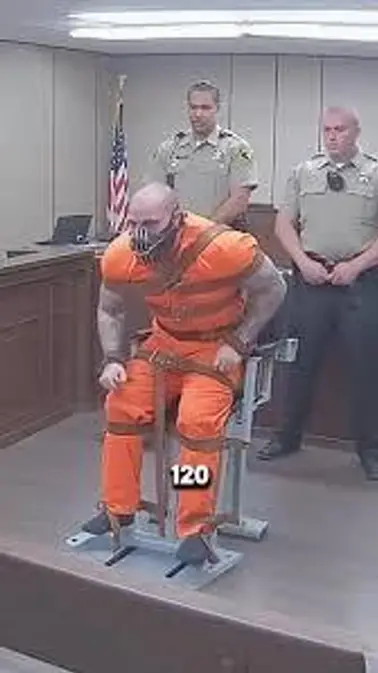
Unbelievable Courtroom Meltdowns in Fiction Where Characters Had to Be Physically Stopped

Long before these stories went viral, whispers circulated online—tales of courtroom chaos so wild that readers questioned whether anyone could have imagined them. Some claimed the scenes were “too ridiculous to be real,” while others swore the scripts must be inspired by
incidents no one dared discuss.

Whether exaggerated or cleverly disguised, one thing is clear: fictional courtroom meltdowns are far stranger than anything you’d expect in a place built on rules and order.

Courtrooms are normally associated with discipline, structure, and seriousness—a space where fairness prevails and proceedings move methodically. But in fiction, writers often toss out the rulebook entirely, turning the courtroom into a playground for absurdity, comedy, and drama.

Books, shows, movies, and sketches delight in characters behaving in ways a real judge would never tolerate. These over-the-top antics amplify tension, inject humor, and keep audiences guessing. Here’s a lighthearted tour of some of the most unforgettable fictional courtroom
moments, where chaos reigns supreme—and order is only restored with the help of heroic (and calm) court officers.

1. The Defendant Who Thought Touching the Judge Wins the Case

In a comedic sketch, a bewildered defendant declares: “If I touch the judge, I win!”

He sprints forward before anyone can stop him. Security intervenes just in time, but the character insists he “almost made it,” muttering like an athlete who missed the finish line by inches. Real courtrooms don’t work this way—but the comedic impact is unforgettable.

2. The Hyperactive Character Who Shoved the Defense Table

Another fictional courtroom sees a character buzzing with energy. As the prosecutor speaks, she kicks the floor and nudges the defense table forward, yelling: “Don’t control me—I’m an athlete!”

After repeated attempts to escape her seat, she’s secured with a restraint belt. Still, she continues fidgeting for nearly twenty minutes, much to the exasperation (and amusement) of everyone present.

3. The Man Who Tried to Bite a Guard… and Then the Microphone

One character leans threateningly toward a guard, then inexplicably attempts to bite the microphone, declaring: “It said speak into the mic—so I did!”

He’s restrained, the audience laughs, and the judge is left bewildered—proof that fictional courtrooms thrive on absurd unpredictability.

4. The Character Who Headbutted the Plexiglass Divider

In another tale, a character challenges the plexiglass barrier, slamming his forehead against it with dramatic flair. No one is hurt, but the judge’s reaction adds perfect comedic timing. Wrist and ankle restraints follow, though the character continues “air headbutts” like a performance artist in a slapstick ballet.

5. The Woman Who Tried to Tip the Witness Stand

A frustrated woman attempts to tip the witness stand with the witness still inside, shouting: “I’m not done yet! That was just my warm-up!”
Security prevents disaster, but the scene becomes one of the most iconic comedic moments in the series.

6. The Character Who Crawled Across the Floor Like a Ninja

After receiving bad news, a character lies flat and crawls forward across the courtroom carpet, announcing: “You can’t stop me—I’m in snake mode!”

Eventually returned to his seat with restraints, his antics leave the audience in stitches.

7. The Character Who Tried to Throw His Own Chair

Already strapped to his chair, a character hears the verdict and attempts to lift it dramatically—only to topple over like a turtle. He shouts: “This isn’t over!”

Security rights the chair, but the scene cements itself as a classic example of fictional courtroom absurdity.

Why Fiction Loves These Outbursts

These exaggerated moments exist for clear reasons:

Comedy & Humor — Absurdity contrasts with courtroom seriousness.
Dramatic Tension — High-pressure settings magnify reactions.
Character Development — Outbursts reveal quirks, flaws, and fears.
Social Commentary — Chaos underscores why order matters.
Calm Professionals in a Sea of Chaos

Fictional court officers are often portrayed as unflappable: “Sometimes they panic. Sometimes they perform. Sometimes they battle their own furniture. You just never know what’s coming.” Even amid absurdity, they restore balance.

✅ Conclusion

These fictional courtroom antics, while wildly exaggerated, highlight the creative contrast between order and chaos. Real courtrooms rely on rules, respect, and structure—but in fiction, anything goes. From sprinting toward judges to crawling across the floor, these stories let us
safely explore chaos, laugh at absurdity, and ultimately appreciate the stability that real courtrooms provide.

Please SHARE this article with your family and friends on Facebook.

Bored Daddy

Love and Peace

        She Moved In—And Tried to Push My Brother Out

        Family First: Choosing Love and Loyalty

        When I lost my parents, my life turned completely upside down. At 28, I was focused on carving out my own path, living independently, and planning for the future. Suddenly, overnight, I became the legal guardian of my 14-year-old brother, Liam. Everything shifted in an instant.
        Grief, fear, and uncertainty became constant companions, but we leaned on each other. In the midst of heartbreak, we forged a new kind of family—one not built by choice, but by necessity and love.

        For the next two years, we found our rhythm. Liam grew into his responsibilities with a quiet strength that left me in awe. He excelled in school, took on a part-time job, and pitched in around the house without complaint. Watching him thrive filled me with a pride I could barely put into words. Our bond was more than strong—it was unshakable. We became each other’s anchor, our safe harbor in a storm we never asked for.

        Then Melissa entered our lives. At first, she seemed perfect—intelligent, warm, attentive, and understanding. Everything I thought I wanted in a partner. I believed she could integrate seamlessly into our little world. When I invited her to move in, I was upfront: Liam was part of
        the package. She hesitated, then agreed, though she added a peculiar condition—she wouldn’t contribute financially to the household. I rationalized it, telling myself compromise was part of any relationship. I ignored warning signs because I wanted things to work, because I wanted to believe in her.

        I’ll never forget moving day. I had stepped out briefly to pick up ingredients for a special dinner I had planned for the three of us—a small gesture to welcome her into our home. But when I returned, everything had changed. Liam’s belongings—his clothes, books, even his
        backpack—were stacked on the porch. Melissa stood there, unnervingly calm, and said to him, “It’s time you stopped freeloading.”

        I watched Liam’s face twist with confusion and hurt, and my heart shattered in a way I hadn’t imagined possible. This wasn’t just a lack of respect—it was a betrayal. Melissa didn’t see Liam as family, as someone to love and protect. She saw him as an inconvenience, a burden to her comfort. That moment crystallized everything I needed to know.

        There were no second chances. I told her to pack her things and leave immediately. Anyone who couldn’t accept Liam, who couldn’t love him as I did, had no place in our home. That day taught me a harsh but invaluable lesson: family, loyalty, and unconditional love always
        come first. Liam and I remain a team, stronger than ever. We survived loss, betrayal, and the trials of growing up too fast. And through it all, we’ve learned that the people who truly belong in your life aren’t just the ones you choose—they are the ones who choose to stand by you, no questions asked, no conditions attached.

        Please SHARE this article with your family and friends on Facebook.

        Bored Daddy

        Love and Peace

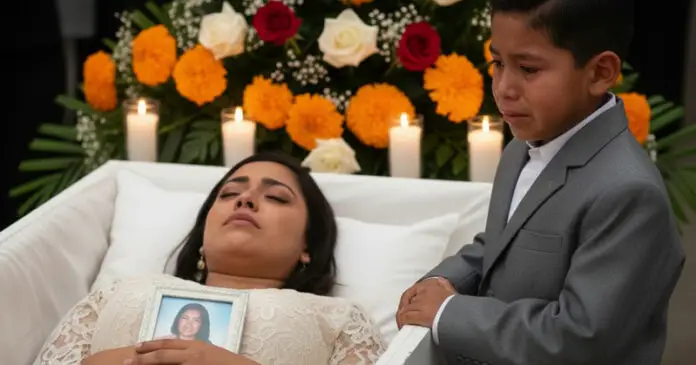
        A mother was prepared for burial after drowning — until her 5-year-old yelled, ‘Mommy said that isn’t her!’

        Mariana López, 32, was swept by the river, leaving her family mourning her tragic passing.

        Her body was retrieved the following day. It was swollen, and it didn’t resemble Mariana, but there was her necklace, and officials said it was not unusual for the body to become disfigured after being under the water for so long.

        At the small room, her family, friends, and neighbors gathered to say their final goodbyes. Her husband, Diego, was seated in the corner of the room and couldn’t stop crying. Her five-year-old son Jim clung to his favorite toy.

        And then, when the priest gave the final blessing and the pallbearers began to move close to the coffin in order to lift it, Jim yelled from the top of his lungs, “Stop! Mommy said it isn’t her. She told me it isn’t her.”

        Those around him whispered that the boy didn’t know what he was saying because he was grieving, but Jim insisted the woman in the coffin wasn’t his mother. And while everyone though it was the pain speaking, his father believed him. Diego himself questioned if that woman was Mariana, and what Jim said only made his suspicions grew stronger.

        The funeral was cut short and the coroner was called once again. Authorities asked for further examination which revealed that the woman’s DNA didn’t mach Mariana’s. So, where was Mariana?

        Jim explained that he had a dream the previous night of his mother sitting next to his bed and holding his hand. She was cold, wed, and breathed heavily, but she managed to tell him that she was still alive.

        The search for Mariana continued that same day, and after two days, she was finally located. Fragile, starved, but alive.

        She had been trapped in an abandoned cabin, a kilometer downstream from where they had found the other body.

        Authorities dubbed the case one of a mistaken identity. But what was most important of all was that Mariana was alive. She was confused and couldn’t recall the exact moment she got swept away by the river. Mariana received medical care and spent some time at the hospital before she was able to return home to her family.

        The body of the other woman was never identified.

        Please SHARE this article with your family and friends on Facebook.

        Bored Daddy

        Love and Peace

        How one misunderstanding transformed our bond for the better

        The ways we were raised have more power over us than we often admit or are aware of. Childhood habits settle deep and become default settings we carry into our adult lives. They decide what feels normal, what feels safe, and what feels unfamiliar. And when we enter relationships, those early patterns shape a great part of how we communicate, how we cope with stress, or how we show love.

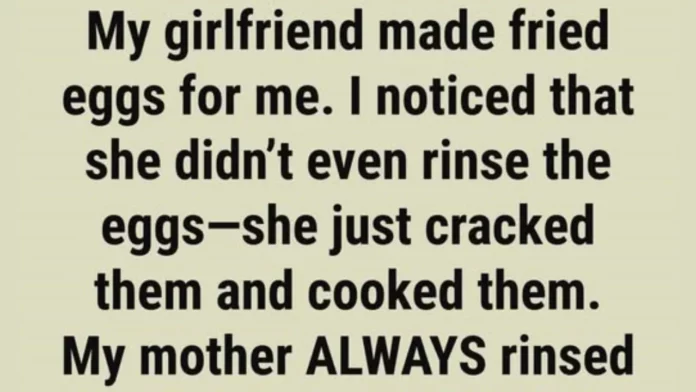
        That morning, Mira got up early in order to prepare breakfast for Evan. They both looked forward to a peaceful time spent together, but then, one tiny remark changed the course of the entire day and the days that followed.

        Mira took some eggs and cracked them straight into the pan without rinsing them. But that triggered a reaction at Evan, who looked at her confused. At one moment, he uttered, “Shouldn’t you be rinsing them first? My mom always did.”

        He didn’t think his remark was a big deal. It was just something he was used watching while growing up. He remembered his mom always saying eggs need to be rinsed before cooking. However, Mira didn’t feel the same. She got offended by Liam’s words. The mood shifted, and the kitchen suddenly felt heavier than it should have. In fact, she wasn’t hurt because of the comment about her cooking but because of the comparison Liam made.

        She woke up early to make him breakfast, and instead of gratitude, her husband corrected her.

        Once things settled, Evan apologized. He explained that rinsing eggs wasn’t a must, just a habit he picked up from his mom, something that felt familiar and safe.

        He hadn’t realized how it sounded. Mira, on the other hand, admitted she simply wanted her effort to matter and not to be measured against someone else’s routine.

        That evening, they cooked together again and found their own way.

        Mira and Evan learned that what makes a relationship perfect is the ability to listen, adjust, and let go of old habits that don’t truly matter.

        Please SHARE this article with your family and friends on Facebook.

        Bored Daddy

        Love and Peace