7 effective exercises to reduce heel pain and manage plantar fasciitis naturally

0

Many of us have experienced that first jolt upon waking up as we step down from our beds. It’s the painful sensation that can make a simple trip from one end of the room to the other as uncomfortable as walking on nails. If this resonates with you, chances are you suffer from plantar fasciitis, a prevalent ailment that results from inflammation or minuscule tears in the plantar fascia, the strong ligament that supports your arch.

The good news? Typically, you don’t have to book an appointment with a surgeon or stock up on medications to make yourself feel better. The evidence is clear – your body’s greatest healing power comes at the end of your feet. As reported by the Journal of Orthopedic & Sports Physical Therapy (JOSPT), stretching and strengthening are the key.

In fact, there is even evidence in the literature stating that the simple use of a stretching program can bring about major improvement in more than 50% of people in a matter of weeks according to ResearchGate. And when you combine your stretching with strength training, you build yourself a “support structure,” which will relieve tension in your foot and help regain your mobility.

Are you tired of limping around? Then take these seven scientifically proven exercises and start healing yourself.

The Seated Plantar Fascia Stretch (The “Gold Standard”)

If you only have time for one stretch, make it this one. Unlike general stretches, this one targets the exact area where the pain starts. According to clinical research by the American Academy of Family Physicians, this stretch is often more effective for chronic cases than standard calf stretches.

How to do it: Sit down and place the affected leg over the other at the knee. Then, hold your toes and gently pull them toward your shin.

Goal: Hold the position for 20–30 seconds.

Quick tip: Try doing this in the morning before getting out of bed to “pre-stretch” the tissue.

The Wall-Supported Calf Stretch

We all know that our body is a chain, and most of the time, the culprit behind your heel pain is actually the calf muscle in your body. When your calf muscles are tense, they tug at the Achilles tendon, which tugs at your heel.

    How to do it: Stand with your back towards a wall, placing your arms up against the wall at the level of your eyes. Place one leg behind, ensuring that it remains straight. Bend at your waist and lean forward until there is a stretch in the rear part of your leg.

    Goal: Hold each for 30 seconds.

    Why it works: Lessening the strain on the calves results in decreased mechanical stress on your plantar fascia as explained by the Foot & Ankle Centers.

    Towel Curls (The Arch Builder)

    What may seem to be a mere trick actually works to activate the intrinsic muscles—those small muscles within the foot that prevent the arch from collapsing.

      How to do it: Start by sitting and placing a thin towel on the smooth floor. With just your toes, “scrunch” the towel inward. After it has been scrumpled, extend it out again and repeat.

      Why it matters: Activation of these small muscles leads to a built-in orthotic and helps relieve the fascia of the weight.

      Controlled Heel Raises

      Strength is the only safety net you’ll need to ensure a future free of pain. These heel raises will strengthen the calf and arch muscle groups, which will help to better distribute the load created by your body weight.

      How to do it: Stand with feet placed shoulder-width apart. Gradually raise yourself on tiptoes; hold steadily for two seconds, then lower back down.

      Goal: 2-3 sets of 10-15 repetitions.

      Scientific Proof: According to research published on PMC, strengthening muscle groups to improve load distribution is crucial in alleviating walking pain.

      Marble Pickups

      Like towel curls, marble pickups are another exercise that helps improve foot dexterity. The goal is to encourage the foot to move actively rather than remain passive.

      How to do it: Scatter a few marbles (or even pens or small objects) on the floor. Use your toes to pick them up one by one and place them into a container.

      Effect: Modern rehabilitation programs often include “foot core” exercises to help counter muscle imbalances that can contribute to inflammation.

      Rolling Massage (Active Release)

      Although this is not strictly considered a workout, but rather a soft tissue massage technique, it plays a crucial role in the list of techniques presented here. It can be seen as a kind of “kneading out” of the knots in the foundation of your foot.

      How to do it: Sit on a chair and place either a tennis ball, lacrosse ball, or even a frozen water bottle underneath your foot, and roll it from your heel to the base of your toe.

      The advantage: It will enhance blood circulation in that particular area and give you temporary neurological pain relief, which will make subsequent stretches easier.

      The Short Foot Exercise

      It is the “plank” exercise for feet. It may look simple, but it is highly effective in firing up the muscles supporting your arches.

      How to do it: Place your foot flat on the floor. Then, pull the ball of your foot towards your heel without flexing your toes. The foot becomes shorter while the arch lifts.

      Goal: Maintain the arch lifting for 5 seconds before resting.

      Purpose: This exercise strengthens the foot structure so that there will be no collapsing of arches, which usually leads to plantar fasciitis pain.

      Why This Works

      While the suffix “-itis” implies active inflammation, recent sports medicine research shows that chronic heel pain should be referred to as plantar fasciosis because it involves more than simply inflammation of the tissues.

      Your foot is truly an architectural masterpiece and the plantar fascia is the “string” of the foot “bow.” If you do not have proper muscle support or your foot’s “strings” are too tight, then you are putting them under extreme strain.

      Numerous studies suggest that treating symptoms without addressing the underlying mechanics is like bailing water out of a leaking boat without fixing the hole.

      Stretching (the “release”): Tightness in the calf muscles and the plantar fascia increases tension. Stretching helps reduce this tension and signals the nervous system to relax.

      Strengthening (the “shield”): Exercises such as high-load strength training—for example, heel raises with a towel under your toes—help train the body to tolerate greater load. Over time, this encourages the tissue to adapt and become stronger through a process known as mechanotransduction.

      Your Road to Recovery

      The road to recovery isn’t always a straight line, but it is predictable based on research data. Most evidence-based programs suggest a timeframe of 4–8 weeks for meaningful structural changes to occur. Think of it like preparing for a 5K—you can’t rush the body’s adaptation process.

      Stretching (2–3 times per day): Targets “first-step” pain. By stretching your calves and toes before getting out of bed, you reduce the risk of micro-tears caused by suddenly loading cold, stiff tissue.

      Strength training (1–2 times per day): This involves progressive overload. Start gradually—the goal is to activate the muscles without triggering a flare-up that carries into the next day.

      Conclusion

      Heel pain isn’t just physical—it can become mentally exhausting, turning something as simple as a walk in the park into something you have to think twice about. It’s frustrating when “quick fixes” like expensive inserts or ice packs only offer short-term relief.

      By focusing on a steady routine of stretching and strengthening, you’re not just covering up the pain—you’re working on the root of the problem. Be patient with your feet; they’ve carried you a long way. With a consistent, research-based approach, you’re not only moving toward recovery—you’re helping make sure the pain doesn’t come back.

      Please SHARE this article with your family and friends on Facebook.

      Bored Daddy

      Love and Peace

      Expert breaks down why Donald Trump did not react during WHCD assassination attempt

      0

      The shooting that took place during the White House Correspondents’ Dinner on April 25 remains a hot topic with experts and the public still questioning how the suspect managed to enter the place and fire gunshots. Further, many are convinced the entire incident was staged, claiming among the rest that Press Secretary Karoline Leavitt’s words in an interview with Fox News that “there will be some shots fired tonight in the room” were “a slip of the tongue” and a sign of foreknowledge, according to CBS.

      According to the news report, the suspect, identified as Cole Thomas Allen, 31, was reportedly carrying a shotgun, handgun, and several knives while charging toward the security checkpoint near the staircase leading to the room where the dinner was being held. US Secret Service agents were able to tackle him before he entered the hall, and an exchange of fire followed. One of the officers was injured but survived due to wearing a bulletproof vest.

      According to ABC News, early evidence suggests that Allen’s plan was to target as many people as possible in a mass shooting. He has since been charged with the attempted assassination of President Donald Trump. He also faces charges of transporting a firearm or ammunition across state lines, as well as discharging a firearm in connection with a violent crime. The allegations were outlined during his arraignment in US District Court in Washington, D.C.

      Reuters via Independent

      Footage from the Washington Hilton shows the sequence of events as they unfolded. While many people sought shelter under tables, Trump administration officials were escorted out of harm’s way.

      Initially, Donald Trump remained in place. An expert later observed that the contrast between the president and those around him was notable.

      Body language expert “Dr. G” has now revealed why Donald Trump didn’t move.

      “He looks indifferent, almost unimpressed by what’s going on around him,” the expert said. “If you look at the three people that he’s surrounded by… we’re all seeing the freeze response… Freeze is the first step.”

      Dr. G, whose YouTube channel has more than 650,000 subscribers, went on to explain that what viewers saw in the clip was a “textbook” example of how people react to sudden danger, noting that “three of them are all freezing.”

      As the situation escalated, those around Donald Trump began to move, shifting into a “flight” response.

      Danny KEMP and AFPTV teams / AFP via Getty Images

      “You’ll notice that… they all leaned backward. Even though physically that’s not actually going to do anything, that’s part of the instinct,” Dr. G said.

      The body language expert stated that, despite the evident danger, Donald Trump’s manner seemed unusual.

      “President Trump still does not seem to be particularly concerned about what’s going on. You’ll notice his facial expression doesn’t really change through any of this,” the expert concluded, adding, “Part of what I think this says is that President Trump may interpret danger differently than other people.”

      Please SHARE this article with your family and friends on Facebook.

      Bored Daddy

      Love and Peace

      Erika Kirk faces backlash for White House Correspondents’ Dinner

      0

      Ever since her husband’s death, Erika Kirk has been under the spotlight, but not for all the good reasons. Following the shooting that took place at the White House Correspondents’ Dinner, she received backlash for her comments regarding the incident.

      It was on April 25 that President Donald Trump, First Lady Melania Trump and a number of officials gathered at Washington D.C. for the annual event when an armed man, later identified as 31-year-old Cole Tomas Allen, charged at a security checkpoint with a shotgun, handgun, and knives. The guests were forced to evacuate as US Secret Service agents were able to tackle him before he entered the hall, and an exchange of fire followed. One of the officers was injured but survived due to wearing a bulletproof vest.

      Following the chaos, it was Erika Kirk’s comments that became one of the night’s most discussed moments.

      Before long, people online started criticizing how she reacted. One person wrote, “Notice how she didn’t say anything out loud until she saw the camera.”

      “Everything about her just comes off as so fake and scripted,” another added. One person posted, “She’s not crying she’s just mad the spotlight wasn’t on her the whole night until the shots hit.”

      According to those present, Erika Kirk appeared shaken and tearful as security led her out after gunshots were heard. Witnesses say she kept repeating, “I just want to go home,” while trying to leave.

      For many attendees, the moment felt especially intense, coming just over six months after Charlie Kirk was killed at a speaking event at Utah Valley University on September 10. The sound of gunfire at another public gathering is believed to have triggered strong emotional responses.

      Many responded with sympathy toward Erika, saying her reaction was understandable.

      “You people are f***ing sick. Whatever you think or feel about her, remember that her husband was f***ing killed on camera. And their children will forever live without a father,” one person wrote.

      Another person added, noting that her husband Charlie Kirk had reportedly been killed just months earlier, “Y’all lowdown that lady just saw her husband killed on his platform in 4k. That shit was just months ago she got ptsd.”

      The evening of April 25 took a sudden turn when gunfire erupted near the venue. The incident occurred at approximately 8:30 p.m., roughly 20 minutes after Donald Trump and Melania arrived in the ballroom.

      Danny KEMP and AFPTV teams / AFP via Getty Images

      In a press briefing taking place after the attack, Trump called the suspect a “whack job” and a “lone wolf.”

      “My impression is he was a lone wolf whack job. These are crazy people,” he said and continued: “I saw a room that was just totally unified. It was, in one way, very beautiful, a very beautiful thing. To see a man charge a security checkpoint armed with multiple weapons, and he was taken down by some very brave members of the Secret Service, and they acted very quickly. It is always shocking when something like this happens.”

      Wolf Blitzer, who was present at the event, described the moment, “All of a sudden, I start hearing g*nshots in the hall right near me. And the next thing I knew, a police officer threw me to the ground.”

      Reports indicate that over 2,000 attendees took shelter under tables as at least five shots were fired. The event was officially called off by 9:45 p.m.

      Subsequently, D.C. US Attorney Jeanine Pirro confirmed charges against the suspect, stating, “Make no mistake, there will be many more charges.”

      Please SHARE this article with your family and friends on Facebook.

      Bored Daddy

      Love and Peace

      7 smells snakes hate and how to use them to keep these slithery visitors away from your home

      0

      There are numerous claims that snakes possess an incredibly advanced sense of smell, although it is nothing like what we humans have. Instead of simply smelling using their nostrils, they rely on a unique organ referred to as the Jacobson’s organ. It is a sensory apparatus designed specifically for the purpose of detecting particles of chemicals through the tongue. As a result, the flicking of a snake’s tongue can be perceived as the process of tasting the surrounding air in order to analyze the environment.

      Given how responsive they are to such chemical signals, it would make sense to think that an extremely strong and foul odor would drive them away. It does seem logical since the smell will either overwhelm them or be nauseating, which means that the snake will not want to linger in the area. However, it is not as straightforward as it sounds. Although a particular smell may cause discomfort in the animal and deter it from staying in the area for prolonged periods, there are no definitive studies on a particular smell that could repel the snake.

      It is also important that you consider the factors that influence the behavior of snakes before buying a number of products such as oils or powders. Generally speaking, snakes visit areas that provide them with the “triple big,” including food, shelter, and suitable weather conditions. If your property provides abundant sources of insects and rodents, along with suitable shelters, it is likely that the snake will remain there, even if the area doesn’t smell right.

      This is the reason why the actual “secret” to preventing snakes involves more physical work than using any magic smell. Mowing the grass, removing heaps of firewood, sealing cracks, and ensuring that you do not have mice are far better approaches compared to using a repellent. Furthermore, if you have venomous species of snakes, then you definitely need to contact an expert, not experiment with DIY solutions.

      Clove and cinnamon Oil

      Clove and cinnamon oil, for example, may be suggested as natural snake repellents. Both these oils have extremely high concentrations of highly irritating substances that will most certainly annoy a snake’s sensory receptors. Some individuals dilute the oil and apply it near doors and entryways to form a minor barrier.

      The fact is that these oils are very concentrated. Extreme caution should be exercised when using them since they may irritate your skin and even your eyes. Moreover, they may be harmful to your pets and household animals; therefore, you shouldn’t apply them undiluted.

      The sulfur method

      This is another type of traditional remedy which has been used since ages. The principle behind using sulfur is that snakes avoid areas where the environment is very foul due to the stench emitted by this substance.

      It can be applied to the edges of your property or around the deck area. But honestly, it has its downsides. For one, it smells terrible to humans, too. It can also mess with your soil quality over time and isn’t great for your plants or certain building materials. It’s a bit of a “cure is as bad as the disease” situation for many homeowners.

      White vinegar

      White vinegar is one of the common solutions used in areas where moisture is present, such as the edges of ponds, poolside decks, or damp crawl spaces. It is highly acidic, and its strong smell is thought to interfere with a snake’s ability to “taste” the air properly.

      It may work in situations that require a quick, targeted response, but white vinegar acts as a non-selective herbicide. It can damage plants and alter the pH balance of your soil, so it’s not something you should use extensively in your garden.

      Garlic and onions

      Next come garlic and onions. These two have their pungent sulfur smell, particularly once they’re diced up or minced, that supposedly drives snakes crazy.

      People will leave these out near entrances, or make their own “smell sprays,” but here’s the rub: Once that stuff starts to decompose, it attracts all sorts of critters, including insects and vermin—animals that snakes prey upon. Plus, onions and garlic are actually dangerous for dogs and cats to eat. And again, the science on whether a snake actually cares about the smell of your kitchen scraps is pretty thin.

      Citrus, lemongrass, and citronella

      Citrus and other plants such as lemongrass and citronella are some of the most popular organic pesticides out there. These are the plants with strong fragrances that we usually love, yet bugs, and according to some snakes too, don’t.

      Lemongrass stands out since it works against insects. The fewer insects you have, the fewer foods snakes will come for in your garden. In terms of citrus, you can use either dried or diluted fruit oils on patios. However, since they degrade very quickly, they need to be frequently reapplied, especially right after rainy days.

      Cedar oil and cedar mulch

      Cedar is yet another major player. Cedar has its natural oils, which produce the distinct “closet” odor, said to be particularly unpleasant for reptiles. Adding cedar mulch to your landscaping will also prove helpful since it helps maintain a dry environment that won’t attract insects.

      This choice seems attractive, practical, and decorative; however, it is not an ultimate solution. One more aspect to consider is that it may drive away beneficial insects as well.

      Peppermint oil

      Because of that intense menthol kick, peppermint oil is a frequent flyer on these lists. The thought is that the smell is just too overwhelming for a snake’s sensitive Jacobson’s organ to handle.

      On the other hand, you need to be very careful when using peppermint oil if there are any animals around your home. It is highly toxic to cats and can also make dogs sick if they inhale it or come into contact with it.

      The reality check

      Though all the scents listed here might be an interesting topic of conversation, none of them is guaranteed to work. Whether or not the effectiveness will be achieved, along with the degree of success that might be reached, will depend on weather conditions, type of snakes, and dosage applied.

      You should have in mind that a lot of these methods can also accidentally hurt your plants or put your pets at risk. That’s why it’s better to think of scents as a tiny, optional “extra” rather than your main line of defense.

      In reality, the best way to protect your property from snakes isn’t with bottles of oil; it’s with some yard work. Snakes have no reason to stick around without food sources (like rodents) and places to hide (such as tall grass or debris).

      Unsplash

      Add some basic maintenance to your snake-proofing efforts, along with securing your home’s perimeter, and you’ll see far better results than with any spray you could make from vinegar or garlic.

      It is not difficult to comprehend why we would desire a “magic smell” that could solve our problem. It seems straightforward and effortless. Snakes, however, do not think like us. Survival is their priority. If your yard satisfies their basic needs, then sprinkling a small amount of cinnamon will not deter them from staying put.

      Once you understand that they’re just looking for a meal and a nap, it’s much easier to focus on the stuff that actually works. Prevention isn’t about finding the perfect perfume; it’s about making your space somewhere a snake doesn’t want to live.

      Please SHARE this article with your family and friends on Facebook.

      Bored Daddy

      Love and Peace

      A hesitant beginning that slowly turned into something meaningful

      0

      I’ve been reflecting quite a bit on that night recently. You see, when we get caught up in doing things, sometimes our minds don’t allow us to notice the real happenings that surround us, and that is exactly where I found myself at the time, trapped in the chaos of my own mind. Well, it seems that everything that happened that evening was rather chaotic – but in the best way possible!

      My night did not start in a spectacular way; it was a quiet evening, too quiet for that matter. It was actually really quiet. Too quiet. I just had this low, steady kind of nervousness that had been sitting in the pit of my stomach for a few days. You know that feeling where your heart isn’t exactly racing, but you just feel… heavy? Like you’re waiting for something but you’re not sure if it’s going to be good or bad? Yeah, that.

      I had thought about asking him out so many times that it wasn’t even funny anymore. Honestly, I probably went through a hundred versions of what I would say before getting my teeth brushed or heading into work. Once I finally made it happen, everything was no longer natural or authentic. Instead, it became this prewritten, rewritten piece that I edited until there wasn’t any authenticity left. Anything I could think of always either seemed way too informal, like “Hey, whatever, if you’re bored,” or too extreme and intense.

      When he finally did say yes, however, I don’t believe that I had much of a reaction. At least I was sure that I didn’t; I must have just nodded and mumbled something like ‘Cool.’ However, it stayed inside of me all the same, this thing that wasn’t joy but was there and persisted in occupying this tiny portion of my thoughts.

      The day of the date itself, however, saw me tell myself not to think too much about it. Of course, that statement alone was my subconscious way of saying, “Oh no, here I go again thinking about every second of this thing!” While I was getting ready, I felt completely hopeless, changing things up multiple times before deciding on the perfect outfit. I thought about whether I looked like someone who was trying too hard, or worse, someone who hadn’t bothered to put any effort into the whole ordeal. Does this jacket make me seem like I am trying to act like something else? Are these shoes really matching the atmosphere of the date? And yet, I was trying to convince myself not to worry because it was just a dinner date after all, where two people get together and share some food. That was all.

      Everything seemed fine when we actually met up. In fact, there really wasn’t anything “wrong.” He was respectful, and he may have been a tad bit careful, as if he was walking on eggshells. We sat down, went through our usual pleasantries and I thought, Oh, that’s good. We’ve started off nicely.

      Then things didn’t quite pan out the way I thought they would.

      The conversation… oh boy, it didn’t really flow. I’m not saying it was awkward. It’s not like we were bickering or keeping an icy silence between us. One minute he would respond to a question from me and after that nothing but silence. He wouldn’t continue the conversation or anything. He wouldn’t even say something like “and you, what do you think about it.” Just straight to the point and then dead silence again. And then it was me looking frantically in search of the next topic because I didn’t want to stay silent.

      In the beginning, I tried to make an exception. I figured maybe he just needed some time to get warmed up. People aren’t always ready to speak at once, right? So I continued to bombard him with questions. I asked him about his work and what he did after getting out of the office, discussed random things like the music or unusual decorations of the place. Nothing helped to break this deadlock.

      Pretty soon, those little intervals seemed too long for any reason other than the discomfort of being acutely conscious of their existence. Do you remember the last time five seconds felt like five minutes? That was when the real trouble began. Nothing had changed, except that I found myself thinking about the awkwardness I was experiencing. I was thinking about the silence, the way I was sitting, and the way the entire situation must have appeared to the diners at the nearby table. I found myself paying attention to things I normally wouldn’t notice—for instance, how loudly the couple two tables down from us was laughing and exactly how often the waiter passed by our table without stopping.

      That’s when the “real” overthinking began.

      Now, I really started to wonder whether I had done anything stupid by going ahead with my idea. Was he really interested in me? Or perhaps, he had simply agreed out of politeness and fear of offending me? All our past meetings came into question as well – maybe it was me who misunderstood his signals and invented the feeling between us?

      All this did not make its way outside, of course. I am not that courageous to say such harsh things in his face. On the exterior, I tried to appear as calm and friendly as possible, nodded whenever he said something, smiled where appropriate and continued to pepper the conversation with questions whenever there was some awkward silence.

      At one point, I guess I gave up. When it was time to order from the menu, I did not even bother flipping through the options anymore; rather, I ordered something I wanted—namely, a burger and fries. This decision became the most effortless choice I’ve made all night long.

      Pexels

      Fortunately, when our food arrived, it helped. Having a distraction in the form of food to do while eating provided some sort of comfort in knowing that, despite everything else going wrong in our interaction, we still have some semblance of normalcy. I grabbed a fry absentmindedly without realizing what I was doing, trying to find some peace and stop the barrage of thoughts racing inside my head.

      Then, he looked at my plate and asked, “Really?”

      Not necessarily loud or aggressive, but definitely shocking to the point where I immediately imagined all the worst things. Okay, so now he judges the food I’m eating as well. Great.

      However, when I actually took a look at him, his attitude towards me completely changed. He did not look judgmental; on the contrary, he looked like he was immensely relieved by something. He started to smile and actually burst out laughing. This laugh, however, was not a laughing-at-you one, rather more of a thank-god laugh.

      “You know I’ve been hoping that you order that,” he said, “and I just didn’t know whether it’s appropriate for me to have the same dish.”

      Needless to say, it took me quite some time to digest what had happened. It was absolutely not what I expected him to say, and the overall atmosphere on the table changed dramatically. The stress that had been weighing on my mind since Tuesday suddenly vanished.

      He started explaining, awkwardly, which somehow made it funny—he was trying so hard and didn’t even realize how obvious it was, and it ended up looking kind of cute. Then he admitted he’d been really nervous the whole time, not knowing how to act or what I expected. He was so afraid of messing things up that he froze and kept his answers short, worried he’d say something stupid otherwise. Even when ordering, he avoided something like a burger because he didn’t want to seem careless.

      I laughed while listening, because it all sounded so ridiculous out loud. And at the same time, I realized I had been feeling exactly the same way.

      However, later on, the interaction became… well, real. Not perfect, not Hollywood, but natural. We discussed, interrupted, joked about how extremely uncomfortable the first part of the evening was. There were no more awkward silences like before – just silences. We were just two people eating burgers and being frank.

      Reflecting on everything that happened, there was absolutely nothing new in the concrete reality – the same restaurant, the same food, the same people. It’s just that instead of guessing each other’s thoughts, we started to share them openly.

      What almost ended up being a total disaster turned into something else entirely. Not because it became “ideal,” but because it became honest. In a weird way, I think it was actually better that it started off so poorly. It gave us something to break through. It made the connection feel earned rather than just handed to us. And yes, it was messy, it was slightly embarrassing, and it was completely human. And honestly? I wouldn’t change it.

      Please SHARE this article with your family and friends on Facebook.

      Bored Daddy

      Love and Peace

      People online are discussing alleged ‘proof’ related to the reported Trump incident

      0

      It wasn’t long after the recent shooting at the White House Correspondents’ Dinner took place that a parallel story started spreading on the social media. Alongside actual reports of the incident, during which an armed suspect carrying a shotgun, handgun, and several knives charged toward the security checkpoint near the staircase leading to the room where the dinner was being held and shots were fired, a wave of social media users claimed the entire incident was staged.

      These conspiracy theories spread like a wildfire and flooded social media platforms almost instantly, with people calling it a “false flag” before the dust had even settled.

      What is known about the shooting comes from law enforcement. According to Washington Post and AP, the surveillance cameras captured the footage of the suspect, later identified as 31-year-old Cole Tomas Allen, charging at a security checkpoint with a shotgun, handgun, and knives. The encounter occurred around 8:36 pm when Secret Service agents stopped him and tackled him down after which he got arrested.

      Reuters via Independent

      Despite the official timeline, certain moments were promptly reinterpreted as signs of cover-up. There were two such cases that stood out on the Internet and captured the attention of theorists:

      Prior to the event, Press Secretary Karoline Leavitt was reported to have said in an interview with Fox News that “there will be some shots fired tonight in the room.” Although social media users interpreted the statement as “a slip of the tongue” and a sign of foreknowledge, available transcripts suggest the phrase referred to the upcoming “roast” of the press by the president, according to CBS.

      After the shooting, President Donald Trump, along with allies, posted on Truth Social suggesting the incident underscored the urgency of constructing a “Militarily Top Secret Ballroom” worth $400 million, which had reportedly been delayed due to legal reasons. According to PBS News, criticism surrounding the shooting included claims that it came at a “too convenient” time.

      President Trump posted a photo of a suspect in custody after the shooting incident at the White House Correspondents’ Dinner at the Washington Hilton on April 25, 2026. @realDonaldTrump/Truth Social

      The missing parts in the initial videos, especially a blurry video showing the evacuation of Vice President JD Vance, led to different interpretations of events. Theories were developed suggesting that the Secret Service looked “too calm,” thereby “proving” that the whole operation had been planned beforehand. Yet, according to The Guardian, conspiracy theories tend to arise during such times, when people lack trust in what is happening around them.

      Scholars who examine misinformation believe that this response is quite common. In environments where polarization reigns supreme, “incomplete evidence” does not come across as a normal feature of an inquiry process but as something rather suspicious.

      So far, there is no hard evidence confirming the allegation that the shooting was staged. There has been, however, confirmation of the existence of a legitimate security threat, the man behind the shooting and his manifesto, and an ongoing FBI investigation into an assassination attempt. It is the resilience of the story of the “staging” that tells us more about the current information environment than the actual events.

      Please SHARE this article with your family and friends on Facebook.

      Bored Daddy

      Love and Peace
      Viewers all pick up on the same troubling detail in footage from the attempted shooting involving Trump

      0

      The attempted attack during the 2026 White House Correspondents’ Dinner at the Washington Hilton has continued to draw attention, as more details emerge about how the incident unfolded and how quickly it was brought under control.

      According to the news report, the suspect, identified as Cole Thomas Allen, 31, was reportedly carrying a shotgun, handgun, and several knives while charging toward the security checkpoint near the staircase leading to the room where the dinner was being held. US Secret Service agents were able to tackle him before he entered the hall, and an exchange of fire followed. One of the officers was injured but survived due to wearing a bulletproof vest.

      In an interview on CNN’s “State of the Union,” Acting Attorney General Todd Blanche noted that, according to investigators, Allen planned to target not only the president but also officials of the administration, based on the manifesto he sent to his family.

      Reuters

      In a press briefing taking place after the attack, Trump called the suspect a “whack job” and a “lone wolf.”

      “My impression is he was a lone wolf whack job. These are crazy people,” he said and continued: “I saw a room that was just totally unified. It was, in one way, very beautiful, a very beautiful thing. To see a man charge a security checkpoint armed with multiple weapons, and he was taken down by some very brave members of the Secret Service, and they acted very quickly. It is always shocking when something like this happens.”

      According to Blanche, the suspected shooter is believed to have “traveled by train from Los Angeles to Chicago, and then Chicago to Washington, D.C., where he checked into the hotel where the correspondents’ dinner was at in the last day or two.”

      The focus of the event quickly shifted toward the historic weight of the setting itself. The Washington Hilton is far from a standard venue; it is the same hotel where, over four decades ago, an American president narrowly survived an assassination attempt.

      Danny KEMP and AFPTV teams / AFP via Getty Images

      On March 1981, only moments after delivering a speech to the members of AFL-CIO, John Hinckley fired upon President Reagan. The official records at the Ronald Reagan Presidential Library revealed that Hinckley used a .22 caliber revolver fitted with “devastator” bullets. One of these rounds ricocheted off the presidential limousine, striking Reagan under the arm and inflicting life-threatening injuries in what remains one of the most significant security breaches in modern political history.

      Decades later, the same scene became a setting for another assassination attempt on a president of the United States.

      Many were quick to point this out, with a viewer writing, “Ironically, the shooting occurred at the DC Hilton which was the same hotel where Reagan was shot and nearly assassinated 45 years ago.”

      Please SHARE this article with your family and friends on Facebook.

      Bored Daddy

      Love and Peace
      From itching to ulcers: understanding stasis dermatitis and what it reveals about your circulation

      0

      When it comes to the outward physical signs of aging, we all expect to see a few more gray hairs here and there, perhaps even some wrinkles under our eyes. However, signs that reflect our overall vascular health are more likely to appear below the neck—particularly around the ankles and shins. From an uncomfortable feeling of heaviness in the legs to the appearance of reddened patches of skin, a condition known as stasis dermatitis may gradually develop.

      Not only does it present itself as a typical rash, but stasis dermatitis can also be seen as a “smoke alarm,” warning of underlying problems within the circulatory system. It serves as a visible reminder of the effort our veins must make to work against gravity and return blood to the heart.

      What exactly is stasis dermatitis?

      Stasis dermatitis is an inflammatory skin condition that falls under the category of venous eczema. The condition predominantly affects the lower legs due to the difficulty faced by the circulatory system in this particular part of the body. The body must use the valves present in the veins of the leg, along with the pump action of the calf muscles, to send blood from the feet towards the heart.

      However, when either of these is weakened—resulting in a condition called chronic venous insufficiency (CVI)—it causes blood to collect in the lower legs. The buildup (stasis) creates increased pressure in the venous system. Per the Cleveland Clinic, this hydrostatic pressure causes leakage of protein-rich fluid, as well as other elements, including red blood cells, from capillaries into the skin tissue.

      The body perceives this leaked fluid as a foreign invader, triggering an immune response. According to recent studies, there are various inflammatory mediators such as matrix metalloproteinases and interleukin-31, which are considered the most crucial connection between venous hypertension and skin alterations.

      The evolution of symptoms: From itch to ulcer

      One of the most deceptive aspects of stasis dermatitis is how innocently it begins. The condition is prevalent in approximately 6% to 7% of adults over the age of 50, and this number can rise to 20% in those over 70, according to a study published in Springer Nature Link.

      Early warning signs:

      The first sign is that the skin over the ankles looks thin or “shiny.” Other signs include:

      Pigmentation: A discoloration of the skin in a reddish or yellowish-brown color, like a bruise that won’t fade.

      Pruritus: This is the most annoying symptom because it causes an itch-scratch cycle, which damages the skin’s barrier.

      Edema: Swelling caused by fluid retention, which is more pronounced toward evening but subsides overnight.

      Later symptoms: Chronic stage

      With time, the skin begins to show physical changes due to the persistent leakage of red blood cells containing iron. Hemosiderin deposition causes permanent pigmentation of the skin in a tea-like color or dark brown. There is a sensation of heaviness or pain in the legs, even after standing for a brief period.

      Advanced progression: Lipodermatosclerosis

      The inflammatory response may result in scarring of fat under the skin. This condition referred to as lipodermatosclerosis, leads to the skin becoming very tough, thick, and firm. Some patients exhibit a very thin leg just above their ankle but still having a swollen calf, which is sometimes referred to as the “inverted champagne bottle” leg.

      The final stage: Venous ulcers

      The most severe complication is the formation of venous ulcers due to the poor oxygen supply from the blood vessels to the skin cells. The slightest injury to the skin may result in an open wound that does not heal because of poor oxygenation in the region. According to research conducted by The Journal of Vascular Surgery, more than 80% of leg ulcers arise from this condition.

      The root causes: Why does circulation fail?

      The human body is an exquisite piece of biological engineering, yet it too ages and breaks down. Venous insufficiency, which leads to stasis dermatitis, occurs when the valves fail to open and close properly.

      Causes of this valve malfunction include:

      Deep Vein Thrombosis (DVT): Past DVT causes scarring in the walls of the veins, destroying the valves.

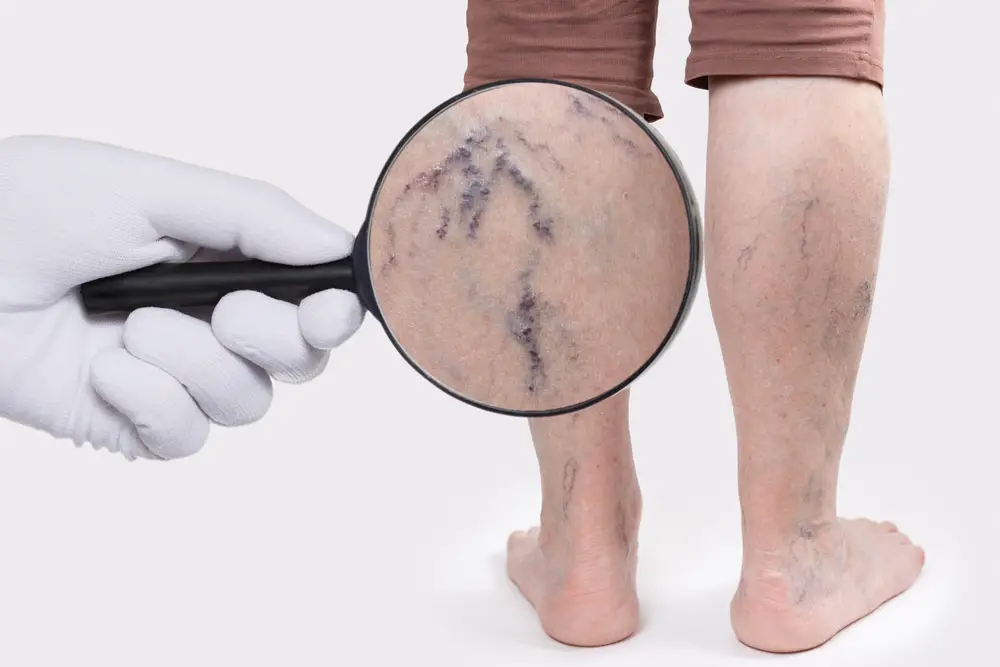
      Varicose Veins: Bulging, twisted veins indicate that blood flows against gravity, putting extra pressure on the valves.

      Heart Failure: A failing heart struggles to pump blood effectively, causing blood to pool in the legs.

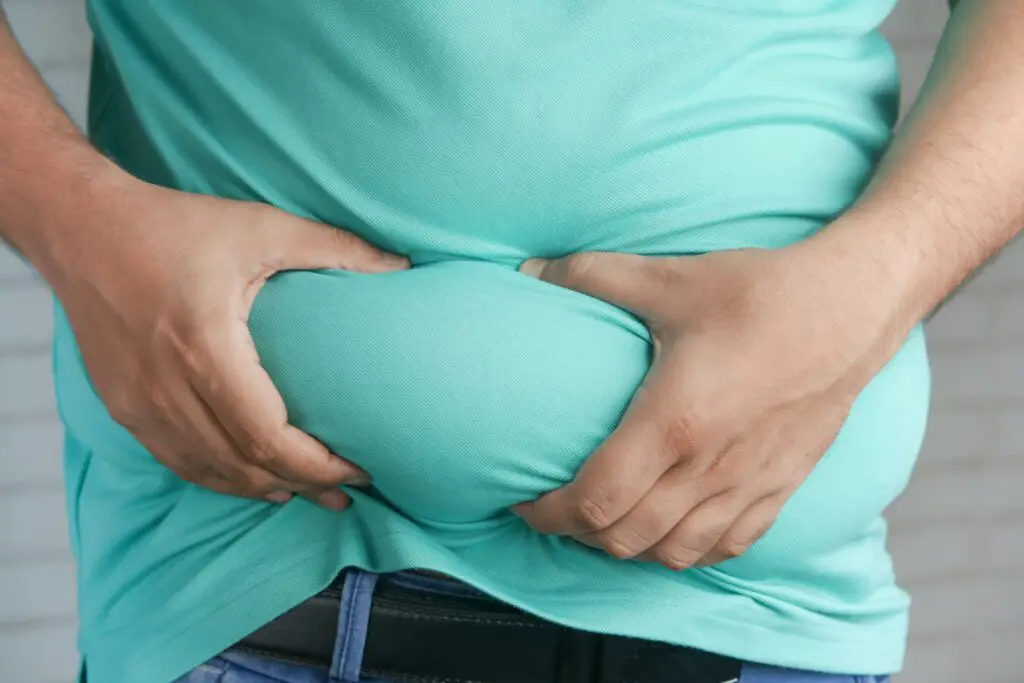
      Obesity: Extra pounds place tremendous strain on the pelvis and surrounding veins, preventing blood flow out of the legs.
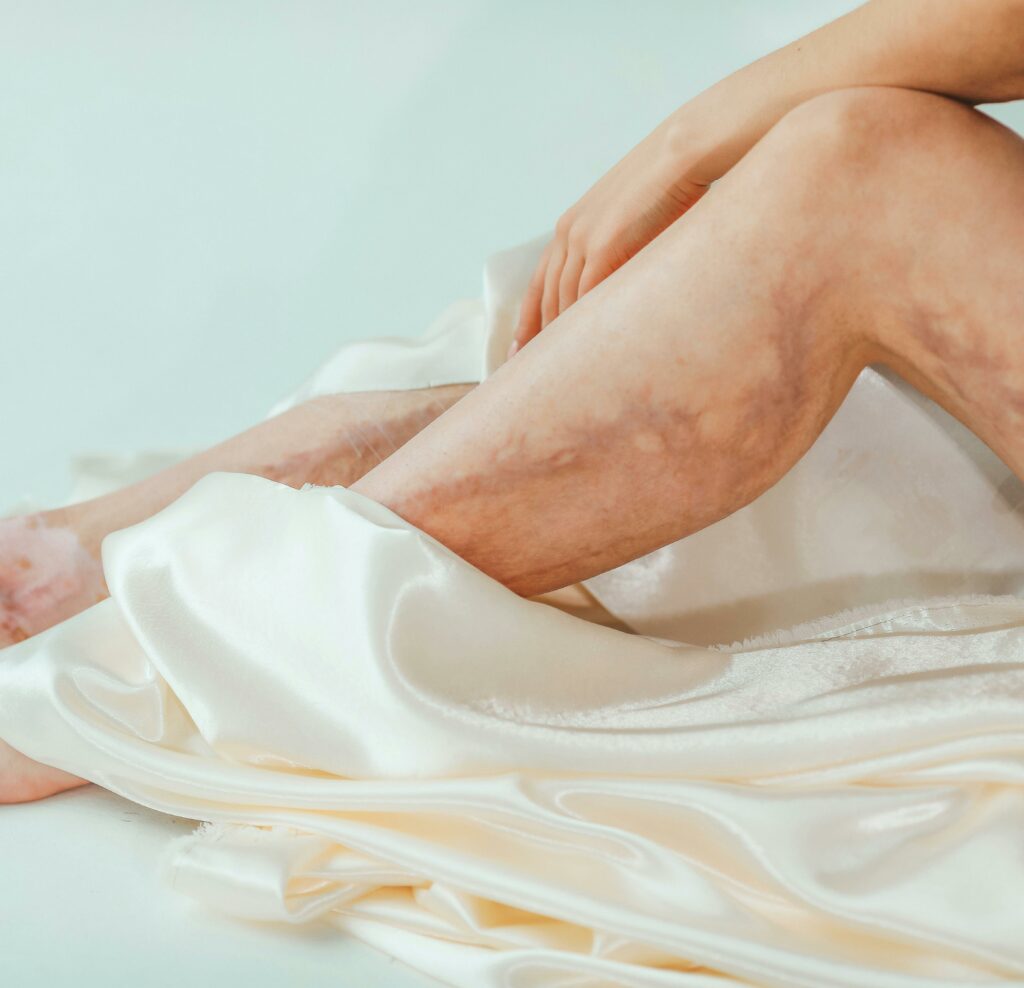
      The National Institute of Health (NIH) highlights that one’s age is a non-modifiable risk factor in which the aging process causes a loss of tissue elasticity and the veins naturally become less flexible.

      Identifying risk factors

      Although age and genetic factors come into consideration, lifestyle becomes the critical determinant. Those with the greatest risks are:

      The “standers” and “sitters”: Teachers, nurses, and desk job workers whose calf muscles fail to move due to hours spent in one place.

      Multiple pregnancies: Pregnancy results in an increase in blood volume and pressure on the abdomen, placing excessive strain on the veins.

      Salt intake: Increased salt intake results in water retention.

      Lack of activity: The “muscle pump” effect provided by exercise does not take place.

      Diagnosis and modern intervention

      If your symptoms indicate something more serious than “dry skin,” it’s time to consult a specialist, either a vascular surgeon or a dermatologist. Usually, the diagnosis can be easily made using a physical examination as well as some testing procedures.

      Venous Doppler Ultrasound is an imaging technique that is considered the standard for diagnosing venous insufficiency. The procedure involves the use of high-frequency sound waves to visualize blood flow, so the exact spot of malfunctioning valves can be identified. According to a study published in the journal Circulation, such a diagnostic procedure is crucial when differentiating stasis dermatitis from other skin diseases, such as cellulitis (a bacterial infection).

      Treatment of stasis dermatitis demands both internal and external treatment.

      The Best Option: Compression
      The single best way to treat stasis dermatitis is by using compression. This works by applying pressure externally to help squeeze the blood out of the leg, simulating the effect of working valves.

      Remember: Compression must be initiated only by a doctor. In cases where there is peripheral artery disease, the application of compression could be dangerous.

      Skin Care
      To address the “dermatitis” problem, doctors will use:

      Topical Steroids: To reduce inflammation and relieve itching.
      Emollients: These are greasy substances that lack smell. They work by helping repair damage to the skin.

      Antibiotics: These are used only when an infection such as cellulitis occurs.

      If the venous reflux problem is quite serious, contemporary medicine provides options such as minimally invasive surgery. This might involve endovenous laser ablation or sclerotherapy, which “seals” up the problematic veins, allowing for rerouting of the blood through healthy veins, thus reducing skin pressure.

      Prevention

      You do not have to wait for any signs of discoloration to begin guarding yourself against issues with your blood vessels. Prevention is mostly associated with mobility and pressure in your body.

      “Elevate” Principle: You should strive to keep your legs elevated above the level of your heart for about 15 minutes, three times a day. Gravity will help you in this case.

      Keep Moving: Walking can be considered an excellent way to support your blood vessels. The reason is that walking helps contract the calf muscles in your legs, creating another pump for your body.

      Inspect Your Skin: Using a mirror, examine the back of your ankles for possible appearance of new spider veins or discoloration.

      Control Weight: Reducing weight can help prevent further progression of CVI.

      Conclusion

      Stasis dermatitis serves as a continual reminder of how interconnected the human body is. An issue with the heart or veins ultimately makes itself known through the skin. Though it may be concerning due to dark spots and an itchy sensation, stasis dermatitis is treatable if addressed early.

      Through movement, the use of compression where necessary, and heeding the signals sent by our legs, we can help keep ourselves healthy and ensure the safety of our vascular system. We should not ignore our circulation until an infection occurs.

      *Medical disclaimer: The information provided in this text is for educational and informational purposes only and is not intended as medical advice, diagnosis, or treatment. It should not be used as a substitute for consultation with a qualified healthcare professional. Always seek the advice of your physician or other qualified health provider with any questions you may have regarding a medical condition. Never disregard professional medical advice or delay seeking it because of something you have read here.

      Please SHARE this article with your family and friends on Facebook.

      Bored Daddy

      Love and Peace