
From itching to ulcers: understanding stasis dermatitis and what it reveals about your circulation

0

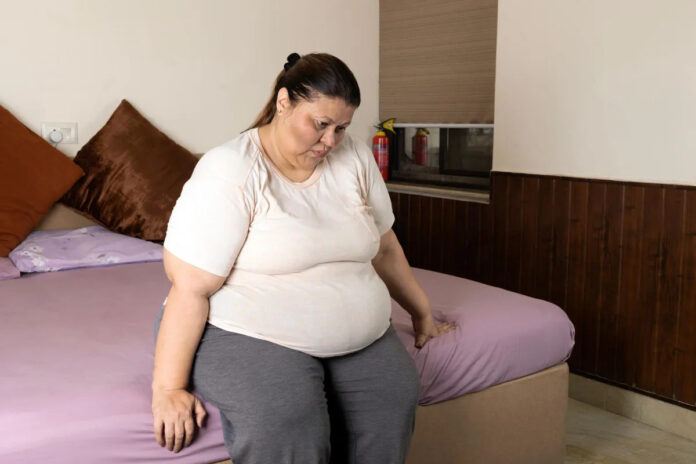
When it comes to the outward physical signs of aging, we all expect to see a few more gray hairs here and there, perhaps even some wrinkles under our eyes. However, signs that reflect our overall vascular health are more likely to appear below the neck—particularly around the ankles and shins. From an uncomfortable feeling of heaviness in the legs to the appearance of reddened patches of skin, a condition known as stasis dermatitis may gradually develop.

Not only does it present itself as a typical rash, but stasis dermatitis can also be seen as a “smoke alarm,” warning of underlying problems within the circulatory system. It serves as a visible reminder of the effort our veins must make to work against gravity and return blood to the heart.

What exactly is stasis dermatitis?

Stasis dermatitis is an inflammatory skin condition that falls under the category of venous eczema. The condition predominantly affects the lower legs due to the difficulty faced by the circulatory system in this particular part of the body. The body must use the valves present in the veins of the leg, along with the pump action of the calf muscles, to send blood from the feet towards the heart.

However, when either of these is weakened—resulting in a condition called chronic venous insufficiency (CVI)—it causes blood to collect in the lower legs. The buildup (stasis) creates increased pressure in the venous system. Per the Cleveland Clinic, this hydrostatic pressure causes leakage of protein-rich fluid, as well as other elements, including red blood cells, from capillaries into the skin tissue.

The body perceives this leaked fluid as a foreign invader, triggering an immune response. According to recent studies, there are various inflammatory mediators such as matrix metalloproteinases and interleukin-31, which are considered the most crucial connection between venous hypertension and skin alterations.

The evolution of symptoms: From itch to ulcer

One of the most deceptive aspects of stasis dermatitis is how innocently it begins. The condition is prevalent in approximately 6% to 7% of adults over the age of 50, and this number can rise to 20% in those over 70, according to a study published in Springer Nature Link.

Early warning signs:

The first sign is that the skin over the ankles looks thin or “shiny.” Other signs include:

Pigmentation: A discoloration of the skin in a reddish or yellowish-brown color, like a bruise that won’t fade.

Pruritus: This is the most annoying symptom because it causes an itch-scratch cycle, which damages the skin’s barrier.

Edema: Swelling caused by fluid retention, which is more pronounced toward evening but subsides overnight.

Later symptoms: Chronic stage

With time, the skin begins to show physical changes due to the persistent leakage of red blood cells containing iron. Hemosiderin deposition causes permanent pigmentation of the skin in a tea-like color or dark brown. There is a sensation of heaviness or pain in the legs, even after standing for a brief period.

Advanced progression: Lipodermatosclerosis

The inflammatory response may result in scarring of fat under the skin. This condition referred to as lipodermatosclerosis, leads to the skin becoming very tough, thick, and firm. Some patients exhibit a very thin leg just above their ankle but still having a swollen calf, which is sometimes referred to as the “inverted champagne bottle” leg.

The final stage: Venous ulcers

The most severe complication is the formation of venous ulcers due to the poor oxygen supply from the blood vessels to the skin cells. The slightest injury to the skin may result in an open wound that does not heal because of poor oxygenation in the region. According to research conducted by The Journal of Vascular Surgery, more than 80% of leg ulcers arise from this condition.

The root causes: Why does circulation fail?

The human body is an exquisite piece of biological engineering, yet it too ages and breaks down. Venous insufficiency, which leads to stasis dermatitis, occurs when the valves fail to open and close properly.

Causes of this valve malfunction include:

Deep Vein Thrombosis (DVT): Past DVT causes scarring in the walls of the veins, destroying the valves.

Varicose Veins: Bulging, twisted veins indicate that blood flows against gravity, putting extra pressure on the valves.

Heart Failure: A failing heart struggles to pump blood effectively, causing blood to pool in the legs.

Obesity: Extra pounds place tremendous strain on the pelvis and surrounding veins, preventing blood flow out of the legs.

The National Institute of Health (NIH) highlights that one’s age is a non-modifiable risk factor in which the aging process causes a loss of tissue elasticity and the veins naturally become less flexible.

Identifying risk factors

Although age and genetic factors come into consideration, lifestyle becomes the critical determinant. Those with the greatest risks are:

The “standers” and “sitters”: Teachers, nurses, and desk job workers whose calf muscles fail to move due to hours spent in one place.

Multiple pregnancies: Pregnancy results in an increase in blood volume and pressure on the abdomen, placing excessive strain on the veins.

Salt intake: Increased salt intake results in water retention.

Lack of activity: The “muscle pump” effect provided by exercise does not take place.

Diagnosis and modern intervention

If your symptoms indicate something more serious than “dry skin,” it’s time to consult a specialist, either a vascular surgeon or a dermatologist. Usually, the diagnosis can be easily made using a physical examination as well as some testing procedures.

Venous Doppler Ultrasound is an imaging technique that is considered the standard for diagnosing venous insufficiency. The procedure involves the use of high-frequency sound waves to visualize blood flow, so the exact spot of malfunctioning valves can be identified. According to a study published in the journal Circulation, such a diagnostic procedure is crucial when differentiating stasis dermatitis from other skin diseases, such as cellulitis (a bacterial infection).

Treatment of stasis dermatitis demands both internal and external treatment.

The Best Option: Compression
The single best way to treat stasis dermatitis is by using compression. This works by applying pressure externally to help squeeze the blood out of the leg, simulating the effect of working valves.

Remember: Compression must be initiated only by a doctor. In cases where there is peripheral artery disease, the application of compression could be dangerous.

Skin Care
To address the “dermatitis” problem, doctors will use:

Topical Steroids: To reduce inflammation and relieve itching.

Emollients: These are greasy substances that lack smell. They work by helping repair damage to the skin.

Antibiotics: These are used only when an infection such as cellulitis occurs.

If the venous reflux problem is quite serious, contemporary medicine provides options such as minimally invasive surgery. This might involve endovenous laser ablation or sclerotherapy, which “seals” up the problematic veins, allowing for rerouting of the blood through healthy veins, thus reducing skin pressure.

Prevention

You do not have to wait for any signs of discoloration to begin guarding yourself against issues with your blood vessels. Prevention is mostly associated with mobility and pressure in your body.

“Elevate” Principle: You should strive to keep your legs elevated above the level of your heart for about 15 minutes, three times a day. Gravity will help you in this case.

Keep Moving: Walking can be considered an excellent way to support your blood vessels. The reason is that walking helps contract the calf muscles in your legs, creating another pump for your body.

Inspect Your Skin: Using a mirror, examine the back of your ankles for possible appearance of new spider veins or discoloration.

Control Weight: Reducing weight can help prevent further progression of CVI.

Conclusion

Stasis dermatitis serves as a continual reminder of how interconnected the human body is. An issue with the heart or veins ultimately makes itself known through the skin. Though it may be concerning due to dark spots and an itchy sensation, stasis dermatitis is treatable if addressed early.

Through movement, the use of compression where necessary, and heeding the signals sent by our legs, we can help keep ourselves healthy and ensure the safety of our vascular system. We should not ignore our circulation until an infection occurs.

*Medical disclaimer: The information provided in this text is for educational and informational purposes only and is not intended as medical advice, diagnosis, or treatment. It should not be used as a substitute for consultation with a qualified healthcare professional. Always seek the advice of your physician or other qualified health provider with any questions you may have regarding a medical condition. Never disregard professional medical advice or delay seeking it because of something you have read here.

Please SHARE this article with your family and friends on Facebook.

Bored Daddy

Love and Peace

Lip-reader reveals Donald Trump’s private warning to King Charles

0

In an event that combined the best practices of diplomacy with the harsh realities of international politics, US President Donald Trump and his wife Melania Trump hosted British King Charles III and Queen Camilla at the White House this week. What appeared on the surface to be a display of diplomacy was, in reality, a more troubling exchange, according to a lip-reading analyst.

With the 250th anniversary of American independence on the horizon, the four-day visit is strategically scheduled to coincide with a significant milestone for the “Special Relationship,” particularly at a time when the British government is seeking to leverage the monarchy as a diplomatic tool to improve strained relations linked to tensions over Iran.

Even with its political significance, the day started out with warm tradition.

Following an initial welcome on the South Portico, the couples then went inside the Green Room for tea. The highlight, however, was the tour conducted by the First Lady herself, where she introduced her creation – the White House beehive, built in the image of the famous White House residence.

The façade of diplomatic decorum is said to have fallen away as the two heads of state walked towards the South Lawn. According to forensic lip-reader Nicola Hickling, President Trump bypassed small talk to deliver a series of startling remarks regarding global security and Russian President Vladimir Putin.

Francis Dias/Pool/via Samir Hussein/WireImage/Getty Images

As the camera’s lens zoomed in from afar, the discussion was believed to have started when the President discussed the incident involving shooting that had occurred just 48 hours prior during the White House Correspondents’ Dinner.

“This shooting…” Trump appeared to say, according to The Mail, before the king responded, “I’d rather not stand about here too long. I feel I shouldn’t be here.”

Trump then asked if Charles was OK, “It’s not a good thing.” He then added, “I wasn’t prepared, but now I am prepared.”

According to Hickling, the president went on to discuss his talks with Russian President Vladimir Putin. “So right now, I am talking to Putin. He wants war,” Trump allegedly said. King Charles, however, said they would discuss that topic later.  “We will discuss that later,” the King replied. 

But Trump continued.  

“I’ve got a feeling… if he did what he said, he will wipe out the population,” Trump warned. 

The monarch attempted to change the subject once more. “Another time,” he said, according to Hickling.

AP

Despite the reported tension, the visit continued as planned with a full schedule. Following the afternoon at the White House, the royal couple attended a garden party at the British Ambassador’s residence, serving 3,000 sandwiches to guests including Treasury Secretary Scott Bessent and former Speaker Nancy Pelosi.

The latter part of King Charles III’s visit includes a historic address at a Joint Meeting of Congress, the first time a British monarch has done so since 1991, along with a visit to the National September 11 Memorial & Museum in New York, marking its approaching 25th anniversary.

Please SHARE this article with your family and friends on Facebook.

Bored Daddy

Love and Peace

What truly creates happiness after 80 may not be what most people think

0

Reaching your 80s is about more than just a number on a birthday card. This stage of life brings not only accumulated knowledge also triggers a fundamental shift in how we view our relationships and our place in the world. Most people at this stage aren’t just counting the years they’ve survived; they are looking backward and forward at the same time, trying to assess whether those years were—and continue to be—fulfilling. It is a period where the “quantity” of life often takes a backseat to the “quality” of the daily experience.

One thing that is quite remarkable about this period in one’s life is that aging can differ considerably from person to person. You see it everywhere: Some individuals will still be considered “young” at 85 years old, being physically fit, travelling, and serving as the centre of attention in their communities. On the other hand, there may also be individuals who, because of poor physical health, the passing of their partners, or other environmental reasons, become more introverted. The scientific consensus is virtually unanimous in stating that there is no “silver bullet” or magic gene that explains all these differences.

The sense of purpose

The most important influence guiding our way through this decade would be the sense of purpose. Purpose in life comes to us very easily, almost effortlessly, throughout most of our adult lives. We are who we are by virtue of what we are expected to be; we become managers, parents, providers. What happens when these aspects no longer exist? What happens after the structure of our career leaves us? Without a purpose, everything becomes ambiguous because there is nothing that we have to wake up for.

The science on this is pretty solid. A major longitudinal study in Psychological Science found that people with a strong sense of purpose tended to live longer. The most intriguing part of this study was that the effect remained valid regardless of other variables such as whether an individual was retired and their emotional state. In other words, having something worth waking up for not only made them feel “happy” but also had a physical impact on their lifespan.

Purpose does not need to be related to something great or something that will change the whole world in the conventional sense of the word. This doesn’t imply that one needs to start a venture or even write a book at 82 years old (some individuals actually do). Instead, purpose could be linked to a hobby such as gardening, walking every day, or doing good for others, such as voluntary work or helping with grandkids. Most importantly, it is about having a purpose.

This concept is the very foundation of the philosophy known as Ikigai, which means “reason for being” in Japanese. People who practice this lifestyle are well known in places like Okinawa, where longevity is well documented. It is indeed a philosophy, but clinical studies have shown that people who identify themselves as followers of ikigai tend to sleep better and experience fewer medical complications. When one’s brain perceives purpose, the body often responds positively.

Unsplash

Social connections

Whereas internal purpose serves as the engine, socialization serves as its fuel. There is an idea that one should have less social interaction as one gets older because one “mellows.” The reality is quite the opposite. Humans are social beings, and age does not alter that fact.

In addition, there are several ways in which the negative effects of lack of socialization can manifest themselves. First, the problem of loneliness in society has been identified by healthcare specialists, including the United States Surgeon General, as a serious health concern. Loneliness in the elderly population cannot be attributed solely to feelings of sadness and depression. Rather, chronic loneliness is associated with elevated levels of cortisol, a hormone often released during times of stress. Additionally, it negatively impacts the efficiency of the immune system. Although loneliness cannot be considered a direct cause of illness, like viruses, it does serve as an additional risk factor for various health problems.

When you reach your eighties, chances are high that your social network will shrink due to the loss of friends and peers. As such, the importance of forming and maintaining quality relationships becomes more pronounced. Whether it is playing cards every week, talking to a brother on the phone, or even exchanging pleasantries with neighbors, “micro-relationships” help maintain cognitive clarity and emotional resilience.

Unsplash

Physical Mobility

The other important factor is physical mobility. In fact, it cannot be denied that muscles gradually become weaker and people become less coordinated, an age-related process called sarcopenia. Nonetheless, numerous studies indicate that this decline is neither predetermined nor irreversible but depends on the concept of “use it or lose it.”

Even such an activity as walking, available to many senior citizens, is likely to be more effective in preserving muscle mass compared to physical inactivity. It does not imply that an octogenarian has to be as physically active as someone in his or her twenties or even try to compete in terms of athletic performance. The point is to achieve functional fitness—meaning that one’s level of physical performance must be sufficient to move freely, perform basic activities independently, go shopping, sit down and stand up without any assistance, or play games with the rest of the family.

Impaired mobility often results in social isolation and thus underscores the problem once again. Hence, the ability to move around becomes equally important in maintaining both physical health and social interaction.

Unsplash

The role of nutrition

Lastly, one needs to consider their diet. There is no magic formula for the optimal diet that would allow you to live to one hundred years old. Nevertheless, in your 80s, several simple guidelines become particularly significant. With age, the absorption of nutrients becomes less efficient; hence, food must be healthier and more nutrient-dense.

Protein helps maintain sufficient muscle mass, while vitamins and healthy fats (omega-3 fatty acids) contribute to brain health. Hence, it is often mentioned that the Mediterranean diet is useful in longevity studies because of its abundant consumption of fresh vegetables, grains, nuts, and fish rich in antioxidants that help reduce inflammation. It is often assumed that chronic inflammation contributes to various diseases associated with aging, such as osteoarthritis and heart disease.

Furthermore, in your 80s, nutrition is related not only to the physiological but also to the psychosocial dimension. It can be enhanced by dining together, as it encourages social interaction.

Unsplash

A new chapter, not a final one

Considering the bigger picture, it becomes clear that “good aging” cannot be achieved through a single magic formula or luck in the genetic lottery. It depends on how interconnected meaning, relationships, exercise, and diet are, and how together they form an internal support system.

It is quite remarkable how much average life expectancy has grown over the last century, as people in their eighties and nineties are becoming increasingly common. Still, a long life is not synonymous with happiness and well-being. The distinction between those who stay active and healthy in old age and those who become limited in their physical activity and social contacts can be quite dramatic.

And, once again, it has nothing to do with healthcare or pharmacies.

After all, it is perfectly possible to continue developing, remain interested in life, and establish close connections when one reaches eighty years of age. Eighty years is the result of hard work and valuable experience gained throughout many years; still, it is a whole new chapter in one’s life story, full of difficulties and opportunities. Life slows down at this age, as one is no longer able to lead the hectic lifestyle characteristic of middle age. At this stage, it is possible to find joy in small things – eating a nice meal or engaging in a long conversation with one’s relatives.

Please SHARE this article with your family and friends on Facebook.

Bored Daddy

Love and Peace
Unexpected moment at the White House Correspondents’ Dinner draws widespread attention

0

Cole Tomas Allen was a NASA intern, a Caltech graduate, and a “Teacher of the Month.” To those who knew him, he has always been the face of the success. But on Saturday night, the 31-year-old became the face of a security nightmare that nearly reshaped the American executive branch during the White House Correspondents’ Dinner.

The shock radiating through the public stems from Allen’s unlikely pedigree. “The evidence is abundantly clear: Cole Tomas Allen traveled to Washington D.C. for the purpose of assassinating President Trump,” said FBI Director Kash Patel in a statement released by the Department of Justice. “Thanks to the heroic actions of our brave law enforcement partners who acted quickly and professionally, Allen did not succeed – and now, he will be held fully accountable. This FBI and our interagency partners have worked around the clock over the past two days investigating this case, and today’s charges are the first step in justice being served and providing answers to the American people.”

Allen’s background is far from a typical background of a violent offender. He graduated with a degree in mechanical engineering from Caltech in 2017 and recently obtained his master’s degree in computer science from CSU Dominguez Hills. In terms of professional standing, Allen was held in high esteem. He had been a part-time teacher at C2 Education for six years.

On LinkedIn, he described himself as a “mechanical engineer and computer scientist by degree, independent game developer by experience, teacher by birth.” What’s more, he created a non-violent strategy game for Steam called Bohrdom using atomic chemistry models, The Los Angeles Times reported.

Reuters via Independent

The investigation into his movement on the night he opened fire at the annual Washington, D.C, Saturday event shows a very high degree of premeditation.

As per the court records, Allen avoided traveling by air, perhaps so as to not get caught because of TSA scanning for guns, but preferred cross-country train travel. Allen reached D.C. on April 24 and registered at Washington Hilton as a bona fide guest. It was precisely because of his guest status that he succeeded in gaining entry into the building. Although there were restrictions on the use of public entrances, Allen gained access using the back door of the hotel.

As per the Justice Department, the items he brought included:

  • A 12-gauge pump-action shotgun (purchased August 2025).
  • A Rock Island Armory 1911 .38 caliber pistol (purchased October 2023).
  • Multiple tactical knives.

According to witnesses, including CNN’s Wolf Blitzer, the situation quickly escalated into chaos. “He seemed to have gone through the metal detector, but he had a weapon and he was firing,” Blitzer told Time Magazine.

In the course of the attack, a Secret Service agent was wounded by gunfire on his chest. His body armor is said to be the reason he survived the shooting. Just before the assault began, Allen sent an email to his relatives and previous employers. This email, which is being treated as a manifesto by the investigating officers, concluded with his signature, “Cole ‘coldForce’ ‘Friendly Federal Assassin’ Allen.” He allegedly expressed his sincere apologies for causing problems because, in his own perspective, the action was a political “correction,” the Department of Justice stated.

President Trump posted a photo of a suspect in custody after the shooting incident at the White House Correspondents’ Dinner at the Washington Hilton on April 25, 2026. @realDonaldTrump/Truth Social

CBS News reported that during his initial court hearing on Monday, April 27, Allen faced a litany of federal charges, including the attempted assassination of the President.

Assistant U.S. Attorney Jocelyn Ballantine told the court, “He attempted to assassinate the president of the United States, Donald J. Trump… We are asking the court to preventively detain Mr. Allen.”

While the country tries to figure out how someone with such an extensive education became radicalized in broad daylight, President Trump himself commented on the event via Truth Social, calling Allen a “lone wolf whack job” and a “very sick person.” He also posted a photo on the social media showing the shirtless suspect on the floor of the hotel with his arms tied behind his back after being detained.

The White House Correspondents’ Dinner has been indefinitely postponed pending the findings of the Secret Service’s investigation into how “Teacher of the Month,” carrying a suitcase packed with weapons, booked a room right above the President’s podium.

Please SHARE this article with your family and friends on Facebook.

Bored Daddy

Love and Peace
Years after I became guardian to my late fiancée’s 10 kids, my eldest looked at me and said, ‘Dad, I’m finally ready to tell you what really happened to Mom’

0

For seven years, I have been living in a world of my own, where sorrow was the heaviest burden my family has ever carried. I have come to believe that the loss of my Calla is what shattered us forever and became the defining factor of our lives. I have been spending every single moment of those seven years taking care of the ten kids my late fiancée has left behind, being convinced that I am but a victim of some awful accident, having survived the unimaginable alongside my fellow survivors. But then one Tuesday evening, while sitting with my eldest daughter in the dimly lit laundry room, she told me that it was now time for her to reveal the truth about what happened on that bridge the night Calla disappeared.

Most mornings start in a kind of chaos that’s almost predictable. By the time seven rolls around, something has already gone wrong. That morning, it was burned sourdough, three missing left shoes, and two of the middle boys yelling over a Lego piece like it was the most sacred piece of plastic there was. I am forty-four, and for the past seven years, I have been the sole parent to ten children, none of whom share my genes. The house is never silent; it is a vibrational wall of noise, with somebody always speaking, crying, needing a signature on a piece of paper, or a Band-Aid on a scraped knee. This is a special kind of fatigue that is impossible to fully convey to those who are fortunate enough to reside in quiet homes. But it is my life. To be perfectly frank, I cannot recall when silence last existed, and for a long time, I did not care to.

Calla was meant to be my wife. When we were younger, she was the one who kept the whole world glued together without seeming to do much work. Whenever she entered the room, everything calmed down. The children paid attention to her. The teenagers looked up to her. I depended on her even more than I knew back then. She was my anchor.

That anchor broke seven years ago.

Her car was found abandoned by the police near the river. The driver’s side door hung wide open, her purse remained in its place in the passenger’s seat, while her coat was left lying on the railings above the water. It was folded carefully, as though deliberately left there. None of this made any sense at all, but then again, in a small community, none of that mattered. Without facts, people have an unfortunate tendency of filling in the gaps. This is simply how rumors are born, through ignorance.

They discovered Mara only a few hours later. She was eleven at that point. They found her walking along the shoulder of a back road many miles from the bridge, barefoot and shaking uncontrollably with her teeth rattling like a machine gun. She appeared lost, confused and completely unaware of her surroundings and how she got there. It took weeks before she would even utter a single word, which was repeated endlessly; “I don’t remember.” Until eventually it became the truth. There was never a body recovered, but after ten long days of searching the river for her, the police informed us it was time to call it quits and they performed a ceremony and buried an empty coffin.

After that it was simply a matter of surviving one hurdle after another.

People called me insane for taking in all of her kids. Even my own brother had a sit-down chat with me and said it was more than what one person could handle. Sure, I might love them, but raising ten grieving children on my own was going to drive me crazy. He might have been right. There were many times when I stared at a mound of laundry at two in the morning and realized that he was right. But I couldn’t turn my back to them, so I stayed.

It had been seven years of school plays and visits to doctors.

And then came that day a few weeks ago. In the midst of the normal assembly line of lunch-making activities, she asked if she could speak to me later. She did not say much about it, but she carried herself differently. There was something grave about the way she spoke to me and I knew she meant to be serious. She seemed to have aged beyond her years at that time.

Late at night, when all had calmed down, she found me. I was expecting an exchange about something to do with her mother, either memories or something that she wanted Calla to be present for. However, her words left me shocked because she said that everything I knew for the last seven years was nothing but a lie.

Initially, my mind could not even comprehend what she was trying to say to me. I only stared back at her blankly before she spoke out loud and clear that, “She did not jump in the water, dad. All she did was leave.”

Mara told me everything else about what happened in slow-motion, as if she was relieved to finally get all of that burden off her shoulders from childhood till now. Calla had not fallen into the river, nor had she jumped in the water. Instead, she drove to the bridge, stopped her car, and created a scenario which would make people believe it was tragic. She had admitted to Mara that she had done wrong and that she had debts that she had no idea about, “complications” that she could not deal with anymore. There was someone else waiting for her. She told an eleven-year-old girl that she had a chance to start over somewhere else, and she was taking it.

Calla told Mara that we’d all be better off without her and asked her to not let anyone know what happened. She told a little girl that keeping quiet about this was the only way to “fix” everything. For seven years, Mara kept it. She witnessed me grieving, saw her siblings crying, and bore the burden of silence because she believed that if she said anything, the world would crumble into pieces.

I felt pain in my heart. Not only did I have to suffer the agony of being abandoned but also having Calla give that young girl a lifetime sentence of guilt and make her believe that she was doing her a favor.

I asked Mara why now. She showed me her phone. Calla had tried to contact her three weeks ago. She had sent an image and a text. In the image, she looked exhausted, grey hair showing as she stood next to some guy I’d never met. She was ill and wished to “get it sorted out before it was too late.”

This was where I drew my line. Her “explanation” was no longer relevant.

On the following day, I did not contact Calla. Instead, I contacted a lawyer. I let her in on all the details. She was very professional, for which I was thankful since I felt like I was buzzing with an anger I had never realized was inside me before. She explained that legally, I was the one with power. I was the guardian, and Calla would have to go through channels other than a sneaky text to a traumatized daughter.

I did agree to one meeting, just to see if it made any difference. We met at a neutral location in the form of a parking lot. As soon as she got out of the car, I knew nothing had changed. She looked like someone I didn’t know, who had endured a tough few years in her life, but it was not the same woman I used to love.

She told me that by leaving, it was her sacrifice. And then he told me that she knew I would make a better father for the kids than she could be at the present moment.

All I did was stare at her. There is a huge difference between making a sacrifice and disappearing from your child’s life. Not only did she use her own daughter as a pawn in her getaway plan, but she knew that Mara was soft-hearted enough to answer her phone calls.

The first thing that I did was talk to Mara. “Mara, you have been relieved from all responsibilities.” The secret had been kept, guilt was washed away, and it was not her fault. After that, I called everybody else into the room. I didn’t tell them every sordid detail of the debt or the other man, but I told them the truth: their mother hadn’t died. She had chosen to leave. I made sure they knew that Mara had been a victim of that choice, too.

The teenage kids got furious while the other ones became confused, but the most important part was that none of them pointed fingers at Mara. They all came to understand that Mara had actually been protecting them.

That evening, however, there was finally peace within the house, only it was a different sort of peace. Mara asked me what would happen if Calla came back and tried to be their ‘mom’ once more.

With a deep sigh, I explained to Mara how being a mother was something that had to be done everyday, especially those days when it seemed impossible not to run away from her children. Calla may have given birth to them, but she certainly was no longer a part of their lives.

And that was perhaps the moment in the last seven years where we truly knew what family was really all about.

Please SHARE this article with your family and friends on Facebook.

Bored Daddy

Love and Peace

At my husband’s funeral, my son took my hand and quietly said, ‘You’re no longer part of this family’

0

You know, it’s funny how you think you know someone until the moment the dirt actually hits the casket. Grief is this unifying force, everyone always says, but in reality it was when the mask slipped from my son’s face.

The day we laid Eduardo to rest, the atmosphere seemed… thick. One of those muggy days that carry a scent of fresh soil and flowers at a funeral. I stood there in my dark dress and shook violently under a shawl, which did nothing to protect me from the cold.

Diego was standing right beside me. My only son. He had frozen like a statue, staring at the coffin with a firm jaw. I thought he was just trying to keep things together for me. I pitied the poor boy. All I could think about was how much he was like his father, bottling up his emotions.

But then he came closer.

He did not put his arms around me, and he did not give me his shoulder. He simply grabbed my hand, squeezing it hard enough to bruise and whispered to me that I am no longer part of his family. In six little words, he took away thirty years of me being a mother.

My brain must have simply gone dead for a moment. It happens, doesn’t it? The rest of the world goes on turning, but all you can do is sit there and ponder one damn sentence. Before I knew it, before I had time to blink or question him, he opened up my purse and pulled out my keys. Without a word, without a by-your-leave, he took an envelope straight out of Eduardo’s lawyer’s hand.

And it was the will. I knew Eduardo’s wobbly signature on the seal.

I attempted to speak, something feeble about there possibly being a misunderstanding, but my voice sounded like that of a specter. The lawyer would not meet my eyes; instead, he mumbled something about “terms being clear” and “Diego being the only heir.” I felt the stares of our relatives and friends upon us. You know that unmistakable change in air that happens when people sense that the one they’re expected to console is really just being embarrassed.

I did not cause a spectacle. I could not. There was too much pride in me to give him the pleasure of watching me crumble underfoot. Instead, I simply nodded. I played my part as if I were a mother tucking down her son’s lapel one final time. I went through the motions, smoothing his jacket and patting his breast pocket before, in that brief moment, slipping the minuscule GPS tracker that had been sitting on Eduardo’s desk for weeks straight into his pocket.

He hadn’t felt anything. Just smiled smugly at me, confident that he won.

I left the cemetery gates by myself. The phone vibrated in my pocket, indicating the connection was established. There was no point for me going back to his place because he had the keys. I chose this tiny café near the train station instead and ordered a coffee that I did not intend to drink, watching a red dot appear on the map on my cell.

He didn’t go home to mourn. He went straight to Colonia Roma.

I sat there watching the monitor, and my mind started racing with everything I was denying. The gossip about the business. The presence of Eduardo’s girlfriend, Valeria, in the last few days. I kept telling myself I was being paranoid, but seeing the red dot lingering outside of the notary’s office made it clear what was happening.

I went there for the view; I didn’t go inside. I watched from the other side of the street through the glass window. Diego, the attorney, and Valeria were inside. They weren’t sobbing or weeping. They were filling out paperwork while laughing and smiling. It appeared to be a corporate merger and not a family grieving their loss. It was ruthless.

I felt sick. But then I remembered one thing.

However, in the few weeks leading up to his heart attack, Eduardo started behaving oddly. He gave me access to his email account and also a key to one of his safety deposit boxes at the bank. “If you ever feel like something is off, do not look within,” he would say. “Look outside.” I thought that he was simply exaggerating because of his old age; little did I know how wise that advice really was.

Back at the café, I opened up my computer and got into Eduardo’s account. The account featured a draft folder. Within it, there was a scheduled email. Should Eduardo not log on after thirty days, the email would be sent automatically, saying nothing more than, “If you’re receiving this message, then Diego has made his play. Don’t sign a single paper. Go to the bank.”

Early the next morning, I arrived at the bank before it opened its doors. Box 317.

Unsplash

It contained a USB stick and a bundle of papers. After viewing the footage on the stick once I returned to my hotel room, I got to see my husband in a light that I hadn’t seen in ages—tired, but keen-eyed. He revealed how he uncovered their attempts to steal from the company and how he had been forced into altering the will during his illness.

Then, he pulled out the real will, which had been executed in private under the watchful eyes of witnesses Diego could not bribe.

In the aftermath, there was no screaming matches, no confrontation with Diego. There was only the lawyers’ business, where I froze the accounts, disputed all of the documents that Diego waved around at the funeral, and left the rest to them.

Diego contacted me after four days. He wasn’t trying to apologize at all; he was raging. He yelled that I was “ruining everything” and it was “his birthright”. I never tried to argue. I just heard him breathing for a moment before hanging up. What can you say to a person trying to bury you while you’re alive?

It took me two weeks to get injunctions served to both of them. Two weeks of sleeping in a hotel, not knowing what to do with my son who was at home drinking Eduardo’s fine scotch, no doubt plotting how to spend the loot.

However, today, I walked in my own house at last.

The smell of cigar smoke and Valeria’s perfume lingered around the house. The violation was palpable. I opened the windows in every room to let the stink of them out. I called the locksmith and changed all locks – the gate too.

Unsplash

It is unclear what is going to happen to Diego; this fraud investigation is going to be messy, but in a way, it is also his fault for bringing this upon himself. While a part of me – a mother – is experiencing some feelings resembling sorrow, another part feels exhausted with the events that are unfolding.

Yesterday, for the first time since all of this happened, I have fallen asleep peacefully without any nightmares involving the funeral, marigolds, and his shocked face while handing over my keys. He believes himself to be too clever, thinking he managed to take advantage of me during my most vulnerable moment and strip me of all I owned before anyone else.

What Diego does not realize is that by the time I left his father’s grave behind, he lost everything he ever had. This time, it is him who no longer belongs to the family. Only, he cannot quite comprehend yet that the locks have been changed.

Please SHARE this article with your family and friends on Facebook.

Bored Daddy

Love and Peace

A baby was left on my porch in my missing daughter’s denim jacket — the note inside left me trembling

0

Five years is an awfully long time to hold your breath. In the eighteen hundred days since then, I had been living in a house that was no longer home but a museum devoted to someone not there anymore. The hallway had become silent to me and the noonday shadows on the door of Jennifer’s bedroom seemed familiar. I knew, without question, that my life would end just as it had begun, in this cold and ghostly old house where unresolved rows lingered.

Until Tuesday, that was.

It was around 6:00 in the morning, that strange time when everything feels slightly unreal in the pale light. I was still trying to make my way to the kitchen for a quick cup of coffee, but my brain wasn’t fully awake yet. When the doorbell rang, I barely registered it. Visitors don’t come that early in our house. They rarely come late, either. It was a sharp ring, the kind that suggested whoever pressed it didn’t plan to wait.

I opened the door, pulling my robe tighter against the cold. I remember feeling annoyed that someone would ring at that hour. It had to be a mischievous neighborhood kid or a delivery gone to the wrong address.

The porch was empty. The street was quiet. But when I looked down, the whole world seemed to turn upside-down.

There was a basket sitting on the mat. Inside the basket there was a swaddled baby girl, perhaps three or four months old. Her hair was dark and she had her eyes open, looking up at the porch light. However, it wasn’t the baby who made me drop to my knees. It was the garment the baby was wrapped up in.

It was a blue jean jacket that was Levi’s, which meant it would fade out to that particular shade of blue after a hundred washes. The left cuff was ragged, a raw tear in it caused by years of Jennifer chewing the fabric while feeling nervous. This jacket was something that I had bought for her when she turned fifteen years old, and she hated it because it was “new.” Therefore, she had taken the jacket and dragged it along with her bike and put it in the sun until it had become “authentic.”

It wasn’t until I spotted the tears on the baby’s head that I realized I was crying. I was shaking so badly I could barely get myself to lift her up off the sidewalk, but I couldn’t leave her there. So I picked her up and ran inside, shutting the door and locking it like I expected someone to come back and take her away.

I set the basket down on our kitchen table beside the cold coffee. “This is not real. This is not her.” My mind was a jumbled mess of denial. But I knew what I needed to do. I began to rummage through the basket, looking for any sign of who left her here, what they needed from me. There was an old diaper bag stuffed at the bottom, with formula and a couple of onesies, a pacifier. Inside the pocket of the blue jean jacket, a piece of notebook paper.

The writing was not Jennifer’s. It was small, scribbled, almost illegible.

“Her name is Hope. She’s Jennifer’s. I’m sorry, I really am. I tried to do this on my own, but I’m drowning. Jennifer always said you were the only one who actually loved her for who she was. Paul told us three years ago that if we ever showed up, he’d call the cops and say I kidnapped her. He said he’d make sure I went to prison. We were scared. But Jennifer’s gone now. She didn’t make it after the birth. I can’t do this anymore. Please don’t hate her. — Andy.”

I believe I went a whole minute without breathing. The words, “Paul told us,” made me feel physically crushed by an invisible hand.

For five long years, I lived in a permanent state of mourning. I had believed that our last fight in the kitchen was my fault. After all, it was nothing big, we were just fighting about something insignificant, some boy, some curfew, typical teenage drama. The escalation had been done by him, he had insulted her and told her how much she disappointed him. And when she stormed out, I assumed that she was just cooling off. When she never returned, I fell apart.

But Paul knew the entire time.

It wasn’t just that he was my husband, he was also the one who looked at me while I wept over my soup during dinner. He was the one who saw me examine the missing people posters, then turned around and said “Forget it, she’s made her decision.” It was him who communicated with them. He was threatening the father of his grandchild to stroke his ego. His daughter being dead was better than her not being controlled by him.

I did not hesitate, I did not think, just I called him. He had moved out three years ago, about the same time that he allegedly told Jennifer to stay away from us. He was living his “new life” as he liked to call it – he had a new wife, a new house that didn’t hold memories of his abandoned daughter.

“Come here,” I said when he answered. I could hardly recognize my own voice, but it sounded cold.

“It is six o’clock in the morning and what is going on?” He groaned.

“This morning or else I’ll report everything in Andy’s letter to the police.”

There was no answer.

He arrived thirty minutes late, disheveled yet still managing to project that “sane” image he cherished so deeply. He entered the kitchen, looked at the infant, and simply turned pale. Then, he looked at the coat. He looked at the letter left on the table.

“I did it for our sake,” he began, his voice quavering. “She was a disaster. The boyfriend was a bum. I thought that if I made them both leave, she would know how tough life could be, and she would come back to me for good. I did not imagine that… that…”

“You didn’t think she’d die?” I demanded, feeling a rage that blurred my vision. “Did you ever consider that I would spend five long years mourning the loss of my child because you allowed her to believe I despised her so much that I never answered the phone? Did you know that she carried a child?”

Unsplash

He reached out to place a hand on my shoulder, but the thought of him touching me made me want to kill him. I asked him to leave. I told him that if he ever showed his face again, I’d make sure he would spend the rest of his life dragging in court for what he’d done.

After he left, the house seemed empty. Hope woke up crying. I hadn’t changed a baby’s diaper in decades, but it was as if I had only done that the previous night. I took care of her and just stared at her as she fussed. She had Jennifer’s strong jawline.

The following morning, I spotted a car I didn’t recognize. A beaten-up sedan with a broken windshield. I knew who it was. I stepped out onto the porch, and after several moments, the front door opened and a young man emerged.

It was Andy.

He did not fit the description of the “drifter” that Paul had given me. On the contrary, he appeared as though the entire world was pressing down upon him. He was scrawny and wore worn-out clothes; he seemed as though he had not slept since Hope’s birth. He did not approach the door but remained standing near his car, staring at me with an expression of sheer, utter terror.

I did not scream at him but simply motioned for him to come closer to me.

We spent two hours sitting side-by-side on the front porch steps. He explained everything to me. He spoke about how they had relocated to another state altogether. Jennifer had taken a job working at a restaurant until her pregnancy reached eight months. She would speak of the “blue room” at our home and how much she longed for my pancakes. He informed me about the hospital and how things happened so quickly that even the doctors could not respond in time.

When I met his eyes, I did not see a murderer, but rather a boy who had lost the woman he loved and was doing all he could to honor her last wish.

“Your daughter is safe,” I reassured him. “And you no longer need to fear for Paul. It is over.”

Unsplash

I spent most of the time accepting the reality that Jennifer was truly gone. No longer was there a sense of uncertainty, but only an overwhelming sense of loss that was both painful yet strangely peaceful. The house no longer felt like a waiting room.

That night, after Andy had gone to stay at a motel (I had to pay for it; he hadn’t had even a cent), I entered Jennifer’s room. After five years, for the first time ever, I decided to open the window, letting the fresh air into the room. I moved the books and cleared the top of the dresser for a bottle warmer and some baby wipes.

Taking the blue denim jacket off the kitchen table, I carried it to her room and gently put it down there. No longer did it have the faint vanilla scent, which reminded me of her favorite perfume. It was just baby powder and old clothes.

Jennifer didn’t return home as I had always imagined over five long years of waiting. There were no apologies and tearful explanations; there was no “I’m sorry I left.” However, standing in the darkness of the room and listening to the breathing in the next room, I understood that she managed to send me what really mattered to me back home.

After eighteen hundred sleepless nights, for the first time ever, I fell asleep, having stopped waiting for the doorbell.

Please SHARE this article with your family and friends on Facebook.

Bored Daddy

Love and Peace

Trump reveals Melania’s chilling words after armed suspect storms White House Correspondents’ Dinner

0

President Donald Trump has addressed the public following the harrowing shooting incident at the White House Correspondents’ Dinner, where a suspect armed with a shotgun, a handgun, and knives managed to storm the hotel.

The suspect, 31-year-old Cole Tomas Allen from California, reportedly breached a security checkpoint around 8:30 PM, sparking pure chaos among the 2,600 guests. While it’s still baffling how he got past security with multiple weapons, his window of attack was cut short when Secret Service agents tackled him almost immediately. One officer was hit during the exchange but, thanks to his bulletproof vest, he’s expected to make a full recovery.

The president and the first lady were rushed from the ballroom along with other senior officials, with video recordings revealing how agents rushed to provide security cover. Trump later praised law enforcement, saying their response was “very quick” and highly professional.

Trump praised his wife in the aftermath of the attack (Celal Gunes/Anadolu via Getty Images)

Speaking at a briefing shortly after the incident that took the world by storm, Trump praised his wife’s intuition and said she actually sensed something was wrong before almost anyone else in the room. According to Trump, you could see the alarm on her face right before the shots rang out. It’s a chilling detail that highlights just how quickly the evening turned from a high-profile dinner into a life-or-death situation.

“It’s always shocking when something like this happens.

“The fact that we were sitting next to each other, the first lady on my right, and I heard a noise,” Trump said, adding they thought ‘it was either a tray or a bullet.’

He continued by praising her instincts in the moment, saying: “The first lady was doing a terrific job. She loves the country. She recognises it better than any. But she told me numerous times, she said ‘you are in a dangerous job.'”

Trump added that the situation escalated rapidly, leaving little time to react: “It was a matter of seconds before we were out the door and got into an area.”

Danny KEMP and AFPTV teams / AFP via Getty Images

Despite the terrifying nature of the attack, the damage was largely contained before the suspect was tackled near the hotel’s screening area. Authorities have identified him as 31-year-old Cole Tomas Allen, who is now facing a litany of firearms and assault charges. Perhaps the most disturbing development is the “manifesto” investigators uncovered—an anti-Trump document Allen sent to his family just minutes before opening fire, in which he chillingly referred to himself as a “Friendly Federal Assassin.”

In the message, he wrote: “I am no longer willing to permit a paedophile, rapist, and traitor to coat my hands with his crimes.”

During a tense interview following the incident, Trump reacted angrily when asked about the manifesto and its contents.

“I was waiting for you to read that because I knew you would, because you’re horrible people, horrible people,” he said.

“Yeah, he did write that. I’m not a rapist. I didn’t rape anybody. I’m not a paedophile.”

“I got associated with all stuff that has nothing to do with me. I was totally exonerated,” he added. “You should be ashamed of yourself reading that because I’m not any of those things.”

It has been reported that the suspect was also angry over political matters, according to his writing. A relative stated that he mentioned he would want to “do something” in reaction to his anger.

Reuters

This event has once again brought up the issue of the safety precautions required during such important political meetings when considering how the suspect gained access to the meeting while carrying weapons. However, it must be remembered that the actions of the Secret Service may have averted an even worse fate.

World leaders have since reacted to the incident, expressing relief that the President, First Lady, and attendees were unharmed. Meanwhile, discussions are already underway about increasing security measures for future events, including the possibility of relocating such gatherings to more secure venues.

The shockwaves of the attack have reached all the way to Buckingham Palace. Despite the security breach, the Palace confirmed that King Charles’ planned state visit will proceed this week as scheduled. In a formal statement, they noted that the King is being kept fully updated on the investigation and expressed his immense relief that the President, the First Lady, and the thousands of guests were unharmed. While there will be some “modest adjustments” to a few of the King’s engagements for safety, the trip—which marks the 250th anniversary of US independence—is still very much on.

Britain’s Prime Minister Keir Starmer said he was ‘shocked’ by the overnight incident.

In a post on X, he wrote: “Any attack on democratic institutions or on the freedom of the press must be condemned in the strongest possible terms.

“It is a huge relief that @POTUS, the First Lady and all those attending are safe.”

Trump later summed up the situation by saying: “You can have the greatest security in the world but if you’ve got a whack job whose brain is distorted, they can make trouble.”

Please SHARE this article with your family and friends on Facebook.

Bored Daddy

Love and Peace