

It seems like valerian has become one of those herbs you can’t escape from if you are experiencing troubles sleeping. Available in the form of teas, bedtime gummies, pills, tinctures, or various “relaxing” products for those who are stressed or simply exhausted, this herb has now earned itself quite a significant moniker—“nature’s valium.” While it may be true, it sets the bar a bit too high. According to the National Institutes of Health (NIH), valerian and Valium aren’t even related. One is just a plant-based supplement, while the other is a heavy-duty prescription drug with an entirely different chemical makeup and medical purpose.
Yet, there is no surprise why these two are often put under the same umbrella. The reputation of valerian regarding stress relief and promotion of sleep is immense. For hundreds of years, people have relied on this plant in case of anxiety and insomnia. And that is why this ingredient remains a champion among many others in modern health care. However, using an ingredient simply because of its long-term popularity doesn’t necessarily prove that it does miracles. Thus, instead of questioning the value of valerian, people should ask if this plant is capable of giving at least some relief from stress and sleep difficulties.
Generally, mainstream health organizations describe valerian using a very cautious language. According to NIH ODS, evidence supporting valerian as a sleeping aid is currently “inconclusive.” Additionally, NCCIH notes that scientific findings on the matter are quite inconsistent and there is no sufficient evidence proving that valerian impacts anxiety disorders. As for the safety issues, the good news is that both organizations are unanimous on one point – valerian does not seem to pose any significant threats to healthy people who take it temporarily.
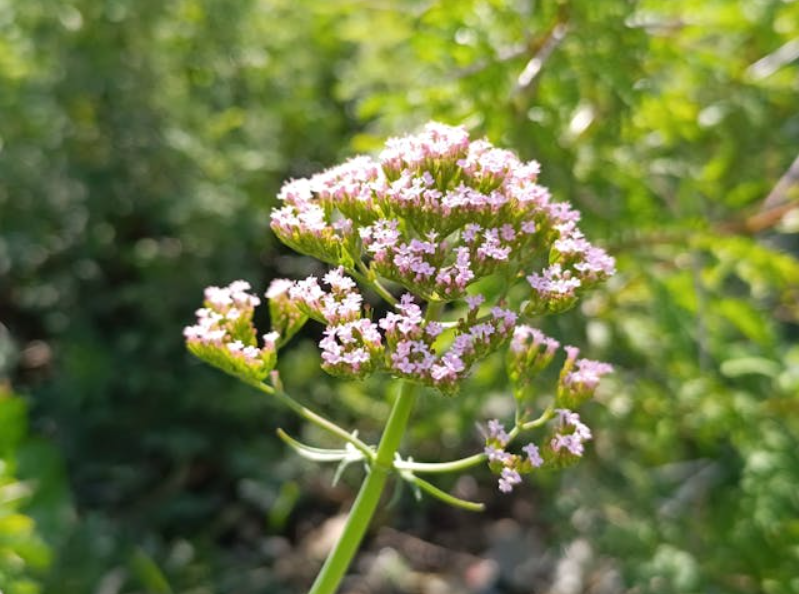
This creates a bit of a weird paradox for valerian in the supplement aisle. Clearly it’s no cure-all magic bullet, but it’s also far from just being another old-wives’ tale with no basis at all in reality. Instead, it falls somewhere in the middle—a traditional herbal treatment which may offer a little relief, but is tempered by its limits in the realm of messy science.
One reason that makes valerian so relevant today is how far back its story goes. The National Institute of Health says that valerian has been used medically since ancient times, like when it was prescribed by Galen, a physician in Ancient Greece and Rome, for cases of insomnia. By the sixteenth century, it was the preferred cure for anxiety attacks, tremors, headaches, and palpitations.
The importance of this timeline lies in the fact that it made valerian famous without any use of marketing in ancient times. Any cure that lasts for many centuries automatically acquires the status of trust. But tradition survives not only due to people’s need for a good story and hope. In the case of valerian, one cannot rule out the presence of both at once.
The National Center for Complementary and Integrative Health (NCCIH) explains that the medicinal properties of the plant lie in its roots and underground stems. Nowadays, valerian is very popular among cures for insomnia, stress, and anxiety. Yet, modern researchers must separate this romantic history from what the data actually proves.
One roadblock is that even today there is no full understanding of how the herb works. According to the NIH, there is still no consensus among scientists as to the exact substances contained in the roots responsible for its sedative properties; it is probably several components that work synergistically. This creates problems in justifying the claims made in marketing campaigns.
In Europe, the authorities are more pragmatic about the issue. The EMA approves several compositions of valerian root for treating mild tension and sleep disturbances. However, they clearly distinguish the effects supported by scientific studies from the ones considered traditional medicine only.
Additionally, the EMA mentions that this plant extract has a “gradual onset,” which means that its effects won’t kick in right away but will accumulate gradually in contrast to a prescribed medication that works almost instantly. In addition, if you decide to buy this supplement in America, keep in mind that the FDA doesn’t hold these products to the same drug-like standards of formulation and standardization.

What the sleep research actually shows?
Sleep is where valerian has its strongest backing, though the science is still hit-or-miss. According to NIH, the evidence for using it in cases of sleeping disorders is “inconclusive”. For every clinical test that has yielded promising results, there is another one suggesting it does almost nothing.
Positive Results: In one study mentioned by the NIH, which involved individuals suffering from mild insomnia, a 450-milligram dose of valerian was found to help people fall asleep and achieve good sleep quality more quickly. Another study, involving people with diagnosed insomnia during a 28-day period, found that a standard amount worked better than placebo to alleviate symptoms.
The Caveats: In a 2006 study led by Dr. Susan Bent from the University of California, San Francisco, valerian was noted as having the potential to “improve sleep quality” while having little to no negative side effects.
The bigger problem is that most valerian studies come riddled with flaws. The NIH mentions inconsistency among experiments, in terms of varying dosages, preparations, and extremely diverse patient groups. While some experiments examined only a few patients, others did not have controls at all.
Newer research hasn’t cleared things up. A more recent experiment mentioned by the NIH showed that standardized valerian had no noticeable effects on sleep quality of patients suffering from insomnia. That led the American Academy of Sleep Medicine to recommend against using valerian for chronic insomnia in adults because the evidence was just too weak to lean on.
What about anxiety relief?
If you think the sleep data is shaky, the claims around anxiety are even harder to defend. There’s no end to websites hailing valerian as the ultimate “natural remedy” for anxiety, yet the most authoritative health organizations remain highly doubtful. In their words, NCCIH reports there are simply insufficient studies to make any conclusion about the herb’s effects on anxiety.
It’s important to note here that actual anxiety disorders are serious medical issues, unlike normal stress and nervousness.
Even after an extensive review of the available scientific literature conducted by the Cochrane Collaboration, researchers found only one small study that met the scientific standards required to evaluate valerian’s effectiveness for anxiety. As a result, there was not enough evidence to determine whether valerian worked better than a placebo or prescription medications such as Diazepam.
Even the European Medicines Agency avoids describing valerian as a treatment for anxiety disorders and instead states that valerian root preparations may help relieve “mild nervous tension.” According to the National Institute of Mental Health, anxiety disorders are typically treated with psychotherapy, medication, or a combination of both, depending on the individual patient’s needs.
Among the benefits associated with valerian is that it seems to be pretty forgiving on the body when used short-term. Data suggests that it is generally safe for healthy adults as long as you stick to typical doses (usually between 300 and 600 milligrams a day for a few weeks).

Safety notes
Long-Term Safety: It is emphasized by both the NCCIH and NIH that there is no information regarding the safety of long-term use.
Adverse Reactions: Although generally mild, adverse reactions may include headaches, dizziness, nausea, vivid dreams, grogginess in the mornings, and irritability.
Interaction: Valerian can dangerously amplify anything else that causes drowsiness. Use extreme caution if mixing it with alcohol, benzodiazepines, OTC sleep aids, or other natural supplements like melatonin or kava.
Pregnancy & Driving: The EMA specifically advises against the usage of this product if one is pregnant or nursing, and also recommends that one should avoid driving after consuming it.
Where valerian realistically fits
The most intelligent approach is to look past all the nonsense. Rather than setting the bar too high in assuming it will magically cure you or making the mistake of completely disregarding its effectiveness altogether, treat valerian for what it really is – an easy fix when you’re having a sleepless night or stressful week.
Don’t get yourself too hyped up about it. It’s important to understand that according to EMA, you may not feel the effects until after several weeks of consistent use, completely dispelling any myths about it being a fast-working “natural valium.”
In case you decide to give it a go, take it easy, avoid pairing it with other downers, and watch your body’s reaction. Above all, if you suffer from debilitating chronic insomnia and severe anxiety, it will be extremely unwise to rely on valerian to cure those problems through supplementation.
Valerian’s truth lies in the comfortable middle ground: it is an ancient herb that may offer some calming properties, yet its scientific research record is very inconsistent, and it can be fairly safe for the short term.
*Medical disclaimer: This article is intended for informational and educational purposes only and should not be considered medical advice. It is not meant to diagnose, treat, cure, or prevent any medical condition. Always consult a qualified healthcare professional before starting any supplement, herbal remedy, or treatment, especially if you are pregnant, nursing, taking medication, or have an existing medical condition. Never ignore professional medical advice or delay seeking treatment based on information found in this article.
Please SHARE this article with your family and friends on Facebook.
Bored Daddy
Love and Peace