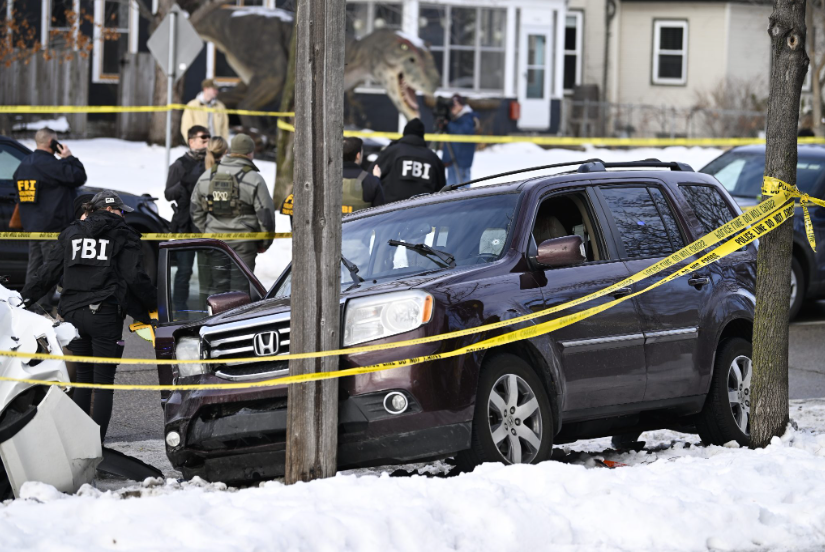
Renee Nicole Good was shot dead by ICE officer Jonathan Ross in Minneapolis, Minnesota, on January 7. The incident triggered public outrage and demonstrations while US officials claimed Ross acted in self-defence, with Trump dubbing her a “professional agitator” who “violently, willfully [sic], and viciously” ran over an ICE officer.
An actual footage from the tragic incident showed Good attempting to drive away from the officers, including the one who pointed the gun at her. So it’s simply an attempt to flee rather than a deliberate attack at the officer.
Renee Good/ X
Speaking to People, the Romanucci and Blandin law firm representing Good’s family said Good and her partner, Rebecca, were driving home when they spotted a group of ICE agents and stopped to “observe, with the intention of supporting and helping their neighbors” at the time she was shot.
The Romanucci and Blandin law firm represented the family of George Floyd, the 46-year-old man who died in Minnesota after former police officer Derek Chauvin pressed his knee against his neck for more than nine minutes, and won a $27 million settlement with the city of Minneapolis.
Following Renee Good’s killing, the family requested an independent autopsy and a private investigation into her death.
The law firm has since released the report of the independent autopsy conducted by a “highly respected and credentialed medical pathologist.” The report showed that Good was hit by three gunshots, one to her left forearm and another through her right breast that did not damage any major organs, neither of which was immediately life-threatening, and a third that entered near her left temple and exited the right side of her head, Peoplereported.
There was also a fourth wound, which the pathologist described as a graze wound consistent with a firearm injury, but with no penetration.
Lead attorney Antonio M. Romanucci said the evidence the firm has so far gathered “and will continue to gather” will help “prove [their] case.”
ROBERTO SCHMIDT / AFP via Getty Images
“The video evidence depicting the events of January 7, 2026, is clear, particularly when viewed through the standards of reasonable policing and totality of circumstances,” Romanucci told People.
“Additionally, our legal team will continue its unwavering and proactive advocacy for Renee’s life and her family.”
Please SHARE this article with your family and friends on Facebook.
With age, air travel can get more demanding due to reduced mobility, change of energy levels, and the need of assistance and accommodation.
While numerous airlines and airports do provide assistance, it is not consistently standardized. Some rights are guaranteed by law, some depend on the airline or airport, and many only apply if you request them in advance.
As the rules are different for every country and airline, many passengers over the age of 65 are often not aware of the type of assistance they can get.
So, being aware of what is standard, when you have to ask for it, and when you shouldn’t expect it at all can make travel much easier and far less stressful.
A number of airports allow a companion to accompany a passenger who has requested assistance through security and to the gate, but again, this depends on airport and security authority rules, not just the airline. You are usually expected to request assistance in advance or ask at check-in and the airline or airport will link your reservation with your companion under mobility assistance.
Priority boarding without a wheelchair
Though this is available in most places, it is not automatic. Most airlines do offer priority or assisted boarding to passengers who, for various reasons, need a little extra time to get on the plane (limited mobility, pain, fatigue, or balance concerns). However, you must ask for it either during booking or at the gate. In cases like this, medical details are usually required.
Quiet or accessible waiting areas
Some airports offer quieter seating areas adapted for people with accessibility needs, but this can vary greatly. These areas are not airline lounges and are not necessarily signposted so you have to ask the airport staff. Also, availability is subject to space and local facilities.
Passengers who travel with medication, medical liquids, CPAP machines, supplements, or other health devices may bring them through the checkpoint. It’s standard practice, covered under security rules in most countries, including TSA regulations in the US. Medically needed liquids can exceed the standard size limits, but you’ll usually need to inform the security officer about them, and they may still take a look during screening.
Additional medical bag
Most major airlines permit you to bring an extra bag of medical supplies—such as insulin, CPAP equipment, nebulizers, blood-pressure monitors, supplements, or cooling containers—that does not count against your carry-on limits, but the bag can contain only medical supplies. Best to check with your airline to avoid issues at boarding.
In-cabin refrigeration for medications
Before boarding, people who carry medications on board should have in mind that airlines do not have a universal obligation to refrigerate passenger medications. Some crew members may help if possible, but travelers should always plan to manage temperature themselves using approved cooling containers.
While airlines may offer seats that are more suitable for mobility or health needs when available, free extra-legroom or premium seats cannot be guaranteed everywhere. Seating must be requested under the accessibility needs option you see on the bottom right of the seating chart, and availability may be limited by aircraft configuration and local legislation.
Health and mobility devicesstay with you
This is highly regulated in many countries. Necessary mobility aids and medical equipment are typically permitted in the cabin and are not considered regular baggage. However, certain equipment must be requested or approved in advance, oxygen equipment being one of them.
Hidden fee exemptions for seniors
Some airlines do provide senior citizen discounts or waive certain fees that are usually promotional and offered at their choice. This means you have to ask for them specifically, and many airlines don’t offer them at all because they are not guaranteed and not part of accessibility law.
Please SHARE this article with your family and friends on Facebook.
Men will be men, they say, and I never questioned it and that’s why when I got married I didn’t have any huge expectations when it came to sharing household tasks or other similar commitments.
But then, one day, my husband ran out to the store, and before he left I asked him to grab sanitary pads. Honestly, I knew that simple request could easily turn into chaos. You know how it goes, texts from the aisle, photos of random packages, maybe a phone call asking, “Is this the one?”
But instead, he came home with the exact brand and type I always buy. No questions. No guessing.
I actually laughed and asked him how he even knew which ones to get. He then smiled a bit, and said he’s seen me buy them so many times that he just remembered. To him, it didn’t feel like it was a big deal, but honestly, to me it mattered.
And it wasn’t some huge romantic gesture or anything, but it hit me way more than I expected. It made me realize he actually pays attention and notices the small stuff because it matters to me.
While we were putting the groceries away, he casually mentioned that he wants to start doing more of the everyday things I usually take care of without thinking about it.
Later, while we were cooking, he admitted that the personal-care aisle totally overwhelmed him. He said he never noticed how many tiny decisions I make in a day until he had to make just one of them for me. That made me smile.
That supermarket moment somehow stuck with me.
I kept thinking about it the entire day because it felt like things became a bit easier and I wasn’t doing everything on my own as I sometimes assumed.
Please SHARE this article with your family and friends on Facebook.
Her entire life, Mara believed that love is all about giving, so when her mother poured all the savings to save Mara’s sister who got seriously ill, Mara felt betrayed.
She knew her sister’s life mattered the most, yet, she felt like the part of her mother’s assets and money that should have been given to her was in a way taken away from her.
When medical bills piled up, her mother sold her home in order to cover the expenses, and for Mara, that act felt like her future was wasted away.
A couple of months after Mara’s sister’s passing, her mother came at her door. She was exhausted, frail, and still mourning the loss. All she had in her hands bas a small bag. When Mara looked at her mother, something inside her snapped. Out of nowhere, she started uttering words she always meant to spill. She accused her mother of wasting her future when she spent every dollar for her sister’s medical bills.
Her poor mother didn’t argue. She just gave Mara a smile, as though she was there to say goodbye and disappear from her life forever, but all Mara cared for was the money she never got but assumed belonged to her.
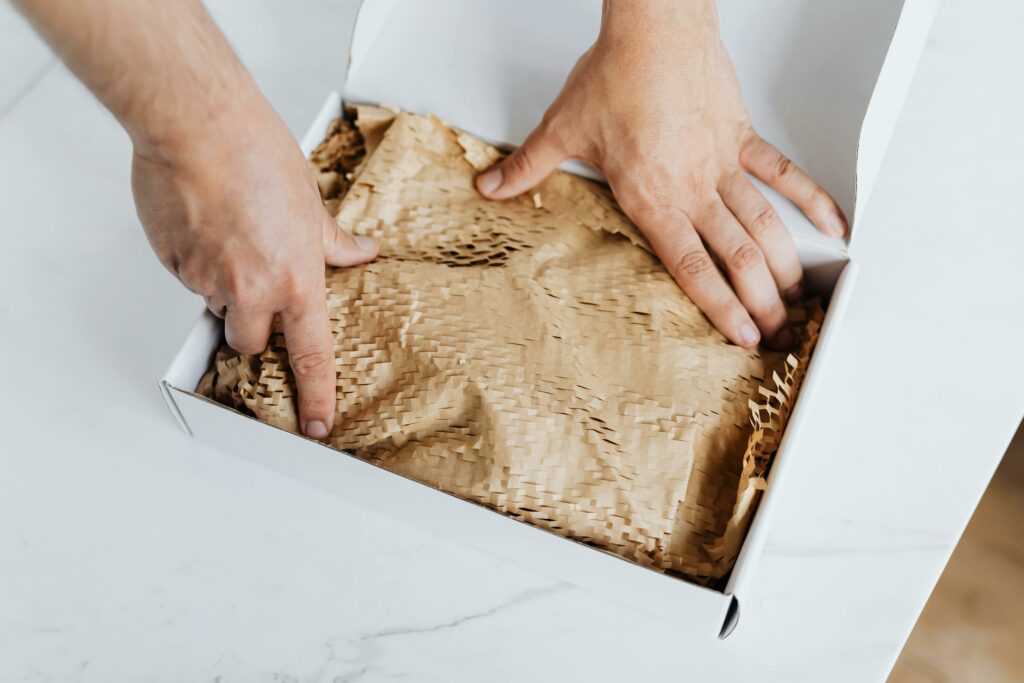
The following morning, Mara’s husband told her a package arrived for her. It was from her mother. Inside was a note that read, “I never used your inheritance. I spent only what was mine. The account is still in your name. I kept the locket for when you were ready,” and an address.
Mara followed the address right away. It led her to a shelter located on the outskirts of town. The receptionist recognized Mara’s name and said she left the place the previous night but didn’t say where she was going.
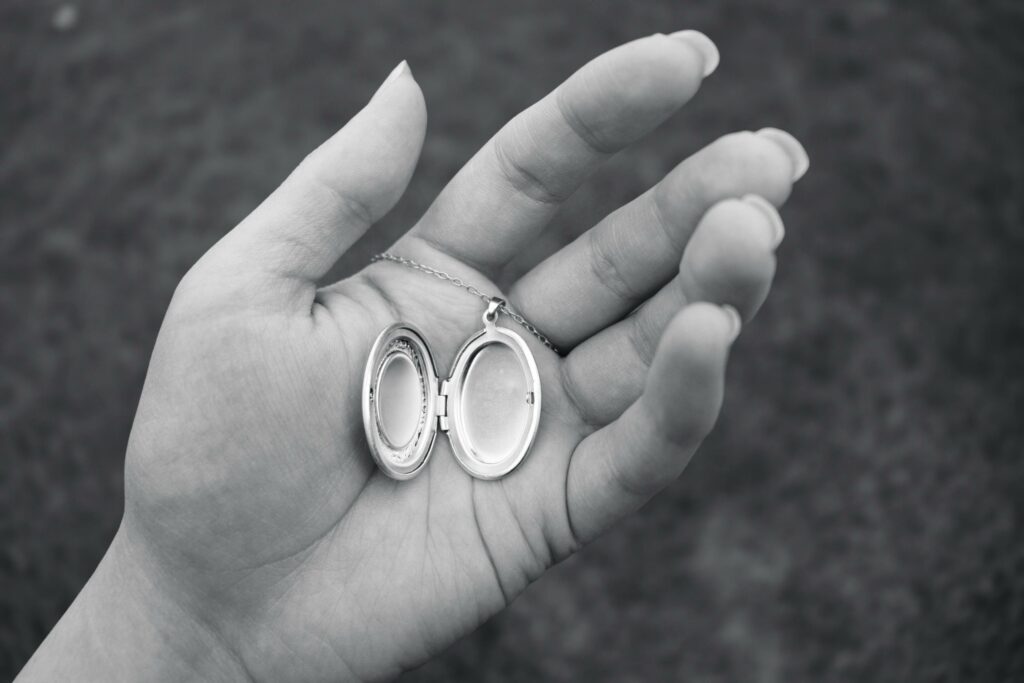
Mara was overwhelmed by guilt. She started searching the streets, the nearby motels, but her mother was nowhere to be seen. When she returned to the shelter, she was handed her late sister’s locket her mother left for her.
In the days after, Mara finally accessed the inheritance account. As she looked through the records, she had to stop and breathe. The money was all still there, and there was more than she expected. Over the years, extra deposits had been added, one by one, each with a short note attached: “For Mara’s education, for Mara’s wedding, for Mara’s future.”
She broke down as it sank in. Her mother hadn’t taken anything from her. She had been saving for her all along, and protecting her future.
Sadly, Mara’s mother never returned, and Mara still scans faces wherever she goes, hoping to catch sight of that familiar, tired smile.
And every night, in the quiet moments before she falls asleep, Mara whispers an apology into the darkness, hoping that somehow her mother can still hear her.
Please SHARE this article with your family and friends on Facebook.
There is probably nothing greater in life than mother’s love. From the moment she welcomes a child in her life, that little creature becomes her entire world, a world she tries to protect no matter what it takes.
Having a mom by your side means having stability, a shoulder to lean on when times get rough, and someone who celebrates your accomplishments as winning the lottery. A mother’s love doesn’t end when her life does. Instead, it remains eternal; a feeling that never fades away, no matter how much time passes by.
The moment your mother is gone, something in the way you think changes.
You don’t only grieve her absence but begin to question things that never crossed your mind before. You are now left with questions that only she could answer had she still be around.
You find yourself wondering where she is, over and over. Some days she feels impossibly close, as if she’s just stepped into the next room. You wake from a dream with the sense that you’ve just seen her face or heard her voice, and for a second, your body believes she’s still here.
Then there are other days when she feels unreachable. So distant that even your memories struggle to remember her. You try to recall the exact warmth of her hug, the comfort of her presence, and it slips through your fingers. Those who have experienced this loss know that that distance can be harder than the grief itself.
You wonder if she can still hear you when you cry, when the pain comes suddenly and steals your breath. You wonder if she knows how much you miss her, how time won’t pass without her, how ordinary days feel heavier than they used to. Then you question whether she would come back if she could, whether the bond still feels real to her now that you can’t touch or speak to one another.
You replay conversations in your head and wonder if she truly knew how deeply she was loved.
But then, out of the blue, something shifts. You begin to understand that the wondering is part of loving her. Over time, it becomes clear that while you question and reach and ache, she doesn’t need to. She already knew.
A mother’s love never dies, even when she does. It becomes who you are and resides in your instincts, your compassion, your power.
You are still her child. That never changed.
Please SHARE this article with your family and friends on Facebook.
Motivational speakers and productivity experts believe that making your bed after waking up is the “first win of the day.” In fact, for most of us, the habit of making our bed is something we learned from early age and we are simply doing it because we are used to it. However, there are also people who tend to leave their bed unmade and it doesn’t necessarily mean they are lazy or unmotivated. On the contrary, psychologists believe that these people tend to share certain characteristics related to how the mind prioritizes control, flexibility, and meaning.
People who don’t make their bed in the morning place greater importance on mental freedom than social expectations. Instead of bothering themselves about how they living space looks, they care more about how spending time there feels. They simply don’t see an unmade bed as an issue since it doesn’t affect their comfort or daily routine. Their focus tends to be on ideas, feelings, or work that matters more to them.
2. They Resist Arbitrary Rules
Psychologists argue that certain people tend to question the rules, and those who don’t make their bed in the morning fall in that category. These people make their own rules and develop habits that suit their personal needs without worrying what the society expects from them. Also, they are considered free-thinkers not bothered by social pressure.
3. They Show Higher Cognitive Flexibility
People who don’t make their bed just seem more comfortable with things being less-than-perfect or complete. They appear to adapt on the fly, work on two or more tasks one after another before feeling they have things ordered up front.
That sort of adaptability also enables them to do well in environments where plans unexpectedly change or are not able to be predicted. Instead of being distracted by a small amount of visual chaos, they focus their attention on the things that are more important to them.
One thing often seen in people who skip bed-making is that they don’t relate their sense of self to how productive they are. They’re less likely to judge themselves based on how much they get done first thing in the morning.
Since they don’t really attribute moral value to trivial habits, they have less guilt or self-criticism about them. This attitude has also been associated with reduced stress and risk of burnout, particularly in those who are already mentally burdened.
5. They May Be More Intuitive Than Structured
These people rely more on intuition than on schedule. Most of the decisions they make are based on their emotional and mental state.
Not a Flaw, but a Mental Style
Leaving the bed unmade isn’t a sign of laziness. For many people, it simply reflects independence and flexibility. There’s no single formula for well-being. While some people need order, others need space. At the end of the day, what matters most is what actually works for you.
Please SHARE this article with your family and friends on Facebook.
I got to hold my newborn in my hands for barely an hour. He was the most beautiful baby I’ve ever seen, and then he was gone, and doctors couldn’t provide me with answers.
At those moments at that cold hospital room where my dreams crashed and my world turned upside-down, I could see my mother-in-law smiling. If I hadn’t known what type of a woman she was, I would have thought I was imagining things, because who would smile after losing a grandson. But my mother-in-law was a cruel woman who believed I was nowhere near the level of her precious son.
At one moment, while I was still dizzy from the anaesthetics, she leaned towards her daughter and whispered, “God protected this family. That bloodline was supposed to end here.”
Her daughter, Melissa, didn’t show compassion either. The worst of all, neither my husband.
The three of them just stared at me as though I was guilty for losing my son.
And then, right there and then, my 8-year-old son Oliver, who hadn’t said a word that day, which wasn’t like him, asked: “Am I supposed to give the doctor what Grandma put in my baby brother’s milk?”
The nurse froze and the doctor went pale. It felt like in that second, calm turned into controlled chaos. Phones started ringing behind closed doors, security appeared without a word, and a senior nurse knelt down, gently guiding Oliver away. Another carefully lifted the bottle.
Eleanor, my mother-in-law started praying aloud and Melissa started sobbing. Were they sorry I lost my newborn all of a sudden or they were crying over their own fate?
My husband stood in the corner and started saying my name over and over again, as if he had just remembered I was there.
Police arrived shortly after and separated the family, questioning each one of us about what Oliver had said.
The test results from the bottle came quickly, almost too quickly, and showed the presence of substance in the milk that wasn’t harmful to adults when used properly, but for a newborn—hours old—it was lethal.
The drug was the same one Eleanor was taking for year for a condition she suffered from.
The sudden death of my baby wasn’t an accident, and she didn’t deny it. She claimed she was protecting the family of the weakness that run in my blood and that God would forgive her.
Law enforcement certainly didn’t. She was taken to the station for further questioning and was later charged with murder of my newborn baby.
My husband, who has always been enchanted by his dear mother, stood by her side, still believing she was innocent, although he knew she wasn’t.
Eight months later, Eleanor was found guilty and sentenced to life in prison. Her daughter, who saw her mother putting something in the bottle but stood silent, accepted a plea deal.
The divorce papers were signed shortly after and I am still struggling to understand how someone could be so cruel as to take a baby from a mother. Today, Oliver and I are away from my ex-husband and his family, doing our best to rebuild our life while still mourning the loss of his baby brother.
Please SHARE this article with your family and friends on Facebook.
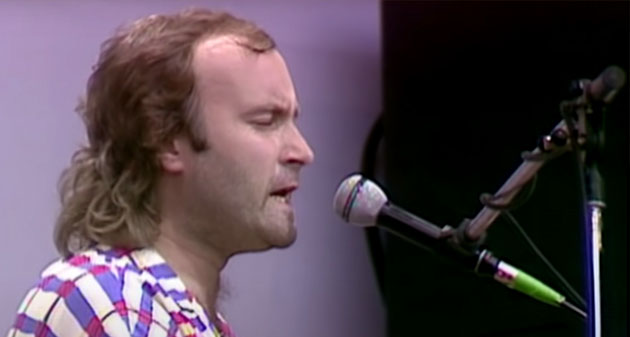
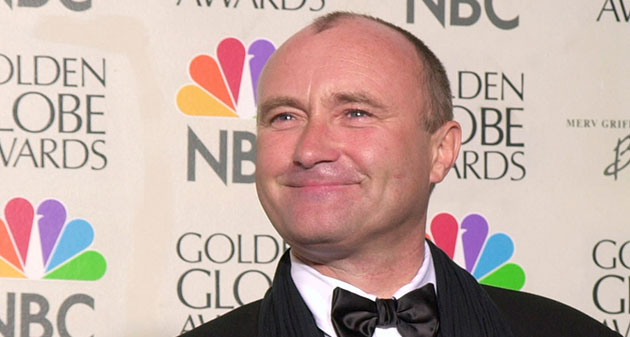
With eight Grammy awards under his belt, Genesis drummer and lead singer Phil Collins is one of the most prominent musicians there are. He is one of only three musicians, alongside Michael Jackson and Paul McCartney, who have sold more than 100 million albums both as a solo act and a member of a band.
Born on January 30, 1951 in London, England to parents who possessed creative spirits, Collins fell in love with making music.
When he was just five, his uncle made him a drum kit out of tambourines, triangles, cymbals and toy drums, Collins recalled. “The old cliché is, ‘Well, at least it will keep him quiet’,” he told Interview Magazine.
Soon after, he found himself performing in shows at his parents’ boating club.
“When I started playing seriously, the English beat thing was just happening, the Shadows and bands like that. It was the very early ’60s,” Collins recalled.
“I remember buying Please Please Me. I used to put the record player on very loud and set up my drums so I was facing the mirror, that way you don’t look at what you’re doing.
“Then when I was fourteen I went to a teacher to learn to read drum music. I figured when this rock-and-roll thing finished I would have to make a living playing in a dance band or in an orchestra pit. So I learned to read drum music, but I found that my capacity for reading was not anywhere near as good as actually playing by instinct.”
Youtube/LiveAid
It was in the 1970 that Collin’s life changed forever. He was already playing in some bands when he came across an ad by a group called Genesis which was looking for a drummer. He decided to get in touch with them and the rest is history. In the first years of Collins being part of it, the group released five albums with singles that reached the charts.
After the founder and lead singer of Genesis left the group, Collins took his place. He was both a singer and a drummer. Speaking of his new role, he said he didn’t really feel comfortable, but as the group failed to find a singer, he simply stepped in.
Besides being a member of Genesis, Collins also had a very impressive solo career. With smash hits such as In The Air Tonight, You Can’t Hurry Love and I Don’t Care Anymore he soon became one of the best in the music industry.
When he decided to leave the group and focus on his solo career, Collins said: “Having been with Genesis for 25 years, I felt it time to change direction in my musical life.
“For me now it will be music for movies, some jazz projects and of course my solo career. I wish the guys in Genesis all the very best in their future. We remain the best of friends.”
However, in 2017, he decided to reunite with the band. A couple of years ago, they announced a world tour, The Last Domino, but had to put it on hold because of the pandemic.
Shutterstock/ Featureflash Photo Agency
And as fans were looking forward to seeing the group on stage together, Collins gave an interview with BBC Breakfast which made many concerned about his health. He and his band mates announced that it will be Collins’ son Nicholas who would do the drumming and Collins will only sing.
“Nic is a great drummer, but he is capable of sounding like early Phil. For Mike and I, that was always quite exciting,” Genesis band member Tony Banks said.
“It means you can play some of the songs that you haven’t played with Phil as the drummer for a long time.”
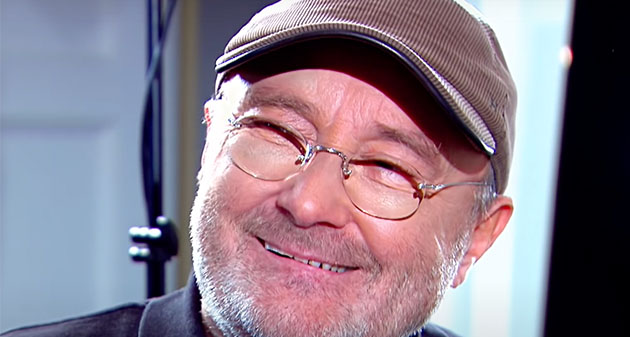
Youtube/7NEWS Spotlight
Speaking of why he’s not getting behind the drums, the musician revealed: “I’d love to but you know, I mean, I can barely hold a stick with this hand. So there are certain physical things that get in the way.
“I’m kind of physically challenged a bit which is very frustrating because I’d love to be playing up there with my son,” adding that he doesn’t know if he wants to be touring any longer.
“We’re all men of our age, and I think to some extent, I think it probably is putting it to bed,” he said. “I think yeah, I think just generally for me, I don’t know if I want to go out on the road anymore.”
Shutterstock/Jimmie48 Photography
During the past few years, Collins experienced certain health issues which left him struggling to get on his feet. Speaking to Billboard, he revealed that after a surgery in 2009, he was left with dislocated vertebra, nerve damage. He had also suffered a foot fracture that left him feeling like he’s walking “on sticks.”
In a rare interview interview he gave during an appearance on BBC’s Eras podcast ahead of his 75th birthday, Collins shared: “I have a 24-hour live-in nurse to make sure I take my medication as I should do. I’ve had challenges with my knee. I had everything that could go wrong with me, did go wrong with me.
“I can walk, albeit with assistance, you know, crutches or whatever,” he said.
The musician also revealed that he’s two years sober.
”I’d probably been drinking too much, and so my kidneys were messed up, you know,” he said.
“I enjoyed coming off tour. Coming off the road … I thought, right, I’m gonna do all those things that I couldn’t do,” he said. “I guess I had too much of it. I was never drunk, although I fell over a couple of times. But it is just one of those things that happened and it all caught up with me, and I spent months in hospital.”
The Grammy Award-winning artist admitted that the last few years have been “difficult, interesting, [and] frustrating,” but added, “It’s all right now.”
Some generations grow up during times that are relatively calm while others come into the world when familiar structures begin to loosen and the ground beneath them starts to shift. Those born between 1980 and 1999 belong to that second group. These people got to be raised in a period when certainty started to melt down before anything stable replaced it.
When you think about it, the childhood of these generations seemed ordinary and their expectations regarding school, social life, family, and routine life were clear. But then came the Internet and the rules they were used to follow changed mid-game. What once was rock solid was now up for negotiation.
People born between 1980 and 1999 have been caught between two worlds; two different eras that affected how they think, feel, and see the world.
While they are familiar with traditions and tend to stick to them as much as possible, they also value progress. To the parents of these people, it felt like their children started to rebel out of nowhere, when that’s in fact what psychologists—among them Carl Jung—have characterized as the inner world becoming active when outer structures cease to provide meaning.
Jung believed that during periods of transition, people turn inward not because something is wrong, but because something is forming. That idea helps explain why many from this generation ask difficult questions early on, feel uncomfortable with superficial routines, and resist lives that “work” on paper but feel empty inside.
Many who belong to these generations also report vivid dreams, strong emotional reactions, or sudden moments of clarity. These dreams and recurrent images were, Jung believed, the psyche’s means of communication when language fell short.
And when they’re brushed off, they don’t manifest it as something dramatic but it often shows up as generalized anxiety with no clear trigger, a feeling of not quite fitting in, or a constant state of fatigue. Jung cautioned that tension within the self, when left unresolved, does not disappear but returns as unease.
This generation is also less willing to repress parts of themselves. Jung called the rejected parts of the personality the “shadow,” and argued that maturity comes from integration, not denial.
The quest for authenticity can unnerve families who value order and predictability, but it can also lead to greater emotional honesty.
For parents, this creates a challenge. The instinct is often to correct, normalize, or push for quick solutions. But control rarely helps. Most important of all is to be there, to listen without rushing to solve, to let questions surface without treating them as threats, and to offer structure without stifling meaning.
People born between 1980 and 1999 are often described as lost but a more accurate description may be unfinished. In Jung’s terms, they are in the middle of a long process of attempting to harmonize reason and purpose, permanence and flux, the truth within and life without.
As a parent to someone who belongs in this so-called “lost” generation, your support, your ability to listen, and your patience can be the bridge that helps transform their sensitivity into strength and their search into a life of meaning.
Please SHARE this article with your family and friends on Facebook.
Palmistry, or the practice of interpreting the lines and shapes of a person’s hands for the sake of revealing something about their future or their personality, has long been present among people who are eager to take a peak at what happen to them in the days or years to come.
As a practice, palmistry has been part of a number of cultures, including Chinese, Indian, and Western.
Most people see this practice as a way of having fun, but there are also those who take it seriously and trust the predictions the person reading their palm reveals.
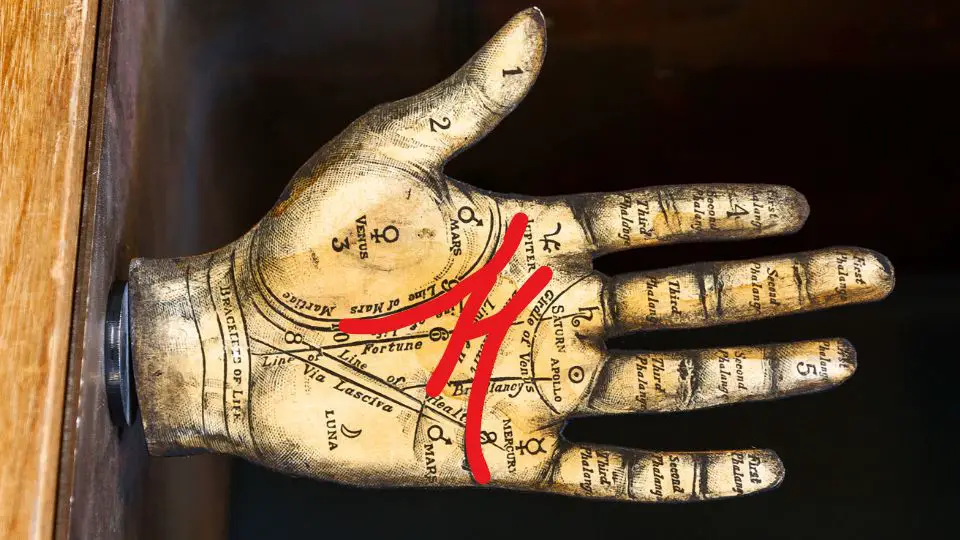
According to this practice, there are four major lines on one’s palm, the life line, that represents the person’s general life path, the heart line, related to the person’s emotions and love, the head line, associated with the person’s intellect and mental state, and the fate line, related to the course of one’s life, encompassing career and achievements.
At certain people, these lines meet in the form of the letter ‘M’ and it is believed that these individuals are unique.
People with this sign are considered ambitious, aiming for success, determined, great at managing finances, able to navigate challenges, brave, and resilient. Overall, these people are born to succeed at whatever field they try themselves in.
Beyond these characteristics, the letter ‘M’ on one’s palm is closely linked to intuition and spirituality. Those with this line typically have strong intuition and make decisions guided by their inner voice. They are also more sensitive to the emotions and needs of others. In spiritual context, the M line indicates a tendency towards spiritual practices and a path of personal growth and deeper understanding.
However, when reading one’s palm, other things are taken into consideration too, such as their entire hand and their personal background.
In addition to the letter M, other auspicious signs in palmistry include the fish, triangle, square, and star. Each symbol is thought to bring various forms of luck, such as financial success or protection from adversaries.
It is believed that only 2% of the world population have the sign ‘M’ on one or sometimes both their palms.
The crescent moon, which is typically represented as a smooth, curved shape near the thumb or at the base of the palm, has profound symbolism across different civilizations. It has long been associated with renewal and growth, emotional sensitivity, inner transformation, and the ability to navigate the unexpected. Rather than signaling endings, the crescent moon is traditionally seen as a harbinger of beginnings.
When the Letter M and the Crescent Moon Appear Together
The combination of the letter M and a crescent moon is said to be unusual and to represent a stage of personal enlightenment. Those familiar with this symbolism believe it marks a process of transformation, often accompanied by a sense of impending change. This may include shifts in relationships and priorities, questioning old beliefs, vivid dreams, and moments of clarity. Rather than predicting the future, the symbols are understood to reflect a period of profound personal transformation.
Some associate this symbolism with 2026 as a broader turning point, suggesting that people who bear these symbols may become aware of change earlier than others.
Read your palm and tell us if you are among the lucky ones who have these two special signs.
Please SHARE this article with your family and friends on Facebook.
I picked up my daughter from kindergarten and on our way home she said something that surprised me at first but I casually laughed it off. Little children, especially five-year-olds do invent things. They have vivid imagination, don’t they?
So when Lily asked me if she could invite her “real dad” to dinner on Father’s Day, I was certain the “dad” she was talking about was some imaginary friend.
“Of course you can,” I said.
However, as she watched at the traffic lights, she said, “You know daddy, my real dad sometimes comes over and brings mommy chocolate.”
And once, while they played in the living room, he whispered to her that he was her real dad.
I tried to convince myself that maybe she had a dream of this man she was talking about, or maybe it was a neighbor or a family member that stopped by while I was at home, but my wife never mentioned any man.
Honestly, I got a bit concerned, and I just wanted to be sure there was nothing going on behind my back. So as Father’s Day was approaching, my anxiety grew bigger and bigger. Finally, I decided to fake a trip out of the country but stay at the city and monitor the house.
My wife seemed devastated when she learned I won’t be home for the holiday. She said she had already planned the day and tried to convince me to stay home and call my boss to cancel the trip, but I said it was an emergency.
On Father’s Day, I parked my car near my home, and at exactly 6 p.m. a man carrying a gift knocked on the door. A few seconds later, someone opened the door and he entered.
I waited for half and hour longer before I got home myself.
When Lily saw me, she ran towards me and said, “Daddy, come meet my real dad.”
She had a huge smile on her face, unaware of the situation.
My wife and the man froze. And then he said, “Listen, I can explain.”
There was no yelling, no harsh words, and no accusations. I tried to stay as calm as possible while I listened to that man explaining that he and my wife dated briefly before we got married and she got pregnant. He always assumed the child could be him, and my wife wasn’t certain either.
He said he had always wanted to meet Lily and watched her from distance until one day my wife noticed him and the two talked about the possibility of Lily being his child.
None of us raised their voice. The three of us sat at the table and spoke calmly because we all knew Lily deserved stability and honesty.
The days that followed were blur. That man wanted a DNA test and the results showed Lily was his daughter.
The day I learned the truth my world collapsed, but my wife and I stayed together, and Lily’s real dad believed it would be for the best if things remained as they were. He only requested to be part of her life and see her occasionally.
He was a good man and a good father who wanted the best for our daughter, and as a father, I understood his pain.
Please SHARE this article with your family and friends on Facebook.
It was on January 19, 2026, that Trump announced his plan on imposing a 10 percent tariff on the United Kingdom and seven other European nations in case they intervene in his decision of acquiring Greenland, a semi-autonomous territory of Denmark located northeast of Canada.
Greenland has belonged to Demark for hundreds of years, but Trump believes America should own it.
Trump first raised the question of the importance of the States purchasing Greenland during his first term, claiming, “We need Greenland for national security, and that includes Europe. We need it for national security, right now,” NBC reported.
Greenland’s geographic position makes it strategically important to the US ballistic missile defense system, and it is already home to a major US military base.
In December, 2025, Trump appointed Louisiana’s governor Jeff Landry as special envoy to Greenland, saying he would “lead the charge” in advocating for the territory to become part of the US, according to Sky News.
Now, a former CIA covert intelligence officer claims to know the reason behind Trump’s desire to take over Greenland, even by force.
According to Andrew Bustamante, a former US Air Force officer and CIA operative, the president’s focus on the enormous Arctic island goes well beyond public explanations, and the real reasons may be more obvious than they appear.
“American dominance in the Arctic is critical to American primacy. And that’s the argument for Greenland,” Bustamante said.
Andrew Bustamante/ Everyday Spy
“The second argument for Greenland is the importance of American economic independence in the use of not only strategic critical use minerals or rare earth minerals, but also critical minerals.
“So the minerals that are required for economic development, as well as the rare earth minerals that are required for military advancement and weaponisation, both of those exist in Greenland with the benefit of global warming, which is making more and more of Greenland accessible.
“So there is a very real American interest in taking some control over the resources that are in Greenland. However, there is no legal, even by American standards, there’s no legal precedent for us to take it by force. So, what does that mean?”
He continued: “I think there’s a very real chance that the United States strikes an economic deal with the independent parties in Greenland that already want independence.”
Bustamante suggests that rather than triggering a military or diplomatic showdown, Washington may opt for a quieter strategy that leaves Denmark out of the equation.
“So the United States will take control of the parts of Greenland that it wants, and I think it will find a way to do so without undermining NATO.
REUTERS via NewYork Post
However, I don’t see an outcome where Denmark is happy. I see an outcome where Greenlanders are happier than, you know, than their parent company or their parent country. But it’s a very difficult, very difficult thing to predict. How fast, in what ways, et cetera. But we can’t, it’s not something that’s just gonna be forgotten.”
Bustamante says any attempt to take Greenland by force would lack legal basis and undermine US NATO commitments, though the confusion it creates may still advance Trump’s agenda.
Vice President JD Vance’s visit of a US military base in Greenland earlier this year raised the possibility that long-term plans are already underway.
“But right now, he has a chance to basically continue to assert his power, strategic ambiguity because of his demonstration of power in Venezuela, so why not milk that for all it’s worth and make people wonder whether or not they should just kowtow to his demands in Greenland?” Bustamante concluded.
Please SHARE this article with your family and friends on Facebook.
Ryan and I have never been friends. On the contrary, he was one of those people who spread rumors about me in high school, turning my days into hell.
And then, one day, out of the blue, I spotted him grabbing coffee at the cafe I visit almost every day. Honestly, it’d been 20 years since I last saw him, and I wasn’t even glad because that meeting brough memories of one of the worst periods of my life. I pretended I didn’t notice him because I was convinced he wouldn’t even recognize me, but he then turner to me and called my name. And for some reason, it felt to me like it mattered.
We engaged in a casual conversation and then he offered an apology for the days I believed were already buried in the past.
“I was awful to you,” he said. “I think about it all the time. I’ve wanted to make it right for years.”
I didn’t forgive him easily. But as we met again and again, he showed me he wasn’t the person who bullied me any more. He was changed. A new person. New Ryan. And somehow, I liked this man.
Over time, I lowered my guard and we started dating. And then, he proposed. I hesitated, but he had already convinced me he was sorry for everything that had happened during high school, so I said yes.
Our wedding? Well, it was just as I had always imagined my big day would be. My gown, the venue… everything was picture perfect.
But then, the night ended, and my world was shaken by the same man yet again.
I got into the bathroom to wash my face and when I entered the living room, I saw Ryan sitting at the edge of the bed.
“Ryan?” I asked softly. “Are you okay?”
He looked at me and said, “Finally… I’m ready to tell you the truth.”
“The truth about what?”
“Do you remember that rumor in senior year?” he asked. “The one that made you stop eating lunch at the cafeteria?”
“Of course I remember,” I said, not knowing where Ryan was going with getting us both back into the past.
“I saw how it began,” he said while sobbing and continued, “I saw him trap you behind the gym. I saw your face afterward.”
Unsplash
My throat closed. After that day, I barely spoke. I stopped participating in class. I told a counselor who listened and did nothing. Then came the nickname and the whispers.
Ryan took a breath. “I froze and didn’t know how to step in. I thought if I joined them, if I shifted the focus, I wouldn’t become the target.”
“That wasn’t self-defense,” I said. “That was betrayal.”
“I hate the person I was,” he said.
“Then why tell me now?” I asked. “Why not before we married?”
“I thought loving you better would somehow erase it.”
My chest tightened.
“There’s something else,” he added. “I’ve been writing a memoir.”
Unsplash
It hit me all at once that he had taken something that broke me and turned it into his story.
I didn’t argue anymore. That man betrayed me again. I went to the guest room and slept there. Lying in the dark, I felt like for the first time in a long while my thoughts were clear. I wasn’t lonely. I just knew I was done with him, and that felt like freedom.
Please SHARE this article with your family and friends on Facebook.
At some point in your relationship, you may feel like your partner is cheating on you—perhaps because they no longer treat you the same way or seem emotionally distant.
The truth is that most relationships have their ups and downs, and periods of insecurity and lack of trust come and go.
Seasoned private investigator Ray Ranno believes there is a consistent sign of infidelity to watch for when it comes to men.
Ranno has been tailing suspected cheaters for many years and claims there is one thing most men do before getting involved with the person they are cheating with.
In fact, the Connecticut-based private investigator has worked with “hundreds of attorneys, insurance companies, self-insured companies, universities, police departments, and the private sector,” and has caught “thousands of spouses cheating.”
“My job is to uncover the evidence of your spouse cheating so you can make a sound decision about your future,” he writes on his website. “We perform discreet surveillance on your spouse and determine if they are lying to you about their whereabouts or if they’re involved with other persons.”
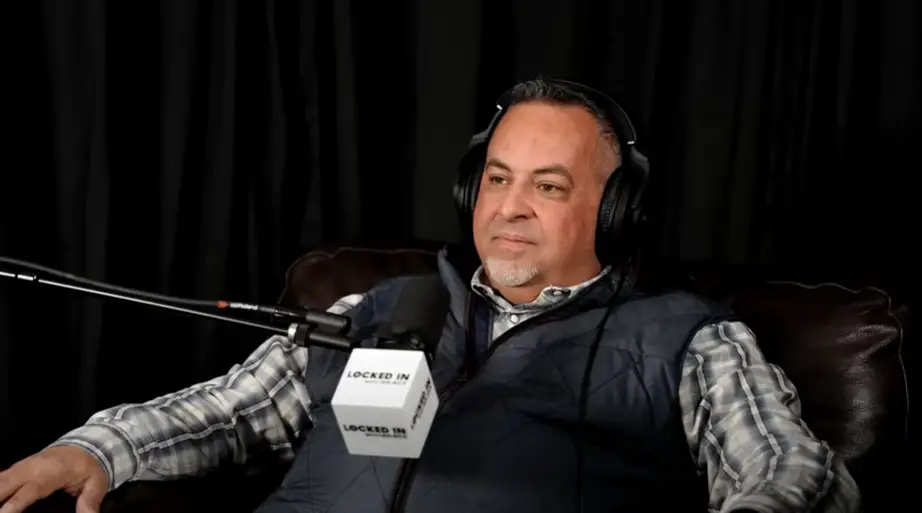
Speaking on the podcast of host Ian Bick, Ranno says that when meeting with the girl on the side, men tend to clean their car first.
“As soon as somebody goes to the car wash I think ‘Ha ha, what’s next?’ It’s amazing how they do that… Women don’t do it so much because they usually jump in the guy’s car – men always want to drive. It’s very rare that I see a guy jump into a female’s car.”
His methods of catching the cheater in the act are as discreet as they are effective and usually involve a coffee cup with a hidden HD camera.
“If I go into a coffee place or a supermarket wherever I need to be, I just take the lid off, turn it on, put the cap on, and it looks like I’m walking around with a coffee,” he explained. “Meantime, I’m videotaping everything.”
This, however, is just one of the signs and the ones described don’t only apply to men but to women, too.
According to experts at UK Private Investigators, “If your partner, who has never shown much interest in doing the laundry, suddenly starts insisting on washing their own clothes, this could be a red flag.
“If they are cheating, they may be worried about things like perfume, lipstick marks, or stray hairs on their clothes, and doing their own laundry allows them to hide these signs without you noticing.”
Further, they say your spouse’s mileage can also reveal something is out of the ordinary. “A change in mileage that doesn’t match up with your partner’s usual routine or work commitments can be another subtle but telling sign,” the investigators said.
“If they claim to have been nearby, whether they said they were at work later than usual or at the gym, a large increase in mileage that doesn’t match up with this may indicate secret trips to meet someone.”
Well, if the mileage is lower than usual, that can also be a sign and they might be involved with someone living locally.
Another sign investigators highlight is the change in the partner’s behavior when it comes to privacy. So, if you were allowed an access to their phone but they’ve changed their passwords out of the blue and no longer let you have their phone, it may leave you wondering if they are hiding something.
“Changes in privacy on your partner’s devices, like a new password, locked apps, or logging out of shared devices like a laptop, can suggest that they are hiding something.”
Has your partner suddenly spent a large amount of money on something you know isn’t meant for you, even though there’s no birthday, anniversary, or special occasion coming up? Private investigators say unexplained purchases like this can sometimes be a sign that a spouse may be seeing someone else.
“Things like unexplained expenses, hidden purchases, or unusual cash withdrawals can sometimes be a sign that your partner is being unfaithful,” the experts say.
“Whether they are buying dinners, gifts, hotel rooms, or transport, people having an affair tend to spend more money than usual.”
Of course, paying more attention to the way they look and dress is one of the most obvious signs they could be unfaithful.
One of the experts argued, “A sudden, unexplained effort to improve appearance, such as new clothes, changes to their hair, or increased time at the gym, might be a sign of trying to impress someone new.
“While self-improvement and taking pride in their appearance isn’t suspicious in itself, it can be a red flag when they don’t tell you what their motivation is, or if they don’t show interest in your opinion or attention following the changes to their appearance.”
So, if you suspect your partner might be cheating on you, pay better attention to these signs.
Please SHARE this article with your family and friends on Facebook.
The fatal shooting of Renee Nicole Good in Minneapolis has sparked widespread national outrage and debate over law enforcement authority and federal power.
On January 7, 37-year-old Good was shot and killed by an Immigration and Customs Enforcement (ICE) agent, Jonathan Ross, during a federal enforcement operation in Minneapolis.
Body-worn and cellphone video show Good in her SUV as the confrontation unfolded, with her wife urging her to “drive, baby, drive” just moments before the shots were fired. Authorities have offered conflicting accounts of the incident, and the case has ignited protests and calls for greater accountability.
US officials, including President Donald Trump, Vice President JD Vance, and Homeland Security Secretary Kristi Noem, claimed the agent acted in self-defence, with Trump dubbing her a “professional agitator” who “violently, willfully [sic], and viciously” ran over an ICE officer.
Renee Nicole Good/ Facebook
Jacob Frey, the mayor of Minneapolis and a former civil rights attorney, strongly refuted Trump’s claims. As per The Hill, he said: “Having seen the video myself, I want to tell everybody directly, that is bullsh*t.
“This was an agent recklessly using power that resulted in somebody dying, getting killed.”
In a press conference shortly after Renee’s death, Frey demanded that ICE ‘get the f**k out of Minneapolis’, adding: “They are not here to cause safety in this city. What they are doing is not to provide safety in America. What they are doing is causing chaos and distrust.”
As per the NBC News, federal officials are now investigating Becca Good, Renee’s partner, to see whether she may have interfered with an officer just before the shooting and are also looking into possible connections she might have with activist groups critical of US immigration policy.
“The investigation is looking at potential links to activist networks, including groups that may have provided guidance on protest activity,” a source told the publication.
Becca Good’s lawyer, however, denied there had been any official contact.
“There has been no contact from the FBI or federal officials indicating Becca Good is the subject of an investigation.”
The Justice Department is reportedly reviewing statements by Tim Walz and Jacob Frey to determine whether they interfered with federal immigration agents, NBC News reported.
The Justice Department is reportedly reviewing statements by Tim Walz and Jacob Frey to determine whether they interfered with federal immigration agents, NBC News reported.
At the same time, the department said its Civil Rights Division will not pursue further action against Ross, Deputy Attorney General Todd Blanche confirmed.
“We investigate when it’s appropriate to investigate and that is not the case here. We are not going to bow to pressure from the media, bow to pressure from politicians, and do something that we never do – not under this administration, not under the last administration. So no, we are not investigating,” he said.
Stephen Maturen/Getty Images
Minnesota Attorney General Keith Ellison and Hennepin County prosecutor Mary Moriarty are reviewing evidence to decide whether Ross should face state criminal charges.
At the same time, federal investigators are reportedly looking into possible links between Renee Good and activist groups critical of immigration policy, as part of their probe into her death.
Several First Amendment experts told USA Today that any past activism would likely have little relevance in determining whether the officer’s use of force was justified.
According to Teresa Nelson, legal director for the ACLU in Minnesota, “That person’s past, their involvement in other activities, is really not relevant. And there’s a long history of the United States government suppressing speech in times of turmoil.”
Please SHARE this article with your family and friends on Facebook.
A Florida man has been charged with murder after he allegedly shot and killed three tourists who were staying at a rental home in Kissimmee, a popular vacation area near Disney World, after their car broke down and left them stranded, authorities said.
Ahmad Jihad Bojeh, 29, was arrested at his home near the rental property where the killing took place, the Osceola County Sheriff Christopher Blackmon said during a press conference.
“It was cold-blooded, it was premeditated, there was absolutely no issues,” Blackmon said. “There was no conflict between these people. This was just random. And this happened to be the person who lived next door.”
Fox 35 Orlando
Deputies responded to reports of a shooting around 12:13 p.m. Saturday in a subdivision near Kissimmee, where they found three adult men dead from apparent gunshot wounds.
According to the sheriff, two of the men killed were brothers — Robert Lewis Kraft, 70, of Holland, Michigan, and Douglas Joseph Kraft, 68, of Columbus, Ohio. The third victim was identified as their friend, James Puchan, 68, of Ohio.
Police found two firearms at Bojeh’s home after executing a search warrant and are working to determine whether they were used in the killings. Jail records show Bojeh was arrested on three counts of premeditated murder and one count of resisting arrest without violence.
Fox 35 Orlando
Bojeh was known to the police from earlier, and was a “frequent flier to the sheriff’s office,” Fox News reported.
“I can tell you he was a threat to the neighborhood all the time. We had a lot of calls for service on this person in that area, so he was a known person, a frequent flier to the sheriff’s office,” Blackmon said and emphasized that the suspect is in custody.
“There is no threat to the community, as a suspect of these horrific and senseless murders has been caught and arrested by Osceola County deputies,” he said.
Please SHARE this article with your family and friends on Facebook.
Victor Rowan was about to open the door of his black sedan when a timid, hesitant voice intervened on the front iron gates of his sprawling estate in Northern California.
“Sir… are you looking for someone to work? I can clean, cook, do laundry. Anything. Please. My baby sister hasn’t eaten since yesterday.”
His security team responded right away and advanced just as they had been trained. Victor had witnessed this type of situation far too many times. He’s heard a lot of heartbreaking tales of random strangers prepared to try and soften the heart of a wealthy man.
He learned not to pay attention because if he would, he knew it would bring trouble.
That day, this billionaire should have kept walking, but something inside him told him not to. There was something in that girl’s voice that made him stop.
The girl who was standing there seemed just about sixteen years old. She was painfully thin and was wearing a jacket that was much too big for her. Her shoes were dirty and her hair was pulled back in a hasty, sloppy bun. What’s more, she was tired in a way no kid her age should ever be because she was taking care of a baby.
The baby was bundled up in an old, worn-out blanket and tied around her back. Nothing was new or warm, just wrapped tightly enough to keep. What struck Victor first was how quiet the baby was. It was so quiet that he found himself watching the child’s chest rising and falling at a slow rate. Because of some reason, it caused discomfort at him.
At first, he was annoyed at the teenager crossing his path, but then he noticed something.
Below the girl’s jaw, at the top of her neck, there was a mark that he had seen before.
His sister had one too. It was the same curve, at the same place. He remembered his sister called that mark her “little moon,” but always tried to hide it with scarves and collars.
Viktor hadn’t seen that mark for twenty years, the same amount of time his sister Elena was missing.
“Who are you?” he asked.
My name’s Clara,” she said. “I’m not asking for money. I just need work. Any kind. My sister’s hungry.”
He lifted his arm slightly, forcing the guards to back away. “Give them something to eat,” he said. “And bring some water.”
When the food came, Clara tore the bread into small pieces and fed the baby whenever she stirred. Only after the baby was full did Clara take a few spoonfuls of soup herself.
“When did you last eat?” he asked.
“Yesterday morning,” she said. “It’s okay. I’m used to it.”
“What’s her name?” he asked, nodding toward the baby.
Before he continued, Viktor hesitated. “And your mother?”
“Elena. She died last winter. Pneumonia.”
“Elena,” he repeated quietly. “Did she have that mark too?” he asked, pointing toward Clara’s neck.
“Same place. She hated it. Said people stared.”
Victor closed his eyes for a second.
For years, he tried to convince himself that his sister had walked away because she wanted to. That she didn’t want his life, his rules, his way of doing things. It was easier than admitting he hadn’t tried hard enough to find her.
And now her children were standing in front of him, hungry and exhausted.
“She said you were her brother,” Clara added. “She said you were important. Busy. She told us not to bother you.”
Unsplash
That hurt more than anything else she could have said.
Victor then reached for the gate and unlocked it.
“Come inside,” he said. “Both of you. You don’t need to work. You don’t need to explain anything.”
That night, Clara had a hard time falling asleep. She was scared for herself and her sister because she knew that good things never lasted long. But the following morning, June was taken to the hospital for a check-up and Clara was given new clothes, and she somehow knew they were finally where they belonged.
“I should’ve looked for you,” Viktor said. “I shouldn’t have stopped.”
Clara hesitated, then said that her mother had always thought he would come for them. It was then that Victor realized he was not only a man behind gates and guards, he was an uncle.
Please SHARE this article with your family and friends on Facebook.
It began with a soft, almost hesitant whisper at his front door — a knock so light that at first Francisco thought it was the wind. But something about the timing felt off: the precise stroke in the dead of night, the silence that followed, and the faint echo that lingered far too long.
There was no name on the intercom, no message slipped under the door — only an aura of expectation, a suggestion that someone or something had come looking for him. As he stepped toward the threshold, his heart pounded with a mixture of anticipation and dread.
Did he open it, or let the mystery remain outside? Either way, he sensed that whatever awaited him could reshape everything.
Francisco San Martin — an actor widely known for his work on daytime soaps such as NBC’s Days of Our Lives and CBS’ The Bold and the Beautiful — has died.
He was found dead in his Los Angeles home on Thursday, Jan. 16. The Los Angeles County Coroner’s Office has ruled his death a suicide by hanging. He was just 39.
Born in Mallorca, Spain, in 1985 and raised in Montana, Francisco San Martin began acting in children’s theatre in the U.S. He later returned to Spain as a teen, pursued modeling, and undertook formal acting lessons. Over time, he appeared in several Spanish stage, TV, and film productions before returning to the United States to further his career.
San Martin’s most notable roles were in American daytime television. After a one-off appearance on Days of Our Lives in 2010, he was cast as Dario Hernandez, a character he portrayed in over 50 episodes during a six-month run in 2011. Following that, he appeared in the 2013 TV movie Behind the Candelabra. He later returned to daytime television in 2017, appearing on The Bold and the Beautiful as Mateo — a groundskeeper caught up in one of Sheila’s schemes. That same year, he joined the cast of Jane the Virgin, playing Fabian Regalo del Cielo in seasons 3 and 4.
News of his passing shocked fans and colleagues alike. Among those paying tribute was his Days of Our Lives co-star, who affectionately called him “Pepe” and shared memories of him singing “Happy Birthday” during a Hollywood concert — a moment she said she will never forget.
🔹 Conclusion
Francisco San Martin’s sudden passing leaves a void in the hearts of fans and colleagues — a poignant reminder of how fragile life can be, even for those who seem to live under a bright spotlight. His roles brought entertainment, his presence brought warmth, and now his absence reverberates across a community that admired him. Though his life ended too soon, the moments he created — on screen and off — will live on in memory.
Let his story be more than a tribute; may it serve as a call for compassion, mental-health awareness, and kindness. In remembering Francisco, we are reminded to reach out, care sincerely, and never assume another’s smile hides no pain.
Please SHARE this article with your family and friends on Facebook.
It was a discovery that left everyone puzzled: a tiny, mysterious door within a door, concealing objects that no one could immediately identify. Curiosity—and a touch of disbelief—spread online as photos began circulating, sparking waves of speculation. Was it a secret mechanism, a relic from the past, or something far stranger? As often happens, the answer emerged from an unexpected source: the internet.
Viewers were amazed by the odd items hidden inside the small door, but explanations soon surfaced online. One Reddit user, 3rdCoastTxn, offered clarity: “You can communicate with someone without opening the door; it’s called a speakeasy.”
Interest in the miniature door intensified, prompting questions like, “What is this tiny door for?” 3rdCoastTxn recounted their experience: “When we moved in, my girlfriend and I found it. It’s probably the strangest thing we’ve ever come across.”
Among the finds was a small, stone-tipped object, roughly six inches in length, discovered during a home renovation. Though it looked ordinary at first glance, a quick Google search revealed it to be a type of pin. Some even joked about its purpose, with one playful comment saying, “It works your abs,” capturing the mix of absurdity and fascination these hidden household curiosities inspire.
Conclusion
What started as a baffling home oddity became a story about curiosity, discovery, and the power of online communities. From a tiny door hiding mysterious items to the rapid sharing of insights on Reddit, this tale shows how even the most obscure discoveries can capture attention, spark conversation, and remind us that sometimes the answers are only a click away.
Please SHARE this article with your family and friends on Facebook.
Late one evening inside Trump Tower, a security aide noticed an anomaly. Barron’s normally predictable routine—school, sports, quiet family time—had an unexplained gap. No staff memo acknowledged it. No press briefing explained it. Even more curious: Melania seemed aware but asked no questions. Then the building’s infrared sensors picked up an unfamiliar signal moving across a restricted floor. By dawn, whispers had already spread: Barron Trump was involved in something few outside the family would ever know.
Barron, the only child of Donald and Melania Trump, arrived in Manhattan on March 20, 2006. From the start, Melania took the lead in his upbringing, emphasizing kindness, discipline, and modesty. Wealth and celebrity were never allowed to define his character.
He attended several prestigious institutions, including Columbia Grammar, St. Andrew’s Episcopal School, and later Oxbridge Academy, completing high school in 2024. Multilingual, thoughtful, and deliberate, Barron speaks French, Slovenian, and English, maintaining a close bond with his mother throughout his upbringing.
Athletics have been a defining part of his life. Tennis, golf, and soccer captivate him, and he shares a growing connection with his father through golf outings and his involvement in the DC United Youth Academy. Even with a public spotlight on his family, Barron has remained measured, blending into activities rather than drawing attention to himself.
At 6’7″, his presence naturally draws the eye. Yet his style remains understated—comfortable sneakers and casual attire rather than high-profile fashion statements—an intentional choice that reflects his desire for quiet individuality amid public curiosity.
Now eighteen, Barron is entering a transitional phase. College plans are underway, with speculation suggesting he may follow family tradition to the University of Pennsylvania. Yet friends and mentors expect him to chart his own course, honoring his upbringing without allowing it to dictate his path.
✅ Conclusion
Barron Trump embodies a rare balance: a young public figure navigating extraordinary circumstances while deliberately shaping his own identity. Guided by his mother’s steady influence and a growing connection with his father, he has cultivated a life rooted in intelligence, restraint, and independence. As he steps into adulthood, the world may continue to watch, but the defining story is clear: Barron is quietly building a legacy on his own terms.
Please SHARE this article with your family and friends on Facebook.
Udo Kier: A Life of Darkness, Magnetism, and Enduring Legacy
Even in death, whispers swirl around the secrets Udo Kier carried behind his intense screen presence. Rumors of lost manuscripts, unreleased film projects, and collaborations with enigmatic European directors hint that the full story of his life—and perhaps some of his boldest work—may never fully reach the public. Fans and historians alike speculate about what hidden treasures remain in his private archives.
From War-Torn Germany to the Spotlight
Kier’s extraordinary life began in 1944 in Cologne, Germany, when the hospital where he was born was bombed just hours later, forcing him and his mother to flee the ruins. He grew up in postwar Germany amid poverty and a fractured family, with basic luxuries such as hot water a rarity until he was 17.
Despite these challenges, Kier discovered an early love for performance. A move to London to study English led to a chance encounter in a coffee shop that launched his acting career. In a 2024 interview, he explained, “I liked the attention, so I became an actor.” His breakout came with the 1970 horror film Mark of the Devil, establishing him as a master of villains, monsters, and unforgettable dark characters—from vampires to Nazis.
Career Shaped by Coincidence and Collaboration
Kier’s trajectory was often determined by chance. A seat next to director Paul Morrissey on a plane led to roles in Flesh for Frankenstein (1973) and Blood for Dracula (1974), produced by Andy Warhol. Though possessing teen heartthrob looks in the 1970s, Kier’s love for horror and European cinema guided him toward iconic character roles.
In Europe, he collaborated with auteurs such as Rainer Werner Fassbinder (The Stationmaster’s Wife, Lola, The Third Generation, Lili Marleen) and Lars von Trier (Breaking the Waves, Dancer in the Dark, Dogville, Melancholia, Nymphomaniac: Vol. II), even serving as godfather to von Trier’s child. In Hollywood, he became a recognizable figure in films like My Own Private Idaho, Ace Ventura: Pet Detective, Johnny Mnemonic, Armageddon, End of Days, Blade, Brawl in Cell Block 99, and Dragged Across Concrete. In Swan Song (2022), he portrayed a flamboyant retired hairdresser on one last adventure.
Kier also made his mark in gaming, voicing Yuri in Command & Conquer: Red Alert 2 and roles in Call of Duty: WWII. Reflecting on his horror career, he once said, “It is better to be evil and scare people than be the guy who works in the post office and goes home to his wife and children. Audiences will remember you more.”
Life Beyond the Camera
Relocating to Palm Springs in 1991, Kier lived in a converted mid-century library, indulging his love for art, architecture, and collecting. Openly gay, he insisted his sxuality never affected his career: “No one ever asked about my sxuality… As long as I did the part well, no one cared.”
He remained a cherished presence at the Palm Springs Film Festival, engaging warmly with fans.
Legacy
With over five decades and more than 275 films to his name, Udo Kier’s legacy as a fearless, magnetic performer endures. His piercing gaze, unforgettable roles, and boundless charisma have left a lasting imprint on cinema worldwide.
Conclusion
From a bombed-out hospital in Cologne to the heights of European and Hollywood cinema, Udo Kier’s life was marked by resilience, magnetism, and unwavering commitment to his craft. As an actor who made villains unforgettable and horror unforgettable, his influence spans decades and genres. Though he has left this world at 81, the characters he brought to life, the chills he delivered, and the artistry he embodied ensure his legacy will never fade.
Please SHARE this article with your family and friends on Facebook.
Latest Trump ratings didn’t enter the public conversation through any official release. Instead, just hours before CNN published its findings, an abbreviated version surfaced briefly in a small, unverified political channel on Telegram. It appeared with a cryptic warning: “The quarterly data is worse than this — November will show the real hit.” Within minutes the post disappeared, but by then whispers had started that the approval figures were only the surface of a much larger political adjustment happening out of public view.
New national polling shows a meaningful slip in public confidence in President Donald Trump, despite his insistence that his second term is running smoothly. The latest CNN/SSRS survey — conducted October 27–30 among 1,245 adults — sets Trump’s approval at 37%. That marks a sharp drop from 47% in February and edges him close to one of the lowest points of his presidency. Meanwhile, 63% now say they disapprove of his overall performance, indicating a solid majority of Americans expressing dissatisfaction.
Views of the country’s direction are equally grim. Sixty-eight percent of respondents believe the nation is doing “pretty badly” or “very badly,” with many pointing to rising prices, economic uncertainty, and escalating household expenses. Nearly half (47%) identify the economy and cost of living as the most pressing national issue. Another 26% name the state of American democracy, while only 10% list immigration as their top concern — a notable contrast to Trump’s emphasis on the topic.
A significant portion of those surveyed see the president’s decisions as contributing to current difficulties. Sixty-one percent say his policies have made economic conditions worse, and 56% feel his leadership has damaged the country’s global standing. Concerns over presidential power have grown too: 61% believe Trump has exceeded reasonable limits of authority. These views appear to be shaping voting intentions ahead of the midterms, with 41% saying their vote will be aimed at rejecting Trump, compared to 21% who see their vote as an endorsement.
Trump dismissed the findings outright, labeling them “Fake Polls” on Truth Social and insisting that public support for his administration is strong. Whether opinion can shift in his favor will depend on economic change, political developments, and the energy leading into the midterm season.
✅ Conclusion
The newest data highlights a widening divide between the White House’s confidence and the public’s growing unease. Many Americans feel the weight of economic stress, political tension, and diminished global influence more sharply than campaign messaging acknowledges.
While public opinion is never static, the path ahead suggests one reality: any administration’s resilience is ultimately tested not in speeches or social-media posts, but in the daily concerns of voters — and the decisions they carry with them into the voting booth.
Please SHARE this article with your family and friends on Facebook.
The alarm didn’t sound in someone’s shower—it rang in a laboratory. While reviewing routine patch-test logs, a group of dermatology interns spotted a recurring pattern they jokingly labeled “Hygiene-Induced Barrier Backslide.” The term was buried in a quarterly draft that was later pulled from circulation for “extended peer evaluation.” Still, word drifted through clinics: the surge in sensitive-skin cases might not be triggered by toxins or faulty formulas at all, but by something far more ordinary—and far more self-inflicted. Our collective urge to stay impeccably clean.
That luxurious, steamy rinse you rely on for comfort may be sabotaging your skin behind the scenes. What once felt soft can gradually turn tight, inflamed, or temperamental. A ritual meant to refresh can quietly unsettle your immune defenses. Dermatologists keep sounding the alarm, but the message slips through the steam. How often is too often—and when does the skin start whispering that you’ve gone too far?
Your skin isn’t merely a surface to scrub; it’s a living shield that depends on balance rather than constant stripping. Natural oils and friendly microbes form a quiet protective system, locking in moisture and repelling irritants. Lengthy, hot, detergent-heavy showers break down this alliance.
The result is dehydration, redness, and near-invisible cracks that allow allergens and microbes to sneak in. That faint sting after towel-drying? It’s usually your earliest warning.
The body responds in ways you can’t see. High heat can nudge heart rate and blood pressure in unpredictable directions—especially in older adults or those with circulation concerns. Daily aggressive shampooing can leave the scalp raw and weaken the hair’s structure. Even the immune system loses valuable low-grade exposure training when every trace of harmless bacteria is washed away.
For most healthy individuals, short, lukewarm showers a handful of times per week—focused on essential areas—maintain cleanliness without dismantling the invisible barrier your body expects you to protect.
Please SHARE this article with your family and friends on Facebook.
Susan Boyle Triumphs on Stage After Stroke, Inspiring Fans Worldwide
After a serious health scare, Susan Boyle has returned to the spotlight, leaving fans inspired by her courage and determination. The Scottish singer, who captured hearts worldwide on Britain’s Got Talent in 2009, faced the daunting challenge of recovering from a mild stroke in April—but she has emerged stronger than ever.
At 62, Boyle delivered a moving rendition of “I Dreamed a Dream,” joining the cast of Les Misérables in a performance that marked her first public appearance since her stroke. Fans and colleagues alike watched in awe as she reclaimed the stage with poise and grace.
Reflecting on the experience, Boyle shared, “It feels incredible… I’ve worked hard every day to be able to sing and speak again.” Simon Cowell, who first introduced her to the world, praised her determination, calling her return “truly inspiring” and highlighting the courage required to face such a comeback.
Boyle documented her journey on social media, revealing the months of effort it took to regain both her speech and her vocal strength. Her triumphant performance is more than just a return to entertainment—it’s a testament to resilience, hard work, and the emotional power of pursuing one’s passion despite life-altering setbacks.
Conclusion
Susan Boyle’s comeback is a shining example of perseverance in the face of adversity.
Overcoming a stroke to reclaim her voice demonstrates not only personal grit but also the importance of support from loved ones and fans. Her story reminds the world that with dedication and courage, even life’s most daunting obstacles can be met—and that music has the power to heal, inspire, and uplift both performer and audience.
Please SHARE this article with your family and friends on Facebook.