Jimmy Kimmel took the stage at this year’s Academy Awards to present the award for the best documentary, and well, to make a brutal dig at First Lady Melania Trump.
It seemed to many that it was exactly what the comedian was waiting for knowing that he never really misses a chance to poke fun at President Donald Trump and those close to him.
Without mentioning any names, Kimmel said before presenting the award, “There are also documentaries where you walk around the White House trying on shoes.”
He then added: “Oh man, is he gonna be mad his wife wasn’t nominated for this.” Of course, it was a reference to Melania’s documentary for which Amazon reportedly paid around $40 million to license it from Melania’s production company.
Host Jimmy Kimmel/ Randy Holmes/Disney via Getty
By all means, the documentary wasn’t the huge hit she and her husband anticipated to be as the interest in the film turned out to be low and ticket sales have been struggling.
Expressrevealed that “not a single ticket has been sold for the 9.55pm viewing at the busiest movie theatre in the metro-Jacksonville area,” with the cinema’s website showing every seat being available.
At the moment, the film has a paltry 1,5/10 rating on IMDb. It followed Melania as she prepared to return to the White House in 2025 after her husband’s victory in the 2024 US elections.
“With exclusive footage capturing critical meetings, private conversations, and never-before-seen environments, Melania showcases Mrs Trump’s return to one of the world’s most powerful roles,” a synopsis of the film reads.
“I’m very proud of the film so people may like it, may don’t like it, and that’s their choice,” Melania told CNN after the project’s release. “We achieved what we want to achieve. For myself, it’s already successful. I’m very proud of what we did.”
Muse Films
Overall, the film was met with harsh criticism from reviewers. The Hollywood Reporter dismissed it as “expensive propaganda,” while The Atlantic went as far as calling it “a disgrace.” Meanwhile, The Guardian didn’t hold back either, branding it “gilded trash.” Taken together, the response paints a picture of a project that failed to win over even the most patient critics.
According to the Independent, White House Communications Director Steven Cheung has lashed out at Kimmel for his comment.
Cheung took to X to slam the stand-up comedian, writing: “Jimmy Kimmel (Mr. Blackface) is a classless hack who is self-projecting his depression and sadness onto others.
“He lives a pathetic existence where nobody – not even his family – enjoys his miserable company. The only people giving him any attention are Hollywood Elites. BUH-BYE!”
Clips of the joke quickly went viral among MAGA supporters, sparking a furious backlash. Benny Johnson led the charge, blasting Kimmel as: “Trump Derangement Syndrome patient zero. So pathetic.”
Others piled on fast, with one calling the host a “Trump Deranged crybaby” and “the most broken man on planet Earth!”, while another lashed out, branding him an “insufferable TDS-deranged p****” and slamming “woke Hollywood” for snubbing the What Is a Woman? as yet more proof of liberal bias.
AFP/Getty
Kimmel, who famously hosted the 2024 Oscars, read aloud a Truth Social post from Donald Trump attacking him, replying with a quip aimed at the then-presidential candidate: “Isn’t it past your jailtime?”
Earlier this month, he also poked fun at Melania Trump on his show, joking: “Between this and Sinners, it’s been a big year for vampire movies.”
“And while some might say that it is not a great look to be plugging your vanity project while your husband’s bombing another country, Melania has never cared much about optics. She can’t even pronounce optics.
“More than anything, this documentary is dreadfully dull. The whole thing is Melania going to fittings, riding in a car, trying on clothes, and interviewing people to work for her.”
At this year’s Oscars, Kimmel appeared to aim a dig at Trump and CBS as well, stating: “Telling a story that could get you killed for telling it is real courage. As you know, there are some countries whose leaders don’t support free speech. I’m not at liberty to say which. Let’s just leave it at North Korea & CBS.”
Please SHARE this article with your family and friends on Facebook.
Why the Word “Colonoscopy” Triggers So Much Anxiety
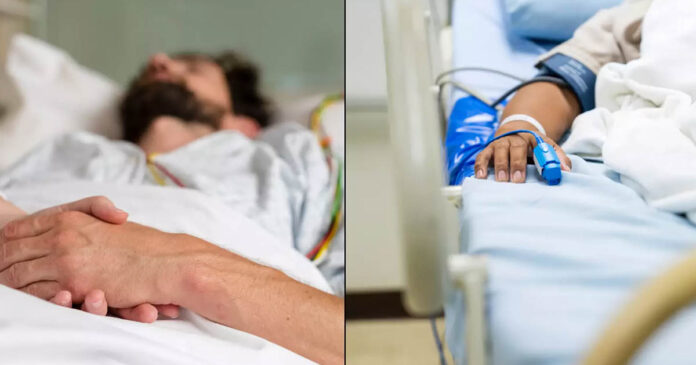
For many, just hearing the word “colonoscopy” is enough to trigger fear or anxiety. Due to embarrassment and misconceptions, a significant number of people decide to postpone or forego the examination altogether. Truth is, however, that the procedure is nowhere near as disgusting as — or as bad as — the hype would have you believe.
When a healthcare professional gives a recommendation, it is not made hastily; it is a purposeful action to protect your health and detect possible issues at an early stage.
Most times, what causes fear at people isn’t the test itself but all the “what ifs.” There are these worst case scenarios running through people’s minds because they are unfamiliar with the facts. Posts spread on the social media and exaggerating stories from friends can definitely make colonoscopy sound more frightening than it actually is. In reality, colonoscopy is a routine test performed by professionals safely a million times a day.
Another factor is simply the sensitive nature of this exam itself. While it could be a little awkward to think about, especially if you come from a culture in which digestive issues are a sensitive subject, this is what medical staff does every day with complete professionalism and without any judgment at all. To them, it’s just another day looking after patients’ well-being.
Of course, there is also the psychological aspect to it. Truth is that the idea of any medical test our doctor orders makes us feel a little vulnerable, which can easily trigger stress.
What one should have in mind, however, is that avoiding the test doesn’t remove the risk,it just delays the answers. Facing that brief moment is worth because it can finally give you a peace of mind.
Unslpash
The One Question You Should Ask Before Saying “I Don’t Want to Do It”
If your doctors recommends colonoscopy, you can ease your mind by asking the simple question of why they are ordering the examination and what they are looking for.
As a patient, you have all the right to know what are your doctor’s doubts that led to the procedure before undergoing one. Understanding the reason helps you make informed decision about your own health.
That conversation with your doctor can be incredibly empowering. Instead of feeling like this procedure is being pushed on you, you become an active participant in your own health. When you understand whether this test is to uncover certain symptoms, to confirm a diagnosis, or if it’s just a routine preventive measure, it’s a heck of a lot less scary.
A colonoscopy, in many instances, isn’t recommended to uncover anything wrong, but rather to prove to you that everything is fine. That’s a big difference. Routine preventive measures are designed to catch problems before they become anything serious, and a colonoscopy is one of the most effective ways of doing exactly that.
It’s also very useful to ask about alternatives, preparations, and what the experience would be before, during, and after the examination. Like with any other procedure out there, the more you know, the less the chances of fear to creep in. When you have an honest conversation with your doctor, it can only be helpful.
What is Colonoscopy?
A colonoscopy is a test that helps identify what’s affecting your bowel, including diagnosis of bowel cancer. The large bowel is also known as the colon or large intestine.
During the procedure, a doctor inserts a thin, flexible tube with a small camera on the end, known as a colonoscope, to examine the inside of the large bowel. In some cases, the test can also view part of the small intestine.
Aside from just looking around, a colonoscopy allows doctors to take small tissue samples, called biopsies, or even remove growths, like polyps, right on the spot. These are not just diagnostic measures; they are, in fact, preventive measures as well. For example, if you remove a polyp, you could be preventing cancer from even occurring in the first place.
The technology used in colonoscopies has advanced significantly in recent years. The current technology allows for the taking of very detailed images, which enables doctors to detect even the slightest abnormalities in the colon. It is because of this technology that the procedure still remains the gold standard in colorectal cancer screening.
Unsplash
Where Does the Fear Come From?
The fear associated with colonoscopies mainly comes from misinformation, as many picture the procedure as painful or distressing, but this is rarely the case.
During colonoscopy, the patient is usually sedated, so they don’t feel any pain or discomfort. The examination usually takes between 20 and 45 minutes, and the recovery is speedy. For most individuals, the most challenging aspect is not the procedure, but the preparation beforehand. Yes, it might feel uncomfortable, but this examination is crucial for ensuring accurate diagnosis.
Preparation for colonoscopy usually includes a special diet and a special solution to help clean out your bowel. While the procedure itself is often consider an inconvenience, it’s just temporary and gives doctors a clear view of what is happening without anything to be missed.
One more thing that needs to be mentioned is that fear is something that tends to go away if you hear real stories from real people who have actually gone through this process. Most people say that it was much easier than they thought, even asking themselves why they were worrying so much about something that, in reality, was not such a big deal. This is just one more example of how our perceptions can sometimes mislead us.
Why Timing Matters
Getting a colonoscopy at the right time can save your life, especially if you are over 45, have a family history of colorectal cancer, or have been dealing with suspicious digestive symptoms. Nothing about this test is radical. On the contrary, it’s a common-sense prevention that can detect and treat abnormalities before they progress.
As explained by the National Cancer Institute, colorectal cancer often starts as small, harmless polyps that doctors can detect and remove during a colonoscopy before they even become a real threat.
By delaying a colonoscopy, you may be passing up a chance to treat a problem early when it is easiest to treat. Experts at Harvard Health advise that delaying your screening may lead to a more serious diagnosis later on. Since colorectal cancers take a long time to develop in the body, early detection is a significant factor in treating it successfully.
Regular screening is especially important because most gastrointestinal diseases don’t display any symptoms in the early stages. The NHS and Cancer Research UKexplain that signs of bowel cancer may not appear until the diseases reaches late stages, which makes screening crucial in both detection and early treatment. Colonoscopy is a proactive procedure, not a reactive one.
It’s all about perspective in the end, though. It’s perfectly natural to be a bit apprehensive, yet the small discomfort of the procedure is far outweighed by the huge benefits you’ll be getting out of the process. As the American Society for Gastrointestinal Endoscopy points out, the procedure is both diagnostic and preventative, allowing doctors to detect cancerous growths early on and eliminate them before they become problematic. This is not just another procedure, after all—this is your health you’re talking about!
Deciding to have a colonoscopy when recommended is not just about following doctor’s orders, it’s about taking charge of your life. Often, the best decisions for our health are the ones that make us feel a little uncertain.
*Medical Disclaimer: This article is intended for informational purposes only and does not constitute medical advice, diagnosis, or treatment. Always seek the advice of your doctor or another qualified healthcare professional regarding any medical condition or concerns you may have. Never disregard professional medical advice or delay seeking it because of something you have read in this article.
Please SHARE this article with your family and friends on Facebook.
Here is a fun fact! Around 10% of the world’s population are left-handed. So, since being a “southpaw” isn’t something common, it has long fascinated experts and ordinary people alike.
Lefties often navigate the world with a unique set of cognitive quirks. While they enjoy some pretty cool perks in certain activities, they also need to deal with the daily annoyance of living in a world built for right-handers. From how their brains are wired to their creative streaks and athletic prowess, left-handedness gives us a front-row seat to how the human brain adapts and succeeds.
The human brain is lateralized, which is a fancy way of saying that certain functions are processed more by one side than the other. For a lot of lefties, the right hemisphere, which we associate with such things as intuition, creativity, and spatial ability, seems to be in charge. According to Dr. Charlotte Reznick, a child educational psychologist and former UCLA professor who is a lefty herself, left-handers seem to have a “knack” for creative activities as opposed to logical ones.
Left-handed people may also process slightly differently by getting both sides of their brain get along better. This can, in turn, help them become more creative thinkers. Scientists believe that this is the exact reason why left-handed people show such unique cognitive behavior.
When it comes to the actual intelligence, research show that the numbers are a lot more balanced than the “tortured genius” stereotypes you see in media. A massive meta-analysis published in the Neuroscience & Biobehavioral Reviews journal, which saw data from 19 different databases in which over 16,000 people were included, found that for the average person there is no significant difference in the overall IQ between left-handed and right-handed people. In other words, the hand you write with is not a shortcut to a higher score on a standard intelligence test.
On the other hand, the research did reveal a few intriguing facts about the extremes of the spectrum. The study noted a slightly greater rate of left-handedness in people with intellectual disabilities, indicating that “atypical handedness” can, in a certain sense, be linked to different developmental routes. The study also went against the common stereotype that left-handed people are more likely to be “gifted.” In fact, hight-achieving groups are in fact slightly less likely to be left-handed than the general public.
This change in the narrative means we shouldn’t see left-handedness as either a “superpower” or a “deficit,” but as a neutral biological variation. While lefties may not have a naturally higher IQ compared to the rest of the population, their advantage lies in the way they use their intelligence, especially in what is termed “spatial rotation” or “divergent thinking,” where the right hemisphere of the brain gets a workout.
One of the most enduring beliefs about left-handed people is that they are more creative than the rest. According to a common psychological theory found on Enviroliteracy, the right hemisphere of the brain, which is used for spatial reasoning and intuition, is said to be more dominant in left-handers, which might give them an advantage in music and art.
Research published in Behavioral and Brain Functions, indicates that left-handed musicians have distinctive structural brain features such as increased gray matter in the auditory cortex which may help with skills such as pitch memory.
However, scientific opinion seems to be shifting to a more nuanced way. A 2025 Cornell University meta-analysis conducted by Owen Morgan and Daniel Casasanto, which reviewed more than 100 years of data and nearly 1,000 studies, found that while leftie do dominate in fields like music and art, they do not actually perform better on standard lab tests that measure “divergent thinking,” which is the ability to come up with more solutions to a single problem. It seems that the “creative lefty” belief only persists because our tendency to notice rare traits like being left-handed and being a genius and assume they somehow just go hand-in-hand.
When to comes to left-handers and sports, it has long been considered that they have strategic advantage over the rest of the people. In “duel” sports like fencing, baseball, and table tennis, lefties are represented at far higher rates than their 10% share of the overall population. A2025 study published in Royal Society Open Science, shows that left-handers are significantly overrepresented in elite fencing—particularly in the foil and épée disciplines—where they make up over 25% of top-ranked male athletes.
This is because of the “Negative Frequency-Dependent Advantage” or “surprise effect.” The overwhelming majority of people, or 90%, are right-handed, and most of them spend their entire lives playing against right-handed opponents. The “southpaw” effect causes their muscle memory to be slightly off because of the angles and spins involved.
However, a newly published research from February 2026 published in the journal Scientific Reports indicates that there is also a psychological element to this phenomenon. Namely, the study shows that left-handers actually have a higher “hyper-competitive orientation” than right-handers. What this means is that lefties are less likely to shy away from a competition due to nervousness or anxiety and are driven by a desire to win. So not only they are harder to predict, but they also have a sharper appetite when it comes to one-on-one combat.
Pexels
Everyday obstacles and adaptation
When you think about it, being a leftie in a world designed for righties isn’t that easy. Everything, from scissors to computer mice is designed with the other 90% in mind.
However, it is these minor frustrations that are great for building character and brainpower. Lefties often end up more ambidextrous and better at problem-solving simply because they have to figure out how to use tools that aren’t meant for them.
According to research, left-handed students tend to be more skilled in mental rotation and in solving puzzles in weird ways. The struggle is real for even the smallest things such as spiral notebooks, kitchen gadgets, and three-ring binders. Lefties learn to adjust their grip and find “workarounds” constantly, which probably improves their spatial reasoning and cognitive flexibility over time.
While the research on health and handedness is mix, certain data do suggest that there is a bit of increased risk of conditions such as dyslexia and ADHD in left-handed people. The thing to remember, though, is that correlation does not mean causation, and most left-handed people lead completely healthy lives without ever having to deal with any of these issues.
There has been some research done on whether or not being left-handed affects how long you live or whether or not you have a stronger immune system, but the evidence is pretty inconclusive, and experts say that being left-handed is not a “health predictor,” lifestyle, genetics, and environmental factors all play much more significant roles.
What makes left-handedness interesting
Being a lefty is a package deal: you get a whole list of awesome advantages and frustrating disadvantages. Left-handed people excel in sports and creative activities, but they also have to continually work at adapting their world.
Plus, learning about left-handedness can also help us understand the brain in general. By learning how left-handed people process information, we can also learn more about the brain’s plasticity and how we can be so flexible in our thinking.
There is also an interesting history involved here. For example, for a very long time, lefties were forced to write with their right hands, and this possibly affected how whole generations learned to deal with and overcome problems. If we look at all this, it helps us see how both biology and environment contribute to who we are.
At the end of the day, being left-handed is not just about which hand you use to hold a pen with, but it is a celebration of the diversity of the human brain.
Whether it’s sports heroes or musical masterminds, left-handers bring something unique to the table. They may have trouble with scissors once in a while, but their flexibility and uniqueness are incredibly valuable.
As we continue to explore, we will likely learn more ways in which handedness affects our lives. By embracing these differences, we can make the world a more ergonomic and accommodating place for all people, regardless of whether they’re left-handed or right-handed.
Please SHARE this article with your family and friends on Facebook.
When we think of Hollywood, we think of luxury and glam, forgetting that not every celebrity was handed fame and fortune on a silver plate. Truth is that a number of celebrities had a rough start in life and struggled to get to where they are today.
Actress Ashley Judd is one of them. This Hollywood icon had a tough childhood, especially after her parents got divorced. Food wasn’t always on the table, and if they didn’t grow it or make it, they simply didn’t have it.
Her mother worked tirelessly to bring Ashley and her sister up in rural Kentucky where they often lacked electricity and indoor plumbing.
Eventually, Ashely’s mother, who worked as a nurse at the time, had her breakthrough in the music industry. And I’m sure you know who we are talking about, famous Naomi Judd. But at the time, that didn’t change much for Ashley who wrote in her 2011 memoir All That Is Bitter & Sweet that she was forced to change 13 different schools before reaching 19.
With her mother on tours, Ashley was shuffled between two sets of elderly grandparents and her substance-abusing father.
“I loved my mother, but at the same time, I dreaded the mayhem and uncertainty that followed her everywhere. I often felt like an outsider observing my mom’s life as she followed her own dreams,” she wrote.
Shutterstock
In her memoir, she also revealed that she was sexually abused as a child by an unnamed member of the family.
“I was molested for the first time I remember at the age of seven,” she said when talking about her past while speaking at the World Congress Against Sexual Exploitation of Women and Girls in New Delhi.
“I experienced two rapes at the age of 14,” she added.
One of those rapes resulted in her becoming pregnant.
“As everyone knows, and I’m very open about it, I’m a three-time rape survivor. One of the times that I was raped there was conception and I’m very thankful I was able to access safe and legal abortion. Because the rapist, who is a Kentuckian, as am I, and I reside in Tennessee, has paternity rights in Kentucky and Tennessee, I would’ve had to co-parent with my rapist,” she said.
The actress has also described growing up in a “dysfunctional family system that didn’t work very well.” She remembered that her famous musician mother and stepfather, Larry Strickland, were “wildly sexually inappropriate in front of [both herself and her older half-sister].”
She added that, for instance, the sisters were made “to listen to a lot of loud sex in a house with thin walls,” which she now recognizes as “covert sexual abuse.”
Ashley Judd attends the “Lazareth” Special Screening at Crosby Street Hotel on May 09, 2024 in New York City. (Photo by Arturo Holmes/Getty Images)
Despite a very difficult childhood, the Ashley rose to fame and built a successful career. She went to college in Kentucky before moving to Hollywood with no connections, no training, and just $250.
She studied acting, worked as a hostess at The Ivy, and lived in a Malibu rental. In 1993, she landed the lead in Ruby in Paradise, a low-budget indie about a young woman escaping an abusive relationship. Her intense, authentic performance earned her the Independent Spirit Award for Best Actress.
In the late ’90s, Ashley Judd became known for strong, intelligent roles in films like Kiss the Girls and Double Jeopardy. Behind the success, she battled old trauma and sought help in 2005.
“I needed help,” she told Glamour. “I was in so much pain.”
“I was unhappy, and now I’m happy,” she shared “Now, even when I’m having a rough day, it’s better than my best day before treatment.”
After that, she focused on healing and visited war zones in Rwanda, Congo, and Kenya to be with victims of sexual assault.
In 2001, she married Scottish race car driver Dario Franchitti. The two didn’t have children, and Ashley spoke openly of the decision not to become a mother, saying, “It’s unconscionable to breed with the number of children who are starving to death in impoverished countries.”
The couple called their marriage quits in 2013.
Ashley Judd attends The New York Times DealBook Summit 2025 at Jazz at Lincoln Center on December 03, 2025 in New York City. (Photo by David Dee Delgado/Getty Images for The New York Times)
In 2017, Ashley Judd became the face of the #MeToo movement after accusing Harvey Weinstein of sexual harassment, including his infamous “Will you watch me take a shower?” request.
While she was blacklisted for speaking out, she decided not to stay silent.
Her battles with harassment began early; during her first audition, “[It] yielded a screen test and I was asked to take my shirt off,” and later recalled being “sexually harassed by one of our industry’s most famous, admired-slash-reviled bosses” on Kiss the Girls (1997).
Competing for a role, Judd refused to be pressured into exposing herself. She told the audience, “I said, that isn’t about our acting, that’s about evaluating a pair of breasts. And the answer was not ‘no’ but ‘hell no.’”
She still acts occasionally, her most recent role was in 2024, but has mostly shifted to activism.
On April 30, 2022, Ashley’s mother, singer Naomi Judd was found “unresponsive in her home by family.” Shortly after her passing, it was revealed that the 76-year-old died of suicide and that she left a note before taking her own life.
The official autopsy report stated, “[Naomi Judd] had an apparent self-inflicted gunshot wound and was transported to Williamson Medical Center where she was pronounced dead shortly after arrival.” Further, it was revealed that Naomi’s family spoke of her intentions to claim her life in the past as she suffered from anxiety, as well as depression, bipolar disorder, chronic idiopathic pneumonitis, hepatitis C, hypertension and hypothyroidism, as per the NY Post.
Naomi’s lifeless body was discovered by Ashley herself.
Shutterstock
Shortly after her mother’s tragic passing, Ashley appeared on Good Morning America and spoke of the pain the loss caused.
On the first Mother’s Day without her loving mother, Ashley said that she felt raged because her mom “was stolen from me by the disease of mental illness, by the wounds she carried from a lifetime of injustices that started when she was a girl.
“My mama was a legend. She was an artist and a storyteller, but she had to fight like hell to overcome the hand she was dealt, to earn her place in history. She shouldn’t have had to fight that hard to share her gifts with the world,” Ashley added.
Shutterstock
Naomi gave birth to her daughter Wynonna a week before she was supposed to graduate from high school. Being a mother at 18 wasn’t easy, let alone a single mom. Her boyfriend left Naomi because he wasn’t ready to be a father so she was forced to raise her daughter all by herself. Some time after welcoming Wynonna into her life, Naomi met Michael Ciminiella whom she married in 1964. Four years after tying the knot, Naomi gave birth to her second daughter, Ashley Judd. Unfortunately, Naomi’s union with Ciminiella didn’t last long and she was once again left to take care of her children alone.
One day while on the job, Naomi met someone who helped change her life forever.
A patient at the hospital happened to be a man whose father was a record producer who arranged for Naomi and Wynonna to get to a live audition at the music label RCA in Nashville in 1983 and that was the start of something huge.
One thing led to another, and the mother-daughter duo became a sensation. They signed their first record and released their first album Wynonna & Naomi, as The Judds. The world became fascinated with the mother-daughter duo. They released number one hits and sold records for more than $20 million.
Ebet Roberts/Redferns
On January 2023, The New York Post shared an image that was allegedly obtained by the Williamson County Sheriff’s Office and was a sticky note Naomi left before taking her own life.
The note read, “Do not let Wy come to my funeral. She’s mentally ill,” with the word “not” underlined. Wy, likely referred to Wynonna.
In an attempt to defend her mother and her sister, Ashley spoke of the note which she didn’t want published in the first place.
“Our family is deeply distressed by the galling, irresponsible publication of and ongoing requests for details and images of our beloved mother and wife’s death by suicide because of the trauma and damage it does to those who view such materials and the contagion risk they pose to those who are vulnerable to self-harm,” the actress wrote.
She then called out the publication that shared her mother’s note, and said, “this so-called ‘journalism’ is merely the crudest monetization of a family’s suffering and despair, and a flagrant, cynical disregard for public welfare.
“It is equally a deep violation of our right to a modicum of decency and privacy in death. We remonstrate media to take as fact the American Foundation for Suicide Prevention’s guidelines on coverage of suicide both for public safety and to avoid re-traumatization of survivors of such a devastating tragedy.”
Speaking of the note itself, and what was written on it, Ashley stated that those words “came from the complex disease of mental illness and not from her mother’s heart. We hope the public and elected officials now see, with us, the keen importance of strengthening and changing state privacy laws so that police reports in the event of death by suicide are not, in fact, public record. The consequence of the law as it is presently serves only the craven gossip economy and has no public value or good.”
Ashley then shared the details of a bill that has been adopted by Tennessee Senate Majority Leader Jack Johnson that is referred to as Tennessee Senate Bill 9. The goal of the Bill is to “limit access to death records, investigative reports, and 911 calls if no crime was involved in the death of an individual.”
“If passed, this bill will give Tennessee families the privacy they deserve without having to fight for it. Senate Bill 9 gives families the privacy that is critical for them to grieve appropriately, and it can be obtained without compromising the importance of government transparency,” Ashley wrote.
The sheer happiness of welcoming a baby into your world and your family can’t be compared to anything. Seeing the bundle of joy you were longing to meet for nine long months is the most exciting thing there is, and this is something every parent will agree with.
When baby Sloan was born in 2015, her parents, Joe and Jennifer McGillis, were over the moon. However, what they didn’t expect was their daughter to have a large tumor on her face because no ultrasound during the pregnancy showed any deformations.
The tumor took a large portion of Sloan’s face and it required thirteen surgeries over the first years of her life for it to be completely removed. Today, Sloan resembles a perfectly normal child. This is her incredible story.
Facebook/Sloansstory
Following her birth on February 25, 2015, baby Sloan’s mom and dad noticed a growth on her face, and on day three, she was hospitalized at the Neonatal Intensive Care Unit as it was determined that the growth was a tumor.
“They handed her to me,” Jennifer told Inside Edition, recalling the first moment she saw Sloan with the tumor. “I went into shock at that point.”
“I had about a minute of panic terror,” Joe added.
The great thing was that the doctor in charge for Sloan’s treatment, Dr. Hardy, gave the family some hope and never left their side.
“He walked into Sloan’s hospital room when she was just born, looked at her & said, “That is a hemangioma & she will be just fine. Your daughter is going to be ok.” And for the 1st time in 48 hours, I think I was able to breathe again,” Jennifer wrote on Facebook.
Facebook/Sloansstory
It was determined that the growth was hemangioma, a type of growth that appear as red or purple lumps on the skin made of rapidly dividing cells of blood vessel walls.
Being non-cancerous, these tumors can be operated on and removed safely, but as with any surgery, these can be followed by complications, too.
“When she was born, it was hard as a rock,” Jennifer told the Billings Gazette. “It was like having a grapefruit under your skin.”
In Sloan’s face, the growth appeared on a large part of her face preventing her from fully closing her mouth. “She just doesn’t seem to know it’s there, she’s grown up with it,” Jennifer explained. “We’ve done nothing to treat it as a visibility.”
Facebook/Sloansstory
The doctors said they should wait and see if the tumor would shrank by itself over time, which caused even greater concern at her parents who know how cruel people could be. They were afraid of the stares and how it would affect their daughter’s self-confidence.
“The world is cruel sometimes,” Joe said.
“Sometimes adults are worse about it than other children,” Jennifer added. “Many parents of children with hemangioma are accused of child abuse.”
Sloan underwent her first surgery at in January, 2016. The doctor who performed the surgery was Dr. Milton Waner at the Vascular Birthmark Institute of New York.
Facebook/Sloansstory
On the day sweet Sloan went under the knife, her mom posted a touching message on the social media.
“They had a plan, but we knew we couldn’t expect the entire tumor to be gone & you can never mentally prepare yourself to see your baby cut all over their face with 100’s of sutures & tubes coming out of them. I look back on this 1st experience & my stomach goes in knots just thinking about the moment I held her in the operating room with the mask over her face & watched her eyes roll back in her head,” Jennifer wrote.
“In that moment, as I think most parents would have a wave of fear come over them, I prayed that was not the last time I held her. Surgery itself is scary enough but to have to make the decision to have it done on your infant is gut wrenching. Were we doing the right thing? Was it to much for her little body? Will the pain be too much for her & she can’t tell us? “
Luckily, doctors were able to remove 90 percent of the tumor.
Facebook/Sloansstory
However, despite the success of the initial surgery, Sloan was about to undergo more, and the family didn’t have the money for it because the hospital, Lenox Hill, in New York, wouldn’t accept Sloan’s Montana Medicaid insurance.
But as they say, it takes a village to raise a child, and in this family’s case, it took some kind-hearted people to help their daughter get the life she deserved. A bank in Missoula set up a medical fund in Sloan’s name, and an online fundraising effort brought in more than $30,000. The Hannah Storm Foundation had raised enough money to cover all Sloan’s surgeries and hospital stays in New York. Overall, the family was bale to raise $100,000.
“Everything we were worried about just fell away,” Jennifer told Missoulian. “We didn’t have to worry about how to pay for all of this.”
Joe added: “They aren’t donating to us, they are donating to her, and it was tough to wrap our heads around that for a while. Sloan’s changed us, she’s made us stronger and made us better people.”
Facebook/Sloansstory
Sloan’s story has been documented on the Sloan’s Story Facebook Page.
Today, she resembles a perfectly normal child and no one would have guessed that she was born with a huge tumor on her face.
“I was born with a port wine birthmark stain on my face. Without makeup, even to this day [it] looks like a black eye,” now eight-year-old Storm told Inside Edition.
The family is thankful to everyone involved in Sloan’s recovery, as well as to everyone who has supported them throughout the years. However, their special thanks goes to Dr. Hardy, who was crucial to Sloan’s new life.
Facebook/Sloansstory
“It’s difficult for me as a mom to put into words the gratitude I have for him. He will never truly know what he has done for Sloan, myself & my family,” Jeniffer McGillis wrote of Dr. Hardy. “Thank you for doing things for my daughter that we, as her parents could not. Thank you for our monthly visits that I’m certain I looked forward to much more than Sloan; I truly think of you as a friend now.”
We are so happy everything turned out for the best for Sloan and her family.
Please SHARE this article with your family and friends on Facebook.
Sean Penn won his third Oscar, but he didn’t attend the 98th Academy Awards ceremony, and many were left wondering what the reason for his absence could be. Well, at least those unaware of the actor’s feelings towards the ceremony.
Penn was nominated for Best Supporting Actor for the role of Colonel Steven J. Lockjaw in Paul Thomas Anderson’s film One Battle After Another and won but he wasn’t there to accept the award. Instead, it was last year’s Best Supporting Actor winner Kieran Culkin who was presenting this year’s category who accepted the Oscar on Penn’s behalf. “Sean Penn couldn’t be here this evening, or didn’t want to,” he joked.
Except for failing to attend the Dolby Theater ceremony, Penn also missed the BAFTAs and the Actor Awards over the past month to pick up his wins.
Warner Bros.
While Penn didn’t release any official statement regarding his absence, sources close to the actor told The New York Times that he had planned to visit Ukraine as of last week. Whether he did travel to Ukraine or not hasn’t been confirmed.
Ghosting the Oscars isn’t anything new for Penn, 65. He also missed the ceremony in 1996 for his nomination for Dead Man Walking, in 2000 for Sweet and Lowdown, and in 2002 for I Am Sam, according to The Associated Press.
Expressing his feelings for the ceremony, Penn said at one point, “The Academy have exercised really extraordinary cowardice… limiting the imagination and different cultural expressions,” according to VT.
In another interview, he said: “I don’t get very excited about what we’ll call the Academy Awards.”
Warner Bros.
He has also raised doubts about how much the awards should matter when judging artistic work, saying, “Ceremonies like the Oscars should best be seen as television shows first and less as barometers of artistic merit.”
In 2023, Penn told Variety that he would even consider melting down his Oscar trophies to support relief efforts in Ukraine.
“I’ll give them to Ukraine. They can be melted down to bullets they can shoot at the Russians,” he said of giving one of his Oscar statuettes to Zelenskyy at the time.
Penn had already been in Ukraine while co-directing the 2023 documentary Superpower, where he traveled to the country to explore the career journey of Ukrainian president Volodymyr Zelenskyy.
This years’s Academy Award is his first Oscar in the best supporting actor category. He had previously won best actor for his performances in Mystic River and Milk. He attended both of those Oscar ceremonies.
PATRICK T. FALLON / AFP via Getty Images
Penn has now joined an elite group of three-time acting Oscar winners that includes Meryl Streep, Jack Nicholson, Daniel Day-Lewis, Ingrid Bergman, Frances McDormand and Walter Brennan.
Katharine Hepburn still holds the record for the most acting Oscars, with four wins during her career for Morning Glory, Guess Who’s Coming to Dinner, The Lion in Winter and On Golden Pond.
At this year’s Academy Awards, One Battle After Another claimed best picture and best director as part of a six-award sweep. The movie also won for best editing, best adapted screenplay and the first Oscar ever presented for best casting.
Leonardo DiCaprio was nominated for Best Actor for the same film, starring alongside Sean Penn but lost to Michael B. Jordan who won Best Actor for Sinners.
Please SHARE this article with your family and friends on Facebook.
As a nation, Americans show utmost respect for the military men and women who fight for our country and our freedom. The need to pay respect to these service officers grows even bigger on Memorial Day, the day when we remember those who lost their life for the country.
On this particular day, it is not uncommon for family members and strangers alike to gather at memorials and pay their tributes to the fallen military members. They often bring flowers and flags, or simply stand in quiet reflection. Over time, a tradition of leaving coins on the tombstones of the fallen soldiers emerged, and for those unfamiliar with it, it can be rather puzzling at first.
If you are unaware of this tradition and you’ve noticed coins on a tombstone, you probably thought someone dropped them by accident. But that’s not the case. In fact, these coins carry a heavy weight. They represent a gesture of appreciation for the sacrifice the soldier has made for our country.
Next time you visit a memorial and you spot coins on a veteran’s tombstone leave them be and if you can, place one yourself.
The coins serve the purpose of the soldiers’ families to know that someone had visited the grave and is thankful for the sacrifice their loved ones made. And trust me, this gesture can mean the world to them. It means that even after many years, sometimes decades, the person is not forgotten and people still stop to honor their life.
This gesture is both emotional and comforting.
Interestingly, the type of coin left behind often tells the story of the relationship between the fallen soldier and the person visiting their resting place.
When someone leaves pennies, it means a complete stranger stopped by to pay their respect.
Nickels on the other hand carry a more personal touch. If they are left on a tombstone, it means the resting place was visited by a fellow soldier who survived booth camp together with the fallen soldier. They also symbolize the that initial, grueling bond the two formed during training.
A dime means the visitor and the fallen soldier served together at some point in their life. This coin represents the deep camaraderie and trust people in uniform who serve together develop.
A quarter, however, is the most poignant of all because it means the visitor was there when the soldier lost their life. It is a truly touching tribute to a shared, painful history.
For the grieving families, these coins aren’t just a piece of metal, but proof that someone out there took a moment to recognize the heroism and the sacrifice of the loved one they lost.
From time to time, the groundkeepers at the cemetery collect the coins, but they don’t keep for themselves. Instead, they are either donated to cover burial costs for other veterans or used to maintain the cemetery. This way, the coins give back to the community of veterans.
This may seem like a simple tradition, but it is one that carries a powerful meaning. A coin left on a tombstone is a lasting reminder of the respect we have for the men and women who gave everything to ensure the freedom we have now.
If you wonder how long this tradition has been around, it turns out it dates back centuries and its history is as fascinating as the tradition itself.
According to the Department of Military Affairs, the tradition actually reaches back to the Roman Empire, and today, it’s practices in nearly every part of the world.
In ancient times, people placed coins in the mouths of fallen soldiers to pay for their passage across the River Styx, which was said to be the border between the living and the dead. Even in naval history, people placed coins under the mast of a ship to ensure that if they were lost at sea, the ferryman would be paid to take their souls safely back to shore.
In the United States, this tradition has been cemented into culture during the Vietnam War. During times when a country was deeply divided by politics, leaving a coin on a tombstone became a respectful way to show support. It allowed people to say “thank you” to the fallen soldier and their family without sparking a debate about the war. And that’s how a piece of metal became a symbol respect, unspoken but felt by all.
For some, Memorial Day is often a time for weekend and BBQ, but in essence, it is a day to stop and remember. Besides leaving a coin on the tombstones of fallen soldiers, there are other genuine ways to pay tribute and honor those who sacrificed everything.
Show up for the community
There are a number of towns that hold local ceremonies and organize parades to honor the day and pay their respects. Without a doubt, it means the world to the families that you are there in person and that their loved ones are still remembered. It’s like the world is coming together and giving the military personnel a big “thank you” and that it much more impactful than just standing on the sideline.
Fly the flag with intention
If you have a flag, fly it as a sign of respect. Just a heads-up on the etiquette: The Department of Veterans Affairs says that on Memorial Day, the flag should be flown at half-staff from sunrise to noon, then at full staff until sunset. A small detail, perhaps, but one that proves you really understand the significance of the day.
Wear a red poppy
This bright little flower became a symbol of remembrance since World War I. It was inspired by the poem In Flanders Fields written by the Canadian military doctor John McCrae and has turned into a national tradition ever since the VFW started distributing then in 1922. When you wear one, you keep that history alive.
Leave a digital tribute
You can actually commemorate a specific veteran by posting on the Veterans Legacy Memorial website. This is a VA site that keeps the memory of almost 4.5 million veterans alive. You can look up a specific veteran and post a picture and/or a message to ensure their story continues to be told.
Cherish your time together
Memorial Day is a reminder to appreciate the freedom we enjoy because of those who fought for it. So when you gather together with family and friends, you honor the fallen soldiers by enjoying the life they sacrificed to protect. To be thankful for your loved ones is probably the best tribute you can pay.
Leave flowers
Many people leave flowers on the tombstones of fallen soldiers, and this is probably one of the most classic ways to pay your respects. This is a tradition shared by many cultures throughout the world.
Say a prayer
If you are a person of faith, simply say a prayer and mention the deceased in a personal way.
Dave Taylor, a Vietnam War veteran, never misses a chance to place coins on the tombstones of his fellow combat friends. He feels like that way he’s keeping the memory of the deceased military members alive.
“It’s a story about life, about sacrifice, and about remembrance,” said Taylor.
Whether it is flowers, a prayer, or a coin on the grave, all these gestures point to the truth that the hero’s story doesn’t end when they are laid to rest.
At the end of the day, Memorial Day is more than just a day on the calendar. It is a commitment to remember the heroism, the names, and the families of those who have given it all. By taking a moment to remember their sacrifice, we can ensure that the freedoms we have today are never taken for granted.
Please SHARE this article with your family and friends on Facebook.
For centuries, people from all over the world have been keeping a close eye on the rhythm of the nature. To our ancestors, the changing of seasons was not just about observing the elements or the next season’s harvest, but a deeply spiritual milestone.
Among the most important of these moments takes place on March 21th, when a large portion of the world is celebrating the spring equinox, a day when light and darkness are perfectly balanced and when day and night are roughly equal in length.
For as long as people remember, this date has been considered a symbol of balance and rebirth, and a new cycle of life beginning. It is because of its symbolic value that a number of cultures have adopted a few rituals to usher in a new and positive energy, to regain a sense of balance and harmony internally, and to prepare both the physical space and the mind to face the busy season ahead.
One simple tradition found in a number of spiritual practices involves placing coarse salt somewhere in the home just before the equinox arrives. This act seems unassuming, but the symbolism behind it taps into much deeper concepts of cleansing, setting intentions, and spiritual renewal.
In this article, we will take deeper look at the true meaning of the equinox, the lasting significance that rituals play in our human experience, and why many people still find value in rituals such as putting salt in their homes as March 21st approaches.
The word “equinox” itself has its roots in Latin and literally means “equal night.” It refers to that particular moment in time when the Earth’s tilt and its orbit around the Sun perfectly coincide, allowing the Sun to pass over the celestial equator. This results in a very unusual day in which daylight and darkness are virtually equal in duration.
This phenomenon occurs twice a year, once in spring and once in autumn. On March 21, the spring equinox occurs and marks a significant change in the Northern Hemisphere, signifying the beginning of a move away from the cold and towards longer and sunnier days.
Throughout the course of human history, this balance of day and night is treated as something deeply symbolic. Many see it as an example of two opposites coexisting in perfect harmony.
As the equinox marks a point on the border of two seasons, it has often been seen as a kind of “threshold,” a specific moment in time in which one season formally ends and another formally begins.
For agricultural societies, this was very important part of the year. It was the ultimate sign that fertility was returning back into the earth and that planting season had finally arrived. And yet, beyond those agricultural realities of the equinox, there has always been a sense of personal reflection and contemplation that comes from people’s thinking of their own growth and rebirth.
Why rituals have always been part of seasonal changes
It is in the human nature to develop and practice rituals that celebrate special milestones. Whether it is birthdays, anniversaries, weddings, or the change of seasons, these rituals make us stop for a moment and reflect, breath, and look around.
Anthropologists have argued that these rituals serve a few important functions in our psyches. They allow us to deal with the major changes we go through, bring us together as a community, and create a sense of continuity that stretches from our past into our future.
Seasonal rituals are rooted in the human’s oldest connection, that with nature. Before we had clocks, digital calendars, and all the technology we have nowadays, we only relied on the moon, the sun, and the starts to measure how time passes by, so celebrating an occasion such as the equinox was a way for entire communities to to stay in sync with the natural cycles of the Earth.
Even today, in this modern world we live in, most of us feel the urge to renew things around our home or some of our routines as the hold of winter begins to loosen. Perhaps the best example of this is the “spring cleaning” most of us practice because we see it as a way to get rid of the old and let room for something new to take place instead.
While the practices may differ from culture to culture, all those rituals that celebrate the equinox almost always circle back to the same core themes:
Letting go of the weights of the past
Restoring a sense of balance in our daily life
Clearing out the negative energy
Setting clear intentions for the period that follows.
However, when you think about it, the message is pretty much always the same. The equinox is a rare moment of balance to stop, reflect, and allow ourselves permission to start anew.
In a sense, the meaning of equinox is the balance between light and dark. Most spiritual practices emphasize this need for equilibrium. Having too much of either side is what leads to friction, much like how having too much hustle without enough downtime leads to burnout.
The equinox is a reminder that everything is cyclical, not linear. There is a flow from growth to downtime, and every challenge will lead to renewal. Therefore, the days leading up to March 21 are a great opportunity to declutter your space and your mind. It is a chance to revisit your goals, release baggage, and find more serenity at home.
Salt as a symbol of purification
One specific element linked to equinox rituals is the salt.
Salt is also used to symbolize purification, protection, and security. In the past, salt was used as a form of currency and was also used as a gift to show respect and goodwill.
Salt is also used in spiritual practices across the globe to “clear the air.” This is usually done by placing salt in bowls across the doors and is a result of its natural properties to preserve and stabilize objects and spaces. If salt is able to preserve and stabilize food from decaying and becoming stale, then it is able to do the same to a space.
When a bowl of salt is placed out before March 21st, it helps “absorb” the heavy energy of winter and make room for the clarity and calm of spring.
The ritual of placing salt is far from complex. In fact, people just place a small bowl of coarse salt somewhere in the home. Some common places include: by the front door or at a table near the entryway, near a window where the light can hot the bowl, or in a quiet area such as a corner or a bookshelf.
This bowl of coarse salt isn’t meant as a decor but a “reset button” for the home. Some people prefer the bowl to be ceramic or glass, but it doesn’t really mater because it is the intention that counts.
The bowl should be kept at the place for a few days around the equinox before it’s tossed out as a mean of “clearing the way” for the new season.
Combining this ritual with other small practices
Some people who practice the coarse salt ritual combine it with other small practices, while others believe that the salt itself is enough.
Some of these small practices include:
Opening the windows
Many people associate the theme of freshness with the idea of new energy. Opening the windows to the sunlight and air may symbolize renewal.
Cleaning and organizing
Many people choose to clean their living spaces before the equinox as a symbol of renewal.
Lightning a candle
Many people light a white candle briefly to symbolize the light returning after the winter is gone.
Meditation
Many people opt for meditation to deepen the feeling of mindfulness.
The coming of spring is a time of growth and renewed light after a dark and cold winter.
Putting a bowl of salt in a corner before March 21st is a seemingly small act, but it is a significant one nonetheless. It is an act of letting go of the past and finding your footing to move into the next chapter of your life with a bit more intention.
In a fast-paced world where time is a luxury few people can afford, a small ritual such as this is a rare and precious thing. At times, it is precisely that awareness that is needed to make a new beginning real.
Please SHARE this article with your family and friends on Facebook.