Opinion: Why Prince William needs to speak about his health

0

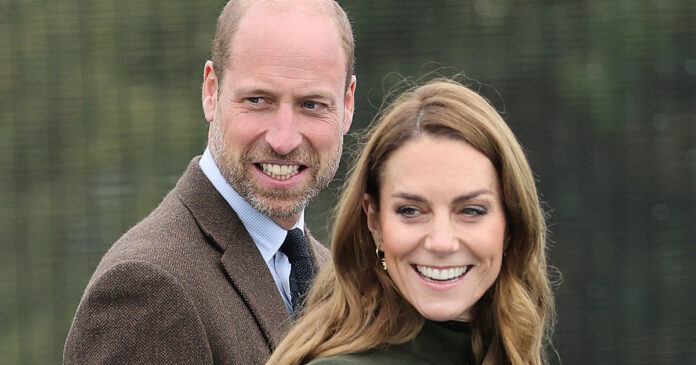
It’s safe to say that the British royals have been through a lot during the past couple of years, and somehow, Prince William has found himself in the middle of many of the family’s struggles. From Harry and Meghan’s decision to step away from royal life in Britain to Kate Middleton’s cancer diagnosis, as well as King Charles’ own diagnosis, William has had a lot on his plate. This has made the public concerned about his own well-being, especially after the future king was spotted with a beard, which was considered a major no-no during the reign of his grandmother, Queen Elizabeth.

William’s new “looks” made people talk, and many started speculating that there was something wrong with his health. The Palace hasn’t addressed those rumors, which have been widely reported by major media outlets.

While the royals have all the right to protect their privacy, being public figures, they probably should be more outspoken about their lives. At least the public would appreciate that.

Getty Images

Just how protective the royals are of their privacy is evident from the fact that they have never issued any official statement regarding the accusations made against them by Prince Harry and his wife.

Even though they’ve been put on the spot about Prince Harry more times than anyone can count, Prince William and the rest of the royals have stuck to a strict script of total silence. They just refuse to bite or share how they really feel. That said, you’d be hard-pressed to find anyone who doesn’t think Harry’s public jabs and accusations didn’t cut incredibly deep behind closed doors.

Keeping out of the controversy is textbook Royal Family behavior. It’s all about “no complaints, no explanations” – keeping things behind closed doors. While it totally makes sense for them to want to maintain their privacy, many people are now beginning to question whether such tactics are even effective anymore. If the monarchy wants to be relevant moving forward, it seems like it’s time for them to put down the walls and allow themselves to become a little more open.

This is where Prince William enters the conversation, and the speculation surrounding his health last fall could have been the ideal moment for him to begin changing the way the Royal Family communicates with the public, having in mind both he and Kate Middleton tend to modernize the monarchy in the years to come.

Christopher Furlong/Getty Images

Prince William’s first outing with a beard caused social media to go wild, but not only because of the new facial hair; many of the commenters also pointed out that he appeared much slimmer and seemed rather tired.

Let us make one thing clear—no one wants anyone to reveal their personal health issues to the entire world, especially since the prince is under such intense scrutiny. However, at the same time, there seems to be a widespread perception that William would benefit greatly from sitting down once in a while and giving a sincere interview about the pressures of being a royal and concerns surrounding his health.

It seems like total transparency isn’t just a nice idea for the Royal Family anymore but practically a survival tactic.

In this age, gossip regarding their marital status and private affairs may spread like wildfire within just a few minutes. The monarchy will appear much more contemporary and connected by taking action themselves and putting a stop to these rumors early on, preventing gossip-filled magazines and trolls on social media from dictating everything.

Of course, there is no doubt that these claims have severely damaged their reputation, however, the royal family’s traditional policy of keeping quiet has never worked properly before and has just allowed speculations to run wild. Prince William himself will have a lot to gain from adopting a slightly different strategy now. All he needs to do is say something and debunk all the rumors that might be spreading in a matter of hours.

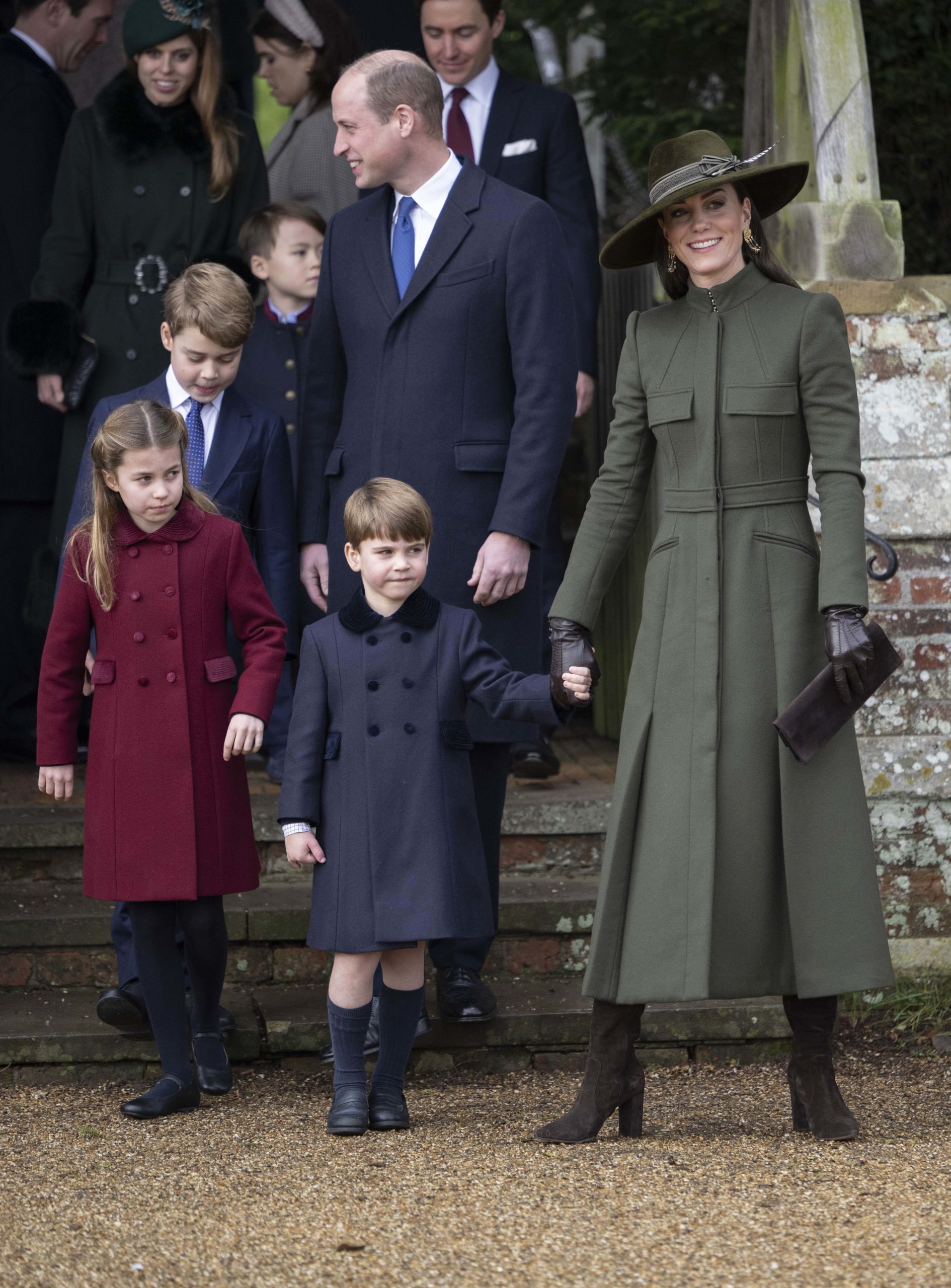
LONDON, ENGLAND – NOVEMBER 21: Prince William, Prince of Wales and Catherine, Princess of Wales attend a ceremonial welcome for The President and the First Lady of the Republic of Korea at Horse Guards Parade on November 21, 2023 in London, England. King Charles is hosting Korean President Yoon Suk Yeol and his wife Kim Keon Hee on a state visit from November 21-23. It is the second incoming state visit hosted by the King during his reign. (Photo by Chris Jackson/Getty Images)

A new survey released by the National Centre for Social Research in April last year revealed that public support for the Royal Family had fallen to its lowest level in modern times. According to the findings, only 54% of people in Britain described the monarchy as “very” or “quite important” in late 2023. By comparison, that figure stood at 76% back in 2012.

Following the death of Queen Elizabeth II and the never-ending chaos of Harry and Meghan, it comes as no surprise that the British monarchy’s popularity is on a downslide. For the future of the family, however, all eyes are on Prince William and Kate Middleton because they have been tasked with the responsibility of making the British monarchy relevant and closer to the regular people.

Actually, even a very simple thing like William openly making jokes about the reasons behind his decision to grow a beard would go a long way toward ensuring that people can relate to him as a person. Trust in today’s day and age is fostered by honesty. Complete secrecy about absolutely everything seems rather undignified nowadays; it simply widens the gap between the royals and the public even more.

Please SHARE this article with your family and friends on Facebook.

Bored Daddy

Love and Peace

Which glass has more water: Your answer reveals if you’re a giver or a taker

0

At first glance, this puzzle seems incredibly simple, just like most puzzles out there. There are four glasses labeled A, B, C, and D, all filled with water to nearly the exact same level. Inside each glass, however, sits a completely different everyday object. Your challenge is to decide which glass truly contains the most actual water.

Most of us give their answer right away, relying on our initial instincts. But after giving it some thought, we will soon discover that this is no game of guessing whatsoever.

It’s fun how puzzles like this one often lead to lively debates regarding personality and thought processes. Although the decision you make may have no scientific basis for defining who you are, it does have in describing how you think and how you interpret the things you see around you.

Looking closely at the glasses

Each glass contains a distinctly different object:

Glass A contains a paperclip

Glass B contains a baseball

Glass C contains an eraser

Glass D contains a wristwatch

Initially, most people concentrate solely on the apparent water level. Given that the four glasses seem to be equally filled to the brim, it becomes increasingly challenging to spot the critical clue in front of them.

The trick behind this puzzle is based on an elementary law of physics known as displacement.

When any object is submerged in water, it displaces water by occupying space. The larger the object, the more space it takes up inside the glass. Consequently, this means less water remains in that particular glass.

Therefore, even if two glasses appear to contain the same amount externally, the one with the smallest object actually contains the greatest amount of water.

The correct answer is Glass A.

The paper clip is undoubtedly the smallest object amongst all four objects. This explains why it causes the minimum amount of displacement of water. Since the paper clip takes up the minimum physical space in the glass, there would be enough space left for water to flow around the object to attain the high water level.

On the other hand, the baseball placed in Glass B takes up a large amount of space. There is not enough space left for the water to fill the gap. The rubber eraser and the metal wristwatch also displace significantly more water than the tiny paperclip.

This is why Glass A technically contains the most water, even though all the glasses may appear completely similar at first glance.

Why so many people get it wrong

The thing that makes this puzzle so fascinating is not the complexity of the science behind it. On the contrary, the idea itself is pretty straightforward when you take your time and think about it. The problem is purely perceptual in nature.

It is natural for the human mind to make fast and efficient visual judgments while navigating through life. Seeing four glasses with water filling them to the same level automatically implies equal amounts of liquid contained within each of the glasses. Most people concentrate on the level of water rather than the displacement caused by the objects hidden inside.

This is precisely the reason why riddles such as these are spreading fast online. It shows how intriguing the gap between perception and reality can be. At times, the tiniest detail makes all the difference.

What your choice might say about you

While there is only one answer that fits this riddle from a logical standpoint, it gets even more interesting when considering the various ways in which you might interpret your choice in terms of personality traits.

If you chose glass A

If your choice was the paper clip, then you likely have an amazing eye for details and find yourself preferring a more methodical thought process instead of jumping to conclusions. You may be one of those people who need to break down the situation before coming to an answer. In other words, instead of just looking at the surface level, you see past it and into the reasoning behind it all.

If you chose glass B

In case the baseball grabbed your interest, you tend to use intuition and instinctive judgments rather than over-analyses of your visual observations. You tend to act according to your instincts and have confidence in yourself while taking swift actions. You might not always consider all possibilities before acting and, therefore, fail to notice small details.

If you chose glass C

The choice of the eraser could point towards a balance between being a logical and creative thinker. This indicates that you have the capacity to think logically while also incorporating some form of imagination, and you normally weigh different options before coming up with a definite conclusion. Being a flexible thinker, you often adapt easily to new information and are perfectly willing to change your perspective if proven wrong. People like this are usually thoughtful and open-minded.

If you chose glass D

By choosing the watch, you are likely to have a greater attraction towards symbolism, emotion, and abstract reasoning. Instead of concentrating on the tangible dimensions or the objective facts and figures, your focus may naturally shift towards the significance, importance, and interpretation of things. You may place a higher importance on experiences and feelings compared to logical reasoning.

Why people love visual puzzles

Puzzles are extremely popular now due to their simplicity, interactivity, and the great pleasure people feel while solving them. Visual puzzles encourage people to engage immediately. Unlike complex equations and lengthy tests that require time and effort, puzzles take only seconds to understand, which makes them highly suitable for social media.

However, what makes them truly memorable has more to do with psychology than anything else. These visual puzzles remind people that our minds do not always interpret things accurately because they often work based on assumptions.

In everyday life, this happens more often than we realize:

  • People judge complex situations too quickly based on a headline.
  • They trust appearances without looking deeper into a person’s character.
  • They react emotionally before analyzing the actual facts.

Puzzles like this gently challenge those automatic cognitive habits and force us to pause.

The bigger lesson behind the puzzle

Ultimately, the most intriguing thing about this puzzle is not whether or not you were right in your initial attempt. Rather, it’s the reasoning process behind your conclusion.

Did you stop to think about what was going on?
Did you rely solely on your gut feeling?
Did you consider the objects’ function within the glasses?

The puzzle ultimately becomes a small reflection of how people approach problems in general. At times, the reality is not always immediately evident. At times, the solution lies in the minutiae that others overlook. And finally, at times, those who take enough time to observe become the ones who get to see the bigger picture.

So the next question is, “Did you choose glass A right away?”

Please SHARE this article with your family and friends on Facebook.

Bored Daddy

Love and Peace

What would happen to Melania if case Trump dies in office

0

While the question of what would happen to Melania Trump if Donald Trump were to pass away while serving as president isn’t exactly dinner-table conversation, it does remain a topic of growing curiosity, especially since discussions about Trump’s age and health completely dominate today’s political headlines.

Donald Trump returned to the Oval Office for the second time at the age of 78 years and 220 days, making him the oldest president ever, as per Presidents USA. If he finishes his term, he will leave office at 82. That reality alone has a lot of Americans quietly wondering what actually happens if a sitting president dies in office—not just behind the scenes in Washington, but personally for his family.

However, while the Internet loves to speculate, the legal framework here is incredibly clear. The USA has constitutional laws, as well as federal laws and traditions that were designed just for such a scenario.

What would happen almost immediately is the shift of power. Under Section 1 of the 25th Amendment, should a president die, the vice-president automatically takes over. There’s no waiting period, special election, or debate. As detailed on Wikipedia’s Twenty-fifth Amendment page, this system was ratified in 1967 to fix major gaps in presidential succession, largely spurred by the chaos following John F. Kennedy’s assassination in 1963.

This means if Donald Trump were to die in office, Vice President JD Vance would immediately step up as President of the United States. He wouldn’t just be an “acting” president; constitutionally, the office belongs to him completely.

Then, the office of the vice presidency will remain unfilled until the new constitutional mechanism takes effect. The new president appoints an individual to fill this vacancy, but this appointment is subject to approval through majority votes in both the House of Representatives and the Senate. This situation has occurred a handful of times in recent history, such as when the vice president Spiro Agnew resigned in the 1970s, prompting the selection of Gerald Ford, who them became a president himself following Nixon’s resignation.

Of course, such transition would also lead to a generational shift as JD Vance, who was born in 1984, would be one of the youngest presidents in American history.

Within one day, the US would go from having one of its oldest-ever inaugurated presidents to one of its youngest leaders.

As expected, in case JD Vance takes the position of a president, it would be his wife Usha Vance who would become a first lady because it’s not an elected position; the title simply belongs to the spouse of the sitting president. What that would also mean is that Melania Trump would stop being First Lady that very same day.

But then comes another important question – What happens to Melania Trump next?

But even without her title, she would keep many perks and benefits. One such benefit is her personal protection. Under federal law, former presidents and spouses receive lifelong protection from the Secret Service unless they remarry. According to The Washington Post, President Obama signed a bill in 2012 which provided complete lifetime security protection for former commanders-in-chief and their family.

Because of this law, Melania Trump would continue to have full Secret Service protection for the rest of her life. Barron Trump would also keep his detail, provided he meets the legal age requirements set for presidential children.

Where Melania would choose to live is anyone’s guess, but most people assume she’d head back to Mar-a-Lago or the Trump family apartments in New York. Unlike the president, former first ladies don’t have any official public duties or mandatory residences to maintain.

WASHINGTON, DC – SEPTEMBER 03: First Lady Melania Trump attends an event to mark National Alcohol and Drug Addiction Recovery Month in the East Room of the White House on September 3, 2020 in Washington, DC. The First Lady hosted a round table event with people who are recovering from substance use and mental health issues. (Photo by Drew Angerer/Getty Images)

Regarding finances, most of Melania Trump’s life after her husband will depend on personal decisions made by the family and not governmental regulations. Donald Trump’s estate is tied up in complex inheritance laws and estate taxes, alongside whatever specific instructions he has laid out in his will and prenuptial agreements. Financial sources have valued Donald’s net worth into billions of dollars for several decades now, although pinpointing an accurate figure becomes difficult because his money is mostly invested in companies and properties.

True, there is a modest lifetime pension given to the surviving spouses of former presidents, but that amount is a drop in the bucket compared to Trump’s personal fortune. The real financial picture is locked away in private legal documents that the public simply won’t ever see.

There is more to it than just money and documents because the death of a sitting president is an event of national response.

In case a sitting president passes away in office, there is a well-defined mourning process that takes place according to the established protocols and traditions developed over many years. These arrangements aren’t thrown together at the last minute. In fact, every administration starts planning for them early on, working directly with the Military District of Washington to coordinate the logistics.

Typically, a president who dies while serving in office is honored with a formal state funeral. These ceremonies usually follow a traditional sequence, beginning with a lying-in-repose ceremony at the White House, followed by a lying-in-state ceremony at the US Capitol Rotunda, and ending with a national funeral service at the Washington National Cathedral.

REUTERS

According to long-held custom in the United States, national flags across the country are flown at half-staff for 30 days following the death of a President.

Melania Trump, who would then be the widow of the President, would undoubtedly take a central role in these solemn proceedings. As such, she would participate in the traditional events alongside other close relatives of the deceased President.

These recent ceremonies follow the established protocol of previous state funerals, such as those of former presidents like John F. Kennedy, Ronald Reagan, and George H. W. Bush. This was recently observed in the state funeral of Jimmy Carter, which witnessed the gathering of many dignitaries for the ceremony in Georgia and Washington.

It might seem far-fetched now, but this is a scenario the nation has experienced before on several occasions. Eight American presidents have died while serving in office, including leaders such as Abraham Lincoln, Franklin D. Roosevelt, and John F. Kennedy. Every one of those moments reshaped how America handles succession and emergency protocols.

The reality is that these concerns largely stem from the ongoing debate surrounding age and health in American politics. From the moment President Trump returned to office for a second term, his age became one of the most frequently discussed topics in both news coverage and public opinion polls. Surveys have repeatedly shown that many Americans are increasingly concerned about the physical demands placed on aging political leaders, particularly in the years following the 2016 election.

PALM BEACH, FLORIDA – DECEMBER 31: Former U.S. President Donald Trump and former first lady Melania Trump arrive for a New Years event at his Mar-a-Lago home on December 31, 2022 in Palm Beach, Florida. Trump continues to run for a second term as the President of the United States. (Photo by Joe Raedle/Getty Images)

However, on the other hand, the White House and President Trump have always argued that he is in excellent health and fit for the job. After an extensive physical checkup at the Walter Reed National Military Medical Center, his physician issued a press release declaring him to be in excellent health, mentally sound, and fit to serve.

In essence, the United States Constitution is structured in such a way that the nation will not panic in case of any emergency. The line of succession for the presidency is always in place.

The funeral services, the transfer of executive power, and the White House transition would all follow a playbook that has been refined over two centuries of American history.

No one wants to see these emergency plans put to use. But the whole reason they exist is because history proves the country always needs to be ready for the unexpected.

Please SHARE this article with your family and friends on Facebook.

Bored Daddy

Love and Peace

The surprising truth about eating eggs every day

0

When it comes to eggs, it’s safe to say they are one of the foods surrounded by much controversy. The reason is that, over the years, experts first condemned their consumption as a cause of high blood cholesterol, and then, years later, they were classified as a superfood. This is why many people wonder what the truth about eggs really is, and whether they can eat them without guilt or worry about their health.

The egg debate has been around for quite some time. Despite their “bad” reputation in the past, today the story surrounding eggs has changed as a number of research revealed that for most people who are not suffering from any conditions, eggs don’t impose risk for heart disease. In fact, studies suggest that heart disease is mostly influenced by the consumption of trans fats, too much sugar, and processed carbs.

The HeartUK states that cholesterol “is a type of blood fat which is made in the liver. It’s found in some foods too. It plays vital roles in how your body works, and it’s especially important in your brain, nerves and skin.”

Around 80% of it is produced by your body and the rest comes from the food you eat.

According to the Cleveland Clinic, “too much cholesterol in your blood can be dangerous for you.” There are two types of cholesterol, HDL cholesterol, or the “good” cholesterol that experts believe can help protect your arteries, and LDL cholesterol, or the “bad” cholesterol that can make a sticky substance called plaque build up in your arteries. In general, cholesterol is essential for cell membranes, hormones, and vitamin D production, and research shows that our bodies adjust to the cholesterol we eat by producing less on their own.

While eggs are high in cholesterol, they are low in saturated fat, which, like trans fats, can raise LDL cholesterol.

This superfood is rightly referred to as the “eggcellent” source of nutrition since it provides an ideal combination of nutrients. The primary reason behind this is the availability of excellent quality protein in the egg that has all the necessary nine amino acids, making it quite effective when it comes to muscle recovery post a strenuous activity or just an entire day at work. Previously, the fat content of eggs was considered problematic, but in reality, eggs contain heart-friendly monounsaturated fats and inflammation-reducing omega-3 fatty acids in abundance. Apart from these macronutrients, an egg also supplies an overwhelming list of vitamins and minerals, such as vitamin A and E, which help boost immunity and keep your skin healthy.

They are also rich in selenium and phosphorus, which keep your thyroid and metabolism running smoothly. What truly sets eggs apart, however, is their high concentration of choline. This vital, often overlooked nutrient serves as a building block for acetylcholine—a key neurotransmitter that directly regulates memory, mood, and focus. By fueling both your body and your brain, eggs provide a simple, complete way to sustain long-term physical health and sharp cognitive function.

Consuming an egg or two per day can:

  • Help build and maintain muscles
  • Boost brain power
  • Keep your eyes healthy
  • Keep you full longer and help with weight management
  • Support your heart and immune system

Eggs can be consumed in a number of ways. Scrambled, boiled, as omelets, sunny-side-up, in salads, in baking to add some extra protein, you name it.

If you can, go for pasture-raised eggs since they usually have more omega-3s and vitamins than the regular kind.

Eggs are safe, healthy, and super easy to cook. They give you protein, good fats, and essential nutrients — all in a few bites. So next time you’re deciding on breakfast, don’t overthink it: crack an egg and enjoy.

The difference between eating eggs in the morning and eating eggs in the evening

People do not often pay attention to when they consume eggs; however, there is ongoing discussion about how eating them at different times may affect health. Eggs are a rich source of nutrients regardless of whether you scramble them in the morning or cook an omelet for dinner. However, consuming eggs at different times of the day may offer different benefits depending on your body’s needs.

Eating eggs for breakfast is common because the body requires energy after several hours of sleep. Eggs contain high-quality protein that helps support metabolism and keeps you feeling full for longer periods. Due to their filling nature, people may also be less likely to snack excessively before lunchtime after eating eggs in the morning.

Eggs also provide generous amounts of choline, which is not one of the most well-known nutrients, yet it plays a key role in promoting brain health. Choline contributes to memory, focus, and overall cognitive function. Therefore, consuming eggs for breakfast could be highly beneficial for students, professionals, or anyone who wants enough energy and mental focus throughout the day.

From another perspective, eating eggs for dinner might bring certain advantages. In particular, some nutritionists suggest that eggs promote relaxation due to their contribution to the body’s production of melatonin, which is responsible for sleep cycles. Therefore, preparing eggs for dinner could help a person relax and feel sleepy at night. At the same time, it is recommended not to eat a large meal before going to bed, as this might cause discomfort.

Another benefit of eating eggs in the evening is their ability to support muscle recovery. They provide complete protein, which helps muscles repair themselves after physical activity throughout the day. Because of this, having eggs for dinner after a workout may be beneficial for athletes and active individuals.

Apart from protein, eggs also contain vitamin D and vitamin B12, which are important for tissue repair and recovery. Since the body performs much of its recovery and restoration during sleep, it makes sense to provide it with the necessary nutrients during dinner time.

From a broader perspective, there is no single perfect time to eat eggs. Having them in the morning may help boost energy, improve concentration, and keep you full throughout the day, while eggs eaten in the evening may support muscle recovery and relaxation. Ultimately, the best time to consume them depends on your lifestyle, needs, and personal preferences.

Please SHARE this article with your family and friends on Facebook.

Bored Daddy

Love and Peace

My fiancé told me not to call him my future husband – Two days later, he froze by what was waiting on his chair

0

The moment my fiancé told me to stop calling him my future husband, something inside me just shut off. Around us, the dinner was as normal as it could be, with my future mother-in-law’s loud laughter echoing in the dinner hall as shattered glass. Inside of me, however, something trusting stopped breathing.

It all started with an innocent comment about how my future husband hated olives as I moved them from his plate.

Adrien’s comment shocked me. His fingers touched lightly against the stem of his glass before he turned to me with that air of elegance with which he tried to be both irresistible and untouchable and said not to call him my future husband. Not yet. His voice was so soft that it made the words he uttered feel even more chilling than they were.

His sister, Camille, smiled, trying to tell me that I got what I deserved by calling my fiancé my future husband, while his mother, Vivienne, kept staring at my engagement ring, as though she tried to send a message that I wasn’t worth wearing, even regretting to allow me to wear it in the first place.

Once again, Adrien reminded me in front of everyone there that were just just engaged, not married yet, so there was no need I mention the word “husband.” And yes, he said it made him feel as though I was trying to make things permanent too soon.

Vivienne added that men needed room to breathe, while Camille joked that it must feel especially difficult when someone married “above themselves.” The comment was wrapped in a smile sharp enough to cut skin.

Heat rose in my throat, but my years of experience in corporate boardrooms had taught me how to be stoic when underestimated by others. So, I sat quietly with my hands folded in my lap.

Adrian put his hand on my wrist, the same gesture one would make to soothe an upset child, and reminded me that he loved me.

The memory of those words remained with me even after we left the dinner table.

He loved me for securing the bridge loan when his company faced bankruptcy, thanks to my father’s venture capital firm. He loved me because of the introductions I made to the people he could never meet otherwise. And yes, Adrien seemed to only love me when my name benefited him.

That night, Adrian was sleeping soundly in my penthouse, but I was sitting alone in my office where I opened all those files which were related to our wedding. Guest lists, vendor contracts, hotel reservations, security clearances, private events for his family and investors.

And you know what? I removed my name from each and every one of those arrangements.

After that, I made a series of calls before sunrise, and by the morning, the marriage Adrian has pictured in his mind no longer existed.

Two days later, he still thought I was just angry.

He sent me flowers along with a message to “be reasonable.”

Next, he texted me. He told me not to humiliate him. It seems his mother thought I owed Camille an apology. We had to have lunch on Friday since appearances were important.

Our lunch date was arranged at Bellamy House, a private club with plush furnishings, oil paintings, and rich people who did not gossip but remembered everyone’s sins. Adrian had extended invitations to relatives, investors, friends, and even a magazine editor, who would write about our marriage in their society section.

What Adrian did not realize was that Bellamy House held many connections with my family. My grandmother had played a significant role in its founding years ago, and there was a painting of her hanging in the garden room.

No one recognized Adrien as someone of high importance, but they did recognize me.

That Friday, I put on a careful dress of ivory silk.

Noelle, my assistant, brought me a folder full of confirmations. All the wedding money deposits were tied to my bank accounts. All contracts were authorized by me. If I ever pulled back the consent, Adrian would lose everything.

That wasn’t all.

His business loan was declared defaulted after an investigation into his false financial statements and exaggerated contracts revealed that one of his clients had never even signed and another one had withdrawn months ago. One contract had falsely used my father’s firm as leverage.

Suddenly Adrian’s desperation made perfect sense. He didn’t want marriage because he loved me. He wanted security before his empire collapsed.

Meanwhile, at Bellamy House, the staff worked silently all around me as things got ready. The seating cards vanished. The reservations were altered. The menus were changed.

On Adrian’s chair, I left a cream-colored envelope sealed with black wax.

It contained four things: an official termination of our engagement, paperwork that canceled all wedding preparations related to my name, the foreclosure notice on Adrian’s business loan, and a photo.

The photo featured Adrian kissing Camille’s best friend Tessa in front of the hotel lift.

I got this photo anonymously several weeks ago, but dismissed it then since love has a peculiar tendency of blinding people to facts.

When the guests arrived, the ball was well underway.

Vivienne glided into the room surrounded by pearls and arrogance, demanding to know why I was the one sitting at the main table instead of her son.

The staff answered politely but firmly.

Not today.

Camille initially chuckled, obviously believing it was some kind of mistake. However, the atmosphere changed as soon as Adrian stepped foot through the door and noticed me sitting beneath my grandmother’s portrait.

And then he saw what lay on the chair.

His confidence instantly vanished.

Adrian crept up slowly, examining the envelope as though it might blow up any second. After all, men like him hated the idea of paper more than anything else since there would be proof.

He wanted to know if I was creating a scene.

I replied that scenes didn’t mean anything if the audience wasn’t worth being entertained.

Camille grabbed the envelope first, scanning the contents before her expression completely drained of color. Adrian snatched the papers away and quickly realized what had happened. The engagement was over.

As Adrian arrived at the photograph, an uncomfortable silence fell over the whole table. Tessa appeared terrified. Vivienne wanted some answers. Another investor pulled back from the table in disgust.

But Adrian sought to reclaim control by pointing out that many couples survived such a slip-up.

I reminded him businesses usually didn’t.

That is when real panic showed up on his face.

I calmly told him that his loan was now in default, his board had been notified, and his finances were being investigated by his financial auditors because the contracts he had for investments had now been rendered useless.

Adrian had never looked scared until that day.

Vivienne tried to strike back, but I hinted at some jewelry purchases that seemed to be linked to company money.

Unsplash

Then the phones on the table started ringing at once.

The announcement about our break-up was already out there for everyone to know.

Not the compromising picture.

Not just yet.

Just our classy break-up – enough to have everyone wondering what else I did not leak out there.

Adrian lowered his tone and requested that we take care of matters privately.

Yet privacy was never of any importance to him, especially when it came to humiliating me in public over an innocent comment during dinner.

I reminded him in a gentle tone that all I did was follow his instructions.

He had instructed me not to refer to him as my future husband.

And I followed.

I removed the engagement ring from my finger and left it gently on his untouched plate.

It took no time for the aftermath to follow.

Adrian was asked to step down by his board within hours, and financial auditors were quick to investigate him. Vivienne started selling her jewelry to pay off her debts, and Camille’s party planning business was dead in the water when her insulting messages about her clients ended up on social media.

Six months passed before I bought the garden room at Bellamy House and renamed it after my grandmother.

Opening night was filled with flickering candles and soft music. Instead of wearing the traditional wedding dress, I wore black silk and felt like myself for once without any expectations from anyone else.

Nobody mentioned Adrian that night.

But somewhere out there, I knew he was still trying to explain himself to people who no longer believed anything he said.

And when someone called my name across the room, I turned toward them feeling whole again — not because someone chose me, but because I had finally chosen myself.

Please SHARE this article with your family and friends on Facebook.

Bored Daddy

Love and Peace

My daughter’s teacher called about something hidden in her locker — and it changed everything I thought I knew.

0

I thought I knew everything about my daughter’s world. Even after losing her, I believed I truly understood who she was. I was completely wrong, and I only figured that out because of a phone call I almost ignored.

Death of a child changes everything. When Lily passed away at age thirteen, it seemed that the world was suddenly divided into two pieces — the “before,” when there was still hope, and the “after.” Nothing seemed normal anymore. The flat became silent, and each and every room made me realize she was no longer around.

I could not bear to touch anything in her room. The grey hoodie was hung up on the back of her chair, while the pink sneakers lay on the floor, just the way she had left them before leaving the room. Some part of me still expected her to burst through the door with another one of her melodramatic stories or an apology, but she never did.

Following her passing, I stopped answering my phone, lost track of time, and spent all of my time indoors, while the rest of the world was proceeding normally.

One day, a Tuesday morning to be precise, the middle school of Lily called me.

At first, I thought that there was no need to pick up since it was just a phone call. However, when I saw who was calling, I instantly panicked, and answered the call. Lily’s English teacher, Ms. Holloway, informed me that she had found something that belonged to Lily in her locker with my name on it.

As soon as I entered, I could feel the tension in the air. The hallways were absolutely quiet, and Ms. Holloway, as well as the school counselor, were on the verge of crying. Ms. Holloway gave me an envelope that had the phrase “FOR MOMMY” in Lily’s writing on the front.

The note said that Lily had fulfilled her secret promise out of love for me. She also left the address of the storage unit and a tiny silver key along with the note.

I was completely perplexed.

I rushed directly to the storage unit. It was such a nondescript building that I had seen it many times before but never really paid any attention to it. I opened the storage unit with the key and pushed the metal door open to reveal whatever I found inside.

Instead of school projects, which I assumed I’d find, the room was filled with perfectly stacked boxes.

Each and every box was labeled with my name.

My knees almost gave out.

The first box contained hundreds of letters written by hand. Each letter came with special instructions scribbled on its envelope, ranging from letters to be sent on my birthdays to ones that should come to me during bad mornings, lonely nights, and days when I missed her so much that I could not function. Lily somehow had predicted the exact feelings that I was going to experience at some point.

Pexels

Above the letters sat a tiny voice recorder.

When I hit the play button and her voice came through, I totally freaked out. It was just too much, after days of nothing but silence. Her message went on to say that, if I was hearing her now, it means she did not have the time she had hoped for.

There I was, sitting in that filthy concrete floor, sobbing more than I had since the funeral.

In the end, I knew I could not do it alone, so I called my sister, Judy, who came right over and froze when she walked into the unit and saw all the boxes.

Together, we began carefully going through them.

The second box was filled with timetables, meal suggestions, and notes reminding me to get enough sleep, along with others urging me to look after myself. Lily had planned everything in minute detail to ensure that I kept going after she was gone.

The third box contained a list of individuals she felt were necessary to have in my life. These included my neighbors, her friends’ parents, teachers, and even the school counselor. She listed down their importance and the exact time when I should contact them.

It became painfully clear that Lily had prepared herself for months before the possibility of her not living any longer came true.

One of the hardest boxes to unpack was marked “Memories You’ll Forget First.”

In there were pictures of events that happened in my life that I didn’t remember happen. Simple, normal moments that I had long since forgotten, like burnt pancakes, movie nights, and messy art projects. Just little happy moments that didn’t seem important enough at the time.

Almost every picture had a little note attached that told the story of the memory associated with the image. It dawned on me how badly Lily had wanted to keep our history safe from ever being lost.

And then we began unpacking the box labeled “The Hard Truth.”

Inside was Lily’s diary.

She spoke about her experiences at the doctor’s office and her attempts to conceal her fear.

Lily described watching the panic I was constantly trying to hide from her. She knew long before I ever admitted it to myself that I was terrified of losing her. In so many ways, she was much stronger than I was.

At that point, I finally stopped trying to hold it together. For weeks, I had forced myself to stay numb because I thought falling apart would make everything worse. But sitting there, surrounded by all the love and preparation Lily had left behind, I completely broke down.

Judy stayed right by my side through all of it.

Finally, a realization dawned on me. It occurred to me that I had never told Judy about the address for the storage space. After asking her about it, Judy revealed that Lily had involved her in the plan many months ago.

According to Judy, Lily came to see her almost six months before her death. With the help of the savings from babysitting jobs, birthday cards, and allowances, Lily rented the storage unit, while Judy had paid for the rest. Lily had begged Judy to keep this from me, as she realized that I would not have been able to cope with this situation mentally.

There was one more box that was kept slightly apart from the others.

All that was inside was a flash drive with the label “LAST ONE.”

Judy got out her laptop into the car where we watched the video recording together.

As soon as Lily appeared on the screen and sat down on her bed, the breath froze in my chest. How calmly she spoke directly to me, as though she was aware from the start of what kind of reaction I would have after her death.

She knew very well how I would cut off all communication with everyone, stop responding to any messages, and just keep on living through each day.

However, she didn’t record that video just to cheer me up. She gave me a task.

Namely, there were always children sitting alone in the school library, silent children whom no one saw. Lily wanted me to return to the school and do something for somebody.

Most importantly, to live and not to drown in grief.

The following morning, for the first time in several weeks, I got out of bed for a reason. One of Lily’s letters was waiting for me on my nightstand, especially designed for mornings when I couldn’t muster the energy to leave bed. Reading it provided me with the necessary motivation to keep going.

In the afternoon, I returned to Lily’s school.

There were children reading books or doing their homework in the library as usual. Then I saw a girl sitting by herself in the corner wearing a gray hooded sweatshirt that looked remarkably similar to Lily’s.

She appeared to be totally closed off, just as Lily had mentioned in the video.

For a split second, the pain took hold of me, and I nearly left the room.

Instead, I approached her and sat down beside her.

For the first time since Lily died, I realized something beautiful: she hadn’t spent her final months preparing me for her death.

She had spent them preparing me to survive it.

And somehow, knowing that made moving forward feel possible again.

Please SHARE this article with your family and friends on Facebook.

Bored Daddy

Love and Peace

How much money did the store lose?

0

So, how much money did the store actually lose?

Give this some thought for a minute. Most people miss the boat completely on this puzzle because they try to treat the robbery and the shopping incident as two entirely different scenarios, when in reality all that needs to be done is follow the path of the money!

The real answer? The store lost exactly $100.

This is one of the simplest ways of looking at it if broken down into simple steps:

In the beginning, the store has both all of its stock and its money. Then comes the customer who steals $100 from the till. What has happened? The store has now been robbed of $100.

But that’s where everybody begins thinking too much about the problem.

Eventually, the criminal returns and spends that very same stolen hundred-dollar bill to buy seventy dollars’ worth of goods. Many individuals tend to think that the retailer has lost both the stolen cash and merchandise, but the accounting doesn’t work that way. Why? Since the stolen hundred-dollar bill is returned back to the cash register when the sale takes place. The retailer literally recovers its money.

Let us try to understand that in more detail:

Step 1: The Theft

The thief steals $100.

Damage: The loss on the part of the shop is $100. Simple enough.

Step 2: The Transaction

The thief comes back into the store and makes a purchase worth $70 using the exact same stolen money. The clerk unknowingly accepts it.

Once the deal is done, that $100 bill is back in the drawer, meaning the original cash is no longer missing. However, the store just handed the thief:

$70 worth of items

And $30 worth of cash.

Thus, the thief got $70 worth of goods and $30 in cash, totaling up to $100.

So, what did the store actually lose in the end? $70 in inventory plus $30 in change. Total loss: $100.

There is no loss of $200 in this case because you cannot count the same hundred dollar bill twice. Nor is there a loss of $170, because the stolen $100 was added back to the register. In the end, the only thing that has been lost is the merchandise plus the change, which comes to a total of precisely $100.

The problem lies not in calculating but rather in comprehending how the trick works. Our minds tend to consider the theft and the purchase completely separately despite the fact that they deal with exactly the same hundred dollar bill. The mind perceives “theft of money” along with “purchase of items,” and instantly comes up with an answer by adding both values together.

That’s why so many people confidently guess wrong on their first try. It’s a logic puzzle, not an arithmetic problem. People get tripped up by the idea of a crime and accidentally count the money twice, which is why online debates about this riddle get surprisingly intense. Even after hearing the fix, some people still fight it because the wording tricks them into thinking it’s more complicated than it is.

Look at it this way: if the thief had just walked in and magically left with $70 worth of stuff and $30 in cash, you’d instantly say the store lost $100. The whole “$100 bill” loop is just noise because it ended up right back where it started.

Once people see that, it clicks. Usually, that’s when they either laugh it off or get annoyed they didn’t catch it sooner. Riddles like this are great because they test your reasoning, not your math skills. You don’t need a calculator; you just have to look at the bottom line.

And no matter how you slice it, the bottom line is always the same: the store lost exactly $100.

Did you get it right on your first try?

Please SHARE this article with your family and friends on Facebook.

Bored Daddy

Love and Peace

My son has been experiencing this for two months — and it’s getting worse

0

Urticaria is a skin condition that affects 1 in 5 people at certain period of their life. It causes intensely itchy, raised patches on the skin known as weals (or hives) that can be round or ring shaped and may join together.

They often appear after scratching and may affect the skin on every part of the body.

It is caused when histamine and other chemical mediators are released into the bloodstream by certain body cells known as mast cells. The welts are the result of fluid leaking from the skin’s capillaries.

While the hives usually disappear within 24 hours, the condition itself may take longer to treat.

Urticaria is often accompanied with swelling under the skin known as angio-oedema. This usually affects the soft parts of the body like the lips, eyelids, or inside the mouth.

Unlike hives, these swellings take longer to disappear and are more painful than itchy.

If angio-oedema appears without weals, it could be a hereditary condition called hereditary angio-oedema. In cases like this, it is not connected to urticaria and requires different treatment and blood tests for diagnosis.

Shutterstock

Depending on how long it lasts, urticaria can be categorized into:

Acute urticaria

The most common type of hives is acute urticaria, which refers to a sudden onset of symptoms that generally disappears within six weeks. In almost all instances, the cause of acute urticaria can be pinpointed. Acute urticaria is caused by an allergic reaction or sensitivity that leads to histamines being released into the skin, dilating the blood vessels and causing fluid leakage.

Some of the common triggers include the following:

Allergic Reactions: Bad reaction to any particular food like peanuts, shellfish, eggs, or milk, as well as to insect stings, or even allergies to some substances such as latex.

Medications: Non-steroidal anti-inflammatory drugs (NSAIDs), aspirin, and particular antibiotics, such as penicillin, are common culprits.

Infection: Viral infection like the common cold, hepatitis, or mononucleosis, which is very common in children, or even bacterial infection.

Environmental Factors: Exposure to heat, cold, or emotional stress.

Symptoms usually peak quickly and fade within a few days or weeks, responding well to oral antihistamines.

Chronic urticaria

The chronic form of urticaria is characterized by repeated outbreaks of wheals and hives on a frequent basis, usually on a daily basis, for more than six weeks. In contrast to acute urticaria, it is particularly challenging to identify the precise trigger for chronic urticaria, which is unknown in as many as 80% to 90% of cases.

Key characteristics and underlying mechanisms include:

Autoimmune Connection: It is estimated that in approximately half of the cases, the body’s own immune system attacks the body’s tissues. Elevated levels of autoantibodies bind to IgE receptors on the mast cells resulting in histamine secretion.

Underlying Conditions: There are times when chronic hives result from a systemic condition in the body. Some examples include hypothyroidism, lupus, and rheumatoid diseases.

Quality of Life Implications: Since individual lesions resolve themselves within a span of 24 hours but new lesions keep cropping up somewhere else, this disorder may lead to sleep disturbances and emotional turmoil. Therapy for this disorder entails aggressive treatment options such as high doses of antihistamines, biologics (such as omalizumab), or immunosuppressives.

Physical Urticaria

Physical urticaria, which may also be known as inducible urticaria, represents a special type of hives in which the formation of lesions on the skin results from exposure to a particular external agent, not any internal factors. The hives occur promptly, within a minute or two after being triggered and are restricted to the part of the skin contacted.

Some of the most frequent triggers are:

Dermographism (Skin Writing): Raised, itchy hives resulting from the physical stimulation of the skin through friction, scratching, or pressing hard on the skin surface. Any light scratching may leave itchy, elevated marks on the skin.

Cold Urticaria: This occurs due to sudden contact with cold air, cold water, or ice. If the whole body is immersed in cold water, it might turn life-threatening by causing a generalized release of histamine.

Cholinergic Urticaria (Heat/Urine): Caused by an increase in body heat. It may occur during exercise, bathing in hot water, eating spicy foods, or intense mental stress.

Solar Urticaria: A unique type that is caused by contact with ultraviolet (UV) rays or natural sunlight.

Delayed Pressure Urticaria: Results from prolonged and heavy pressure applied to the skin for hours—for instance, carrying heavy backpack straps, sitting in an uncomfortable position, or tightening one’s belt. This condition is different from other forms of physical urticaria because it takes up to 4–8 hours for symptoms to occur and feels deeper and more painful than itchy.

Though hives are generally harmless, there are times when waiting it out is not an option. If your hives are accompanied by breathing difficulties such as shortness of breath, swelling of the tongue or throat, dizziness, or chest tightness, immediate medical attention should be sought. These symptoms may indicate an anaphylactic reaction, which can be life-threatening.

To help identify possible triggers, your doctor may recommend keeping a symptom diary. While it may seem time-consuming, recording the foods you eat, medications you take, stress levels, daily activities, and the timing of outbreaks can help uncover patterns and possible causes behind the hives.

There are also certain lifestyle changes that may help reduce flare-ups. These include wearing loose-fitting clothing, using fragrance-free skincare products instead of harsh soaps, keeping the skin cool, and taking steps to manage stress. For itchy outbreaks, applying a cool compress may provide immediate relief.

Living with chronic hives can feel overwhelming, especially when the flare-ups keep returning, but many cases can be managed successfully once the right treatment plan is found and the person understands their triggers. It is important to consult a healthcare professional if symptoms become severe, frequent, or begin interfering with quality of life.

Please SHARE this article with your family and friends on Facebook.

Bored Daddy

Love and Peace