
‘Nature’s Valium’: Exploring the research behind valerian’s reputation for anxiety relief and better sleep

0

It seems like valerian has become one of those herbs you can’t escape from if you are experiencing troubles sleeping. Available in the form of teas, bedtime gummies, pills, tinctures, or various “relaxing” products for those who are stressed or simply exhausted, this herb has now earned itself quite a significant moniker—“nature’s valium.” While it may be true, it sets the bar a bit too high. According to the National Institutes of Health (NIH), valerian and Valium aren’t even related. One is just a plant-based supplement, while the other is a heavy-duty prescription drug with an entirely different chemical makeup and medical purpose.

Yet, there is no surprise why these two are often put under the same umbrella. The reputation of valerian regarding stress relief and promotion of sleep is immense. For hundreds of years, people have relied on this plant in case of anxiety and insomnia. And that is why this ingredient remains a champion among many others in modern health care. However, using an ingredient simply because of its long-term popularity doesn’t necessarily prove that it does miracles. Thus, instead of questioning the value of valerian, people should ask if this plant is capable of giving at least some relief from stress and sleep difficulties.

Generally, mainstream health organizations describe valerian using a very cautious language. According to NIH ODS, evidence supporting valerian as a sleeping aid is currently “inconclusive.” Additionally, NCCIH notes that scientific findings on the matter are quite inconsistent and there is no sufficient evidence proving that valerian impacts anxiety disorders. As for the safety issues, the good news is that both organizations are unanimous on one point – valerian does not seem to pose any significant threats to healthy people who take it temporarily.

Pexels

This creates a bit of a weird paradox for valerian in the supplement aisle. Clearly it’s no cure-all magic bullet, but it’s also far from just being another old-wives’ tale with no basis at all in reality. Instead, it falls somewhere in the middle—a traditional herbal treatment which may offer a little relief, but is tempered by its limits in the realm of messy science.

One reason that makes valerian so relevant today is how far back its story goes. The National Institute of Health says that valerian has been used medically since ancient times, like when it was prescribed by Galen, a physician in Ancient Greece and Rome, for cases of insomnia. By the sixteenth century, it was the preferred cure for anxiety attacks, tremors, headaches, and palpitations.

The importance of this timeline lies in the fact that it made valerian famous without any use of marketing in ancient times. Any cure that lasts for many centuries automatically acquires the status of trust. But tradition survives not only due to people’s need for a good story and hope. In the case of valerian, one cannot rule out the presence of both at once.

The National Center for Complementary and Integrative Health (NCCIH) explains that the medicinal properties of the plant lie in its roots and underground stems. Nowadays, valerian is very popular among cures for insomnia, stress, and anxiety. Yet, modern researchers must separate this romantic history from what the data actually proves.

One roadblock is that even today there is no full understanding of how the herb works. According to the NIH, there is still no consensus among scientists as to the exact substances contained in the roots responsible for its sedative properties; it is probably several components that work synergistically. This creates problems in justifying the claims made in marketing campaigns.

In Europe, the authorities are more pragmatic about the issue. The EMA approves several compositions of valerian root for treating mild tension and sleep disturbances. However, they clearly distinguish the effects supported by scientific studies from the ones considered traditional medicine only.

Additionally, the EMA mentions that this plant extract has a “gradual onset,” which means that its effects won’t kick in right away but will accumulate gradually in contrast to a prescribed medication that works almost instantly. In addition, if you decide to buy this supplement in America, keep in mind that the FDA doesn’t hold these products to the same drug-like standards of formulation and standardization.

Pexels

What the sleep research actually shows?

Sleep is where valerian has its strongest backing, though the science is still hit-or-miss. According to NIH, the evidence for using it in cases of sleeping disorders is “inconclusive”. For every clinical test that has yielded promising results, there is another one suggesting it does almost nothing.

Positive Results: In one study mentioned by the NIH, which involved individuals suffering from mild insomnia, a 450-milligram dose of valerian was found to help people fall asleep and achieve good sleep quality more quickly. Another study, involving people with diagnosed insomnia during a 28-day period, found that a standard amount worked better than placebo to alleviate symptoms.

The Caveats: In a 2006 study led by Dr. Susan Bent from the University of California, San Francisco, valerian was noted as having the potential to “improve sleep quality” while having little to no negative side effects.

The bigger problem is that most valerian studies come riddled with flaws. The NIH mentions inconsistency among experiments, in terms of varying dosages, preparations, and extremely diverse patient groups. While some experiments examined only a few patients, others did not have controls at all.

Newer research hasn’t cleared things up. A more recent experiment mentioned by the NIH showed that standardized valerian had no noticeable effects on sleep quality of patients suffering from insomnia. That led the American Academy of Sleep Medicine to recommend against using valerian for chronic insomnia in adults because the evidence was just too weak to lean on.

What about anxiety relief?

If you think the sleep data is shaky, the claims around anxiety are even harder to defend. There’s no end to websites hailing valerian as the ultimate “natural remedy” for anxiety, yet the most authoritative health organizations remain highly doubtful. In their words, NCCIH reports there are simply insufficient studies to make any conclusion about the herb’s effects on anxiety.

It’s important to note here that actual anxiety disorders are serious medical issues, unlike normal stress and nervousness.

Even after an extensive review of the available scientific literature conducted by the Cochrane Collaboration, researchers found only one small study that met the scientific standards required to evaluate valerian’s effectiveness for anxiety. As a result, there was not enough evidence to determine whether valerian worked better than a placebo or prescription medications such as Diazepam.

Even the European Medicines Agency avoids describing valerian as a treatment for anxiety disorders and instead states that valerian root preparations may help relieve “mild nervous tension.” According to the National Institute of Mental Health, anxiety disorders are typically treated with psychotherapy, medication, or a combination of both, depending on the individual patient’s needs.

Among the benefits associated with valerian is that it seems to be pretty forgiving on the body when used short-term. Data suggests that it is generally safe for healthy adults as long as you stick to typical doses (usually between 300 and 600 milligrams a day for a few weeks).

Safety notes

Long-Term Safety: It is emphasized by both the NCCIH and NIH that there is no information regarding the safety of long-term use.

Adverse Reactions: Although generally mild, adverse reactions may include headaches, dizziness, nausea, vivid dreams, grogginess in the mornings, and irritability.

Interaction: Valerian can dangerously amplify anything else that causes drowsiness. Use extreme caution if mixing it with alcohol, benzodiazepines, OTC sleep aids, or other natural supplements like melatonin or kava.

Pregnancy & Driving: The EMA specifically advises against the usage of this product if one is pregnant or nursing, and also recommends that one should avoid driving after consuming it.

Where valerian realistically fits

The most intelligent approach is to look past all the nonsense. Rather than setting the bar too high in assuming it will magically cure you or making the mistake of completely disregarding its effectiveness altogether, treat valerian for what it really is – an easy fix when you’re having a sleepless night or stressful week.

Don’t get yourself too hyped up about it. It’s important to understand that according to EMA, you may not feel the effects until after several weeks of consistent use, completely dispelling any myths about it being a fast-working “natural valium.”

In case you decide to give it a go, take it easy, avoid pairing it with other downers, and watch your body’s reaction. Above all, if you suffer from debilitating chronic insomnia and severe anxiety, it will be extremely unwise to rely on valerian to cure those problems through supplementation.

Valerian’s truth lies in the comfortable middle ground: it is an ancient herb that may offer some calming properties, yet its scientific research record is very inconsistent, and it can be fairly safe for the short term.

*Medical disclaimer: This article is intended for informational and educational purposes only and should not be considered medical advice. It is not meant to diagnose, treat, cure, or prevent any medical condition. Always consult a qualified healthcare professional before starting any supplement, herbal remedy, or treatment, especially if you are pregnant, nursing, taking medication, or have an existing medical condition. Never ignore professional medical advice or delay seeking treatment based on information found in this article.

Please SHARE this article with your family and friends on Facebook.

Bored Daddy

Love and Peace
Which couple is the happiest? The one you choose reveals your true personality

0

Most of us believe that we know exactly what we want in a partner, yet all that goes through our conscious mind is simply a set of clichéd requirements: being truthful, being nice, and having a good sense of humor. Truth is that the way we relate to one another is far more complex and takes place far below the surface. So, does love really need to resemble a Hallmark movie scene? Not really, honestly. What love is all about, at the end of the day, is in simple things such as how you share a space, how you handle minor inconvenience, or how you react when not everything goes along the plan.

This is precisely why even a straightforward visual cue, such as picking between four sets of couples walking in the rain, can be quite interesting from a psychological standpoint. Rain messes with people’s heads and compels them to react right away. They can freak out, chuckle, cover up, and some may even have the urge to protect the person beside them. What the brain does not do when presented with a picture like this is sit down and logically analyze the couples’ body language. Rather, the viewer picks one particular couple who just seem to be more right than the others.

This is not a quiz that can be scored against a range, or ranked to determine which relationship is the healthiest. Each and every one has its own particular strengths, as well as its own potential for trouble. All you are doing with your instinctual response is bringing to light the emotional language that feels most natural, most familiar, or even urgent to you at this moment.

Couple 1: The Anchors

In case you were instantly drawn to the first couple, your whole outlook towards relationships is based on emotional security, certainty, and discreet devotion. You are most likely an individual who finds no appeal whatsoever in the wild roller coaster ride of love affairs filled with drama and constant ups and downs which might be entertaining to watch on television, yet rather tiresome in reality. In your opinion, genuine love cannot be all about emotions; it should be carefully nurtured on a daily basis.

You flourish when the relationship is entirely secure for you. As far as you are concerned, your ideal outcome would be to get to a stage where you and your partner can coexist in the same place without any acting, pretending, or worrying about where you stand. The person you appreciate is the one who means what he or she says and acts on those promises. If you have this tendency, then you are definitely someone who is very consistent in nature. In your social group or family setting, you must be the one that people look at as being reliable. When things are hectic, you do not throw a fit but rather figure out a way to solve the problem.

Couple 2: The Parallel Solitudes

In case the second couple seemed like the happiest to you, you are a very complex individual who needs independence and freedom in your intimate relationships. You do not believe that being in a relationship means sacrificing your identity and merging two souls into one unbreakable unit. In your opinion, the best type of love is when two fully grown individuals choose the same direction in life and support each other’s development but never feel suffocated by each other or develop emotional dependence.

You value your personal space, and what you want is a partner who would understand that your breathing room is essential for your relationship. This does not mean that you avoid commitment or keep people at arm’s length because you are emotionally distant. Quite the contrary, you perceive intimate connections as an expression of mutual respect and intellectual compatibility.

Couple 3: The Spark Seekers

If the third couple is was what happiness really means to you, then you are one of those people who live and breathe their love with great passion and emotional intensity. You are a true romantic at heart, but not in the naive sense of the word. It is just that you know that life is too short to waste time on superficial connections, bland relationships, or lukewarm bonds between partners. Love, for you, is something that must be intense and transformative, full of strong chemistry, captivating communication, and emotional power.

You can bring so much warmth, energy, and vitality into your relationships and interactions with others. When you love somebody, you give yourself completely and wholeheartedly without any fear of being vulnerable or putting up any barriers. You want your partner to experience how deeply you desire them and appreciate them. You are most probably an extremely expressive lover who knows how to use words, actions, touches, and even humor to make the connection between you and your partner exciting and full of positive energy.

Couple 4: The Guardians

Choosing the fourth couple demonstrates an emotionally nurturing, protective, and very committed nature. It is evident that for you, being in a relationship does not just form one of the many aspects of your life; it is the core of your emotional existence. Being around those you love makes you feel complete and gives you a sense of purpose, happiness, and meaning. You have a motherly or fatherly instinct no matter what your biological sex or whether or not you are a parent, and your instinct in any close relationship is to protect your loved one from the harsh world outside.

You have an amazing ability to read emotions. You are very empathic and end up picking up on the feelings and emotions of those around you without even knowing that you are doing it. You can tell when someone’s shoulders are slumping or their tone is changing before they even realize that they are having trouble. This is because you are so aware of other people’s needs that when they are around you, they feel safe and comfortable emotionally. They know that they can break down around you and you will not criticize them, but rather figure out how to piece them back together.

Conclusion

What we see when looking at this type of quiz is that we are not analyzing the image; we are auditing ourselves subconsciously. While the couple you picked is not a reflection of yourself, it is a true depiction of where your heart stands at the moment.

Perhaps if you picked the couple who are the steady ones, it is because your life is quite chaotic, and your soul wants something to be in order. Maybe the couple you picked were the independent ones since you have felt suffocated lately or are rebuilding yourself. Possibly you picked the passionate couple because you feel like you are in a rut and need some excitement. Or maybe you picked the protective couple because you are either taking on your role as a caregiver or desperately hoping someone will do it for you.

The relationships that humans have are very complicated and dynamic, and they evolve as we ourselves evolve. There is no such thing as the correct way to love, and there is certainly no such thing as the right couple in the stormy rain.

What matters is that you look at your decision, your pattern of relationships, and question yourself whether you are receiving and giving love that completes you.

So now the question becomes even more interesting.

Which couple did you choose first?

Please SHARE this article with your family and friends on Facebook.

Bored Daddy

Love and Peace
The woman who recorded 30 years of news because she didn’t trust the future

0

Before the term “fake news” entered popular vocabulary and became a regular feature in headlines, one woman had long been preparing herself for a reality where the very concept of truth could become negotiable. She did not author books, give interviews, or attempt to start a public revolution. All she did was press record, capturing the world as it was happening.

Her name was Marion Stokes. In a world that had become fast-paced and oversaturated with information, she deliberately chose to document everything possible, with immense self-discipline. News channels, political debates, important news events, global emergencies, and even mundane daily updates were all part of her collection. Her seemingly odd, even obsessive behavior would soon be hailed as sheer brilliance.

Stokes’ practice of taping the television news without interruption for over 30 years, as stated in The Guardian, was motivated by her belief that sooner or later, truth would be twisted, changed, or wiped out completely. Her approach to fighting against the corruption of information did not involve protesting but, rather, preserving the original records without fail.

Today, no one considers what she did as a strange passion but, rather, a warning delivered way ahead of time. In an age when thenarrative changes overnight and truth is doubted at every turn, her collection serves as a vivid reminder of how important it is to preserve original records.

Marion Stokes was not only an archivist throughout her life. As a young woman, she was engaged in civil rights activism and social justice. Her experience allowed her to develop a keen insight into the game between power, media, and public opinion. On one hand, she understood that information had the ability to shape society, yet on the other hand, she knew that the process could be selective and fast-paced.

With the development of television as the primary tool for shaping public opinion, Stokes began paying closer attention to the news. She noticed certain trends, like the tone of presentation, the way the news was repeated, and the way particular stories managed to capture public attention, while others vanished from sight without any explanation.

Rather than merely criticizing the media, Stokes decided to act upon her thoughts. She opted for documenting the process. Gradually, she created a recording studio within the walls of her own house that contained multiple TVs, VHS machines, and tons of tapes. She recorded from multiple stations simultaneously and kept her equipment in top condition in order not to miss a minute of her recordings.

Her relatives claim that she was an extremely disciplined person who did not give up on her idea. Recording was no mere pastime; it controlled her entire day-to-day schedule. She truly believed that future generations would need unedited, raw footage to see exactly how events were pitched to the public the moment they happened.

Over the period of three decades, Stokes amassed an archive that is simply mind-blowing. Countless VHS tapes filled her living quarters and were arranged in a way that showed continuous TV history through the years. All tapes recorded exact slices of time as they happened on TV screens.

As reported by KPBS, she made sure to upgrade her equipment to always stay ahead of the curve. As soon as some device became obsolete, she would replace it with a better one. Her goal was quite straightforward: keep the tapes rolling, no matter how media technology changed.

Her collection was immense in scope. Estimates suggest that she recorded more than 71,000 tapes containing all kinds of broadcasts, ranging from major global events to local weather reports. Unlike curated archives that focus only on historically significant moments, her collection was comprehensive, as she made no distinction between major and minor pieces of information.

It is this completeness that has made her archive especially valuable to researchers and historians today. The archive doesn’t just preserve the events themselves; it preserves the way those events were fed to the public.

Marion Stokes was deeply anxious about the long-term survival of accurate information.

She felt that the media, whether intentionally or not, would slowly reshape public memory through sneaky edits, new interpretations, and shifting narratives.

Of course, at the time, her worries seemed rather paranoid. People had not yet grasped the idea of the doubt that would come to characterize the mainstream media. Even so, she saw the early warning signs of a fragmented media landscape.

For Stokes, her tapes served as the best protection against this uncertainty. By preserving broadcasts in their original form, she created a permanent reference point. People would always have a way to look back and verify what had actually been said and shown, rather than relying entirely on later interpretations or rewritten narratives.

To a large extent, she anticipated the confusion that defines today’s media landscape. Her archive was not only meant to preserve history, but also to protect its integrity. She understood that truth is shaped not only by events themselves, but also by the way those events are presented to the public.

With Marion Stokes’ passing in 2012, that gigantic mountain of tapes could very well have ended up buried in a landfill somewhere, or been left totally forgotten. The scale of the collection made its preservation an enormous logistical nightmare, and it would take an almost unbelievable amount of effort to save it from oblivion.

Fortunately, all of her years of hard work did not go down with her into the grave. The Internet Archive, a nonprofit digital library dedicated to the preservation of human knowledge, understood exactly what they were getting themselves into when they began their monumental undertaking.

It was extremely tough and challenging work. Each and every VHS video had to be digitized, logged, and entered into a searchable digital database. Digitizing decades of non-stop TV required massive expertise and a serious long-term commitment. The result is a truly remarkable and unique source of information. What began as the passionate hobby of a single woman has become a valuable resource for journalists, scholars, historians, and all people interested in how media spin develops through time. This project proves that one person really can make a dent in this world.

The concept of “fake news” seems to be everywhere in today’s media environment, mostly as a tool of aggression. News spreads very fast nowadays, particularly via social media, which makes it extremely difficult to differentiate between fact and misinformation, bias, or outright manipulation.

The Stokes archive provides something unique in the contemporary world – receipts. By accessing original broadcasts, individuals can skip any modern interpretation and look at things precisely the way they were portrayed at that particular time.

The Stokes archive provides something unique in the contemporary world – receipts. By accessing original broadcasts, individuals can skip any modern interpretation and look at things precisely the way they were portrayed at that particular time.

Moreover, the example set by Stokes makes us reconsider how we consume media ourselves in the modern age. We have become accustomed to consuming media in small doses, through the means of short videos or click-bait headlines. These forms may make consumption easier, but they lack critical context. The ability to see the complete and unfiltered picture is what enables us to create a comprehensive worldview.

With a world full of digital information that can be edited or removed in mere seconds, the use of analog tapes provides Stokes’ work with a sense of longevity. It serves as a reminder that information cannot simply be preserved; it must also be safeguarded.

The life of Marion Stokes was mainly spent out of the spotlight. For anyone looking from outside, her constant and round-the-clock recording could easily be considered strange and hard to explain. However, in retrospect, the genius of her efforts is now quite obvious.

What she created has proven to be a valuable instrument for self-reflection and research. Through the help of her archive, we can view our past in great detail and learn about the process of narrative construction. Thus, we can gain insight into the complex relationship between media, memory, and public belief.

Please SHARE this article with your family and friends on Facebook.

Bored Daddy

Love and Peace
Heart surgeon warns everyone about this food that ‘destroys your heart’ daily

0

Processed red meat products such as ham, bacon, corned beef, and some sausages like salami, chorizo and hot dogs, belong to the group of foods often blamed for heart disease alongside saturated fat and excess salt. But are these foods the only ones that affect people’s heart health? The answer is no, according to heart surgeon Dr Philip Ovadia.

According to official mortality data released by the Centers for Disease Control and Prevention (CDC) via the National Center for Health Statistics, diseases of the heart remained the leading cause of death in the United States in 2024. This accounted for approximately 22.2% of all total deaths nationwide in 2024, maintaining its long-standing position above cancer (which claimed 619,876 lives).

Whereas genetics establish the baseline risk and physical activity helps maintain cardiovascular function, recent clinical evidence suggests that dietary patterns play a central role in addressing the growing burden of cardiovascular disease. Contemporary guidelines on cardiovascular health have shifted away from focusing on individual nutrients toward promoting overall dietary patterns such as the Mediterranean and DASH diets, which emphasize whole grains, fruits, vegetables, lean proteins, and healthy fats in relation to key risk factors such as hypertension and dyslipidemia.

Dr Philip Ovadia/ YouTube

The importance of diet-based interventions is further underscored by CDC statistics indicating that approximately two-thirds of American adults have at least one modifiable cardiovascular risk factor.

Dr Philip Ovadia now shifts the focus to refined carbohydrates and says they can quietly damage the heart over time.

“This food drives insulin resistance, triggers chronic inflammation, and is slowly destroying your heart,” Dr Ovadia said.

The doctor noted that eating refined carbohydrates can lead to arterial plaque buildup, which elevates the risk of a heart attack.

“It leads to exactly the inflammatory environment that turns into that soft, unstable plaque I see causing heart attacks every week in the operating room,” he explained.

Dr Ovadia warned that some foods advertised as healthy may still contain a lot of refined carbohydrates. “Even foods marketed as healthy, like low-fat granola, whole wheat bread, and rice cakes are loaded with these refined carbs,” he said.

He also advised people to limit foods such as bagels, flavored yogurts, fruit juice, instant oatmeal, breakfast cereals, crackers, and potato chips. Instead, he recommended a diet rich in vegetables, healthy fats, and protein.

Please SHARE this article with your family and friends on Facebook.

Bored Daddy

Love and Peace
New Trump family photo draws attention online for one interesting detail

0

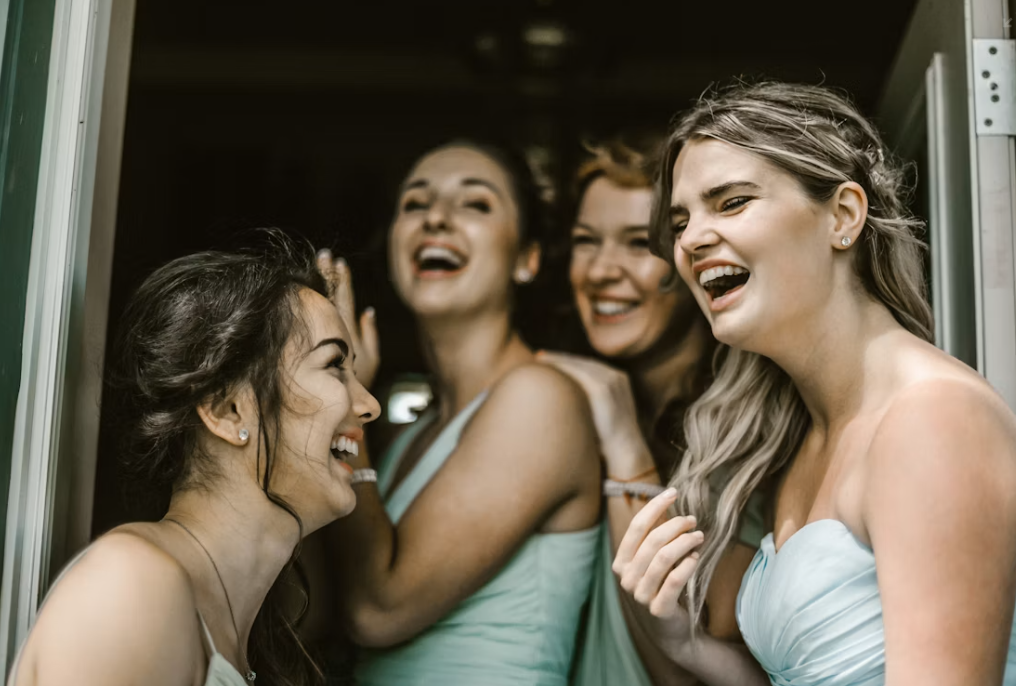
The more he tends to stay out of the public eye, the more the public is interested in the personal life of Barron Trump.

The youngest child of the business mogul doesn’t expose his private life and is rarely seen in public. What we know of him is that he’s currently attending a business school in New York.

Barron was born in 2006, the same year when Donald and Melania tied the knot. He grew up in the Trump Tower in Manhattan, where he is reported to have an entire floor for himself. Although he has lived surrounded by luxury, he never had a traditional nanny while growing up. Instead, Melania took all the care of him, and that included preparing him breakfast and lunch every day.

Back in the day when Barron was born, Donald Trump did something unconventional.

Just 20 minutes into the world, the former president alerted the media that he became a father for the fifth time.

PALM BEACH, FL – JANUARY 18: Viktor Knavs, Melania Trump, Barron Trump and Donald Trump are seen at the funeral of Melania’s mother Amalija Knavs on January 18, 2024 in Palm Beach, Florida. (Photo by MEGA/GC Images)

As reported by several newspapers, he called MSNBC’s long-running radio show “Imus in the Morning,” hosted by Don Imus, to reveal the great news.

“Everyone’s perfect,” Donald Trump, who was 59 at the time, told Imus.

“I continue to stay young, right? I produce children, I stay young,” while Melania’s website posted that the baby weighted in at 8 1/2 pounds and was 21 inches long.

Being significantly taller than the rest of his siblings, as well as his father, Barron’s height has caught the attention of many and each photo of him leaves people stunned over his appearance.

Photos of Barron were taken at his grandma’s funeral.

Melania’s mother, Amalija Knavs, died at 78 on January 10.

PALM BEACH, FL – JANUARY 18: Viktor Knavs, Melania Trump, Barron Trump and Donald Trump are seen at the funeral of Melania’s mother Amalija Knavs on January 18, 2024 in Palm Beach, Florida. (Photo by MEGA/GC Images)

The Former First Lady announced the news with sadness.

“Amalija Knavs was a strong woman who always carried herself with grace, warmth, and dignity,” the former First Lady said.

In the statement she released, Melania further wrote about her late mother that “[Amalija] was entirely devoted to her husband, daughters, grandson, and son-in-law.

“We will miss her beyond measure and continue to honor and love her legacy.”

The news of Amalija’s ill state came to light when Melania was missing from the Christmas family photo. Back then, Donald Trump explained that his wife was absent because she was caring for her mother whose health deteriorated.

Amalija Knavs and her husband, Viktor, became US citizens in 2018 after living in the US on green cards sponsored by their daughter. 

Joe Raedle/Getty Images

Melania’s parents have always been by her and her sister’s side. They have been very supportive and did all in their power to provide a good life for their daughters. Even when they were very young, Amalija and Viktor took Melania and her sister Ines to trips around Europe, including France, Germany, and Italy.

When Trump became the President, Melania gave speech in the White House Rose Garden in which she thanked her parents.

“My parents worked very hard to ensure our family could not only live and prosper in America but also contribute to a nation that allows for people to arrive with a dream and make it a reality,” she said. “I want to take the moment to thank my mother and father for all that they have done for our family. It is because of you that I am standing here today.”

Melania’s parents also played an important role in the life and upbringing of Barron Trump.

“Barron almost certainly speaks Slovenian with… Ines, his aunt, who also lives in New York.” author Bojan Pozar wrote in his book Melania Trump – The Inside Story: The Potential First Lady, released in 2016. “[Melania’s sister] Ines Knavs was the one who took care of all the paperwork at the Slovenia consulate in New York so that Barron could formally acquire Slovenian citizenship.” The same was true for Amalija and Viktor.

James Devaney/GC Images

At his campaign rally, Trump also took the time to mention his late mother-in-law and thank her for everything she had done for his son and his family.

“I want to thank her incredible, beautiful mother who passed away a few days ago,” he said. “And she’s up there, way up there. She’s looking down and she’s so proud of us,” he told the crowd.

“And I just want to say to Amalija, you are special, one of the most special people I’ve ever known,” he added.

Trump further added, “Great people, great parents to all of us, really. Great parents, but also to Barron. Boy, did she take care of Barron. That’s how he got so tall, he only ate her food.”

Trump then joked about his son’s height, saying it is pity he isn’t interested in basketball, but in soccer.

“I said you’re gonna be a basketball player. He said, ‘Well, I like soccer, Dad, actually.’ I thought… at your height, I like basketball better, but you can’t talk them into everything,” Trump added, saying that Barron was a “special boy.”

Getty Images North America/Chip Somodevilla

Barron is growing up so fast that some believe the photos of him are photoshoped.

“I thought this was Photoshop, what the hell?!” one person said, as reported by Yahoo. “Wasn’t that the little kid fighting to stay awake at Trump’s inauguration? That was…. 7 years ago. Oh.”

Several news outlets have reported that Barron stands at 6 feet 7. However, that is incorrect, according to Barron Trump’s father, Donald.

In fact, Donald revealed that Barron stands at 6 feet 8, as reported by the Mirror.

The most recent photos of Barron taken on the election day stunned the public even further because he seems like he has grown even more.

People were quick to comment on the photo of Barron voting for the first time for his dad.

“One way that it is definitely not 2016 all over again is that Barron Trump is like 7 feet tall now,” one person wrote. 

“Barron Trump may very well be just three normal height humans stacked on top of one another,” another added.

“[Six-foot-nine] Barron Trump, son of Donald Trump, may just get a call from the Washington Wizards one of these days,” shares one, referring to a draft by the NBA team.

“God d*** Barron Trump is like 7 feet tall; that boy gotta get off the stage and start HOOPING.”

Most recently, it was Ivanka Trump, Barron’s sister, who shared a family photo featuring herself, her husband, Jared Kushner, Donald Jr. and his fiancée Bettina Anderson, Tiffany and her husband Michael Boulos, as well as Barron smiling on the end, that caused a stir.

Instragram

Not only it was a rare public appearance but it also prompted an online discussion about Barron’s height… yet again!

Commenting on the photo, one social media user joked: “Barron is 12 foot tall.”

“Yo they don’t make XXXXXL ties,” another teased. “He’s so damn tall. Unreal!”

A third also jibed: “Baron is an absolute unit.”

Please SHARE this article with your family and friends on Facebook.

Bored Daddy

Love and Peace
Look closely: There’s one unusual detail hidden in this scene

0

Are you in for another puzzle?

First impressions can be very deceiving as far as images go. A familiar setting, familiar objects, and the familiar surroundings may fool us into believing there is nothing special about what we see before us. As the brain works fast to interpret data, our perception of something is made within seconds, and we believe we understand everything. While the skill allows us to move through life efficiently, it has its drawback. We fail to notice small things right under our noses.

This is one of the reasons why visual puzzles and observation games have gained so much popularity on the Internet. Such puzzles test just how carefully people really observe and show how easy it is to trick the brain with assumptions. Often, the hidden object may not necessarily be hard to see once you know what you are looking for. The hard part is forcing yourself to slow down long enough to see it.

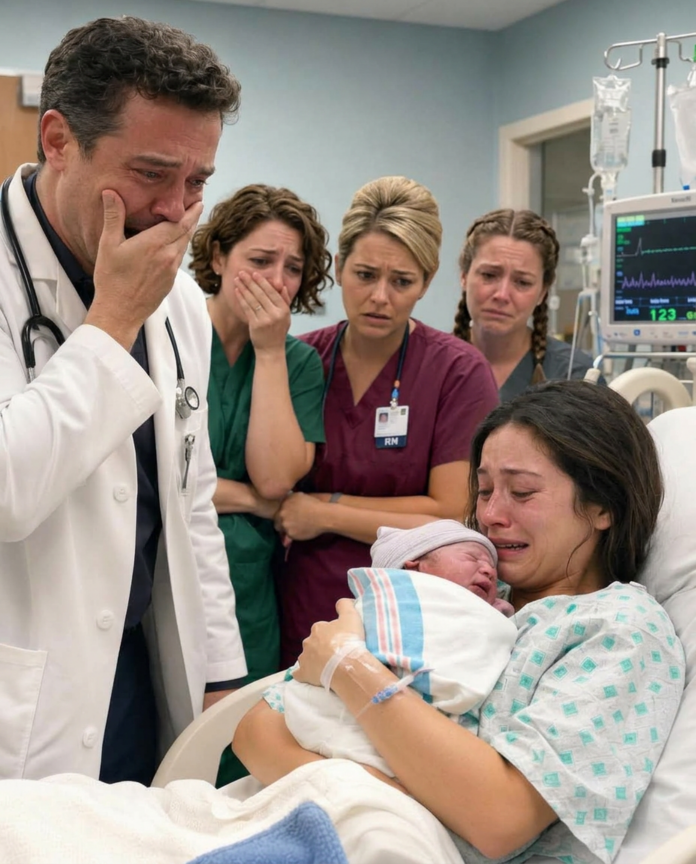
Picture an idyllic maternity room in the hospital. It looks very soothing and comfortable. A lady who just gave birth is seen lying down in bed, holding the baby close to her chest, and smiling sweetly while the doctor is standing beside her ensuring that she and the baby are in good health. The picture looks well arranged and neat with all medical instruments well kept and bright light shining on the walls.

In fact, most of those observing this picture will never even think that anything is not right here. Since everything looks so natural and realistic, the brain automatically accepts all the elements as true without any doubt. The focus of attention is always on the baby, the mother or the emotions displayed by her. There are only very few people who take a closer look at the background.

But there is one little detail in this picture which many people fail to notice at first glance.

At first glance, the clock appears perfectly normal. It hangs quietly in the background just like any ordinary hospital clock. But when you look more carefully, you realize that something is off. Instead of displaying the number “8,” the clock shows the letter “B.”

It is such a tiny detail that many people overlook it instantly.

Why our mind gets tricked?

Actually, there is a fascinating explanation behind it. The human mind has depends greatly on expectations. Whenever we encounter a clock, we subconsciously expect that the numbers would be correct on it. This is because the letter “B” bears some resemblance with the number “8” when seen for a brief moment. Simply put, humans do not really read all the numbers on the clock since the brain fills in the missing information automatically.

This is why many people look straight into the picture for a few seconds but see nothing strange about it. The brain favors quickness over accuracy in processing information. Instead of examining each small detail one by one, it makes shortcuts based on pattern recognition.

In psychology, this concept is known as inattentional blindness. It refers to the inability of people to notice something out of the ordinary due to the fact that their attention is concentrated somewhere else. Some very noticeable features can be overlooked if the brain assumes what should be seen.

The best illustration of this phenomenon is observed during psychological experiments in which people become so concentrated on one particular activity that they don’t notice anything else going on in front of their eyes. In one well-known study, people watching a group pass a basketball often failed to notice a person in a gorilla suit walking across the screen. Their attention was directed elsewhere, so the unexpected detail became practically invisible.

In fact, visual puzzles such as the clock puzzle operate in the same way as the optical illusions. They force people to go beyond their natural way of thinking and start paying attention to what they observe. In addition, while the puzzle might look very easy at the beginning, it teaches us a lot about human perception.

Finally, another reason why people love solving such puzzles so much is that they offer satisfaction after finding the concealed element. First, the viewer is puzzled because everything looks absolutely normal. However, after noticing the error, the whole picture changes entirely. Something that seemed invisible before becomes noticeable immediately.

These puzzles also serve as a good example of how strong the impact of our first impression is on our judgment. We tend to think that we have grasped everything that happened there at once but some very essential details can be easily overlooked because of our assumptions.

Observation tasks teach us patience and attentive analysis. We learn to slow down our thoughts and concentrate in order to process the information correctly and not make false conclusions based on our preconceptions. According to some scientists, such brain teasers can actually enhance our mental abilities.

Patience over brainpower

The most fascinating thing about this exercise is that just being intelligent is not enough for solving it. There are many intelligent individuals who fail to solve it because it requires not knowledge, but rather the ability to notice details. The one who carefully examines the picture will be able to see the answer very quickly as compared to those who act on intuition.

In conclusion, the hidden letter “B” in the clock face is a small mistake but a very important lesson. Our brains have the habit of making some assumptions to simplify our lives, but they do not always prove to be right. Sometimes, taking more time to examine something leads to seeing different things.

And that is exactly what makes puzzles like this so fascinating. They remind us that even in the most ordinary scenes, there may be something unexpected hiding in plain sight waiting for someone observant enough to notice it.

Please SHARE this article with your family and friends on Facebook.

Bored Daddy

Love and Peace

Man asks elderly neighbor to watch his pets and receives an emotional surprise in return

0

For most people, the scariest part of getting old is being lonely. When we are young and caught up in the daily grind, it’s easy to overlook the fact that our elderly family and neighbours feel isolated. Truth is that when a person gets old and loses most of their friends, or they simply reach a point where physical limitations make it hard to leave the house and socialize, they can easily spend most of their time indoors and alone.

Sadly, loneliness does far more than just weigh heavily on a person’s emotional well-being. That constant feeling of disconnection leads to a condition of hyper-vigilance, flooding the system with stress hormones and driving up systemic inflammation. The result of such a biological wear-and-tear is toxic and causes immense damage to the person’s immune system and increases the chances of having a stroke, type 2 diabetes, and heart problems.

As reported in a study by the World Health Organization, the effects of loneliness are staggering—surpassing the dangers of obesity and matching the mortality risks of smoking 15 cigarettes a day—and are linked to an estimated 100 deaths every single hour globally.

So, being around people and nurturing social connections are some of the factors that contribute to a long and fulfilling life, and a post by a Redditor that goes by the name Dylan might be the perfect example of that.

Dylan started his post by explaining that he asked his elderly neighbor to look after his pets while he was on vacation for two weeks, not assuming the effects that simple request would have on the neighbour’s life.

In a letter Robert sent to Dylan, he wrote, “Good afternoon. This letter is regarding your vacation two weeks ago and how you let me babysit Smokey, Oreo, and Jennifer. I’d just like to give you a letter of thanks.”

While the letter didn’t mention what kind of animals Smokey, Oreo, and Jennifer are, Dylan later cleared it up: Smokey was a German shepherd, Jennifer was a grumpy little beagle, and Oreo was the cat.

I went on a vacation 2 weeks ago, and let my neighbor babysit my pets. Shortly after I got back home, I received this letter from him in the mail that made me smile and cry. I’d like to share it here.
by
u/SnooCupcakes8607 in
MadeMeSmile

Robert’s letter continued, “As you know, I’m an old man. You don’t see me outside often anymore, as these joints aren’t as lively as they used to be. To add to that, two years ago, in the midst of the pandemic, my dad got diagnosed with stage four colon cancer. After his death, I was left alone in my home. I don’t have a wife or kids. I could go to sleep one day and never wake up again. Every day is just sitting around and wondering what I have done for this world.

“Until I met Smokey, Oreo, and Jennifer.

“Your pets are the cutest, funniest, and most troublesome (In a good way, don’t worry, they didn’t mess up my house too much!) individuals. They gave me the motivation to restart my life again. I started waking up early in the mornings. I began to take walks outside with your pets for the first time in years. Every 10 minutes, whenever I felt sad for a second, they would bark or rub against my leg and make me laugh.

“The highlight of their stay was when I took them to the park. It was the longest time I’ve spend outside in a while. It didn’t just bring back pet interaction, I also met other people, started talking, and made friends with a handful of fellow human beings. I was so happy to finally be able to talk with friends again, interact with others, and feel like I’m part of the human race.

“I realize I sound very existential right now, but I’m telling the truth. It’s nice knowing that I’m doing something for someone, even if it’s my neighbor.

“I adopted two dogs soon after. (You may have been hearing noise from my home, pardon them!) I now take regular walks to the park with them and talk with friends I made there. Anyways, I’d just like to say: thank you so much. You brought back meaning to my life. And that’s all that matters.

“Sincerely,

“Robert (P.S. I think it’s time for you to mow the lawn, haha!)”

It didn’t really come as a surprise that Dylan’s post went viral, with many praising both him and Robert.

“Robert is a national treasure and I take anything less to be an insult!”

“I wouldn’t just mow my lawn, but Robert’s too. Forever.”

“Robert really is the good in all of us. He must be protected at all costs.”

A number of people shared their own experience of “fighting” loneliness by adopting a pet.

“My Grandma is 93 and losing her mobility. She loves cats but doesn’t think she can take care of one. Enter, Rent-a-Kitty! The neighbor’s cat! He comes over and they hang out and she’s tickled by his visits, but then he goes to his own house at night. It’s a pretty big win for her,” one Redditor wrote.

“I’m so glad no one can see me right now. Tears everywhere. I’ve been so worried that I will become that old man. This year has been such a low and trying to get out of it has been the worst. I can’t have dogs where I live but maybe a cat. I need to get my life in order and perhaps having a pet (or really anything more than a plant) will help get me there Thank you,” another person commented.

The pleasure pets give is immense, and it is scientifically proven that there are health benefits too because according to the American Heart Association, people who have pets live longer. Being around a dog makes you release feel good hormones such as oxytocin, serotonin, and dopamine which helps reduce stress levels and improve mood.

In addition to that, taking your dog for walks is an exercise routine all by itself. Plus, taking a dog out forces you to step outside and connect with the world; you naturally end up chatting with other pet owners or random neighbors, and those small daily interactions can completely turn someone’s day around.

Another advantage dog owners enjoy is their ability to bounce back from health scares. Research suggests that individuals who own a dog recover much faster from a heart attack or a stroke than those who do not have a dog as a companion.

Keep in mind that it is a good idea to go check on your older relatives and perhaps take your furry friends along with you. You truly never know what a little visit from a dog can do to their mood.

Please SHARE this article with your family and friends on Facebook.

Bored Daddy

Love and Peace
I moved in with the perfect man at 51, but just over a week later, I found myself rushing back home

0

By age 51, I felt I had created a life that was completely my own. After having been divorced for five years, I had gotten used to living my life independently. I owned my own home, I owned my own vehicle, and I did things my way without having to ask for anyone else’s opinion. I was finally not changing myself to please anyone else anymore.

While I have never been one of those women with a cover-magazine body, I somehow learned how to love myself the way I was. Growing up, I was forced to see curve as something I needed to hide, and the insecurities only grew bigger when I married my now ex-husband, who’d always make comment about how I used to look fitter and better. At first, I didn’t pay much attention to his words, but over time, his criticism affected my self-confidence, although it was always more subtle than said with a raised voice.

When I think about it, I realize that I stayed in that marriage way longer than I should have. At the time, I tried to convince myself that he only meant well, and that I was overly sensitive. But then, I became aware that I started talking to myself the same way he did, and that’s when I left. When I divorced him, I didn’t feel liberated right away. No, at first, I felt like a failure and someone unable to keep a relationship healthy and going. Later on, it was as though I left a room that was suffocating me for too long.

I slowly rebuilt myself into someone who didn’t need permission to be comfortable in their own skin.

So, when my friends introduced me to Mike nine months ago, I was skeptical yet open-minded about dating again. He was a 63-year-old who used to serve in the military and was working as a security consultant. On our first date, he brought lilies because I once casually mentioned I preferred them over roses. That tiny detail made me think he truly listened.

For all the weeks after that, he was entirely consistent. He would pay for food without making it a big deal and he would open doors without making a fuss. He did not say anything about my physique or my age. Every time I tried to get my purse out to pay for something, he politely told me to leave it alone without making me feel bad.

Seven months later, he suggested living together. It wasn’t like he was rushing things or putting any sort of pressure on me. He just pointed out that we were always hanging around each other, so why not? It seemed natural. Initially, I was hesitant, stating that I cherished my independence and needed some personal space. His reaction to this was that he admired my individuality and did not intend to alter my nature. This, coupled with his understanding attitude, persuaded me to say yes.

However, I didn’t give up my apartment right away. Instead, I let him know that I needed some time to adjust, and he agreed without any argument, which felt reasonable, and even healthy.

The first night was warm and effortless. We made dinner, had some wine, and chatted like two people who were entirely at home in each other’s presence. I felt confident that I had made the right choice.

Then came the morning after that.

We had a bowl of cereal that had been prepared using water instead of milk for breakfast. When I questioned it, he explained casually that it was healthier and lower in calories. I thought it was funny initially and assumed it was a prank.

But it wasn’t a joke.

As days passed by, things started to change. His fridge started to run out of any food that he deemed “unhealthy.” The bread, cheese, butter, and snacks were all gone because after a particular age, these items were not suitable anymore. Every meal was carefully regulated with small amounts of protein and vegetables only. My plates were so small at times, that I was left feeling hungry. When I’d say I was hungry, he’d brush it off as unnecessary emotional eating that I needed to control.

By day three, he brought a scale in the bedroom and had me weigh myself. He then went on to explain what my idea weight should be based on some scientific facts he was throwing at me randomly.

I don’t know why, probably because I didn’t want to get into an argument with him, my I did step on that scale while something deep inside me tightened.

From there, weighing myself became a daily occurrence. He kept asking about what I was eating, monitored my diet, and started making comments about my physique like a work-in-progress project. From there, more rules came into place. Some food items were completely prohibited. Even how I behaved at the dining table became monitored and corrected.

The breaking point was when I walked into the kitchen and found my meal set out precisely and in an exact portion size, with instructions not to eat anything extra. It wasn’t advice. It was like a manual telling me how to live my life.

That’s when I stood my ground.

I told him I didn’t like the idea of being controlled because I was an adult and didn’t need someone telling me what to eat or what to do with my own body. He remained unfazed and unperturbed and simply claimed that it was for my own good and that I would appreciate what he was doing for me one day.

But I couldn’t overlook how suffocating it made me feel. It wasn’t love but manipulation under the guise of caring.

I told him that I had not joined his world because I felt incomplete. He assured me that all he was doing was helping me reach my fullest potential. Our discussion didn’t take long before escalating into something more intense. I told him that I felt like I was being observed, judged, and restricted by someone in what should have been my own space. He called me paranoid and said it was just “house rules.”

That was when I realized that there was no middle ground. He never considered my discomfort a valid issue. In the end, he laid down the ultimatum—either go along with his terms or get out.

At first, I thought about how I always used to back down before in my former marriage because I wanted to avoid conflict. However, for once, my instincts told me not to.

I left him then and there.

Without wasting any time, I rushed into the room and started packing my bags. He tried to hold me back as he said that we could resolve our differences and make it work. But I knew what this relationship was all about. Love? No way! It was control.

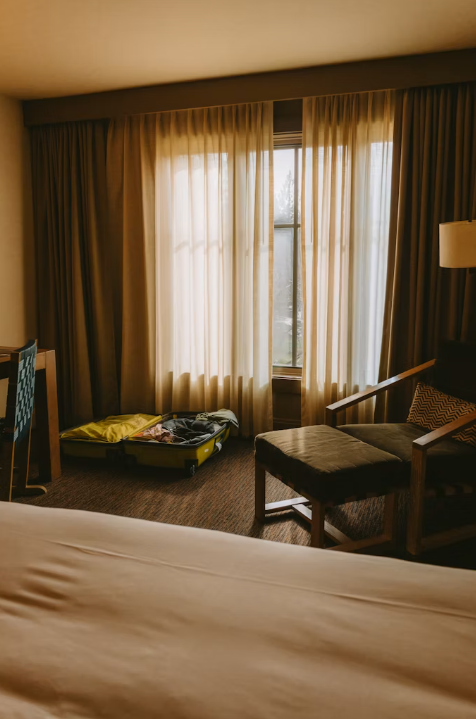
But once back at my apartment, it felt like a whole new world. The silence was no longer oppressive; it was soothing. I understood that I came very close to once again losing what I had fought so hard to gain. Sitting in front of my luggage on the floor, I cried not out of sadness but out of pure relief, perhaps even pride.

I saw the pattern for what it was; I chose me.

I made tea that night, added milk, and even had some cookies, all without giving a second thought to rules, calories, and consequences. For the first time in days, I truly relaxed in my body. I learned a very important lesson, that true caring does not entail controlling. True love is never going to ask you to become something else to prove yourself. And I promised myself I would never again mistake control for kindness, no matter how nicely it was presented.

Please SHARE this article with your family and friends on Facebook.

Bored Daddy

Love and Peace