
The public is still outraged over the shooting of Renee Nicole Good, the 37-year-old mother of three who was killed by an ICE agent in Minneapolis.
US officials, including President Donald Trump, claim Good obstructed the agent, Johnathan Ross, with her vehicle, but an actual footage of the incident shows her trying to drive away from the officers.
Trump dubbed Good a “professional agitator” who “violently, willfully [sic], and viciously” ran over an ICE officer.
In a post on Truth Social, he wrote, “I have just viewed the clip of the event which took place in Minneapolis, Minnesota. It is a horrible thing to watch.
“The woman screaming was, obviously, a professional agitator, and the woman driving the car was very disorderly, obstructing and resisting, who then violently, willfully, and viciously ran over the ICE Officer, who seems to have shot her in self defense.”
The footage showed Ross positioning himself in front of Good’s vehicle the moment she attempted to drive away and shot three shots at her point blank, muttering “f****g b***h” as she drove away and crashed into a parked white car.
BREAKING: Alpha News has obtained cellphone footage showing perspective of federal agent at center of ICE-involved shooting in Minneapolis pic.twitter.com/p2wks0zew0
Tricia McLaughlin, assistant secretary for public affairs at the Department of Homeland Security, claimed Good had “weaponized her vehicle, attempting to run over our law enforcement officers in an attempt to kill them,” calling the act “an act of domestic terrorism.”
Jacob Frey, the mayor of Minneapolis and a former civil rights attorney, strongly refuted Trump’s claims. As per The Hill, he said: “Having seen the video myself, I want to tell everybody directly, that is bullsh*t.
“This was an agent recklessly using power that resulted in somebody dying, getting killed.”
In a press conference shortly after Good’s death, Frey demanded that ICE ‘get the f**k out of Minneapolis’, adding: “They are not here to cause safety in this city. What they are doing is not to provide safety in America. What they are doing is causing chaos and distrust.”
Timmy Macklin/ X
Timmy Macklin, the father of Good’s late husband, also spoke of his former daughter-in-law’s killing, saying he doesn’t blame agent Ross for what had happened.
“I’m not blaming anybody,” he told CNN.
“I mean, the ICE agent, you know, at first I didn’t see the footage where he was actually being rammed.
“I’ve seen the bumper of the car hitting his legs. And so in a flash like that, it’s hard to say how you would react.”
Macklin, who openly showed his support for Donald Trump, added he didn’t agree with Good’s action on the day she was brutally shot.
“I think there’s some bad choices… if we’re walking in the spirit of God, I don’t think she would have been there. That’s the way I look at it,” he said.
Looking back on Ross’ choice to hurl a profane insult at Good immediately after firing the fatal shots, Macklin said: “His statement that he made after the incident, the things he called her, I mean, that’s definitely showing evidence that he that he don’t know the Lord like he should.”
In an interview with Donald Trump yesterday, CBS anchor Tony Dokoupil said he had spoken with Renee’s father and shared that he, too, supported the 47th POTUS. When Dokoupil asked about his administration labeling Renee a ‘domestic terrorist,’ Trump responded: “I wanna say to the father that I love all of our people. They can be on the other side.”
“And I would bet you that she, under normal circumstances, was a very solid, wonderful person. But, you know, her actions were pretty tough.”
Please SHARE this article with your family and friends on Facebook.
Kenny Rogers, the king of country music, had an awesome life. When he passed away in 2020, he left millions of heartbroken fans mourning, as he gave them so much during his incredible career of 65 years.
The musician and actor was born on August 21, 1938, in Houston, Texas. His childhood wasn’t an easy one as his family struggled to make ends meet. His father, who worked as a carpenter, did all in his power to provide for the family, but doing that wasn’t easy during those times so he turned to the alcohol. Kenny spoke of his childhood and said, “I think that one of the real tragedies in my life is that I never really got to know why my dad drank. He couldn’t really support his family and I think it just broke him down. It breaks my heart that I didn’t know that before he passed away.”
Kenny Rogers, Jefferson Davis High School in Houston, Texas (1955)
Seeing what his addiction did to his dad, Kenny made a decision to never drink alcohol himself.
In his book, “Luck or Something Like It,” the musician wrote how his childhood shaped him in the man he became. “I think it made me more determined. One of the things I talk about in the book is the fine line between being driven and being selfish. I think there were times in my life I was so driven I became very selfish, and I’m not proud of that. I think it’s a realization I came to when I was writing this book.”
Flickr
When he started high-school, Kenny already knew he wanted to be a singer. Soon after, he joined the band The Scholars. They had concerts and performed life in Houston, and everyone who knew Kenny somehow knew his place belonged on stage.
Speaking of one of Kenny’s first solo performances in his hometown, his older brother Lelan said, “All the little girls started screaming and carrying on. It was just like Elvis. And my wife leaned over and said to me, ‘There’s your star.’ I said ‘That’s no star, it’s just my kid brother.’” Kenny did turn into an icon and one of the most legendary musicians who helped shape country music forever.
At the beginning of his career, Kenny wasn’t sure which music style suited him best so he tried himself in many. However, it turned out that country was what he loved best at the end.
In 1977, one of the most famous ballads up until this day, Lucille, was born. It was so great and so loved by many that it brought Kenny his first out of the three Grammy Awards he earned for his everlasting music.
The song’s producer, Larry Butler, said how Kenny hesitated whether to take that song or not as it sounded too country to him, but that’s not how Kenny remembers the story behind the huge hit. “We remember the story differently. He remembers me not liking it, and I don’t … but whatever’s real is real. But I remember both of us looking at each other – and I think we both really, truly felt this was gonna be a major country record. I don’t think either one of us ever dreamed it would be what it ended up being,” he told author Bill DeYoung.
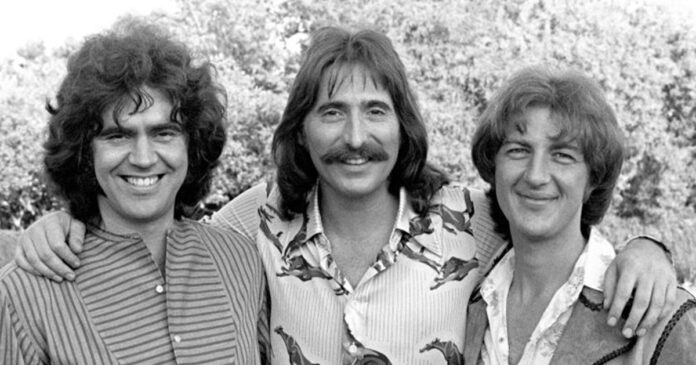
Kenny Rogers & The First Edition
Next was another Grammy worth song, The Gambler, which somehow cemented Kenny’s spot in the music industry.
Throughout his career and his captivating solo performances, there was a collaboration that captured the hearts of many. That of Kenny and Dolly Parton. The two performed together and made many famous songs, including the 1983 hit Islands in the Stream. Kenny and Dolly remained very close friends their whole lives. When Kenny died, she wrote a heartfelt tribute that touched many. “You never know how much you love somebody until they’re gone. I’ve had so many wonderful years and wonderful times with my friend Kenny, but above all the music and the success I loved him as a wonderful man and a true friend.”
It wasn’t just Dolly who described Kenny as a wonderful person, but pretty much everyone who had ever met him. He was considered a genuine and a very generous man.
Kenny was married five times, although he didn’t consider himself a womanizer. In fact, he once said, “And this may seem like an absurd statement, but every woman I married, I really loved when I married her. And I do not blame them for the marriage falling apart. I blame myself and my chosen field of music. That’s why I say that music is a mistress, because you can not wait to get out there to it, and usually the mistress wins in a situation like that.”
Kenny Rogers had five children and stayed together with his last wife, with whom he had two twins, until the rest of his life.
“They say that twins at my age will either make you or break you. Right now I’m leaning towards break. I would kill for the energy they’ve got,” Kenny, who was 66 when Jordan and Justin were born in 2004, told People magazine. He met Wanda Miller, who was 28 years his junior, while he was on a blind date with another woman. Her parents, who were two years younger than Kenny, weren’t happy with their daughter dating an older man, but he promised to them that he would never lie to her or hurt her, and he kept his word.
Shutterstock
Kenny Rogers, who retired in 2015, said at the time, “I’ve been so lucky to have enjoyed such a long career and to have such amazing support from my fans and all who have helped me along the way, but there comes a time when I need to focus on spending time with my family.”
“My life is about my wife and my 11-year-old twin boys right now. There are a lot of things I want to do together with them to create some special memories.”
The following year he came out of retirement and took both boys on his final tour ‘The Gambler’s Last Deal’.
“My goal is to spend some time with them and take them to some places they might not have gone to without me. So, they can look back someday and say, ‘My dad took me there.’ That, to me, is my legacy to them,” the star told Rare Country.
Kenny Rogers / Instagram
When Rogers decided to stop touring so he could spend more time with his sons he told CMT: “I hope my fans understand that I’m a father first and a singer second… I’m missing some very great parts of my boys’ lives. I know as well as anybody else how that time gets away from you. And I don’t want to miss it. I just worry about how much longer I’m going to be here, and I want to have time to spend with them. It’s pretty simple.”
At the time of his death, March 20, 2020, the singer songwriter, producer, and actor, who always said he wasn’t good with managing money, left his wife and his five kids $250 million. He released 65 albums and sold over 165 million records.
Kenny also owned a 973-acre ranch in Georgia. The “Beaver Dam Farm” which includes an enormous mansion, a golf course, fishing lakes, tennis courts, two swimming pools, five guests houses, and an equestrian center was built by Kenny himself and is as legendary as the musician himself. Kenny was very proud of it and welcomed many guests there.
After his death, the Wilbert Group said the property had been auctioned and sold.
Shutterstock
A number of outlets reported that Kenny had cancer. However, this was never confirmed. The only thing the family shared was that he was preparing for his passing. In Touch Weekly reported his wife to have said: “He just wants to stay alive long enough to see his 14-year-old twin boys, Justin and Jordan, graduate from high school.”
According to Radar Online, “Dolly begged him to join her to try to write some songs. But even a short drive was too much for him. He literally could no longer stand for more than a few minutes at a time.” Instead of joining his life long friend in making music, he said his final goodbye.
Rest in peace Kenny. We miss you!

Please SHARE this article with your family and friends on Facebook.
Erfan Soltani, a 26-year-old shopkeeper, was arrested and sentenced to death after taking part in a protest in Fardis, west of Tehran, on January 8. The protests and demonstrations were triggered by the collapse of Iran’s currency, the rial, on December 28, with citizens demanding political reform.
The anti-regime protests that have swept the country witnessed the killing of thousands in a crackdown by authorities, rights groups claim, while Erfan Soltani remains the sole individual facing execution following an arrest.
Hengaw, an Iranian Kurdish rights group, claimed Soltani had been denied access to legal counsel, with a relative telling BBC Persian that an Iranian court had issued a death sentence “in an extremely rapid process, within just two days.”
Erfan Soltani/ Hengaw Organization for Human Rights
The family had reached to US President Donald Trump for help, hoping he would stand on Iran’s way of proceeding with the execution, which is exactly what Trump did.
“Our demand now is that Trump truly stand behind the words he said, because the Iranian people came to the streets based on those statements,” she told CNN. “An unarmed population trusted these words and is now under gunfire. I beg you, please do not let Erfan be executed. Please.”
Trump warned that the US would “take very strong action” if “peaceful protestors” were executed by Iran. Speaking to CBS News, the POTUS said, “We don’t want to see what’s happening in Iran happen.
“And you know, if they want to have protests, that’s one thing, when they start killing thousands of people, and now you’re telling me about hanging – we’ll see how that works out for them. It’s not going to work out good.”
He then threatened that Iranian officials would pay a “big price” if protesters of the regime were put to death.
Trump also took to Truth Social to express his stand on the possible execution of young Soltani.
Following Trump’s threats, Soltani’s execution has been postponed.
The US State Department and the US virtual embassy in Iran released a notice saying American citizens should leave Iran now if it’s safe to do so. They advised Americans to consider departing by land through neighboring countries like Turkey or Armenia, since flights and travel may be disrupted.
Trump also announced on Monday that any countries doing business with Iran will face 25% tariffs from the US, News Skyreported. However, while several European countries – including France, Spain, Finland, Belgium, UK, and Germany – called in Iranian ambassadors in response to the violence, China, Iran’s top trading partner, has pushed back against Trump’s 25% tariff on trade with the regime.
Tehran, Iran protests on January 8, 2026/ Getty Images
Soltani’s family knows little to nothing about his condition. A friend of the family told The Guardian before the stay of execution was revealed: “I spoke to his family yesterday and all I know is that they were trying to visit him in prison. I haven’t slept in two days.”
She added: “How can anyone have the heart to put a rope round the neck of such a kind child and send him to die?”
Addressing the US president directly, she said: “Our demand now is that Trump truly stand behind the words he said, because the Iranian people came to the streets based on those statements.
“An unarmed population trusted these words and is now under gunfire. I beg you, please do not let Erfan be executed. Please.”
Please SHARE this article with your family and friends on Facebook.
People talk about clogged arteries all the time, but most don’t really think about what that means. It’s usually a slow process during which fat, cholesterol, and other stuff builds up inside the arteries over years, not days. At first, blood still gets through, so nothing feels wrong. That’s why so many people fail to realize there’s an issue until much later.
Problems start when blood can’t move as easily anymore. That’s when things like heart attacks, strokes, or poor circulation show up. And it’s not just a heart problem. Arteries all over the body can be affected. Everyday habits matter here more than people like to admit, especially diet, smoking, and cholesterol levels.
The NHS lists symptoms of atherosclerosis that can include chest pain, shortness of breath, pain in the arms or legs during activity, feeling unusually tired, weak, or even confused. Many people don’t connect these signs to their arteries at first.
Shutterstock
Risk also goes up with age. Being over 65, smoking, high blood pressure, high cholesterol, and having close family members with heart or blood vessel disease all make it more likely.
When I started reading about artery health, I didn’t expect supplements to come up as often as they did, but they kept appearing in different places.
Vitamin K2 was one of the first names I ran into. Mostly in connection with calcium and where it ends up in the body. Some people supplement, others just try to get small amounts from foods like fermented vegetables or certain cheeses.
Krill oil was another one that kept showing up. Not everyone agrees on it, but it’s often mentioned because of its antioxidant content. A lot of people seem to take it as part of a general routine rather than expecting it to fix anything on its own.
Vitamin E took a bit more digging because there are different types. Tocotrienols get talked about more than the standard versions, especially when blood pressure comes into the conversation. Some people focus on supplements, others stick to foods like nuts, olive oil, leafy greens, and avocados instead.
Garlic is one of those things that’s been around forever. It shows up in studies, old advice, and family recommendations alike. Eating it raw isn’t for everyone, so extracts are usually mentioned as a more realistic option.
Vitamin C doesn’t get as much attention, but it still comes up, mostly because of its role in keeping blood vessels flexible. A lot of people seem to prefer getting it from food rather than pills, especially vegetables and berries.
Evening primrose oil appears less often, but it still comes up now and then, usually because of its anti-inflammatory reputation and the fact that many women already use it for other reasons.
Before taking any supplements, consult a healthcare provider first, especially if you’re on medications like blood thinners.
Please SHARE this article with your family and friends on Facebook.
During President Donald Trump’s tour of a Ford plant in Michigan, a worker, who has identified himself as TJ Sabula, shouted at Trump, calling him a “pedophile protector,” likely referencing his past associations with disgraced financier and convicted sex offender Jeffrey Epstein.
The president was not happy with the insult and yelled “F*** you” before flipping Sabula a middle finger, according to video footage obtained by TMZ.
Sabula has since been suspended from his job without pay but says he doesn’t regret speaking his mind.

In an interview with The Washington Post, the automotive worker said he has ‘no regrets’ about what he said, adding, “As far as calling him out, definitely no regrets whatsoever.”
TJ Sabula/ GoFundMe
He claimed he was standing around 60 feet from the POTUS, which allowed Trump to hear him “very, very, very clearly.”
Further, Sabula claimed he was “targeted for political retribution” for “embarrassing Trump in front of his friends” and fired.
“I don’t feel as though fate looks upon you often, and when it does, you better be ready to seize the opportunity,” he said. “And today I think I did that.”
While many showed support for Sabula and even started a GoFundMethat has raised $480,755 at the time of writing to help him financially while he remains jobless, the White House addressed the incident, with Communications Director Steven Cheung saying in a statement, “A lunatic was wildly screaming expletives in a complete fit of rage, and the President gave an appropriate and unambiguous response.”
The White House via X
Ford’s Executive Director of Corporate Communications David Tovar also commented on the interaction, telling CNN: “We had a great event today and we’re proud of how our employees represented Ford.
“We’ve seen the clip you’re referring to. One of our core values is respect and we don’t condone anyone saying anything inappropriate like that within our facilities. When that happens, we have a process to deal with it but we don’t get into specific personnel matters.”
The Epstein Files Transparency Act required the full release of Epstein-related records within 30 days, but only a small portion has been made public. Although the Justice Department released thousands of pages, heavy redactions have drawn criticism, including from former president Bill Clinton.
The slow pace has fueled claims online that President Trump is blocking disclosure, which he denies, as his Justice Department faces bipartisan scrutiny for missing a December deadline, with estimates suggesting only about 1% of the files have been released.
Please SHARE this article with your family and friends on Facebook.
For decades, paprika has lived a quiet, almost invisible life in kitchen cupboards—reliable, colorful, and rarely questioned. But recently, the internet collectively spiraled into confusion when a single harmless question went viral: “What does paprika look like before it becomes… paprika?”
Suddenly, thousands of people realized they had absolutely no idea. The comments were a mix of panic, laughter, and existential spice-related crisis. It was as if the world had been pretending to know the truth all along.
Paprika’s Big Internet Plot Twist
The bright red powder that decorates deviled eggs and seasons our favorite comfort foods has officially entered its “celebrity scandal” era. The shock came when many learned that paprika isn’t some exotic plant, rare root, or mysterious berry—it’s simply… ground-up red peppers.
Nutra Organic, an Australian brand that helped fuel the conversation, summed up the chaos with a line that resonated across social feeds: “Realizing paprika is just dried red capsicum shook me. I was convinced there was a paprika tree somewhere.”
Apparently, that imaginary tree had a fan club, because countless others admitted they believed in it too—without ever questioning their fantasy.
The Internet Reacts: Pure Culinary Chaos
Once the post went viral, people flocked to comment threads confessing their long-held ignorance. Some swore they thought paprika came from a seed pod. Others imagined a special paprika plant that somehow produced powder-ready spice.
In the end, the confusion revealed a universal truth: we don’t question spices—they just exist. They feel ancient, almost mystical, so discovering their origins can feel oddly anticlimactic.
So What Is Paprika?
Here’s the simple, no-frills reality: Paprika = dried and ground red capsicum, usually mild or sweet varieties.
No mythical fruit. No enchanted shrub. Just peppers fulfilling their destiny in powdered form.
How Paprika Is Made
The process is beautifully straightforward: Let red peppers ripen until they turn a deep, vibrant crimson. Dry them—using sun, air, or dehydrators. Grind them into a smooth, richly colored powder. That’s it. Truly. No ancient ritual. No dusty spice wizard. Just peppers, patience, and a grinder.
Want to Make Your Own?
You absolutely can. Grab fresh red peppers, dry them until brittle, then grind them with a spice grinder or mortar and pestle. Unless you smoke the peppers first, the result won’t taste like smoked paprika—but it will be fresher and more flavorful than anything in the supermarket. And honestly, making your own paprika is an instant bragging right.
Why Was Everyone So Shocked?
Not because paprika’s origin is disappointing. In fact, the flavor remains exactly as warm, sweet, earthy, and versatile as ever—essential for dishes like:
goulash roasted potatoes BBQ rubs Spanish classics soups and stews
Conclusion
Paprika may not grow on a mystical spice tree, but its true origin is just as charming—because it shows how something ordinary can become extraordinary with the right touch. Its simplicity doesn’t diminish its magic; it creates it.
So next time you shake that red dust onto your food, enjoy the fact that you’re using one of the most straightforward—and delightfully misunderstood—ingredients in the spice world. Knowledge makes the flavor even richer.
Please SHARE this article with your family and friends on Facebook.
Not all that glitters in Hollywood reflects the truth. Demi Moore’s story reminds us of that stark reality. Beyond the red carpets, the flashing cameras, and the applause, there existed shadows no audience could see: family secrets whispered in quiet corners, silent struggles, and betrayals that left marks invisible to the public eye. Behind the glamour lay a question rarely asked aloud: how does a child survive the unseen pressures of life, and can that survival become the source of extraordinary power?
Long before she commanded screens with her raw intensity and emotional authenticity, Demi Moore was navigating a turbulent childhood defined by uncertainty.
Beneath the magazine covers, blockbuster premieres, and accolades lay a history shaped by instability and hardship. The girl who would become a star was forged not by privilege, but by endurance, adaptability, and quiet courage. To truly understand her, one must begin at the start, where each day of survival felt like a triumph.
Born in 1962 in Roswell, New Mexico, Demi’s early years were shaped by constant upheaval. A teenage mother, multiple relocations, financial insecurity, and emotional turbulence created a world where stability was rare. Her home life was fractured: a stepfather struggling with his own demons, a mother battling emotional storms, and hidden truths about her parentage. At the age of twelve, the revelation that the man she believed to be her father was not biologically related to her shook her sense of identity, forcing a young girl to reconcile love, loyalty, and betrayal all at once.
The challenges compounded over time. After her parents separated and her stepfather passed away, Demi assumed responsibilities far beyond her years. She learned to navigate chaos, adapt to emotional instability, and care for herself and others in ways most children never must.
Eventually, she left school to pursue acting, relying on instinct, determination, and a raw, unpolished talent that would soon capture attention.
Her ascent brought both opportunity and new trials. Fame introduced scrutiny, public judgment, and battles with addiction. Personal hardships—including a turbulent marriage to Ashton Kutcher and the complexities of parenting—tested her resilience further. Through therapy, treatment, and years of self-reflection, she reclaimed control over her life, rebuilding her career and emerging stronger than ever.
Today, Demi Moore speaks openly about her past not for shock value but to illuminate the possibilities of survival and growth. Her resurgence in Hollywood, marked by acclaimed performances and renewed creative energy, is a testament to the strength forged through adversity. She embodies the truth that trauma need not define destiny—one can transform pain into purpose, and struggle into foundation for reinvention.
Conclusion
Demi Moore’s life is proof that resilience grows from hardship. Early experiences of instability, secrecy, and trauma cultivated an inner strength that enabled her to navigate fame, personal challenges, and reinvention. Beyond her status as a Hollywood icon, she stands as a living testament to perseverance—a reminder that even the most difficult beginnings can give rise to extraordinary achievement, creativity, and a life defined by courage and purpose.
Please SHARE this article with your family and friends on Facebook.
Have you ever caught a glimpse of your breasts in the mirror and noticed something just a little different—a texture, a shape, or a tiny shift that you dismissed as normal? Many early breast changes are incredibly quiet, almost whisper-like, and because they don’t cause pain or dramatic symptoms, they’re easy to overlook. Yet sometimes, these faint signals can be the body’s way of asking for attention.
Being aware of what’s normal for you—and recognizing what isn’t—can play a crucial role in early detection.
1. Skin that looks puckered or dimpled
If the surface of your breast begins to resemble the texture of an orange peel—slightly bumpy, tight, or unusually dimpled—it may indicate inflammation or changes in the underlying tissue. This type of texture shift is not something to monitor casually. Even if it’s subtle, it’s worth getting checked by a healthcare provider.
2. Nipple changes or unexpected discharge
Your nipples rarely change without a reason. If you notice that one starts to pull inward, flatten, or invert in a way that’s new for you, consider it a sign to pay attention. Also, any discharge that appears without squeezing—especially if it’s bloody or clear—should be evaluated by a doctor. These changes don’t automatically point to cancer, but they can signal that something in the breast tissue needs medical review.
3. Swelling or lumps in the armpit area
The lymph nodes in your armpits often react to infections, hormones, or irritation. But a persistent lump or lasting swelling shouldn’t be ignored. Because lymph nodes filter fluid from the breast, they can sometimes reveal issues even before changes appear in the breast itself. If a lump remains for more than a short period, schedule a clinical exam.
How to Stay Proactive About Breast Health
Do a self-check every month. The best time is a few days after your period ends, when breast tissue is least tender and swollen. Know what’s normal for your body. The more familiar you are with your own patterns, the easier it is to spot something unusual.
Follow age-appropriate screening guidelines. From around age 40, most doctors recommend mammograms every 1–2 years, though earlier screening may be needed depending on personal or family history.
See a professional promptly. If something feels off, it’s better to get clarity sooner rather than later.
Conclusion
Breast cancer is most treatable when found early—and often, the earliest clues are the quietest ones. Paying attention to skin texture, nipple changes, or armpit lumps can make a meaningful difference. Combining regular self-exams with professional screenings and quick action when something changes is one of the strongest ways to protect your long-term health.
Your body often communicates in whispers before it ever raises its voice. Listening to those early signals is one of the most powerful choices you can make for your well-being.
Please SHARE this article with your family and friends on Facebook.
I never imagined a single night could hold so much fear, heartbreak, and revelation. The contractions had started, the hospital lights were harsh and unyielding, and I couldn’t reach him. Every unanswered call, every passing minute, pressed down on me like a weight I wasn’t prepared to carry. By the time he finally arrived, what awaited him would shake him to his core—and reshape our family forever.
The evening had begun quietly, deceptively ordinary. My husband and I had argued earlier, leaving a silence that felt heavier than any shouting match.
When the first contractions hit, I dialed his number, my hands trembling, tears blurring my vision. Call after call went unanswered. Thirty calls later, panic set in alongside the pain.
My brother rushed me to the hospital, his presence steady, grounding, while I clenched my teeth through each contraction. The physical pain was sharp, immediate—but it was nothing compared to the ache of disappointment, the gnawing fear that I was facing this alone.
Hours later, when my husband finally returned the call, it was my brother who answered first. His voice cracked as he delivered four devastating words: “She didn’t make it.”
Those words hit like a physical blow. My husband drove in a daze, replaying every missed call, every moment he had taken for granted. Hours passed in the waiting room, each one stretching into eternity, until a doctor finally appeared. The news he delivered nearly stopped his heart—but not in the way he expected: I was there, cradling our newborn daughter.
The relief and guilt collided in an unstoppable flood of tears. My brother’s grim announcement hadn’t been cruel—it had been a mirror, reflecting how dangerously close we had come to losing everything.
When my husband finally held me and our daughter, the apologies came unfiltered, whispered between sobs, raw and unrestrained. Over the following weeks, he showed that love isn’t measured in words alone. It’s in the quiet devotion: early-morning feedings, late-night diaper changes, lingering touches that speak volumes without sound.
Our love didn’t become perfect that night—it became real. Imperfect, raw, and enduring. Now, when he rocks our daughter, his voice always trembles ever so slightly as he whispers: “I almost lost both of you.”
And I’ve learned something profound: sometimes it takes almost losing someone to truly understand love. Not pride. Not anger. But a love that returns—stronger, softer, and unafraid of vulnerability.
Conclusion
Life often teaches us through near-misses. Almost losing someone you love can feel unbearable, yet it also strips away pretense, leaving only what truly matters: commitment, compassion, and the courage to open your heart completely. It’s in those moments that love proves itself—not in perfection, but in presence, devotion, and the willingness to never take tomorrow for granted.
Please SHARE this article with your family and friends on Facebook.
What drives a teenager to commit a crime so horrific that decades later, it still chills a city to its core? As Tennessee prepares for a historic execution, questions of trauma, twisted impulses, and a life shaped by abuse demand a closer look beyond the headlines.
Christa Gail Pike, the only woman on Tennessee’s death row, is set to be executed for the 1995 murder of Colleen Slemmer in Knoxville.
The crime remains notorious for its brutality: Slemmer was lured into the woods, tortured over hours, marked with a carved pentagram, and a fragment of her skull was kept as a macabre trophy. Law enforcement accounts describe Pike as eerily composed when recounting the events, cementing her image as a remorseless teenage killer.
Yet the defense team of Christa Gail Pike stresses that understanding her story requires confronting a childhood marked by abuse, neglect, and untreated mental health disorders. Diagnosed with bipolar disorder and PTSD, Pike has spent nearly three decades in prison, during which attorneys say she has demonstrated remorse and insight into her actions.
The case sits at the intersection of trauma, accountability, and evolving legal standards on executing individuals for crimes committed as minors. As Tennessee moves forward with a scheduled execution on September 30, 2026, difficult questions arise: Does executing Pike serve justice, or does it perpetuate punishment for someone profoundly damaged at a young age?
Conclusion
Christa Pike’s case confronts society with the complex realities behind extreme acts of violence: trauma, mental illness, and the enduring consequences of youth. While the state pursues a historic execution, the debate highlights a broader tension—how justice can balance retribution, rehabilitation, and humanity when the offender was still a child.
Please SHARE this article with your family and friends on Facebook.
For several days, subtle hints and murmurs across financial forums, political channels, and social media fueled growing uncertainty. Screenshots of unverified documents circulated in group chats, while tax experts dropped cryptic comments about “eligibility nuances” that left ordinary Americans scratching their heads. Now, as new details emerge, many citizens—particularly those who are unmarried—are beginning to question whether an overlooked detail could affect their eligibility for the proposed $2,000 tariff dividend.
Marital Status and Eligibility Concerns
Recent alerts about Donald Trump’s proposed $2,000 payments highlight a critical question: could marital status influence who qualifies for the payout? While full guidelines have yet to be officially released, pieces of information continue to surface, helping Americans understand what factors might determine eligibility.
Trump first made headlines when he announced that revenue from tariffs on imported goods could be distributed directly to U.S. citizens. He framed it as a “dividend” for nearly all Americans, emphasizing that most households could receive at least $2,000. Naturally, questions arose immediately: who qualifies, how are income thresholds determined, and is the plan economically feasible?
As the administration releases fragments of information about potential timelines, payment amounts, and eligibility, one issue has consistently sparked confusion: whether being married or single changes your chances of receiving the payment.
Expert Clarifications
A popular voice in this discussion comes from YouTuber and Social Security expert Blind to Billionaire, who recently published a video breaking down the available information. He explained that the key factor is income, not marital status, providing a simple way to assess eligibility.
According to Blind to Billionaire, the primary question is: “Is your annual income below a certain threshold?” For single filers, that threshold is expected to be around $75,000. For married couples, it could be roughly $150,000 in combined income.
He summarized it plainly: “It all comes down to income—nothing more. If your income is below the cutoff, you’re almost certainly eligible.”
Blind to Billionaire also referenced a clip of Trump stating that the government anticipates issuing these “dividends” around the middle of next year, with an emphasis on households with “moderate income.” He reassured viewers who were concerned about being unemployed, on Social Security, or having irregular tax filings: “The income limit is what really matters. Whether single or married, if you stay within it, you should qualify.”
Understanding Income Thresholds
For married couples, the key is calculating combined household income. Exceeding the limit simply indicates financial stability and could disqualify them from the payment. Single individuals only need to consider their own earnings. Beyond that, marital status itself does not seem to impact eligibility.
However, Blind to Billionaire cautioned that much of the circulating information is speculative. The government has yet to release a fully official plan, leaving room for assumptions and conflicting reports. Despite this uncertainty, the emerging consensus is clear: staying under the anticipated income threshold—either individually or jointly—appears to be the most important requirement.
Key Takeaways
Income is the primary factor: Single filers likely need to earn under $75,000, and married couples under $150,000.
Marital status matters only in terms of combined income: Being married doesn’t disqualify you if you meet the combined income limit. Other eligibility details remain unclear: Factors such as unemployment, Social Security benefits, or tax filing irregularities are still open questions until the government issues formal guidelines.
✅ Conclusion
Until an official framework is released, details surrounding Trump’s proposed $2,000 tariff dividend remain in flux. However, one consistent point is emerging: Americans whose income falls below the expected limits—whether single or married—are likely to qualify for the payment.
While uncertainty continues, the early signs suggest marital status alone will not prevent eligible individuals from receiving the dividend, providing hope for millions of households counting on financial relief.
Please SHARE this article with your family and friends on Facebook.
Tensions and demonstrations fueled by the killing of Renee Nicole Good, a 37-year-old mother of three, spread beyond Minneapolis.
While the public seeks justice for the shooting, officials claim Good had “weaponized her vehicle, attempting to run over our law enforcement officers in an attempt to kill them,” calling the act “an act of domestic terrorism.”
President Trump himself took to social media to discuss the incident, dubbing Good a “professional agitator” who “violently, willfully [sic], and viciously” ran over an ICE officer.
In a post on Truth Social, Trump wrote, “I have just viewed the clip of the event which took place in Minneapolis, Minnesota. It is a horrible thing to watch.
“The woman screaming was, obviously, a professional agitator, and the woman driving the car was very disorderly, obstructing and resisting, who then violently, willfully, and viciously ran over the ICE Officer, who seems to have shot her in self defense.”
Actual video from the incident shows a slightly different sequence than what officials claim to have happened on the day of the shooting. Footage released by multiple outlets appears to show Good beginning to drive away from the officers before shots were fired, rather than deliberately attacking the agent who shot her.
Still, officials claim the ICE agent in question, Jonathan Ross, acted in self-defence.
“There is currently no basis for a criminal civil rights investigation,” Deputy Attorney General Todd Blanche told Fox News Digital, adding that the FBI is handling the investigation exclusively, excluding Minnesota state authorities.
Further, they claim ICE agent Ross sustained injuries to his torso and internal bleeding, CBS News reported.
Protests in Minneapolis have continued as tensions remain high. Demonstrators and federal agents have clashed in the streets, with officers using tear gas and other crowd-control tactics while protesters push back against the increased presence of ICE and other federal forces.
In a separate incident Wednesday evening, the Department of Homeland Security said a federal officer shot a man in the leg during an arrest after the person and others attacked the officer.
”The law enforcement officer caught up to the subject on foot and attempted to apprehend him when the subject began to resist and violently assault the officer,” DHS’ statement said.
“What we need most of all right now is a pause. The temperature needs to be lowered,” Minnesota Assistant Attorney General Brian Carter said during a hearing on the state’s lawsuit challenging the Trump administration’s immigration crackdown.
Fundraisers have been raised both for Good’s family and ICE agent Ross, with billionaire Bill Ackman making a $10,000 donation to Ross, adding to the tensions.
Jacob Frey, the mayor of Minneapolis and a former civil rights attorney, strongly refuted Trump’s claims. As per The Hill, he said: “Having seen the video myself, I want to tell everybody directly, that is bullsh*t.
“This was an agent recklessly using power that resulted in somebody dying, getting killed.”
In a press conference shortly after Good’s death, Frey demanded that ICE ‘get the f**k out of Minneapolis’, adding: “They are not here to cause safety in this city. What they are doing is not to provide safety in America. What they are doing is causing chaos and distrust.”
Please SHARE this article with your family and friends on Facebook.
That evening, a father got a call from his young daughter. When he saw her name on the screen, he answered with a smile on his face, but nothing could prepare him for what his daughter had to say. “Dad, I didn’t know who else to call,” she said. “Can you come and take me?”
Her words brought chill’s down the father’s spine. He was with the Marines and away from his hometown most of the time while his daughter stayed with her mother and her boyfriend.
She didn’t accuse anyone of anything, just explained how her mom’s boyfriend’s mood changed constantly and he was making up rules based on whim. She was forced to stay in her room because his jokes crossed the line many times.
The father knew his daughter wasn’t part of a home where she felt safe or loved. And it wasn’t just a teenage frustration. It was fear.
He asked questions he learned to ask under pressure. Was his girl safe at that point? Had anyone touched her? Has anyone offended her in any way?
As a Marine, he was trained to assess threats quickly. As a father, he realized he’d missed one.
He thought of the times he tried to convince himself that his daughter was fine because she had never complained. He simply trusted that adults would act as adults. But he was now aware that silence didn’t mean there was no threat just because kids stay silent at times only to avoid causing trouble.
Calling him was the right call and nothing she felt felt wrong. This dad was proud his daughter found the courage to speak up.
Shortly after, he and a couple of his Marine friends arrived at his ex’s home. Shaun, the mom’s boyfriend opened the door. “What do you want?” he shouted, but was forced to calm his voice down.
“I’m here to take my daughter, so get out of my way,” the dad said.
That night, the dad didn’t sleep. He made calls, reviewed custody paperwork, and planned next steps the same way he would prepare for any mission, thoroughly, deliberately. Except this time, it wasn’t about strategy. It was about his child.
That call was a reminder that one doesn’t stop being father when they are not under one roof.
Please SHARE this article with your family and friends on Facebook.
I almost never visited my daughter’s house uninvited or unannounced, but this time, something inside me told me I should pay her a visit, and my instinct didn’t fail me.
I know that drive to my daughter’s house by heart. It only takes like forty minutes through dull Connecticut suburbs, nothing remarkable about it. But that day, something felt off the whole way there. I had that tight feeling in my stomach that doesn’t go away.
My daughter, Laura valued her space, and I respected that. Or I used to. But in the last half year, she had withdrawn. Calls were crisper and invitations ceased. When I asked her how she was, she’d say she was busy or tired. She said something about keeping the house a certain way because Daniel liked it that way. She always seemed cautiously worded, as if a mask were slipping when she spoke.
That afternoon, I stopped listening to logic and listened to something deeper, so I got in the car and drove.
The house looked perfect from the outside. Neat hedges, polished shutters. Daniel liked appearances. I rang the bell. No answer. I rang again. Both cars were in the driveway, including his mother’s. She’d been staying there “temporarily” for months.
I waited, then took out the spare key Laura had given me years ago. I let myself in.
The house felt cold immediately. Not just chilly, but cold in a way that made you want to shrink. I called Laura’s name, but there was no answer, just the sound of the water running in the kitchen.
She stood at the sink, scouring a pot as if that was more important than anything else in the world. She was trembling and was looking tinier than I remembered. Ten feet away, Daniel and his mother were seated at the table, cozy, eating, chatting as if everything was ordinary.
When Margaret pushed her plate aside, Daniel didn’t move. He snapped at Laura to bring more food. Laura flinched, and hat tiny movement told me everything I needed to know.
She looked hollow. Not tired, but emptied out. That was when it clicked. The distance. The silence. This wasn’t a marriage anymore. It was control.
I kept my cool because I had enough sense not to make a scene, so I walked out, faked a need for the bathroom, and dialed up a family lawyer friend. I informed him that I believed my daughter was in danger. He came immediately and called in a wellness check.
When the police showed up, Daniel’s self-assurance evaporated. Laura froze when they spoke to her. She glanced at him first, as if seeking his consent. It almost killed me.
When the officer asked if she was okay, she finally said no. Her voice was so soft that it almost disappeared.
That was enough.
They separated them. I wrapped my coat around Laura because she was freezing and she leaned into me like she hadn’t been held in years.
The weeks that followed weren’t easy because healing never is. But gradually, she came back to herself. One day, months later, we went back to that house to pack the last boxes. Before she went out, she walked over to the thermostat and turned it up.
“I’m never going to be cold again,” she said.
Please SHARE this article with your family and friends on Facebook.
Actress Melissa Gilberts’ response has been to stand by her husband, Timothy Busfield, amid child sex abuse allegations.
Busfield, an Emmy Award winning actor, turned himself in to police in Albuquerque, New Mexico, four days after a warrant was issued for his arrest and is now in custody at the Bernalillo County Metropolitan Detention Center. The 68-year-old West Wing star is charged with two counts of criminal sexual contact of a minor and one count of child abuse, stemming from allegations involving 11-year-old twin boys during production of the 2024 series The Cleaning Lady.
The Bernalillo County District Attorney’s Office plans to seek pretrial detention, with a judge set to decide whether or not he will remain in custody until trial.
Timothy Busfield/ Bernalillo County District Attorney
Before he surrendered, Busfield addressed the nation in a video obtained by TMZ.
“Hi everybody, it’s Tim. I’m sure most of you know, that are watching this, that I was ordered to come to Albuquerque – I’m here now. I got the call Friday night, I had to get a lawyer. Saturday I got in the car, drove 2,000 miles to Albuquerque. I’m gonna confront these lies. They’re horrible.
“They’re all lies and I did not do anything to those little boys and I’m gonna fight it. I’m gonna fight it with a great team, and I’m gonna be exonerated, I know I am, because this is all so wrong and all lies.
“So hang in there and hopefully I’m out real soon and back to work. I love everybody for supporting me, thank you.”
Police documents show that Busfield claimed the mother of the alleged victims wanted to get revenge because her children weren’t cast in the last season of the now-cancelled Fox crime series on which Busfield served as executive producer and directed several episodes.
Pascal Le Segretain/Getty Images
Melissa Gilbert, who married Busfield in 2013, has deleted her social media account shortly after the warrant for her husband’s arrest was issued,People reported.
A representative of the actress confirmed she’s staying by her husband’s side. “Melissa Gilbert is not making public statements at this time,” the statement began. “Any purported ‘statements’ circulating online — including AI-generated deepfakes of her ‘breaking her silence’ — should not be treated as coming from her.”
“She is honoring the request of Tim’s lawyers not to speak publicly while the legal process unfolds.
“During this period, her focus is on supporting and caring for their very large family, as they navigate this moment. Melissa stands with and supports her husband and will address the public at an appropriate time. We ask that their privacy be respected.”
Stephane Cardinale – Corbis/Corbis/Getty
Weeks prior to her husband’s arrest, Gilbert took to Instagram where she spoke of child sexual abuse. Namely, she responded to Megyn Kelly’s claim that convicted sex offender Jeffrey Epstein wasn’t a pedophile because he targeted “barely legal” minors, “like 15-year-olds.”
Gilbert recalled the times she started acting as a minor of 15 years, thanking the people she worked with for making her feel safe on set, and warning Kelly to “be careful with your words.”
Please SHARE this article with your family and friends on Facebook.
The fatal shooting of Renee Nicole Good during an ICE operation in Minneapolis resulted in public outrage and demonstrations that spread beyond Minneapolis. However, much of the renewed attention has centered on a decision made days later by billionaire investor Bill Ackman.
Ackman, hedge founder manager and chief executive of Pershing Square Capital Management, an investment management company, known as a long-time donor to Democratic candidates and organizations, confirmed a donation of $10,000 to a GoFundMe campaign set up to support Jonathan Ross, the ICE agent involved in the incident.
The fundraiser aims at helping Ross with professional and personal fees after he became the subject of online abuse and threats, including doxxing.
As Ackman’s donation quickly became a flashpoint, the billionaire issued a lengthy statement on X in which he defended his decision, claiming it wasn’t meant as a political statement. “I am big believer in our legal principal that one is innocent until proven guilty,” he wrote and added that he had also intended to donate to a fundraiser set up to support Good’s family but said it “was closed by the time I attempted to provide support.”
“My purpose in supporting [the officer] and attempting to support Good was not to make a political statement,” Ackman said. “I was simply continuing my longstanding commitment to assisting those accused of crimes of providing for their defense. I strongly believe that only a detailed forensic investigation by experts and a deep understanding of the law that applies will enable us to determine whether [the officer] is guilty of murder.
“Twenty-three years ago almost to the day, I was accused of a crime that I did not commit. [I] was confident that I had done nothing wrong, but I was convicted in the headlines. I was under investigation for nearly a year before it ended without any finding of wrongdoing, but it would be years later before I was exonerated in the public eye. Fortunately, I had the financial resources to pay for my defense and support my family during the investigation, a period during which I was unemployed,” the billionaire added.
Supporters of Ackman’s decision to donate to the ICE agent claim he was standing up for legal principles at a time when public pressure and online outrage risk undermining fair process. Further, they argued that officers involved in fatal incidents are often subjected to immediate judgment before investigations conclude and that raising money for legal costs is a common response in such cases.
Critics on the other hand dubbed the donation troubling, arguing that regardless of Ackman’s intent, showing support for an officer involved in a civilian’s death sends a powerful signal especially during times when the federal agency is already under scrutiny.
Legal experts note that crowdfunding for legal defense is lawful and fairly common in high-profile cases, but warn that such campaigns can shape public opinion before investigations are complete. Ackman’s involvement has also raised the question about the influence of wealthy donors, with some seeing his contribution as a stand for due process and others as a symbol of unequal power and public sympathy.
The investigations into the shooting are ongoing.
Please SHARE this article with your family and friends on Facebook.
Renee Nicole Good, a mother of three, lost her life during an incident that shook the country. Namely, the 37-year-old poet was shot by an ICE agent in Minneapolis, and while officials claim she tried to hit the agent in question with her car, videos of the tragic incident say otherwise.
A footage shared shortly after her shooting shows Good attempting to drive away from the officers, including the one who pointed the gun at her. Still, US officials, including President Donald Trump, claim Good a was “professional agitator” who “violently, willfully [sic], and viciously” ran over an ICE officer.
In a post on Truth Social, Trump wrote, “I have just viewed the clip of the event which took place in Minneapolis, Minnesota. It is a horrible thing to watch.
“The woman screaming was, obviously, a professional agitator, and the woman driving the car was very disorderly, obstructing and resisting, who then violently, willfully, and viciously ran over the ICE Officer, who seems to have shot her in self defense.”
So, why is ICE in Minneapolis in the first place?
Thousands of ICE agents were sent to Minneapolis starting on 5 January, in what the Department of Homeland Security described as the “largest DHS operation ever” in the state of Minnesota. Officials said the purpose of the deployment was to apprehend “fraudsters, murderers, rapists, and gang members.”
The surge in enforcement followed after a right-wing online influencer claimed that several childcare facilities run by Somali residents in Minnesota had committed welfare fraud. That video prompted FBI investigations, and Homeland Security Investigations agents began visiting Somali-owned businesses last week. In response, the Trump administration announced it would freeze all federal child care payments to the state; Minnesota normally receives about $185 million in such funds annually, News Skyreported.
Good’s shooting triggered public outrage and protests, with demonstrations spreading to major cities including Chicago, New York, and Los Angeles.
Now, officials claim the ICE agent who shot Good in the head at point blank range has faced online threats and doxxing since the incident, leading to security measures for him and his family, and that he is receiving counseling.
The agent was previously seriously injured on duty after being dragged by a suspect’s vehicle, Reutersreported, which supporters say may have influenced his split-second response, while critics argue it does not justify lethal force.
The shooting has deepened divisions nationwide. Supporters, including Republican officials, say the agent acted in self-defense, while Democrats and immigrant-rights groups are calling for full investigations and stricter oversight of ICE. Former ICE chief Tom Homan defended the agent, urged patience, and condemned the online harassment.
Media coverage has mirrored the divide, and the case has also highlighted the mental strain on law enforcement. Federal and local authorities say investigations are ongoing to determine whether the use of force was justified.
Please SHARE this article with your family and friends on Facebook.
Actress Jennifer Aniston is one of the most beautiful and most influential women Hollywood has ever seen. At 56, she’s as stunning as before, and still loved by millions.
Rumors are, however, claim that Jennifer Aniston has undergone plastic surgery recently after she was allegedly seen exiting a plastic surgery facility.
Not surprisingly, being an A-list actress, people have always speculated whether Aniston has ever undergone plastic surgery. In the past, she confessed she had only fixed her deviated septum through surgery but has never gone under the knife for beauty reasons. What’s more, she has been vocal against cosmetic procedures.
“It’s funny. I had [a deviated septum] fixed – best thing I ever did. I slept like a baby for the first time in years,” she told People. “As far as all the other [rumors], as boring as it sounds, it’s still mine. All of it. Still mine.”
Shutterstock
In 2006, a year prior to her nose job, Aniston opened up about her rumored procedures, confirming she has never had breast implants or a breast enhancement.
“No boob job! You know what it’s called? It’s called 10 pounds,” Aniston said. “Here’s what it is, this is the funny thing, you’re either, ‘Oh, look at the bump,’ and they circle the bump and there’s an arrow. But instead, it’s like, you know, maybe a couple of cheese plates too many.”
Aniston has previously said she’s tried Botox but decided it wasn’t for her, describing it as a “slippery slope.” Despite that, speculation about cosmetic procedures has continued. In March 2024, she was photographed leaving a high-end cosmetic surgery retreat in Greenwich, Connecticut. The images, published by Daily Mail, showed Jennifer Aniston alongside friends Sandra Bullock and Amanda Anka, as they attempted to keep a low profile while leaving the office of well-known cosmetic surgeon Neil A. Gordon.
Gordon is part of a “small, elite group of international facial plastic surgeons” who specialize in “facial rejuvenation and rhinoplasty.”
James Devaney/WireImage
In a new Q&A with Glamour, The Morning Show star neither confirmed not denied the speculations. She only said she has “maintained” her looks.
“I’m not going to say I don’t get the facials and the lasers and all that good stuff,” she said. “I mean, I’m maintained. I’m not going to just go down and let these gray hairs take over.”
Aniston continued: “So it’s perspective, and also knowing that this is our one body. It’s a mindset. So it means a lot to me to hear that from Marion, who I think is a walking beam of sunshine and love and beauty and talent.”
Speaking to Allure, Aniston admitted that her lifestyle consists of “eighty percent healthy living” and 20 percent “go have a martini, go have your pizza and burgers.”
Steve Granitz/WireImage
She’s also said she wants to change how aging is viewed, starting with staying positive and grateful.
“What’s the alternative?” she continued. “I’m trying not to think about growing older. I try not to think about age. The world will always be there telling us what your age is and what women should do in society when you’re this or that. We can make our own rules. It’s all bulls–t.”
Please SHARE this article with your family and friends on Facebook.
When people turn thirty, they feel like they have found themselves at a crossroad. At this point in life, many take their time to ponder upon the thought of what they expect their future to look like.
According to Dr. Mohammed Enayat, a GP, “biohacking” expert, and founder of HUM2N, the “Big 3-0” isn’t only about taking stock of your life or career, but also a time when the trajectory of your long-term health begins to take shape.
He adds that “most diseases that cause problems in our 60s and 70s begin quietly in our 30s and 40s” and that is why prevention in midlife is crucial for the future.
“Once you pass 40, the risk of several chronic health conditions gradually increases, not because the body fails, but because biological wear and tear begins to accumulate,” he told the Daily Mail. “This decade is essentially the make-or-break period that determines how well you’ll age.”
The longevity doctor says he has turned back his biological clock by 14 years, at one point reportedly testing as biologically 24 while actually 38, and he’s now trying to help others do the same by adopting certain life habits.
Cut Back On Drinking And Smoking
Consumption of alcohol and smoking has been closely linked to increased risks of chronic disease, premature aging, and reduced overall life expectancy. So, it doesn’t come as surprise that Dr. Enayat lists cutting back on both as key for longevity, adding that doing it can “dramatically lower the risk of premature heart disease, stroke, and cancer.”
He says adults should make regular health checks part of their routine, including blood pressure, cholesterol, and blood sugar tests, as well as keeping track of weight and waist size to catch problems early. He also warns against skipping standard screenings such as mammograms, cervical smears, prostate exams, and bowel cancer tests, pointing out that spotting issues sooner rather than later can lead to far better outcomes.
When it comes to exercise, Dr. Enayat says it’s one of the key factors of healthy aging. He recommends a balanced routine that includes cardio, strength work, and mobility or balance exercises, saying this mix can help cut the risk of diabetes, dementia, and heart disease while keeping muscles and bones strong as you age.
“Cardio strengthens the heart and lungs and reduces the risk of diabetes, strokes and dementia,” he explains. “Strength training becomes especially important after 40 because it preserves muscle mass, improves bone density, enhances balance and keeps your metabolism active.”
What’s more, you don’t have to overdo it. Two or three workouts a week can move the needle, and small bits of movement spread through the day add up.
The Mediterranean diet centers on fresh, seasonal fruits and vegetables, along with whole grains and healthy fats like olive oil. It’s a balanced, flavorful way of eating that supports heart health, helps manage weight, and lowers the risk of diabetes, while staying low in saturated fat and high in fiber.
Dr. Enayat recommends adopting this style of eating for longevity.
“This approach naturally lowers inflammation, stabilises blood sugar, improves cholesterol and supports gut health,” he says. “Around half your plate ideally comes from vegetables and fruit, with the rest split between whole grains and lean protein sources.”
He also highlights the importance of staying hydrated and being exposed to natural light. “Staying hydrated, getting natural light in the morning and stepping outside during lunch breaks helps regulate energy and mood,” he explains.
Sleep Like Your Life Depends on It — Because It Does
“Poor sleep disrupts immunity, weight regulation, mood and cardiovascular health,” Dr. Enayat says.
He also notes that mental and emotional wellbeing can take a hit in midlife, as people try to juggle careers, family life, and changing hormones.
“Managing stress, through mindfulness, community, hobbies or therapy, becomes indispensable at this stage of life because chronic stress accelerates biological ageing,” he explains.
Dr. Enayat concludes by saying, “Your 40s are the perfect time to build a foundation for long-term health, resilience and longevity.”
Please SHARE this article with your family and friends on Facebook.
President Donald Trump has launched what he dubs one of the most visionary policies of his presidency: “Trump Accounts,” a plan to invest $1,000 of government funds into stock market–linked accounts for all US babies born within a four-year window — from late 2024 to early 2029.
Top business leaders who will contribute to billions more to an initiative tied to “the big beautiful bill,” backed up the baby funds by Trump, the Guardianreports.
“For every US citizen born after December 31, 2024, before January 1, 2029, the federal government will make a one-time contribution of $1,000 into a tax-deferred account that will track the overall stock market,” Trump told the CEOs of major companies gathered at a White House roundtable.
Among the business owners and executives were Michael Dell, Dara Khosrowshahi of Uber, David Solomon of Goldman Sachs and Vladimir Tenev of Robinhood.
Speaking of their contributions, Trump praised them as “really the greatest business minds we have today” who are “committed to contributing millions of dollars to the Trump account.”
Further, President Trump said of the plan, “It’s a pro-family initiative that will help millions of Americans harness the strength of our economy to lift up the next generation, and they’ll really be getting a big jump on life.”
To qualify for the program, the baby must be a US-born citizen whose both parents have Social Security numbers.
Families and others can contribute to the accounts as long as the the total number doesn’t exceed $5,000 annually. There will only be exceptions for the non-profit organizations.
The funds, which the children won’t have access to until they turn 18, will be invested in a diversified, low-cost U.S. stock index fund or equivalent.
REUTERS via NewYork Post
Once they turn 18, they will be able to use the money in purchasing a first home, higher education expenses, other qualifying post-secondary credentialing, or mall business or small farm expenses only.
Only when the account beneficiary turns 30 would they gain full control of all the funds for any purpose, according to Time.
House speaker Mike Johnson shared his thoughts on the program, saying,: “It’s a bold, transformative policy that gives every eligible American child a financial head start from day one. Republicans are proud to be the party we always have been. It supports life and families, prosperity and opportunity.”
“Trump Accounts” is just one component of his administration’s ambitious “big, beautiful bill” that intends to reshape American economic relationships.
Please SHARE this article with your family and friends on Facebook.
Homeland Security Secretary Kristi Noem was in Portland this week and met with Mayor Keith Wilson. During the visit, she said the federal government could send in more officers if the city does not cooperate more closely with federal law enforcement. The warning was tied to protests and security around federal buildings.
Noem also toured the ICE facility in Portland’s South Waterfront area. The building has been the site of protests and ongoing disputes between federal officials and city leaders since mid-2025.
Her comments come as disagreements continue between Portland officials and the federal government over how protests are handled, how public safety is managed, and how much cooperation the city should provide to federal agencies, KATV reported.
During a live interview on Fox News, Noem dubbed the meeting with Wilson as “extremely disappointing.” She added that if local officials failed to adopt enhanced security measures, the federal government stood ready to drastically expand its presence in the city. According to her remarks, the Department of Homeland Security (DHS) could deploy up to four times as many federal officers to Portland to secure federal facilities and support law enforcement operations if cooperation did not improve.
Earlier, Noem stopped outside the ICE facility to take photos with federal agents. She accused city officials of failing to protect federal buildings and the officers assigned there.
According to Noem, political hesitation slowed the response, even as security concerns around the facility continued.
Her remarks repeated claims from federal officials that a small number of protesters were responsible for vandalism and other crimes near the ICE center. Local leaders and protest groups reject that view. They say most protests have been peaceful and argue that federal crowd-control tactics, including tear gas, have sometimes escalated tensions rather than reduced them.
Mayor Wilson’s office declined to comment on camera and instead issued a written statement describing the meeting as “cordial but deeply concerning” in response to Noem’s remarks. According to him, Portland has continued to manage public safety professionally and responsibly, a reality he said stands in contrast to portrayals of chaos and disorder used by federal officials to justify an increased presence.
Wilson pushed back against claims that Portland is “out of control,” saying it remains unclear what a larger federal presence would actually mean for the city. He questioned how additional federal officers would operate and why local officials have not been given clearer answers. Wilson said he plans to use every legal and civic option available to protect constitutional rights, including the right to peaceful protest, while keeping public safety decisions at the local level.
The dispute remains part of a broader fight over federal involvement in Portland. In October, a federal judge temporarily blocked the Trump administration’s attempt to deploy National Guard troops to the city, ruling that the move lacked a solid legal foundation. That decision remains in effect as the administration continues to appeal.
Please SHARE this article with your family and friends on Facebook.
In a landmark ruling that will have far-reaching effects on workplaces across the country, the U.S. Supreme Court issued a unanimous decision reinforcing protections for employees pursuing religious accommodations under federal law.
The ruling, which sets out how employers should assess such requests, is one of the most significant interpretations of religious liberty at work in decades.
The case, Groff v. DeJoy, opened the question of whether an employer can require employees to perform work that violates their religious beliefs, and what level of accommodation for those beliefs is mandated in the workplace under Title VII of the Civil Rights Act of 1964. The Court’s June 29, 2023, 9–0 decision in favor of a Pennsylvania postal worker marked a somewhat unusual alignment of justices from opposing ends of the ideological spectrum.
The controversy involved the experience of Gerald E. Groff, a former U.S. Postal Service rural letter carrier in Lancaster County, Pennsylvania. Groff is a practicing Evangelical Christian and observes Sunday as a Sabbath day of rest and worship. For many years his position enabled him not to work on Sundays with little trouble, and his employer had been accommodating his religious beliefs. That changed once the Postal Service signed on with Amazon in 2013, obligating it to deliver packages on Sundays as part of a larger push to stay financially viable.
Groff was constantly assigned to Sunday shifts which would break his Sabbath as Sunday work became the norm. He pleaded to make up for the lost time by working more weekdays or holiday shifts, but he wasn’t allowed. In 2019, Groff resigned and sued, claiming that the Postal Service did not reasonably accommodate his religious beliefs.
At the center of the case was the meaning of “undue hardship” under Title VII of the Civil Rights Act. For decades, courts relied on a 1977 Supreme Court ruling that allowed employers to deny religious accommodations if they imposed more than a minimal cost. Critics argued this standard weakened protections for religious workers and made it too easy for employers to reject accommodation requests.
Groff’s lawyers that particular reading of the statute to be re-evaluated, contending that “undue hardship” should turn on a showing of substantial cost or significant operational disruption. Their argument was supported by numerous religious and civil rights groups, which expressed concern that the current standard places a burden on workers whose religious practices are different than the commonly accepted workplace norms.
Rejecting the long-held “more than de minimis” standard, the Supreme Court clarified that employers must point to more than “ordinary” increased costs when seeking to deny religious accommodations. Temporary chaos in a work schedule or coworker dissatisfaction are not undue hardships, the Court ruled.
The decision bolsters religious protections in the workplace and sets a precedent for employers to apply a more individualized approach to accommodation requests. While not guaranteeing Groff a particular result, it does give his claims for consideration under an interpretation of legal standards that more fully captures the purpose of federal civil rights law and further advances the understanding that workers should not be made to choose between their faith and their ability to make a living.
Please SHARE this article with your family and friends on Facebook.
The death of Renee Nicole Good, the 37-year-old mother of three killed by an ICE agent in Minneapolis, sparked rage across the country.
Good was shot in the head at point blank range. Tricia McLaughlin, assistant secretary for public affairs at the Department of Homeland Security, claimed Good had “weaponized her vehicle, attempting to run over our law enforcement officers in an attempt to kill them,” calling the act “an act of domestic terrorism.”
However, actual footage of the scene shows otherwise. Those who have seen the video of the fatal shooting claim Renee could be seen attempting to drive away from the officers, including the one who pointed the gun at her. So it’s simply an attempt to flee rather than a deliberate attack at the officer.
AP
The footage captures an officer attempting to enter Good’s vehicle, after which she reverses, turns her wheels to the right, and tries to pull away. Another officer is positioned in front of the SUV, though the tires are angled away from him. As the vehicle moves, it strikes the officer lightly, not enough to knock him to the ground. He then fires a shot through the windshield, followed by two more through the side window as she continues to drive off.
Her vehicle then careens roughly 100 feet before crashing into a parked white car.
Public response remains intense days after the tragic incident.
“Murder. Plain and simple. There are times we can no longer stay silent. This is the time. This is murder,” one person wrote.
“That wasn’t self defence. That was retaliation/anger that she was getting away. They should all prosecuted,” another added.
One Reddit user pointed out to a crucial detail, observing, “THE WHEELS ARE FULLY TURNED AWAY FROM THE OFFICER. Watch in SLOW MO. No intention IMO to hit anyone. Sole intention based on wheel/steering wheel to LEAVE the scene NOT A THREAT. Look at the wheel.”
A number of officials and lawmakers condemned ICE and their poor explanation of why the shooting happened.
Rep. Alexandria Ocasio-Cortez dubbed the shooting “a public murder,” saying: “What we saw today was a criminal murder a woman and shoot her in the head while she was trying to escape and flee for her life.” She then described the killing as “the manifestation of every American’s worst nightmare.”
Jacob Frey, the mayor of Minneapolis and a former civil rights attorney, strongly refuted Trump’s claims that Good was a “professional agitator” who “violently, willfully [sic], and viciously” ran over an ICE officer. As per The Hill, Frey said: “Having seen the video myself, I want to tell everybody directly, that is bullsh*t.
“This was an agent recklessly using power that resulted in somebody dying, getting killed.”
In a press conference shortly after Good’s death, Frey demanded that ICE ‘get the f**k out of Minneapolis’, adding: “They are not here to cause safety in this city. What they are doing is not to provide safety in America. What they are doing is causing chaos and distrust.”
Renee Nicole Good, whose life was cut short in a senseless act, was described as a kind and compassionate person devoted to her family. She was also a creative soul, a poet, and a writer.
Please SHARE this article with your family and friends on Facebook.
The night I told Charles I wanted a divorce, the house felt too quiet—like it already knew something I didn’t. His eyes didn’t flash with anger or confusion; they simply softened, as if he had anticipated my words long before I found the courage to speak. I convinced myself he was manipulating me with that calmness, but deep down, a strange unease took root. Something about his silence didn’t feel like surrender—it felt like a goodbye.
After fifty years of marriage, I never imagined I’d be the one asking to leave.
At seventy-five, the desire for independence hit me harder than expected—not because Charles had mistreated me, but because somewhere along the decades, my identity had dissolved into his. We were young when we married. He was patient, reliable, gentle… and together, we built what everyone called an ideal life.
But as the years slowed and routines settled, a quiet longing stirred inside me. It whispered that I had never truly lived for myself. Little frustrations grew into bitterness, and even our everyday conversations became barbed.
When I finally told him I wanted a divorce, he didn’t fight. “If freedom is what your heart aches for,” he murmured, “I won’t stop you.” After the papers were finalized, our lawyer suggested one last meal together. Charles lowered the lights because they irritated my eyes and ordered the salad I always preferred. Instead of feeling seen, I felt suffocated. I snapped and walked out, leaving him alone at the table.
That night, he tried to call, but I dismissed it, convinced he wanted to pull me back through guilt. By morning, he had suffered a heart attack. Rushing to the home we had shared for decades, I discovered the letter he had written for me: “I have loved you through every stage of life. I dim the lights because they hurt your eyes. I order your favorites because I care. That’s all I ever wanted—to take care of you.”
At his bedside, I broke down, pleading for another chance. It became painfully clear that I had confused devotion for imprisonment. The freedom I had been chasing had always existed—held gently within his love. Now, with whatever time remained, I chose to love him with clarity, gratitude, and the tenderness he had always shown me.
Conclusion
I realized the cage I felt trapped in was never built by him—it was built by my own fears, regrets, and misunderstandings. Charles had never tried to own my life; he had only ever loved me the best way he knew how. His final letter opened my eyes to a truth I had been too blinded by resentment to see. True freedom wasn’t found in leaving—it lived in the quiet, steady love he had offered all along. For the days we still have, I choose to hold onto that love instead of running from it.
Please SHARE this article with your family and friends on Facebook.