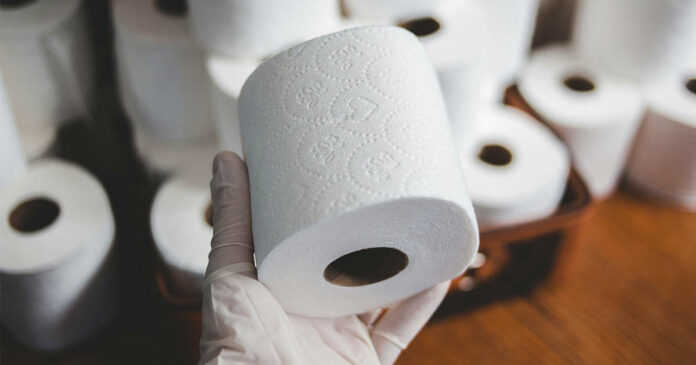
Using public restroom on a daily basis almost feels like a routine, so we do not give it much thought, do we?
Regardless of whether you are in an office, in a shopping complex, or traveling by plane, public bathrooms will always be available. However, even such familiar surroundings can present some risks when it comes to hygiene, which may go unnoticed unless one pays attention. For instance, one of the things that one needs to consider when visiting the bathroom is the state of the toilet paper. Although this may seem trivial, experts recommend considering the small things.
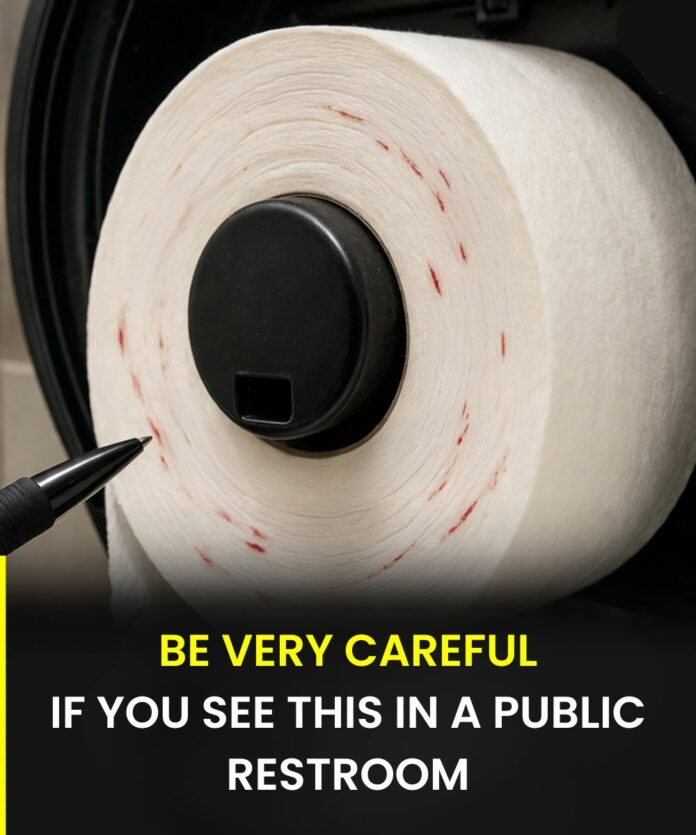
On first inspection, a small spot or a mark on the roll may seem insignificant; after all, it could simply be a speck of dirt or a flaw in manufacturing. However, occasionally, it may signify something more than meets the eye. Toilet paper found in highly trafficked restroom facilities is subject to constant exposure to humidity and high foot traffic throughout the day. This means that it becomes quite easy for the toilet paper to become contaminated due to poor maintenance. Damp spots or weird marks usually mean the paper has been touched by wet hands or splashed, which isn’t exactly what you want to see.
However, the key point here is that most bacteria and viruses are completely invisible to the naked eye. This makes a sheet of toilet paper look “acceptable” but in reality, serve as a great landing strip for microorganisms. In other words, once a sheet of toilet paper comes into contact with bacteria or viruses, the latter become transferred from the former onto the surface of a person’s body through direct contact. While you are not likely to fall ill on each occasion, your chances certainly increase when hygiene starts to slip.
This is the reason why experts suggest just skipping over any paper that doesn’t look perfectly dry, clean, and intact.
To be frank, there are a lot of things in public restrooms that would have your personal toilet turn its back on you. Starting from the door handles and dripping faucets and moving on to flush handles and toilet paper dispensers, there is always a bunch of people who use these objects daily. Of course, you don’t have to refuse using public bathrooms, but you can be more cautious when it comes to touching things. It’s not enough to just watch for paper – you should also avoid getting close to any standing water and dispensers that haven’t been cleaned in days. It won’t take you much time to check your surroundings.
If the paper feels wet, if there is an odd color change to it, or if you get that gut feeling that something isn’t quite right, don’t hesitate. Moving over to the next stall, or searching for fresh paper, can take only a few seconds and greatly decrease your risk of being exposed to potential germs. For anyone who needs to travel often, or travels through crowded cities on a daily basis, keeping a packet of travel tissues or sanitizing wipes with you at all times is a game-changer. It may go unused most of the time, but when you’re in an unkempt restroom on the side of the road, or at a sports stadium, you’ll thank yourself for bringing your own.
It’s also worth remembering that you’re allowed to speak up when a facility isn’t cutting it. If a restroom is clearly out of soap or looks like a disaster zone, mentioning it to a manager or the janitorial staff is actually a huge help. They can’t fix what they don’t know is broken, and a quick heads-up helps ensure the next person doesn’t have a terrible experience. Think of it as a bit of “hygiene karma”—by looking out for the state of the shared space, you’re helping maintain a healthier standard for the whole community, which eventually benefits everyone.
No matter how much scouting there may be, the best line of defense you can ever give yourself is the one you do at the sink. The use of soap and water to wash your hands is a very effective practice because of this very reason. This is especially true after going through the stall where you cannot help but touch something that is full of germs such as the lock or the handle of the sink itself. While it is always good to have some kind of high alcohol-based sanitizer with you, there is no comparison to physically washing those germs away.
Thus, this assignment is not about developing an unhealthy obsession with cleanliness or making you feel uncomfortable every time you go to use the restroom in a public facility. The idea here is to develop some “street smart” habits which will help you to feel at ease throughout the day, realizing that you do everything necessary for your health but do not make any additional efforts. This means that there is no need to become paranoid or obsessed with hygiene issues – just pay attention to details and follow basic rules which are quite natural and easy to remember.
All in all, staying healthy in a public space does not mean analyzing each and every inch of the room. In order to stay healthy in the bathroom, a person only needs to be vigilant and to act rationally, following certain rules and taking proper steps. Thus, one needs to have a look around the room, wash hands properly and pay attention to other details which are rather important for one’s hygiene.
Please SHARE this article with your family and friends on Facebook.
For many years, I lived with the illusion that life is some kind of grand ledger sheet. I thought that, somehow, by working hard in my job and spending enough hours in our home, everything would even out in the end, and I could finally live in some sense of balance. I was expecting “enough” to show up – enough to eat that I wouldn’t have to bother calculating the unit price of cereal anymore, enough heat so that our thermostat didn’t need to go above 65 degrees, enough emotion so that I could actually exist in our hallways without feeling like a ghost.
What I discovered, though, is that “enough” wasn’t something you achieved. It was a fight. It was a constant battle waged at the checkout line, during the mad scratching of numbers into a checkbook, and in the late night moments of lying in bed awake, trying to do the calculations in my head to figure out our financial debt. Enough was a ghost that haunted me, and I was failing to catch it.
It always started on Tuesdays, which were the absolute worst. At our place, Tuesday was known as “rice night,” which was a tactic made out to seem like a normal thing. As I stood at the kitchen counter gazing into a box of chicken thighs and some wrinkled carrots, I knew I had to make this pitiful bunch of food stretch to last an entire meal for three people, and even one more for lunch tomorrow, or everything would fall apart. I always found myself thinking about what bill I could ignore for ten more days until everything went dark.
Dan came in off the garage floor looking like someone out of a movie of black and gray shadows. The grimy nails and slumped shoulders revealed that he had been working on automobiles that cost more than our yearly salary. We exchanged the familiar pleasantries – quick summaries about how the day went, and feeble jests at our daughter Sam’s addiction to her cellphone. However, my mind wandered away from the conversation because the focus of my attention was the stove and the steaming pot there.
But then everything changed in our life course once again when Sam walked in and brought with her a girl I did not know, drowned in the dark and bulky hoodie. Holding on tightly to the straps of her tattered purple bag, the girl kept staring intently at her worn sneakers. There was no need for Sam to ask anyone for permission to let Lizie stay until dinner was ready.
I will never forget the sudden shock of fear that ran through me. It wasn’t hatred; it was the stark reality of a mother who had already shared her food equally in exactly three and a half parts. My grip on the knife became firmer as I momentarily despised this child, as one more person I could not possibly provide for. Then I saw her. Really saw her. She was shaking in a warm kitchen and the sunken places under her cheekbones showed that she was hungry for much more than just a skipped meal. I stuffed my bitterness down into a shadowy crevice of myself and got out a fourth plate.
To see Lizie eating was like witnessing an exercise in resignation. Unlike the average teenager, she did not plunge in with reckless abandon. Rather, she ate with a frighteningly precise politeness. Her rice portion was a scant bit of food. One chicken piece was all she allowed herself along with exactly two carrot slices. Her movements made her seem invisible to everyone as she flinched whenever there was any clinking sound or when Dan laughed loudly.
The conversation that evening was a delicate affair. Upon hearing that Sam was her partner in physical education class, Dan attempted to smooth things out by bringing up their school. The voice that came from Lizie was soft and almost imperceptible. She admitted loving algebra because she enjoyed patterns. This was a chilling revelation—that a young girl loved math because everything else in her life was unpredictable and crumbling around her. On Lizie’s way out, Sam did something that made me feel a lump in my throat. She handed Lizie a banana, saying it is our “house rule” that no one leaves without receiving anything.
Explosion took place the moment the door closed behind me. I lashed out at Sam. “We are struggling to make ends meet,” I said, “and we cannot simply give what little we have left to whoever you feels pity for.” But Sam did not back down. With an intense look in her eyes, she explained how Lizie almost fainted in the bathroom, how her dad worked two shifts a day just to pay off their rent, and how they have been going on without electricity.
The knowledge that my daughter’s “friend” was really just a teenage girl going through systemic collapse made my small calculations seem traitorous. I came to know that as I was worrying about the grains of rice and calculating in order to save whatever I could, a little girl in the neighborhood was really fading away.
The following day, my concept of “enough” took on a completely different meaning. I stopped worrying about making my chicken last longer and just started purchasing whatever large packets of pasta I could find in the grocery stores. Lizie became a part of our life and a constant presence in our kitchen. Initially, she used to apologize for taking up so much space or fall asleep on the counter due to her exhaustion.
It took about a week before we were fully aware of the severity of the situation. Lizie’s backpack knocked over, dumping a pile of “Final Warning” letters on top of a journal with an entry labeled, “What we take first if we get evicted.” The sight of a child’s meticulously written list of the items she would keep in case she and her family lost their home brought a realization to all of us.
The situation escalated to a crisis level when Lizie’s father, Paul, finally showed up at our door to take Lizie home with him. At this point, he looked like a completely empty man, struggling under the weight of an emotional cocktail, consisting of his pride in himself and his grief over his wife’s death, trying to keep faith with his promise to “handle everything” alone. It was only a direct confrontation between parents that allowed Dan to talk some sense into him and make him accept the help available for the sake of his daughter’s well-being.
The weeks that followed did not turn into a fairy tale but a marathon of organizing and sorting everything out. Every evening was filled with conversations with the school district, endless paperwork related to food pantries, and also discussions with the owner of the house regarding rent arrangements. Dan became an expert of “clearance sales” sections in stores, and we managed to live on fewer funds so that Lizie could get a bit more.
However, something unusual took place while we were going through these hardships. In spite of a tighter budget for the groceries we used, the house became freer in some way.
For all these years, I had been operating under the assumption that my life was an example of a closed system; whenever I gave something away, I was losing something. However, Lizie taught me that “enough” is not about material possessions. It is a mindset, one which gives me the peace of mind that I am not going through everything alone.
Eventually, when the electricity returned, and the possibility of eviction was put on hold, Lizie went back to her home. However, she did not really leave our table, either. She visited us not out of hunger but out of love. She held herself differently now, she spoke with authority, and the fearful look she used to give way to a hearty laugh.
One night, several months later, as I stood in the kitchen staring at that very same stove which used to make me feel such resentment, I prepared dinner that was, by no means, lavish. As I heard the girls’ voices coming from the living room, I did not feel the old familiar twinge of stress. No, there was no need to check and recount carrots or calculate rice.
I was simply arranging four plates on the counter when it occurred to me that the hunt had ended and that I had finally got hold of the elusive prey. No, it was not about having plenty of money or a well-stocked pantry. The truth is, I had found what I had been searching for all those years – in the form of a collective effort, an opened door, and an additional chair. That night, I knew without any calculations that there were enough plates for us to have more than enough.
Please SHARE this article with your family and friends on Facebook.
The news of the passing of Ivana Trump, the first wife of former president Donald Trump, caught the world by storm. At the time of her passing, she was 73 years old. Ivana was the mother of three of Donald Trump’s children, Donald Trump Jr., Ivanka, and Eric.
At the moment, neither the Trump family statement nor the post put out by Donald Trump himself has mentioned Ivana’s cause of death.
The former president shared the news of his ex-wife’s passing on the social media platform Truth Social where he wrote: “I am very saddened to inform all of those that loved her, of which there are many, that Ivana Trump has passed away at her home in New York City.”
Her children, who are devastated and in deep mourning over the loss of their mother remember her as an “incredible woman – a force in business, a world-class athlete, a radiant beauty and caring mother and friend.”
Their family statement read: “It is with deep sadness that we announce the passing of our beloved mother, Ivana Trump. She fled from communism and embraced this country.
“She taught her children about grit and toughness, compassion and determination. She will be dearly missed by her mother, her three children, and ten grandchildren.”
Shutterstock/Featureflash Photo Agency
What is known of Ivana Trump’s sudden passing comes from The Fire Department of New York. According to Reuters, first responders answered a call about cardiac arrest at an “aided individual” at about 12.40. p.m. When they arrived at Ivana’s apartment, they found a “73-year-old female unconscious and unresponsive.”
Although the exact cause of death hasn’t been revealed, the New York Police Department said there did not “appear to be any criminality” related to her death.
Ivana Trump was considered to be a very important and influential person in Trump’s life as she’s credited with helping him build his empire.
Ivana was born on February 20, 1949 in Gottwaldov, today’s Zlin, Czechoslovakia, today’s Czech Republic.
As a child, she had it all. Her father Milos was very strict, but he taught his daughter to be disciplined. Ivana was very good at athletics and learned how to ski when she was around three years old. Some of her former classmates describe her as a very bright and intelligent woman who excelled at school.
Her beauty helped her get into the modeling industry and work with some of the most famous names in the world of fashion at the time after finding her way out of Communist-controlled Czechoslovakia.
Shutterstock/Vicki. L Miller
Once in Canada, Ivana met and later married Austrian skier Alfred Winklmayr. The two stayed together for two years, and then in 1976, Ivana went to New York at a fashion show and that’s when her love story with the former president Trump began.
In her memoir, Ivana wrote how she and some friends were at Maxwell’s Plum, described by a 1988 The New York Times article as “a flamboyant restaurant and singles bar that, more than any place of its kind, symbolized two social revolutions of the 1960s – sex and food.”
Getting a table there wasn’t easy, and as Ivana was waiting, this tall man with blue eyes tapped her on the shoulder, introduced himself as Donald Trump, and told her he will arrange a table for her. “I look at my friends and said, ‘The good news is, we’re going to get a table real fast. The bad news is, this guy is going to be sitting with us,’” she said in an interview with the NY Post.
After the dinner, Donald paid the bill and left the place. Once she was out, Ivana noticed him waiting for her in his limousine, and that’s how they started dating. At the time, Donald was the richest and most influential mogul who had just inherited his father’s empire and business.
NEW YORK, NY – 1982: Ivana Trump and Donald Trump are seen in December 1982 in New York City. (Photo by Sonia Moskowitz/Getty Images
Shortly after, Donald and Ivana tied the knot. First, their son Donald Trump Jr.was born, and then they welcomed their daughter Ivanka and son Eric.
After 14 years of marriage, the two divorced, and at the time, all eyes were on them. Ivana received $25 million and custody over her kids. Speaking of Donald, she always praised him of being the father every child could ask for. Although strict and unconventional, Donald was devoted and his children love him and support him.
“Donald might not have been the greatest husband to me, but he was a good father to the kids,” Ivana wrote. “Obviously, they adore him and are fiercely loyal to him. If he were a horrible dad, that would not be the case. If Donald wants to write a book about fatherhood, I would be happy to read it.
Shutterstock
“I believe the credit for raising such great kids belongs to me. I was in charge of raising our children before our divorce, and I had sole custody of them after the split,” she wrote in her memoir Raising Trump. “When each one finished college, I said to my ex-husband, “Here is the finished product. Now it’s your turn.”
After Donald, Ivana was married twice. Both times with men younger than her.
Rest in peace, Ivana Trump.
Please SHARE this article with your family and friends on Facebook!
The “Great Resignation” may have cooled, but the “Great Paycheck Pivot” is officially in full swing—and it’s arriving in a brown truck.
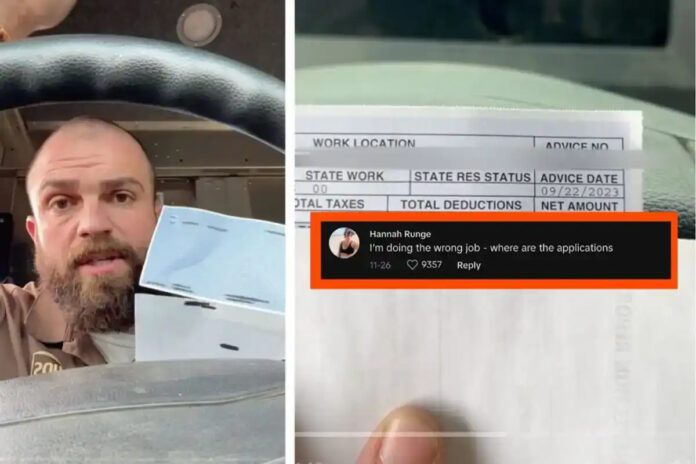
As Skyler Stutzman, a UPS driver based in Oregon, pressed “post” on his TikTok video showing his paycheck for the week in late 2023, he not only became an overnight sensation but also unlocked the key to one of the best-kept secrets in the blue-collar world. As many white-collar workers struggle with the concept of “quiet quitters” and stagnant salaries, Stutzman’s open discussion about his salary, which has the potential for six-figure incomes with top-tier benefits, has sent a shockwave for the labor market.
The clip revealed that Stutzman worked 42 hours at $44.26 per hour, earning $2,004 before taxes and taking home a little over $1,300 after deductions.
Needles to say, the clip caused a stir on the social media and triggered a lot of comments from people who compared their salary to Stutzman’s, especially those netizens whose job requires a university degree and a bunch of other qualifications. Well…it did sound like some of them were a bit jealous.
“Not me realizing that a UPS driver makes more than I do. 20 years in my field with a degree!” one person lamented.
Another added, “$44? I’m a dang nurse only making $32.”
In fact, many people joked about it, albeit half-heartedly, about joining the team themselves as drivers. But, as Stutzman explained in a series of follow-up videos, getting to where he is today has not been an overnight success. In one video, he mentioned that it took him nearly six years to land a full-time gig, followed by another four years of incremental pay increases to get to where he is today. That’s about a decade’s worth of waiting, which someone likened to the years it takes to become a doctor.
Stutzman also noted that workers may be required to start at a UPS warehouse before moving into a driver role. Thus, even though Stutzman’s paycheck may make the work sound appealing, it’s definitely not the easiest path. And that’s not even taking into consideration the physical work that goes into delivering packages.
Stutzman explained that he was sharing his paycheck as a matter of radical transparency, a core value upheld by the Teamsters union during their high-stakes 2023 negotiations.
He wanted to show the fruits of the labor battle the union fought for: a historic contract with substantial wage increases and safer conditions, such as the promise of air-conditioned delivery vehicles for the first time ever.
The point of Stutzman’s post wasn’t to invite envy but rather to show the power of collective bargaining and the importance of wages that keep up with the cost of living.
@skylerleestutzman Quite the 's'kerfuffle I'd say. UPS Chief Fincancial Officer Bryan Dykes and Teamster president Sean O'Brien sharing their point of view on this situation regarding UPS relationship with Amazon as well as the 20,000 Jobs that are at stake; UPS Center closures. Quite a lot going on. #upsdriver♬ original sound – Skyler Stutzman
While the internet buzzed over individual pay stubs, UPS CEO Carol Tomé confirmed the new standard during a 2023 earnings call. Tomé stated that by the end of the new five-year Teamsters contract, full-time drivers would enjoy an average total compensation package of $170,000. She further emphasized that the deal didn’t just favor those behind the wheel; part-time union workers would see their minimum pay rise to $25.75 per hour, all while maintaining the ‘gold-standard’ healthcare and pension benefits that have made UPS a cornerstone of American labor.
Please SHARE this article with your family and friends on Facebook.
When we are not getting enough sleep, it can have negative consequences on both our body and mind. Eventually, lack of sleep does more than just make us tired; it leaves us drained, foggy, and irritable, and it can increase the risk for serious health issues in the longer run. The good thing, however, is that it’s never too late to start forming better sleeping habits and getting your life back on track.
Nowadays, most of us tend to follow strict schedules packed with a bunch of commitments, and sadly, 24 hours aren’t always enough to have everything done, so we tend to start cutting corners, and sleep is usually the first thing we cross off the list of our priorities. Between our jobs, our families, and our screens, it’s easy to stay up a little too late or drag ourselves out of bed a little too early. While these things are important, cutting corners on sleep consistently eventually alters how both our body and brain operate, even if we are not really aware of it until we are running on empty.
So, how do we know we are running low on sleep? The most common signs are irritability, mood changes, or problems concentrating. Most times, sleep deprivation is also visible when we look ourselves in the mirror and notice dark circles or puffiness under our eyes.
While each individual is different when it comes to the hours of sleep they actually need in order to get through the day, the widely accepted rule says teenagers need between 8 and 10 hours of sleep daily, while adults need 7 to 9. Senior need 7 to 8 hours of sleep each night.
A great way to determine your personal “sweet spot” when it comes to the hours you need to sleep each night is to pay attention how you are feeling the next day based on the hours you get to sleep the previous night.
According to the Centers for Disease Control and Prevention, lack of sleep affects almost every part of our body, including the hormones that help regulate hunger and metabolism. This is the reason we always feel like having junk food when we’re tired. Prolonged deprivation of sleep is associated with more severe medical conditions like heart disease, hypertension, and diabetes. Sleep deprivation also affects our mental well-being. It is difficult to handle situations like anxiety when mentally exhausted because our brain has not had a chance to reboot.
Sleep is like a restoration project for the body. When you’re asleep, your body is hard at work. Your system is busy repairing muscles, balancing your hormones, and even “cleaning” waste from your brain. Sleep is also one of the best ways to combat stress. Sleep helps you keep your cortisol levels under control. When you’re well-rested, you’re able to handle the next day.
If you are having trouble getting a good night sleep, the good thing is that even slight changes to your routine can make a great difference.
For example, you can try going to bed at the same time each night, keep your room temperature cool, and keep your room dark. It’s also a good idea to put your phone away some time before going to sleep, avoid that late-night cup of coffee or a glass of alcohol, and get some physical activity during the day. If all this fails, then maybe it’s time to consult a medical professional who can give you useful advice and even medications.
At the end of the day, when you finally decide to prioritize your sleep, you are not just going to start the morning fresh and energized, but you will also help your heart, your brain, and your mood.
No matter your age, once you decide sleep becomes a non-negotiable part of your routine, you’ll start to feel real difference in your energy and focus.
The choice of food is also important when it comes to good-night sleep that comes without disruptions. Some foods help you sleep better, while others will just leave you lying awake all night.
So let’s take a closer look at the foods than can help facilitate your sleep.
1. Turkey
Turkey is an excellent source of lean protein; however, it is more famous for containing tryptophan, an essential amino acid that is used by your body to produce serotonin and melatonin—two of the most important chemicals that are used to regulate your mood as well as your sleep-wake cycles. Once in the brain, tryptophan helps increase the production of serotonin, which is then converted to melatonin, the hormone that tells your body it’s time to sleep.
Of course, consuming a slice of turkey won’t be enough, because tryptophan works best when paired with carbs which enable amino acids to get to your brain more effectively, as explained by Sleep Foundation.
Almonds are a nutrient-rich snack that can, in fact, do a lot to ensure a good night’s rest. Almonds are rich in magnesium, which is good for relaxing the muscles and regulating the body’s internal clock. With just a single serving of almonds, which is one ounce, you are assured of 77 mg of magnesium, which can do a lot for the quality of your sleep.
In addition to that, almonds are a natural source of melatonin, the hormone that regulates the body’s sleep-wake cycle, as well as healthy fats, which are good for you anyway. Almonds are low in sugar, so they do not cause a rapid increase in energy, making them a perfect snack to ensure a good night’s rest.
Kiwi make for a great healthy snack because they are low in calories. But did you know that they’re also good for a good night’s sleep? Just like almonds, kiwi contain serotonin, the chemical that regulates the sleep-wake cycle and kickstarts melatonin production. On top of that, they are also rich in antioxidants and vitamin C.
Chamomile tea is a classic for a reason. This tea contains an antioxidant called apigenin. This antioxidant binds to specific receptors in your brain that make you relax a little bit and feel drowsy. Because of this, chamomile tea is the best solution for anyone who wants to relax or needs a solution to deal with insomnia without grabbing the pills.
Fatty fish like salmon, trout, and mackerel are packed with vitamin D and omega-3 fatty acids which may help regulate serotonin levels and support better sleep.
Tart cherry juice is yet another natural source of melatonin. Consuming some of the juice before going to bed can ensure that you are asleep for a longer time, as well as improve the quality of your sleep. In fact, research indicates that the juice can even ensure that you fall asleep a little more comfortably when your head hits the pillow.
White rice has a high glycemic index, which can also help you fall asleep faster, as it allows tryptophan to enter your brain easily. Having some of this an hour before you go to bed can help you fall asleep faster and even improve your sleep quality.
The flavonoid antioxidants found in passionflower tea are natural relaxants that can aid your body in getting into a healthy sleeping routine. The relaxing effect of passionflower tea can take the edge off any stress or anxiety you may be feeling, making it much easier to fall asleep.
Shutterstock
9. Dairy Products
Dairy products, including milk and yogurt, are good sources of tryptophan, the amino acid that your body needs in order to create serotonin and melatonin, the “dynamic duo” for controlling your sleep.
Having some dairy products in your evening meal, especially if you’ve had some exercise during the day, can really help your body relax, which makes it much easier to fall into a deep sleep that rejuvenates your body.
Think of bananas as of nature’s own little relaxation kit. They’re chock-full of magnesium and potassium, which are two minerals that do all the hard work for you when it comes to relaxing your muscles and soothing your nervous system.
Having a banana in the evening is a great way to help your body relax on a physical level, which means that falling asleep is easy, and staying asleep until your alarm goes off is even easier.
When we turn to a comforting meal, it’s not unlikely that we choose oatmeal, since it’s high in carbs and fiber that can cause sleepiness if consumed before going to bed. Also, it contains melatonin, which we already mentioned is what helps us fall asleep.
Pumpkin seeds, sesame seeds, and sunflower seeds are like little magnesium powerhouse. Magnesium is also known as the “relaxation mineral” that helps the muscles release tension and reminds your nervous system that it’s time to chill.
Having seeds as part of your nightly routine, maybe soaked in yoghurt or just as a snack, can help you relax and have a better sleep.
Peanuts are an excellent source of niacin and folate, two nutrients essential for the production of serotonin. So, if you want your body to “switch gears” and starts preparing for sleep, have some peanuts before going to bed, you won’t regret it.
When you think of an “all-in-one” snack for a good night sleep, think walnuts. Not only they are naturally melatonin-rich, but they also have good fats and antioxidants that are beneficial for the brain.
Pexels
Food to Avoid for a Good Night’s Sleep
Sleep Foundationreminds us that besides the foods mentioned above, which facilitate our sleep, there are also foods to avoid if we have troubles sleeping.
Caffeine is a no-brainer, and I guess that’s something we are all aware of but there are also other foods that affect our sleep as much as the caffeine.
1. Coffee (of course), strong tea, and energy drinks
Coffee is at the top of the list for sleep disruptors because caffeine suppresses sleep pressure even six hours before bedtime. But caffeine is not just in coffee. It is also found in tea, energy drinks, and sweet treats such as tiramisu. However, as metabolism is genetically determined, all caffeine products should be avoided in the late afternoons to prevent fragmented sleep, morning grogginess, and caffeine dependency.
2. Chocolate and cocoa desserts
Chocolate masks stimulants behind a comforting reputation. Cocoa contains caffeine and theobromine, which can trigger alertness, especially in dark chocolate. Beyond stimulation, chocolate’s fat and sugar can cause nighttime reflux and indigestion. To ensure deeper rest, treat chocolate like coffee and avoid it in the hours before bedtime.
Alcohol is a deceptive sleep aid that trades quick sedation for shallow, fragmented rest. While it speeds up sleep onset, it disrupts sleep architecture, suppresses REM, and worsens snoring or reflux. This “nightcap” often leads to 2 a.m. wakefulness and morning grogginess, creating a cycle of caffeine dependency the next day.
4. Spicy dishes and chili-heavy takeaways
Spicy foods have a tendency to interrupt sleep because they cause heartburn and indigestion, especially when you sleep on your back. In addition, capsaicin increases the human body’s temperature, which is contrary to the natural processes of heat loss for sleeping. This has the effect of forcing the human body to digest the meal and control its heat at the same time.
Sugary desserts can interfere with sleep because they cause blood glucose levels to spike and provide large amounts of saturated fat and refined flours. The effects of this are lighter sleep and more awakenings. While ice cream or cake may be tempting, a midnight dessert means an exhausting morning.
6. White bread, sugary cereals, refined carbohydrates
White bread, sugary cereals, and crackers are all refined carbs that are stealthy sleep disruptors. Their high glycemic index causes blood sugar to shoot up while the body is trying to wind down, which might contribute to insomnia. These “light” foods are often low in fiber, causing shallow sleep and morning grogginess without the obvious discomforts of heartburn or caffeine.
Greasy foods such as burgers, pizza, and fried chicken ruin sleep because they put the digestive system to work overtime. Fatty foods cause light and unrefreshing sleep. They also cause reflux. These foods keep the body active and engaged in heavy digestion even when it should be resting.
8. Tomatoes, citrus, and acid-triggering sauces
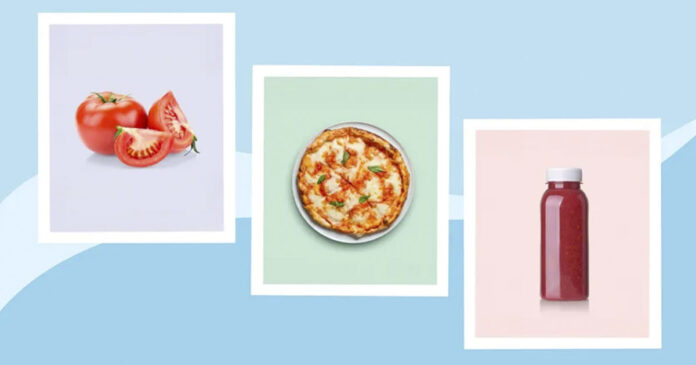
Healthy foods like tomatoes and citrus can ruin your sleep as they can set off heartburn as soon as you lay flat. Although this does not completely wake you up, it can disrupt your sleep. To save your sleep, eat such acidic foods earlier to enable digestion before sleeping.
9. Beans, lentils, broccoli, and other gas-producing foods
Healthy legumes and cruciferous vegetables can cause sleep disruption because of gas, bloating, and pressure. Although beans and broccoli are full of fiber, which is great for you, they are digested slowly, keeping your body restless. To reap the nutritional benefits of beans and broccoli without having your sleep affected, have large portions of them during the day.
*Disclaimer: This content is for informational purposes only and is not intended as medical advice. Always consult a healthcare professional before making significant changes to your diet, sleep routine, or if you have concerns about sleep disorders or other health conditions.
Please SHARE this article with your family and friends on Facebook.
It’s actually kind of wild just how much our little daily habits and behaviors, especially in terms of the food we eat, can reveal about who we really are. Are you the kind of person who reaches for the same snack every time? Or the kind of person who can’t help but be attracted to the boldest, sharpest flavors possible? Either way, it’s not just about the food itself. Those behaviors tend to be like little windows into your mood and your actual experience of the world.
If you think about it, we’re not necessarily choosing these flavors at random. We’re drawn to things that somehow connect with our headspace at any particular time. Things that somehow ground us, excite us, or feel right. That’s what makes these choices interesting.
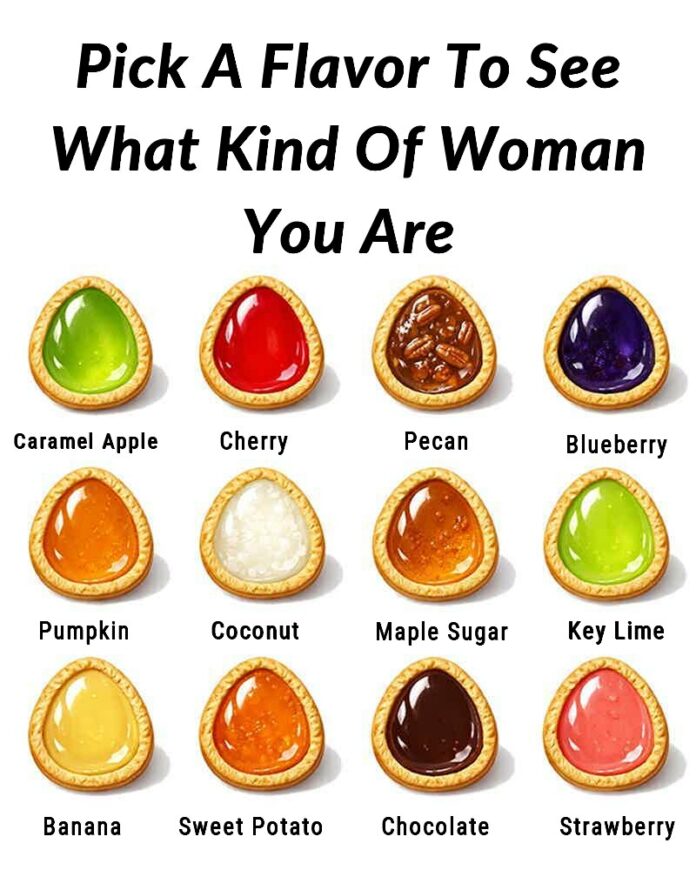
This is not some scientific study or psychological in-depth analysis. It is simply an intuitive, playful way of viewing yourself in the context of flavor. Each personality type has its own style: bold, relaxed, sweet, or adventurous; and often times, one of them will feel more like “you” than the rest.
So, what’s your favorite flavor saying about you today?
Caramel Apple – The Balanced Dreamer
If you’re a caramel apple enthusiast, then you’re probably living in the sweet spot between two worlds. You love the best things in life, but your feet stay firmly on the ground. There’s a natural balance to the way things go in your life. You’re never easily rattled, and you always seem to find your center.
You’re the go-to person when things get messy. You’re the voice of reason and stability in the midst of chaos. You’re a thoughtful and emotionally intelligent person, and this makes you a steady and reliable person to have in your life.
You haven’t lost your sense of wonder and your big dreams. You’re a dreamer, and the things in life that might seem mundane to other people, to you, they’re magical.
Cherry – The Confident Romantic
Cherry types are used to attention, and you know what? They thrive on it. If you are a cherry type, you are a bold and expressive individual, comfortable in your own skin.
You are a romantic at heart. Whether it is a love affair, a friendship, a passion for life or a work project, you are all-in. There is passion and intensity to everything you do, and while that may be a little too much for some people, for those around you, you are impossible to forget. You are honest and will voice your opinions even if they are unpopular. Some may say you are a little dramatic, but those who know you know you are just honest and straightforward.
Choosing pecan means you are a person who is extremely grounded. You are someone who values meaning over noise, depth over superficiality, and connection over complete chaos.
You are probably a person who loves quiet moments, deep conversations, and traditions that feel like a warm hug. There is a sense of timelessness to you, as if you have a well of knowledge you have been carrying around for a while now.
You are probably a person people come to for advice. You are a good listener and talker only when you have something meaningful to say. Being around you just feels like home.
Blueberry – The Quiet Strength
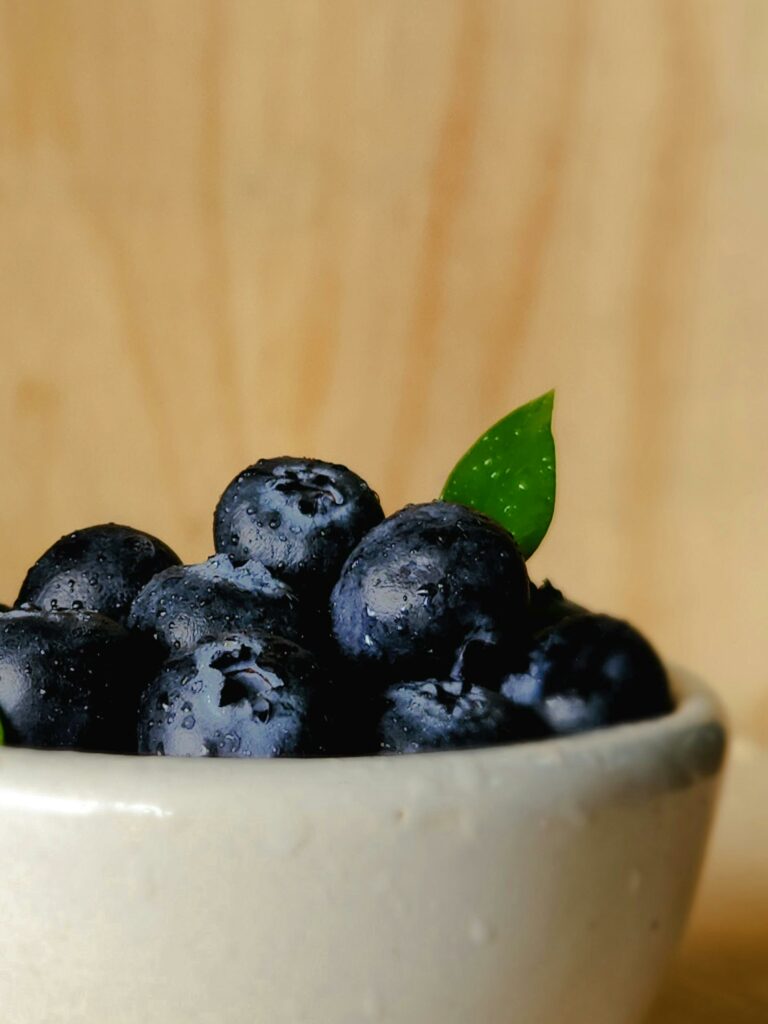
If blueberry is your choice, then you might not be the loudest person in the room, but you are probably the one making the biggest impact. You are an observer, someone who absorbs everything before making your next move.
You are someone with quiet strength. You handle life’s curveballs with a lot of grace, and you don’t feel the need to brag about how tough you are. In fact, you’d rather let your results speak for themselves.
You might be someone who is easily overlooked at first, but when people see what you’re made of, then they see how much depth is there. You are someone who is smart, solid, and emotionally balanced, someone who makes an impact without even trying.
You’re the human equivalent of a fireplace if you’re a pumpkin lover. If you’re one of them, then you’re probably the kind of person who is very nurturing, reliable, and the go-to person whenever someone needs emotional support.
You have the capacity to give people a sense of security. It might be in the form of an encouraging word or simply being present; the presence of someone like you is enough to make anyone feel better. You’re the type of person who listens and reassures everyone that everything will be fine.
You’re the type of person who is very grounded. You value kindness and real emotional intimacy. You’re the type of person who looks out for the well-being of everyone else as well.
Coconut – The Free Spirit
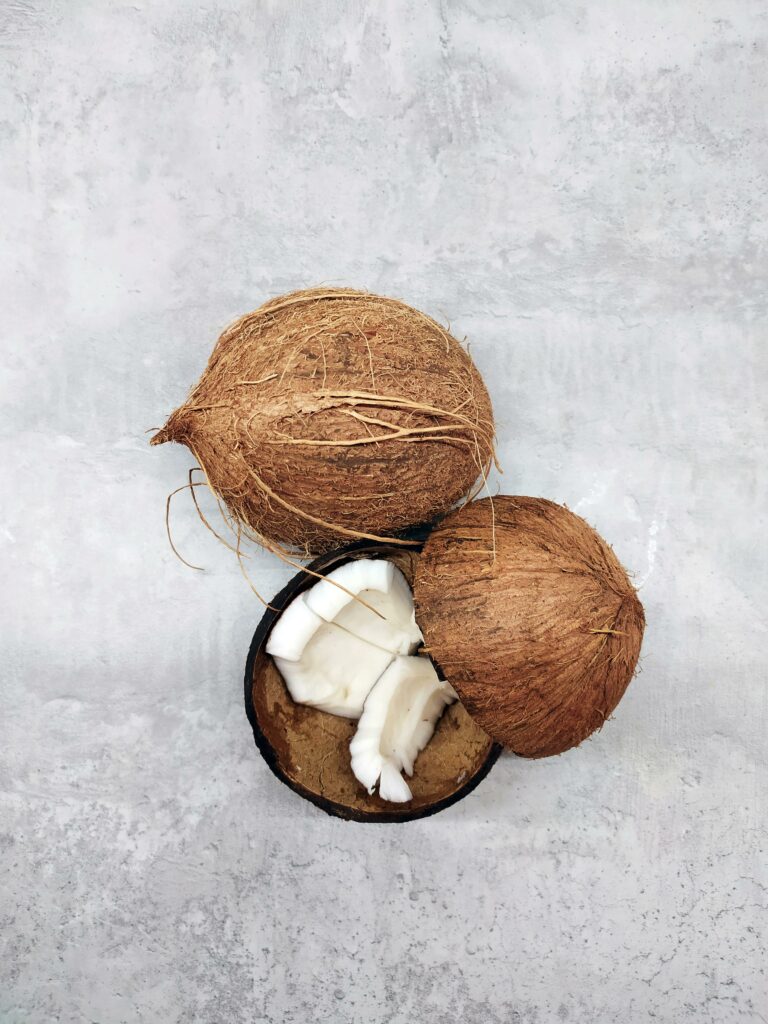
Love the coconut? Then you’re all about being free and doing your own thing. So if this was your decision, then I guess you’re not really interested in following the crowd and doing your own thing.
You’re an inquisitive person who isn’t afraid of anything. Being stuck in a routine is like being in jail to you. You’re at your best when you’re exploring or doing something entirely new.
There’s just a little bit of wild in you, but that’s what makes you so attractive. People love your authenticity and the fact that you just dive into life without worrying about what’s “expected.”
If maple sugar is your pick, kindness is basically your superpower. You move through the world with a certain softness, empathy, and a lot of genuine sincerity.
You’re the person who catches the little things—you notice how someone is really doing and what they might need before they even ask. Just being in the room with you can make people feel seen and appreciated.
You aren’t looking for applause or a big thank you, but your impact is huge. People trust you and feel a sense of peace around you that they can’t quite find anywhere else.
Key Lime — The Energetic Optimist
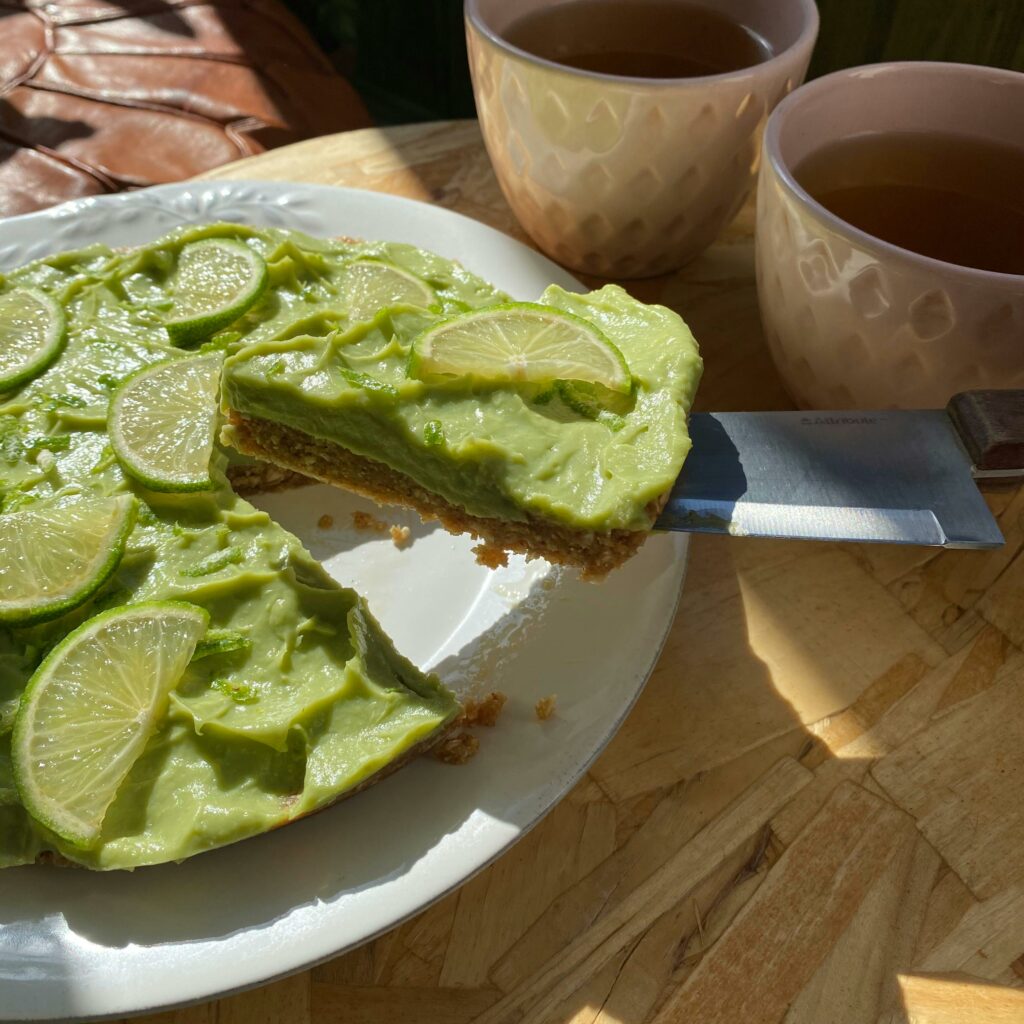
Key lime lovers bring the light. If this is your vibe, you’re naturally upbeat and you bring a fresh energy into every room you walk into.
You have a way of cheering people up, even when things are looking pretty grim. Your optimism isn’t just blind luck; it’s a choice. You decide to see the good, find the fix, and keep things moving forward.
People crave your company because you bring a sense of fun and lightness. You’re the reminder that life shouldn’t be taken too seriously and that the present moment is worth enjoying.
If banana is your choice, then you are refreshingly simple – genuine, warm, and incredibly easy to be around. You don’t feel the need to overcomplicate things, which is why people find you so easy to be around.
You enjoy comfort, honesty, and relationships that don’t feel like a chore. People feel like they can breathe around you because you don’t bring any unnecessary drama or pressure to the table.
There is something powerful about being simple. You know who you are, so you don’t feel like you have to prove anything to anyone.
Sweet Potato — The Hidden Gem
Sweet potato represents a kind of depth that isn’t always obvious at first glance. If you picked this, you might seem a bit reserved to start, but there is so much going on under the surface.
You’re thoughtful, creative, and you spend a lot of time in your own head. You don’t reveal your whole self to everyone immediately, but for those who stick around, they find someone incredibly complex and rich.
There is a massive amount of strength in your quietness. You don’t have to shout to be powerful, and your presence often leaves a more lasting impression than the loudest voice in the room.
Chocolate lovers are the “all-in” type. If you’re one of them, then you’re passionate, emotional, and fully present in your life.
You’re not one to do things halfway. It doesn’t matter if it’s your job, your hobbies, or your relationships – you give it your all. And while it can be overwhelming at times, it makes your life experiences incredibly rich.
You’re not one for small talk or shallow relationships. You want it all or nothing at all. And when you’re in it, you’re in it with everything you have. It makes you both powerful and unforgettable.
Strawberry – The Playful Charmer
You are all about joy, lightness, and even a little wink. So if this is your flavor, then you’re the one who brings the joy and the positivity wherever you go.
You’re all about the light side of life and try not to get bogged down in the heavy stuff. Your playful nature makes you super accessible, and everyone just wants to be around you.
You’re really good at making people happy without even trying. There’s just something charming about you that feels completely effortless and, more importantly, completely genuine.
The reality is, at the end of the day, a taste does not determine who you are. Human beings are too complex and multifaceted for something like a taste preference to determine our essence. What you chose today might just represent how you are feeling today or even what you need to help you get through the rest of the day.
Perhaps today you are feeling the high-intensity energy of chocolate, but tomorrow you might crave the refreshing taste of strawberry or key lime. And that’s the way it should be.
Our personality is not static; it evolves and develops as we go through different stages in life.
So, it’s not really about defining you; it’s more like a little representation of you in this moment.
The best part is, you can evolve, reinvent yourself, and adore every single version of you in the process.
Please SHARE this article with your family and friends on Facebook.
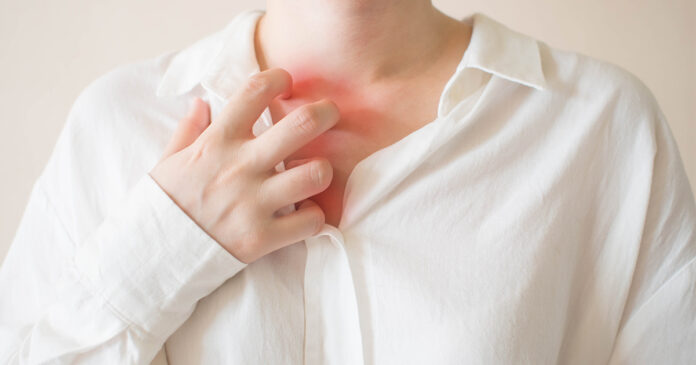
Breast itching is something that many women have experienced at some point in their lives. It can be a mild problem or a possible sign of an underlying issue. In most cases, it is simply a matter of dry skin, hormonal changes, or irritation from clothing. While occasional itching is not something to be worried about, if it persists, it can be a sign of something more serious going on in your body and should not be ignored.
In some instances, breast itching can be associated with more alarming conditions like inflammatory breast cancer and Paget’s disease of the breast. It is thus crucial for women to be aware of when an otherwise common symptom crosses the line and requires medical attention. While it is no secret that breasts often cause discomfort due to issues like poorly fitting bras and back pains, itching is becoming an alarming symptom for a number of women.
This awareness is evidenced by the rising search engine results for words such as “itchy breast.” The searches, which also include phrases such as “one itchy nipple” and “itching below breast,” tend to peak during times such as Breast Cancer Awareness Month, where there is greater awareness of possible symptoms.
Unsplash
While breast itching is generally considered harmless, health experts stress that recurring itch, noticeable changes, and unusual sensations that are unlike the usual feeling should not be taken lightly. In addition to this, there is the inconvenience of having an itch in a rather sensitive part of your body.
Dr. Tim Woodman, Medical Director for Cancer Services at Bupa UK Insurance, explains that occasional itching in the breast area is not unusual and often has straightforward explanations.
“It’s rare for itchy breasts to be a symptom of breast cancer,” Woodman said, “but if you have a patch of skin on or around your breasts that you find yourself regularly scratching, it’s always worth getting it checked by a health professional.”
Unsplash
As stated above, while most common causes of itchy breasts are ether skin conditions or allergies, there are two rare forms of breast cancer that may include itching as a symptom:
Inflammatory breast cancer (IBC): IBC is a rare and aggressive form of this disease that may also bring noticeable changes to the skin, such as redness, swelling, warmth, and persistent itching, according to the Cleveland Clinic. There may also be feelings of breast heaviness, tenderness, or a sudden change in size.
Paget’s disease of the breast: Paget’s disease of the breast is another rare form of breast cancer that “causes scaly or crusty skin on the nipple. The affected area may slowly grow to involve the skin around the nipple, called the areola,” according to the Mayo Clinic. This condition, different from Paget’s disease of the bone, “refers to breast cancer in the nipple,” and may cause itching, redness, flaking, or burning of the skin.
According to the National Breast Cancer Foundation, about 1 in 8 women in the United States will be diagnosed with breast cancer at some point in their lives. In 2026 alone, an estimated 321,910 women and 2,670 men are expected to be diagnosed with invasive breast cancer.
Unsplash
Because of these concerning numbers, doctors stress the importance of paying attention to any unusual symptoms, especially those that occur alongside changes in breast tissue.
The Mayo Clinic reports that symptoms include:
A breast lump or thickened area of skin that feels different from the surrounding tissue
A nipple that looks flattened or turns inward
Changes in the color of the breast skin. In people with white skin, the breast skin may look pink or red. In people with brown and Black skin, the breast skin may look darker than the other skin on the chest or it may look red or purple
Change in the size, shape or appearance of a breast
Changes to the skin over the breast, such as skin that looks dimpled or looks like an orange peel
Peeling, scaling, crusting or flaking of the skin on the breast
While these symptoms are often linked to non-cancerous conditions, medical professionals stress that getting them checked is the safest way to rule out anything serious.
“Advances in breast cancer screening allow healthcare professionals to diagnose breast cancer earlier. Finding the cancer earlier makes it much more likely that the cancer can be cured. Even when breast cancer can’t be cured, many treatments exist to extend life,” the Mayo Clinic writes.
Please SHARE this article with your family and friends on Facebook.
Let’s face it: there’s a certain type of inner shift that nobody really teaches you how to deal with. It’s not a mid-life crisis, and it’s certainly not a lightning bolt of an epiphany that strikes you like a bolt of lightning out of the sky. It’s much more subtle than that. It’s more like a tide rolling in. One day you wake up and you look around and you see that the things that once kept you up at night—social climbing, the need to always be “right,” the need to buy things to prove yourself—are just not as sharp as they once were.
It’s a little disorienting, to be honest. You might think to yourself, “Am I losing my edge? Am I getting old?” But if you lean into that, you’ll find that it’s not about losing anything. In fact, it’s about gaining clarity that you could not have achieved when you’re younger and busier. It’s the process of finally fitting into your own skin.
If you’re feeling as though the world is getting smaller and deeper, you’re not alone. This is what that looks like in real life.
We spend the first half of our lives gathering. We gather things like degrees, professional titles, and a lot of physical things to prove to the world that we’ve “made it.” But at a certain point, that starts to feel less like a badge of honor and more like a ball and chain.
You may find yourself standing in a closet full of clothing or a garage full of gear and feeling a strange impulse to just…let it all go. It’s not about becoming a monk or a hardcore minimalist. It’s just a matter of realizing that your identity is not wrapped up in your stuff. When you stop trying to prove your worth to the world through your stuff, you stop being a slave to the “upgrade.” There is a huge freedom that comes with realizing that the guy or girl across the street doesn’t actually care that you’re driving a Mercedes, and even more importantly, that you don’t care if they care or don’t care, if you know what I mean.
2. Quiet is no longer boring
Remember back when you were in your twenties? Silence was something to be avoided. We filled every void with music, television, or a night out on the town. But as this inner change begins to take place, you will find that noise is becoming very bothersome to you.
You may find that you are becoming more protective of your energy levels. That noisy restaurant that once was the place to be now becomes a source of a headache. You find yourself craving the quiet of a coffee shop in the morning, the sound of the wind rustling the trees, or the simple pleasure of a drive with the radio off. This is not being antisocial; it’s being choosy. You are at last understanding the value of the quiet: it’s full of the things you need to hear.
Pexels
3. The past becomes a teacher, not a haunt
Most of us are burdened with a heavy backpack of “should haves” and “could haves.” Old arguments or decisions made a decade ago are replayed in your mind. Yet, in this stage, the pain begins to dissipate.
You think about past loves or past career choices, but instead of the pain of regret, you experience a sense of distant empathy. You start to see yourself in the past as a person who simply did the best they could with what they knew back then. The need to be the “hero” of your story begins to dissipate, and you are comfortable simply being the narrator. Being at peace with the past doesn’t mean you enjoy what happened in the past; it simply means you are no longer trying to change what is no longer changeable.
4. A deep pull towards the real and the grounded
There’s a certain kind of “settling” that goes on during this time. There’s a certain kind of attraction to things that are tangible and slow. Some people find it in gardening, some people find it in woodworking, some people find it in cooking, some people find it in just walking.
It is an attraction to the rhythm of the natural world. In a world that is increasingly digital and everything is fast and fake, there is something healing about things that take time to grow. You are no longer seeking the “next big thing”; you are seeking the “current small thing.” You are no longer trying to get away from your life; you are actually seeking to be in your life.
Unsplash
5. Sleep and rest become sacred
Sleep was something we thought was a luxury or even a waste, a product of laziness. “I’ll sleep when I’m dead,” we’d say. But as you move into this new, introspective place, you realize that was a lie.
You start to listen to your own body with a level of respect that you may never have had before. You realize that a poor night’s sleep can make you short-tempered and change your outlook on things. Your dreams may even become more vivid, as if your subconscious is finally getting a chance to talk to you, since you’ve been talking over it for the rest of the time.
6. You no longer try to control the uncontrollable
One of the most exhausting aspects of being a human is the idea that we can prevent horrible things from happening if we just worry enough. We live in a perpetual state of future anxiety.
As you get into this new place, though, you stop doing that. You still plan and you still care, but you don’t panic anymore. You start to accept the fact that life is going to do what life is going to do, and you start to accept the fact that you’ve survived 100% of the horrible days so far. You start to accept the fact that no matter what the future is, you’ll likely find a way to deal with it when you get there. That’s probably the single biggest factor in finding peace.
Unsplash
7. The beauty of the mundane
When the big, loud goals begin to lose their luster, the small things begin to shine like beacons. You might even find yourself touched by a decent cup of tea, the light on a brick wall, or a genuine conversation with a neighbor.
You become more aware, and realize that you’re no longer just passing through your life, but are, in fact, present for your life. You begin to understand that the “good life” isn’t waiting for you at the end of a promotion or a vacation, but in the crevices of your ordinary Tuesday.
How to live through the change
This is not a medical condition or a problem to fix. It is an evolution. So, if you are feeling these things happening, the best thing you can do is get out of your own way.
Stop saying sorry for your “no.” If you don’t want to go to the party, don’t go. Your energy is a finite resource, and you need to spend it on people and things that actually matter to you.
Clear the clutter. If your environment is feeling heavy, clear it. Your house is supposed to be a place where you can breathe, not a museum for things you used to be into.
Be patient with the “old” feelings. If a feeling that happened to you twenty years ago is suddenly surfacing, just leave it there. You don’t have to analyze it to death. You don’t have to make a story about it. You just have to acknowledge that it is there and then move on.
Touch the ground. Literally. Get outside, put your hands in the dirt, or just walk around barefoot on the grass. It helps to quiet the brain.
Unsplash
Conclusion
In our society, we’re obsessed with the idea that “growth” is defined by “more.” We’re taught that to be more, to be better, we need more money, more followers, more achievements to add to our trophy case.
But the greatest growth is about less. Less noise. Less ego. Less of the things that don’t really nourish our soul. It’s almost like our inner world is finally turning down the static on the radio to turn up the music.
If you’re becoming more quiet, less engaged with the “hustle,” it might feel like you’re losing your spark. But what if I told you that what’s really happening is that you’re not losing your spark, you’re just replacing the flickering flame of the candle with the reliable heat of the fire. You’re moving away from the energy that will inevitably burn out and towards the energy that will sustain you for the long haul.
So, if you’re feeling a little more introspective and a little less “on” lately, don’t worry. You’re not disappearing. You’re just finally opening your eyes to see the world—and yourself—for what it really is.
Please SHARE this article with your family and friends on Facebook.
During Donald Trump’s campaign rally in Butler, Pennsylvania on July 13, 2024, prior to the presidential elections he won, the now president of the US was shot at by a 20-year-old man named Thomas Crooks.
The president wasn’t injured with any life-threatening injuries but was only hit in the ear. Sadly, Crooks claimed the live of a volunteer fire chief. Two other people were wounded in the incident in which Crooks fired eight rounds from an AR-15-style rifle from a nearby building’s roof.
“For 15 seconds, time stood still,” Trump told the crowd. “This vicious monster unleashed evil. The villain did not succeed in his goal.”
Trump was “fine and being checked out at a local medical facility,” a spokesperson said at the time.
In his inauguration speech, Trump said, “I was saved by God to make America great again.”
However, following the shooting, the FBI said they had no, or little, information concerning the shooter, who was apprehended shortly after the shooting. However, there has been speculation that they did not give out information concerning Crooks and the event itself.
Anna Moneymaker/Getty Images
Rep. Pat Fallon from Texas, speaking to The National News Desk, said that they, as a task force, were not given certain information, even though they were meant to look into the assassination attempt.
“We definitely got stonewalled,” Fallon said. “When we finally got answers that we thought were fully forthright, now it seems like they weren’t.”
The investigation, however, revealed that the event was preventable.
Among those raising doubts about what really happened on the day of Trump’s assassination attempt is Jesse Ventura, the former WWE star and Minnesota governor, who sparked controversy by questioning a key detail of the 2024 assassination attempt on Donald Trump.
During an interview with Piers Morgan, Ventura suggested the incident may have been staged.
Known for his past interest in conspiracy topics—especially from his show Conspiracy Theory with Jesse Ventura—he surprised Morgan by describing Trump’s near-death experience as what wrestlers call a “blade job.”
In professional wrestling, a “blade job” refers to a performer deliberately causing themselves to bleed to make an injury look more dramatic and convincing. While it’s meant purely for entertainment in WWE, Jesse Ventura suggested the same idea could apply to the shooting at a rally in Butler, Pennsylvania in July 2024.
Trump had been speaking to the crowd when he was struck on the ear by a bullet after turning to examine a chart on the stage. Secret Service agents immediately attended to the scene. Trump was later seen in Wisconsin with a bandage on his ear.
During the interview, Morgan noted Trump’s defiance after being attacked, to what Ventura said, “Oh yeah right, right, right, you ever heard of a blade job?” When asked if he thought the assassination attempt was “fake,” Ventura added: “I don’t know, where’s his scar today?”
Morgan then reminded the MMA fighter of the death of the former volunteer fire chief, who was struck by a bullet. Ventura went on to say, “I don’t know, come on Piers, you’re going to tell me this guy’s a big hero now?” When Morgan pressed further, Ventura replied sharply: “Then he accomplished what he wanted out of you guys.”
When asked what he’d say to Trump face-to-face, Ventura said he’d “rather not” speak to him, explaining, “He has no courage. He never has. There’s always one guy who will start the fight, and then hold your coat. That’s Donald Trump.”
Ventura was born in Minneapolis and has had a long and varied career in different fields. He initially served in the United States Navy’s Underwater Demolition/SEAL Teams during the Vietnam War. He later joined professional wrestling. From 1975 to 1986, he wrestled under the alias Jesse “the Body” Ventura, portraying an evil character.
BUTLER, PENNSYLVANIA – JULY 13: Republican presidential candidate former President Donald Trump is rushed offstage during a rally on July 13, 2024 in Butler, Pennsylvania. Butler County district attorney Richard Goldinger said the shooter is dead after injuring former U.S. President Donald Trump, killing one audience member and injuring another in the shooting. (Photo by Anna Moneymaker/Getty Images)
Following his retirement from wrestling, Ventura continued working for the WWF/WWE, this time as a commentator. He was later inducted into the WWE Hall of Fame in 2004. He was also involved in acting and appeared in popular movies such as Predator and The Running Man.
Ventura ventured into politics in 1991 when he became the mayor of Brooklyn Park, Minnesota, a position he held for four years. However, his biggest political breakthrough came in 1998 when he ran for governor of Minnesota, winning under the Reform Party despite competing against both Democratic and Republican candidates.
However, he distanced himself from the Reform Party and finished his term as a member of the Independence Party. While serving as governor, Ventura implemented tax reforms, lowered income taxes, and was involved in building the METRO Blue Line light rail system. He chose not to run for a second term and finished his stint in 2003. He continued to be an active participant in politics through books, TV appearances, and political endorsements, including supporting the Green Party in 2020 and the Democratic Party in 2024.
Please SHARE this article with your family and friends on Facebook.
For most of us, toilet paper is not even a blip on the radar screen. It’s the ultimate “invisible” essential, until, of course, it runs out. So, learning that the rolls in your bathroom might have ties to some not-so-great chemicals, well, that’s a bit of a curveball.
But there’s a scientific reason why researchers are looking into this. It seems that some toilet paper out there has PFAS, or what’s sometimes called “forever chemicals,” which means they just don’t go away. That’s not to say that the rolls in your bathroom right now are a health risk or anything, but rather that an unremarkable aspect of our lives has become part of a bigger, more complex story.
The point of all of this, however, isn’t to try and freak everyone out, but rather to consider the facts, determine what, if anything, we should be worried about, and what we should do about it.
How toilet paper joined the PFAS conversation
This is not the result of a social movement; it is the result of a lab. Scientists studied wastewater samples and realized something unusual. Certain types of PFAS were showing up in the sewage. As they back-tracked to determine the origin, toilet paper came into the picture.
A study conducted in 2023 by the University of Florida analyzed rolls from North America, Europe, and Africa. The researchers detected measurable levels of fluorinated compounds in the rolls. The concern, however, was not the presence of these chemicals but the method by which they were being “disposed of.”
While a jacket or a pan might be used and then stored, toilet paper is used and then immediately disposed of. It goes right into the water system, which was not designed to filter out these kinds of molecules. Eventually, millions of households’ worth of toilet paper can make up a large portion of the PFAS in the sewage sludge.
The interesting thing is, these chemicals are not always intentionally added. Sometimes, they are inadvertently added during the manufacturing process, recycled paper pulp, or even machine lubricants in the factory.
Now, let’s get a little more specific. PFAS is a huge category of chemicals, with thousands of different varieties. While some, like PFOA, are associated with serious health problems, such as increased risk of cancer or suppressed immune systems, this risk level is completely dependent on how you are exposed.
The biggest risk with toilet paper, however, is not your skin at all. Most health experts, including those at the EWG, observe that skin absorption of PFAS is very, very low. The big culprits in human exposure are contaminated drinking water and food packaging.
Therefore, while these chemicals are noted in the product, the risk level as a result of using the product is low. The problem lies in the environmental build-up. Since these PFAS do not degrade, they accumulate in our soil and water forever.
But the real story begins when you push the handle. When the PFAS is introduced into the wastewater treatment, it is frequently included in “biosolids” (treated sewage sludge). It is frequently used as fertilizer for industrial farms.
This is the cycle: the chemicals go from the paper to the water, to the soil, and even into the food we might one day be eating. It is the environmental impact in slow motion, showing the effect our daily choices can have on our footprint.
Recycled vs. Bamboo: Are “eco” options safer?
If we try to do the right thing for the planet, we assume that using recycled or bamboo paper, as opposed to traditional wood pulp, is a get out of jail free card, so to speak, in terms of trees and carbon footprints. But in terms of chemical purity, there are a number of issues, some of which are a little ironic.
The Recycled Paper Paradox: While recycled toilet paper can be a fantastic option for the circular economy, it can be a “magnet” for unwanted chemicals. Consider what we put in the recycling bin. Glossy magazines, shipping labels, and thermal cash register receipts can all make their way into the recycling bin. These items can have BPA or PFAS to make them water-resistant or printable. If we mash them up into pulp, we can end up with unwanted microscopic chemicals in the finished product. Unless a company has extremely stringent filtration, your “eco-friendly” option could have more of these chemicals in it than virgin wood pulp.
The Bamboo Factor: While bamboo itself is considered a miracle crop because of its incredible growth rate and low water requirements, once the bamboo is cut, it must then be processed into soft, white paper. The safety of the finished product, however, rests entirely in the idea of a “closed-loop” factory. If the company uses harsh chemical solvents or even elemental chlorine to leach the difficult bamboo fibers, then we’re right back to square one. To get the full benefits of bamboo, we must find companies that emphasize mechanical processing over chemical-based techniques.
But when it comes time to fill the bathroom, things get a little fuzzy. While the peer-reviewed studies cited in this conversation so far haven’t mentioned any specific brands, further independent tests have tried to fill in those blanks.
It is, of course, absolutely essential to take these results with a grain of salt, as most of these tests are merely a series of spot checks, not exhaustive tests of a wide variety of brands. Take, for instance, a 2023 report conducted by Mamavation, in partnership with Environmental Health News, where 17 different products were sent to an EPA-certified lab to test for total fluorine, a chemical which is a common indicator of PFAS.
The levels found were generally low, in the range of 10 to 35 parts per million, which Environmental Health News indicates is a level at which these chemicals are “unlikely to be added on purpose, but are instead accidental contaminants from the manufacturing process.”
The “caution list” from limited testing
Within that particular screen of 17 brands, four of these products were shown to have detectable levels of fluorine. This doesn’t mean all rolls of these brands have fluorine in them; however, it is a reminder of how contamination can seep in.
Charmin Ultra Soft: As a major conventional brand, it is placed in this category based on those initial screening tests.
Seventh Generation 100% Recycled: Even green-rated brands are not spared. The company notes that because they use recycled paper, there’s a chance that any impurities in the original source material (such as old inks or coatings) may be found in their final product, too.
Tushy & Who Gives a Crap (Bamboo): Both brands were found in the limited fluorine screening tests. Who Gives a Crap has taken this situation in stride, noting on their site under their Transparency section: “Through our regular testing, we have found some trace amounts of organic fluorine… we won’t stop there! We are sooo committed to investigating where this contamination is coming from.”
These disclosures don’t settle the question, but they do confirm that concerns about contamination are a very real problem for manufacturers, not a purely hypothetical one.
Two categories to approach with extra care
Aside from the names themselves, you can generally protect yourself by being aware of two general categories of chemicals that often cause problems in safety standards such as the 2025 Green Seal GS-1 Standard:
The “Extra” Rolls: This category includes anything heavily scented or treated with lotions. These additives are not really necessary and can include hidden chemicals. The Green Seal standard even bans these kinds of additives in sanitary paper to avoid these risks.
The “Vague” Brands: If a company does not discuss their recycling contamination control or their whitening process, then it might be time to go elsewhere. Transparency is the only guarantee of safety.
What’s the safe bet?
If you want to play it safe, the strongest advice you can follow is this: look for the most basic products available. The current gold standard is trending towards Totally Chlorine Free (TCF) processes. This is a big deal, as the World Health Organization (WHO) has pointed out that previous chlorine bleaching processes have resulted in the creation of Dioxins – a type of toxic by-product.
The moral of this story is this: take a look at those with clear labels and a fragrance-free guarantee, and those with vague promises and luxury add-ons, and think of those as less safe options. It’s not about being perfect, it’s about choosing a brand that is working hardest to be perfect.
Conclusion
Toilet paper is not exactly something we ever thought we’d have to go around “auditing” in terms of safety, and learning that this is another contributing factor to this worldwide problem of PFAS chemicals in our environment is just another thing to add to the list of worries, right? However, let’s keep in mind that this is just a small piece of a gigantic worldwide puzzle, and this is not the entire picture.
The most balanced advice, in this case, would be: Don’t panic, but stay informed. You are not going to change the worldwide chemical situation by changing your type of toilet paper, but you can help change your personal household’s contribution to this situation. Going with simpler, less processed products is a classic example of a “low effort, high reward” situation. It’s a small change, but if millions of people are making this change, then this will start to change the market.
But until that time, a little bit of information and awareness is a big help in keeping your house and the world a little cleaner.
Please SHARE this article with your family and friends on Facebook.
That tickle in the back of your throat and the constant need to clear it. The general grossness of the mucus just… sitting there. If you’re experiencing this, rest assured: you’re not crazy. And you’re definitely not alone.
Chronic throat phlegm is one of those symptoms that is very simple in theory but ends up being ridiculously difficult to overcome. Most people think it’s some kind of infection and look for either antibiotics or other heavy-duty medication. The thing is: most of the time, it’s not an infection but your body telling you something’s a little out of whack.
The good news is that once you figure out exactly what is causing the problem, finding a solution is not nearly so difficult.
First, what is throat phlegm?
Phlegm is just a form of mucus. In fact, phlegm is the good guy. It’s a protective mechanism that catches dust and junk for you.
Phlegm is supposed to simply go down your throat without you ever even realizing it. The problem arises when your system overproduces it, or when it gets thick and cannot go down your throat as easily. And that’s when you’ll know it’s there—stuck in your throat, making you want to cough or swallow every five seconds. It’s not usually there for no reason, though. There’s usually something that caused it.
Post-nasal drip is the usual cause in the vast majority of cases. This occurs when mucus from your nose or sinuses runs down the back of your throat, which is frequently brought on by allergies, weather changes, or a little sinus irritation. Common symptoms are: worse when you wake up, thin, clear-ish mucus, constant throat clearing, itchy eyes or nose.
Many people do not even realize that their sinuses are the cause because they don’t really feel “stuffy.”
2. Silent reflux (LRP)
Unlike the classic version, this type doesn’t always produce heartburn. Instead, the stomach acid rises high enough to touch your throat. Common clues: hoarseness or raspy voice, a “lump in the throat” sensation, made worse by eating or lying down.
3. Dehydration
When you’re dehydrated, your mucus gets thick and sticky. That in itself causes the sensation of phlegm being “stuck.” The signs of dehydration are: thick, gluey mucus, dry mouth, relief after drinking water.
This is the simplest thing to cure, yet most people are totally unaware that dehydration is what causing it.
4. Medication side effects
Some meds can actually increase mucus production or dry out your throat. Look for: certain blood pressure medications, hormones, certain antidepressants.
If this problem began after you filled a new prescription, this may be your answer.
5. Smoking or chronic lung issues
If you have a persistent cough and a long-term cough (especially if you are a smoker), then a check-up is in order. Warning signs: a cough every day for months, discolored or thick phlegm, difficulty breathing.
This is not as common, but it is not something you should ever ignore.
Pexels
What most people miss
Throat phlegm is real; it is not “all in your head.” It is simply not a cause for alarm in most cases. This is why “blunt force” treatments rarely work and can sometimes make things worse.
What actually helps
1. Hydration
If you only take one piece of advice from me, let it be this: Water thins out the mucus so your body can expel it more easily. When it is thinned out, it does not pool or stick around.
How to do it right: drink steadily throughout the day (don’t chug it all at once), shoot for 2-3 liters based on your activity level, drink warm liquids like herbal tea, broth, or water. Warm liquids are good because they relax the muscles in your throat and help the mucus go along.
What to cut back on: too much caffeine and alcohol as both of these will dry out your body and make the phlegm stickier than usual.
By the way, that dairy product rumor about increasing mucus production? Not exactly supported by science. But if it does make your throat feel filmy, trust your instincts.
2. Saltwater gargling: Old School, but it works
This is the reason why your grandmother recommended this. Saltwater gargling is the best way to reduce the swelling caused by the fluid loss in your throat tissues. This is how to do it: mix one-half teaspoon of salt with warm water, gargle it for 30 seconds, spit it out. Do not drink it. Do this several times a day if it is bothering you. This is not a cure, but it is incredibly relieving.
3. Humidity matters more than you think
Dry air turns mucus into glue. This is why it’s always worse at night or in a heated office. What helps: running a humidifier while you sleep, setting indoor humidity at 40-60%, even just placing a bowl of water near your radiator will help.
If it’s allergies: Try a saline nasal rinse (like a Neti Pot), use an antihistamine, avoid allergens like dust or pollen.
If it’s silent reflux: Don’t eat 2-3 hours before bedtime, prop your head up with an extra pillow, avoid “triggers” like mint, chocolate, or booze.
If it’s dehydration: Set a “water reminder” on your phone, drink more during your workout.
If it’s your meds: talk to your doctor about alternatives but don’t stop your meds on your own.
What doesn’t work
The internet loves a “quick fix,” but most of them are junk.
Apple cider vinegar for reflux: It actually burns your throat more if you already have a raw throat.
“Drying out” the mucus: It actually makes your mucus more sticky. You want to thin it, not get rid of it.
Essential oils: There’s no scientific evidence that they help stop phlegm. In fact, for some, the smell of these oils causes your throat to constrict.
Dairy products as the “evil” cause: It can actually change your mouth sensation, but it’s not actually producing more phlegm.
Unsplash
When to see a doctor
Most of the time, some more water and a humidifier will cure your problem. However, pay attention to your body. See a doctor if you have: blood in your phlegm, hoarseness that won’t go away in a few weeks, trouble swallowing, losing weight for no reason, symptoms that last longer than two months, if you’ve tried the basics and nothing is budging, get an expert opinion.
Why this is so frustrating
Let’s be real: chronic phlegm is a mental drain, it’s distracting and constant, and it messes with your voice and sleep.
You can’t “see” it, so it’s hard to explain to others. Since it feels like such a “small” problem, it’s even more annoying when it won’t go away. The reality is that your throat, your sinuses, and your stomach are all connected. A “one-size-fits-all” solution is not going to work for you.
A smarter approach: Spot the patterns, stop guessing and start observing. Ask yourself: when is it worst? After coffee? First thing in the morning? Is the mucus clear and thin, or thick and yellow? Does it get better when you drink more water? By tracking this for a week, you’ll know more than a Google search could ever hope to provide. For instance: morning issues usually mean post-nasal drip. Post-meal issues usually mean reflux. Thick gunk usually means you’re just dehydrated.
Conclusion
Honestly, it’s super annoying to have to clear your throat every five seconds, but it’s rarely ever a situation that actually causes you to freak out. Most of the time, it’s just your body’s way of reacting to something totally fixable, whether it’s because the air is too dry, some random irritation, or because you need to drink more water. You don’t need super-strong meds to fix it; it’s more about those little, boring habits of making sure you’re hydrated, grab a humidifier, and actually pay attention to it. If you simply stop and pay attention to what your body is telling you, the solution is usually more obvious than you’d have thought.
*Medical disclaimer: This content is for informational and educational purposes only and is not intended as medical advice, diagnosis, or treatment. Always consult a qualified healthcare professional or your doctor regarding any medical concerns or symptoms. Do not ignore professional medical advice or delay seeking it based on information from this article.
Please SHARE this article with your family and friends on Facebook.
The ink on the divorce papers hadn’t even dried before Ethan leaned back in his chair and let out a quick, almost bored-sounding chuckle. He didn’t hesitate, simply pulling a black credit card from his wallet and sliding it across the table toward Emily.
“Take it,” he said. “It will get you a place for a little while until you get settled in. Think of it as compensation… for the time.”
He was casual, but he was dismissing her completely.
Across the room, Ethan’s girlfriend, Vanessa, was already looking around the penthouse, already thinking of redecorating now that Emily was officially out of his life. To them, Emily wasn’t a person anymore, simply a phase in Ethan’s life, a phase he had moved past with ease.
They assumed she had nothing. No job, no safety net, no one.
They didn’t even notice the man in the back of the room. He hadn’t said anything the entire hour. He just sat there, observing. They had no idea he was Alexander Reed, the man who actually owned the building, the man who had half the debt Ethan’s company had been built on.
Ethan didn’t know that with those smugly signed papers, he had essentially cut off his own safety net.
The room was thick. It smelled like stale coffee. It was raining outside, blurring the view through the window. Emily sat silently, her hands in her lap. She was wearing no jewelry. She hadn’t worn her wedding band in days.
Across from her, Ethan looked like he had stepped right out of the brochure. Expensive suit, nice watch, and that level of nervous energy he had always possessed.
“Let’s just get through this,” Ethan said, pushing the folder towards her. “We both know it’s for the best.”
“For the best,” Emily repeated, her voice barely above a whisper. She scanned the top of the folder. It said “Dissolution of Marriage.”
“Don’t do the hurt look,” Ethan said, his voice taking on a slightly sharper tone. “You were a waitress when I met you. I gave you a very comfortable lifestyle.”
He looked like he was very happy with himself.
“But you’ve never really grown with the business. You can’t even talk to the board. You can’t even work the social scene.” He shrugged. “You’re just… not part of the vision anymore.”
Vanessa didn’t even bother to look up from her phone. “Honestly. Those dinner parties she used to throw were really awkward.”
Ethan offered him a small smile. “The company is going public next month. The team believes it’s best if we only have one CEO. It’s cleaner.”
Emily looked up. “So, I’m essentially a branding problem?”
“Business,” Ethan said. “Try not to take it personally.”
He tapped the papers again. “As the prenup states, you take with you what you came with. But I’m being reasonable.” He pushed the black credit card slightly forward. “That will get you a place. Keep the old car, if you want.”
The man next to him, presumably the lawyer, cleared his throat. “Actually, the title to the car is—”
“It’s fine, let her have it,” Ethan interrupted. “I’m being generous. Just sign it. I have a flight in an hour.”
Emily looked at the line.
Two years ago, things were different. Ethan’s business was failing. She was the one who was staying up until 3 AM, trying to fix his pitch decks, and paying his payroll with her own money. He had told her then that he couldn’t survive without her. Now, he was acting like she had just been a guest in his life.
“Do you really think I’m here for the money?” she said.
Ethan sighed, sounding annoyed. “Everybody’s here for the money, Emily. Especially when they’re about to be out of it,” he said, pointing to the line.
Emily dipped into her bag. Ethan braced himself, like he thought she was about to make a scene, but she merely pulled out a pen.
“I don’t want the card, and I don’t want the car,” she said.
Emily signed her name in a quick, flowing script: Emily Reed Carter.
The room was silent. When she finished, she put the pen to the cap and pushed the folder back. “It’s finished. You have what you wanted.”
Ethan smiled. “Good. I’m glad to see you’re being realistic.”
Vanessa made a tired sound. “At last. Can we go?”
Emily said nothing. She stood up, took her bag, and was about to leave when a chair shifted in the back of the room.
The man in the charcoal suit stood up. The lawyer at the table stood up right away, looking pale.
“Mr… Mr. Reed?”
Vanessa looked up, looking puzzled. Ethan scrunched his face. “I’m sorry, who are you?”
The man walked forward and stood beside Emily. He put a hand on her shoulder. “Are you ready to go, sweetheart?”
The room fell silent. Ethan looked as if he had seen a ghost. Vanessa’s phone fell from her hand and landed on the carpet.
Emily looked at the man and nodded. “Yes, Dad.”
The silence was total. The realization had come to Ethan all at once.
Alexander Reed. The name was on the building. It was on the venture capital documents Ethan had been begging for.
Ethan stammered. “Wait… what is this?”
Alexander picked up the documents, looked at the signature, and then at Ethan. “So,” he said, his voice very level. “You’re the one who thought my daughter was an inconvenience.”
Ethan attempted to regain his composure. “Look, this is a private matter. We had a legal agreement.”
“It became my business when you tried to treat her like a dismissed employee,” Alexander said.
Unsplash
Vanessa’s voice was high and shaky. “We had no idea who she was—”
“No,” Alexander said.
Ethan swallowed hard, his confidence dissipating. “If the settlement is the issue, then we can discuss it. I want to make sure she’s taken care of—”
Alexander snorted. “Taken care of?”
He pulled out his phone. “Cancel the bridge loan on Carter’s firm. And notify the lead investors that I’m removing my endorsement. Immediately.”
Ethan leapt to his feet, frantic. “You can’t do that! The IPO is weeks away!”
Alexander looked at him with an eyebrow raised. “I just did.”
“You’re going to destroy the company!”
“No,” Alexander said. “You did that the day you realized you didn’t need to be a decent human being. I’m just stopping the help you never earned.”
He put the folder on the table. Vanessa stood up to Ethan, worried. “Ethan, what’s going on?”
But Ethan was unable to answer. He knew exactly what was going on. No backing. No reputation. The IPO was done.
Emily took a deep breath. “Dad…”
Alexander turned to her, his expression lightening. “I know. You wanted to handle it. You did.”
She nodded. She turned back to Ethan once more. She didn’t feel happy. She felt relieved that it was over. “I never wanted your money, Ethan. And I never need your help.”
Unsplash
She put the black card on top of the stack of papers.
Alexander walked her to the door. As they passed through the doorway, he stopped. “Oh, and Ethan? The lease on this office space…”
Ethan looked up, looking small.
Alexander offered a thin smile. “My company owns the building. Expect a call about the renewal.”
And then they were gone.
A week later, the story had spread throughout the industry. The IPO was called off. The big players stopped returning Ethan’s calls. The empire he thought he’d built was crumbling.
Ethan spent his days in an office, alone, as his phone remained silent. Each time he tried to rectify the situation, he received the same reply: “Sorry, the decision was made from above.”
Meanwhile, Emily was on a quiet terrace, and for the first time in years, she didn’t feel like she was performing.
Her father was sitting in front of her. “Any regrets?”
She thought about that. “No. I think I needed to see who he really was.”
“What did it teach you?”
Emily looked out over the city. “I learned that I spent way too much time trying to fit into a life that was too small for me.”
Alexander raised his cup. “To that.”
She smiled. “And to starting over.”
He leaned forward. “My tech group needs a new Director. Someone who actually understands how to build things.”
Her eyebrow arched. “Director?”
“You built his company. Now build one for yourself.” Emily gazed out over the horizon, and a familiar spark ignited within her. This time, however, it was for herself. She knew what she was worth. And she was not about to let anyone forget it.
Please SHARE this article with your family and friends on Facebook.
Separation from a long-term partner is never easy. It’s a complex and overwhelming situation, no matter your age. However, if you are older than 60, there is a certain kind of separation that is not talked about very often.
When you are older than 60, separation from a long-term partner is not just a separation from a relationship. It’s a separation from a life, a routine, and a structure that may have defined your life for decades. While many stories portray life beyond separation in our golden years as liberating, and in many instances, it is, there is also a part of it that is seldom talked about.
This is the part of separation that no one tells you about, especially if you are older than 60.
The emptiness you didn’t expect
When you’ve lived with someone for 20, 30, or 40 years, your life becomes inextricably linked with theirs. It’s not just about love or companionship; it’s about the routine, the rituals, the things you do together that eventually become a part of who you are.
Sharing coffee in the mornings, going grocery shopping on weekends, watching the same TV shows every night. Even the mundane, seemingly insignificant things, such as asking how the day was, contribute to a sense of familiarity, of belonging.
And then, of course, there’s the silence.
Many people think that there will be a sense of relief, especially if the relationship was difficult. But what there is instead is a feeling of emptiness. The absence of this person is not just the absence of a person, but a way of living. For many, this is the first time that they are forced to deal with the reality of being alone.
When you’re in your 30s or 40s, divorce can feel like hitting a reset button. You can build new social circles, new relationships, or new careers. The world feels wide open again.
When you’re over 60, things are a little different.
Your social circles may get smaller as friends move away, retire, or experience their own struggles with health. Children, if you have them, are grown with their own families. It can be harder to meet new people, though not impossible, certainly less natural than it used to be.
As a matter of fact, studies carried out by gerontology have shown that loneliness often increases as people get older, especially in instances where there are significant life transitions, such as a loss or separation. According to the National Institute of Aging, social isolation in this group of people often results in depression, cognitive impairment, and even physical problems.
What makes this situation even more difficult, however, is that loneliness in this instance may not always be a temporary situation. Perhaps the most difficult part of this situation, however, is that no one wants to discuss it. There is a certain level of unspoken pressure that requires a person to “adjust” and “move on” from the situation.
The emotional impact
The clarity that comes with the decision to separate in later years is not always immediate. In fact, it can bring about a whole range of complex emotions that are even more difficult to deal with than one might expect:
A sense of failure: The end of a long-term relationship can be seen as the loss of something that was “meant” to be permanent.
Guilt: You might even begin to think about all the decisions that were made in the past and question what could have been done differently.
Worry about the future: The concerns that come with growing old and the possibility of illness can be even more worrisome.
The fear of vulnerability: The possibility of having to deal with illness and the process of growing old without your partner can be quite frightening.
Psychologists describe this phenomenon as the ‘late-life transition.’ Unlike in the previous stages, there are no distractions such as building a career or raising kids to ease the shock. These emotions can build up over time, affecting your well-being in various ways.
Perhaps the most impactful part of divorcing at the age of 60 is the financial implications. At this point in their lives, most couples have built their lives together. This includes their assets, savings, property, and retirement plans. This means that divorcing at the age of 60 is not just about separating your material possessions but also your future.
This may include:
A decrease in household income
An increase in individual expenditures
Changes in living situations
Uncertainty about future retirement plans
Research on “gray divorce” reveals that individuals, especially women, experience a substantial drop in financial stability. This is because what used to sustain two people comfortably may not be enough for one. Moreover, at this stage in life, there is little time to recover from any economic changes.
The body feels it too
Emotional stress is not an abstract phenomenon. It manifests itself in physical ways. After 60, your body does not bounce back from stress in the way it used to. It takes longer, and it can show itself in stronger ways:
Sleeping difficulty
Fatigue
Lack of motivation
Vulnerability to illnesses
The science of health psychology demonstrates strong correlations between emotional stress and physical health. Cortisol can have an effect on anything. In other words, the effects of separation can manifest themselves in your physical health without your being consciously aware of it.
There is an assumption that separation provides for a “fresh start.” But for some, rebuilding your life from scratch at 60 is a huge undertaking. You’re not simply changing your relationship status. You’re rebuilding your life from scratch.
This means:
Developing brand new routines
Developing a new sense of purpose
Rebuilding your social circle
Rebuilding your sense of identity as an individual
The structure that provided stability in your life—shared responsibilities, emotional support, financial security—is gone. Rebuilding that foundation is a huge undertaking.
What no one tells you (but you should know)
Ending a relationship after 60 is a transformation of a full life. It’s not to say it’s not the right decision when conflict and lack of fulfillment are ongoing, but the unspoken reality is:
You’re not only leaving someone; you’re leaving a system.
You’re leaving your system of routines, your system of responsibilities, and your system of self-identity. Rebuilding all of that is not easy and is not quick.
Questions worth asking before you make a decision to separate
Before making such a massive decision, it’s crucial to take a moment to reflect not in fear, but in awareness.
Is this type of relationship something that can be improved with genuine effort or professional assistance?
Am I emotionally prepared to live independently in the long term?
Do I have a strong support system of friends or family?
What does my life look like six months from now?
How does this affect my financial and physical well-being?
These aren’t meant to discourage you, but to prepare you. The more you understand what could happen, the more prepared you’ll be for it.
An uncomfortable truth
There’s something that people often discover too late: It’s not always the person that you’ll miss the most, but it’s the life and the familiarity that you created with that person, and it’s not “me,” it’s “we.”
While it is certainly true that moving on at 60 is often the beginning of a brand new chapter in life that is liberating, it is seldom as easy as people make it out to be. For many people, it is often accompanied by an overwhelming feeling of peace and an opportunity to rediscover themselves, which may have been set aside for many decades. However, for others, it is often a lot steeper and jaggeder than people expected, especially due to loneliness and financial issues.
The line that separates a successful transition from a painful one is ultimately determined by the degree of one’s preparedness. Recognizing the whole picture, including the obvious and the not-so-obvious, is what will ultimately dictate whether your next chapter is one of being lost at sea or one of being in control of your own rudder. The greatest realization that one can come to is that the transition itself is not the problem; it’s the quiet and unseen work of being ready for all that comes after.
Please SHARE this article with your family and friends on Facebook.
The Constitutional Crucible: Scrutiny, Stability, and the Executive in 2026
The political climate of America at the beginning of 2026 is characterized by the paradox of returning to an old pattern of disruptive executive behavior while at the same time entering an unknown climate of international politics. Again, recent comments by popular media personality Tucker Carlson have served to spark the level of discussion about the presidency, the Constitution, and the growing level of incivility within the political process. While the comments made by Carlson, distributed throughout an independent media network, have clearly gone beyond the level of digital media, they have entered the realm of fundamental discussion about the state of the Republic and the level of transparency within the highest office.
At the heart of this evolving dialogue, there remains a tension between the need for a decisive executive during a time of war and the need for a democratic counterbalance. As the Trump administration continues to navigate a growing conflict with Iran, the question of leadership remains one that echoes beyond the confines of the Beltway. When a prominent voice, once the president’s strongest ally, calls into question the decision-making process of the highest office, it begs a larger discussion of the mechanisms by which leadership remains effective and constitutionally constrained.
REUTERS via NewYork Post
The Architecture of Continuity: The Twenty-Fifth Amendment in the 2026 Context
To fully grasp the legal significance of the current debate, it is necessary to go back to the Twenty-Fifth Amendment. Ratified in 1967 in the aftermath of the assassination of President John F. Kennedy, the amendment was a pragmatic response to the Constitution’s original ambiguity in dealing with presidential disability. It was intended to guarantee that the “engines of the state” never stall by providing a blueprint in case of presidential disability.
In the past, the amendment has been invoked in a clinical and temporary manner—most notably in the medical procedures of Ronald Reagan and George W. Bush, and most recently, a brief invocation by Joe Biden in 2021. But the discussion on the 2026 invocation has centered on the most controversial and untested part of the law—Section 4. This part allows for the Vice President, JD Vance, along with a majority of the Cabinet, to declare the President “unable to discharge the powers and duties of his office.”
Unlike other methods of transferring power, Section 4 is a non-voluntary measure. It has been intended to be a “break glass in case of emergency” provision for functional or mental incapacity. In today’s climate, critics such as Illinois Governor JB Pritzker and various constitutional scholars have now come to argue that erratic rhetoric regarding “internal wars” and military use within America’s cities should spark a discussion of “fitness.” However, the threshold for invoking such a measure is clearly set high to avoid partisan warfare. As Laurence Tribe, a legal expert, has repeatedly warned that it is a functional safeguard, not a remedy for political differences or changes in public temper.
The debate on domestic leadership is not an isolated issue; it is an issue that is playing out against the backdrop of an incredibly volatile international environment. The United States, as of March 2026, is no longer simply “monitoring” the situation in the Middle East; it is an active participant. While the tenuous ceasefire, with US backing, has largely held in Gaza, the United States has been actively engaged in an increasingly direct conflict with Iran since late February.
This conflict has put the debate over the US President’s leadership under an international microscope. Secretary of State Marco Rubio has been busy throughout the month working with the G7 nations, reiterating the need for a “steady hand” and clear US messaging to avoid regional collapse. In this context, it is not hard to see why the debate over the President’s focus or the clarity of command is an issue with significant international implications. The need for clarity from international allies, as well as the need to avoid appearing divided from domestic enemies, is an issue with significant implications.
Experts have indicated that in times of heightened military engagement, the threshold of ambiguity at the highest levels of government seems to decrease. Issues of communication, endgame strategies, and the involvement of internal advisors such as Defense Secretary Pete Hegseth come to the fore. When the President’s statements and the gravity of the military situation do not align, such as his recent assertions that the media is “keeping the war going,” and military operations are still in full swing, it creates a power vacuum that media commentators like Carlson are all too willing to exploit.
The Power of the Message: Communication as Governance
Political scientist Norman Ornstein has written for many years that in the modern world, the ability to communicate effectively is a fundamental part of good governance. Trust is a rare commodity, and it is built on a foundation of clear and consistent communication. In 2026, where independent media outlets have the power to reach millions with a single statement in a matter of seconds, the stakes have never been higher.
“Where communication is perceived as unclear, speculation can quickly fill the gap, potentially undermining the stability of the institution itself.”
The current state of affairs underscores how sweeping statements about “accountability” can sometimes assume new dimensions insofar as there is a perception that there is a disconnect between the administration’s rhetoric and its execution on a daily basis. This dynamic is further complicated by the growing division within the conservative movement itself, as figures like Marjorie Taylor Greene and Steve Bannon increasingly align with Carlson’s views, creating a perception that the “America First” movement has been hijacked by neoconservative agendas in the Middle East. This division complicates the administration’s ability to present a united front as the “Maga” movement seeks to define its own identity in light of this new war.
The Enduring Pattern of American Discourse
What we are seeing is a common pattern in American life: a moment of national and international pressure, followed by a renewed focus on our Constitution. We debate the Twenty-Fifth Amendment and the reach of executive power because our Constitution is the only common language in which we can discuss the health of our Republic.
The response to recent media commentary is a manifestation of a basic division in how Americans think about “oversight”:
The Proponents of Scrutiny: View the questioning of leadership as a vital democratic exercise. They argue that in a time of war, the President’s ability to remain focused and temperamentally stable is a legitimate subject of public concern.
The Institutionalists: View such rhetoric as a dangerous distraction. They argue that invoking constitutional crises in public discourse risks misleading the public and projecting an image of American weakness to adversaries in Tehran and elsewhere.
Looking Ahead: The Intersection of Policy and Perception
As the month of March 2026 comes to a close, the question of how the country’s leadership and its institutions handle the relationship between domestic dissent and international pressure is still very much in the forefront. The nature of the discussion in the coming weeks is likely to play a significant part in determining how the American public views the ongoing military activities and the stability of the executive branch.
Regardless of whether the discussion remains within the realm of speculation and politics, or moves into a genuine exploration of what it means to be a leader in the 21st century, one thing remains true: the strength of American institutions is always being challenged by the very freedom it embodies. As the administration continues to navigate the complex situation in Gaza and the high-stakes campaign against Iran, the balance between stability and accountability has perhaps never been more important.
Please SHARE this article with your family and friends on Facebook.
Dr. Younan Nowzaradan, also known as Dr. Now, is one of the best bariatric surgeons there are. Over the course of his long and successful career, he has helped many people change their lives drastically. He has also been part of the TLC reality show My 600-lb Life.
He is often times harsh with his patients only because he wants them to understand how serious their condition really is. Dr. Now is known as someone who has never turned any patient down, but sometimes, as he says it himself, there is nothing he could do for those who don’t want to help themselves.
Source: YouTube/TLC
One of those people who appeared on the show and clashed with Dr. Now is Marla McCants.
When she applied to be on My 600-Lb Life, Marla McCants weighted staggering 800 pounds. She was morbidly obese and was eating practically all the time. She even had a small fryer that she kept next to her bed and fried chicken all the time. She wasn’t able to stand up and relied on her daughter Sierra for everything.
After undergoing the bariatric surgery, Marla refused to cooperate and stayed at the hospital longer than the rest of the patients. At one point, Dr. Now decided enough was enough and discharged her. However, Sierra begged the doctor to take her mother in again and a follow-up of Marla’s story was shot.
At this point, Marla already lost a significant amount of weight but she still refused to get out of bed and still had her fryer next to her. She was hoping to get an excess skin removal surgery, but she didn’t lose the desired amount of weight needed in order to be eligible for it.
Source: YouTube/TLC
Almost a year after she had undergone her bariatric surgery, Marla still couldn’t stand up.
“A couple of months ago, I was kind of depressed because things weren’t going as I thought they would go, but it is getting better,” she said. “I’m getting stronger.
“I came to Texas so I can get my life back and be here for my grandkids, but I still don’t feel like I am able to be in their lives like I should. So I can’t wait to get that surgery done,” she said in the follow up episode.
“I still have cravings, miss fried chicken,” she added. “I was trying to find a way that I can eat that, I tried using olive oil, but it don’t taste the same, and just eating meat is a little frustrating.
‘”All I can say is that I am human. You don’t have to starve yourself; you just have to make better choices.”
Source: Facebook/MarlaMcCants
The great thing is that everything turned out for the best for Marla eventually. She understood she had to let her daughter move on with her life and didn’t want to be burden any longer.
She even claimed that the production of the show manipulated with her case. Speaking to Rickey Smiley in a YouTube interview, she said, “Like, the scene where I was in the hospital. And I wouldn’t get up. You all don’t know why I didn’t get it up. First of all, they put it out there a year ahead, when actually it was only one month after I had the gastric bypass.
“I had lost seventy pounds the first month. I had my surgery February 13th of 2015; that episode aired March of 2015. So I had just lost seventy pounds. I was malnourished, I was in the hospital, and he wanted me to get up? Seriously? I’m bleeding on the bed and you want me to get up?”
Source: YouTube/SisterCircle
After the show, she lost 580 pounds and looks unrecognizable.
When she appeared on the show Sister Circle in 2019, she recalled the time she struggled with her eating disorder.
“I never want to go back to that place,” she explained. “The way I was treated. I never want to go back there. It’s lonely.
”I firstly want to get out there that food is an addiction. I’m always going to have that mindset. I struggled with it,” she added.
”The way I was treated…you never want to go back there. You should never judge a book by it’s cover. Everybody has a story, everybody has roots that they have to get to.
“For those people [who think it’s gross with people on the show], they are just ignorant,” she added. ”You can overcome your struggles and fears, you can do what I did.”
Marla regained control of her life and is now a true beauty and a huge inspiration for others who are about to go through the transformation she went.
Please SHARE this article with your family and friends on Facebook.
The pancreas is a large gland responsible for the production of digestive juices and hormones located in the top part of your tummy, just behind your stomach.
Pancreatic cancer is a form of cancer that starts in the pancreas as a result of abnormal growth of cells in this gland. It is the tenth most common cancer in the UK.
Sadly, it is rarely caught at an early stage since the symptoms are not manifested until it progresses beyond the point of early intervention.
Shutterstock
It is usually when the cancer reaches more advanced stage that certain symptoms start to become noticeable. But even then, they can be vague and similar to those caused by a number of other conditions.
The symptoms vary depending on what part of the pancreas — the head, body or tail — the cancer develops in.
The most common type of pancreatic cancer is ductal adenocarcinoma which starts in the cells that produce digestive juices.
Some of the most common signs, as described by Cancer Research UK, are as follows:
One of the most common symptoms of pancreatic cancer is pain in the upper abdomen, accompanied by back pain. This pain is usually constant and dull. At the early stages, the pain may come and go, but as the tumor grows larger it tends to be more constant and last longer.
The reason for this pain is the location of the pancreas. It is located in the abdomen, close to the spine. As a tumor develops, it may put pressure on nerves or organs, causing pain that spreads to the back.
One of the things people notice is that the pain tends to worsen with meals or when lying down. It is interesting to note that some people find relief from the pain by leaning forward. This relieves pressure on the nerves. Because of this, the pain is usually attributed to digestive problems, muscle strain, or even stress.
The discomfort in the early stages might not be severe, and it is possible to neglect it. However, as the tumor grows in size, the pain becomes more severe and persistent. This is one of the major warning signs.
It is worth noting that not all abdominal pain is related to cancer. There are other possible reasons such as gastritis, ulcers, or gallstones. However, if the pain is persistent and not easily explainable, especially if it is associated with the back, it is advisable to consult a doctor.
Jaundice
A number of people diagnosed with pancreatic cancer have jaundice—yellowing of the skin and eyes resulting in the buildup of bilirubin, a pigment produced by the liver. In patients suffering from pancreatic cancer, jaundice occurs because of an obstruction in the bile duct due to cancerous tumor formation.
In addition to jaundice characterized by yellow skin and eye color, jaundice in patients with pancreatic cancer also includes dark urine, pale or greasy stool, and severe itching sensations. Interestingly enough, jaundice in patients with pancreatic cancer is painless.
For many, the first sign that something is seriously amiss is the appearance of jaundice, especially if the tumor is located at the head of the pancreas. This is because, being visually apparent, it is likely to prompt medical intervention sooner than other, less obvious, signs.
It is, however, worth noting that other, less serious, ailments can cause jaundice, including gallstones or liver problems. Nevertheless, if jaundice appears suddenly without an obvious cause, it is still considered an emergency.
The early detection of jaundice can, in some instances, result in the early detection of pancreatic cancer, which is vital due to the speed with which it can progress.
Losing significant amount of weight because of no apparent reason is one of the signs of cancer in general, including pancreatic cancer.
For pancreatic cancer, unexpected weight loss occurs for several reasons. Pancreatic cancer accelerates metabolism, causing the body to burn more calories than usual. At the same time, appetite is reduced. In addition, the pancreas fails to produce digestive enzymes, making it difficult for the body to digest food.
Some people also experience early satiety, which means they feel full even when they have only taken a little food. This reduces the amount of calories they take.
Digestive Problems
Digestive problems may also be a primary symptom of pancreatic cancer, as the pancreas secretes enzymes that help in the proper digestion of fats, proteins, and carbohydrates.
When this process is interfered with by cancer, it may result in improper digestion, thereby causing bloating, nausea, and discomfort in the stomach after meals. The primary symptom may also include oily, greasy, and smelly stools that may float in the toilet bowl due to improper fat digestion.
Individuals may also experience indigestion, gas, and a heavy feeling in the stomach after meals, which may be interpreted as a symptom of commonly experienced health conditions such as acid reflux.
Although digestive problems are commonly experienced, it is advisable to seek medical attention in case of severe symptoms.
Bowel changes
Shutterstock
Alterations in bowel movements can also be a symptom of pancreatic cancer, although this is not commonly recognized. This can manifest as diarrhea, constipation, pale, greasy, and foul-smelling stools.
One of the symptoms of pancreatic cancer is steatorrhea, which is characterized by fatty stools. This occurs when the body is unable to digest fat properly, as it is unable to produce pancreatic enzymes. This can manifest as stools that float, are oily, and have a tendency to leave a residue in the toilet.
The connection between bowel movements and pancreatic cancer can be explained by the role of the pancreas in the digestive process. When a tumor blocks the pancreatic duct, it interferes with the digestive process.
It is not uncommon for people experiencing changes in bowel movements to assume that they are experiencing common digestive issues.
New-Onset Diabetes
One of the unusual manifestations of pancreatic cancer is the onset of diabetes in individuals without a history of diabetes. This is because the pancreas is responsible for the production of insulin, and when cancer occurs in the pancreas, there is a possibility of blood sugar levels being affected.
When diabetes occurs, the patient is likely to experience excessive thirst, urination, tiredness, and blurred vision. It is possible for diabetes to occur months or years prior to other cancer symptoms.
Although most diabetes is not associated with cancer, sudden-onset diabetes without other risk factors should be further investigated.
Fatigue is a common symptom of pancreatic cancer, although it is frequently not taken seriously. Unlike normal fatigue, fatigue from cancer does not go away even after resting.
It is believed that fatigue occurs as a result of the body using extra energy to combat cancer, changes in metabolism, and inadequate nutrition as a result of digestive complications. In addition, fatigue can also be a result of a patient having a low red blood cell count, a condition referred to as anemia.
Generally, fatigue is a vague symptom, and it is frequently dismissed as a result of stress and lifestyle. However, fatigue is a symptom that cannot be ignored, especially when it is continuous.
The blood clots that are formed in the legs by the pancreatic cancer can move to the lungs and cause a pulmonary embolism, which is a medical emergency.
Cancer can cause blood clots, and in some cases, it can even cause them before the symptoms appear. Blood clots are the early symptoms for some people.
Although blood clots are usually caused by a number of reasons, they should always be investigated, especially if they are not caused by anything.
Fever and shivering
Fever and chills can also be a symptom of pancreatic cancer, especially when there is inflammation. When the bile duct is blocked, it can lead to infection, which can result in fever and chills.
Fever is a low-grade fever, but it can be a constant problem. Fever can sometimes be accompanied by night sweats and a general feeling of illness. This is sometimes misdiagnosed as a common infection, such as the flu.
However, fever can sometimes be a symptom of a more serious problem when it is accompanied by jaundice and abdominal pain.
Itching, or pruritus, is often associated with jaundice, which is caused by the accumulation of bile salts in the blood due to bile duct blockage. This can cause significant itching, which can occur at night.
Itching, unlike other kinds, does not always improve with creams or antihistamines. This can interfere with sleep or comfort.
It is possible for itching to occur before the appearance of jaundice, which makes it an early symptom that is easy to miss.
It is advisable to seek medical attention if itching, especially if accompanied by yellow skin or eyes, persists.
Conclusion
Pancreatic cancer can also be difficult to identify at an early stage because its symptoms can be vague and may resemble other, less serious conditions.
If you notice a combination of symptoms, particularly pain, jaundice, or weight loss, you should seek medical attention.
*Medical disclaimer: This content is for informational purposes only and is not a substitute for professional medical advice, diagnosis, or treatment. Always consult a qualified healthcare provider with any questions about your health or symptoms. Do not ignore or delay seeking medical care based on this information.
Please SHARE this article with your family and friends on Facebook.
It’s weird how life does that, how it circles back on itself at exactly the time when you feel like you’ve finally moved past it. You spend all this time trying to put the past behind you, and then, out of the blue, something or someone appears, forcing you to confront it all once again. For me, it happened at three in the morning. I was half asleep, reaching over to grab my phone to shut off whatever alarm or notification had gone off, when I saw the name on the screen.
It was Stacey.
You see, Stacey was once my best friend, and she’s now my ex-husband’s wife. When I actually picked up, her voice was a mess, shaking and thin. I didn’t expect to hear fear in her voice, and I certainly didn’t expect to hear the regret.
But then something happened that I could have never seen coming. It was this strange connection between two women who had been tied to this man in completely different ways. We had both been hurt and lied to by him, but instead of remaining bitter enemies, we had become unlikely allies in finding the truth we’d been blind to all these years.
It wasn’t even really about revenge or being bitter. It was just… clarity. We had found something in each other that I didn’t even think was possible.
For seven years, I really believed that Alan and I had a good thing going. And why wouldn’t I? He and I had a nice home, two lovely girls, Mia and Sophie, and a future ahead of us. Honestly, it did seem like a good marriage, maybe not a picture-perfect one, but definitely a solid one. Alan was a great with the girls, and he had this charm that just made people want to like him. I felt like I had a guy who really liked being around me and my girls.
But then things began to change. And those were slight changes at first, it’s not like it was a big blow out of the blue but more like a slow slide. He started coming home late, and he’d give me these vague excuses about his work. The business trips started getting more and more frequent, and it got harder and harder to pin him down. He and I no longer talked about everything like before, and I could sense something was going on. What I found the strangest of all was his phone that used to be just right there, on the middle of the table, but was now faced down and always locked. Call it intuition or being aware, but things were different, I could definitely see it.
As you assume already, bringing any of this up ended with Alan branding me paranoid. Was I imagining things? Of course I wasn’t.
When I think about it, I believe that I lived in denial more than I should’ve. I continued to tell myself that there had to be another explanation or that we were just having a rough period. Yet, the truth would finally come out, and it would turn out that he was with another woman, named Kara. When I finally confronted him about it, he did not even bother to try to defend himself. Instead, he just shut up, grabbed his bag, and left. And just like that, my marriage ended.
Pexels
Just like with any divorce out there, mine was also a rollercoaster. Messy? I guess so. What I found it the hardest of all was that now I had two girls that depended on me, so I didn’t have the luxury of falling apart, even though I felt like every minute of every day.
I picked up extra hours at work, went to therapy, and just focused on getting through it for my daughters. And then enough time had passed that let me believe that my failed marriage was already a closed book.
Unlike me, Alan moved on and remarried, and it was something I couldn’t wrap my mind around. That, by itself, would have been hard enough, but it turned out that Alan had married Stacey, my best friend. The person who I had confided in about my marriage, who had listened to me speak about all the pain that Alan had put me through, who had been with me throughout the divorce. Or at least, that’s what I had thought. When Stacey called me to tell me the news, I felt like the ground had been swept out from under me. I asked her how she could marry the man who had destroyed my family, who had put me through all the pain that Alan had, and still expect me to be her friend. She had no answer. That, to me, was answer enough. I hung up the phone, shut both of them out of my life, and focused on my girls. I thought I had shut the door on them forever.
Well, a year had passed and I moved on too, because there wasn’t really anything else that I could do. And then, out of thin air, I got a call in the middle of the night. It was Stacey. I didn’t want to answer the call,but I did it anyways.
Pexels
She told me that she did not feel safe, and that she had ignored the red flags for too long. She asked if she could come over, and even though every part of me wanted to say no, I told her yes because, unlike the other times, her voice told me she was scared.
An hour later and there she was at my door. Alan was out of town, and she had gone through his home office, a place he always locked. What she saw there wasn’t very nice. He had all of this material from all of these different women, organized and locked away like he was keeping trophies. While it wasn’t illegal, it was very weird. He had dates and information that indicated he went from one woman to another, never really committing to any of us, not even me, and not even this other woman.
Why wasn’t I surprised that her story was a carbon copy of mine? Just like me, she failed to see the red flags, but the difference was that no one warmed me about my ex, and Stacey had me to hear from all about the type of man Alan was, and yet, she went on and married him.
I did remind her of that, many times during that evening, and she kept saying, “I thought you were exaggerating.” So, was I? Of course not.
The most interesting part was that I wasn’t mad at Stacey for marrying Alan any longer. Because of some reason, I somehow felt sorry for her.
At that point, I realized that it wasn’t just Stacey’s life and future at stake, but also my daughters’. If Alan was that kind of man, then I need to know the whole story. So, we looked at everything she had found, remained calm, and even contacted a few of the other women. They had the same story. They had found him to be charming, easy to talk to, but couldn’t maintain an emotional stability, and that wasn’t much of a secret, really.
And by the time morning rolled around, we both felt something we hadn’t felt in years: clarity.
Pexels
Needles to say, Stacey decided to walk away from Alan. And she did not make her choice impulsively but with a plan and support. And when she did, Alan reacted in exactly the way you’d expect. He was confused, but not really affected. For me, having the entire picture gave me the confidence that I’d been lacking. I fixed the custody arrangements and defined my boundaries. I wasn’t guessing anymore; I finally knew what I was truly dealing with.
Months later, Stacey and I sat together once again, in the same room where she had first arrived, consumed with fear. Everything had changed. I looked at her and told her that we had made it through, and she thanked me for being there for her when I did not have to. For so long, the only thing that had ever really connected us had been anger, but now that had gone away. We were not two women, bound together by the act of betrayal, anymore. We were two people who had looked at the truth, had looked at the reality, and had made it through it, stronger for it.
I looked at her and told her that we deserved better, and she just nodded. For the first time in years, I did not feel closure, or relief. I just felt free.
Please SHARE this article with your family and friends on Facebook.
Colon cancer is on the rise at younger adults compared to the past, and more and more people under the age of 40 are diagnosed with this awful disease each year.
Historically, this form of cancer was typical for the older population, but as more and more young people are diagnosed with it, researchers are rethinking screening recommendations and are looking for different treatment approaches.
As per the American Cancer Society, colorectal cancer starts in the colon. “Most colorectal cancers start as a growth on the inner lining of the colon or rectum. These growths are called polyps.”
While polyps are quite common and often noncancerous, some can turn into cancer over time.
Dr. Jeremy Kortmansky of Yale School of Medicine explains that colorectal cancer typically exhibits aggressive histological features, which is why it is often diagnosed in later stages.
The symptoms can be rectal bleeding, changes in bowel habits, diarrhea, or constipation. It is very likely these symptoms to be mistaken for less severe issues like hemorrhoids or irritable bowel syndrome.
Of course, as with any other cancer, genetics can play significant role at colorectal cancer.
Obesity increases cancer risk by altering hormones like insulin, promoting cell growth. Chronic inflammation caused by fat tissue also contributes to this risk. A study in JAMA Oncology found that obesity nearly doubles the risk of early-onset colorectal cancer.
Courtesy of David Lyon
David Lyon, 26, from Erie, Pennsylvania, who has never been sick in his life except for some minor sport injuries here and there, never imagined cancer could strike him at such a young age. He noticed blood when at the toilet, but because of his age, he didn’t assume it was anything serious.
“I was seeing red when I would go to the bathroom. And I didn’t think much of it,” Lyon told Today.
“I kind of wrote it off because I worked in a sheet metal shop, and I didn’t know if maybe I had a piece of metal on my finger and it scratched something.”
Sadly, his symptoms worsened very quickly, and he got concerned for his health. The abdominal pain he experienced was so severe that he couldn’t stand upright and only found relief when he hunched over.
“That is when I was like, yeah, something’s not right. I need to go get it checked out,” he recalls. “Cancer was the farthest thing from my mind.”
The colonoscopy revealed a mass and further scans determined the cancer had already spread to his liver. Lyon was diagnosed with Stage 4 colon cancer.
The doctor who treated him, Dr. Bassam Estfan, said Lyon was his youngest patient, but he did see people in their thirties being diagnosed with this form of cancer. “I quickly got a scan done and they found the cancer had already metastasized to my liver. It was so aggressive,” David told People.
“The doctors didn’t know what to think because I was so young.”
Getting cancer diagnosis is, understandably, a shock — and David Lyon was no different.
“I was mad. Like I just saw red. I didn’t feel sad, I didn’t feel anything, I just felt mad,” he recalled.
Shortly after receiving the diagnosis, Lyon made a decision not to know the full extent of the severity of his condition, so for the first three years of his battle with colon cancer, only his mother was fully aware of how serious things were. Lyon says this helped him stay positive.
From the very start, Lyon refused to let the cancer define his life. Even through the very intense rounds of chemotherapy he went through over the three-year span, he continued going to the gym and playing hockey, a sport he had just taken up the last year of high school. Being out on the ice was his escape, a place where fear and pain seemed to disappear, even if only for a brief time.
Following chemotherapy treatments that shrunk a significant amount of the tumor from Lyon’s colon, he underwent surgery in 2022 to remove the remaining tumors and lymph nodes.
Sadly, however, since the cancer spread to his liver, he was also forced to undergo a liver transplant surgery in 2024.
Thanks to the advancement of medical science, transplant has now become a viable treatment option that extends life for cancer patients with colorectal cancer. This treatment option promises much better results compared to chemotherapy. The end result of the treatment was that he was now cancer-free. One person he had with him through all of this was his dog, Sully.
Lyon adopted the St. Bernard months before the diagnosis.
Lyon’s story is a reminder that we should listen to our body and seek help when we notice something isn’t right, because detecting colon cancer, and any cancer in general, during its early stages increases the chances of a successful treatment.
Doctors stress that symptoms like blood in the stool, unusual fatigue, unexplained weight loss, or changes in bowel habits should never be overlooked — even in young adults.
According to the NHS, some common signs of bowel (colon) cancer to watch for are:
Feeling unusually tired or fatigued without a clear reason
Changes in your bowel habits, like diarrhea or constipation
Bleeding from the rectum
A persistent feeling that you need to go, even after using the bathroom
Abdominal pain or cramping
A noticeable lump in your stomach
Bloating or swelling
Unexplained weight loss.
Please SHARE this article with your family and friends on Facebook.
When we get married to that one person who feels just right, the idea of that relationship falling apart feels a world away, and maybe that is the reason why for a long time divorce has been one of those subjects we’ve rarely talked about.
However, divorce between two people happens more often that one assumes, and when it does, it’s not just about the legal mess that people are forced to face, but more about the start of an emotional journey that can take years for people to come to terms with.
When you think about it, divorce doesn’t just end a marriage, it changes how you see yourself, your connections with the people in your life, and the world at large.
Some of the biggest truths people learn don’t come with the divorce itself, but after what’s left after it. Some of these truths are hard to grasp, and other bring a strange kind of peace. All in all, they represent a beginning of carving a path towards moving on and growing up.
1. It’s rarely about one partner being the problem
We tend to assume that every divorce has a clear “bad guy” and a victim. We want to point a finger at someone who “ruined everything.” But in the real world, it’s rarely that simple.
In most cases, what we have are two people who tried their best, perhaps for many years, but simply were not compatible in the ways that really mattered. This does not mean that anyone was a failure or broken in any way. It simply means that the relationship had run out of road.
Being obsessed with blame does nothing but keep you stuck in place. When you realize that not all relationships are destined to last the distance, it’s much easier to let go of the guilt. Rather than trying to determine who was at fault, the question becomes “what did not work and why?”
2. You can see the side of your partner you never knew existed
One of the scariest aspects of a divorce is watching your partner change right in front of your eyes. Many people, although they’ve decided to split, believe their marriage was solid and loving, but all that changes once the lawyer gets involved. So, your partner, who you once considered your rock and that one person you could rely on, suddenly becomes cold, defensive, and even nasty. There are also cases where the emotions of one of the partners regarding the other are so raw that no communication is possible.
This can come as a complete shock, especially if you believed that you knew that person all to well both inside and out. What some of us forget, however, is that the process of divorcing a partner is a stressful situation and people do weird things when they are under stress. That’s why having a support system is so big; it helps keep both sides grounded when everything else around them is changing.
You’ve shared a lifetime with someone, and then out of the blue, that person is no longer part of your life, and you are left with silence that feels awkward at first. Coming into an empty house can be a heavy thing at first. It’s the little things, like not having anyone to talk to about your day, that really makes it hit you. It can be loud for a lot of people.
But this feeling tends to fade away eventually, and you simply get used to the new situation.
4. You start finding yourself again
There is a lot of give and take in a relationship, and it’s so easy to lose a piece of yourself along the way. You stop listening to the same kind of music, you change your routine, and you even change your personality a little bit to make everyone happy.
When you get out of a relationship, those pieces of yourself start coming back to you. You start to enjoy the things you used to enjoy again – whether it’s a hobby or a food or a way of spending a Saturday afternoon that you hadn’t thought of in years. Some people go back to those old things; others discover a new passion within themselves.
This isn’t about “starting over” like a failure. This is about meeting yourself again. It’s about remembering that you are who you are, no matter what your relationship status is. You are who you are because of your own values and your own quirks, and those have never changed.
Unsplash
5. You begin to reevaluate more than just your relationship
Divorce is usually a trigger for a chain of events. So once you get separated from your partner, you not only reevaluate your relationship but nearly every aspect of your life.
You begin to see your own habits, your grind, even the people you’re surrounding yourself with. Your friendships, which were perfectly fine before, might now be exhausting you. You might finally see some patterns, like how you’re eating or how little you’re caring for yourself.
It’s a big audit, and it can bring some massive changes. You might get healthier, establish better boundaries, or even simplify your life. It’s like a total system reset, one that’s forced on you, yes, but one that brings doors of opportunities for you to grow, opportunities you might not have had otherwise.
6. The stigma is still present, even if it shouldn’t be
While divorce is no longer stigmatized like it was back in the day, it still somehow feels like there’s this weird weight to it. People don’t really know how to talk to you about it, and that can leave you feeling pretty lonely.
You might lose some friends who don’t know how to deal with it. Or people might unintentionally make you feel like they’re judging you. In some circles, being divorced is like a strike against you.
But ultimately, you come to see that people are dealing with their own insecurities when they judge you for being divorced. They’re projecting their own fears of commitment. The more comfortable you are with yourself, the less what other people think of you matters.
Unsplash
7. The grief
You got divorced, it’s not that your partner passed away, so people assume you shouldn’t be grieving because they only associate grief with death and underestimate just how painful a divorce can be.
In a way, divorce is death, not of a person but of a future. It’s death of a future that never really happened. What’s worse is that people expect from you to just move forward, as though nothing had happened, and that’s almost always easier said than done. No, the pain doesn’t end when the legal process does, but that’s something not many understand.
The healing process can be a messy one, because there are days when everything seems just fine, and days when something random comes up and it knocks you over. The most important thing is to give yourself the time to heal without rushing your grief.
8. Ending a marriage doesn’t mean you’ve failed
A lot of people associate divorce with failure, but that’s never the case. We’ve been told that the only measure of a successful marriage is forever. That just staying put, no matter how miserable we are, is the ultimate goal.
Well, staying in a marriage that is dead, or even one that is harming us, is not strong. Sometimes, it takes more courage to walk away than it ever took to stay.
Divorce is not a failure. Divorce is just being honest with yourself. It’s recognizing that the marriage is not working, that it’s broken, and having the courage to change direction instead of wasting more time.
Unsplash
9. You become someone new
Divorce often comes with a “label.” But the good thing is that over time, this starts feeling more and more irrelevant.
Following a divorce, many believe you try to get to being “normal,” but that’s not what really happens. Usually, when who go through divorce, because of one reason or another, somehow you move to a new and better version of yourself.
You realize exactly what you need and what you’re no longer willing to put up with. You may even date again, but you do it with a lot more intention. Divorce isn’t just a tragic ending; it’s a turning point into a far more honest part of your life.
Conclusion
Divorce is brutal, period. It messes with your identity, your schedule, and your head. But within all of that chaos, there is a real opportunity to rebuild.
The awkwardness eventually turns into clarity. The quietness starts to feel like peace. The grief starts to feel lighter. The uncertainty starts to feel like a new direction.
It’s not about the things that fell apart; it’s about the things you get to build next. For most people, that means a stronger sense of self, stronger connections to others, and a much clearer sense of what’s truly important to you.
It closes one door but opens another to a life that’s more “you.”
Please SHARE this article with your family and friends on Facebook.
Writing messages on a cup of coffee has somehow turned into a trend during the past years, and many customers find it extra special when they stumble upon something like “thanks a LATTE!” “thank you SOY much!” “have a BREW-tiful day!” or “WATER we’d do without you?!”
However, one woman swore she’ never returning to a Starbucks location after the barista scribbled a “hidden message” on her cup.
Namely, twin sisters Ari and Noe Chance, from Canada, took to TikTok to share a video which shows one of them holding a Starbucks cup, with a “secret message” written across the top and an arrow directing attention to the printed hot drink warning underneath.
Normally, the text warns customers: “Careful, the beverage you’re about to enjoy is extremely hot.”
Well, it turned out the barista crossed se of those words out to have the message read, “Careful, you’re extremely hot.”
The barista probably thought his comment would make the woman’s day, but just the opposite happened. According to the twin sister, she felt embarrassed instead of flattered. “What just happened at Starbucks? Never going back there,” she said.
TikTok / chance_twins
The video, which was initially shared in 2022, went viral. Some people felt the message was humorous and explained that it reminded them of the cup warning and “was kinda funny.” Others, however, felt the message came across as… well, just “rude.”
“That was smooth [though] not gonna lie,” shared one TikToker, while a second wrote, “It’s cute, girls say guys never do anything. He just put his heart out to you.”
A third said, “This is why guys stopped asking girls out. Someone attempted to ‘shoot their shot’ and you put them on blast on TikTok and said you are not going back.”
Another added, “That is rude who did that, but that person is not wrong – you’re beautiful.”
Well, there were also those who questioned if the barista was the one who wrote that message or it was the sisters themselves for the sake of likes and media attention.
“The quest for clout is never ending,” shared one netizen, while a second wrote, “She definitely wrote that herself.”
A third added, “one of the cheapest tricks for 2 million views.”
The skepticism also led to more sarcastic remarks: “Now spill it on yourself and sue,” wrote one TikToker, while a second quipped, “Spill it in yourself and sue Starbucks [because] the safety info was blocked.”
What are your thoughts on this trend of baristas scribing messages on customers’ coffee cups? Have you ever received one yourself?
Please SHARE this article with your family and friends on Facebook.
Why am I always bloated and gassy? A deep dive into reclaiming your gut health
Well, we’ve all been there. You’re out for a nice dinner, or you’ve just had a quick bite for lunch at the office, and within twenty minutes, you feel like you’ve shrunk two sizes. Your stomach is constricted, you’re acutely aware of the waistband on your pants, and you’re doing the subtle “post-meal stretch” just to find some relief.
It’s not the most pleasant feeling, and let’s be honest, it’s also a bit embarrassing. What we’ve all been told is that it’s “part of getting older,” or “something I ate,” but when bloating and gas have become the norm, it’s your body’s way of screaming, “Hey, something’s wrong here!” It’s your body’s way of warning you that the complex, 30-foot-long assembly line known as your digestive system has a bottleneck somewhere.
So in this guide, we’re going to go beyond the surface and explore the science of why you’re producing gas in the first place, the hidden culprits in your kitchen, the biological misfires such as SIBO and enzyme deficiency, and the day-to-day changes you can make to start feeling light again.
Before we get into the “fixes,” let’s talk about what’s really going on inside your body. Gas is not a failure; it’s a side effect of living! Every time you eat a meal, you’re feeding a colony of trillions of bacteria living in your gut. These bacteria eat what you eat, and just like you, they have waste products – often in the form of gas.
The Cleveland Clinic states the average person passes gas 13 to 21 times per day. Well, if you fall into this category, you must be proud, because you are a normal human being. But bloating, on the other hand, is the feeling of trapped gas or physical swelling. It’s the “inflated” feeling you get, the one where you run to put on sweat pants the minute you walk in the door.
However, when the feeling is chronic, or happens most days of the week, it is usually a sign of an interruption in the digestive process. In order to solve the problem, we need to determine where the interruption is occurring.
Unsplash
The enzyme gap: when your body can’t keep up
Digestion is like having a highly organized demolition crew work on your food. When you take a big bite of a sandwich, your body sends out its “workers” called digestive enzymes to break down the proteins, fats, and carbohydrates into little pieces your bloodstream can use.
Amylase takes care of the bread, which is carbohydrates.
Protease takes care of the turkey or ham, which is protein.
Lipase takes care of the mayonnaise or cheese, which are fats.
But what if the “demolition crew” does not come to work today? This is called Enzyme Insufficiency. When you do not have enough enzymes, you cannot break down your sandwich into little pieces, and it goes into your large intestine mostly whole.
This is where the trouble begins. Your bacteria in the colon look at this undigested food and see an all-you-can-eat buffet. They go into a process called fermentation. They release gases into your body, including hydrogen and methane. It is exactly the same process that happens when you are baking a loaf of bread.
A study from Clinical and Experimental Gastroenterology states that many people suffer from ‘random’ bloating, but this may simply be because they are deficient in these enzymes, particularly as they get older or are subjected to great stress.
SIBO: the bacteria in the wrong neighborhood
If your bloating happens right away after eating, within a short time of 30 to 60 minutes, then SIBO (Small Intestinal Bacterial Overgrowth) might be the culprit.
Normally, the vast majority of your body’s bacteria reside in the large intestine. Your small intestine is supposed to be a sterile zone, so to speak, so that it can focus on absorbing nutrients from the food you’ve eaten. SIBO occurs when the “gates” between the large and small intestines get stuck or when your body’s gut motility slows down. Bacteria from the large intestine migrate into the small intestine.
When the bacteria are in the small intestine, they get first dibs on the food you ate before you even get a turn to digest it. They ferment the food right in the middle of your abdomen. This results in high levels of pressure and gas in the abdomen.
A study done by Alimentary Pharmacology & Therapeutics found SIBO to be one of the most underdiagnosed causes of bloating. If you notice that even “good” foods like salads are causing you to look like you’re six months pregnant, SIBO is a prime suspect to bring up with your doctor.
Unsplash
The healthy foods that may be hurting you
It’s not fair, is it? You make an effort to eat well—more beans, more broccoli, more garlic—and your stomach protests with pain. It’s usually due to something called FODMAPs.
FODMAP is a clumsy word for a type of short-chain carbohydrate that is notoriously hard for the human body to digest. It is “osmotic,” meaning it draws water into the body, and is quickly fermented by bacteria.
Common high FODMAP foods include:
Veggie basics: Onions, garlic, cauliflower, and asparagus.
Fruits: Apples, pears, and cherries.
Legumes: Beans, lentils, and soy.
Sweeteners: Sorbitol, Xylitol (often in sugar-free gum).
For the person who has a “cast-iron stomach,” these foods are wonderful. But for the person who has a sensitive digestive system or IBS, these foods are like gasoline on a fire. The Monash University FODMAPguideis the best resource for learning how to reduce these foods for a gut reset.
Unsplash
Food intolerances: the silent saboteurs
Sometimes, it’s not because of a “bad” gut; it’s simply a case of your genes and your food just not getting along.
Lactose: the common culprit
The sad truth is that most people are lactose intolerant; that is, they don’t digest milk correctly after they are weaned from their mother’s milk. This is called Lactose Intolerance. When you are lactose intolerant, your body does not produce lactase, the enzyme that breaks down lactose, a sugar found in milk. The lactose then ferments or “rots” in your gut, producing gas and causing you to have urgent bowel movements. According to the Mayo Clinic, many people discover they are lactose intolerant in their 20s or 30s when they realize their lifelong love of ice cream is causing problems for them.
Fructose malabsorption
We are told that fruit is candy from nature, but for some people’s intestines, it is hard to “grasp” the fructose molecules. If you feel bloated after consuming a large smoothie or a lot of honey, then fructose malabsorption might be the underlying issue you are not aware of.
Non-Celiac gluten sensitivity
You don’t have to have Celiac disease to be sensitive to wheat products. Many people complain of low-grade inflammation in their intestines due to wheat proteins and feel “heavy” and bloated.
Unsplash
Habits: you are “eating” air
Sometimes, the source of the gas isn’t even the food, but the atmosphere. Aerophagia, the medical term for swallowing air, is more common than we think.
Common ways we swallow air:
Eating too fast: If you “inhale” your lunch, you’re literally inhaling air with your food.
Straws and water bottles: Drinking through a straw pulls air into the esophagus before the water even reaches the bottle.
Talking while chewing: The classic recipe for disaster.
Carbonation: The bubbles in your sparkling water or soda contain CO2, which must find a way out. If it doesn’t, it goes down into the intestines.
According to Harvard Health, even making the simple change to flat water and eating slowly, over the span of 20 minutes, can reduce bloating by as much as 30%.
Unsplash
The stress-gut connection
Have you ever noticed that you tend to be more bloated when you’re stressed out at work or worried about an important event? Well, this isn’t in your head.
The connection between your gut and your brain is through the Vagus Nerve. When you’re in “fight or flight” mode, also known as stress mode, your body takes blood supply away from your digestive system and sends it to your muscles instead. Your digestive system literally comes to a halt. Your food stays in your stomach for longer, giving the bacteria in your stomach more time to ferment it, and the muscles in your stomach can cramp or move irregularly.
This plays a huge part in Irritable Bowel Syndrome (IBS). It’s not just what you eat, it’s also the state your nervous system is in when you eat.
When is the time to see a doctor
Although bloating is usually related to lifestyle or functional causes, it may be associated with something serious, and you should consider consulting a doctor if you are experiencing:
Unintentional weight loss: This indicates that your body is not able to properly absorb calories.
Blood in stool: This may be a sign of inflammation or other gastrointestinal problems.
Severe pain: This could be a sign of a blockage or a gallbladder problem.
Fever: This may be a sign of infection.
Unsplash
Five steps to a flatter, happier gut
If you’re sick of being a balloon, you don’t need to change everything in your life. With these five changes, you can regain control of your gut:
The 20-Minute Rule: Take a moment to enjoy your food and really chew. This gets the enzymes going and prevents you from swallowing gas.
Post-Meal Walk: Take a 10-minute walk after meals to stimulate the muscles in your abdomen. This is called peristalsis.
The ‘Big Three’ Audit: Try eliminating dairy, processed wheat, and onions/garlic for a day or two. If you feel better, you know the culprit.
Enzyme Backup: Take an over-the-counter enzyme supplement for big meals to ensure you’re digesting fats and proteins.
Ditch the Bubbles: Try drinking flat water instead of soda and skip the straw to stop ingesting bubbles.
Bloating is not just ‘part of the meal’; it is a symptom. By making these small changes, you can stop living with bloating and start enjoying your food again.
*Medical Disclaimer: This article is for informational and educational purposes only and is not a substitute for professional medical advice, diagnosis, or treatment. Always seek the guidance of your physician, registered dietitian, or other qualified healthcare professional with any questions you may have regarding a medical condition or before making changes to your diet, exercise, or treatment plan. If you experience persistent, severe, or concerning symptoms, consult a healthcare professional immediately.
Please SHARE this article with your family and friends on Facebook.
Rebecca McLellan, 24, born and raised in Clacton, Essex, suffered from bipolar disorder and was under the care of the Norfolk and Suffolk NHS Foundation Trust, which according to her mother, failed to provide her with help when she needed it, which eventually led to her death.
According to the BBC, McLellan was originally cared for by a psychiatrist in Essex, but was discharged when they found out she was moving to Ipswich for work.
“Her GP then also threw her out because she was moving,” her mother said. “There was a real lack of support from the start of her diagnosis, despite Rebecca desperately trying to access it.
“She was hugely let down.”
McLellan, who worked for the East of England Ambulance Service throughout the pandemic, was left without access to a doctor or psychiatrist. She eventually found a new GP in Ipswich, who referred her for specialist care.
She was assigned a care coordinator, but he went on leave. McLellan tried to find out who would replace him and sent numerous emails, but they were all left unanswered.
Rebecca McLellan
According to her mother, at times, the lack of support was so severe that, that her daughter felt she had to adjust her own medication when she was struggling because she could not get professional guidance. She also began ordering and paying for her own drugs online.
In August, during a mental health crisis, she went to a mental health unit in Ipswich and refused to leave until she received help.
“She told them she would drive anywhere in Norfolk and Suffolk to see someone, but they told her to leave – they threatened to call the police,” her mother said.
“The lack of support defined her way of thinking about the future. Rebecca was worried she wasn’t going to be well enough to work. She lived for her job.”
McLellan’s mother, Natalie, explained that an urgent referral was made to assess her daughter’s medication, but the trust cancelled it. When McLellan eventually saw a psychiatrist three weeks later, she was informed she would have to start taking lithium—a change she found “terrifying,” her mother said.
She was scared that particular drug would change her personality and that she wouldn’t be able to work, and to her, her job was extremely important.
Just three weeks later, McLallen took her own life.
During the inquest, evidence revealed that McLellan had struggled with her mental health. Through her work at the East of England Ambulance Service, she had received 18 sessions with psychotherapist Darren Monsigneur, who described her as “high risk” for suicide. Monsigneur offered to continue therapy on a pro bono basis, but she did not take up the offer. She also attended four sessions with psychiatrist Dr Kavitha Devarajan, concluding their last meeting in September 2023.
In a handwritten statement, McLellan expressed her frustration with the mental health system, specifically criticising the Norfolk and Suffolk NHS Foundation Trust (NSFT) for repeatedly failing to respond to her attempts to get help.
A video shown at the inquest recorded McLellan at NSFT’s Ipswich clinic, requesting to speak with a mental health practitioner. The receptionist told her no one was available and threatened to call security if she did not leave.
In a letter written by McLellan, she expressed the hopelessness she felt, saying, “People can survive pretty much everything as long as they can see an end in sight. Unfortunately for me, I cannot. All I can do is wait for the inevitable fall again.”
She went on, “I miss the person I used to be. Unfortunately, that girl is long gone. I’ve been running this race for a little too long, and now my legs are tired.”
She ended her letter by writing, “I know there are those out there who love me, and to those people I thank you from the bottom of my heart. I love you all tremendously. Please know that I tried. I really did.”
Natalie McLellan, the mother of Rebecca McLellan (Image: Shikhar Talwar)
Anthony Deery, chief nurse at the NHS trust, said: “We are very sorry for the profound distress that Rebecca’s tragic loss has caused.
“We have carried out an extensive investigation into the care which Rebecca received, and would like to thank her family and friends for the vital contributions they made during this process.
“Learning from Rebecca’s death has seen us introduce a new protocol to help us respond better when a young person comes to a mental health unit in distress without a planned appointment.
“We will now review the coroner’s findings in detail and take any further action which is necessary to ensure we are delivering safer, kinder and better care.”
McLellan’s mother described her to the press as a “loving person,” “sensitive,” “kind,” and “fiercely loyal.” Known for standing up for other people.
Outside court after the inquest, she said: “[My daughter] wanted help, she fought for help, she wanted to be in control of her life.
“She wasn’t allowed that, she wasn’t given that consistent care she should have been given.”
Please SHARE this article with your family and friends on Facebook.
The political career of JD Vance is an astounding one, to say the least. However, before he got into politics, he first rose to fame with his memoir Hillbilly Elegy: A Memoir of a Family and Culture in Crisis in 2016.
Before becoming the Vice President of the US, he served in the military and had a short stint as a venture capitalist.
However, his life hasn’t always been an easy one. On the contrary, he experienced hardship from the moment his parents divorced and his mother started expressing violent tendencies.
Luckily, he had his half-sister, Lindsay by his side.
Following an incident during which their mother threatened to crash their car and kill both her children, Vance and his sister got adopted by their grandparents.
When Lindsay started her own family and moved, it was extremely hard for Vance, but he never blamed her, because she was still his support.
Eventually, he started hanging out with the wrong people who were involved with using drugs, but it was his grandmother who talked some sense into him. Vance said it was a moment he’d never forget.
“She actually told me in a very menacing voice, ‘Look, JD, I’ll give you a choice. You can either stop hanging out with these kids, or I’ll run them over with my car. And trust me, no one will ever find out,’” Vance told NPR.
Stephen Maturen / Getty Images
After graduating from Middletown High School in 2003, Vance spent four years in the Marine Corps, serving as a combat correspondent in Iraq in 2005.
Retired Maj. Shawn Haney, JD Vance’s officer in charge at Cherry Point, North Carolina, told CNN that he and the rest of the marines knew Vance “would run for office one day.”
“He always did a great job where he was, but always looked forward to the next thing.”
Recalling the four years with the Marine Corps, Vance wrote in his memoir, “When I joined the Marine Corps, I did so in part because I wasn’t ready for adulthood. I didn’t know how to balance a checkbook, much less how to complete the financial aid forms for college.”
He added: “It was the Marine Corps that first gave me an opportunity to truly fail, made me take that opportunity, and then, when I did fail, gave me another chance anyway.”
AP Photo/J. Scott Applewhite
Once back to the Marine Corps Airfield in Cherry Point, North Carolina, Vance got the opportunity to become a media relations officer, considered the “holy grail” of Marine Corps public affairs with the “biggest audience and the highest stakes.”
In 2009, Vance graduated with a bachelor’s degree in political science and philosophy from the Ohio University. Showing immense talent and hard-work, he then attended Yale Law School, where he graduated with a law degree in 2013.
Today, JD Vance is the vice president of the country.
At the start of his term, he experienced minor health issues.
Vance underwent a “long-planned” minor surgery after appearing at the Capitol earlier in the day for the Senate’s swearing-in ceremony.
“The Vice President-elect is having long-planned, minor sinus surgery and will be back at work tomorrow,” his spokesperson William Martin told Fox News.
The surgery took place at George Washington University Hospital.
Noelia Castillo, a 25-year-old woman from Spain, won the legal battle against her father to be euthanized.
Following a lengthy legal battle initiated by her father, courts ultimately upheld Castillo’s right to die after a medical body in Catalonia approved her euthanasia request in 2024. Castillo’s case attracted widespread attention in Spain as her family’s legal fight played out. With euthanasia legalized in 2021 under specific criteria, her age, the public dispute, and her circumstances sparked debate before courts ruled in favor of her right to die.
“At last, I’ve managed it, so let’s see if I can finally rest now,” Castillo told Spanish broadcasterAntena 3 in an interview that aired Wednesday. “I just cannot go on anymore.
“I just want to go peacefully now and to stop suffering. That’s all … there’s nothing I want to do. I don’t want to go out, I don’t want to eat, I don’t want to do anything.
“I’ve always felt alone because I’ve never felt understood … before I applied for euthanasia, my world was a very dark place and I foresaw a very dark end. I had no aims, no goals, nothing – and I still don’t.”
Castillo’s father, who was represented by the conservative campaign group Christian Lawyers (Abogados Cristianos), claimed his daughter’s mental judgement was affected by the her personality disorder. He also pointed to “the obligation of the state to protect the lives of people, especially the most vulnerable, as is the case with a young person with mental health problems,” according to the BBC.
Eventually, the European Court of Human Rights (ECHR) ruled in Noelia Castillo’s favour. She was euthanized on Thursday in Barcelona.
Announcing her death by euthanasia on Thursday evening on X, Abogados Cristianos pointed her case “highlights the serious flaws” in Spain’s euthanasia law.
Speaking to Spanish television earlier that week, Castillo said her father had tried to legally block her decision to die with dignity. “He hasn’t respected my decision and never will,” she said.
“They’ve said I just lie in bed,” she added. “But I get up out of bed and I shower myself. And I put my makeup on by myself … I’ve managed to do it at last.
“Let’s see if I can rest now because I can’t go on. I can’t go on with this family, I can’t go on with the pain and I can’t go on with all the stuff that’s tormenting my mind.”
She described her difficult childhood, much of it spent in care homes, and said she had been sexually assaulted on several occasions. She said the first time was by her former boyfriend after she had taken sleeping pills, and later by several men in a separate incident.
Afterwards, she tried to take her own life by jumping from a building. She survived, but was left paralysed from the waist down and in constant pain, and needed to use a wheelchair.
Castillo had struggled with mental health problems since her teenage years and was later diagnosed with conditions including severe depression, obsessive-compulsive disorder and borderline personality disorder. Medical assessments presented during her case described her suffering as persistent and unbearable.
Eighteen months later, she applied under Spain’s euthanasia law, introduced in 2021, and was granted permission to end her life after a lengthy legal battle.
“Nobody in my family is in favour,” she said. “I am leaving and you are staying here with all the pain, but what about all the suffering I have endured over the years? I just want to leave in peace and stop the pain.
“The happiness of a father or a mother or a sister shouldn’t precede the happiness of a daughter.”
Castillo said she had made the decision for herself and she did not want to be seen as “an example to anyone”.
She added: “I don’t want anyone to follow in my footsteps. I don’t want there to be people asking how the process works because they want euthanasia and they want to know how it’s done.
“I don’t want them to think about that. I just feel that my life is my life and that I’m not an example to anyone, be it for good or for ill. It’s just my life and that’s all there is to it.”
While her family was allowed to say their goodbyes, Castillo said she wanted to be alone when receiving the injection.
Please Share this article with your family and friends on Facebook.