Cole Tomas Allen was a NASA intern, a Caltech graduate, and a “Teacher of the Month.” To those who knew him, he has always been the face of the success. But on Saturday night, the 31-year-old became the face of a security nightmare that nearly reshaped the American executive branch during the White House Correspondents’ Dinner.
The shock radiating through the public stems from Allen’s unlikely pedigree. “The evidence is abundantly clear: Cole Tomas Allen traveled to Washington D.C. for the purpose of assassinating President Trump,” said FBI Director Kash Patel in a statement released by the Department of Justice. “Thanks to the heroic actions of our brave law enforcement partners who acted quickly and professionally, Allen did not succeed – and now, he will be held fully accountable. This FBI and our interagency partners have worked around the clock over the past two days investigating this case, and today’s charges are the first step in justice being served and providing answers to the American people.”
Allen’s background is far from a typical background of a violent offender. He graduated with a degree in mechanical engineering from Caltech in 2017 and recently obtained his master’s degree in computer science from CSU Dominguez Hills. In terms of professional standing, Allen was held in high esteem. He had been a part-time teacher at C2 Education for six years.
On LinkedIn, he described himself as a “mechanical engineer and computer scientist by degree, independent game developer by experience, teacher by birth.” What’s more, he created a non-violent strategy game for Steam called Bohrdom using atomic chemistry models, The Los Angeles Times reported.
The investigation into his movement on the night he opened fire at the annual Washington, D.C, Saturday event shows a very high degree of premeditation.
As per the court records, Allen avoided traveling by air, perhaps so as to not get caught because of TSA scanning for guns, but preferred cross-country train travel. Allen reached D.C. on April 24 and registered at Washington Hilton as a bona fide guest. It was precisely because of his guest status that he succeeded in gaining entry into the building. Although there were restrictions on the use of public entrances, Allen gained access using the back door of the hotel.
As per the Justice Department, the items he brought included:
A 12-gauge pump-action shotgun (purchased August 2025).
A Rock Island Armory 1911 .38 caliber pistol (purchased October 2023).
Multiple tactical knives.
According to witnesses, including CNN’s Wolf Blitzer, the situation quickly escalated into chaos. “He seemed to have gone through the metal detector, but he had a weapon and he was firing,” Blitzer told Time Magazine.
In the course of the attack, a Secret Service agent was wounded by gunfire on his chest. His body armor is said to be the reason he survived the shooting. Just before the assault began, Allen sent an email to his relatives and previous employers. This email, which is being treated as a manifesto by the investigating officers, concluded with his signature, “Cole ‘coldForce’ ‘Friendly Federal Assassin’ Allen.” He allegedly expressed his sincere apologies for causing problems because, in his own perspective, the action was a political “correction,” the Department of Justice stated.
President Trump posted a photo of a suspect in custody after the shooting incident at the White House Correspondents’ Dinner at the Washington Hilton on April 25, 2026. @realDonaldTrump/Truth Social
CBS News reported that during his initial court hearing on Monday, April 27, Allen faced a litany of federal charges, including the attempted assassination of the President.
Assistant U.S. Attorney Jocelyn Ballantine told the court, “He attempted to assassinate the president of the United States, Donald J. Trump… We are asking the court to preventively detain Mr. Allen.”
While the country tries to figure out how someone with such an extensive education became radicalized in broad daylight, President Trump himself commented on the event via Truth Social, calling Allen a “lone wolf whack job” and a “very sick person.” He also posted a photo on the social media showing the shirtless suspect on the floor of the hotel with his arms tied behind his back after being detained.
The White House Correspondents’ Dinner has been indefinitely postponed pending the findings of the Secret Service’s investigation into how “Teacher of the Month,” carrying a suitcase packed with weapons, booked a room right above the President’s podium.
Please SHARE this article with your family and friends on Facebook.
For seven years, I have been living in a world of my own, where sorrow was the heaviest burden my family has ever carried. I have come to believe that the loss of my Calla is what shattered us forever and became the defining factor of our lives. I have been spending every single moment of those seven years taking care of the ten kids my late fiancée has left behind, being convinced that I am but a victim of some awful accident, having survived the unimaginable alongside my fellow survivors. But then one Tuesday evening, while sitting with my eldest daughter in the dimly lit laundry room, she told me that it was now time for her to reveal the truth about what happened on that bridge the night Calla disappeared.
Most mornings start in a kind of chaos that’s almost predictable. By the time seven rolls around, something has already gone wrong. That morning, it was burned sourdough, three missing left shoes, and two of the middle boys yelling over a Lego piece like it was the most sacred piece of plastic there was. I am forty-four, and for the past seven years, I have been the sole parent to ten children, none of whom share my genes. The house is never silent; it is a vibrational wall of noise, with somebody always speaking, crying, needing a signature on a piece of paper, or a Band-Aid on a scraped knee. This is a special kind of fatigue that is impossible to fully convey to those who are fortunate enough to reside in quiet homes. But it is my life. To be perfectly frank, I cannot recall when silence last existed, and for a long time, I did not care to.
Calla was meant to be my wife. When we were younger, she was the one who kept the whole world glued together without seeming to do much work. Whenever she entered the room, everything calmed down. The children paid attention to her. The teenagers looked up to her. I depended on her even more than I knew back then. She was my anchor.
That anchor broke seven years ago.
Her car was found abandoned by the police near the river. The driver’s side door hung wide open, her purse remained in its place in the passenger’s seat, while her coat was left lying on the railings above the water. It was folded carefully, as though deliberately left there. None of this made any sense at all, but then again, in a small community, none of that mattered. Without facts, people have an unfortunate tendency of filling in the gaps. This is simply how rumors are born, through ignorance.
They discovered Mara only a few hours later. She was eleven at that point. They found her walking along the shoulder of a back road many miles from the bridge, barefoot and shaking uncontrollably with her teeth rattling like a machine gun. She appeared lost, confused and completely unaware of her surroundings and how she got there. It took weeks before she would even utter a single word, which was repeated endlessly; “I don’t remember.” Until eventually it became the truth. There was never a body recovered, but after ten long days of searching the river for her, the police informed us it was time to call it quits and they performed a ceremony and buried an empty coffin.
After that it was simply a matter of surviving one hurdle after another.
People called me insane for taking in all of her kids. Even my own brother had a sit-down chat with me and said it was more than what one person could handle. Sure, I might love them, but raising ten grieving children on my own was going to drive me crazy. He might have been right. There were many times when I stared at a mound of laundry at two in the morning and realized that he was right. But I couldn’t turn my back to them, so I stayed.
It had been seven years of school plays and visits to doctors.
And then came that day a few weeks ago. In the midst of the normal assembly line of lunch-making activities, she asked if she could speak to me later. She did not say much about it, but she carried herself differently. There was something grave about the way she spoke to me and I knew she meant to be serious. She seemed to have aged beyond her years at that time.
Late at night, when all had calmed down, she found me. I was expecting an exchange about something to do with her mother, either memories or something that she wanted Calla to be present for. However, her words left me shocked because she said that everything I knew for the last seven years was nothing but a lie.
Initially, my mind could not even comprehend what she was trying to say to me. I only stared back at her blankly before she spoke out loud and clear that, “She did not jump in the water, dad. All she did was leave.”
Mara told me everything else about what happened in slow-motion, as if she was relieved to finally get all of that burden off her shoulders from childhood till now. Calla had not fallen into the river, nor had she jumped in the water. Instead, she drove to the bridge, stopped her car, and created a scenario which would make people believe it was tragic. She had admitted to Mara that she had done wrong and that she had debts that she had no idea about, “complications” that she could not deal with anymore. There was someone else waiting for her. She told an eleven-year-old girl that she had a chance to start over somewhere else, and she was taking it.
Calla told Mara that we’d all be better off without her and asked her to not let anyone know what happened. She told a little girl that keeping quiet about this was the only way to “fix” everything. For seven years, Mara kept it. She witnessed me grieving, saw her siblings crying, and bore the burden of silence because she believed that if she said anything, the world would crumble into pieces.
I felt pain in my heart. Not only did I have to suffer the agony of being abandoned but also having Calla give that young girl a lifetime sentence of guilt and make her believe that she was doing her a favor.
I asked Mara why now. She showed me her phone. Calla had tried to contact her three weeks ago. She had sent an image and a text. In the image, she looked exhausted, grey hair showing as she stood next to some guy I’d never met. She was ill and wished to “get it sorted out before it was too late.”
This was where I drew my line. Her “explanation” was no longer relevant.
On the following day, I did not contact Calla. Instead, I contacted a lawyer. I let her in on all the details. She was very professional, for which I was thankful since I felt like I was buzzing with an anger I had never realized was inside me before. She explained that legally, I was the one with power. I was the guardian, and Calla would have to go through channels other than a sneaky text to a traumatized daughter.
I did agree to one meeting, just to see if it made any difference. We met at a neutral location in the form of a parking lot. As soon as she got out of the car, I knew nothing had changed. She looked like someone I didn’t know, who had endured a tough few years in her life, but it was not the same woman I used to love.
She told me that by leaving, it was her sacrifice. And then he told me that she knew I would make a better father for the kids than she could be at the present moment.
All I did was stare at her. There is a huge difference between making a sacrifice and disappearing from your child’s life. Not only did she use her own daughter as a pawn in her getaway plan, but she knew that Mara was soft-hearted enough to answer her phone calls.
The first thing that I did was talk to Mara. “Mara, you have been relieved from all responsibilities.” The secret had been kept, guilt was washed away, and it was not her fault. After that, I called everybody else into the room. I didn’t tell them every sordid detail of the debt or the other man, but I told them the truth: their mother hadn’t died. She had chosen to leave. I made sure they knew that Mara had been a victim of that choice, too.
The teenage kids got furious while the other ones became confused, but the most important part was that none of them pointed fingers at Mara. They all came to understand that Mara had actually been protecting them.
That evening, however, there was finally peace within the house, only it was a different sort of peace. Mara asked me what would happen if Calla came back and tried to be their ‘mom’ once more.
With a deep sigh, I explained to Mara how being a mother was something that had to be done everyday, especially those days when it seemed impossible not to run away from her children. Calla may have given birth to them, but she certainly was no longer a part of their lives.
And that was perhaps the moment in the last seven years where we truly knew what family was really all about.
Please SHARE this article with your family and friends on Facebook.
You know, it’s funny how you think you know someone until the moment the dirt actually hits the casket. Grief is this unifying force, everyone always says, but in reality it was when the mask slipped from my son’s face.
The day we laid Eduardo to rest, the atmosphere seemed… thick. One of those muggy days that carry a scent of fresh soil and flowers at a funeral. I stood there in my dark dress and shook violently under a shawl, which did nothing to protect me from the cold.
Diego was standing right beside me. My only son. He had frozen like a statue, staring at the coffin with a firm jaw. I thought he was just trying to keep things together for me. I pitied the poor boy. All I could think about was how much he was like his father, bottling up his emotions.
But then he came closer.
He did not put his arms around me, and he did not give me his shoulder. He simply grabbed my hand, squeezing it hard enough to bruise and whispered to me that I am no longer part of his family. In six little words, he took away thirty years of me being a mother.
My brain must have simply gone dead for a moment. It happens, doesn’t it? The rest of the world goes on turning, but all you can do is sit there and ponder one damn sentence. Before I knew it, before I had time to blink or question him, he opened up my purse and pulled out my keys. Without a word, without a by-your-leave, he took an envelope straight out of Eduardo’s lawyer’s hand.
And it was the will. I knew Eduardo’s wobbly signature on the seal.
I attempted to speak, something feeble about there possibly being a misunderstanding, but my voice sounded like that of a specter. The lawyer would not meet my eyes; instead, he mumbled something about “terms being clear” and “Diego being the only heir.” I felt the stares of our relatives and friends upon us. You know that unmistakable change in air that happens when people sense that the one they’re expected to console is really just being embarrassed.
I did not cause a spectacle. I could not. There was too much pride in me to give him the pleasure of watching me crumble underfoot. Instead, I simply nodded. I played my part as if I were a mother tucking down her son’s lapel one final time. I went through the motions, smoothing his jacket and patting his breast pocket before, in that brief moment, slipping the minuscule GPS tracker that had been sitting on Eduardo’s desk for weeks straight into his pocket.
He hadn’t felt anything. Just smiled smugly at me, confident that he won.
I left the cemetery gates by myself. The phone vibrated in my pocket, indicating the connection was established. There was no point for me going back to his place because he had the keys. I chose this tiny café near the train station instead and ordered a coffee that I did not intend to drink, watching a red dot appear on the map on my cell.
He didn’t go home to mourn. He went straight to Colonia Roma.
I sat there watching the monitor, and my mind started racing with everything I was denying. The gossip about the business. The presence of Eduardo’s girlfriend, Valeria, in the last few days. I kept telling myself I was being paranoid, but seeing the red dot lingering outside of the notary’s office made it clear what was happening.
I went there for the view; I didn’t go inside. I watched from the other side of the street through the glass window. Diego, the attorney, and Valeria were inside. They weren’t sobbing or weeping. They were filling out paperwork while laughing and smiling. It appeared to be a corporate merger and not a family grieving their loss. It was ruthless.
I felt sick. But then I remembered one thing.
However, in the few weeks leading up to his heart attack, Eduardo started behaving oddly. He gave me access to his email account and also a key to one of his safety deposit boxes at the bank. “If you ever feel like something is off, do not look within,” he would say. “Look outside.” I thought that he was simply exaggerating because of his old age; little did I know how wise that advice really was.
Back at the café, I opened up my computer and got into Eduardo’s account. The account featured a draft folder. Within it, there was a scheduled email. Should Eduardo not log on after thirty days, the email would be sent automatically, saying nothing more than, “If you’re receiving this message, then Diego has made his play. Don’t sign a single paper. Go to the bank.”
Early the next morning, I arrived at the bank before it opened its doors. Box 317.
Unsplash
It contained a USB stick and a bundle of papers. After viewing the footage on the stick once I returned to my hotel room, I got to see my husband in a light that I hadn’t seen in ages—tired, but keen-eyed. He revealed how he uncovered their attempts to steal from the company and how he had been forced into altering the will during his illness.
Then, he pulled out the real will, which had been executed in private under the watchful eyes of witnesses Diego could not bribe.
In the aftermath, there was no screaming matches, no confrontation with Diego. There was only the lawyers’ business, where I froze the accounts, disputed all of the documents that Diego waved around at the funeral, and left the rest to them.
Diego contacted me after four days. He wasn’t trying to apologize at all; he was raging. He yelled that I was “ruining everything” and it was “his birthright”. I never tried to argue. I just heard him breathing for a moment before hanging up. What can you say to a person trying to bury you while you’re alive?
It took me two weeks to get injunctions served to both of them. Two weeks of sleeping in a hotel, not knowing what to do with my son who was at home drinking Eduardo’s fine scotch, no doubt plotting how to spend the loot.
However, today, I walked in my own house at last.
The smell of cigar smoke and Valeria’s perfume lingered around the house. The violation was palpable. I opened the windows in every room to let the stink of them out. I called the locksmith and changed all locks – the gate too.
Unsplash
It is unclear what is going to happen to Diego; this fraud investigation is going to be messy, but in a way, it is also his fault for bringing this upon himself. While a part of me – a mother – is experiencing some feelings resembling sorrow, another part feels exhausted with the events that are unfolding.
Yesterday, for the first time since all of this happened, I have fallen asleep peacefully without any nightmares involving the funeral, marigolds, and his shocked face while handing over my keys. He believes himself to be too clever, thinking he managed to take advantage of me during my most vulnerable moment and strip me of all I owned before anyone else.
What Diego does not realize is that by the time I left his father’s grave behind, he lost everything he ever had. This time, it is him who no longer belongs to the family. Only, he cannot quite comprehend yet that the locks have been changed.
Please SHARE this article with your family and friends on Facebook.
Five years is an awfully long time to hold your breath. In the eighteen hundred days since then, I had been living in a house that was no longer home but a museum devoted to someone not there anymore. The hallway had become silent to me and the noonday shadows on the door of Jennifer’s bedroom seemed familiar. I knew, without question, that my life would end just as it had begun, in this cold and ghostly old house where unresolved rows lingered.
Until Tuesday, that was.
It was around 6:00 in the morning, that strange time when everything feels slightly unreal in the pale light. I was still trying to make my way to the kitchen for a quick cup of coffee, but my brain wasn’t fully awake yet. When the doorbell rang, I barely registered it. Visitors don’t come that early in our house. They rarely come late, either. It was a sharp ring, the kind that suggested whoever pressed it didn’t plan to wait.
I opened the door, pulling my robe tighter against the cold. I remember feeling annoyed that someone would ring at that hour. It had to be a mischievous neighborhood kid or a delivery gone to the wrong address.
The porch was empty. The street was quiet. But when I looked down, the whole world seemed to turn upside-down.
There was a basket sitting on the mat. Inside the basket there was a swaddled baby girl, perhaps three or four months old. Her hair was dark and she had her eyes open, looking up at the porch light. However, it wasn’t the baby who made me drop to my knees. It was the garment the baby was wrapped up in.
It was a blue jean jacket that was Levi’s, which meant it would fade out to that particular shade of blue after a hundred washes. The left cuff was ragged, a raw tear in it caused by years of Jennifer chewing the fabric while feeling nervous. This jacket was something that I had bought for her when she turned fifteen years old, and she hated it because it was “new.” Therefore, she had taken the jacket and dragged it along with her bike and put it in the sun until it had become “authentic.”
It wasn’t until I spotted the tears on the baby’s head that I realized I was crying. I was shaking so badly I could barely get myself to lift her up off the sidewalk, but I couldn’t leave her there. So I picked her up and ran inside, shutting the door and locking it like I expected someone to come back and take her away.
I set the basket down on our kitchen table beside the cold coffee. “This is not real. This is not her.” My mind was a jumbled mess of denial. But I knew what I needed to do. I began to rummage through the basket, looking for any sign of who left her here, what they needed from me. There was an old diaper bag stuffed at the bottom, with formula and a couple of onesies, a pacifier. Inside the pocket of the blue jean jacket, a piece of notebook paper.
The writing was not Jennifer’s. It was small, scribbled, almost illegible.
“Her name is Hope. She’s Jennifer’s. I’m sorry, I really am. I tried to do this on my own, but I’m drowning. Jennifer always said you were the only one who actually loved her for who she was. Paul told us three years ago that if we ever showed up, he’d call the cops and say I kidnapped her. He said he’d make sure I went to prison. We were scared. But Jennifer’s gone now. She didn’t make it after the birth. I can’t do this anymore. Please don’t hate her. — Andy.”
I believe I went a whole minute without breathing. The words, “Paul told us,” made me feel physically crushed by an invisible hand.
For five long years, I lived in a permanent state of mourning. I had believed that our last fight in the kitchen was my fault. After all, it was nothing big, we were just fighting about something insignificant, some boy, some curfew, typical teenage drama. The escalation had been done by him, he had insulted her and told her how much she disappointed him. And when she stormed out, I assumed that she was just cooling off. When she never returned, I fell apart.
But Paul knew the entire time.
It wasn’t just that he was my husband, he was also the one who looked at me while I wept over my soup during dinner. He was the one who saw me examine the missing people posters, then turned around and said “Forget it, she’s made her decision.” It was him who communicated with them. He was threatening the father of his grandchild to stroke his ego. His daughter being dead was better than her not being controlled by him.
I did not hesitate, I did not think, just I called him. He had moved out three years ago, about the same time that he allegedly told Jennifer to stay away from us. He was living his “new life” as he liked to call it – he had a new wife, a new house that didn’t hold memories of his abandoned daughter.
“Come here,” I said when he answered. I could hardly recognize my own voice, but it sounded cold.
“It is six o’clock in the morning and what is going on?” He groaned.
“This morning or else I’ll report everything in Andy’s letter to the police.”
There was no answer.
He arrived thirty minutes late, disheveled yet still managing to project that “sane” image he cherished so deeply. He entered the kitchen, looked at the infant, and simply turned pale. Then, he looked at the coat. He looked at the letter left on the table.
“I did it for our sake,” he began, his voice quavering. “She was a disaster. The boyfriend was a bum. I thought that if I made them both leave, she would know how tough life could be, and she would come back to me for good. I did not imagine that… that…”
“You didn’t think she’d die?” I demanded, feeling a rage that blurred my vision. “Did you ever consider that I would spend five long years mourning the loss of my child because you allowed her to believe I despised her so much that I never answered the phone? Did you know that she carried a child?”
Unsplash
He reached out to place a hand on my shoulder, but the thought of him touching me made me want to kill him. I asked him to leave. I told him that if he ever showed his face again, I’d make sure he would spend the rest of his life dragging in court for what he’d done.
After he left, the house seemed empty. Hope woke up crying. I hadn’t changed a baby’s diaper in decades, but it was as if I had only done that the previous night. I took care of her and just stared at her as she fussed. She had Jennifer’s strong jawline.
The following morning, I spotted a car I didn’t recognize. A beaten-up sedan with a broken windshield. I knew who it was. I stepped out onto the porch, and after several moments, the front door opened and a young man emerged.
It was Andy.
He did not fit the description of the “drifter” that Paul had given me. On the contrary, he appeared as though the entire world was pressing down upon him. He was scrawny and wore worn-out clothes; he seemed as though he had not slept since Hope’s birth. He did not approach the door but remained standing near his car, staring at me with an expression of sheer, utter terror.
I did not scream at him but simply motioned for him to come closer to me.
We spent two hours sitting side-by-side on the front porch steps. He explained everything to me. He spoke about how they had relocated to another state altogether. Jennifer had taken a job working at a restaurant until her pregnancy reached eight months. She would speak of the “blue room” at our home and how much she longed for my pancakes. He informed me about the hospital and how things happened so quickly that even the doctors could not respond in time.
When I met his eyes, I did not see a murderer, but rather a boy who had lost the woman he loved and was doing all he could to honor her last wish.
“Your daughter is safe,” I reassured him. “And you no longer need to fear for Paul. It is over.”
Unsplash
I spent most of the time accepting the reality that Jennifer was truly gone. No longer was there a sense of uncertainty, but only an overwhelming sense of loss that was both painful yet strangely peaceful. The house no longer felt like a waiting room.
That night, after Andy had gone to stay at a motel (I had to pay for it; he hadn’t had even a cent), I entered Jennifer’s room. After five years, for the first time ever, I decided to open the window, letting the fresh air into the room. I moved the books and cleared the top of the dresser for a bottle warmer and some baby wipes.
Taking the blue denim jacket off the kitchen table, I carried it to her room and gently put it down there. No longer did it have the faint vanilla scent, which reminded me of her favorite perfume. It was just baby powder and old clothes.
Jennifer didn’t return home as I had always imagined over five long years of waiting. There were no apologies and tearful explanations; there was no “I’m sorry I left.” However, standing in the darkness of the room and listening to the breathing in the next room, I understood that she managed to send me what really mattered to me back home.
After eighteen hundred sleepless nights, for the first time ever, I fell asleep, having stopped waiting for the doorbell.
Please SHARE this article with your family and friends on Facebook.
President Donald Trump has addressed the public following the harrowing shooting incident at the White House Correspondents’ Dinner, where a suspect armed with a shotgun, a handgun, and knives managed to storm the hotel.
The suspect, 31-year-old Cole Tomas Allen from California, reportedly breached a security checkpoint around 8:30 PM, sparking pure chaos among the 2,600 guests. While it’s still baffling how he got past security with multiple weapons, his window of attack was cut short when Secret Service agents tackled him almost immediately. One officer was hit during the exchange but, thanks to his bulletproof vest, he’s expected to make a full recovery.
The president and the first lady were rushed from the ballroom along with other senior officials, with video recordings revealing how agents rushed to provide security cover. Trump later praised law enforcement, saying their response was “very quick” and highly professional.
Trump praised his wife in the aftermath of the attack (Celal Gunes/Anadolu via Getty Images)
Speaking at a briefing shortly after the incident that took the world by storm, Trump praised his wife’s intuition and said she actually sensed something was wrong before almost anyone else in the room. According to Trump, you could see the alarm on her face right before the shots rang out. It’s a chilling detail that highlights just how quickly the evening turned from a high-profile dinner into a life-or-death situation.
“It’s always shocking when something like this happens.
“The fact that we were sitting next to each other, the first lady on my right, and I heard a noise,” Trump said, adding they thought ‘it was either a tray or a bullet.’
He continued by praising her instincts in the moment, saying: “The first lady was doing a terrific job. She loves the country. She recognises it better than any. But she told me numerous times, she said ‘you are in a dangerous job.'”
Trump added that the situation escalated rapidly, leaving little time to react: “It was a matter of seconds before we were out the door and got into an area.”
Danny KEMP and AFPTV teams / AFP via Getty Images
Despite the terrifying nature of the attack, the damage was largely contained before the suspect was tackled near the hotel’s screening area. Authorities have identified him as 31-year-old Cole Tomas Allen, who is now facing a litany of firearms and assault charges. Perhaps the most disturbing development is the “manifesto” investigators uncovered—an anti-Trump document Allen sent to his family just minutes before opening fire, in which he chillingly referred to himself as a “Friendly Federal Assassin.”
In the message, he wrote: “I am no longer willing to permit a paedophile, rapist, and traitor to coat my hands with his crimes.”
During a tense interview following the incident, Trump reacted angrily when asked about the manifesto and its contents.
“I was waiting for you to read that because I knew you would, because you’re horrible people, horrible people,” he said.
“Yeah, he did write that. I’m not a rapist. I didn’t rape anybody. I’m not a paedophile.”
“I got associated with all stuff that has nothing to do with me. I was totally exonerated,” he added. “You should be ashamed of yourself reading that because I’m not any of those things.”
It has been reported that the suspect was also angry over political matters, according to his writing. A relative stated that he mentioned he would want to “do something” in reaction to his anger.
Reuters
This event has once again brought up the issue of the safety precautions required during such important political meetings when considering how the suspect gained access to the meeting while carrying weapons. However, it must be remembered that the actions of the Secret Service may have averted an even worse fate.
World leaders have since reacted to the incident, expressing relief that the President, First Lady, and attendees were unharmed. Meanwhile, discussions are already underway about increasing security measures for future events, including the possibility of relocating such gatherings to more secure venues.
The shockwaves of the attack have reached all the way to Buckingham Palace. Despite the security breach, the Palace confirmed that King Charles’ planned state visit will proceed this week as scheduled. In a formal statement, they noted that the King is being kept fully updated on the investigation and expressed his immense relief that the President, the First Lady, and the thousands of guests were unharmed. While there will be some “modest adjustments” to a few of the King’s engagements for safety, the trip—which marks the 250th anniversary of US independence—is still very much on.
Britain’s Prime Minister Keir Starmer said he was ‘shocked’ by the overnight incident.
In a post on X, he wrote: “Any attack on democratic institutions or on the freedom of the press must be condemned in the strongest possible terms.
“It is a huge relief that @POTUS, the First Lady and all those attending are safe.”
Trump later summed up the situation by saying: “You can have the greatest security in the world but if you’ve got a whack job whose brain is distorted, they can make trouble.”
Please SHARE this article with your family and friends on Facebook.
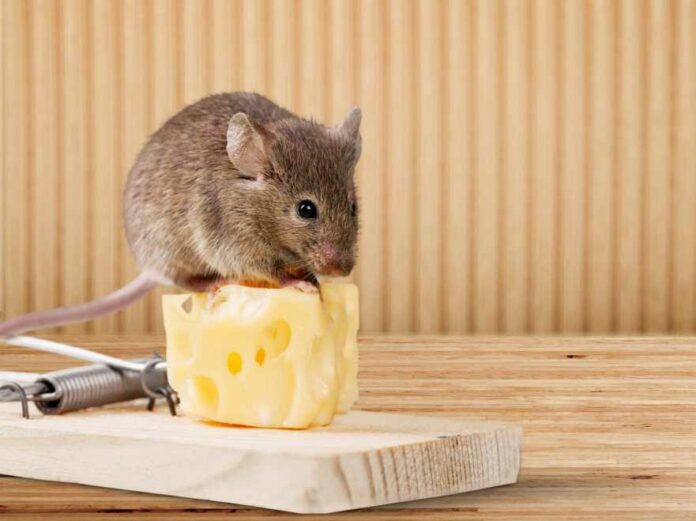
When you see a mouse skittering around the floor of your kitchen tiles at midnight, your heart will definitely drop because there’s no way it could be an isolated incident. Sadly, it’s never just one. Spotting a single mouse is usually the “tip of the iceberg” moment and a signal that your home’s defenses have been breached, and you’ve likely got some uninvited roommates moving into your walls, chewing on your wires, and eyeing your pantry.
For generations, families and DIY enthusiasts have passed down a bit of “homestead wisdom” known as the “rice trick.”
Yes, I’m aware that this trick sounds too good to be true, but trust me, all you need is some rice along with a couple of household ingredients to get rid of the mice wandering around your home. So, despite seeming like something that your grandfather could have sworn was true, there is some very interesting science behind this process.
Given the concerns about the harmful substances present in many industrial rat poisons, the effectiveness of this technique in ensuring that your house is rodent-free without turning it into an unhealthy place for your pets and children has made it extremely popular. In this essay, we will learn more about the mechanics behind this effective and healthy alternative to poisons, its unique way of acting on a mouse’s physiology, and the tactics that work well here.
Rodents, specifically Mus musculus (the common house mouse), are characterized by high metabolic activity. Thus, they need to consume 10-15 percent of their body weight per day to survive. As foragers, rodents have a predisposition towards carbohydrate-rich food sources.
There are two reasons why rice is an ideal “carrier” for the bait.
Firstly, mice are very fond of rice; therefore, it makes it easier for the animals to either chew the substance on-site or transport it back to the nesting place to be shared with other members of the colony.
Secondly, dry rice acts as a substrate which helps to absorb any powdered materials such as baking soda or plaster.
The Chemical Mechanism: Baking Soda and Rodent Physiology
The most widely used form of this remedy uses a mixture of half dry rice and baking soda (sodium bicarbonate). In order to understand how this works, it is important to know about the biological peculiarities of a mouse’s body.
The “No-Burp” Biological Defect
Unlike humans, mice and rats have an anatomical limitation that prevents them from regurgitating anything they ingest. They lack an effective gag reflex and cannot vomit. In addition, a mouse’s stomach is divided in a way that restricts the movement of air or solid contents back into the esophagus.
When the mouse eats baking soda, it begins to interact with the hydrochloric acid (HCl) in the mouse’s stomach. This chemical reaction is identical to the one you see in a school science volcano.
In a human, the resulting carbon dioxide is simply expelled, while in mice, it accumulates in the digestive tract. Due to the inability to release the gas, the pressure mounts to the point where the insides are damaged or fatally blocked. It is a fast process but occurs out of sight of the baits as it takes some time for maximum pressure to be attained.
Whereas baking soda is the “kindest” of these homemade methods, another variation involves the use of Plaster of Paris or salt.
Plaster of Paris: When dried grains of rice are mixed with this material, nothing happens until the mouse drinks water. Once it does so, there is an interaction between the Plaster of Paris and the water present in the animal’s stomach, causing it to harden. As a result, the mouse cannot digest it.
Dehydration from Salt: Rice is mixed with a large quantity of salt, thus creating very strong osmotic pressure. It causes dehydration in mice and can lead to organ failure. However, it is not as effective as baking soda, since mice often avoid it and stop eating the food.
Reasons Why Homeowners Are Switching From Using Commercial Poisons
The move to “Rice Trick” techniques isn’t just economical, but also a matter of health and environmental awareness. Rodenticides, which are anticoagulants, work by disrupting the blood-clotting process, causing internal bleeding. Though effective, the risks involved are substantial:
Secondary Poisoning: This is a major issue for pet owners and wildlife. When a mouse consumes commercial poison and is then eaten by a hawk, owl, or stray cat, the toxin can be passed on to the predator. Every year, thousands of raptors die due to this “trickle-up” effect.
Danger to Children and Animals: The brightly colored pellets can attract children, who may mistake them for sweets, and pets, who may think they are food. However, baking soda and rice are generally considered to pose less risk to humans and larger animals in typical household amounts.
The “Dead in the Wall” Syndrome: Old-fashioned toxins might need several days to kill the mouse, and in the meantime, it may move back into the deeper portions of the wall cavity. In consequence, the unpleasant odor of the decomposing corpse may persist for many days. However, natural solutions tend to act more quickly.
Just leaving a bowl of rice in the middle of your kitchen floor will likely not get the job done. You need to think like a hunter.
Step One: Hunting and Reconnaissance
Prior to setting up the bait, determine the “High-Traffic Zones” in your home. Look for:
Droppings: These are small, dark pellets shaped like grains of rice that typically appear in cupboards or along the baseboards.
Staining: These are marks created by the mouse’s oily coat as it moves along the wall.
Gnawing: Inspect food containers and wooden trimmings.
Step Two: The “Pre-Bait”
As mentioned above, mice are neophobic, which means they fear unfamiliar things. In this case, the bait. Therefore, the first two nights, place small amounts of plain rice. This helps with “bait acceptance.” When they are comfortable eating the bait, then introduce the baking soda.
Step Three: Placement
Mice dislike open areas because of their poor eyesight and dependence on their whiskers to move around vertically (thigmotaxis). You should place your dishes:
Near large appliances such as refrigerators and stoves.
Bigger Than the Hook: The Three-Pillar Strategy for Mouse Management
Getting rid of the mice currently in your house is merely the tip of the iceberg. Without changing the environment, they will simply be replaced by new ones.
1. Exclusion (Block the Perimeter)
The space a mouse needs to fit through is approximately the width of a dime (about 1.8 cm). Using steel wool and caulking, plug any holes found at the following locations:
Pipes entering the house
Door sweeps
Window screens
Foundations and roof vents
2. Sanitation (Take Away the Motivation)
Your house can be compared to a five-star restaurant; even rice will not divert them from their path if food sources remain available. All cereal, grain, and pet food should be stored in sealed plastic or glass containers. Remove crumbs from under toasters and sweep behind ovens. Fix any leaks, as mice require access to water.
3. Deterrents
Once the population is controlled, natural deterrents can help prevent mice from returning. Peppermint oil, red pepper, and ultrasonic repellents can make the environment less attractive, but this strategy works best alongside exclusion measures.
Conclusion
“The Rice Trick” serves as a reminder of how effective and efficient a bit of chemistry and biology can be. Using a simple bowl of rice mixed with baking soda, you are using an environmentally friendly and pet-friendly solution.
But keep in mind that rodent prevention requires constant maintenance. Although a bowl of rice can help, it is still important that your house stays sealed, sanitized, and dry. If pests continue to return despite your efforts, it may be best to seek the assistance of a professional to identify possible flaws in the structure of your home.
Please SHARE this article with your family and friends on Facebook.
Forget the “World’s Best Teacher” mugs, Ms. B now knows the real measure of what being an awesome educator really means, and to her surprise, it comes in the form of requests for vanilla-related products of dubious legality and an international network of second-cousin-once-removes.
When Minnesota teacher Ms. B flew off to Mexico for a short weekend vacation, she anticipated coming back to a pile of grading and her normal “Is there homework?” emails. What she got instead was an inbox turned upside down into a heartwarming (and rather hilarious) community support hub.
From students’ parents seeking the “good stuff” from the local markets to others offering up relatives’ spare rooms to save her from a travel booking blunder, these messages prove that when you pour into your students, their parents might just try to pour a little homemade sunburn remedy back into you.
Here’s the story behind how an innocent holiday video turned into a viral sensation, all because it captured the experience of being part of a school that truly has your back, even if they’re just “using” you for your proximity to authentic Mexican extract.
So, once her trip to Mexico was over, Ms. B, 42, got back to her usual routine of checking her email. And yes, she did in fact expect mails from parents, but probably not in the form she received them. What’s more, she decided to read each and every one of them out loud in a video that has since caught the attention of over 2 million people, and ours too!
Ms. B posted the video on her Instagram page, @tlcwithmsb.
The first message opened on a friendly note, “I hope you are having a great time relaxing, you deserve it,” before quickly shifting to the main point. The parent had heard Ms. B was in Mexico and had one request: real vanilla. Not the kind you get in Minnesota. The good stuff. She even offered to Venmo her for the trouble.
Sadly, Ms. B wasn’t able to fulfill the request since her school district had blocked her email access during the vacation, so she didn’t see the message until she had already returned home.
The second email was from a parent worried about sunburns. She mentioned having a homemade remedy she could prepare herself, and said Ms. B only needed to come pick it up. “That’s seriously so sweet… I might actually try it,” Ms. B said in her video.
The third email arrived after Ms. B posted a separate video in mild panic. She had mistakenly booked her return flight for Monday instead of Sunday and couldn’t afford an easy rebooking. A parent saw the video and quickly offered a fix: Ms. B could stay at her second cousin’s uncle’s house.
At the end of the day, Ms. B might have come home with an empty suitcase (and zero bottles of vanilla), but she returned to something much more valuable: a community that actually has her back. It turns out that when parents are just as invested in the teacher as they are in the report card, the “school family” stops being a cliché and starts being a literal safety net.
So cheers to those parents who view teachers as the rock stars they are and cheers to Ms. B and teachers like her who make it impossible for a community to not be rooting for them!
Do you believe that this level of “investment” will become the norm, or is Ms. B simply fortunate to have stumbled upon a unicorn school district?
Please SHARE this article with your family and friends on Facebook.
In a world where high-end chefs often chase Michelin stars and the approval of harsh critics, chef Spencer Richards is chasing something more profound, smiles from people who don’t really have many more smiles left. At the Oxfordshire hospice where he works, cooking is about so much more than sustenance; it’s about dignity, about reminiscence, about compassion.
To this incredible chef, each dish he cooks is a subtle act of defiance against the sterile nature of illness. He knows that once the world starts to shrink, there is something to be gained from relishing a taste that feels like home. This is not merely about nutrition but the “much love” that goes into every dish. For him, feeding people at their end is not a responsibility but a holy mission.
From recreating the excitement of street food for someone who has been bored to tears with hospital meals, to preparing a “last meal” that will taste just like home, Spencer takes each request with the gravity it deserves. It is a touching acknowledgment that even at the end of our lives, we are allowed moments of luxury and comfort – all from a chef who sees great meaning in a deliciously prepared meal.
Speaking to the Mirror, chef Richards revealed there is no greater privilege than making the last days of the patients a little bit better with his comforting food.
“My own philosophy is that there can be no greater privilege as a chef than serving someone their final meal. Recently a 21-year-old patient didn’t connect with anything on the standard menu. He was young and didn’t like the usual options, so we talked and he liked street food, so we made that happen,” he shared with the publication.
He recalled making a birthday cake for a 93-year-old patient who spent her entire life in a traditional home where birthday celebrations weren’t common.
“When we surprised her with one, she was in tears. She was absolutely over the moon.”
Actually, a birthday cake is the most common thing the patients at Sobell House Hospice ask for as their days on earth are slowly coming to an end.
“They’re small things, but especially for people who’ve been isolated or are feeling lonely, they mean a lot,” chef Richards said.
Further, he explained that adapting the dishes he prepares is of great importance since most of the patients who are at palliative care lose the ability to swallow. Their taste buds also change, and due to the medications and the treatments they receive.
One thing this hospice chef has noticed, however, is that patients with cancer “get a sweet tooth.”
Also, most of the patients are sensitive to salt.
“Food is a powerfully emotive medium – it can summon childhood memories and create new lasting ones. That’s what we do here.”
In a hospice setting, food and meals take on a greater meaning than mere sustenance. The research and personal experiences of experts, such as Spencer Richards, indicate that when the body is preparing itself for the great transition, there occurs an odd yet poignant change to the palate.
While every patient is different, studies conducted on palliative care bring to light numerous interesting phenomena regarding the desires patients have before death:
The “sweet tooth” phenomenon: As described by Chef Richards, patients at hospice, especially those suffering from cancer, tend to develop a craving for sweet food. The reason behind this lies in the fact that sweet is a taste that lasts the longest even after other tastes are distorted by medicine. While everything else may taste metallic or bitter to the dying patient, the taste buds responsible for “sweet” usually continue working.
The high-salt threshold:On the other hand, sensitivity to salt can reduce. The patients might experience normal food as bland or “tasteless” since their threshold for salt sensitivity has increased. They may have cravings for salty or umami foods, especially those found outside of home-cooked food.
Nostalgia on a plate: From a psychological perspective, those in hospice don’t request luxuries such as lobster and caviar. Rather, they yearn for nostalgia food – that is, the dishes that their mothers used to make or the food that they loved as children. These foods are like biological time machines, which release dopamine from the limbic system, creating a feeling of home and safety in a clinical environment.
The texture shift: Many patients suffer from a condition known as dysphagia or difficulty swallowing. In this context, the task of a hospice chef becomes that of presenting “pureed” or “soft” food as if it were the normal food. Modified versions of popular dishes, such as shredded chicken cooked in thick broth rather than hard steak, enable patients to eat.
In the end, the efforts of individuals like Spencer Richards reveal the value of the kitchen in the healthcare community. In the case of a 21-year-old wanting street food, it is not only about tacos and sliders, but also about a connection to their younger self, who was able to enjoy such things without being labeled a “patient.”
Finally, what we can deduce from this experience is that what is truly essential in hospice care is not a culinary recipe or any kind of seasoning, but human dignity. It does not matter whether a patient needs an extra helping of sugar or salt, but that their last days on earth are filled with moments of pure joy through food.
Please SHARE this article with your family and friends on Facebook.
It’s kind of funny how these small, thoughtless actions that we perform on a daily basis have the potential to reveal so much about ourselves without us realizing it. For instance, something as insignificant as returning a shopping cart is causing quite an uproar on social media platforms. Through social media posts and in-depth opinion pieces, the “shopping cart theory” has become a measure of whether you’re a good person or not.
All of this started with an anonymous post on the website 4chan asserting that putting back your shopping cart is the supreme test of character. In explaining this notion, the sites argues that “The shopping cart is the ultimate litmus test for whether a person is capable of self-governing,” because the task is easy, everyone knows it’s the right move, but there’s no “cart police” to force you to do it.
Since you won’t get arrested for leaving it in the middle of a parking spot, doing it becomes a purely selfless act.
The logic behind this “shopping cart theory” is that, unless there’s some massive emergency, returning the cart is always the right call. As the original poster put it, “Therefore, the shopping cart presents itself as the apex example of whether the person will do the right thing or not without being forced to do it.” Basically, if you do it, you’ve got internal discipline; if you don’t, you might be the type of person who only behaves when there’s a law or a fine involved. The theory’s wildest conclusion? “The shopping cart is what determines if the person is a good or a bad member of the society.”
This statement sounds quite audacious, yet people are drawn to it due to the fact that it’s black and white, really. Real life is generally complicated, with plenty of “gray areas,” and so having a definitive test to determine one’s character is gratifying. Most of us have witnessed an abandoned shopping cart crashing into a person’s vehicle or taking up space in a parking spot, and so we understand that storing the cart benefits all parties involved.
However, as far as people are concerned, the matter is not as simple as that. There may well be some people who do not act out of goodwill; on the contrary, it is because they fear negative perception from others. As mentioned in previous discussions through sources such as Bolde, many people will simply push that shopping cart back just to prevent themselves from being known as the “jerk” of the parking lot.
This aligns perfectly with how psychologists explain the presence of scripts inside our minds. According to anthropologist Krystal D’Costa in her article for Scientific American, there are two types of social pressures which dictate every step we take. The first is the injunctive norm – what we believe society expects from us (“should”). The other is the descriptive norm – what we observe people around us do (“is”). While observing a parking lot strewn with stray carts, it is the descriptive norm that signals our brain that there’s nothing wrong with slacking off. On seeing a parking lot that is absolutely spotless, it is the injunctive norm that puts pressure on us.
Then there are the “non-returners,” who come up with an endless list of reasons why they can’t return their carts. They might say that the corrals feel like a mile apart, they have sleeping children in the car they can’t leave unattended, or it’s raining cats and dogs. Some may even be philosophical about it, claiming they’re “creating jobs” by leaving work for the employees. That’s a very generous way of being lazy, but the logic falls flat quickly. Ask any sales associate what they think about having to look for carts while being soaked to the bone, and they’ll let you know that’s not a job they enjoy doing.
If you go down the rabbit hole on Reddit, you’ll see the internet is completely polarized. While one side of the debate defends leaving carts wherever they please—sometimes dismissing the expectation as “elitist”—the other views a stray shopping cart as a sign of moral decline. On one hand, some argue that returning a cart amounts to “free labor” that ultimately benefits large retailers. On the other, critics point out that an abandoned cart can damage someone’s vehicle or block access to spaces like disabled ramps, creating real inconvenience or harm.
From a philosophical perspective, this idea touches on self-regulation, a concept explored extensively by Aristotle. It refers to the capacity to govern one’s own behavior without relying on either reward or punishment. In the modern world, much of what we do is shaped by rules, incentives, or social expectations; voluntarily returning a shopping cart, however, stands out as a simple act of doing the right thing purely because it is right.
However, there are those who feel the theory is extremely judgmental and fails to ask the question of why. We are not all physically capable. For example, if you are elderly, disabled, or trying to manage three toddlers, going to the corral is not a small feat. Judging the whole moral integrity of a person on whether they can physically push an object is a slippery slope.
In her criticism of the theory, D’Costa urges us to be careful before rushing into judging and punishing others. She states that we must consider certain fact:
“That guy who didn’t return his cart may not be a complete jerk. He may just be using the example set by others so he can get home a little more quickly.”
However, she does sound an alarm about the “broken windows” effect. If laziness becomes the new standard, the social fabric starts to fray. As she puts it:
“But if everyone does that, then we’re shifting the balance of what is acceptable, which may have greater ramifications to the social order.”
Research has even categorized us into specific “cart personas,” to illustrate just how strange our behavior can be, a concoction of morality, attitude, and surroundings:
Always Returners: They would feel bad for a whole week if they didn’t.
Never Returners: They think someone else should, end of story.
Convenience Returners: They will only do it if it’s conveniently located.
Pressure Returners: Only if people are watching.
Child-Driven Returners: Parents who teach their children by doing it or making it a “drive.”
Ultimately, all this focus on the theory may actually have more to do with the intense need that we seem to have to “rank” and put people into categories. There’s a clear desire to have something simple and easy that can help us figure out which ones are “good,” but the shopping cart is a terrible measure to use. According to social worker Meg Rowley, we should start looking at things beyond such a simple dichotomy of “good versus bad.”
In the end, the debate isn’t about carts, it’s about how we treat shared spaces and whether we care about the person who comes after us.
The shopping cart philosophy may very well be an overstatement, but it certainly reveals the fact that the seemingly insignificant actions we perform daily contribute greatly to the formation of our culture.
It should be noted that the situation is quite complex. Certainly, putting back your shopping cart is a courteous action that you can take to help others, protect property, and ease the job for the staff member who collects those carts. At the same time, it is not a defining factor for your soul, since there are many other aspects in life that define who we are, making people much more complex than just their actions. In this regard, one should view the shopping cart theory as an individual’s self-reflection tool instead of judging others.
Please SHARE this article with your family and friends on Facebook.
Ginger is a flowering plant that’s been used around the world for centuries, both in cooking and in traditional remedies. While it is native to Southeast Asia, ginger has found its way across the globe. Today, this incredibly powerful plant can be found in countless dishes across various cuisines ranging from spicy curries to stir-fried foods, beverages, desserts, and tea. Ginger may be best known for its pungent, slightly spicy flavor, but it is the underground stem of the plant, often called the root, that has made it so versatile.
Ginger has long been a part of holistic and herbal medicine traditions, including Ayurveda and Chinese herbalism. People have relied on it for centuries to support healthy digestion and alleviate problems associated with bloating, flatulence, or indigestion. Also, many turn to ginger as a natural way to ease nausea, whether it’s related to motion sickness or minor stomach upsets. Its soothing properties make it a popular choice in teas and tonics designed to calm the stomach and promote overall digestive balance.
Other than promoting proper digestion, there is another important reason why people use ginger – its anti-inflammatory effects. Ginger has been found to contain certain substances that may aid in reducing bodily inflammation, thus serving as an excellent treatment for minor physical pain, such as muscle aches and pains in joints. For this reason, people tend to consume ginger in different forms, whether it is freshly sliced, powdered, capsules, or even in beverages infused with it.
It would also be helpful to note another important factor behind the long-term popularity of ginger. The fact is that people find ginger to be very convenient to use since it may be easily added to one’s daily menu in order to get its beneficial effects on one’s well-being. It is consumed in a variety of forms, including fresh slices, powdered spice, capsules, or infused beverages.
Another factor behind ginger’s long-lasting popularity is its convenience. This spice can easily be used in daily meals, thus making it available to everyone. Ginger can be included in prepared foods, used to make tea, added to smoothies, and included in soups or sauces. The combination of ease and the health benefits that ginger provides helps keep it popular even today.
Ginger is associated with a number of possible advantages for the heart, such as low blood pressure, improved blood flow, and balanced cholesterol. All these qualities can help reduce the risks of heart problems and inflammatory disorders, making ginger a common ingredient in a healthy diet. Ginger’s components are thought to facilitate proper vessel functioning and reduce oxidative stress.
However, it isn’t risk-free for everyone.
Ginger can interact with some medicines, such as blood thinning and anti-platelet drugs, leading to bleeding issues. Additionally, it may cause irregular heartbeats in some people, depending on how sensitive they are to the chemicals in ginger. While consuming small amounts in food or tea is generally considered safe for most people, caution is still advised.
Anyone with an existing heart condition or those taking related medications should consult a healthcare professional before using ginger regularly, especially in higher doses or supplement form.
As mentioned above, ginger is believed to facilitate digestive processes because it stimulates the formation of bile that plays an important role in fat metabolism. However, this mechanism of action does not benefit all patients because some people suffer from gallstones or experience other gallbladder problems. Since the use of ginger increases the formation of bile, it puts additional pressure on this organ, thus causing discomfort in the patients with pre-existing disorders.
In case the gallbladder cannot discharge bile into the duodenum owing to some complications such as blockage or inflammation, this process may cause pain, cramping, or other uncomfortable sensations during and after eating. Hence, people with gallbladder disease should consume ginger only with caution. It is recommended to consult a doctor prior to taking ginger supplements or eating large amounts of this food product.
3. People with diabetes
Consuming ginger can possibly result in reduced blood sugar levels. This outcome can be advantageous to diabetics since the herb can boost glucose tolerance and enhance insulin sensitivity. However, it can be a cause for concern for people taking prescription drugs that lower their blood sugar levels.
People using blood-sugar-reducing medication can suffer from hypoglycemia when consuming ginger because of its possible effects on glucose levels in the body. People can experience dizziness, lightheadedness, nausea, fatigue, and fainting if there is a drop in blood sugar. It is thus advisable to use ginger carefully when on blood-sugar medication.
It would be best to seek medical advice before using ginger regularly when taking blood sugar-regulating drugs. One should do so especially if taking other types of medicine, such as warfarin, antiplatelet medication, and blood pressure medication.
Rahaf Al Bochi, RD, a spokesperson for the Academy of Nutrition and Dietetics stated, “We know that ginger can affect your insulin levels. If you’re taking ginger supplements and you are on diabetes medication, that can cause low blood sugar, or hypoglycemia.”
Just like any other food product available, there are certain individuals who might suffer from side effects while consuming ginger. The side effects may vary from one individual to another, ranging from allergic reactions such as hives, rash, or breathing difficulties, which may indicate that a particular individual is allergic to the food product. Others may suffer from digestive problems like nausea, vomiting, diarrhea, and stomach pain due to excessive intake of ginger.
There is also a possibility that the consumer may suffer mouth and throat irritation when they consume fresh ginger, while others may suffer heartburn. Such reactions are rare for most individuals, but there are instances where a person can experience them. For example, a particular patient suffering from a medical disorder may experience certain side effects after consuming ginger due to the medication he or she is taking.
In case of severe side effects after consuming ginger, it is advisable to discontinue its use immediately and consult a physician at once.
5. Possibly if You’re Pregnant
Guidance on ginger during pregnancy is mixed since the side effects might vary depending on the dosage and one’s physical state. The small dosages of ginger are usually recommended as a way to treat morning sickness naturally, especially in the first trimester. People use ginger in different natural ways, like making ginger tea, putting it into dishes, or using small pieces of grating in their cooking process. However, it is quite safe when used in moderate dosages.
The problem with the use of ginger arises when it is consumed in larger quantities. Ginger consumed in large amounts or taken as concentrated supplements might have adverse effects on the body. The concern is that consumption of large quantities might pose a risk of bleeding, especially during advanced stages of pregnancy, and particularly around childbirth.
Due to these potential risks, it may be advisable for pregnant women – especially those with previous miscarriages or bleeding problems, or with high-risk pregnancies – to be careful. For these women, it may be best to avoid large amounts of ginger and use moderate amounts through food consumption only.
Pregnant women should consult a healthcare professional before using ginger regularly or in higher quantities to ensure it is appropriate for their specific situation.
Ginger is a widely used plant that provides different health benefits, such as improvement of digestion, relief from nausea, and support in the fight against inflammation. The reasons for its popularity include its widespread use in culinary practice and traditional medicine.
Nevertheless, due to various side effects, ginger is not appropriate for everyone in every condition. It may be associated with different adverse reactions in individuals with certain diseases or those taking specific medications. Therefore, one needs to be careful about using ginger when having diabetes, heart disease, gallstones, or when taking medication that affects blood clotting. Ginger should also be used with caution during pregnancy due to possible risks in high amounts.
Therefore, it is generally recommended to include ginger in the diet in moderate quantities.
*Disclaimer: This information is for informational purposes only and not a substitute for professional medical advice, diagnosis, or treatment. Always consult your physician or healthcare provider with any questions about your health or medications. Do not disregard professional advice based on this information.
Please SHARE this article with your family and friends on Facebook.
Julie McFadden is a hospice nurse who has witnessed a number of deaths throughout her life. Very often, she speaks of the reality of dying in an attempt to help people understand the process of leaving this world through the behaviors seen in those nearing death.
It is her mission to “alleviate the fear and stigma around death.”
She has dedicated her career to helping individuals and families navigate the final stages of life. Alongside her professional work, Julie has authored a book and built a significant social media presence. She’s focusing on themes of death and dying.
In the videos she posts on the social media, she shares insights of the last moments of life of her patients – from their last words and their biggest regrets, to certain behaviors they display.
TikTok/@hospicenursejulie
Speaking of some of the most disturbing moments the loved ones of the dying person experience are the changes in breathing at the person who is about to live the world.
This is known as Cheyne–Stokes breathing, happening as a result of metabolic changes in the body.
These changes are normal, and even if they take place, it doesn’t necessarily mean that the patient is suffering. However, their loved ones understand it as a suffering and most of them say it’s something they “wished they would have known about.”
“You can see that chest rapidly breathing, and then a long pause […] and then rapid breathing again,” she explained.
TikTok/@hospicenursejulie
Another of the behaviors seen in those nearing death, as explained by Julie is the “death rattle.”
This happens when the mouth creates saliva but the brain doesn’t communicate to the body to teel it to swallow it, leading to a strange gurgling noise.
“People hear it, they don’t understand it, they automatically assume it’s coming from their lungs. That is not happening. It’s truly just a little bit of saliva,” Julie explained.
“This is not making them feel that they are suffocating, and we know this because the body is showing that it is relaxed,” she added.
According to her, human bodies are built to know how to prepare themselves for dying.
Further, Julie described how she can detect initial signs that someone is likely to die a natural death approximately six months beforehand, allowing her to recognize when a person may be in their final half year of life, even if others do not yet see it.
So, what are the signs a person is dying at the 6-month mark?
According to Nurse Julie, patients are often placed in hospice care once these signs start to show.
“You will have very generalized symptoms. Those symptoms will usually be, one, you will be less social. So you’ll be more introverted than extroverted,” she said. “Two, you will be sleeping a lot more. And three, you will be eating and drinking a lot less. Literally, everyone on hospice, I see this happen to.”
What are the signs a person is dying at the 3-month mark?
“You are going to notice more debility,” she continues. “They will be staying in their house most of the time. It’s going to be difficult getting up and just going to the bathroom. Again, sleeping a lot more and eating and drinking a lot less.”
What are the signs a person is dying at the 1-month mark?
During the final month of a person’s life, they may begin to believe they are in contact with deceased relatives or friends. These experiences are often described as comforting and may help them become more accepting of their final transition.
“Usually around the one month mark is when people will start seeing ‘the unseen’, they have the visioning. They’ll be seeing dead relatives, dead loved ones, dead pets, old friends who have died,” Julie said in one of her videos. “Again, not everyone — but many, many people will start seeing these things at around one month.”
Other people who have been working in hospice also share the same things happening with those who are nearing their life. Among them is Angela Morrow, a registered nurse at Verywell Health, who also agrees that people in the final stage of life often report sensing or hearing from those who have already passed away.
In her view, caregivers and relatives should not confront patients while discussing their encounters with the spirits of deceased persons or animals. Rather, they should listen patiently and answer with empathy, despite the strangeness of the situation. This way, they will ensure a feeling of security among patients instead of making them confused, upset, or uncomfortable.
“You might feel frustrated because you can’t know for sure whether they’re hallucinating, having a spiritual experience, or simply confused. The uncertainty can be unsettling, but it’s part of the process,” Morrow writes.
In the final part of the video, Nurse Julie discusses the indicators used by nurses working in the area of palliative care for determining the stage of dying. According to her, the important aspects considered include eating, drinking, and sleeping habits. In fact, she mentions that before a person dies, usually a couple of weeks before death, they sleep much more than they are awake.“Most people, a few weeks out from death, will be sleeping more than they are awake. And they will be barely eating and barely drinking,” she said.
According to her, hospice care typically entails “allowing the body to be the guide” because the nurse watches all these changes very closely and guides the patient during the last phase of life. The nurse does not impose anything on the patient but only comforts and guides them.
Nurse Julie’s work has resonated deeply with many people online, especially those going through end-of-life experiences with loved ones. Her videos have offered reassurance during emotionally difficult moments. “My mom is in hospice right now and she’s currently, I think, hours or days from death. Your TikToks have helped me out tremendously,” Deb wrote. Others have shared similar feelings of comfort and understanding. “My grandma passed away in February, and she experienced all of this. this page brings me peace knowing everything she went through was natural,” Jaida added.
Healthcare workers have also expressed appreciation for her educational content. “Thanks, Julie. I volunteer in a hospice end-of-life facility, and this helps educate the families. Your posts are wonderful,” Grandma Nita wrote.
Ultimately, death is a subject that is so hard to deal with partly because of its unpredictable nature. Through her open discussion of what she had been through, Julie McFadden brings some understanding to this topic by demonstrating that the process of dying is usually a normal process rather than an unexpected event. The message brought out by her is that hospice care is not about giving up but supporting the process.
Please SHARE this article with your family and friends on Facebook.
Aging is not always marked by sudden and noticeable changes like your hair turning white overnight or having to use a cane out of the blue. Instead, aging tends to occur quietly in the corners of our lives through small changes that we may miss unless we pay close attention.
To recognize these changes doesn’t mean to be “on watch” or bracing for the worst case scenario. This is more of an effort to develop a different literacy, one that involves recognizing the language that the body and mind may be using as they transition into a new phase.
The following are five such signs that indicate a loved one is struggling with the issues that come with aging.
The very first change may reveal itself in the kitchen. You may see that there is less food stored in the refrigerator, or people around you say, “I’m just not really that hungry,” all too casually. This is important because nutrition gives strength to other processes that take place in the body.
There are multiple explanations behind this phenomenon. Physiologically, the process of aging dulls the senses of smell and taste so that food starts tasting like cardboard to older people. As noted by the researchers of Mayo Clinic, “reduced appetite in older adults” may also stem from side effects of hypertension or cholesterol-reducing medications that older people commonly use. Additionally, problems with teeth or poor digestion also make a meal an unpleasant experience.
However, we shouldn’t forget about the social aspect. Consider your favorite food; most likely, you enjoy it even more when dining with someone else. Preparing a full course for oneself might seem pointless to a lonely elderly individual who lives alone. Loneliness has a way of diminishing hunger.
Rather than constantly reminding them to “eat their greens,” try reintroducing food into their social life. Drop by with some food that can be shared. Alternatively, set up a “food preparation date” with the goal of creating smaller, quick meals together.
Everyone experiences fatigue, but this is something else entirely. This chronic, debilitating fatigue cannot be alleviated by a quick nap. Perhaps they no longer take their morning stroll, or maybe they have been lounging in their favorite recliner, watching the television all afternoon without much interest.
Physiologically, the heart and lungs require more effort to circulate oxygen throughout the body as we grow older. Chronic fatigue may also be the “silent” indication of ailments such as anemia or even depression, according to a study featured in The Lancet. Social isolation has even been linked to physical weariness; with fewer reasons to look forward to, the body’s “engine” idles.
Think about a grandfather who previously spent hours tending to his garden. Today, all he does when he sees the weeds is let out a sigh. This is not because he is being “lazy”; rather, it is because the effort involved is like scaling a mountain.
Undoubtedly, this is one of the most challenging signs to observe. You may realize that your family member is increasingly quiet at dinner time, or maybe they do not call their friends anymore. It seems like they are gradually withdrawing the curtains from their life.
It should be remembered that memory issues usually coincide with emotional withdrawal. It is not only about searching for lost things, such as keys; rather, it involves losing track of what they used to say for years, or even asking the same questions again after ten minutes have passed. Sometimes, such behaviors can be the first signs of cognitive impairment, but at the same time, they may indicate another medical condition called pseudo-dementia, in which depression causes similar memory issues.
According to the findings of National Institute on Aging researchers, forgetfulness is a common symptom among older adults, yet if it interferes with health and wellbeing, it is important to act.
Your most powerful weapon is patience. If they tell you a story twice, act like you’ve never heard it before. If they forget a word, allow them the chance to figure out what it was rather than completing the sentence for them. Dignity usually correlates with the ability to converse.
Unsplash
Slower Healing and “Linger-on” Illnesses
Don’t you think it’s strange that when they get a small scratch from something on their arm while gardening, it persists after several weeks? Or even that a common cold leaves them completely bedridden for up to a month?
One of the changes the body experiences when aging is known as “immunosenescence.” In essence, the immune system fails to react as quickly to infections as it used to. Not only do the “first responders” slow down in reaching a site of injury, but also the skin itself becomes thin and less well-supplied with blood, thus making any wounds heal slower.
This trend is also indicative of a person’s general lifestyle: slower healing can lead to a fear of falling or getting hurt, which in turn leads to less movement and more isolation. It’s a cycle that feeds itself.
Monitor the medicine cabinet. Make sure they have everything required to care for their injuries and that they remain well-hydrated. Being dehydrated is a big cause, and easy one to rectify, of delayed healing and skin problems among older individuals.
Unsplash
Changes in Circulation and the Rhythm of Breath
Finally, the last symptom is often the least apparent but can be the most serious. This would be the well-known “cold hands” problem. You may see your loved one wearing a sweater on an otherwise warm day or always wanting a blanket. This could mean that there are some changes in their circulatory system. The heart may not be pumping quite as vigorously to the extremities.
Another sign that you may see is the way that they breathe. Their breath may get very shallow or even exhibit a “sighing” rhythm. Although this is common with the elderly, it becomes more important to be aware of if there are any blue nails or if they suddenly feel dizzy.
These subtle alterations in temperature control and respiration can be addressed by having better body movements and ensuring that the environment remains “draft-free,” as recommended by the American Heart Association. This is because the aim is to stay within the “thermal comfort zone,” which will ensure that the energy of the body is used effectively.
Unsplash
Conclusion
Looking at this list, do not see these five warning signs as “problems needing solutions,” but rather as markers showing you what your loved one is experiencing right now.
Age is not a disease, nor an illness. It is merely another phase of life that becomes more challenging when done in isolation. And the best support you can give to an older person does not necessarily mean a solution, or even a professional intervention—it means your presence.
Your elderly relative may not need someone to solve all their problems, but they will certainly need someone who understands that their life is no longer the same.
Please SHARE this article with your family and friends on Facebook.
Here is my story, and I’m still shivering with fear while recalling those moments. Honestly, I don’t think I’ve had more than several hours of sleep since last Thursday. You know how long we’ve waited for Sophia. Ten years! And those were ten years of injections, of crying my heart out at every negative test which felt like I was a failure every single time, of being frustrated with my “broken” body.
Now that we finally brought her home, I couldn’t help but feel as if I were holding my breath. I did not dare to make any noise or express excitement out of fear that the cosmos might notice the error and reclaim her. Yet, there she was, our baby girl, asleep in our crib.
And then came her first bath.
We were in the bathroom, and this was to be our core memory, yes? The ‘perfect parents’ experience? Well, Daniel was being so incredibly sweet – you know what he’s like, such a perfectionist! He was holding her delicate head up with one hand while pouring hot water from this little plastic cup over her. She looked like fragile china to him.
The cup tipped over, water began sloshing out into the bath again and he just stood there frozen. “Daniel,” I called out to him, but he didn’t so much as blink. His face was fixed on the area of her back above her shoulder blades in sheer terror. “No,” he murmured. “Not possible.”
Before I had a chance to question him, he blurted out, “We can’t keep her!”
My heart dropped not just down, but to my feet. My mind raced with all sorts of scenarios – did he have second thoughts? Was she ill? Was she not ours?
But he wanted me to look closer. As I leaned down, I saw it. It wasn’t a mark from birth or a scratch from the crib. It was a scar, a line perfectly straight from a surgical cut. She had been operated on without us ever knowing.
Words cannot describe how frantic and panicked I felt at that point. Daniel bundled her up in a towel, still trembling, and we were out the door. I was trying desperately to get ahold of Kendra, our surrogate, but it went straight to her voice mail. Again and again and again.
I don’t even remember how we got to the hospital. I couldn’t stop looking at my baby girl, questioning what was inside her and what they had done to her. Finally when we arrived at pediatrics, this doctor approached with total calmness, which actually made me scream internally, and said “the procedure was successfully performed.”
He explained that she had a slight risk of infection at birth and required “immediate intervention.” I asked him as to who gave consent as this surely wasn’t from our side, and then the door opened and in came Kendra.
Her face was so pale that it looked like she had seen a ghost. Once inside the doctor’s office, she explained that the doctors had informed her that the procedure was urgent. She said that the doctors had attempted to contact us, but were unable to do so. So, she had to sign the forms and make the decision for our child.
There I stood, looking into the eyes of this person who had been entrusted with everything, only to look into those of another doctor who had never even heard my name before, and come to understand that they had seen me as an outsider in my own daughter’s life. There had been just a single phone call from the hospital. Only one. And because we didn’t answer immediately, they assumed that we weren’t available.
I felt insignificant. Like just another faceless woman paying the bills.
I was honest with Kendra and explained that even though she meant no harm, I was angry at her; I told her that she made a decision which was mine to make. I also demanded from the doctor every document, all the logs of the conversation on the phone, and an an explanation on why I was not been seen as a parent when the situation became complicated.
On the way back home, there was absolute silence in the car; Daniel was blaming himself for not having insisted to remain by her side throughout the delivery, or for not having checked her body after we went out of the hospital. I did not allow him to say those words because we cannot write history.
Upon our return, the bathroom was still messy. The water in the tub remained the same. It seemed that while away from this life, we had returned into another life. It became difficult for Daniel to continue the process, which I ended up finishing myself.
I put her back in that warm water and began washing her. While doing so, I remembered that scar mark on her back, and suddenly, it dawned on me that she is indeed a fighter. She endured surgery in the absence of her mother and father by her side, yet emerged from it perfectly.
I’m still angry. I’m going to spend the next month making sure that hospital never ignores a mother again. But when I held her in that towel and she made this little annoyed squeak because she was cold, Daniel actually laughed. A real laugh.
They made efforts to make me just an afterthought. They think that being a mother begins when the paperwork is simple, but they are mistaken. I am her mother because it is me who is there, and it is me who will never let go.
Finally, I know that she belongs to me. It hasn’t been a flawless process, but it is now when the world tried to push me aside that I found myself back by her side. Everything will be all right from now on. She is asleep, and for the first time in ten years, I believe that I can sleep too.
Please SHARE this article with your family and friends on Facebook.
The moment my boyfriend suggested I should meet the whole family, not only did fear overcome me, but I went into a total daydream for a full day in advance. Ever felt yourself detached from everything happening around you, observing everything that occurs from afar? This is exactly how I felt at that particular moment. All my day was spent in preparations for the meeting in mind, thinking about what to say and how to behave in case things go wrong. I imagined what I was supposed to do in case of introduction, what kind of first impressions I would make in case I would not appear to be myself, what kind of clothing to choose to create good impression without appearing artificial. I wanted others to like me because I seemed approachable and nice, but I also did not want people to think I am putting on some kind of a false face.
Trust me when I tell you that the drive there was a blur. All I could hear was my boyfriend telling me over and over again to just breathe because everything was going to be just fine. And honestly, that’s the least useful piece of advice one should hear when feeling as anxious as I had at the time. Yet when we walked into the front door of his house, everything changed. My expectation was of a cold, clinical-style room, where all I would be facing is the interrogating look of his parents.
Instead, what I walked into was a place that was almost inviting in its warm glow and the delicious scents coming from the kitchen and the laughter coming from the dining room. When his parents welcomed me in, there were no handshakes. They came up to me with their eyes crinkling from smiling genuinely at me, letting me know instantly that they liked me before even meeting me.
That’s exactly when the floor dropped out. As we walked into the kitchen, my boyfriend looked at me with a completely straight face and said, “Hope you brought your wallet… we’re all starving.”
My mind went blank. Just when my inner debate stopped, it began again. For an instant, I did the calculation in my head about how much money I carried with me and if I should make the offer to pay for myself or maybe order something on DoorDash. I must have appeared extremely scared because the next thing that I heard was a roaring laugh coming from his father. He wasn’t politely amused by my reaction but laughed with gusto, hitting my boyfriend on his shoulder. “Come on, relax kid, we’re just playing along,” his father said to me, breaking the ice for everyone else to laugh at. I felt my boyfriend’s hand on mine, and it was only then that I realized I’ve been holding my breath ever since I entered the car.
His mother knew instinctively that I needed some kind of distraction from the joke and took us to the table. She was eager to start eating, her hands busy arranging the utensils. Background music played softly in the form of an instrumental tune that would fill in wherever there was a gap in our conversation. With all the heavy ceramic bowls being passed around, conversation became a lot easier. We moved away from the stilted introductions like “So, how do you make a living?” to jokes, mostly at my boyfriend’s expense.
The best part of that evening was discovering his “culinary phase” from high school. As far as I understood, one time he decided to boil a big pot of pasta, but forgot the most important ingredient—the water. He simply put the dried spaghetti in the pot and turned the fire on at maximum. And after just a couple of minutes, the room was already filled with thick black smoke, his smoke detector went off, and his neighbors started beating at his front door while holding a fire extinguisher since they considered the building was burning down. Hearing this story, she delivered everything with such an intense enthusiasm, as if describing him with his horrified expression while trying to disperse the smoke with a dishcloth, that it made me giggle uncontrollably.
The more time passed during the night, the less performance there was in our interactions. While having a few slices of freshly baked bread and eating an awesome, yet simple dinner, I found myself no longer watching my body language and word choice. It just happened that way. I sat and watched his father, who enjoyed all the attention he could get, retelling stories using large hand gestures and perfect timing. And then his mother would come in and use her witty remarks to bring him back to reality. The banter between the two was natural and comfortable. They weren’t trying to put one another down or hurt any feelings.
Next, his little sister entered from the kitchen, holding a plate of the messiest, most delicious-looking cobbler she could have made, saying something to the effect of how excited she had been to meet “the girl who had managed to make her brother finally clean his room after years of ignoring it.” Now, normally in situations like this, I would have felt self-conscious and very much on display, but in this moment, it just came easy to me. It almost seemed as though I had known them for months rather than mere hours. There’s just something liberating about not having to try your hardest and just being yourself.
When the dishes were cleared, the night was far from over. No, now came out the real “artillery”: those big photo albums. We sat in the living room going through pages that were covered in plastic and held pictures that we all generally tend to avoid showing our new lovers – like those embarrassing middle-school bowl cuts, birthday cake disasters, and Grand Canyon vacations where the whole family had terrible expressions because the air conditioning in their vehicle failed on the one-hundred-degree day they chose to go on their vacation. While looking at these pictures, it dawned on me that it wasn’t how many people were in the room that made it feel “full” – it was a certain warmth and aggressive openness.
As we turned to make our exit, his father called out to me and grabbed a little brass key chain from the drawer near the front door. “You’re always welcome,” he told me, with an earnestness that was completely unexpected coming from him. As simple as it was, this act struck me with a force far greater than I would have imagined possible. The key itself was meaningless; it was the unspoken acknowledgment of passing an unspoken test. I didn’t just survive dinner; I had proven myself worthy of acceptance into the family.
As we drove back to my place, the atmosphere was one of comfortable silence, broken only by the occasional sound of my fidgeting with the key chain. In those few hours, I had gone from being an anxious mess, fearful of judgment and rejection, to a much calmer, more centered person who felt like she had a place in the world after all.
Please SHARE this article with your family and friends on Facebook.
Can you define the role of a mother? Well, when you think about it, that’s probably an impossible task and I don’t think the reason why would come as a surprise.
Motherhood is all bout being present day in and day out and placing the needs of their children before their own. This goes beyond love; it is persistence, patience, and showing up even when you are exhausted.
When you meet a mom who appears to “have it all together” despite the chaos at home or at work, trust me, that’s more than just luck.
But let’s get clear, there is no such thing as the “perfect mother,” that’s just a myth. However, there are certainly some tendencies—little quirks and changes in mindset—that enable some moms to feel like they are doing things well and can handle things better. According to psychologists and specialists in the field of family studies, the “supermom” is not a machine, but rather who has figured out how to prioritize, stay flexible, and take care of herself alongside her kids without burning out along the way.
Below are some qualities and habits that really make the difference.
The Art of the Hard “No”: Setting Boundaries Without the Guilt Trip
Among the distinctions that exist between a mother who is constantly teetering on the edge of a nervous breakdown and one who is able to move through life with a sense of confidence and peace of mind is the ability to establish strong boundaries. Today’s society often idealizes the image of a martyr-like mother who devotes herself completely to her family and community without considering her own identity and well-being.
After all, we’ve all been there—we feel compelled to answer yes when asked whether we will contribute to a school fundraiser or work an additional shift at the office. As social psychologist Susan Newman explains, however, a life without the word “no” leads only to burnout. Balanced mothers understand that when one says yes to something, they say no to something else—it is impossible to do otherwise. Mothers who set boundaries don’t do so simply because they don’t care about others’ requests; they do so in order to free up time for other, equally important things, such as saying goodnight to their kids, having a cup of coffee, and catching their breaths. According to the research, this practice actually reduces stress.
There exists a heroic belief that a “good” mother is supposed to have superhuman abilities when it comes to taking care of her kids alone. The reality is, however, that such efforts to keep up with such a demanding performance is a recipe for disaster. Researchers who studied the problems associated with parental burnout among working mothers concluded that the lack of assistance was the key factor contributing to emotional exhaustion in parents.
According to child development specialist Genevieve Thiers, some of the best moms out there know where their boundaries lie and are willing to cross them whenever necessary by asking for help. Instead of being seen as a weakness, the ability to seek assistance can be viewed as a smart approach to parenting. Just having a couple of minutes of rest can significantly boost a woman’s mood and patience levels.
It’s a common misconception that you have to choose between being the “fun” parent and the “strict” one. According to parenting expert Sherene McHenry, children need a certain degree of structure and flourish when they know precisely what to expect – as long as such expectations come together with unwavering love. This parenting philosophy can be compared to years of psychological research regarding “authoritative parenting,” regarded as the ideal model for parenting by numerous psychologists. It means providing solid structure and discipline combined with strong support and empathy.
In other words, such mothers are not trying to become their child’s favorite today but rather prepare a responsible adult who will grow up tomorrow. They realize that although children may complain about particular demands today, stable family life and proper discipline are much more beneficial in the future.
t is all too simple for a romance to take a back seat once a new baby enters the picture. But the shrewd mom knows that it takes a solid partnership to establish a healthy environment in her home. The evidence proves time and again that the child benefits from seeing their parents in a true and supportive relationship. What moms don’t always realize is that when you communicate well with your partner, you create security for everyone in your household, according to Dr. Sherene McHenry.
It doesn’t mean that you need to go out on elaborate dates, or even have a perfect marriage without any problems. But it does involve small acts such as a brief exchange in the middle of a hectic day, delegating chores around the house, or taking 20 minutes to sit down and chat when the kids are sleeping.
Being a mother can be quite lonely despite never really being alone. In order to fight the sense of isolation associated with being a parent, some mothers try to create a “village.” Instead of waiting for community to emerge, they seek one out through different ways, such as seeking wisdom from an elderly neighbor, talking out frustrations with someone in the same “toddler trenches” as them, or mentoring new moms as they begin their own mothering journey.
According to social psychology, making these kinds of connections is essential and literally life-saving, reducing stress hormones and greatly improving mental well-being. With a community of support, one gains the realization that everyone else around them has faced similar hardships before, giving them a boost of confidence and patience. A woman surrounded by peers is one who is capable of decision-making, secure in her support system.
Pexels
Trusting the Mother’s Intuition
Modern life can be described as being full of information, which every parenting guru and book provides. There will be times when any mother will start questioning her decisions. Nevertheless, successful moms will sooner or later realize the necessity to sort everything out and trust themselves. As mentioned by the success coach Saundra Pelletier, intuition is not a talent but a skill that can only improve if used on a regular basis.
In addition, each child is different with their own peculiarities and requirements, and there is nobody who could understand all the details better than the parent. This idea is supported by science as well because of the notion of “parental attunement.” If a mother uses her natural abilities and adjusts to the needs of the child and their individual needs rather than tries to follow strict instructions, she will achieve a strong emotional connection with the little one.
Unsplash
The “Good Enough” Mom
Perfection is the enemy of joy, especially in parenting. And it’s the moms who learn to embrace the inevitability of making mistakes that are ultimately the happiest mothers. Studies of children’s developmental processes indicate that good enough parenting is superior to perfect parenting since it teaches the kid how to cope with imperfections and setbacks. Rather than dwelling on mistakes and beating themselves up, the happy moms see the silver lining in the situation. They realize that the testing of limits is all a part of the child’s growing process, not a manifestation of their poor parenting skills. The fact that everything will never be perfect and there will always be something to clean up in the house or something else that needs to be done becomes an accepted fact of life that the happy mom has come to terms with.
Unsplash
Focusing on the Big Picture
It’s surprisingly easy to get wrapped up in a tizzy over an untidy living room, a poor exam result, or forgotten duties. But there’s one thing grounded mothers know well: how to keep the bigger picture in mind. As author Kathy Buckworth points out, stepping back from a problem can immediately reduce stress levels within the family by simply asking yourself whether the issue will matter five years from now.
The ability to let such problems go is tremendously powerful, as it gives you a chance to connect emotionally, to laugh together, and to learn something new without getting stressed over it. What matters is choosing relationships over chores; by focusing on the big picture, both parents and their children can become less tense and happier.
Unsplash
The Art of Delegation
Delegation is not just a fancy word thrown around at corporate events; it is a necessity for modern mothers. The balanced mother knows that it is not about being a “super mom.” It is about being a good leader within her home environment. The process may include delegating certain mental tasks to one’s partner, having chores assigned among the children, or even paying someone else to perform them, provided that it does not strain their budget.
By no means can delegation be considered a lack of interest on behalf of the parent; it is rather a way to prepare the next generation for its responsibilities in life. Numerous studies have proven that assigning appropriate chores to children develops their cognitive abilities and increases their sense of responsibility. Thus, by making such an unusual choice, these parents are creating responsible, capable adults.
Unsplash
Making Room for Spontaneity
Amidst all the rigors of school timetables, training sessions, and food preparation, the excitement of being a parent may become overshadowed by practicalities. The mothers who feel the most rejuvenated are those who consciously create “white space” on their calendars for magical moments to occur. They know that while the best memories might not be trips that have been carefully organized ahead of time, they will come from unplanned living-room dance parties, midnight ice-cream outings, or “duvet days” where the whole family watches movies together. According to experts such as Bob Dickson, it is these unplanned and impromptu moments that stick with kids into their adult years. Psychologically speaking, these joyful experiences serve as “emotional glue,” bonding parent and child.
Please SHARE this article with your family and friends on Facebook.
President Donald Trump’s recent post on the social media caused a stir and made many question what could possibly be wrong.
The US continues to be engaged in tensions with Iran after the Strait of Hormuz, through which roughly a fifth of the world’s oil passes, was opened briefly and then shut again as Iran claimed US attacked their ships. At the same time, Trump’s unpredictable activity on social media has sparked debate about his ability to lead. His stance on the conflict appears to shift frequently, alternating between hardline positions and sudden pushes for diplomatic talks.
According to The Wall Street Journal, Trump has been moving back and forth between confrontation and peace efforts, while privately expressing concern over how serious the conflict could become as it continues longer than expected.
His public messaging reflects this uncertainty. Officials say many of his remarks were made on the spot rather than as part of a structured approach. His statement that Iran’s “whole civilization” could be destroyed was improvised, and officials said it does not represent official policy.
REUTERS via NewYork Post
However, this could be part of a strategy. According to the report, Trump intentionally acted unpredictably. Senior officials said he aimed to come across as unstable and aggressive to push Iran toward negotiations. At the same time, he closely monitored public response, even asking aides, “How’s it playing?”
Despite this, his frequent and erratic social media posts have caused concern, especially following a recently shared video of Frank Sinatra.
Namely, Trump posted a nearly four-minute video of Frank Sinatra’s live performance of My Way to Truth Social. The lack of context fueled widespread speculation about the message behind the post.
The text to the song reads, “And now, the end is near, and so I face the final curtain. My friend, I’ll say it clear, I’ll state my case, of which I’m certain, I’ve lived a life that’s full, I traveled each and every highway, and more, much more than this, I did it my way.”
The song continues, “Regrets, I’ve had a few, but then again, too few to mention. I did what I had to do and saw it through without exemption. I planned each charted course, each careful step along the byway, and more, much more than this, I did it my way.”
Getty Images
On social media, users questioned Trump’s well-being and speculated about the meaning behind the song he shared. One person asked, “Is he foreshadowing his demise?”
Another wrote, “I’d focus more on ‘I did it my way’ than ‘the end is near.’”
A third added, “It feels like a chilling message. Either the end is near for us or for Donald Trump. Either way, things don’t seem likely to improve anytime soon.”
A fourth user suggested a different interpretation, writing that Trump may be signaling his intention to handle the Iran situation on his own terms, without compromise or outside pressure.
Trump has rarely spoken openly about his health. However, in January, a comment he made about aspirin offered a glimpse into how he views it.
Speaking to The Wall Street Journal, he said, “They say aspirin helps thin the blood, and I don’t want thick blood going through my heart. I want it nice and thin. Does that make sense?”
Well, one thing is certain, President Donald Trump never ceases to amaze the public, don’t you agree?
Please SHARE this article with your family and friends on Facebook.
A woman was flying from Melbourne to Brisbane. Unexpectedly, the plane was diverted to Sydney. The flight crew announced that there would be some delay on the ground and that if any passengers wanted to disembark from the plane, they could. They further stated that there would be about fifty minutes before reboarding would commence.
Passenger after passenger rose to their feet, grabbed their luggage, and exited the plane. After a while, the plane had become almost empty.
The only person who remained seated was a blind woman. The woman sat calmly at her seat, displaying no signs of urgency to leave the plane. There was another passenger who had observed her before and had seen that the guide dog which accompanied her had been sleeping below her seat throughout the journey without making a peep.
After everyone had left the aircraft, the pilot himself walked down the aisle. He stopped beside the woman and greeted her warmly by name which made it obvious the woman had this very flight before.
“Hi Kathy,” he said. “We’re going to be in Sydney for about an hour. Would you like to get off the plane and stretch your legs?”
Kathy smiled and shook her head slightly. “No thank you,” she said. “But maybe Max would like to stretch his legs.”
Now picture the scene at the gate. There were 100 worried passengers who were sipping their expensive lattes and keeping track of time. The doors of the jetway opened up suddenly, revealing the pilot who is wearing his full outfit and his aviator sunglasses which are completely blacked out, being escorted by a Seeing Eye dog.
There was no sound, then the panic began. It was not only that people were running away from the situation, but they had started changing airlines.
Now, here’s another story.
The two friends had been walking for hours, and the smell of garlic and grilled steak wafting from a nearby bistro was becoming impossible to ignore.
His buddy, with the leash of the Chihuahua in his hand, looked at him as if he was crazy. “What are you talking about? See the notice on the glass. This is a five-star bistro; not a dog park. We’ll be thrown out even before entering.”
But the first man smiled. “Watch and learn, my friend. Just follow my lead.”
He dug deep into his pocket and put on his large dark sunglasses. Then he walked erectly, took hold of the Doberman’s harness, and walked to the entrance. He reached into his pocket, pulled out a pair of heavy black sunglasses, and adjusted them over his eyes. He stood up a little straighter, gripped the Doberman’s harness, and tapped his way toward the door.
As they passed through the doorway, a huge bouncer blocked their way. “Hey, hey! Hold it right there, mac! No dogs permitted. We have a professional environment here.”
The man didn’t even flinch. “There must be some confusion,” he stated in a tone that brooked no argument. “I am visually impaired. This is my guide dog.”
The bouncer stared at the Doberman, who was glaring at him with an intimidating stare that could soften steel. “A Doberman Pinscher? I haven’t heard of any Dobermans being used for guidance.”
“It’s a new program,” the man explained with the smoothness of silk. “Not only are they incredibly smart and focused, but they provide a level of personal protection that your average Labrador just can’t offer. It’s about safety and service.”
Seeing that he was no match for the confidence of the man, the bouncer moved out of his way. “Sorry about that, Sir. Enjoy your meal.”
The friend with the Chihuahua was stunned. If he can get a Doberman in there, he thought, this should be a breeze. He threw on his own sunglasses, tucked his tiny dog under his arm, and marched toward the bouncer.
“Sorry, pal,” the bouncer said, already sounding annoyed. “No dogs.”
“You don’t understand,” the man said, mimicking his friend’s serious tone. “I’m blind, and this is my seeing-eye dog.”
The bouncer glanced down at the small shaking animal that was trying to lick its paw. The bouncer stared back at the man. “A Chihuahua? You’re saying that an animal weighing four pounds is your seeing-eye dog?”
The man paused. He could feel the disbelieving stare from the bouncer. He could feel the quietness of the lobby around him. And then he just stared at his own leash before his jaw dropped open and his hands started to shake with sheer terror.
“A Chihuahua?! You’re telling me they gave me a Chihuahua?!”
Please SHARE these stories with your family and friends on Facebook if they made you laugh.
Shamar Elkins, the Army veteran responsible for the death of his seven children and their cousin, confessed before the tragedy that he had struggled with “dark thoughts,” as per The New York Times.
It was just after 6 am on Sunday, April 19, when Shreveport police officers responded to a call regarding a domestic disturbance. Police spokesperson Christopher Bordelon explained that when they arrived at the scene, they encountered a gruesome sight. Seven of Elkins’ children and their cousin were found dead. Most of the victims were shot in the head while they were sleeping, Bordelon explained.
Elkins’ wife is reported to be hospitalized and in serious condition, as she was also shot during the incident, which allegedly took place after Elkins and her had an argument. Elkins’ girlfriend, with whom he shared three of the children he killed, has also been injured when he shot her at a nearby house.
The children who were murdered were three boys and five girls, ages 3 to 11, the Caddo Parish Coroner’s Office said. Police had previously given their ages as about 1 to 14.
Their mothers identified the children as Jayla Elkins, 3; Shayla Elkins, 5; Kayla Pugh, 6; Layla Pugh, 7; Markaydon Pugh, 10; Sariahh Snow, 11; Khedarrion Snow, 6; and Braylon Snow, 5.
“I just don’t know what to say. My heart is just taken aback,” Shreveport Police Chief Wayne Smith told reporters, per NBC News. “I just cannot begin to imagine how such an event can occur.”
Facebook/Shaneiqua Elkins
State Rep. Tammy Phelps told the Associated Press that some children tried to escape through the back door.
“I can’t even imagine what the police officers, first responders actually dealt with when they got here today,” she said at a news conference.
Elkins was later killed by police during an attempted carjacking. According to a database maintained by the Associated Press in partnership with Northeastern University, the Shreveport shooting was the deadliest mass shooting in the United States since eight people were killed in a Chicago suburb in January 2024.
Just weeks earlier, on Easter Sunday, Elkins called his mother, Mahelia Elkins, and his stepfather, Marcus Jackson, and reportedly told them he was going through severe emotional distress and that his marriage to Shaneiqua Pugh was ending. He said he was consumed by “dark thoughts” and warned his stepfather that some people “don’t come back from their demons.”
“I told him, ‘You can beat stuff, man. I don’t care what you’re going through, you can beat it,’” Jackson told The New York Times. “Then I remember him telling me: ‘Some people don’t come back from their demons.’”
Facebook/Shamar Elkins
Elkins worked for UPS and served in the Louisiana Army National Guard from August 2013 to August 2020 as a signal support system specialist and fire support specialist, according to The Times.
A colleague at UPS described Elkins as a devoted father, but said he often appeared stressed and would pull his hair out, leaving a noticeable bald spot, the report stated.
Elkins’ mother noted that she reconnected with her son more than a decade ago after previously leaving him to be raised by a family friend, Betty Walker. She gave birth to Elkins as a teenager while struggling with a crack cocaine addiction.
Walker said she did not witness the shootings on Sunday morning but was aware that Elkins had shot his wife multiple times, the paper reported.
She last saw him when his family visited for dinner just last weekend, and said he did not appear unusual or distressed at the time, as per the New York Post.
“I was getting up this morning to make myself some coffee, and I got the call,” Walker recalled. “My babies — my babies are gone.”
Facebook/Shamar Elkins
Elkins also had two prior convictions, including for driving while intoxicated in 2016 and for the illegal use of weapons in 2019, the outlet said.
In March 2019, a police report stated that the National Guard veteran allegedly pulled a 9mm handgun from his waistband and fired at a vehicle five times after a driver reportedly pointed a handgun at him. One of the bullets was later found near a school where children were playing.
Please SHARE this article with your family and friends on Facebook.
The idea of beauty is one of those rare things in life that becomes more intriguing as time goes by. When we are young, beauty is a purely biological thing, something that happens because of our genetic makeup and our youthful, smooth skin. But as we age, so does our understanding of beauty. Not only does beauty not disappear; it changes, becoming more complex and profound. It evolves from an aesthetic aspect into a deeper notion.
Many women become elegant in a certain way. They develop an aura of quiet confidence, poise, and charisma that is unique to them and impossible to buy or copy. Their beauty doesn’t come as a result of trendy, costly procedures and treatments, but is the product of habits cultivated over many years.
Instead of seeking perfection, which is an impossible and ultimately tiresome goal by its very definition, it’s more realistic to focus on growth and self-respect.
The following is an analysis of several traits that make up a woman’s natural beauty as she matures, as well as the rationale behind why they work for her mind and body.
A person’s posture can say more before any hello than their actual words. Body language is perhaps the most primitive means of communication and conveys what the mind truly feels. Standing straight, keeping one’s shoulders relaxed instead of hunched up by the ears, and moving with purpose convey an impression of self-confidence.
Of course, as people age, some deterioration of posture occurs. This can be attributed to the weakening of muscles, decreased bone density, and the effects of years of poor posture, which often develop from sitting too long at a desk or staring at smartphones. However, recent discoveries in the science of “embodied cognition” have shown that posture does not only affect other people’s perception but also influences one’s inner state. When a person stands tall, they do not only “pretend” to be confident—they signal to their brain that they are comfortable and in control of their surroundings.
Women who pay attention to maintaining good posture look more lively and youthful, since they do not seem to “age down” into themselves. A smooth, stable walking pattern, together with an upright posture, helps create a sense of elegance that has nothing to do with what brand name one wears or how professionally one’s make-up is applied.
Good skin is not about an elaborate and lengthy nighttime regimen of cutting-edge ingredients. Instead, dermatological studies continually emphasize one simple yet critical truth: consistency wins over complexity. Women who radiate health despite their advanced age are often those who have stopped playing around with each new trend and developed a trustworthy and basic routine.
Skincare for graceful aging can be simplified to the three core steps: cleansing, moisturizing, and protection. In particular, the latter step is proven to be crucial to prevent premature aging of the skin. It is believed that 80% to 90% of visible signs of skin aging, such as wrinkles, dryness, and uneven skin tone, are due to excessive exposure to the sun. For instance, women who apply a daily layer of SPF for twenty years differ noticeably from those who only do so when going to the beach.
The next pillar is moisturization. As you get older, your skin barrier weakens, becoming less effective at retaining lipids and moisture. By hydrating the skin, you support this barrier, which keeps the skin soft, glowing, and more resistant to damage from external factors. It’s not about how expensive the jar is, it’s about consistency. These women care for their skin as an investment, not as an emergency that requires miracle fixes.
There is a vast difference between being “fashionable” and “having style.” The former dictates what one should wear according to fashion industry standards each month, while the latter is choosing to wear clothes that define one’s identity. In the development of one’s sense of beauty, many ladies experience a significant boost in confidence once they cease trying to fit in with fashion standards tailored to adolescents and begin building an individual aesthetic reflective of who they are now.
It is important to note that this is not about one’s selfish interests but rather a phenomenon known as “enclothed cognition.” The hypothesis posits that the clothing one wears can actually affect their psychology. When women dress themselves up in clothes that suit their body type, make them feel comfortable, and reflect their character.
As women age and become unique in their looks, they usually go for clothing that complements their body and accentuates their facial features rather than concealing their true beauty by wearing clothes that are too big for them or too small. Women who have unique looks usually become experts at color matching. They know what colors bring out the best in them and which colors are just not flattering. The reason why these women choose such a trend is not to attract attention or to be “on trend.” It is all about being true to themselves.
A smile is arguably one of the most universally appealing features a human being can possess. This feature provides instant appeal and warmth, making all conversations more approachable. However, aside from the socially beneficial aspect, there are physical effects when it comes to using one’s facial expressions consistently.
The face acts as an imprint of the most common emotional responses of a person. Constant tension or frowning can result in a face that has a permanent “hardened” look to it. Alternatively, by practicing keeping the facial expression relaxed, softening the jaw line, brows, and keeping up a friendly disposition, women actually experience aging differently.
It seems there is also an interesting “feedback loop” at play here. According to research, the simple act of smiling, whether or not it is a conscious process as opposed to an involuntary one, tends to cause the brain to produce neurotransmitters such as dopamine and serotonin. Thus, by ensuring that they maintain smiles, these ladies ensure that they continue to be happy and in good moods, thereby being more open to interaction and appearing more vibrant overall. While this may be attributed to them having fewer lines on their faces, the reason behind their lack of wrinkles is really that they smile in “happy” places.
Unsplash
Cultivating a “Lively” Mind
As we already mentioned, beauty cannot only be understood on the surface level since it has something to do with the “pilot” of our organism. Curiosity and activity of the mind create that special sparkle in the eyes and that particular zest of speech. We have all known young people who appear old since they did not learn anything new, while people over 80 can look young because they continue being interested in what is happening around them.
The scientific study of cognitive health shows that being actively engaged in thinking and learning (by reading books, learning new languages, communicating with other people, or simply solving puzzles) helps preserve brain flexibility and emotional stability. Mental activity makes our personality livelier.
A positive attitude definitely has a big part to play here too. Although getting older means you will inevitably experience things like loss and change, being able to maintain a positive outlook can help slow down your aging process. Stress has long been shown to accelerate the aging process at a cellular level. When women think about growth, exploration, and gratitude, they have a certain lightness of spirit that makes them more engaging and appealing.
Unsplash
Movement as Self-Care, Not Punishment
Exercise is always advertised as a tool to “fix” our body, yet older ladies who are energetic about aging see exercise as a necessity. Elderly women don’t train to achieve an ideal physical appearance or to compensate for eating certain foods, it simply makes them feel lively.
According to researchers, moderate physical activities are more valuable compared to sporadically performed and intense exercises. Jogging, stretching, yoga, and some exercises contribute to the improvement of blood circulation; therefore, the skin receives oxygen and nutrients that enhance its beauty. Exercise positively affects joint condition and hormone levels, which are vital to sustaining good mood and proper sleep.
Of course, exercise promotes the maintenance of muscle mass. Since our muscles tend to decrease their mass and size when aging (it is called sarcopenia), having at least some muscle mass is important to have an attractive appearance and physical capabilities. In other words, if a woman perceives exercise as self-respect, she will perform her workouts regularly and develop a healthy lifestyle. As a result, one would see that an elderly woman is active and energetic rather than exhausting herself at the gym.
Unsplash
Conclusion
Looking beautiful at any age isn’t about trying to turn back the clock. Looking beautiful at any age isn’t about trying to turn back the clock. It’s about alignment. It’s the sweet spot where how you feel on the inside, how you care for your body, and how you present yourself to the world all match.
What stands out most in women who age gracefully isn’t the absence of wrinkles or a specific dress size. It’s their presence. They seem comfortable in their own skin. They’ve built habits that support their well-being, and over time, those habits become visible in the way they stand, the way they listen, and the energy they bring into a room.
Confidence, consistency, and self-acceptance create a kind of beauty that doesn’t fade, it’s the only kind that actually improves with time. In the end, the most powerful transformation doesn’t come from a product; it comes from the quiet realization that taking care of yourself is one of the most meaningful things you can do.
Please SHARE this article with your family and friends on Facebook.
It is interesting how the environment tends to become quiet around us as we get older; however, inside our heads there will be an awful lot of noise going on. Once you reach the age of 70, you do not necessarily reminisce about those “good old days”; instead, you analyze your current state of affairs using a magnifying glass. You finally find yourself capable of making sense out of things – the fog disappears and everything becomes crystal clear. You know what you’ve accomplished and what you have been through; therefore, no one has the right to ask you to perform or carry a burden of any sort.
Many of us followed the “rules of should” for decades. We should remain good friends with a person because we’ve known each other since the Nixon era. We should not cause a rift in the family because family comes first. Also, we should oblige our neighbor whenever they call because they need help because it is the polite thing to do. However, at 70, you begin to realize that peace is more than just an idea, it becomes a necessity. You start to realize that to achieve peace, you might need to free yourself from certain ties.
This is neither an act of becoming a bitter old person nor a grump. On the contrary, it is an act of self-respect. It is a conscious decision that life is too valuable to spend around people who make you feel worthless.
We’ve all met those people with an innate talent for delivering backhanded compliments. You tell them about something you accomplished, and their response will always be something like “Oh, yeah… but…” You choose something for yourself, and they raise an eyebrow, “Well, if you want it that way…”
At thirty or forty, you may feel like having enough energy to debate with them or persuade them. By seventy, this dance just gets too tiring. Life has taught you things; you know what is best for you, what you have won, and what you have lost in the process. To continue listening to a person who looks down upon you after such a long life of experience is pointless.
There’s plenty of psychological research that says chronic criticism wears us down, but you don’t need a study to tell you that. Your body will tell you when the situation gets too much, you feel it in your shoulders. Today, your mental well-being is no less important than your blood pressure. If being around certain people always feels like you’re on trial to get their stamp of approval, then it’s probably high time you stopped inviting them around.
The People Who Drain You of All Energy
And then, there are what we may refer to as “energy vampires.” I’m sure all of us have one in our circles of friends. We see their name flashing on our cell phones, and we find ourselves exhaling a deep breath just thinking about engaging in conversation with them because all they wish to talk about is their problems, pains, and grudges against life.
Of course, we all like to support our loved ones in times of need. But the problem here is distinguishing between someone having a difficult phase in life and someone whose entire personality revolves around misery. Once you’ve spent two hours listening to someone complain, you can never really make up for that lost time.
The older we become, we find ourselves noticing that the time it takes to be energized again is longer than it used to be before. When we know that we have a limited number of good hours during the day, would you sacrifice three hours of it for a person who hasn’t even bothered to check up on how you’re doing? It’s alright not to take part in everything. It’s alright not to affect your mood by others.
This is a harsh truth to come to terms with. You find yourself looking back on a relationship and thinking, “if I stopped being the person making plans, taking care of transportation, and reaching out, this relationship would simply fizzle out.”
Our reluctance to abandon such relationships has much to do with the history behind it. “But we have been best friends since the 70s.” However, the past should not dictate our current choices. If you find yourself having invested a lot more into your relationship than your friend, you must question the reasons behind it.
Healthy friendships don’t need to be perfectly balanced every day, but eventually there must be a give-and-take aspect to it.
The Family Trap
Family is by far the most difficult element of this entire puzzle. There are so many “shoulds” around family: I should call. I should visit. I should suffer through poor treatment because, after all, they’re “family.”
Here’s some tough love, however: Respect doesn’t offer any family discounts. If your sister or cousin disrespects your thoughts, belittles you, or disregards your boundaries, it’s even more painful than if she were a stranger. It doesn’t matter how similar you may look or sound; if your family is making you miserable, it doesn’t matter if you have the same surname.
You aren’t obligated to excommunicate family members, but there’s nothing wrong with redefining your terms of service. You can decide not to discuss politics, religion, or other subjects; you can set boundaries that limit the amount of time you spend with family. Taking care of yourself around your relatives is not “betraying” your family—it’s growing up.
There are certain people who have a fascination with the “old” you. They are interested in discussing the failures that occurred in your thirties or what you used to be like before you got wiser. This keeps you firmly rooted in something that you left behind long ago.
It is nice to look back sometimes but it is also draining being around a person who cannot see beyond what you used to be like. You have grown. You are different in many ways, having become softer in some respects and harder in others. How can you enjoy today when the people around you keep reminding you of your past?
The people who are worth having around are those who are interested in the person you currently are and not who you once were decades ago.
The “Crowded Loneliness”
Then, we have the lonely relationship – the one you have absolutely nothing in common with anymore. Here, you simply sit there, surrounded by a thick silence because you know you have absolutely nothing more to say to each other.
There’s a particular kind of loneliness that occurs when you find yourself around the wrong kind of people; it is lonelier even than solitude. The reason why so many do not want to leave such empty relationships is due to the fear of a “void,” but the void is almost always better than the illusion of an “us.”
The Relentless Conflict-Seeker
There are some individuals who only feel truly alive when there is some sort of firefighting to do or when there is some sort of disagreement. It is all too easy for these individuals to make everything a debate and to turn even the smallest problem into something more serious.
When you are thirty, you have enough energy to deal with these kinds of situations. When you are seventy, you simply tune them out. Most things that cause arguments are really not worth getting worked up about at the end of the day. When you find yourself being dragged into some conflict, whether it’s personal or at the dinner table on Sundays, these people are actively taking away your peace.
Why Selectivity is the Greatest Gift of Ageing
There is even a psychological theory for this, called Socioemotional Selectivity Theory. Essentially, as young people, we seek “information” and “possibilities,” and we talk to everybody. However, as we age and recognize that our days are numbered, we prioritize “emotional meaning.”
We no longer seek to build a “network” but seek to create a “haven.”
This does not indicate that you are becoming “cantankerous” or “reclusive.” On the contrary, it reflects a sense of purposefulness. In essence, it is the equivalent of decluttering your home from an emotional standpoint. You are evaluating every single relationship and asking yourself, “Does it bring me happiness?” If the response is “No, it actually gives me a headache,” you have every justification to discard it.
Moving away from relationships after the age of 70 does not require any elaborate farewell speeches. There is no need for sending a resignation letter. The process typically involves a gradual fade-out rather than an abrupt cut-off. This involves the decision to stop calling and texting, apologizing for things one did not do, and making appearances for people who would not do anything similar for them.
It’s all about recognition. One recognizes their independence and realizes that they cannot exist as someone else’s whipping post, personal psychologist, or reserve force.
Once you get rid of the “wrong” individuals, you will finally have enough strength to breathe and enjoy some quality time with those who genuinely make you smile, listen to you, and give you their attention. Isn’t that what you deserve after living through seventy years?
Caring for your own inner peace does not amount to rejection but self-care. It may very well be one of the most important steps you take at this stage of your life.
Please SHARE this article with your family and friends on Facebook.
Considered one of the most beautiful women, Melania Trump’s beauty routine is something many are eager to get an insight into as questions about whether she has undergone surgical procedures over the years remain a hot topic.
Melania, who is of Slovenian descent, worked as a model in her youth. She has always described her childhood as a happy one, thanking her parents for everything they’ve ever done for her and her sister.
Melania was 16 when she caught the attention of fashion photographer Stane Jerko. He first spotted her leaning on a fence while leaving a fashion show at the Festival Hall.
“By the staircase at the entrance, I saw this girl,” Jerko recalled. “She was tall, slim, with long hair. I told her who I was, what I did, and why I would photograph her.”
It was back in 1987 when young Melania decided to drop out of the University of Ljubljana and focus on modeling instead. It took her only a year to get a contract with a modeling agency in Milan.
Once in Milan, Melania focused on her goal of making a name for herself and went home after work instead of partying.
“She kept to herself, she was a loner. After a shoot or a catwalk, she went home, not out. She didn’t want to waste time partying,” Jerko said.
Youtube/BBC
Eventually, Melania met famous Italian businessman Paolo Zampolli, who helped her get a work visa to the U.S.
Even today, the first lady is praised for her impeccable looks. Experts, however, believe her looks is due to botox, fillers, and even plastic surgeries.
“Her face has a stony look from being overfilled and over-botoxed,” Dr. Franklin Rose told The Skincare Edit.
“Melania’s forehead is as smooth as a baby’s rear end, so she’s had liberal amounts of Botox for sure. Her cheeks, along with the nasolabial lines between the nose and corners of the mouth, likely have fillers. [Her rhinoplasty] is a beautiful job. Whoever is treating her now is just a little overzealous with the injectables.”
The FLOTUS, however, denied these rumors. Speaking with GQin 2016, she also denied having undergone a breast augmentation.
“I didn’t make any changes,” Melania said. “A lot of people say I am using all the procedures for my face. I didn’t do anything. I live a healthy life, I take care of my skin and my body. I’m against Botox, I’m against injections; I think it’s damaging your face, damaging your nerves. It’s all me. I will age gracefully, as my mom does.”
Shutterstock/MaciejGillert
Nicole Bryl, a makeup artist, shared an insight into Melania Trump’s beauty routine.
Bryl spoke to Women’s Wear Daily and revealed some of the tricks she used when styling the First Lady.
“I certainly spend the most amount of time on my client’s skin. Ensuring that there is always a gentle, flawless glow and that everything is blended perfectly is a skill I never tire of perfecting. I would also say I have a gift for customizing individual eyelashes quickly,” she said.
Sharing her beauty regimen, Melania said in 2012, “I take vitamins and use a moisturizer that’s an oxygen cream. Everything is natural. It’s A, C, and E, and I mix them together. It’s so important to care for your skin — inside and out from morning to night (especially in the night!). You need to take makeup off and moisturize!”
Shutterstock/mark reinstein
Celebrity makeup artist Philippa Louise reveals what to do in order to accomplish Melania’s looks.
“When you reach your 50s, makeup should be paired back and the rules in makeup application should not be broken if you want to look effortlessly chic. Makeup should empower, not overpower you,” Louise told Hello! Magazine.
“There’s nothing worse than looking at a complexion and seeing makeup caked on, which then emphasises the wrong areas and thus ages you. For anyone over 50 such as Melania, you can get away with a slightly heavier look for a big event, as long as it is applied in the correct way and the right products are used. Melania’s style is elegant, chic and sophisticated, and I think her makeup compliments this beautifully as her makeup artist clearly uses the correct products suited to her own skin.”
WASHINGTON, DC – SEPTEMBER 03: First Lady Melania Trump attends an event to mark National Alcohol and Drug Addiction Recovery Month in the East Room of the White House on September 3, 2020 in Washington, DC. The First Lady hosted a round table event with people who are recovering from substance use and mental health issues. (Photo by Drew Angerer/Getty Images)
She also explained that after a certain age, the rule that “less is more” applies.
Amish Patel, an Aesthetics Practitioner and Skincare Expert at Intrigue Cosmetic Clinic, it is evident that Melania Trump takes great care of herself, which contributes to her looks.
“Melania also clearly looks after herself, which is a significant factor in the ageing process. A healthy diet full of vitamins and antioxidants, drinking plenty of water, avoiding too much sugar or alcohol, and getting enough sleep play a role,” Patel said.
Please SHARE this article with your family and friends on Facebook.
Concerns are being raised about Donald Trump’s proposed “tariff dividend” plan and how it could affect households, particularly married couples.
President Trump has put forward the concept of the “tariff dividend” which involves redistributing funds earned from taxing imports to Americans in the form of financial aid. This has been presented as a means of counteracting increased costs associated with tariffs as well as providing monetary benefits directly to citizens.
In November 2025, he wrote: “People that are against Tariffs are FOOLS! We are now the richest, most respected country in the world. A dividend of at least $2,000 a person (excluding high-income individuals!) will be paid to everyone.” He later added that any remaining funds, after payments are distributed, could be used to reduce the national debt.
This concept emerges amid an increasing debate over the impact of tariffs on ordinary people. According to calculations by the US Congress Joint Economic Committee (JEC) and the Tax Foundation, reported by Poynter, US citizens incurred an estimated $1,745 per household in extra costs from January 2025 to January 2026. This implies that the total financial burden on individuals reached approximately $231 billion.
Despite earlier political messaging, the timeline for actual payments remains unclear. When questioned in early 2026, Trump appeared uncertain about previous statements, though he later suggested that disbursements could occur ‘toward the end of the year,’ contingent on available tariff revenue.
Getty Images
Simultaneously, major questions persist regarding the system’s practical implementation. A primary uncertainty is eligibility—specifically who would qualify and the metrics used to measure household income. Preliminary discussions suggest that individuals earning under $75,000 annually could be included, while married couples filing jointly might face a combined threshold near $150,000, mirroring the structure of past federal stimulus programs.
This issue is particularly relevant for married couples, as their aggregate household income can drastically shift their status from a maximum payout to zero eligibility. Significant debate continues regarding how to fairly categorize recipients, especially concerning variations in income sources and the number of dependents.
Furthermore, the logistical execution remains a hurdle. Experts have noted that there is still no concrete process for disbursement, nor is there an official consensus on the delivery method—whether via direct deposit, paper checks, or refundable tax credits.
Economists have also highlighted significant fiscal concerns regarding the proposed policy. The total cost of providing $2,000 rebates to eligible recipients could potentially exceed the total tariff revenue collected during the same period. Furthermore, while the policy may offer some financial relief, it is unlikely to fully offset the broad price increases triggered by the tariffs on imported goods.
REUTERS via NewYork Post
Proponents of the initiative argue that the dividend allows Americans to recoup costs incurred from rising prices on everyday items like food, clothing, and electronics. Conversely, critics contend that a more effective approach to lowering consumer expenses would be to modify or reduce the tariffs themselves, rather than issuing rebate checks.
Timing remains another issue. While initial discussions suggested that payments would start in mid-2026, it later became clear that disbursements may occur later in the year, or even after that, based on various legal, administrative, and economic factors. Legal challenges regarding tariff powers may also affect the decision-making process itself.
Moreover, analysts point out that there have been several inconsistencies concerning the communication regarding the proposal. This has created uncertainty as far as how to categorize the measure. Will it be a one-time payment scheme or a permanent program?
As of now, the plan is still under discussion within the realms of economics and politics, although certain elements such as eligibility criteria, amounts payable, delivery channels, and approvals have not yet been finalized. In light of the above, families are encouraged to refrain from drawing any conclusions regarding any proposed payments.
In summary, the tariff dividend proposal exists at the nexus of trade policy and consumer aid, seeking to find the middle ground between economic planning and household assistance. Nevertheless, until concrete plans are put in place, the effectiveness of the proposal will remain unclear.
Please SHARE this article with your family and friends on Facebook.
Social interactions are never as simple as we would hope them to be. It is rare for an individual to tell you directly what they think about you, particularly if their sentiments towards you are not entirely favorable. Rather than coming right out and saying what they mean, people tend to rely heavily on hints, slight changes in tone, or physical signs to indicate that they do not approve of the social interaction. As hard as someone might try, subconscious signals will almost always betray their true intentions. Psychological studies have found that these signals tend to be subconscious in nature; individuals hardly ever realize that they are giving away their intentions.
The most obvious clue is an unusual smile. At first glance, it may appear like nothing is out of the ordinary—there is the expected cheerful greeting when you enter the room and proper words used in conversation. However, when someone truly welcomes your company, you notice much more than mere smiling. For example, their face should be soft as opposed to stiff and there should be signs of the genuine smile crinkling the eyes.
A fake smile, on the other hand, is strictly limited to one’s mouth. In most cases, it appears quite tense, ends abruptly, or is slightly crooked. Of course, you may not sit and contemplate its validity right away, but your “gut feeling” will tell you that something is amiss. And if this same blank look keeps coming up, there is a very good chance that this person is not as friendly as they claim to be.
Non-verbal cues can be more telling than verbal communication since they require no thought process. Strangely enough, the feet are some of the most accurate indicators of truth. While we concentrate on creating an agreeable facial expression or hand gestures, our feet tend to point exactly where we actually want to go.
When a person is fully engaged in communication, their entire body, including the feet, tends to align with your body position. But when their toes are pointed at the exit or another individual, it means they have already mentally left the place. This doesn’t necessarily imply disinterest in you, but it usually means boredom or an unconscious intention to leave.
Pexels
They don’t mirror your body language
When we click with someone, we tend to mimic them. This behavior, known as mirroring, can include matching posture, copying body movements, and even adopting similar speech patterns. Without realizing it, we send the message, “I’m on the same wavelength as you.”
When a person doesn’t mirror you but instead reflects everyone else’s behavior, it may suggest there isn’t the same emotional connection between you. For example, you might lean forward to share something, while they remain stiff or even pull back. You may appear relaxed and open, while they stay guarded and reserved. These differences can create a sense of distance, as if there’s an invisible wall between you.
That said, it’s important not to overanalyze a single moment. Factors like anxiety, stress, or a bad mood can influence body language, so patterns over time matter far more than one isolated interaction.
The flow of a conversation is an indication of how much that person appreciates being with you. When someone enjoys your company, they are very curious about you and will ask questions to understand you better.
When you find yourself asking for more details from a person whose answers are always “yeah,” “cool,” or just “okay,” then something is off. It is fine to use short responses sometimes, but when it gets to the point where the other person does not want to elaborate on their thoughts, it often signals a lack of interest or effort.
The constant interruption could be a sign that your friend doesn’t respect you. Whereas friendly conversations involve some level of overlapping, constant or dismissive interruptions may signal an unhealthy relationship. If your friend constantly interrupts you, there’s little doubt that they care more about their own opinion than yours.
As a result, you become insignificant or even irrelevant. You get into an odd position in which your views are second-best. True friends allow others space to speak. They listen to you when you have something to say.
Negativity often hides behind “politeness,” and backhanded compliments are the perfect tool for that. These are the comments that sound like praise until you actually think about them for two seconds.
These may be statements that seem flattering at first glance but still leave you feeling somehow bad inside. These types of insults can gradually undermine your self-confidence. Even though the speaker believes that he is being rather sophisticated and sly, it always looks like passive-aggressiveness. A proper compliment should be explicit and flattering without any doubts.
Pexels
They won’t spend time with you
We’re all busy, but “busyness” can be a state of priorities. If someone is perpetually “swamped,” continually rescheduling, and not remembering to look at their schedule, that person is letting you know where you stand.
Those who really care will make the time, even just for a cup of coffee or for a text. When it’s consistently one-sided, there’s your answer. Sometimes a cancellation happens to us all, but never following through is a deliberate choice.
Pexels
They slowly fade out or ghost you
In the digital age, people rarely “break up” with friends or acquaintances; they just fade. It starts with slower replies and vague “we should hang soon” texts that never turn into plans. Eventually, the silence just takes over.
Why is ghosting so irritating? It’s all about closure. Rather than telling you how they really feel, they simply go away. Even though it can be hard not to feel offended, the fact that they have trouble dealing with awkward talks says much more about them than you.
Pexels
They only engage in group settings
Have you ever seen people who seem lively in a group yet become stone-cold once it is just the two of you? This can be a sign that their affability is more of an act, performed in front of others.
The presence of other people can make someone feel pressured to appear socially acceptable. However, one-on-one situations can reveal how they behave when there is no audience. If someone avoids being alone with you or becomes quiet as soon as the group leaves the room, then the relationship may not be as deep as it appears during social events.
A vast difference exists between receiving some constructive advice from a friend versus someone who simply criticizes you. The difference is that constructive advice focuses on helping you, while criticism focuses on bringing you down.
When you have a person who is constantly criticizing you or labeling you with “always” or “never” statements regarding your character, there’s nothing constructive going on. Those who actually care about you will talk to you with the respect you deserve and focus on resolving issues.
While these signs can be valuable information, it is necessary not to overanalyze each action or become a kind of “social investigator” seeking meaning in everything the person does. As you know, human nature is intricate, and we do not always behave in an absolutely consistent and calculated manner. For instance, when a person moves their legs toward the door, it may simply reflect their need to get up and leave. A short answer, lack of eye contact, or a cool tone of voice can stem from fatigue, stress, or just a bad day.
This brings us to the importance of context. It means that one moment of awkwardness or a change in behavior cannot define the overall course of communication between two people. There are certain moments when our mood fluctuates, and we simply do not feel like speaking.
The key thing here is repetition. If you notice that a person is occasionally unusual in their behavior, that is natural. But if they consistently show disinterest, avoid communication, or behave differently with you compared to others, then there may be something worth considering.
Please SHARE this article with your family and friends on Facebook.
Fashion has never been simply a matter of dressing up in the morning. Before we even start to speak and utter the first “hello,” our choice of clothing is already doing the work for us. Our clothes reflect all that we are, or all that we feel like at the moment. This uncanny ability to mirror our mood, our level of confidence, our odd quirks, and our place in the world tells us more about fashion than any other feature could. And most of the time, we don’t even notice it.
Give it some thought for a moment—what makes you choose that particular sweater whenever you’re under pressure? What is it about one dress that makes you feel like you can dominate an entire boardroom while the other, which costs the same, leaves you feeling as though you’re dressed up as someone else entirely? The answer usually lies far beyond simple aesthetic preferences. It’s all about your own unique identity.
That’s how style works its magic. It’s very personal, but at the same time, it’s probably the most public way we have of expressing ourselves. You never have to verbally justify yourself because your clothing choices say everything for you. Now, here’s a little exercise we could try out—nothing too complicated, simply a self-analysis that often reveals surprising truths about us.
Imagine six black dresses lined up in front of you. Don’t overthink the “rules” of fashion or what’s currently trending on social media. Just go with your immediate, raw instinct. Which one do you grab? Which one can you actually see yourself living your life in? Your answer might reveal a lot more about your inner world than you’d think.
Dress 1 – The Romantic Dreamer
If the first dress attracted you, then you must be a person who moves gracefully through life. You care deeply about forming profound connections rather than engaging in superficial conversations. You are very observant; you pay attention to the details around you such as how light fills a room at 4 PM and how your friend’s voice sounds when he or she is happy.
One thing about you that people love is that you possess a high degree of emotional intelligence and therefore are a natural safe haven to many because people turn to you for comfort and understanding and not logic and answers. You see beauty in things most people miss such as a badly written letter or enjoying coffee in peace while watching a sunset unnoticed by everyone else.
Your style embodies this energy. You don’t have to be the most talkative person in the room for people to take notice, because you make an impression without even trying. You are genuine in a sea of carefully constructed characters, opting for sincerity and deliberate action over acting. You know that the world isn’t always gentle, so you choose to be one yourself.
Dress 2 – The Confident Non-Conformist
If you go for this type of dress, then odds are that you got your “I don’t give a damn what people think” attitude at a younger age than most. You’ve figured out that fitting in can be quite the demanding job without any pay off in sight. As such, you just don’t really bother. Instead, you’re much more interested in being yourself, even when it requires you to go about your business all alone at social gatherings. There’s a solid sense of confidence about you which has no use for virtual likes or followers.
You’re not here to make any sort of statement with your clothing choices – you’re simply past caring about anything and everything which seems superficial and pointless. Most likely, you’ve got a barrier when meeting new people since you’d much prefer two close friends over having fifty acquaintances. In that regard, your fashion choice is a clear representation of that very attitude. No matter how odd or unique something might be, you’re happy wearing whatever suits your taste.
Dress 3 – The Elegant Professional
This is the dress you choose if you always have your passport handy and in full view. Something about neatness and a blank page appeals to you. It’s not that you’re a control freak; more that you’ve figured out that it’s easier to live a less chaotic life if you’re not stumbling around both physically and emotionally. You’re the rock of your little clique; the one everyone turns to for stability and action.
You’re happiest when you see your destination clearly in front of you. You’re the type of person that comes to the party, does his or her part without needing a gold star for every accomplishment. The reason for your self-assured demeanor? You know you’re qualified and capable. Your aesthetic is purposeful, much like your meticulously organized Google calendar. You appreciate lines that are straight and functional garments. This is because you understand that elegance can be achieved only through preparation. When you dress, you’re not preparing for an outfit for a single day; you’re dressing for the future.
Dress 4 – The Classic Traditionalist
In case you chose dress number four, you are the one who still goes to bookstores and calls people on their birthday phone calls. You value things that have lasting power, and you do not easily believe statements like “that’s going to be the next big thing”. You prefer familiar things not out of fear of change but because they are already perfect.
People usually respect you for your consistency because what you say is what you mean. You do not hide your feelings behind false smiles, and you are the rock for all the people around you. Traditions matter to you, which is why you can provide a sense of stability for other people. You wear timeless clothes; you are not bothered about what other people think of your choice. You will never buy something that will be out of fashion next season; you simply do not need anything new.
Dress 5 – The Artist
If the fifth dress was the one you chose, then it seems that you have forty tabs opened in your browser every single day. This means you have a colorful imagination and a very quirky perception of the world around you. The little details, which others would not even pay attention to, such as the texture of the crumbling brick or how “awful” two clashing colors work in harmony, capture your attention, which comes from a curiosity, making you question everything you encounter.
Your life resembles the sandbox where you get to build your own little worlds without any limits. Your desire to explore and experiment makes the thought of following some “uniform” routine really frustrating for you. Although you tend to go for a rather conservative look, there is always something strange about your clothing choices, such as a vintage brooch, odd socks or mismatched shoes, which makes them uniquely yours. You are a story-telling person, so your wardrobe becomes your medium of communication with others.
Dress 6 – The Assertive Leader
Do you recognize yourself as the choice you would instantly make? Most likely, you are unable to sit still comfortably. This is because you are the one that gets the things done while everyone else is just pondering how it could be accomplished. You have an innate sense of leadership, which causes others to rely on you in crucial situations due to your confidence that you can handle whatever is going on. You might not actively seek attention, yet you receive it because of your clear vision and strong will.
You are goal-oriented and quite unstoppable. If you have made up your mind, nothing will stop you from achieving your purpose quickly. In addition, you are capable of tolerating a lot of stress and choosing the most effective way out of any situation. Your personality and attitude towards fashion are also quite assertive and straightforward. You do not use clothes as an instrument to become invisible but rather as a means of emphasizing the space you occupy. Therefore, your outfits must always feature sharp tailoring and unusual cuts to attract attention.
Conclsuion
Ultimately, this isn’t about fitting you into a convenient box. Human beings are complex creatures, and one dress won’t summarize an individual’s whole life history. You may have gone through all of this and realized that “I am somewhat like Dress 1, but I also have the integrity of Dress 6.” This is perfectly normal since human beings have many sides to their personalities.
This task underscores the truth that our selections often reflect how we feel on the inside. Your selection wasn’t about the style or materials; rather, it was more about your preference, comfort level, and the image of yourself that you want to portray to others. Your selection tells you a lot about your feelings of comfort.
There is not one “perfect” choice here. Each individual and her personality have their own distinctive kind of beauty. The real issue isn’t what kind of gown she wears, but that she feels like herself when wearing it.
This doesn’t happen by following all of the rules. Confidence only comes when one stops putting on an act and wears what feels right.
Please SHARE this article with your family and friends on Facebook.