
Home Blog Page 11

Don’t cheat: Pick the odd one out to see how ‘lucky’ you really are

At first glance, the task behind this photo of six clovers placed side by side seems too simple to be taken seriously. What you need to do is simply pick the odd one out, that’s it. It’s one of those images that can simply flash across your screen and you wouldn’t even notice it, or you may even spend a second or two to play along without thinking too much about it. But you look at it, like really look at it, something interesting starts to happen.

Your eyes start to dart from one clover to another and you start to compare shapes, notice details, and even question your initial assumptions. And out of nowhere, this task looks more complex that it first seemed. Maybe one of the clovers is different at a first glance, but then another one starts to look completely different from the rest because of another reason. And then you start to hesitate and look at the clovers all over again.

This is the point when you realize that this isn’t just a simple game but something that pulls you into your own way of thinking and seeing things.

Why something so simple can feel so tricky?

You see, the human brain is wired to look for patterns. In fact, it does it all the time, but we are not always aware of it. When we are presented with a challenge such as to find the odd one out our brain immediately goes into a comparison mode. It automatically searches for differences in things like color, shape, texture, and size. And here comes the fun part. Not everyone’s brain spots the same difference first. Some people are immediately struck by differences in color. Is one clover a little darker or a little brighter than the others? It’s like it’s screaming for attention. Others don’t notice differences in color right away. Instead, they notice differences in shape. Is one leaf different from the others in shape? Is it not symmetrical?

Then there are those whose brain notices texture first. Perhaps one of the clovers appears smoother, shinier, or more artificial. It might be a slight difference, but to some, this difference can’t be ignored.

Also, there are those people who cannot really justify their choice, they simply choose one for no obvious reason.

What’s fascinating isn’t just the choice you make, but how quickly you make it.

Some people make their choices almost immediately. They look at the picture, look at the four options, and pick one without hesitation.
Others, of course, take their time, looking back and forth, thinking, analyzing, and comparing. That, in itself, says a lot.

When people make their choices quickly, it’s often because of instinct. It doesn’t mean they’re not thinking, just that they’re relying on their initial reaction, their inner confidence that comes from “just knowing.”

When people make their choice slowly, that’s usually a result of analysis. They want to be certain so they double-check, question their assumptions, and make sure their choice holds up before they settle on it.

And while neither of these ways of making a choice is better or worse than the rest, it does say a lot about how a person interacts with the world.

What your choice might say about you?

If you chose the clover that looks the most natural of all, clover number one, it suggests you might be a type of person who values authenticity above all else. You are not easily distracted by surface-level differences, and you prefer what feels real, what feels grounded, what feels honest.

If your attention was initially attracted to the clover that looked like it was balanced but not quite right, or the second clover, you’re probably a person who is aware of subtlety. You don’t just see what’s obvious; you see how things relate to each other. You weigh your choices carefully, considering details that others might not notice. You’re probably a logical decision-maker who takes their time.

If the bold and shiny clover caught your eye because it stood out, then chances are you have a thing for uniqueness. You are someone who tends to focus on things that break away from the norm but in a more obvious way. In life, you are probably always up for trying something new and not afraid of what is different.

If your attention to detail was caught by something with texture, something a little more complex, like the clover number four, chances are you have a creative way of seeing the world. What this means is you’re not just seeing what’s in front of you; you’re seeing deeper. You’re seeing patterns within patterns, details within details. Perhaps you’re someone who enjoys thinking outside the box.

Clover number five shows that you make your choices based on your instincts alone. You simply trust your gut even when you can’t logically explain why. Such a decision-making process is incredibly powerful, especially in situations where overthinking only makes things more confusing and more complicated.

If your first choice was clover number six, you are likely someone who’s incredibly practical. You prefer those things that make sense and aren’t overly complicated, which makes you efficient. When you notice that something needs to be done, you are simply doing it.

The truth about “right” and “wrong”

Not this is what surprises most people: There isn’t a correct answer.

You believe that when there’s a puzzle or a quiz you need to solve, there would be this one final answer that would tell you if you’ve nailed it or failed it. But “quizzes” like this one don’t tell you that. Why? Because the answer itself depends on what you are looking at.

It’s a different question now. It’s no longer about “what’s the right answer?” but about “why did I choose this one?”

What does this have to do with real life?

Well, a lot actually. Each and every one of us is faced with the challenge of making plenty on decisions on a daily basis. Just think about it, we choose what to focus on, determine what’s important, and interpret the world in our own way.

Two people can witness the same event and walk away with two completely different perceptions. One person might see it as an opportunity, and another one might see it as a risk.

While one person focuses on what’s missing, another one focuses on what’s present. And they both might be right. That’s exactly what happens when you make a choice of choosing one of the clovers.

Rethinking luck

It is a common belief that four-leaf clovers bring luck. Why? Because they are rare and usually connected to the notion that good things come by chance. But this quiz debunks that notion in a way because the choice you made wasn’t based on pure luck but more on awareness. It’s about how quickly you notice differences and how you interpret them.

People who notice opportunities are more likely to act upon them, and people who trust their instincts are more likely to move forward instead of hesitating.

From the outside, it might look like luck. But from the inside, it’s a way of thinking.

Conclusion

At the end of the day, it’s not about the “odd clover.” What matters is the process, the way you looked, the way you decided, the way you trusted (or didn’t trust) your initial reaction.

You see, life doesn’t usually present us with a clear-cut choice. Most of the time, we’re dealing with limited information, fine gradations, a combination of logic and intuition. Just like with the clovers. Perhaps, therefore, the real question isn’t: “Am I picking the right one?”
Perhaps the real question should be: “What made me pick the one I did?” Because the answers to that will reveal far more about you than the puzzle ever could. And perhaps, in a way… that’s where your real “luck” begins.

Please SHARE this article with your family and friends on Facebook.

Bored Daddy

Love and Peace

arty

I gave my pregnant neighbor $200—and uncovered something about my husband

I’ve been sitting here, staring at the wall, trying to wrap my head around everything that has happened during the last month. You know how sometimes you think you know someone, like you know that person you wake up next to every single morning, and then just one random quiet Tuesday everything goes BAM! Yeah, that’s pretty much where I’m at right now. I have got to tell you the whole thing, from the beginning, because if I don’t, I might actually go crazy.

It was just after sunset. You know, that specific time of day, that “blue hour” when the sky is just this deep, bruised blue, and everything outside feels weirdly muffled? I just finished doing the dishes. I remember it because the water on my hands was still warm, and I was just standing there in the kitchen, drying a plate with a worn-out dish towel, looking at the crumbs on the counter, thinking about absolutely nothing in particular. Just the usual mid-week autopilot.

And then I heard a knock, and it wasn’t one of those “hey I’m here”kind of knocks. Honestly, it sounded as though the person behind the door was afraid to make any sound.

I walked to the door, my gut telling me something wasn’t right, and when I opened it I saw my neighbor, the one living two houses down in the gray house.

The two of us aren’t really friends. To be honest, I don’t even know what her last name is. I’d just wave “hi” to her occasionally and maybe give her a little nod or say a “nice weather today” if we are both grabbing the mail at the same time, but beyond that, nothing. She’s always quiet, so I have never really tried to make friends with her anyways.

But that day, she looked like a ghost.

Her heavy and round belly told me she’s pregnant, unmistakably so. She looked so fragile standing there in the fading light of day with her face a mess of total flushing and swelling. To me, it seemed as if she’d been crying for three days running and had finally cried dry. But still had pain to leak out.

There was a long moment of silence between us. The crickets were loud, the evening air was cooling down nicely, and we just looked at each other. And then I took one step forward. Just one. And she just fell apart.

“I’m so sorry,” she cried. “I don’t know where else to go. I just… I don’t know.”

Honestly, my heart broke for her. I dopped the towel, took her by the hand, and led her to the bench at the porch. I then hugged her, I don’t even know why myself. I guess I didn’t know what else to do, and she didn’t hug me back, she just collapsed. I wasn’t sure if I should ask any questions, because I was puzzled by the entire situation.

I kept repeating that whatever was bothering her could somehow be fixed and that everything was going to be just fine, and then I heard this sound of someone dragging a chair. It was my husband. When he saw us, he didn’t really approach closer, he stood by the door and then leaned against it. After a couple of seconds he said, “What is this now?”

I was surprised that he didn’t show that he was worried by our neighbor’s crying. He didn’t ask if she was okay or of we needed to call help. No, he acted as though we interrupted his favorite show. He was just annoyed, and that’s it.

When she finally managed to collect herself, she finally told me what had happened. It turned out her fiancé, the guy I’d seen a few times when he came to unload groceries, just left. And not like, “We got into a fight, he’s at a hotel.” He’d spent the day packing up every single thing he owned in his car, in front of her, and then he just drove away. The baby “wasn’t part of the plan anymore.” No goodbye, no “Let’s talk later.” Just a clean cut.

She then told me she had no family within five hundred miles of her and she had no friend to call who wouldn’t think she was a failure. So she just wandered around the neighborhood until she spotted the lights at my house.

“I just… I didn’t know where else to go,” she said again.

I really felt sorry for her, and just as I wanted to tell her that she could stay with us until she starts feeling better, my husband spoke up again, and this time, his voice was loud.

“Some women are born to be burdens,” he said. “Tell this drama queen to go cry somewhere else. I’m trying to relax.”

I swear to you, I didn’t even process what he said. It was as if my brain wasn’t registering the words because they were so ugly. I turned to face him, thinking that maybe he’d had a bad day, that maybe he was confused, that maybe he’d had too much to drink…I was looking for any reason. But he was serious. His face was closed off and he looked bored.

“Go inside,” I said. Trying to stay as cal as possible.

He rolled his eyes at me as though I was the “difficult”one and went inside the house without saying another word.

I looked at her, and the look on her face? Pure humiliation. She started apologizing again, trying to stand up, acting as if she was going to run away into the dark.

“Hey,” I said, grabbing her hand and making her look at me. “You’re not going anywhere. You’re okay.”

We stood there for almost two hours, and I listened to her speaking about the nursery she was preparing for her child, and the fear of not having any support system whatsoever. She was paralyzed of fear by the idea of being a single mother. And as much as I wanted to tell her that everything happens for a reason just to calm her down, I knew it was just a pure lie. So I just sat there and listened.

Finally, she began to calm down and started breathing normally. But still, I was aware she needed something more than just a hug, so I entered the house and totally ignored my husband who was on the couch watching TV, and grabbed my wallet. I then took $200 out of it.

Look, I know the budget. That wasn’t “extra” money. That was the grocery bill for the next two weeks and the gas for the car. It was money I had to move things around to account for. But looking at her, it didn’t feel like a sacrifice. It felt like the only thing in the world that made sense.

I went back out and pressed it into her hand. She tried to fight me on it, of course. But I wouldn’t let her.

“Please,” I said. “Just take it. For the baby. For a taxi, for food, for whatever you need tonight.”

She looked at me with this expression… I can’t even describe it. It was like I handed her a life vest in the middle of the ocean. “Thank you,” she said for the tenth time. “You have no idea what this means.”

Perhaps I didn’t, or maybe I actually did.

Unsplash

A month passed by, and everything was normal. But for whatever reason, whenever I would see my husband’s face, I recalled his words that some women are born to be burdens. That day, I saw that part of him, the empty space inside where compassion ought to reside, and I simply couldn’t “unsee” it.

And then, last Saturday morning, everything changed again.

I was upstairs, making the bed, when my husband rushed into the room saying, “Look outside. There’s your drama queen. But why the hell does she look rich?”

When I looked out of the window I saw this luxury black car, and there she was, my neighbor, wearing a coat that probably cost more than my car. She spotted me and smiled, and I barely recognized her.

I went outside, and she stood by my door. “I hoped you’d be home,” she said.

She handed me an envelope with $200 inside and told me that she never really needed money because she had a job and her family has always been well off. But she was in a state of total emotional shock that night. She had not been able to think straight. But my kindness, the kindness of a stranger who cared enough to give her their last bit of security? That was what brought her back to life.

She then gave me another gift, an expensive necklace she wanted me to have. “Just a thank you,” she said, squeezing my hand. “Your kindness is worth more than any stone. If you ever need anything—and I mean anything—you call me.” And that was that. She then left and drove away in her expensive car.

Unsplash

My husband was shocked by what he witnessed. “Who knew that gray mouse was some rich charity girl?” he said. He sounded almost impressed now. He was smiling, looking at the necklace like it was a trophy we’d won.

I didn’t say a word to him. I just looked at him.

In that moment, everything changed for me. Completely. I realized that, to him, she was only worth something now because she had a car, a driver, an expensive necklace. That night, out there on the porch, she was a “burden” to him. Now that she was “someone,” he was interested.

I realized I don’t want to be with someone who thinks a person’s worth comes from what they have, not who they are. I realized I deserve a life that isn’t so… cold.

My neighbor moved on, and I’m standing there with the necklace and wonder if my life would ever be the same.

I honestly don’t know what to do anymore. Am I crazy for wanting to leave over this, or do you see it too?

Please SHARE this article with your family and friends on Facebook.

Bored Daddy

Love and Peace

arty

The only color you should never use in your house

Do most of us spend plenty of time thinking about the color our walls are painted in? Honestly, I don’t think so. That’s because most of us pick a color just because it was on sale, or simply because our landlord picked it. Or, I don’t know, maybe because it was neutral enough not to be an eyesore.

However, once the furniture is moved and the boxes are unpacked, the wall color is no longer just a designer choice but the background noise of our lives. We become so accustomed to our surrounding, that we no longer even see it, even though we can always feel it.

When you think about it, our place of living is in a way a sensory map. It is a set of tiny stimuli such as light, texture, but especially color, that we navigate through every time we enter our home. And while we want to think about ourselves as above the aesthetic of our home, the truth is that our environment is always working on our nervous system – it can be the difference between finally being able to relax after a long day of work or feeling like the walls are closing in on us.

Why color matters more than you think

It’s an interesting thing that you don’t need to be an interior designer to feel the difference as long as you step foot inside a room.

Colors are one of those things that affect us in a way we don’t really take the time to think about. A light blue color can be the breath of fresh air you needed all day long. A dark room can leave you feeling drained without any logical explanation as to why.

We all fall victim to choosing colors based on what’s “in” or what looked good in a showroom or magazine. What we don’t take the time to consider is how those colors will affect us six months down the road. Six months from now, those colors are not just a part of the walls in your house, they are the actual emotional space of your life. If you’re spending more time than not inside a room, it’s your mental space, and it’s more powerful than you could ever imagine.

So, maybe instead of scrolling through Pinterest asking “Does this look cool?” just ask yourself “How does this actually make me feel?”

Green: The feeling of life moving again

When we step into the woods, there is a reason why we feel a collective exhale. Green is the color of growth, renewal, and resilience. It is the color that we associate with moving forward, maybe because it’s the color we first see after the long winter.

When we bring the green color into our home, whether through a velvet armchair, a linen throw, or a few plants, we create a sense of movement. So, whenever you feel like your life has been a little stagnant lately, or as though you’ve been stuck in a loop of same old, same old, bring something green into your home and welcome the energy back.

And let me tell you, plants do a lot more than just sit there and look pretty. They bring a living element into your living space. Even the smallest of plants have the power to change the “frequency” in the room. It seems subtle, but trust me, you’l definitely feel it.

Gold: Just a reminder that you deserve more

Gold is a bit of a divisive design element. Many of us tend to steer clear of the stuff because we associate it with the word “luxury” or with trying too hard. But when you use the right amount of gold, you aren’t trying to show off so much as you are declaring your worth.

A small pop of gold—maybe a lamp base, a picture frame, or a small tray—changes the way you look at the space around you. Yes, it adds warmth and light to the room, but it also adds the idea of a space that is cared for.

I think there is a tremendous psychological play here. When you surround yourself with the idea of intention and care, you can’t help but believe you deserve a life that is full and rich, not just “functional.” And you don’t even need a lot of it to do the trick. In fact, the best way to use gold is to use just enough to catch the light and remind you that the space you’re sleeping in is a place where you matter.

Red: The energy you didn’t know you were missing

Many people try to avoid the red color when it comes to their home, because honestly, it does feel too much when you think about it. However, sometimes “too much” is exactly what we need, especially when we find ourselves in a place that feel dull.

Red is action, the spark that breaks you out of a rut. Whenever you feel like your days resemble one another way too much, that the color red might be exactly what you need. This doesn’t mean you should give the color an entire wall, because that’s too much for any person to handle, I guess. It’s enough to just have a “moment” of red. Maybe a cushion, a vase, or a piece of art.

This color is like a spark plug. You won’t even know it’s there, yet it will give a sense of urgency to a room that is otherwise boring.

Blue: The space to breathe again

Blue is the color of clarity and silence. In a world that’s screaming to your attention and energy from the top of its lungs, the blue provides the type of sanctuary that allows the mind to relax. This is one of the reasons why many opt for it wen it comes to their bedroom. Have you ever walked into a room and you felt like your shoulders dropped an inch? Chances are there was some blue color there.

Blue doesn’t ask anything from you nor it pushes you to do anything, and in today’s world, the greatest luxury is a place where nothing is expected from you, at least for a while.

White: Fresh Start

While many people opt to have their walls painted in white, there are also those who believe this color is boring and somehow unfinished. But white is the color that “creates” space, both visually and emotionally. If you have recently gone through a stressful situation or you simply feel “off” for no reason, including some white in your living space can definitely give you that feeling of opening a window in a stuffy room.

Just a white bedsheet or a fresh coat of paint over a dark shelf can give you the feeling of starting over, even if nothing really changed in your life and daily routine. Think of it as of a reset button for your eyes.

The color that can quietly drain you

And now here’s the color you probably didn’t see coming: Dark Gray!

Dark gray seems to be everywhere nowadays since it’s rather modern and sort of “safe.” While this color is sleek and sophisticated in small doses, as a room-filling color, dark gray changes the vibe.

It doesn’t energize like white, and it doesn’t make you calm like a deep wood or a soft, earthy color. It just… exists. It’s a dense, emotionally neutral color that can, over time, start to feel draining. It’s like living under a gray sky. You don’t really notice it at first, but over time, the conversations feel a little more serious, the energy a little more flat, and the room a little colder.

You don’t need to start over

The good thing is that you don’t need to spend wealth on contractors or replace everything there is in your home just to get that “vibe” right.

So, if you are currently living in a gray-scale world, there’s no room for panic. No one says you should replace all your furniture or repaint all of your walls. All you need to do is add some color. Whether it is a red cushion, some greenery in the form of plants, or some gold pieces, it would be enough to get some life back in there.

At the end of the day, your home should have your back. It should give you energy when you’re tapped out, calm you down when the world is just too much, and be a reflection of your life that feels thoughtful.

You don’t need perfect. You just need to be aware. Listen to your gut – if the room feels “off,” it probably is. And if the color makes you feel happy, there’s a reason for that too.

Your home is always speaking to you. Maybe it’s time to listen.

Please SHARE this article with your family and friends on Facebook.

Bored Daddy

Love and Peace

arty

Family with mysterious facial condition are becoming an internet sensation – now they’re inspiring millions worldwide

Ever since we were little children, our parents taught us to never judge people based on their physical appearance. Sadly, there are still those who make assumptions about others based on their looks. 

Although being different means being special and unique, those people who don’t fit the ‘standards’ imposed by the society can easily fall victims of stares and bullying.

A family from Indonesia, the Manurung family, are unlike the rest of the people from their village.

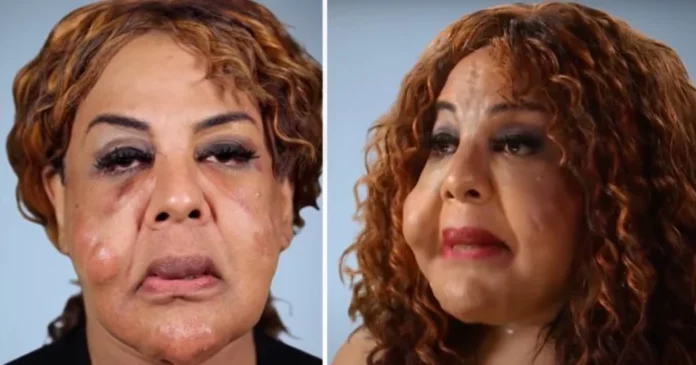
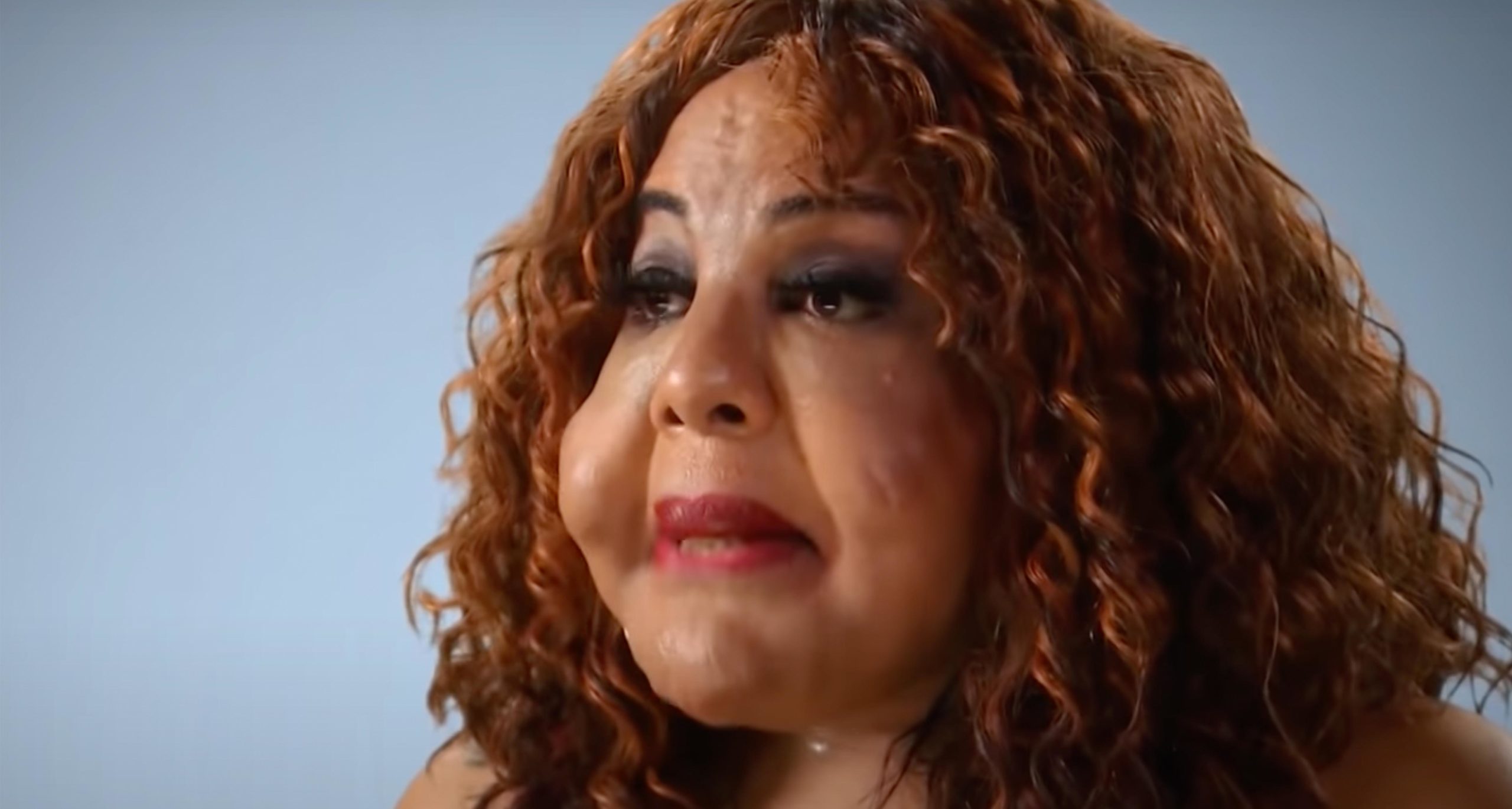
Four out of six siblings, together with their father, suffer from a mysterious facial condition.

Their faces look exactly the same, and according to them, they changed over time.

Youtube/Truly

Unfortunately, they hadn’t visited a doctor in order to try to detect the cause of their condition until they became famous on TikTok. Even then, no one was able to detect the exact reason which lead to these people’s faces to change drastically.

Recently, sisters Sri, Mairani, Tiur, and their brother Surya appeared on camera for the YouTube channel Truly where they spoke of their condition and how it affects their lives. After considering a number of theories, the siblings settled on the idea that their condition is a result of genetics.

“I always used to think about it; Why am I so different to my sisters and brother?” Tiur, the only sibling without the condition, told Truly.

“But when I got older, what I realized was that it must be genetics from our parents. My sisters and brother inherited it from my father, and I am more like my mother.

“We think that their condition right now isn’t a problem day-to-day. If it did cause problems, like tiredness, they would go to the doctor for a check-up,” Tiur explained. “Now, their condition doesn’t affect their lives, so it’s not an issue.”

Youtube/Truly

As they haven’t been provided with a diagnosis, because doctors are unable to find out what exactly caused these siblings’ faces to change, there are a few possible explanations.

According to some, the members of this family might be suffering from a rare condition called Parry-Romberg Syndrome which according to the National Institute of Neurological Disorders and Stroke is a condition “where the tissue of one side of the face gradually wastes away.” This condition is incurable but “immunosuppressant drugs and other medicines may help treat some neurological symptoms. Other treatment focuses on treating other symptoms.”

Another possible condition the Manurungs might be suffering from is Treacher Collins, a genetic disorder resulting in congenital craniofacial malformation which affects the development of bones and other tissues of the face. 

A third possibility could be the so-called Barber Say Syndrome, which is usually present from birth and causes malformations in a newborn’s body.

Youtube/Truly

The siblings are well accepted by the people who live in the village, but when they go to the town, they usually get stared at.

“When we walk around our village, we don’t have any problems. No one makes fun of us, no one insults us in our village,” Surya said.

“But if we leave here and go out of town, people who never seen us before for sure, they look surprised when they do. The fact is our faces changed, but we accept it and just live with it. We are thankful for it, it’s a gift from God. That’s how we see it.”

Youtube/Truly

Tiur added: “I feel bad that they’re not like me. I have a normal life without bullying, without being mocked, without being ridiculed by others. When they feel sad because of that, I do too.”

The family decided to use their specific looks to gain the attention of people worldwide and spread a message that we should all embrace our physical appearance and learn to love ourselves they way we are.

Youtube/KeluargaManurung

They decided to start posting videos on TikTok where have over 2.9 million followers. They post videos of themselves dancing and show the world how they live. At the same time, they use the platform as a way of earning money.

“We went viral on TikTok,” mother Mardiah Manurung said. “Since then people thought we did it for pity, but that’s not true. We’ve used this as an opportunity of going viral of hoping to earn a living to raise our living standards.”

Since the documentary about this family aired on Truly some 18 months ago, Surya got married to a beautiful woman named Shasa Puspita Dew.

This family inspires many and they are the perfect proof that appearance is not everything.

Please SHARE this article with your family and friends on Facebook.

Bored Daddy

Love and Peace

arty

The old man, his bed, and a faithful dog

Arthur didn’t mind the weird metallic smell of air conditioning and bleach any longer. Who knew, maybe being in a place that smells like that for too long forces you to get used to it. Or, maybe his nose didn’t work that well at ninety-nine as it used to. Anyway, I guess that even that awful smell was better than the one in the old house, especially after the pipes started backing up.

It’s weird, but Arthur spent a lot of time thinking of those pipes, and it’s fun how he wouldn’t instead think of bigger events he experienced, maybe the war, or the Great Depression, or even that one time he got promoted. Arthur spent his time thinking of that day the kitchen sink overflowed in 1984 and he spent hours under the cabinets, trying to fix the issues, while Martha stood in the doorway and wouldn’t stop complaining about the hardwood floors. He even remembered how Martha looked that day, with her floral apron on, and her hair in a bun as she always styled it. Truth was, Arthur missed her yelling during those quiet days at the hospital room. The silence of the hospital was polite, it really was, but for this old man, polite meant empty.

The nurses were young. Actually, everyone was young. They had bright, garish scrubs with owls and cartoon characters on them, and rushed around with incredible energy, so Arthur’s head spined if he looked at them for too long. They’d come in and say, “How are we doing today, Arthur?” and he’d think, “Who is ‘we’? You’re doing all right, and I’m a wreck,” but he’d just smile and nod at them because they were trying, and they’d always be taking his blood pressure.

And then, of course, there was the food, and to Arthur, that food looked disguising. The thing was that he was used to colors when it came to his diet, and the hospital’s food had all shades of beige, and that was it. He was served mashed potatoes he didn’t like, and some mystery meat that was supposedly a Salisbury steak, which he also didn’t like because to him it tasted like cardboard. So, Arthur would play with the food using the plastic fork, because he wasn’t even hungry, because hunger is for people with a future, and to him, eating was just a chore.

Richard was the only thing that felt solid. The dog was a mess, really. The fur on his back had been shedding in clumps from the stress of going to the hospital, and there was one spot on his elbow where his fur had all been licked off. But when Richard put his weight against the side of the bed, it was a real weight. It wasn’t the “gentle” touch of a nurse or the “supportive” pat of a doctor. It was seventy pounds of living, breathing, slightly-smelly dog who didn’t care a thing for medical charts.

Arthur recalled the day Richard entered his home. It was hid daughter who brought that ball of fluff over to him and said, “Dad, you need a companion.” Arthur also recalled how he thought his daughter had lost her mind. He told he that she was crazy and that he hated the idea walking a dog outside. But the dog ran towards Arthur and then chewed on his mahogany table and that made him smile. It was then that Arthur smiled after many months. He was lonely and didn’t really smile after Martha died.

At that moment, something about that puppy made him feel a bit better.

Richard wasn’t a puppy anymore. He was twelve, maybe thirteen—they’d lost track. His muzzle was almost entirely white, and he had these fatty lumps under his skin that the vet said were nothing to worry about, just “old dog things.” Arthur knew all about old dog things. He had his own lumps and bumps, his own creaky joints that popped every time he tried to shift his weight.

The nights were the longest, and that’s when the hospital felt like a waiting room. The lights in the halls were dim, but never off.

Arthur would lay there, trying to think of the names of all the people he used to know. It was a game, of sorts. He thought about his first-grade class. Tommy Miller, Sarah Jenkins, he wondered what they were doing now. Probably under a headstone somewhere, or in a place just like this one, staring at a Kidney-bean-shaped spot on the ceiling.

Then he thought of his kids who called on Sundays. They talked about the weather in Chicago, or the traffic in LA. The also told him about their own kids, his grandkids, who were doing a bunch of youngsters’ stuff he was too old to understand. One was a “social media manager,” which Arthur thought was a title concocted out of thin air. He’d nod and say, “That’s nice, real nice,” trying to remember which one liked dinosaurs or which one played the flute.

The calls however became less frequent during the final years of Arthur’s life, and he somehow felt left behind, you know, like the last guest standing at a party and feels like he overstayed his welcome by a decade.

One day, the sun hit at a particular angle and it reminded Arthur of his old porch. He could have sworn he could smell the fresh cut grass and the charcoal from his neighbor’s grill. He used to spend hours on that porch, having his iced tea, and watching the world go by. Richard would spend hours on that porch too. He was mostly lying on the cool concrete, snapping at flies that weren’t even there. It was a boring life, you know, but to Arthur it was this cool kind of boring, and he somehow didn’t realize that until it was gone.

Arthur’s breathing became even harder over time, he struggled to inhale and exhale, and every breath felt painful. But Richard was still there. He was fully on the bed and had his head on Arthur’s chest.

“You’re a good boy,” he said. He’d said it a million times, but it felt like something he should say again. Richard wagged his tail once.

Arthur then closed his eyes and stopped starring at the ceiling. All he did at that moment was feel Richard’s fur that felt soft and rough at the same time. And he thought of his life once again. He thought of his wife, of the chewed leg of the mahogany coffee table, of the smell of rain when it hit the pavement during the hottest of days.

Arthur was many things, and afraid wasn’t one of them. He knew fear asked for a lot of energy; energy he no longer had. He then felt Richard shift and press closer, and it felt like the dog’s weight became a part of Arthur’s own body.

There is that specific kind of quiet when the end is nearing. And it doesn’t really feel like the absence of sound, but like the absence of need. He didn’t need that phone call from his kids and grandkids, nor he needed the nurses to come into the room and check on him. Arthur didn’t need the hospital’s boring food. What he really needed was this moment with his furry friend, the only living being who stood by his side until the very end. It somehow felt awkward to Richard that all he needed at that moment was the dog.

When the nurse finally got to Arthur’s room, she sensed the moment, because she’s witnessed moments like that before. Arthur somehow looked younger, and the wrinkles on his forehead seemed smoothened. And Richard, it looked like he was sleeping next to his favorite human.

Arthur was gone. There was no heartbeat. So, the nurse tried to wake the dog up and get him out of the room. But Richard wouldn’t move either. His body was still warm, but he wasn’t breathing either.

It felt strange, almost impossible. The dog was perfectly fine that morning, he even had his food and water. The nurse remembered he even licked the bowl. To her, logic had no place in that room.

And then she thought of her own dog, a scruffy terrier mix who waited at the door every night and acted as though she was his entire world. And that’s the only truth about dogs, really. To them their humans really are their whole world. And Richard no longer had purpose, not after his owner died.

She didn’t call for help right away. She just pulled the curtain closed and gave Arthur and Richard some more time.

Out of the hospital, the world moved on. But in room 412, the promise was kept. No one went anywhere alone. It wasn’t a tragedy just the end of a very long, messy, real day.

Arthur and Richard. Just two old souls who’d decided they’d had enough of the bleach and beige food and thought it was time to go see if there were any flies to snap at somewhere else. And honestly, as the nurse turned off the monitor and the screen went dark, she couldn’t think of a better way for the story of these two souls to have ended.

Please SHARE this article with your family and friends on Facebook.

Bored Daddy

Love and Peace

arty

Mom, 47, diagnosed with early-onset Alzheimer’s disease reveals the first symptoms she noticed

According to NHS, Alzheimer’s is the most common cause of dementia in the UK. The exact cause of it is not fully understood, although medical professionals list potential factors that can lead to it, such as increasing age, untreated depression, a family history of the condition, and lifestyle factors and conditions related to cardiovascular diseases, among the rest.

Alzheimer’s is a “brain condition that slowly damages your memory, thinking, learning and organizing skills. It’s the most common cause of dementia. Symptoms usually first appear in people older than 65,” the Cleveland Clinic notes.

“People with memory loss or other Alzheimer’s symptoms may have difficulty recognizing changes in their own mind and body. These signs may be more obvious to loved ones,” the clinic’s website explains.

While this disease affects everyone differently, common symptoms are weakened or complete elimination of memory, reasoning, language, personality and behavior, and spatial understanding.

Staci Marklin, a mother-of-one from Knoxville, Tennessee, shares her journey with early-onset Alzheimer’s and the first symptoms she experienced.

Namely, Marklin first noticed switching words around at the age of 47 but brushed it off believing it was due to being just a busy mom to a toddler. Speaking to Uniland, she recalled saying things like, “move the carpet,” instead of “move the curtain.”

“There would be times when things would just disappear from my brain. Someone once asked me about a co-worker, and I had absolutely no idea who they were talking about. I could tell it was someone I should know by the way they were talking. It was a few days later when I realized it was a co-worker that I had worked really closely with.”

Marklin decided to consult with a doctor due to the fact that her grandmother also suffered from the disease. She was then told that although it’s rae for someone her age to have Alzheimer’s, it’s not impossible.

In 2024, she was diagnosed with the disease after an amyloid PET scan revealed amyloid plaques in her brain.

SWNS

Marklin and her family were well-aware that the diagnosis would change their lives, but Marklin accepted it and she’s very open about it, sharing her journey with her TikTok followers.

“People generally see this as an older person’s disease and view people with Alzheimer’s as if they can’t do anything for themselves,” she said. “It was difficult for me to get people to believe me and to trust the results I had gotten.”

What makes Staci Marklin’s story hit so sharp is the fact that everything sounded normal at first. We’ve all been there, haven’t we? You are tired, juggling a career, have a kid with about a million times more energy than you have, you are running around and make sure everything is just fine. And then you just mispronounce a word, or say something else instead of what you wanted initially, and you just laugh at it and brush it of, not realizing it could mean something serious or something you should be worried about.

But that’s exactly the trap of early-onset Alzheimer’s.

In Marklin’s case, the signs were linguistic. The brain is a massive, high-speed switchboard. To say a simple sentence, your brain has to navigate complex networks to retrieve the right “files.” Alzheimer’s acts like a vandal in that switchboard, cutting wires at random.

SWNS

Why younger people are misdiagnosed?

Perhaps one of the greatest hurdles in patients under 50 is the “Dismissal Phase.”

The reason for this is that since early-onset or “younger-onset” Alzheimer’s is less common, people and their physicians are inclined to seek any possible explanation for their condition rather than even considering it could Alzheimer’s.

According to the Alzheimer’s Association, early signs of Alzheimer’s in younger patients do not necessarily resemble the “classic” memory loss experienced by the elderly. Rather, the signs and symptoms of Alzheimer’s disease in early onset patients appear as:

Aphasia: Having trouble finding the right words and using incorrect words.

Executive Dysfunction: Having trouble planning and organizing tasks that were once automatic.

Spatial Confusion: Having trouble judging distances and losing their way in familiar areas.

Given that these symptoms are similar to the effects of chronic stress, perimenopause, or depression, many women in their 40s have spent years being told they need “more sleep” or “less coffee.” This is a dangerous delay.

For Marklin, the defining moment was her family’s history. Her grandmother had gone through this same “fog,” and this was the only thing that gave Staci the courage to fight back against the “you’re too young” argument.

In 2024, Marklin had an amyloid PET scan. To understand the severity of this, you have to understand what this scan is actually detecting. Our brain naturally produces a protein called beta-amyloid. Normally, this is broken down and washed away. However, for a brain suffering from Alzheimer’s, this protein actually turns to “plaques,” sitting in between brain cells and actually “choking” the brain’s communication with itself, Dementias Platform UK explains.

When Marklin’s scan came back positive for these plaques, the “mom-brain” excuse evaporated.

When an 85-year-old patient is diagnosed, society expects them to gradually withdraw from public life. But when you’re 47, you still have a child to raise, a mortgage to pay, a digital footprint to maintain. Marklin’s choice to take her journey to TikTok wasn’t just to document her life, but a bold statement of visibility.

The National Health Service (NHS) explains that while the disease is progressive, life doesn’t stop overnight. Early diagnosis allows for lifestyle adjustments that can support cognitive “reserve.” This includes:

Cardiovascular Management: ‘What’s good for the heart is good for the brain.’

Social Engagement: Being socially engaged can help create new ‘paths’ in the brain to compensate for damaged areas.

Mental Stimulation: Learning new skills and staying mentally challenged can slow down the perceived effects of the decline.

The legal and medical systems are not always equipped to handle patients in their 40s. How do you tell a toddler that Mommy’s brain is “changing”? How do you prepare a future that is being erased one word at a time?

Unsplash

Marklin’s openness is a bridge to the thousands of people currently “waiting” to see a physician because they think they are “too young” to have their symptoms taken seriously. Stories like that of Marklin shift the paradigm on Alzheimer’s from a “death sentence for the elderly” to a “chronic condition for the young.”

It begins with a word. A curtain becoming a carpet. A colleague becoming a stranger. But as Marklin’s case illustrates, the end of the word is merely the beginning of a new, much tougher kind of heroism.

As research into treatments targeting amyloid deposits goes forward, stories of people like Marklin are crucial. They help the medical world remember that behind every PET scan, behind every “factor,” is a mother, a worker, a human being who is still very much present, fighting to keep the lights on for as long as possible.

*Medical Disclaimer: This content is for informational purposes only and does not constitute medical advice, diagnosis, or treatment. Always consult a qualified healthcare professional regarding Alzheimer’s disease or any medical concerns. Never ignore or delay professional advice based on this information.

Please SHARE this article with your family and friends on Facebook.

Bored Daddy

Love and Peace

arty

She took my grandson from me after I brought him up — years later, he came back a different person

Raising kids at my age? That was the last thing that could cross my mind, but somehow, it just happened. One day, I’m looking at retirement, and the next one, my grandson is two years old and the world around him is falling apart. My son had been gone in spirit long before he was physically away from his son’s life. And the boy’s mother? She was never really there… I guess. When she left, she didn’t even say goodbye, just disappeared.

And now, out of the blue, I have this tiny human in the middle of my living room, holding a stuffed rabbit, and looking at me as though I have any answers. I didn’t, yet, I started moving around, since one doesn’t have much time to contemplate life when a two-year-old says he’s starving.

And just like that,I got used to a completely new routine, and learned that pancakes need to be square, not round, and I also learned when the cry says “I’m bored and I want something,” and “I’m scared.”

My grandson and I became “us” and I witnessed that small boy grow up. I still keep wondering how fast the time has passed. He was just a thumb-sucking little kid, and now all of a sudden, he’s 12. Looking at him, I truly believed that the two us made it.

Well, it turned out I was wrong.

Ten years after vanishing from his life, his mother suddenly reappeared. She didn’t resemble the woman I remembered. She was elegant, polished, expensive, and cold. Like someone who’d rebuilt their life and made sure everyone knew they’d gotten the receipts. She didn’t even say “hi” or called the boy by his name, she just grabbed him and said, “I guess I should say thank you for your service, but I’ll take it from here.”

She made it sound like I was a hired baby-sitter and those ten years of looking after my grandson were just a long shift.

I remember I had a hard time processing her words. Then the man next to her, wearing a fancy suit and a briefcase, started speaking. It turned out he was her lawyer who started showing me some papers and spoke of custody and legal rights. All those words he said had no connection whatsoever to life as I knew it inside my home. All I heard were: She can have him.

Once I was able to collect my self from the shocked, I started arguing. I was the one who raised that boy, and my house was the place he knew as his home. I wanted him to at least have a choice. But no. No one seemed to care about the years I spent reading bedtime stories,promising everything would be just fine. All they cared for was biology and signatures. At the end of the day, that woman was his mother.

I will never forget the day my grandson was told he needed to leave my house. The poor boy had no idea what was happening. I remember him looking straight at me, expecting me to stop whatever was going on from happening.

I couldn’t, and that’s what hurt me the most.

Unsplash

They took him to the car, and he was crying so hard that he didn’t even sound like himself anymore. He pressed his face against the window of the car, his hand flat against the glass as they drove away. I stood on the porch, watching until the car was out of sight. And then I stood there some longer. Just stood there. Not sure of anything else to do.

After that, nothing. No calls, no cards, no pictures, no updates. It felt like my grandson and all those years with him never existed.

My house was so silent that I thought I was going mad. All I did was waited. I though he would call my name from the other room, and I thought I was hearing his footsteps. His room remained untouched, all his things were where he left him. The posters remained on the walls, and I just went inside once a week to clean it and have the windows opened to make sure it didn’t feel abandoned.

I have no idea why I did it. Maybe for me, maybe for him, or maybe for both of us.

Birthdays were the worst. I’d swear to myself that I’d just pretend it was any other day, skip it, don’t even acknowledge it, whatever. But I never could. I’d bake a little cake, light a candle, and just sit there for a while. It sounds ridiculous when I say it out loud, but it felt wrong not to.

Years went by and I somehow got used to the silence, but I still couldn’t get used to the absence.

Unsplash

When my grandson turned eighteen, I convinced myself it would be for the best if I didn’t expect anything because I already learned my lesson the hard way.

But that afternoon, there was a knock on the door. The moment I heard it, my hands started shaking. As I went to open it, I kept telling myself, “Don’t do this to yourself.”

But when I opened that door, there he was. My grandson was standing right in front of me.

He wasn’t a boy anymore. No, he was taller than me, his shoulders broad, and his face a bit different. But it was him, there was no doubt about that in my mind. I’d recognize those eyes from miles away. For a split second, we starred at each other, and then he hugged me as hard as he could.

And then he started crying, and it seemed to me that at that exact moment, he cried all the tears he had been keeping all those years.

“I thought about you every day.” I could tell it was true.

Unsplash

I though he was just visiting and that he was there to stay for the day, hopefully for the weekend. And although it had been just minutes of me seeing him after 6 years that felt like eternity, I already felt the pain of him leaving again. He hugged me again, and wiped the tears off my face.

“You’re still my favorite person,” he said. “The one I respect most.”

And then he handed me keys. “I’m eighteen now,” he said. “I get to choose where I want to live.”

Honestly, I had no idea what that meant or what he was talking about. I just starred at those keys.

“I want to live with you,” he said. “I rented us a place. It has an elevator. No stairs. Remember, you had a hard time with those.”

Those words broke me. Out of everything that he could have done with his freedom and youth, he thought of me.

I asked him how he had managed to find money for rent. And he said he had been saving for years, money he got for his birthdays, allowances, holidays. He had been planning this from the moment his mom forced him out of my place.

Then it finally hit me. All those years I spent believing that I had lost my grandson… I hadn’t.

Unsplash

Now he and I have all this time for ourselves before he goes off to college and pursues his dreams. I am well aware it’s not forever, but it’s still something, and I know I will not take for granted any of the seconds I get to spend with him.

We sit and watch films together, and we talk about everything. He told me everything about what his life had been before he turned eighteen, everything he went through, and all the things he couldn’t say to me during those years.

While there are gaps and years that cannot be recovered, what matters most is that he’s here for at least now.

Sometimes, I’ll catch him sitting there in the quiet, and the way he looks when I see him is though as he’s making sure the floor isn’t going to vanish from beneath his feet again. And in moments like those, I can’t help but look at him and see right through the man with the broad shoulders. I see a small, shell-shocked kid holding a tattered stuffed animal, wondering where the hell everyone is.

Life has a way of stretching a relationship until it’s as thin as a thread, messing with your head, breaking things so badly that you’re sure they’re beyond repair. You think the story’s over, that the pages have been ripped out, but I’ve come to realize that some things don’t care about time, or distance, or some judge’s verdict written down on a piece of paper. They don’t go anywhere. They just sit there quietly, waiting for the right moment to wake up.

Please SHARE this article with your family and friends on Facebook.

Bored Daddy

Love and Peace

arty

The incredible story of Victoria Wright: She inspires millions with her rare genetic condition

Forget beauty standards, this is the face that literally broke the mold.

Victoria Wright was just four when her life took a dramatic turn that most people couldn’t even imagine. It all started with a subtle change in her jaw, but it quickly spiraled into a rare genetic mystery that had her doctors scratching their heads and made many stare.

Imagine carrying the weight of a bowling ball in your lower face every single day.

Sadly, that has been the reality of Victoria Wright who grew up battling cherubism, a condition that causes the jawbone to expand into an abnormal, stony overgrowth.

From brutal comments from bullies on the school bus to constant side-eye from complete strangers, she had every right to hide. But Victoria? She had other plans. This brave woman never let her condition to define who she is, and she turned her uniqueness into a powerhouse platform. Today, she’s a spokesperson for anyone who just like herself, feels “different.”

Let’s take a closer look at Victoria’s life journey, her condition, and her bravery to stand against a world fascinated by beaty standards determined by the media.

BBC

Imagine a picture-perfect start: a beautiful family, a baby girl, and a future full of promise. For Victoria, the perfect “normal” childhood took a sharp turn at the age of just four.

“My mum was brushing my teeth, and she noticed they weren’t in the right place,” Victoria Wright told the NHS.

What her mother had noticed was just the first crack on the glass. It was the beginning of cherubism, an ultra rare genetic condition characterized by variable degrees of abnormal bony overgrowth of the lower face. Ironically, named after chubby-cheeked “cherubs” found in Renaissance paintings, the condition is far from angelic for those suffering from it.

Victoria’s face changed as much as her life did. From a toddler with a slightly “off” smile, to a woman carrying a burden as heavy as a bowling ball, her journey is an epitome of a transformation that makes headlines.

Facebook/Changingfaces

Her family took her to a number of doctors who eventually did diagnose her with cherubism. The told her that the condition would regress after puberty, but that is not what happened. Instead, her jaw grew so large that is started affecting her eyes and she had undergone a surgery that helped release the pressure. Luckily, the surgery was a huge success and saved her eyesight, but even today, she suffers from severe headaches.

“Cherubism isn’t a painless condition. I do get twinges of pain. My head is very heavy. Doctors say it’s as heavy as a bowling ball,” Wright explained.

“I’ve been offered surgery on my jaw to make it smaller, but I don’t think it would improve my appearance. I’m used to the way I look.”

In a piece she penned for The Guardian, this brave woman opened up of her struggles with bullying, threats of violence, intimidation, and verbal abuse.

Kids at school called her names such as Fat Chin, Buzz Lightyear (the astronaut character from Toy Story), and Desperate Dan (a wild west character from the Scottish comic magazine The Dandy).

“A girl used to draw pictures of me in class and share them around,” Victoria said.

And people started all the time. Whether it was at school, on the streets, at the mall, she could feel everyone was looking at her, and it did bother her, but she eventually realized that it’s in the human nature to stare.

“I try not to take it too personally. We all stare, even me,” Wright said.

Facebook/Jeansforgenes

“As a teenager, I used to get angry, but that doesn’t do any good to you or the person staring. It just reinforces the stereotype that people with disfigurements must be angry, tragic, or scary. If I find myself being stared at in an aggressive way, it can be unsettling. But I don’t let it get to me.”

She continued, “If someone’s staring out of curiosity, I just smile and nod to show them I’m a human being and there’s nothing to be scared of. Most of the time, people smile back. That’s a good feeling, because I know I’ve made a small connection with them.”

Her life started to change when she reached her teenage years and discovered the Changing Faces charity, which is now the UK’s leading charity for people with a scar, mark, or condition on their face or body. According to their website, they “provide life-changing mental health, wellbeing, and skin camouflage services” and “work to transform understanding and acceptance of visible difference, and campaign to reduce prejudice and discrimination.”

It was through this charity, founded in 1992, that Victoria found huge support. It helped her understand that beyond her looks, she was worth just as much as everyone else.

“As a teenager meeting them, I felt, ‘Wow, you can have a career and be happy and confident with a disfigurement,” she told the NHS.

“Sometimes you can feel isolated, especially if you have a rare condition. It’s difficult if you don’t see anybody else in the street like you. Getting peer support is so important. For every person who stares, there are a hundred others who don’t and who will like and respect you for who you are.”

Through the charity, she didn’t only found a new perspective but also a sense of humor. In a move that caught the media totally off guard, she told 60 Minutes Australia that she “adores” Buzz Lightyear, jokingly referring to the square-jawed hero of Toy Story as her long-lost brother.

Victoria also spoke of the questions she constantly gets about undergoing plastic surgery, “Why don’t you just get plastic surgery?”

Some even started saying that she’s some sort of crusader against cosmetic surgery, but Victoria is finally setting the record straight. It’s not that she’s all against plastic surgery, she just doesn’t think everyone needs to undergo one. What’s more important is to be satisfied with yourself, and at the moment she’s perfectly satisfied with the reflection she sees in the mirror.

“I’m certainly not against people with disfigurements having surgery, but I’m fine with the way I look. Why should I have the surgery for other people?” Victoria Wright asked.

“I’m happy with my face most days. After all, I’m a woman, and no woman is completely happy with the way she looks. But I’m not going to change myself to make other people happy.”

She added, “I don’t want to hide at home, afraid to go out and afraid of other people. If they have issues about how I look, it’s their problem, not mine.”

By 2016, Victoria wasn’t only a spokesperson but a breakthrough TV star. She was part of the BAFTA-nominated mock documentary Cast Offs, a hard-hitting comedy-drama that saw six disabled individuals stranded on a remote British island as part of a fictional reality TV show.

Twitter/victoriamwright

Among the characters were a blind man, a paraplegic man, and Victoria, who has cherubism. As noted by The Guardian, all were played by actors who share those disabilities, and one even raised concerns about non-disabled actors taking on similar parts.

“There is likely to be a storm of comment from disabled people and non-disabled people alike over Cast Offs. Some disabled people will find it funny and real – portraying disabled people as adults who swear, drink, and have sex. A real break from covering disability with kid gloves or not covering it at all. Others may well find it offensive,” Liz Sayce, chief executive of the Royal Association of Disability Rights, told the newspaper.

Victoria loved doing the show, and during a Q&A occasion with directors Miranda Bowen and Amanda Boyle, a funny story about her was shared, which once again showed her humorous side.

“I remember in your casting Victoria, you had to invent a secret. You claimed that you’d had plastic surgery to become funny-looking. I remember the look on the face of the person you were acting with. It was a brave, bold, and funny moment – everything we were looking for,” Boyle said.

Miranda added, “I often forgot that neither of you [Victoria and co-star Peter Michell] had acted before. You both performed with great professionalism and proficiency, and it was a joy working with such a talented group of actors.”

Youtube/Jeansforgenes

Today, Victoria Wright is a loving mother and leads a fulfilling life. She’s also a productive disability rights campaigner.

What’s more, she has become the spokesperson for Jeans for Genes in the UK, which is the annual fundraising event for the genetic condition community.

“Throughout my life, I’ve met people who assume that because of how I look, I must live a depressing, isolated life, but I have a good life. I’m a charity campaigner and public relations professional, and I’m blessed with a young daughter who makes me laugh every day,” she said.

This incredible woman’s story teaches us resilience, and serves as an inspiration for many people out there both with and without disabilities.

Please SHARE this article with your family and friends on Facebook.

Bored Daddy

Love and Peace

arty

Living well in your golden years: 4 principles from Confucius

I believe it is in the human nature to dread the idea of getting old, and honestly, it’s not that hard to see why. Sometimes, it feels like we live in a time where youth is the only thing we are allowed to worship. Every time we turn a year older, it’s like the world tells us we somehow slowly slide into irrelevance.

We’re constantly bombarded by ads that try to sell us eternal youth in a jar, biohacking tips and tricks, and retirement strategies that make us feel more like bank savings than human beings. What the media doesn’t do, however, is talk about who we are inside, and how we’ve developed as individuals over the years. Somehow, it defines our worth based on how we look on the outside and how much money we’ve saved. No wonder we wake up every morning, looking at our reflection in the mirror, and feeling genuinely shocked by how fast the clock is ticking.

But long before we were sold a bunch of anti-aging creams and retirement saving plans, there was a Chinese philosopher named Confucius (or Kong Fuzi) who was already trying to figure out what it looked like to age well.

His style, to be honest, is rather different from our modern “deny it at all costs” attitude. He believed that life is a work of self-improvement, where the later years of our life are not an old age of decline, but an old age of harvest. To him, old age is the time when a life lived with heart, integrity, and wisdom finally reaches its full bloom. If we are afraid of old age, it is because we have not built a life around values like these. A review of the teachings of Confucius might be what we need to turn our fear of aging into something truly fulfilling.

Confucius/ Shutterstock

The journey of self-cultivation

Great Confucius was not a believer in life being a sprint to some finish line. On the contrary, he was a firm believer in self-cultivation, or the constant effort to grow your mind, your morals, and your spirit. For Confucius, the “golden years” were not about stepping into the background of life; they were the grand finale of a lifetime of hard work. This was the time when a person, what he called a Junzi or an exemplary person, got to enjoy the fruits of a life well spent in the pursuit of being a good human being.

According to Confucius thought, the fear of aging is a result of ignoring our inner life. Just think about it, if you have built your life on the thought that you are the “young, fast, and successful one,” what happens when those titles are handed down to the next generations? If you haven’t been working on becoming a person of character, aging can be a burden. But if you’ve been working on becoming a person who’s committed to growth and development your whole life, aging then isn’t about what you’re losing but about who you’re becoming: wiser, lighter, more at peace.

Confucius lived this himself. In The Analects, he famously broke down his own timeline:

“At fifteen, I had my mind bent on learning. At thirty, I stood firm. At forty, I had no doubts. At fifty, I knew the decrees of Heaven. At sixty, my ear was an obedient organ for the reception of truth. At seventy, I could follow what my heart desired, without transgressing what was right.”

This concept completely flips the script on the “peaking in your twenties” narrative. While most of us are raised to believe that life is a battery that drains with time, Confucius teaches us that life is in fact more like a library; the older it gets, the more valuable and packed with wisdom it becomes.

Our golden years are not a decline, but a grand finale in which we trade our youth anxiety for a grounded sense of self.

Depiction of Confucius by Wu Daozi, 8th century CE/ Wikipedia

1. Personal dignity: The backbone of it all

One of the biggest aspects of aging well, according to Confucius, is dignity. In today’s terms, we might refer to this as living with integrity and self-respect, regardless of what’s going on around us. When we are younger, our sense of dignity is often connected to our work, our status, our physical appearance—but none of these is sustainable over time. In fact, Confucius taught that our sense of dignity comes from our own inner virtue, our own alignment with our own values.

It’s not about being stiff or formal. It’s about having an unshakeable sense of self-respect. It’s about the little things: how you treat others when you have nothing to gain from them, how we carry ourselves when you are tired, how you respect your own space. He believed that the tiny ways we live our lives add up to a life of honor.

As we age, most of us feel like we are losing our “power,” but Confucius would argue that external power has been an allusion anyway. Our worth isn’t about the titles we receive, but about who we are. It is all about not letting our spirit slump just because nobody’s watching. For those who’ve lived ethically, old age becomes a sanctuary rather than a source of regret. You don’t have to look back and wonder if you were a “good” person—you already know.

2. Mastering your relationship with time

Another essential principal is learning to live fully in the present. Many people have trouble as they get older, either dwelling on the past or worrying about the future. Confucius encouraged people to be aware of and accept the natural flow of life. He believed that happiness comes from embracing each moment, as opposed to going against the clock.

In the world we live in, we are constantly fixated on “optimizing time.” Most of us live every hour as if it were an asset to be extracted to maximum deficiency. Confucius proposes a different path, and this path isn’t about being lazy or chasing just pleasure. It’s about honoring the “season” you are in. When you are young, time is something you spend or invest, when you get older, time is a space you inhabit.

This shift of perspective is radical because it removes the pressure of “to be someone” and allows you to simply “be.”

Letting go of the “lost” years and the anxiety of what’s next allows you to live fully, creating a sense of serenity that the youth-obsessed world can’t touch.

The Analects

3. Relationship: The true wealth

To Confucius, real wealth and success are not measured by how much money you’ve got in the bank, but how deep your connections are. He was all about family and community, and he saw that we’re all connected through a web of social ties. His concept of filial piety, or Xiao, is just about how we should treat each other across generations, how we should show respect and care for each other. It’s just the notion that we’re not really “individuals” at all, we’re part of a long, beautiful chain.

However, these connections don’t come easily but demand effort and sincerity. You have to be present and to empathize. If you spend your middle years climbing a corporate leader, you shouldn’t be surprised if the view from the top is lonely.

In the end, Confucius teaches us that the only investment that is worth is the one in people.

4. Leaving legacy beyond yourself

Finally, Confucius teaches us to look for a purpose bigger than we are. A happy old age can come from contributing to others, whether through mentorship, sharing stories, or just being a moral touchstone to those around you. Older people aren’t just spectators; they are active participants in creating what’s next.

Confucius thought of life as a relay race in which wisdom was the baton. Your individual triumphs are ephemeral—nobody cares who you were in 1994 for winning the sales award—but the good you pass along will be remembered. This makes aging very meaningful. When you focus on what you can pass along rather than what you’re losing, you can think of old age as a time of purpose.

Basically, the core of Confucius’ teaching is that it’s all about how you impact the world. It is about how your kids, or your neighbors, define “doing the right thing” by watching you do it. It changes the golden years into a time of mentoring and giving back. When you focus on your contribution, you make sure the cycle of learning remains in motion long after you are gone.

Portrait by Qiu Ying (1494–1552), Ming dynasty/ Wikipedia

Aging as a philosophical practice

At the end of the day, aging isn’t about biology but about your mindset. Confucius’ take on aging is that it’s a process that’s both active and enriching. When you take in dignity, presence, relationships, and purpose, your later years are a time of “effortless mastery.” You don’t have to prove yourself to the world anymore; you can just live in it.

The best part? It’s never really too late to start. Whether you are twenty or sixty years old, today is the day to sharpen your character and connect to others.

One simply shouldn’t fear aging but see it as a process of becoming more human and more fulfilled. It’s a process of cultivating a resilience that can ride out the physical changes of life without losing who you are.

Please SHARE this article with your family and friends on Facebook.

Bored Daddy

Love and Peace

arty

How could my friend’s son have my family’s distinctive birthmark? The truth was more disturbing than I ever expected

We all know that there are some promises we never say out loud. Like there are no handshake or contracts, just that feeling that something needs to stay hidden for the sake of everyone involved. When I think about it, such promises do have that power to map our lives for good. And mine started when I was just sixteen.

That was the year when my best friend fell pregnant.

In small towns such as the one where we live, not much stays private for too long. News travel way faster than the truth itself and nobody waits for the facts before they start gossiping around. I still remember all the whispers and the stares whenever my friend and I walked into a room. Everyone knew she had a baby, and everyone had a theory, but there was this one thing no one could figure out; who the father of the baby was.

She never said a single word about it, not to anyone. Not to me.

People did make guesses. And whenever a name popped out, they’d elaborate a bunch of theories. Eventually, the gossips stopped because they realized they were hitting a brick wall and that my friend wouldn’t speak. And I? Well, I never really asked her because I though that if she thought I should know the truth, she’d simply share it with me. And it wasn’t like I wasn’t dying to know who the father was.

The two of us grew up sharing everything. We shared our clothes, all of our secrets, our dreams of getting out of that town. But something about this secret felt off.

And so, I made a choice to stay beside her without asking questions or demanding explanations. Because to me, it was all what friendship was really about.

Life didn’t stop to catch its breath. School kept rolling, exams happened, and the real world just rolled up on us a lot quicker than we were prepared for. While the rest of us were worrying about our grades and our weekends, she was trying to learn how to keep a newborn alive. She came of age in a way that the rest of us didn’t have to—yet, anyway.

Thomas just sort of became part of everything.

At first, he was just this fragile little baby, but we all know they don’t stay babies for long. So, before long, he started crawling and talking.

Over the years, I stayed part of both my friend’s and her baby’s life. I babysat for her whenever she needed, helped the boy with his maths homework, and showed up for all the important staff. Birthdays, school plays, Tuesdays at the park, you name it.

Thomas was a curious boy. He wanted to know everything there was to know and asked all sorts of questions, like why the sky was blue, or where the birds flew, and sometimes, his questions were so confusing that all I did was wait for him to forget what he asked.

He had this way of looking at things, like he was trying to find a pattern hidden underneath it all.

I guess, eventually, I started doing the same thing.

It was on a totally normal afternoon that we had dinner and I helped him clear the table when Thomas started rumbling around like he always did. And then, in one moment, he reached for a glass and his sleeve slid up. And that’s when I saw his small birthmark, right by his shoulder.

I stood there looking all puzzled when it hit me. That birthmark felt way too familiar. It ran in the family. I’ve seen it on my grandfather, my brother, and even two of my cousins.

We never talked about that birthmark over family dinner, but I did notice it on each one of them. And now, seeing it on Thomas felt so weird. Was I going crazy? I could be, right?

Most people have birthmarks, and they aren’t really a DNA test, so maybe it was just a coincidence, a weird glitch in life. Who knew? But the thought wouldn’t leave me alone.

Weeks went by and I was trying really hard to let it go, hoping the thought of that birthmark will just fade away. Well, not only it didn’t but it became even louder and messed up with my mind completely.

I kept wondering what would it mean if it wasn’t just a coincidence.

And well, curiosity is a funny thing. It doesn’t shout at you or wakes you up in the middle of the night. But it’s there, sits and waits until there’s no chance to ignore it any longer.

Eventually, I cracked, and did something I knew wasn’t right,but I couldn’t help myself because at that point, I was going crazy.

One day, I ordered one of those DNA kits you get online used for family trees. I tried to convince myself that it wasn’t a big deal, just something to give me a peace of mind.

Unsplash

Even while I was ordering it, I felt like a complete idiot when I pictured myself seeing the results and laughing because I’m a conspiracy theorist or something.

When I received the email, I hesitated whether to read it or not. I just stood there, starring at the screen, and I almost shut the laptop when I said I should just go with it. But then I clicked, and that was it.

The page took forever to load, and showed a bunch of percentages. And then I saw it. There was a match, and it wasn’t a parent or a sibling, it just showed connection between Thomas and my own family.

Years ago, one of my relatives had moved away. We’d lost touch, and they’d become just another name we’d refer to every few years. That section of the family tree had always been its own thing. It had felt like it was totally separate from us.

And yet… somehow… it had brought me right back to Thomas.

I sat there for a long time. I just let it all sink in.

It didn’t tell me everything. It didn’t tell me the whole story of what had happened back then. But it gave me context. The “unknown” wasn’t so unknown anymore.

I thought about speaking up for a moment.

After all these years… did I have the right to even bring it up?

And then, when I thought about it more profoundly, I realized that some silences exist for a reason. Years ago, I made a promise not to ask questions. I decided to stay by my friend’s side no matter what, so who was I to break that now?

Honestly, I didn’t feel betrayed. I wasn’t even uncomfortable about that discovery, because it didn’t really change anything. I just felt like I finally understood this truth about how life works, and how it has its ways of tangling people together.

Thomas was still Thomas, the lovely boy I knew from the very first moment he entered the world. My friend was still my friend, and the truth didn’t change anything about our relationship.

Unsplash

It was just another layer of a story that was already complicated beyond what it initially seemed. It wasn’t a scandal, it was just life. And it reminded me that everyone has something going on inside them that we can’t see. Every choice, every accident, every moment of our lives isn’t always neatly defined.

I never told her what I’d seen.

And she never told me what had happened.

It didn’t become some big discussion. Honestly, it didn’t need to. Nothing felt like it had to be said out loud. Nothing felt like it had to be done. It felt…more like a recognition that just kind of…settled in. Like something that didn’t need to be said, but was just…there. Like something you didn’t question.

It felt like the same trust we’d always had, just a little deeper. Like it had been…tested, but we hadn’t known it.

And that’s when it occurred to me: not all truths are something you’re supposed to do anything about. We’re taught growing up that once you know something, you have to do something about it. Confront it, talk about it, make it right. But sometimes…that’s just not the case.

I was just thinking about that. About how we like to think our lives are our own. Like we’re each our own story, our own lane, and that’s all there is to it. But that’s not true. Our lives intersect. We intersect with people in ways that make no sense at the time. In ways that make no sense at all. In ways that connect in the background, without anyone realizing it’s happening.

And then one day, something small just clicks into place, and suddenly you get it.

Not in a huge, life-changing kind of way. Just in a different kind of way.

Even our secrets, that we think are ours alone, are not. They’re connected to others, to other moments, to moments from before we even knew what was going on. They’re connected to something bigger than we are, whether we like it or not.

And when they come up—when you finally get them—sometimes they’re not the end of everything. Sometimes they’re just the beginning of everything making sense.

Please SHARE this article with your family and friends on Facebook.

Bored Daddy

Love and Peace

arty

‘New Nostradamus’ who foresaw Iran war makes chilling prediction about Trump

One thing about predictions is that people are fascinated by them. For years, many have been following the work of Nostradamus, the world’s most famous astrologer whose quatrains have been re-read and re-interpreted even half a millennium after his passing, and Baba Vanga, the Bulgarian mystic whose prophecies are so accurate they are chilling and go far beyond the year we now live in.

Nowadays, there are also some renowned psychics who have a lot to say about what awaits humanity in the years to come. Among them is British psychic Craig Hamilton-Parker, who also calls himself the “Prophet of Doom.” Hamilton-Parker has gained plenty of attention and online following after foreseeing some major global events.

Most recently, he spoke about the possibility that rapidly escalating global tensions could lead to unexpected political outcomes. Among other things, he mentioned the possibility of Trump serving a third term as President of the United States, despite the law limiting presidents to two terms.

“To reiterate what I said at the time, I felt there would be some big global conflict, possibly involving Taiwan,” he said, according to the Mirror.

The 22nd Amendment is clear, “No person shall be elected to the office of the President more than twice, and no person who has held the office of President, or acted as President, for more than two years of a term to which some other person was elected President shall be elected to the office of the President more than once,” according to VT.

In the past, Trump himself has spoken about the possibility of serving three terms as president.

REUTERS via NewYork Post

While the Constitution doesn’t allow a single person to serve as the president of the country for three times, allegedly there is a “loophole” Trump intends to “use” in order to change this.

So far, Donald Trump has opened up about the idea of a third term a number of times, but not many believed he was serious – at least not until recently, when he clearly hinted there are ways for him to continue his presidency beyond 2028.

“A lot of people want me to do it. But, I mean, I basically tell them we have a long way to go, you know, it’s very early in the administration,” he explained. “I’m focused on the current.

“I like working. I’m not joking. But I’m not – it is far too early to think about it,” he said, adding “there are methods which you could do it.”

When asked about the possibility of JD Vance running for president and then passing the role to Trump, he answered, “That’s one,” adding that there are other possibilities but refused to provide examples.

Congressman Andy Ogles has already introduced a House Joint Resolution that would amend the US Constitution to allow a president to serve up to three terms, but no more.

“President Trump’s decisive leadership stands in stark contrast to the chaos, suffering, and economic decline Americans have endured over the past four years. He has proven himself to be the only figure in modern history capable of reversing our nation’s decay and restoring America to greatness, and he must be given the time necessary to accomplish that goal,” Ogles wrote on his website.

AP

“To that end, I am proposing an amendment to the Constitution to revise the limitations imposed by the 22nd Amendment on presidential terms. This amendment would allow President Trump to serve three terms, ensuring that we can sustain the bold leadership our nation so desperately needs.”

This was ratified in 1951, following Franklin D. Roosevelt’s unprecedented four-term presidency, making him the sole US president who has served the country more than two terms.

The congressman went on to say that it’s “imperative that we provide President Trump with every resource necessary to correct the disastrous course set by the Biden Administration.”

To make this change happen, both the House of Representatives and the Senate must pass the proposal with at least a two-thirds vote. It should then be ratified by at least 38 of the 50 US states before the president signs it into law.

While Ogles tends to change the law and Trump is looking for loopholes, a poll by Reuters and Ipsos asked respondents if Trump should run for a third term.

“Three-quarters of respondents said Trump should not run for a third term in office — a path Trump has said he would like to pursue, though the U.S. Constitution bars him from doing so,” Reuters revealed.

“A majority of Republican respondents — 53% — said Trump should not seek a third term,” it added.

Craig Hamilton-Parker/ LinkedIn

Hamilton-Parker’s prediction comes during a time of global instability, especially in the Middle East and it fits into a broader picture: rapid changes in the world are making formerly unthinkable outcomes seem increasingly likely.

“Who would have imagined the possibility of invading Greenland, or kidnapping a country’s leader, as has happened in Venezuela? The world is changing rapidly,” he said.

He also warned that extraordinary measures could come into play if tensions continue to escalate: “Something will occur that overturns the existing rules, and that period will be a time of great conflict.”

Meanwhile, another person, Professor Xueqin Jiang, widely known as the Chinese Nostradamus, also made predictions regarding the ongoing conflict in the Middle East.

According to him, the final outcome of the hostilities between the US and Iran that escalated into open warfare on February 28, 2026, would end with US being defeated.

“The third big prediction is that the United States will lose this war, which will forever change the global order,” he said, pointing to Iran’s demographics and topography as key factors.

“If this war [US-Iran] were to happen, there’s absolutely no way America can win this war,” he added.

Professor Xueqin Jiang/ X

According to Jiang, his predictions are based on what he calls “psycho‑history,” a framework loosely inspired by the fictional concept from Isaac Asimov’s Foundation series that he uses to analyse broad historical patterns and project future geopolitical events.

In his lectures and interviews, he has argued that certain international actors, including Iran, behave in ways shaped by long‑term strategic considerations and resistance to US influence, including what he describes as animosity toward US interventionism in the region, News 24 Online reports.

Jiang actually predicted in 2024 that if Donald Trump wins the elections for a second term, geopolitical pressures could push the United States toward a confrontation with Iran.

“We can suspect that a second Trump term war with Iran will be a major priority.

“Basically the United States is looking for a reason and Iran wants to give them a reason and that’s why I think war between the United States and Iran is very likely in the next two to four years.”

Speaking earlier this month, Jiang remained confident in his predictions: “Given my analysis of how the war is progressing, I think that Iran has many more advantages over the United States. The reality is, right now, it’s a war of attrition between the United States and Iran, and Iranians have been preparing 20 years for this conflict.”

Please SHARE this article with your family and friends on Facebook.

Bored Daddy

Love and Peace

arty

Barack Obama fuels speculation about another presidential run with a cryptic video

Barack Obama shared a social media teaser, and now all eyes are on him, as people believe he may be entering the race for the 2028 presidential election.

In a short clip shared on X on March 15, 2026, Obama keeps getting notifications on his phone while a cameraperson tells him, “We’re so excited to talk to you about the Obama Presidential Center today.” He replies with a quick “Got it,” not looking up, and then says, “Hold on one second. I can’t believe I’m still dealing with this.” The caption itself, “Any guesses, fam?” sent people spiraling.

The clip has been seen more than 1.5 million times, and with social media users jumping to conclusions, with those claiming Obama could be returning for a third term being the loudest.

“Barack Obama, don’t you wanna save the USA and be the president again?” one person commented on the clip.

Another added: “My heart just leapt for joy. Please tell me he’s coming back. Kamala and Barack??? Could it be??”

Others responded with humor. One person joked, “Alexa, play My President by Young Jeezy,” while another wrote, “President Obama still looking good. Hope they find some way to allow two-term presidents to run for a third term.” A fifth added, “He will be the one with a third and fourth term! We need him!”

Not everyone was convinced, with some expressing skepticism or impatience. “I don’t have time for guess. what are you up to?” one person wrote, while another added, “Now I’m genuinely curious what the reveal is going to be.”

According to Newsweek, the Obama Foundation later released a follow-up video clarifying the meaning behind the cryptic teaser. The new clip, shared on March 17, revealed that the teaser was actually part of a lighthearted sports promotion featuring NBA star Anthony Edwards, rather than a political announcement, putting a stop to the speculations.

For context, Obama served as President of the United States from January 20, 2009, to January 20, 2017, completing the maximum two terms permitted. Under the law, former presidents are not allowed to serve a third term. The next US presidential election is set for November 7, 2028, when voters will choose the country’s 61st president. While it remains far too early to know who will run, one thing is certain: Obama will not be among them. Any speculation about a third term is unfounded, as it is not legally possible.

Please SHARE this article with your family and friends on Facebook.

Bored Daddy

Love and Peace

arty

I paid the price for being kind and lost my job — but then the brooch came, and nothing was the same

To others, the bookstore probably never felt like anything more special than just a random place. To me, though, it was sort of an escape. I simply loved the place for no obvious reasons, I guess. There was nothing cinematic about it, just this little corner of the world where the light felt just right, and things fell in their place. It was old and dusty, and smelled like old paper. And yes, I guess I liked the predictability of it.

Most days were dull, and nothing really happened. People would come in, ask for something obscure, and I’d tell them where whatever they were looking for was. Same old, same old.

But that Tuesday was different.

This kid walks in, and she’s around sixteen or seventeen. She had her hoodie up and a backpack that seemed to be loaded with a bunch of lead weights. I mean, I didn’t think much of it at first, but then I noticed the way she was moving. She wasn’t looking around like most other kids. It seemed to me that she wasn’t browsing but hunting.

I’m looking at her out of the corner of my eye as I’m messing around with some invoices, and this kid is looking at the shelf, grabbing a certain book, looking around like she’s in a spy movie, and then jamming the book in her backpack.

She wasn’t a “pro,” and I knew that because I’ve seen shoplifters before, both the nervous type and the ones who are too relaxed when they grab a book they don’t plan on paying for. This girl, however, was… well, sort of hollow. When she put the book in her backpack, she didn’t look around to check whether someone was looking or whether there were any cameras there. She just did it.

I went to her acting as though I knew what I was doing. I didn’t want to be the “tough guy,” because honestly, I’m not that type of person. So I just approached her and said “Hey.”

She looked at me and didn’t try to run away. In fact, she just stood there, frozen, like a robot whose batteries went dead. Looking at her, I thought maybe she didn’t even have the energy to run. Instead, she started crying.

Her tears made me feel like the biggest prick out there for even approaching her and saying anything.

I kept my hands in my pocket, looking like a complete idiot. “Look, just… you know you can’t do that, right?” I said, but it seemed to me like she wasn’t even listening.

She then started speaking through her tears and said that her mom died a year ago and that book was her favorite. She also said things weren’t going well since her mom’s passing.

The girl didn’t want some shrink-wrapped copy from a big-box store, but exactly that book, because it was exactly the one she and her mom actually read together. As I understood, she wanted to leave it on her mom’s grave as some sort of a final message, but she didn’t have the twenty bucks to pay for it.

At that moment, the “Employee Handbook” vanished from my memory, because who cares about corporate lists when you have to deal with someone who’s trying to say goodbye to their mom.

I told her to stay still, and then I returned to the register, feeling the heat rise in my neck because I knew the cameras were watching, and I swiped my own credit card. It was twenty-two dollars and some change after tax, basically just three hours of my working day, and it felt like the only move I could do.

So, when I handed the book back to her, she looked at me as if I had just saved her life. She didn’t say thank you or anything, just lunged forward and gave me this bone-crushing hug. Then, she grabbed my hand and pressed something into my palm.

“It was her lucky one,” she whispered to me. “It’ll save you, I promise.”

It was this silver flower brooch, and it looked old, maybe even a little tarnished, but it was heavy. I tried to give it back to her, told her I didn’t want it, that it was her only heirloom, but she was out the door before I could even get the words out.

The next morning was as bad as I anticipated it to be. Rick, my manager, whose life was dedicated to the word “policy” was waiting for me to show me the previous day’s tape even before I had the chance to clock in. He didn’t yell at me, he was just saying things like “aiding and abetting” or some other technicality like that. He then said “rules are rules” and handed me my final paycheck before he told me to leave the place.

Honestly, I left the place feeling completely numb. Did I really lost a boring, but steady and predictable paycheck just because of a gut feeling about a girl I knew nothing about?

Fast forward a week, I found myself sitting in a lobby, waiting for an interview for a high-end design firm. I was way out of my league, wearing the only nice blazer I have. And because of some reason, I pinned the silver flower brooch on the lapel. When I think about, I probably though it would bring me luck in my search for a job.

Anyway, half way through the interview, this woman across the desk from me, this super smart and intimidating executive type, stops talking mid sentence. She’s looking at me as though I did something wrong, and says, “Where did you get that from?” pointing to the brooch.

I panicked, and since I’m a lousy liar, I ended up telling her the truth. And just as I thought that was it, that she’d call security on me, she told me to follow her. Moments later, I found myself to the back on an enormous corner office where a man was starring out the window.

He turned around and saw my brooch, and his face went pale that exact moment.

The man didn’t even look at my resume, all he did was stare at the brooch and I felt like he was looking right through me. He then reached out to touch the petals of the flower brooch and said, “Where is she?” That was it, he said nothing more, just kept repeating that same question over and over again.

It turned out the brooch wasn’t an antique piece, but a hand-made piece for his late wife. When his wife passed away last year, his daughter, Elena, just… went crazy. I guess we all want to think we’d be okay in the face of something terrible, but Elena just was not okay. She’d gone from bad to worse, ended up on the streets, and then just stopped calling people altogether.

And then I walk in, wearing the one thing he thought he’d never see again.

I felt like a total idiot for a moment, thinking, “Oh, great, while I’m stressing about my rent, my permanent record at the bookstore, this guy’s living a real-life nightmare.” So, of course, I told him everything. How she looked, how she was crying, and how she just wanted the specific book to leave at the cemetery. When I said she was at her mom’s grave, I think that’s when it all finally hit him. He didn’t care about the theft or the fact that I’d gotten fired. He just kept going, “You saw her. You actually saw her.”

Right now, I’m working at the firm, and it’s a real job that comes with health benefits. I’m still not sure what I’m doing most of the time, but Arthur says he’d rather hire someone who gives a damn about people rather than someone with the perfect GPA. His daughter, Elena, is home too. She’s still at a bad place, but at least she’s not on the streets.

When I tried to return the brooch to Arthur, he told me to keep it. He said that in his family, they say that things somehow find people who are supposed to have them. He said that I got the chance to bring his daughter home because that brooch chose me.

I don’t really feel comfortable having it, but he won’t have it any other way, so I just wear it every now and then.

When I think about it, I’m not even really sure if I believe in fate or “lucky charms,” but I do know that those twenty something bucks I spent on Elena’s book was the best investment I’ve ever made.

I still find myself touching that brooch whenever I feel nervous during a meeting because it remind me that actually being a soft touch actually saved my life. And yes, I’d lie if I tell you that I don’t miss that bookstore from time to time.

Please SHARE this article with your family and friends on Facebook.

Bored Daddy

Love and Peace

arty

What happened to ‘Tan Mom’ Patricia Krentcil? This is what she looks like today

Patricia Krentcil is a woman who became famous for all the wrong reasons. Her obsession with tanning almost cost her her life. She used to visit the salon for tanning treatments five days a week and it took its toll.

She got obsesses with getting the right tan when she was young, but it wasn’t until 2012 that everyone learned about her. Patricia became an internet phenomenon after she stood trial for taking her daughter with her to the tanning salon.

“I’ve been tanning my whole life, going to the beach, tanning salons and so forth,” she once said.

What she did with herself wasn’t something people bothered about, but when her 6-year-old daughter was left with burns following an alleged tanning treatment, Patricia was charged with child endangerment, as per CBS New York.

Patricia claimed that she never took her daughter Anna with her to the salon and denied any accusations. “No not at all, not at all, not whatsoever,” she said when asked about the charges.

As per ABC, New Jersey law doesn’t permit children under the age of 14 to use tanning services. Children older than 14 can get tanning session with parental consent only.

So what made people believe Patricia took Anna to the salon? As it turned out, a school nurse asked Anna about the light burns on her body to which the girl replied: “I go tanning with mommy.”

Youtube/10syncro

Patricia on the other hand said her daughter got sunburns from playing outside in the sun.

“There’s not room… I would never permit it… It didn’t happen,” she said. “She never went in,” Patricia claimed in 2012. “It was beautiful out, and they went into the kiddie pool. She’s a redhead. She got sunburnt.”

“She’s 6 years old. Yes, she does go tanning with mommy, but not in the booth,” she added. “The whole thing’s preposterous!”

This incident brought Patricia the nickname “Tan Mom.” Not only that, but her face was all over the media and the magazines.

Instagram/realtanmom

“When you look at this, this is somebody who has a problem which most likely has a condition called tanerexia, where they just don’t realize just how much color they have,” New York dermatologist Doris Day told ABC News.

“There’s really no excuse to take a young child to a tanning salon,” she added.

“We often consider going to a tanning salon the equivalent of smoking for the skin and the younger you start, those effects are cumulative.”

Looking at what Patricia looked like after all those tanning sessions, a number of prominent dermatologists took their time to remind the public of the negative effects of excessive tanning.

“In all my years of treating patients as a dermatologist, I have never encountered anything like this,” Zeichner told the NY Daily News.

“Going to a tanning salon 20 times a month, frankly, is insane, especially with all of the public education and awareness campaigns on the dangers of tanning beds and skin cancers.”

Youtube/ABCNews

“It may be she has an [obsession with] tanning, which actually now has a name – tanorexia. She may need help to treat not only the damage to her skin but also what is going on with her psychologically,” he added.

In 2013, Patricia was cleared of all the charges but still, many people condemned her for her parenting.

All the pressure by the public and the media had a negative effect on Patricia who started drinking. Eventually, the family decided to move from New Jersey to Florida, looking for a fresh start.

Youtube/World of Adam Barta

Eventually, she decided she could use her fame in order to make some money. Being a mom of five and her husband being out of work, she said she planned on starring in a movie about her life and writing a book. She also claimed that there were plenty of modeling job offers on the table.

“It’s not even near being over,” she said about her moment in the spotlight. “Everyone wants me. I have a lot of other opportunities, so I’m just trying to figure out where to move my family.”

Instagram/realtanmom

In 2019, Patricia almost lost her life after she suffered cardiac arrest and was diagnosed with severe pneumonia, pancreatitis, and an infection that spread to her lungs.

“They are feeding her very strong antibiotics to kill the infection as well so her system is taking quite a hit. I personally believe last night was the most critical turning point, and she made it so she will only continue to get better. The current plan is to try to extubate and revive her tomorrow or Tuesday, provided she maintains this trajectory,” Patricia’s friend Adam Barta told US Weekly back in 2019.

Luckily, that is all in the past now and Patricia is doing good.

Instagram/realtanmom

Recently, she posted new picture of herself which clearly show the scars from her tanning days.

Well, it’s not that she stopped tanning entirely. According to her, she still tans twice a day in her own tanning bed.

She might have been mad about being called “Tan Mom” back in the day, but that doesn’t bother her any longer.

“It doesn’t bother me anymore. It’s two separate people,” Patricia explained to The Post in April 2021. “There’s Tan Mom, celebrity, and then there’s Patricia Marie, Mom.”

What do you think of Patricia’s obsession? Tell us in the comments section below.

arty

After seventeen years, a father returns to ask for forgiveness

My world didn’t just end; it hit a brick wall at that hospital corridor.

Even today, everything about that day at the hospital comes flooding back. I had been walking for what felt like hours. My world was crashing down around me, and all I could see was the nurses going back and forth non stop. When the doctor appeared, he didn’t need to say anything. I saw it all in his eyes.

That day, my wife was gone.

It was as if the ground was pulled off from under me. The doctor kept talking, trying to explain the “situation.” The baby had made it, but she was going to have some serious medica issues to face; staff that would follow her until the rest of her life. I remember just standing there and nodding my head. My brain didn’t function. It felt like someone had handed me a 1000 piece puzzle and then just threw half of it, and I was still trying to solve it. The truth, it wasn’t something to be solved.

It felt strange and devastating to think that just a single afternoon could change my life forever. I lost my best friend and was left with a life I was absolutely terrified of.

So, I ran. Not out of the building, but out of life. Every choice I made that day was led by fear, and that one coward’s decision wasted seventeen years of my life.

I tried to justify my choice by trying to convince myself that I was just surviving, that I was being strong. Really, though, grief makes you a good liar. I signed whatever papers were put right in front of me without even bothering to read them. What I didn’t realize in that moment was that I was essentially signing my way out of being a father one day.

Of course, those around me tried to convince me not to sign anything. They begged me to stay involved in my daughter’s life, but I was closed off. I built a wall of guilt that I called “being independent.” I threw myself into work and distractions, anything to keep my mind away from every milestone she was reaching without me.

I avoided dates on the calendar for years. Whenever my anniversary was approaching, I’d work until I couldn’t do it any more, telling myself that she would be better off without the “broken man” I’ve become after losing my wife.

It was an easy excuse to avoid the fact that I was just a lousy person, a coward. What I didn’t know was that silence doesn’t help you heal. No, it just makes the regret feel even heavier.

Seventeen years flew by like a fever dream. It’s not like I was “fine,” but I was functioning, though barely. I paid my bills, went to work, and live inside this comfortable little bubble where I never really felt alive. I was just a ghost floating through the world. Whenever I saw another dad in the park, I couldn’t help but think of the man I refused to be.

The came the day when it all came crushing down. It was my wedding anniversary, and I didn’t plan on visiting the cemetery, but before long, I caught myself driving there.

Seventeen years of running were finally catching up with me. I was standing there with these cheap flowers, feeling like a complete fraud. When I was looking at her name on that stone, it suddenly came to me. Love made me brave. Fear made me into someone I didn’t even recognize anymore.

I whispered an apology into the air simply because I felt like there was really nothing else I could do. I was sorry for being weak, for being the coward to choose to take the “easy way” out, and for running away when I should have stay and be there for that one person who needed me the most.

For the first time since that day at the hospital, I caught myself crying, and it wasn’t because of my wife, but because of my daughter.

Unsplash

That man whose reflection I saw on that gravestone scared the hell out of me. I had let nearly twenty years of my life slip away. knew then, though, I had no need to let fear dictate the next seventeen years of my life. Redemption does not happen in grand, Hollywood-style moments. It happens when you choose to stop running and turn around.

I began to ask questions about her. I was aware I had no right to ger life, but I had to try. What I had to discovered about her blew my mind. She was amazing, smart, and had this grit about her that had absolutely nothing to do with her medical condition. She had overcome every single thing I had been so afraid of. And she did all that without me by her side, so why would she let me be part of her life now when she achieved everything without a father. Others had been the village I should have been to her. But I decided to run away and hide.

I was totally aware she didn’t need me now, but I also knew that I needed to make amends. I simply had to learn more about her and her life. What I didn’t know was why it took me so long to realize that.

I was ashamed of myself, but still, there was that tiny bit of hope that I could still be the father I always needed to be.

Our reunion was far from picture perfect. On the contrary, it was awkward and hard.

I had to admit to her that I was a coward, and she definitely didn’t deserve a coward as her father. But at least I was honest with her for the first time in my life.

Unsplash

The hardest thing I had to realize wasn’t the loss of my wife; it was who I had become after her passing. You see, fear is a hell of a drug, and my excuses were always “survival.” But survival isn’t living when you don’t have your loved ones by your side; survival is waiting to die. I’ve come to realize you don’t have to be perfect to find redemption. You just have to show up and face the consequences.

Those seventeen years also thought me that second chances are fragile. Absence leaves profound scars, but presence, even late, somehow matters and love never expires.

Now, when I sit across her, I don’t just think about all the ways I’ve failed her, but also the woman that she’s become. I see all those holes I left, but also how she managed to fill them in. And while we can’t change the past, we can be open about it. We can discuss the mess I’ve made and how to build something new on top of the old.

Every birthday I’ve missed is one more reason to make each next worth remembering. Every apology is one step further away from the kind of guy I used to be. While the shame still lingers, the hope of the future helps me get through it.

The moment I stopped running was the moment I felt like a human being for the first time. It wasn’t the end of everything, but it altered the course of the path I was on. We are defined by the choices we make, and confronting your own failure is the only way to get over it.

Seventeen years is a whole lot of time to lose, but thankfully, it didn’t kill the possibility to reunite. When I think about it, I realize that fear can put you in a room, but you are still the one holding the key.

Forgiveness? That’s a long shot, but not impossible if you’re willing to get real.

Unsplash

I’m still not sure if she would ever forgive me totally, and if I’d ever be able to stop beating myself up for the time that’s been lost. What I do know is that I’m not running any more, not ever. I am choosing to face the mess I’ve created and I’m finally doing my best to be the man I should have been the day my daughter was born.

And that’s maybe a start.

It’s never too late to turn around. No matter how much time has been wasted, no matter how much you’ve messed up, it’s always your choice to stop running. The first step back is terrifying, but it’s the only way home.

Please SHARE this article with your family and friends on Facebook.

Bored Daddy

Love and Peace

arty

A man adopted the most feared dog from a shelter—and soon shook the whole neighborhood

The rain was pouring, and it seemed like it would reclaim the earth. That cold, heavy rain soaked through Ivan’s canvas jacket until it felt like he was walking around with a sheet of lead draped over his shoulders. When Ivan finally arrived at the grounds of the municipal shelter and opened the heavy door, the sound hit him even before the stench did. It was a frantic, desperate cacophony of barks from hundreds of dogs who all wanted to be elsewhere than at that cold place.

Some of them probably lived better lives before they ended up at that shelter. But most of them were there for so long, that they probably barely remembered those better days. At least Ivan thought so.

You know, when people go to a shelter, they usually come with a list of expectations. Everyone seems to want that Golden Retriever energy, even if the dog itself is a mutt. They want a wagging tail, that “pick me up” look they’d share stories about to their friends, and a dog that would easily get used to the new life. And yes, almost everyone hopes to get that friend for life that would immediately fit into their life just like a piece of furniture.

Well, it’s true shelters are built on such hopes. People walk down the aisles, point at the quiet dogs and dogs that lick fingers through the mesh. They look for dogs that simply feel “safe.”

But not Ivan. He, unlike many people who visit the shelter in hopes of finding the perfect fur “baby,” didn’t walk towards the noise, but towards the silence at the very end of the hall.

There is always a row of cages that people skip. It’s the row where the light is a little dimmer. The dogs in that row do not perform. They do not bark for attention because they know that when they bark, it hurts. Or they bark so hard that the cage door rattles on its hinges. These are the dogs with the red folders attached to their wire mesh enclosures. The ones with the warnings printed in bold: Aggressive. High-Shedding. Unpredictable. Not Suitable for Households with Children.

These are the “lost causes,” who in the world of economy of shelter life, are the bad investment.

A woman named Irina looked at Ivan with a tired look in her eyes and said, “Can I help you find a specific breed?”

“I’m looking for the dog no one wants,” Ivan said.

She looked at him and said in a rather professional voice. “Well, we have plenty of seniors that are hard to place.”

But it seemed like she didn’t understand Ivan’s words. So he made his request a bit more clear this time. “You see, I mean the most difficult one you have. The one that’s been here the longest. The one that people are afraid of.”

Irina’s face then turned from tired to genuinely concerned. “Look, heroes are great, but trust me, I’ve seen them before. People think they can save a broken animal with some treats and a YouTube tutorial, but then they bring that animal back two days later with a little nip on their arm and a large dent in their ego.”

She then continued, “These dogs… they aren’t projects, Mr.”

However, as she realized Ivan was really determined to get such a dog, she agreed to take him to see one at the last kennel in the hall.

The dog inside that kennel was a German Shepherd, or at least he had started as one. At that very moment, he looked like a map of hard luck, all sharp ribs and scar tissue. One ear looked as if it’d been chewed on, and his fur had dulled. He didn’t do the usual kennel routine, not a single bark. Just stood there, dead center, like a statue. But his eyes were wide, showing those frantic crescents of white as he followed every move Ivan made.

“This is Shadow,” Irina said. “He’s been with us three years. He was an owner surrender. Severe incident. We’ve tried three different placements. Last one ended with a hospital visit for the adopter. Since then, he’s been on the euthanasia list twice. Just… we haven’t been able to get it done yet.”

Ivan didn’t reach out with that “good boy” phrase all dogs seem to like. He just sat on his heels, looking at the floor three inches in front of Shadow’s paws.

“I’ll take him,” Ivan said.

“Ivan, listen to me,” Irina said, with her hand on the latch of the kennel. “He may never let you touch him. You may just be housing a roommate who despises you for the next five years of your life. Are you ready for that?”

Ivan stood up from the bench. “Listen, I’ve lived with people who hated me for far longer than five years,” he said. “At least this one is honest about it.”

The drive home was a tensed one. Shadow rode in the back of Ivan’s old Ford. And to Ivan’s surprise, the dog didn’t look at the trees or the streets during the ride. He stared straight at Ivan the entire time, something Ivan could see in the rearview mirror. That wasn’t typical behavior for a dog who had spent years in a shelter.

When they finally arrived at the isolated cottage at the end of the woods, Ivan opened the tailgate of the truck, but Shadow didn’t rushed out. Instead, he dragged himself inside the house and went straight to the most isolated corner of the place. He didn’t growl, just started breathing heavily.

Ivan didn’t try to coax him nor he gave him a huge steak. Instead, he placed a bowl of good kibble and a bucket of fresh water next to the dog and went on with his evening. He put on a record with some jazz music, sat in his armchair, and then started reading a book. At times, he read aloud.

He wasn’t talking to the dog, he was just trying to fill in the silence, and that was it. And yes, he also wanted Shadow to start getting used to the vibration of his soul.

Week one was a ghost story. Shadow only ate somewhere between 2 a.m. and 4 a.m. When Ivan would get out of bed, he’d see the licked bowl, and Shadow was once again either under the wooden table or behind the couch.

One day, while Shadow stood by the wall, the sun caught him, and Ivan could see the marks on his body more clearly. Those weren’t marks from fights, but from cigarette burns. There was also this long jagged line down his hindquarters that looked as though it came from a hot wire.

God knew what that dog had gone through while in the hands of the wrong people.

Ivan got angry, but he didn’t react because he knew dogs can sense emotions. “Yeah,” Ivan muttered, not looking at the dog. “People are the worst thing that ever happened to this world, aren’t they, Shadow?”

Ivan tried to give Shadow some form of predictable reality. Every morning at sharp 7 a.m.he gave Shadow his food. Next, the two walked, and while Shadow was on a leash, it looked as though the two were just strangers who found themselves sharing a sidewalk.

And then, around a week in, the atmosphere changed. It wasn’t much, even too small for some to notice, but Ivan did. Out of nowhere, Shadow moved towards Ivan.

Ivan didn’t say anything. He didn’t even react because he didn’t want to scare Shadow. He just got on his knees and opened his hand, but pretended not to look at the dog. After a couple of minutes, Shadow put his paw in Ivan’s hand, and then pulled away a second later. But that was it. That was all.

Things did not suddenly get easier after that, but it started to happen. Shadow started coming out during the day, and they began taking small, awkward walks. They were stiff at first, both of them tense, but gradually, the dog started to ease.

However, as it is with humans, not everyone was on board with a dog in the neighborhood. Most of the neighbors would cross the street whenever they saw Ivan and Shadow approaching. Eventually, someone even called the local police apartment just “to check in.” The officers gave Ivan the usual lecture when it comes to dogs, and that was pretty much it.

One day, purely by accident, Ivan learned Shadow’s true story. Deep under the matted fur, tucked away, was a small, scratched-up metal tag. It was old and worn, but the message on it remained clear enough to read. Shadow hadn’t always been a “problem dog.” He had once been a service dog.

Ivan could only imagine what had happened to him after that, but he knew he didn’t need to imagine too much to know that it hadn’t been good.

Eventually, Shadow learned to listen and to follow commands. He acted around Ivan as though he finally started to trust him.

The neighbors also noticed the change. They no longer feared Shadow, and they even walked by his side when they spotted him outside with Ivan.

The reality, though, was that there had never been that kind of “miracle” or “cinematic” moment, just the boring stuff: the hard work, the repetition, the showing up every day, no matter what.

The boring stuff people don’t want to talk about, the boring stuff that’s hard, the boring stuff that nobody wants to do, but that, in the end, makes all the difference.

What shocked the neighbors, though, wasn’t so much that Ivan took in a “monster” in. It was that the scary dog eventually stopped being scary. Shadow did not transform into something else. He simply went back to being who he had been before everything went wrong.

There are a great many dogs just like Shadow in shelters all over the country – the ones nobody wants because they are “broken.” Well, maybe some of them are. But I think most of the time, when you see a mean dog, what you are really seeing is a terrified one who has been ignored for too long.

Please SHARE this article with your family and friends on Facebook.

Bored Daddy

Love and Peace

arty

The poor student and the elderly woman in the alley

Diego was 21 and in his third year of studies in Guadalajara. Just like most people his age, he struggled to make ends meet. He was in that perpetual state of low-grade hustle, taking whatever odd job came his way. Some weeks, he was a tutor, and others, he was clearing tables at a café in the neighborhood. When the money was really tight, he was spending hours scouring digital job boards, hoping for a break.

This was how he found the job.

The job was described in direct terms. Someone was needed to assist with cleaning for an old woman who was alone in a small alleyway in the old part of town. It was a small pay, 200 pesos per visit, but for Diego, it was the difference between eating and hoping.

When Diego knocked the door, it was Doña Carmen who opened it.

She was leaning on a cane and seemed really thin and fragile. Her hands had a constant tremor that she had a hard time hiding from Diego. Something about her eyes said she was through much throughout her life, as they were wary and spoke of a person who seemed to be used to loneliness and silence.

The moment Diego entered the place he realized that the house itself was a reflection of that elderly lady. The place was dark and cluttered and somehow it resembled her spirit. On the table, there was a dead radio bought years ago. The curling photographs on the walls, and the wooden bed made the place look as it had been worn down by the weight of a thousand lonely nights.

Doña Carmen moved really slowly because of her rheumatism which was a real struggle. Each move seemed like a battle to her, and it was something Diego could easily notice.

When she finally started speaking, she explained that she only needed him once a week. His job would be to sweep the floors, dust, and clear out the sink.

“I’ll pay you 200 pesos each time,” she told him.

Diego didn’t hesitate even a bit, he accepted the job right there and then.

At first, it was all business. He would go, clean, exchange some small talk, then go out again. But after a few weeks, he began to notice the small tragedies that filled this house.

The fridge was always hauntingly empty. Not empty as in, this person is too busy to eat. It was empty as in, this person is not even surviving. There were two eggs and a few wilted veggies.

One afternoon, Diego finally asked her if there is someone in her life to help her with her expenses. And it was than that Doña Carmen told him that she in fact had children, two sons and a daughter, who lived away. She said she didn’t want to be burden to them. It was obvious they rarely visited her, almost never, honestly, and it was sad just to think about it.

Diego didn’t ask any more questions because he knew she wasn’t happy when she spoke of her estranged children.

The next time he went over, he didn’t just clean the place. He also stopped by the store and got some groceries. It was just the basics. He then returned to her place and make her a pot of chicken broth.

It was for the first time in weeks that the elderly lady actually smiled genuinely.

After that day, the visits became more frequent.

He still cleaned for her, but from that moment on, he didn’t leave her house the moment the floors got dry. Instead, he cooked for her, ran her errands, and even took her to the public hospital when her flareups worsened. What’s more, he waited for her at the hospital’s waiting room so he could help her return home safely.

One day, as he was leaving the clinic, Doña Carmen put out her hand, took his, and said:

“Son, I don’t know how you found me… but when the money runs out, please, don’t stop coming by.”

Diego just smiled and said, “Don’t worry about that. Let’s just get you feeling better.”

“Promise me,” she said. And without knowing why he really did that, Diego gave his word.

When the payments eventually stopped, he figured it was just a lapse. Maybe she’d forgotten, or maybe she was waiting on a check. But as the weeks stretched on, the reality became impossible to dodge.

She was completely broke.

One afternoon, while he was stirring a pot on the stove, Diego said, “You can pay me back whenever you’re able.”

Doña Carmen looked at him and said, “You talk as if there’s still plenty of time left.”

Diego was caught off guard and didn’t know what to respond to that.

Over the months, Diego started visiting even more often. He’d get her fruits whenever he had some extra coins, but he mostly listened.

Doña Carmen shared stories of her youth, he husband who was long gone, and her children who barely reached out to her. Diego, however, found it fascinating that she never spoke ill of her children, beside they never called her.

“A mother is always a mother,” she said one day. “Even when her children forget how to be sons and daughters.”

Diego felt that statement had marked him.

One night, while searching through a drawer for a cloth, he came across a pile of old letters. All had been returned, unopened, addressed to a handful of names.

He did not say a word.

Nor did she.

But that night, as he went out the door, she called out to him.

“Come back tomorrow.”

She was dying with a speed that was terrifying. Getting out of bed was becoming a struggle. Her breathing came in shallow, ragged hitches.

At the clinic, a doctor stopped Diego in the hallway.

“She’s fading,” he said. “There’s not much time left at all.”

Diego barely nodded.

On the way home, Doña Carmen sat at the back of the taxi and starred at the streets as though she was trying to say her final goodbyes to the town where she had spent her entire life.

“Diego,” she whispered, “when I’m gone… promise me that you won’t let them throw everything out without looking in the wardrobe.”

And yet again, Diego made another promise.

The end was quiet and grueling. Doña Carmen ate very little. Diego sat with her in the room, helping her drink water, adjusting her blankets, and reading out loud to her to keep the silence from feeling like a predator.

One night, she placed her hand on Diego’s and said, “Please forgive me.”

“Forgive you for what?” Diego asked.

“For never paying you.”

“You don’t owe me a single cent.”

Two days later, Doña Carmen was gone.

Diego learned of her passing when he went to visit her that morning and a neighbor told him the news. He explained that Doña Carmen died during the night.

The neighbor told Diego that he knew how much he meant to the elderly lady and handed him an envelope. “Diego, she wanted you to have this.”

Inside the envelope, there was a letter and a key. As Diego read, the truth began to make sense. Doña Carmen wrote of her son, Tomás—a boy who had balanced his books and work, as Diego had. He had fallen ill years ago. There was a cure, but it was expensive, far more than she could ever pay.

“I had seen a ghost of what I’d lost. And a debt I could never truly settle,” she wrote of the moment Diego entered her life. She then wrote about the wooden box placed between her clothes in the drawer.

Diego used the key to open the box, and to his surprise, there was a pile of cash and deed to the house. She had left everything to him.

Diego couldn’t believe what he was seeing. Was he really the owner of that small, dark home?

The following day, Doña Carmen’s children showed up. They went through her rooms as if they were at an auction, calculating what they would sell.

When Diego presented them with the documents, the air became bitter. They tried to accuse him of taking advantage of their mother and stealing the house, but it was the neighbor who stood up for him, reminding them that he was the one there with her as she died away.

And then they were gone and the house was once again silent.

But Diego stayed. That place was now his home, and that meant he would no longer pay rent. Eventually, he fixed the leaks in the roof and paid the bills.

He did renovate the place little by little with the little money he was making, but he never touched some of the things there that Doña Carmen liked so much, like that old radio, the photographs, and the wooden bed.

Two years later, Diego graduated from university. At those moments in life when he felt proud of himself, all he could think of was that elderly lady he met by chance but who changed his life forever.

After the ceremony, he returned home and cooked some chicken broth. He then placed two bowls on the kitchen table. “I made it,” he whispered, because he knew that Doña Carmen was looking at him from heaven and was smiling at him.

Please SHARE this article with your family and friends on Facebook.

Bored Daddy

Love and Peace

arty

Jimmy Kimmel makes brutal dig at Melania Trump at the Oscars

Jimmy Kimmel took the stage at this year’s Academy Awards to present the award for the best documentary, and well, to make a brutal dig at First Lady Melania Trump.

It seemed to many that it was exactly what the comedian was waiting for knowing that he never really misses a chance to poke fun at President Donald Trump and those close to him.

Without mentioning any names, Kimmel said before presenting the award, “There are also documentaries where you walk around the White House trying on shoes.”

He then added: “Oh man, is he gonna be mad his wife wasn’t nominated for this.” Of course, it was a reference to Melania’s documentary for which Amazon reportedly paid around $40 million to license it from Melania’s production company.

Host Jimmy Kimmel/ Randy Holmes/Disney via Getty

By all means, the documentary wasn’t the huge hit she and her husband anticipated to be as the interest in the film turned out to be low and ticket sales have been struggling.

Express revealed that “not a single ticket has been sold for the 9.55pm viewing at the busiest movie theatre in the metro-Jacksonville area,” with the cinema’s website showing every seat being available.

At the moment, the film has a paltry 1,5/10 rating on IMDb. It followed Melania as she prepared to return to the White House in 2025 after her husband’s victory in the 2024 US elections.

“With exclusive footage capturing critical meetings, private conversations, and never-before-seen environments, Melania showcases Mrs Trump’s return to one of the world’s most powerful roles,” a synopsis of the film reads.

“I’m very proud of the film so people may like it, may don’t like it, and that’s their choice,” Melania told CNN after the project’s release. “We achieved what we want to achieve. For myself, it’s already successful. I’m very proud of what we did.”

Muse Films

Overall, the film was met with harsh criticism from reviewers. The Hollywood Reporter dismissed it as “expensive propaganda,” while The Atlantic went as far as calling it “a disgrace.” Meanwhile, The Guardian didn’t hold back either, branding it “gilded trash.” Taken together, the response paints a picture of a project that failed to win over even the most patient critics.

According to the Independent, White House Communications Director Steven Cheung has lashed out at Kimmel for his comment.

Cheung took to X to slam the stand-up comedian, writing: “Jimmy Kimmel (Mr. Blackface) is a classless hack who is self-projecting his depression and sadness onto others.

“He lives a pathetic existence where nobody – not even his family – enjoys his miserable company. The only people giving him any attention are Hollywood Elites. BUH-BYE!”

Clips of the joke quickly went viral among MAGA supporters, sparking a furious backlash. Benny Johnson led the charge, blasting Kimmel as: “Trump Derangement Syndrome patient zero. So pathetic.”

Others piled on fast, with one calling the host a “Trump Deranged crybaby” and “the most broken man on planet Earth!”, while another lashed out, branding him an “insufferable TDS-deranged p****” and slamming “woke Hollywood” for snubbing the What Is a Woman? as yet more proof of liberal bias.

AFP/Getty

Kimmel, who famously hosted the 2024 Oscars, read aloud a Truth Social post from Donald Trump attacking him, replying with a quip aimed at the then-presidential candidate: “Isn’t it past your jailtime?”

Earlier this month, he also poked fun at Melania Trump on his show, joking: “Between this and Sinners, it’s been a big year for vampire movies.”

“And while some might say that it is not a great look to be plugging your vanity project while your husband’s bombing another country, Melania has never cared much about optics. She can’t even pronounce optics.

“More than anything, this documentary is dreadfully dull. The whole thing is Melania going to fittings, riding in a car, trying on clothes, and interviewing people to work for her.”

At this year’s Oscars, Kimmel appeared to aim a dig at Trump and CBS as well, stating: “Telling a story that could get you killed for telling it is real courage. As you know, there are some countries whose leaders don’t support free speech. I’m not at liberty to say which. Let’s just leave it at North Korea & CBS.”

Please SHARE this article with your family and friends on Facebook.

Bored Daddy

Love and Peace

arty

Colonoscopy: The key question you should ask your doctor before the procedure

Why the Word “Colonoscopy” Triggers So Much Anxiety

For many, just hearing the word “colonoscopy” is enough to trigger fear or anxiety. Due to embarrassment and misconceptions, a significant number of people decide to postpone or forego the examination altogether. Truth is, however, that the procedure is nowhere near as disgusting as — or as bad as — the hype would have you believe.

When a healthcare professional gives a recommendation, it is not made hastily; it is a purposeful action to protect your health and detect possible issues at an early stage.

Most times, what causes fear at people isn’t the test itself but all the “what ifs.” There are these worst case scenarios running through people’s minds because they are unfamiliar with the facts. Posts spread on the social media and exaggerating stories from friends can definitely make colonoscopy sound more frightening than it actually is. In reality, colonoscopy is a routine test performed by professionals safely a million times a day.

Another factor is simply the sensitive nature of this exam itself. While it could be a little awkward to think about, especially if you come from a culture in which digestive issues are a sensitive subject, this is what medical staff does every day with complete professionalism and without any judgment at all. To them, it’s just another day looking after patients’ well-being.

Of course, there is also the psychological aspect to it. Truth is that the idea of any medical test our doctor orders makes us feel a little vulnerable, which can easily trigger stress.

What one should have in mind, however, is that avoiding the test doesn’t remove the risk,it just delays the answers. Facing that brief moment is worth because it can finally give you a peace of mind.

Unslpash

The One Question You Should Ask Before Saying “I Don’t Want to Do It”

If your doctors recommends colonoscopy, you can ease your mind by asking the simple question of why they are ordering the examination and what they are looking for.

As a patient, you have all the right to know what are your doctor’s doubts that led to the procedure before undergoing one. Understanding the reason helps you make informed decision about your own health.

That conversation with your doctor can be incredibly empowering. Instead of feeling like this procedure is being pushed on you, you become an active participant in your own health. When you understand whether this test is to uncover certain symptoms, to confirm a diagnosis, or if it’s just a routine preventive measure, it’s a heck of a lot less scary.

A colonoscopy, in many instances, isn’t recommended to uncover anything wrong, but rather to prove to you that everything is fine. That’s a big difference. Routine preventive measures are designed to catch problems before they become anything serious, and a colonoscopy is one of the most effective ways of doing exactly that.

It’s also very useful to ask about alternatives, preparations, and what the experience would be before, during, and after the examination. Like with any other procedure out there, the more you know, the less the chances of fear to creep in. When you have an honest conversation with your doctor, it can only be helpful.

What is Colonoscopy?

A colonoscopy is a test that helps identify what’s affecting your bowel, including diagnosis of bowel cancer. The large bowel is also known as the colon or large intestine.

During the procedure, a doctor inserts a thin, flexible tube with a small camera on the end, known as a colonoscope, to examine the inside of the large bowel. In some cases, the test can also view part of the small intestine.

Aside from just looking around, a colonoscopy allows doctors to take small tissue samples, called biopsies, or even remove growths, like polyps, right on the spot. These are not just diagnostic measures; they are, in fact, preventive measures as well. For example, if you remove a polyp, you could be preventing cancer from even occurring in the first place.

The technology used in colonoscopies has advanced significantly in recent years. The current technology allows for the taking of very detailed images, which enables doctors to detect even the slightest abnormalities in the colon. It is because of this technology that the procedure still remains the gold standard in colorectal cancer screening.

Unsplash

Where Does the Fear Come From?

The fear associated with colonoscopies mainly comes from misinformation, as many picture the procedure as painful or distressing, but this is rarely the case.

During colonoscopy, the patient is usually sedated, so they don’t feel any pain or discomfort. The examination usually takes between 20 and 45 minutes, and the recovery is speedy. For most individuals, the most challenging aspect is not the procedure, but the preparation beforehand. Yes, it might feel uncomfortable, but this examination is crucial for ensuring accurate diagnosis.

Preparation for colonoscopy usually includes a special diet and a special solution to help clean out your bowel. While the procedure itself is often consider an inconvenience, it’s just temporary and gives doctors a clear view of what is happening without anything to be missed.

One more thing that needs to be mentioned is that fear is something that tends to go away if you hear real stories from real people who have actually gone through this process. Most people say that it was much easier than they thought, even asking themselves why they were worrying so much about something that, in reality, was not such a big deal. This is just one more example of how our perceptions can sometimes mislead us.

Why Timing Matters

Getting a colonoscopy at the right time can save your life, especially if you are over 45, have a family history of colorectal cancer, or have been dealing with suspicious digestive symptoms. Nothing about this test is radical. On the contrary, it’s a common-sense prevention that can detect and treat abnormalities before they progress.

As explained by the National Cancer Institute, colorectal cancer often starts as small, harmless polyps that doctors can detect and remove during a colonoscopy before they even become a real threat.

By delaying a colonoscopy, you may be passing up a chance to treat a problem early when it is easiest to treat. Experts at Harvard Health advise that delaying your screening may lead to a more serious diagnosis later on. Since colorectal cancers take a long time to develop in the body, early detection is a significant factor in treating it successfully.

Regular screening is especially important because most gastrointestinal diseases don’t display any symptoms in the early stages. The NHS and Cancer Research UK explain that signs of bowel cancer may not appear until the diseases reaches late stages, which makes screening crucial in both detection and early treatment. Colonoscopy is a proactive procedure, not a reactive one.

It’s all about perspective in the end, though. It’s perfectly natural to be a bit apprehensive, yet the small discomfort of the procedure is far outweighed by the huge benefits you’ll be getting out of the process. As the American Society for Gastrointestinal Endoscopy points out, the procedure is both diagnostic and preventative, allowing doctors to detect cancerous growths early on and eliminate them before they become problematic. This is not just another procedure, after all—this is your health you’re talking about!

Deciding to have a colonoscopy when recommended is not just about following doctor’s orders, it’s about taking charge of your life. Often, the best decisions for our health are the ones that make us feel a little uncertain.

*Medical Disclaimer: This article is intended for informational purposes only and does not constitute medical advice, diagnosis, or treatment. Always seek the advice of your doctor or another qualified healthcare professional regarding any medical condition or concerns you may have. Never disregard professional medical advice or delay seeking it because of something you have read in this article.

Please SHARE this article with your family and friends on Facebook.

Bored Daddy

Love and Peace

arty

What left-handed people have that right-handers don’t

Here is a fun fact! Around 10% of the world’s population are left-handed. So, since being a “southpaw” isn’t something common, it has long fascinated experts and ordinary people alike.

Lefties often navigate the world with a unique set of cognitive quirks. While they enjoy some pretty cool perks in certain activities, they also need to deal with the daily annoyance of living in a world built for right-handers. From how their brains are wired to their creative streaks and athletic prowess, left-handedness gives us a front-row seat to how the human brain adapts and succeeds.

The human brain is lateralized, which is a fancy way of saying that certain functions are processed more by one side than the other. For a lot of lefties, the right hemisphere, which we associate with such things as intuition, creativity, and spatial ability, seems to be in charge. According to Dr. Charlotte Reznick, a child educational psychologist and former UCLA professor who is a lefty herself, left-handers seem to have a “knack” for creative activities as opposed to logical ones.

Left-handed people may also process slightly differently by getting both sides of their brain get along better. This can, in turn, help them become more creative thinkers. Scientists believe that this is the exact reason why left-handed people show such unique cognitive behavior.

When it comes to the actual intelligence, research show that the numbers are a lot more balanced than the “tortured genius” stereotypes you see in media. A massive meta-analysis published in the Neuroscience & Biobehavioral Reviews journal, which saw data from 19 different databases in which over 16,000 people were included, found that for the average person there is no significant difference in the overall IQ between left-handed and right-handed people. In other words, the hand you write with is not a shortcut to a higher score on a standard intelligence test.

On the other hand, the research did reveal a few intriguing facts about the extremes of the spectrum. The study noted a slightly greater rate of left-handedness in people with intellectual disabilities, indicating that “atypical handedness” can, in a certain sense, be linked to different developmental routes. The study also went against the common stereotype that left-handed people are more likely to be “gifted.” In fact, hight-achieving groups are in fact slightly less likely to be left-handed than the general public.

This change in the narrative means we shouldn’t see left-handedness as either a “superpower” or a “deficit,” but as a neutral biological variation. While lefties may not have a naturally higher IQ compared to the rest of the population, their advantage lies in the way they use their intelligence, especially in what is termed “spatial rotation” or “divergent thinking,” where the right hemisphere of the brain gets a workout.

Creativity and artistic ability

One of the most enduring beliefs about left-handed people is that they are more creative than the rest. According to a common psychological theory found on Enviroliteracy, the right hemisphere of the brain, which is used for spatial reasoning and intuition, is said to be more dominant in left-handers, which might give them an advantage in music and art.

Research published in Behavioral and Brain Functions, indicates that left-handed musicians have distinctive structural brain features such as increased gray matter in the auditory cortex which may help with skills such as pitch memory.

However, scientific opinion seems to be shifting to a more nuanced way. A 2025 Cornell University meta-analysis conducted by Owen Morgan and Daniel Casasanto, which reviewed more than 100 years of data and nearly 1,000 studies, found that while leftie do dominate in fields like music and art, they do not actually perform better on standard lab tests that measure “divergent thinking,” which is the ability to come up with more solutions to a single problem. It seems that the “creative lefty” belief only persists because our tendency to notice rare traits like being left-handed and being a genius and assume they somehow just go hand-in-hand.

The athletic advantage of left-handers

When to comes to left-handers and sports, it has long been considered that they have strategic advantage over the rest of the people. In “duel” sports like fencing, baseball, and table tennis, lefties are represented at far higher rates than their 10% share of the overall population. A2025 study published in Royal Society Open Science, shows that left-handers are significantly overrepresented in elite fencing—particularly in the foil and épée disciplines—where they make up over 25% of top-ranked male athletes.

This is because of the “Negative Frequency-Dependent Advantage” or “surprise effect.” The overwhelming majority of people, or 90%, are right-handed, and most of them spend their entire lives playing against right-handed opponents. The “southpaw” effect causes their muscle memory to be slightly off because of the angles and spins involved.

However, a newly published research from February 2026 published in the journal Scientific Reports indicates that there is also a psychological element to this phenomenon. Namely, the study shows that left-handers actually have a higher “hyper-competitive orientation” than right-handers. What this means is that lefties are less likely to shy away from a competition due to nervousness or anxiety and are driven by a desire to win. So not only they are harder to predict, but they also have a sharper appetite when it comes to one-on-one combat.

Pexels

Everyday obstacles and adaptation

When you think about it, being a leftie in a world designed for righties isn’t that easy. Everything, from scissors to computer mice is designed with the other 90% in mind.

However, it is these minor frustrations that are great for building character and brainpower. Lefties often end up more ambidextrous and better at problem-solving simply because they have to figure out how to use tools that aren’t meant for them.

According to research, left-handed students tend to be more skilled in mental rotation and in solving puzzles in weird ways. The struggle is real for even the smallest things such as spiral notebooks, kitchen gadgets, and three-ring binders. Lefties learn to adjust their grip and find “workarounds” constantly, which probably improves their spatial reasoning and cognitive flexibility over time.

Health considerations

While the research on health and handedness is mix, certain data do suggest that there is a bit of increased risk of conditions such as dyslexia and ADHD in left-handed people. The thing to remember, though, is that correlation does not mean causation, and most left-handed people lead completely healthy lives without ever having to deal with any of these issues.

There has been some research done on whether or not being left-handed affects how long you live or whether or not you have a stronger immune system, but the evidence is pretty inconclusive, and experts say that being left-handed is not a “health predictor,” lifestyle, genetics, and environmental factors all play much more significant roles.

What makes left-handedness interesting

Being a lefty is a package deal: you get a whole list of awesome advantages and frustrating disadvantages. Left-handed people excel in sports and creative activities, but they also have to continually work at adapting their world.

Plus, learning about left-handedness can also help us understand the brain in general. By learning how left-handed people process information, we can also learn more about the brain’s plasticity and how we can be so flexible in our thinking.

There is also an interesting history involved here. For example, for a very long time, lefties were forced to write with their right hands, and this possibly affected how whole generations learned to deal with and overcome problems. If we look at all this, it helps us see how both biology and environment contribute to who we are.

Final Thoughts

At the end of the day, being left-handed is not just about which hand you use to hold a pen with, but it is a celebration of the diversity of the human brain.

Whether it’s sports heroes or musical masterminds, left-handers bring something unique to the table. They may have trouble with scissors once in a while, but their flexibility and uniqueness are incredibly valuable.

As we continue to explore, we will likely learn more ways in which handedness affects our lives. By embracing these differences, we can make the world a more ergonomic and accommodating place for all people, regardless of whether they’re left-handed or right-handed.

Please SHARE this article with your family and friends on Facebook.

Bored Daddy

Love and Peace

arty

Inside the troubled past of a Hollywood legend

When we think of Hollywood, we think of luxury and glam, forgetting that not every celebrity was handed fame and fortune on a silver plate. Truth is that a number of celebrities had a rough start in life and struggled to get to where they are today.

Actress Ashley Judd is one of them. This Hollywood icon had a tough childhood, especially after her parents got divorced. Food wasn’t always on the table, and if they didn’t grow it or make it, they simply didn’t have it.

Her mother worked tirelessly to bring Ashley and her sister up in rural Kentucky where they often lacked electricity and indoor plumbing.

Eventually, Ashely’s mother, who worked as a nurse at the time, had her breakthrough in the music industry. And I’m sure you know who we are talking about, famous Naomi Judd. But at the time, that didn’t change much for Ashley who wrote in her 2011 memoir All That Is Bitter & Sweet that she was forced to change 13 different schools before reaching 19.

With her mother on tours, Ashley was shuffled between two sets of elderly grandparents and her substance-abusing father.

“I loved my mother, but at the same time, I dreaded the mayhem and uncertainty that followed her everywhere. I often felt like an outsider observing my mom’s life as she followed her own dreams,” she wrote.

Shutterstock

In her memoir, she also revealed that she was sexually abused as a child by an unnamed member of the family.

“I was molested for the first time I remember at the age of seven,” she said when talking about her past while speaking at the World Congress Against Sexual Exploitation of Women and Girls in New Delhi.

“I experienced two rapes at the age of 14,” she added.

One of those rapes resulted in her becoming pregnant.

“As everyone knows, and I’m very open about it, I’m a three-time rape survivor. One of the times that I was raped there was conception and I’m very thankful I was able to access safe and legal abortion. Because the rapist, who is a Kentuckian, as am I, and I reside in Tennessee, has paternity rights in Kentucky and Tennessee, I would’ve had to co-parent with my rapist,” she said.

The actress has also described growing up in a “dysfunctional family system that didn’t work very well.” She remembered that her famous musician mother and stepfather, Larry Strickland, were “wildly sexually inappropriate in front of [both herself and her older half-sister].”

She added that, for instance, the sisters were made “to listen to a lot of loud sex in a house with thin walls,” which she now recognizes as “covert sexual abuse.”

Ashley Judd attends the “Lazareth” Special Screening at Crosby Street Hotel on May 09, 2024 in New York City. (Photo by Arturo Holmes/Getty Images)

Despite a very difficult childhood, the Ashley rose to fame and built a successful career. She went to college in Kentucky before moving to Hollywood with no connections, no training, and just $250.

She studied acting, worked as a hostess at The Ivy, and lived in a Malibu rental. In 1993, she landed the lead in Ruby in Paradise, a low-budget indie about a young woman escaping an abusive relationship. Her intense, authentic performance earned her the Independent Spirit Award for Best Actress.

In the late ’90s, Ashley Judd became known for strong, intelligent roles in films like Kiss the Girls and Double Jeopardy. Behind the success, she battled old trauma and sought help in 2005.

“I needed help,” she told Glamour. “I was in so much pain.”

“I was unhappy, and now I’m happy,” she shared “Now, even when I’m having a rough day, it’s better than my best day before treatment.”

After that, she focused on healing and visited war zones in Rwanda, Congo, and Kenya to be with victims of sexual assault.

In 2001, she married Scottish race car driver Dario Franchitti. The two didn’t have children, and Ashley spoke openly of the decision not to become a mother, saying, “It’s unconscionable to breed with the number of children who are starving to death in impoverished countries.”

The couple called their marriage quits in 2013.

Ashley Judd attends The New York Times DealBook Summit 2025 at Jazz at Lincoln Center on December 03, 2025 in New York City. (Photo by David Dee Delgado/Getty Images for The New York Times)

In 2017, Ashley Judd became the face of the #MeToo movement after accusing Harvey Weinstein of sexual harassment, including his infamous “Will you watch me take a shower?” request.

While she was blacklisted for speaking out, she decided not to stay silent.

Her battles with harassment began early; during her first audition, “[It] yielded a screen test and I was asked to take my shirt off,” and later recalled being “sexually harassed by one of our industry’s most famous, admired-slash-reviled bosses” on Kiss the Girls (1997).

Competing for a role, Judd refused to be pressured into exposing herself. She told the audience, “I said, that isn’t about our acting, that’s about evaluating a pair of breasts. And the answer was not ‘no’ but ‘hell no.’”

She still acts occasionally, her most recent role was in 2024, but has mostly shifted to activism.

On April 30, 2022, Ashley’s mother, singer Naomi Judd was found “unresponsive in her home by family.” Shortly after her passing, it was revealed that the 76-year-old died of suicide and that she left a note before taking her own life.

The official autopsy report stated, “[Naomi Judd] had an apparent self-inflicted gunshot wound and was transported to Williamson Medical Center where she was pronounced dead shortly after arrival.” Further, it was revealed that Naomi’s family spoke of her intentions to claim her life in the past as she suffered from anxiety, as well as depression, bipolar disorder, chronic idiopathic pneumonitis, hepatitis C, hypertension and hypothyroidism, as per the NY Post.

Naomi’s lifeless body was discovered by Ashley herself.

Shutterstock

Shortly after her mother’s tragic passing, Ashley appeared on Good Morning America and spoke of the pain the loss caused.

On the first Mother’s Day without her loving mother, Ashley said that she felt raged because her mom “was stolen from me by the disease of mental illness, by the wounds she carried from a lifetime of injustices that started when she was a girl.

“My mama was a legend. She was an artist and a storyteller, but she had to fight like hell to overcome the hand she was dealt, to earn her place in history. She shouldn’t have had to fight that hard to share her gifts with the world,” Ashley added.

Shutterstock

Naomi gave birth to her daughter Wynonna a week before she was supposed to graduate from high school. Being a mother at 18 wasn’t easy, let alone a single mom. Her boyfriend left Naomi because he wasn’t ready to be a father so she was forced to raise her daughter all by herself. Some time after welcoming Wynonna into her life, Naomi met Michael Ciminiella whom she married in 1964. Four years after tying the knot, Naomi gave birth to her second daughter, Ashley Judd. Unfortunately, Naomi’s union with Ciminiella didn’t last long and she was once again left to take care of her children alone.

One day while on the job, Naomi met someone who helped change her life forever.

A patient at the hospital happened to be a man whose father was a record producer who arranged for Naomi and Wynonna to get to a live audition at the music label RCA in Nashville in 1983 and that was the start of something huge.

One thing led to another, and the mother-daughter duo became a sensation. They signed their first record and released their first album Wynonna & Naomi, as The Judds. The world became fascinated with the mother-daughter duo. They released number one hits and sold records for more than $20 million.

Ebet Roberts/Redferns

On January 2023, The New York Post shared an image that was allegedly obtained by the Williamson County Sheriff’s Office and was a sticky note Naomi left before taking her own life.

The note read, “Do not let Wy come to my funeral. She’s mentally ill,” with the word “not” underlined. Wy, likely referred to Wynonna.

In an attempt to defend her mother and her sister, Ashley spoke of the note which she didn’t want published in the first place.

“Our family is deeply distressed by the galling, irresponsible publication of and ongoing requests for details and images of our beloved mother and wife’s death by suicide because of the trauma and damage it does to those who view such materials and the contagion risk they pose to those who are vulnerable to self-harm,” the actress wrote.

She then called out the publication that shared her mother’s note, and said, “this so-called ‘journalism’ is merely the crudest monetization of a family’s suffering and despair, and a flagrant, cynical disregard for public welfare.

“It is equally a deep violation of our right to a modicum of decency and privacy in death. We remonstrate media to take as fact the American Foundation for Suicide Prevention’s guidelines on coverage of suicide both for public safety and to avoid re-traumatization of survivors of such a devastating tragedy.” 

Speaking of the note itself, and what was written on it, Ashley stated that those words “came from the complex disease of mental illness and not from her mother’s heart. We hope the public and elected officials now see, with us, the keen importance of strengthening and changing state privacy laws so that police reports in the event of death by suicide are not, in fact, public record. The consequence of the law as it is presently serves only the craven gossip economy and has no public value or good.”

Ashley then shared the details of a bill that has been adopted by Tennessee Senate Majority Leader Jack Johnson that is referred to as Tennessee Senate Bill 9. The goal of the Bill is to “limit access to death records, investigative reports, and 911 calls if no crime was involved in the death of an individual.”

“If passed, this bill will give Tennessee families the privacy they deserve without having to fight for it. Senate Bill 9 gives families the privacy that is critical for them to grieve appropriately, and it can be obtained without compromising the importance of government transparency,” Ashley wrote.

Please SHARE this article with your family and friends on Facebook.

Bored Daddy

Love and Peace

arty

The incredible story of Sloan McGillis: She was born with a giant facial tumor – but overcame all obstacles

The sheer happiness of welcoming a baby into your world and your family can’t be compared to anything. Seeing the bundle of joy you were longing to meet for nine long months is the most exciting thing there is, and this is something every parent will agree with.

When baby Sloan was born in 2015, her parents, Joe and Jennifer McGillis, were over the moon. However, what they didn’t expect was their daughter to have a large tumor on her face because no ultrasound during the pregnancy showed any deformations.

The tumor took a large portion of Sloan’s face and it required thirteen surgeries over the first years of her life for it to be completely removed. Today, Sloan resembles a perfectly normal child. This is her incredible story.

Facebook/Sloansstory

Following her birth on February 25, 2015, baby Sloan’s mom and dad noticed a growth on her face, and on day three, she was hospitalized at the Neonatal Intensive Care Unit as it was determined that the growth was a tumor.

“They handed her to me,” Jennifer told Inside Edition, recalling the first moment she saw Sloan with the tumor. “I went into shock at that point.”

“I had about a minute of panic terror,” Joe added.

The great thing was that the doctor in charge for Sloan’s treatment, Dr. Hardy, gave the family some hope and never left their side.

“He walked into Sloan’s hospital room when she was just born, looked at her & said, “That is a hemangioma & she will be just fine. Your daughter is going to be ok.” And for the 1st time in 48 hours, I think I was able to breathe again,” Jennifer wrote on Facebook.

Facebook/Sloansstory

It was determined that the growth was hemangioma, a type of growth that appear as red or purple lumps on the skin made of rapidly dividing cells of blood vessel walls.

Being non-cancerous, these tumors can be operated on and removed safely, but as with any surgery, these can be followed by complications, too.

“When she was born, it was hard as a rock,” Jennifer told the Billings Gazette. “It was like having a grapefruit under your skin.”

In Sloan’s face, the growth appeared on a large part of her face preventing her from fully closing her mouth. “She just doesn’t seem to know it’s there, she’s grown up with it,” Jennifer explained. “We’ve done nothing to treat it as a visibility.”

Facebook/Sloansstory

The doctors said they should wait and see if the tumor would shrank by itself over time, which caused even greater concern at her parents who know how cruel people could be. They were afraid of the stares and how it would affect their daughter’s self-confidence.

“The world is cruel sometimes,” Joe said.

“Sometimes adults are worse about it than other children,” Jennifer added. “Many parents of children with hemangioma are accused of child abuse.”

Sloan underwent her first surgery at in January, 2016. The doctor who performed the surgery was Dr. Milton Waner at the Vascular Birthmark Institute of New York.

Facebook/Sloansstory

On the day sweet Sloan went under the knife, her mom posted a touching message on the social media.

They had a plan, but we knew we couldn’t expect the entire tumor to be gone & you can never mentally prepare yourself to see your baby cut all over their face with 100’s of sutures & tubes coming out of them. I look back on this 1st experience & my stomach goes in knots just thinking about the moment I held her in the operating room with the mask over her face & watched her eyes roll back in her head,” Jennifer wrote.

“In that moment, as I think most parents would have a wave of fear come over them, I prayed that was not the last time I held her. Surgery itself is scary enough but to have to make the decision to have it done on your infant is gut wrenching. Were we doing the right thing? Was it to much for her little body? Will the pain be too much for her & she can’t tell us? “

Luckily, doctors were able to remove 90 percent of the tumor.

Facebook/Sloansstory

However, despite the success of the initial surgery, Sloan was about to undergo more, and the family didn’t have the money for it because  the hospital, Lenox Hill, in New York, wouldn’t accept Sloan’s Montana Medicaid insurance.

But as they say, it takes a village to raise a child, and in this family’s case, it took some kind-hearted people to help their daughter get the life she deserved. A bank in Missoula set up a medical fund in Sloan’s name, and an online fundraising effort brought in more than $30,000. The Hannah Storm Foundation had raised enough money to cover all Sloan’s surgeries and hospital stays in New York. Overall, the family was bale to raise $100,000.

“Everything we were worried about just fell away,” Jennifer told Missoulian. “We didn’t have to worry about how to pay for all of this.”

Joe added: “They aren’t donating to us, they are donating to her, and it was tough to wrap our heads around that for a while. Sloan’s changed us, she’s made us stronger and made us better people.”

Facebook/Sloansstory

Sloan’s story has been documented on the Sloan’s Story Facebook Page.

Today, she resembles a perfectly normal child and no one would have guessed that she was born with a huge tumor on her face.

“I was born with a port wine birthmark stain on my face. Without makeup, even to this day [it] looks like a black eye,” now eight-year-old Storm told Inside Edition.

The family is thankful to everyone involved in Sloan’s recovery, as well as to everyone who has supported them throughout the years. However, their special thanks goes to Dr. Hardy, who was crucial to Sloan’s new life.

Facebook/Sloansstory

“It’s difficult for me as a mom to put into words the gratitude I have for him. He will never truly know what he has done for Sloan, myself & my family,” Jeniffer McGillis wrote of Dr. Hardy. “Thank you for doing things for my daughter that we, as her parents could not. Thank you for our monthly visits that I’m certain I looked forward to much more than Sloan; I truly think of you as a friend now.”

We are so happy everything turned out for the best for Sloan and her family.

Please SHARE this article with your family and friends on Facebook.

Bored Daddy

Love and Peace

arty

The reason Sean Penn didn’t attend the Academy Awards as he wins third Oscar

Sean Penn won his third Oscar, but he didn’t attend the 98th Academy Awards ceremony, and many were left wondering what the reason for his absence could be. Well, at least those unaware of the actor’s feelings towards the ceremony.

Penn was nominated for Best Supporting Actor for the role of Colonel Steven J. Lockjaw in Paul Thomas Anderson’s film One Battle After Another and won but he wasn’t there to accept the award. Instead, it was last year’s Best Supporting Actor winner Kieran Culkin who was presenting this year’s category who accepted the Oscar on Penn’s behalf. “Sean Penn couldn’t be here this evening, or didn’t want to,” he joked.

Except for failing to attend the Dolby Theater ceremony, Penn also missed the BAFTAs and the Actor Awards over the past month to pick up his wins.

Warner Bros.

While Penn didn’t release any official statement regarding his absence, sources close to the actor told The New York Times that he had planned to visit Ukraine as of last week. Whether he did travel to Ukraine or not hasn’t been confirmed.

Ghosting the Oscars isn’t anything new for Penn, 65. He also missed the ceremony in 1996 for his nomination for Dead Man Walking, in 2000 for Sweet and Lowdown, and in 2002 for I Am Sam, according to The Associated Press.

Expressing his feelings for the ceremony, Penn said at one point, “The Academy have exercised really extraordinary cowardice… limiting the imagination and different cultural expressions,” according to VT.

In another interview, he said: “I don’t get very excited about what we’ll call the Academy Awards.”

Warner Bros.

He has also raised doubts about how much the awards should matter when judging artistic work, saying,  “Ceremonies like the Oscars should best be seen as television shows first and less as barometers of artistic merit.”

In 2023, Penn told Variety that he would even consider melting down his Oscar trophies to support relief efforts in Ukraine.

“I’ll give them to Ukraine. They can be melted down to bullets they can shoot at the Russians,” he said of giving one of his Oscar statuettes to Zelenskyy at the time. 

Penn had already been in Ukraine while co-directing the 2023 documentary Superpower, where he traveled to the country to explore the career journey of Ukrainian president Volodymyr Zelenskyy.

This years’s Academy Award is his first Oscar in the best supporting actor category. He had previously won best actor for his performances in Mystic River and Milk. He attended both of those Oscar ceremonies.

PATRICK T. FALLON / AFP via Getty Images

Penn has now joined an elite group of three-time acting Oscar winners that includes Meryl Streep, Jack Nicholson, Daniel Day-Lewis, Ingrid Bergman, Frances McDormand and Walter Brennan.

Katharine Hepburn still holds the record for the most acting Oscars, with four wins during her career for Morning Glory, Guess Who’s Coming to Dinner, The Lion in Winter and On Golden Pond.

At this year’s Academy Awards, One Battle After Another claimed best picture and best director as part of a six-award sweep. The movie also won for best editing, best adapted screenplay and the first Oscar ever presented for best casting.

Leonardo DiCaprio was nominated for Best Actor for the same film, starring alongside Sean Penn but lost to Michael B. Jordan who won Best Actor for Sinners.

Please SHARE this article with your family and friends on Facebook.

Bored Daddy

Love and Peace

arty

People are placing coins on military tombstones, when you learn why you’ll pull out your change

As a nation, Americans show utmost respect for the military men and women who fight for our country and our freedom. The need to pay respect to these service officers grows even bigger on Memorial Day, the day when we remember those who lost their life for the country. 

On this particular day, it is not uncommon for family members and strangers alike to gather at memorials and pay their tributes to the fallen military members. They often bring flowers and flags, or simply stand in quiet reflection. Over time, a tradition of leaving coins on the tombstones of the fallen soldiers emerged, and for those unfamiliar with it, it can be rather puzzling at first.

If you are unaware of this tradition and you’ve noticed coins on a tombstone, you probably thought someone dropped them by accident. But that’s not the case. In fact, these coins carry a heavy weight. They represent a gesture of appreciation for the sacrifice the soldier has made for our country.

Next time you visit a memorial and you spot coins on a veteran’s tombstone leave them be and if you can, place one yourself.

The coins serve the purpose of the soldiers’ families to know that someone had visited the grave and is thankful for the sacrifice their loved ones made. And trust me, this gesture can mean the world to them. It means that even after many years, sometimes decades, the person is not forgotten and people still stop to honor their life.

This gesture is both emotional and comforting. 

Interestingly, the type of coin left behind often tells the story of the relationship between the fallen soldier and the person visiting their resting place.

When someone leaves pennies, it means a complete stranger stopped by to pay their respect.

Nickels on the other hand carry a more personal touch. If they are left on a tombstone, it means the resting place was visited by a fellow soldier who survived booth camp together with the fallen soldier. They also symbolize the that initial, grueling bond the two formed during training.

A dime means the visitor and the fallen soldier served together at some point in their life. This coin represents the deep camaraderie and trust people in uniform who serve together develop.

A quarter, however, is the most poignant of all because it means the visitor was there when the soldier lost their life. It is a truly touching tribute to a shared, painful history.

For the grieving families, these coins aren’t just a piece of metal, but proof that someone out there took a moment to recognize the heroism and the sacrifice of the loved one they lost.

From time to time, the groundkeepers at the cemetery collect the coins, but they don’t keep for themselves. Instead, they are either donated to cover burial costs for other veterans or used to maintain the cemetery. This way, the coins give back to the community of veterans.

This may seem like a simple tradition, but it is one that carries a powerful meaning. A coin left on a tombstone is a lasting reminder of the respect we have for the men and women who gave everything to ensure the freedom we have now.

If you wonder how long this tradition has been around, it turns out it dates back centuries and its history is as fascinating as the tradition itself.

According to the Department of Military Affairs, the tradition actually reaches back to the Roman Empire, and today, it’s practices in nearly every part of the world.

In ancient times, people placed coins in the mouths of fallen soldiers to pay for their passage across the River Styx, which was said to be the border between the living and the dead. Even in naval history, people placed coins under the mast of a ship to ensure that if they were lost at sea, the ferryman would be paid to take their souls safely back to shore.

In the United States, this tradition has been cemented into culture during the Vietnam War. During times when a country was deeply divided by politics, leaving a coin on a tombstone became a respectful way to show support. It allowed people to say “thank you” to the fallen soldier and their family without sparking a debate about the war. And that’s how a piece of metal became a symbol respect, unspoken but felt by all.

For some, Memorial Day is often a time for weekend and BBQ, but in essence, it is a day to stop and remember. Besides leaving a coin on the tombstones of fallen soldiers, there are other genuine ways to pay tribute and honor those who sacrificed everything.

Show up for the community

There are a number of towns that hold local ceremonies and organize parades to honor the day and pay their respects. Without a doubt, it means the world to the families that you are there in person and that their loved ones are still remembered. It’s like the world is coming together and giving the military personnel a big “thank you” and that it much more impactful than just standing on the sideline.

Fly the flag with intention

If you have a flag, fly it as a sign of respect. Just a heads-up on the etiquette: The Department of Veterans Affairs says that on Memorial Day, the flag should be flown at half-staff from sunrise to noon, then at full staff until sunset. A small detail, perhaps, but one that proves you really understand the significance of the day.

Wear a red poppy

This bright little flower became a symbol of remembrance since World War I. It was inspired by the poem In Flanders Fields written by the Canadian military doctor John McCrae and has turned into a national tradition ever since the VFW started distributing then in 1922. When you wear one, you keep that history alive.

Leave a digital tribute

You can actually commemorate a specific veteran by posting on the Veterans Legacy Memorial website. This is a VA site that keeps the memory of almost 4.5 million veterans alive. You can look up a specific veteran and post a picture and/or a message to ensure their story continues to be told.

Cherish your time together

Memorial Day is a reminder to appreciate the freedom we enjoy because of those who fought for it. So when you gather together with family and friends, you honor the fallen soldiers by enjoying the life they sacrificed to protect. To be thankful for your loved ones is probably the best tribute you can pay.

Leave flowers

Many people leave flowers on the tombstones of fallen soldiers, and this is probably one of the most classic ways to pay your respects. This is a tradition shared by many cultures throughout the world.

Say a prayer

If you are a person of faith, simply say a prayer and mention the deceased in a personal way.

Dave Taylor, a Vietnam War veteran, never misses a chance to place coins on the tombstones of his fellow combat friends. He feels like that way he’s keeping the memory of the deceased military members alive.

“It’s a story about life, about sacrifice, and about remembrance,” said Taylor. 

Whether it is flowers, a prayer, or a coin on the grave, all these gestures point to the truth that the hero’s story doesn’t end when they are laid to rest.

At the end of the day, Memorial Day is more than just a day on the calendar. It is a commitment to remember the heroism, the names, and the families of those who have given it all. By taking a moment to remember their sacrifice, we can ensure that the freedoms we have today are never taken for granted.

Please SHARE this article with your family and friends on Facebook.

Bored Daddy

Love and Peace
arty

Popular posts