If your partner passes away first — Avoid these 5 mistakes to live peacefully and strongly after 60

0

When someone we love passes away, grief quickly settles in our heart and there is a void that no other person is able to fill. And sometimes, one of the most difficult things about grief is that the world doesn’t stop, although ours have, and we feel that’s unfair.

Those around us simply turn to their routines, and it seems like everything is moving with a frantic speed while we are still standing still, wondering how can we possibly move on without that one person who was the center of our world and the reason for our existence.

If you’ve ever experienced the loss of a loved one, you know how difficult it is when everyone expects from you to just move on and be okay, when you actually aren’t. Losing a loved one puts us in a difficult place, because the pressure we feel from the outside world sometimes leads to rushed decisions and choices that don’t actually help us build a more secure future for ourselves, just force us to try and avoid the grief, which is never an easy thing to do.

Unsplash

The thing is that not everyone experiences grief in the same way. While many say it’s a universal feeling, some of us overcome it easier than the rest. This doesn’t mean we should set timetables or deadlines on when exactly we should let go of it and become stronger, more stable emotionally, more social, or more optimistic about what the future holds. No, because someone looks like they’ve moved on quickly, it shouldn’t pressure you into doing the same, and that’s very important to remember.

There could be days when you feel like you are stronger than yesterday and almost like yourself again. And there will also be days when getting out of bed is an accomplishment by itself.

When you sidestep the pitfalls that grief so commonly offers—impulsiveness, isolation, self-destruction—you leave yourself the opportunity for healing that doesn’t compromise your independence or your peace of mind later on.

Here are five decisions to avoid making while grieving

1. Learning to sit with discomfort instead of escaping it
Unslpash

Most of the decisions people regret after a loss are because of one thing: the need to escape from the pain.

Grief is uncomfortable in a ways few things are. It doesn’t stay neatly contained in a specific time and place but seeps into daily life. When pain invades all aspects of life, it creates a sense of urgency. A sense that something must be done immediately, even if we have no idea what that something might be.

Selling a home, moving to a new place, passing on responsibilities, or withdrawing from others may feel like relief in the short term. Pain says, “Do something. Change something. Anything.” And in the short term, it may feel like we’re making progress.

Sadly, the thing about grief is that is won’t simply go away if we suddenly change environment, our routines, give up control, or step back from all the things that remind us of the person we lost. No, grief follows us into that new apartment, and even that new country, and into the simpler life we hoped would be less painful.

Sometimes, the discomfort we try to get away from comes back, but this time, it’s mixed with regret over the things we gave up too soon, regret over the choices we made when we couldn’t think clearly because of the pain in our hearts.

This isn’t an encouragement to continue to suffer, to continue to be uncomfortable, or to continue to be miserable, and it’s certainly not an invitation to act on our emotions, to do anything with them, or to try to change them.

This ability to do nothing, to wait out the emotions, to let them come and go without immediately reacting to them, is one of the most difficult things grief asks of us, and one of the best protections we have against it.

Grief isn’t something you solve, it’s something you learn to live with until it eventually fades away.

2. Redefining independence after loss
One thing that changes with the loss of the person we’ve shared our life with is how we see independence. In the past, independence could be related to the shared commitments, the teamwork, and knowing that someone had you back. Now, independence may feel like it requires more assistance than before, and that’s perfectly fine.

One one should have in mind that independence has nothing to do with the ability to do everything by yourself. It has to do more with staying engaged and involved in the decisions you make even when someone’s helping you with things along the way.

Whether it’s about finances, your current living situation, or certain medical decision, when someone’s assisting you with all this following a loved one’s dead, you need to make sure your opinion still counts. And it’s okay to say things like, “I appreciate your help, but I still want to choose.”

In most cases, people help you “too much” simply because they are worried about you and because they think you are overwhelmed by the loss. It’s not that their help doesn’t come from a good place, but to you, it may feel like someone else is suddenly deciding for you.

When your answer to someone’s help comes in the form of “Let me decide myself,” or “I’m not ready yet,” doesn’t make you difficult. You are just stepping for yourself.

3. Making peace with loneliness without letting it define you

Unsplash

Loneliness is a feeling everyone experiences at certain point in life,but the loneliness after a loss of someone we loved is unlike any other form of this feeling, because we don’t only miss a person but everything that came with their presence. We shared jokes, our days, our secrets, and all of a sudden, it’s all gone, and there is no amount of other people who can feel that kind of need.

Whats more, during grieving, it’s even hard to be around people, and even if we do surround ourselves with friends and family, we can still feel lonely. Why? Because just the thought of being around people while our loved one is not there can feel like we are doing something wrong, because to us, it may feel like we are trying to fill their presence, and that seems like a betrayal although it isn’t.

The goal shouldn’t be to erase loneliness, because honestly, that’s rarely possible, at least initially. The goal is to prevent that loneliness from turning into isolation.

You don’t need to force yourself to make social connections or interactions, but still, when you are surrounded with familiar faces can help you remember that even your loved one passed away, you are still part of the world.

Loneliness will eventually lose its edge. While it may never disappear entirely, you’ll learn how to control it instead of letting it control you.

4. Allowing joy without guilt
When joy returns into our life following a loss, we can easily feel guilty because of that. We may catch ourselves laughing, enjoying a meal or someone’s presence, and even have some fun along the way. But then guilt strikes and we ask ourselves, “How I dare I feel like this when they gone?”

Well, grief and joy aren’t really antonyms because they can co-exist, and they often do. If you feel joyous, it doesn’t mean you no longer mourn the death of the person you loved or that your love for them wasn’t strong enough.

On the contrary, these times and moments of joy can only help you cope with the loss better, and being happy, despite the circumstances, can never be a bad thing. At the end of the day, we are just human beings, and both grief and joy are simply parts of our life.

5. The power of routine

Unsplash

When we lose someone, the days can become indistinguishable from one another. Without the shared routine, the days lose their shape. It is no longer morning, afternoon, and night, but rather the same old thing every day.

That is the power of routine.

Routine does not have to mean “moving on.” Routine simply has to exist.

Having breakfast at roughly the same time every day. Drinking coffee in the same seat every day. Taking a walk after lunch every day. Making one proper meal in the course of the day every day. Watching the same program on television every night.

Routine is not about accomplishment or self-control. It is not about being disciplined or productive but about stability in the face of instability.

A different kind of future

The future after the loss of a partner rarely looks like we’ve envisioned it. This is the first thing many of us have a hard time adjusting to.

When we decide to let go of the grief, we don’t pretend like the past didn’t matter, we just move on because we are human beings, and that’s what human beings do.

Please SHARE this article with your family and friends on Facebook.

Bored Daddy

Love and Peace

Donald Trump’s 5-word swipe at Melania during State of the Union address has everyone talking

0

President Donald Trump gave the first State of the Union speech of his second term on Monday night, using the opportunity to target the Democrats, honor the nation’s veterans, and pledge a prosperous future for the American people, as well as taking many by surprise when he made an unexpected comment about his wife, Melania Trump.

Trump’s State of the Union speech on February 24, 2026, lasted 1 hours and 48 minutes, becoming the longest ever recorded address in US history, a record previously held by former President Bill Clinton for his State of the Union in 2000, which lasted 1 hour and 28 minutes, according to the American Presidency Project.

In his address, Trump went beyond outlining his vision for the future of the country. He criticized Democrats as “crazy” and claimed his administration had delivered what he called an “economic turnaround for the ages.”

He also shifted away from politics for a brief moment and joked about his wife’s popularity.

REUTERS via NewYork Post

Trump praised his wife’s efforts in the previous year, pointing out her work on foster care and AI among the rest. He also mentioned her documentary with the Amazon.

At one point, he paused mid-speech and made a lighthearted remark that Melania is more popular than he is. That shifted the attention from politics to something more personal.

“Nobody cares more about protecting America’s youth than our first lady — she’s now a movie star, can you believe it? Who would’ve believed that?” Trump said. “Over the past year she’s had an incredible impact, implementing AI legislation, advancing a landmark executive order on foster care and securing 30 million dollars to launch the Melania Trump foster youth to independence initiative. It’s tremendous.”

Then he made the light joke that got people talking:

“It’s a really tremendous thing that happened and she got a lot of bipartisan support. She gets much better bipartisan support than I do. I get none, she gets a lot. Some day you’re going to have to tell me how you did that!”

Of course, this wan’t criticism, just the president teasing his wife.

WASHINGTON, DC – SEPTEMBER 03: First Lady Melania Trump attends an event to mark National Alcohol and Drug Addiction Recovery Month in the East Room of the White House on September 3, 2020 in Washington, DC. The First Lady hosted a round table event with people who are recovering from substance use and mental health issues. (Photo by Drew Angerer/Getty Images)

However, despite Trump’s comment on his wife’s popularity, a recent YouGov survey shows her approval rating is currently negative, lower than that of some former first ladies.

According to the survey, Melania Trump has an approval rating of -16, putting her lower than Jill Biden, whose rating stood at -9. Yet again, Melania Trump has a slightly better rating than Hillary Clinton, whose rating stands at -17.

In contrast, many former first ladies had higher ratings while they were serving as first ladies or even after they left the White House. While Nancy Reagan had a rating of +25, Lady Bird Johnson had a rating of +23. Rosalynn Carter had an impressive rating of +32, and Barbara Bush had a rating of +21.

In more recent times, Michelle Obama had a rating of +21, while Laura Bush had a rating of +19.

Please SHARE this article with your family and friends on Facebook.

Bored Daddy

Love and Peace

Don’t throw these 5 things when someone passes away

0

Grief can cloud your mind, making it hard to think clearly when sorting through a loved one’s belongings. But before you decide what stays and what goes, remember that some things, no matter how ordinary they may seem, can hold powerful sentimental or spiritual meaning. Slowing down and giving yourself time to reflect can ensure you don’t lose pieces of their memory that could one day bring peace, connection, and comfort when their absence feels heaviest.

Here are five things you should never throw away when someone in the family passes away.

1. Personal Letters and Handwritten Notes

When a loved one leaves this world, what they leave behind can take on a significance beyond what we ever thought possible. A set of letters written by hand, notes slipped between the pages of a book we barely ever open, or just a quick message scribbled on a piece of paper can become extremely valuable to us. These are no longer simple things but a reminder of that voice we’ll never hear again, and evidence that the person we lost once sat in that same chair, pen in hand, writing their thoughts down.

There is something uniquely personal about handwriting. The way the letters curve on a page, the feel of the pen on paper, even the errors themselves can give the words a sense of life.

Reading the words of someone we loved and lost can serve as comfort during the worst days, as if they are reaching out to us from beyond to provide the comfort we desperately long for. Too many people don’t discover this until it’s too late, regretting the moment they threw away a card or a note, thinking it had no value.

Keepsakes are not always fancy things, and a simple book that holds notes written in the margins, or a recipe written in their familiar handwriting may mean more to you than any expensive thing.

Rather than throwing these keepsakes right away, hold them and pass them down, because they can be the most treasured reminders of that love that didn’t die when the person passed away.

2. Family Photographs and Recordings

Photos and videos carry memories that words can’t describe. They show a snapshot of a moment, a laugh, a look, and everyday details that silently speak of someone’s life. Even though they may seem unimportant because they are blurry or because you already have too many photographs with that one person, they may become very significant at a future point in your life. A random photo or a video could be the only change you feel close to the person you lost.

It’s easy to think that you should get rid of old photos in order to declutter your space, especially when you have a lot of photos and videos you haven’t revisited in a long time. However, you should know that your perception of these photos and videos may change after a certain point in your life. They may appear to be invaluable at that point, and you may be glad to have someone’s voice, someone’s laugh, and someone’s way of moving and acting in front of you when you are going through a hard time of grieving and longing.

Don’t let these memories go to waste; back them up, organize them, and protect them as something sacred. Because when everything else fails, photographs and videos can bring peace, connection, and reassurance that memories don’t die, they just wait to be rediscovered.

3. Jewelry and Personal Accessories

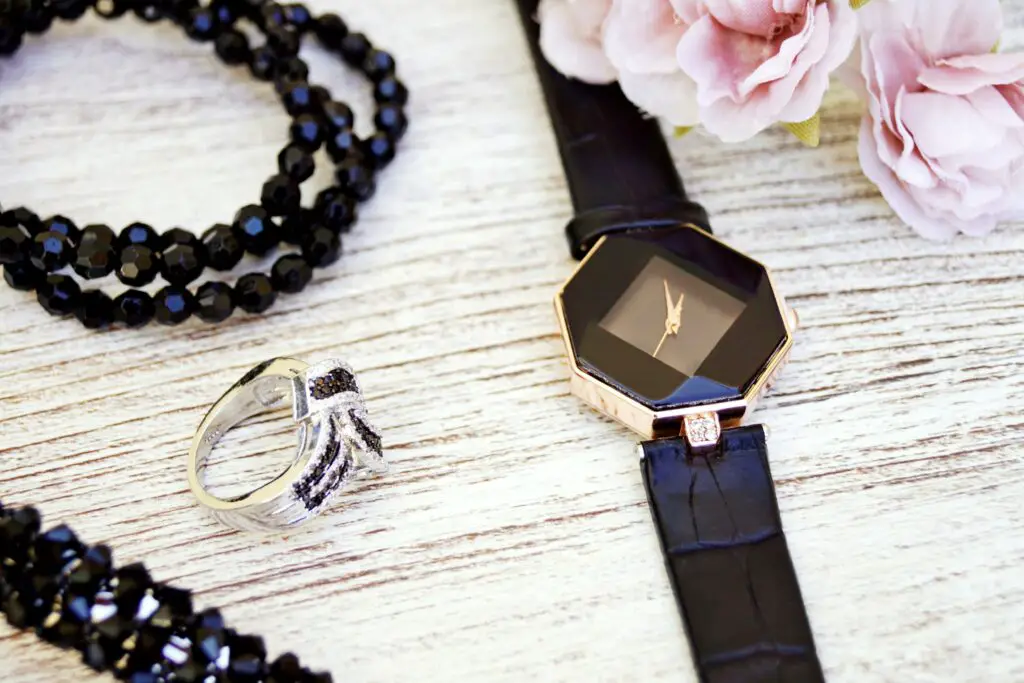
Personal items such as jewelry and accessories hold special emotional value because they were part of your loved one’s everyday life. They were word during ordinary and special days, and while they may appear worn and dated, these items hold a piece of their personality. A ring, a bracelet, or a watch may have been touched countless times, absorbing years of memories along the way.

Over the years, these items may become family heirloom, and may be a way to stay connected to a person who is no longer physically present. When wear these items, you share a part of their story, their legacy, and their place in the world. When another person, like a family member or a friend, wears one of these items, the memory lives on in a way that feels meaningful.

Rather than seeing jewelry and accessories that belonged to someone you loved and lost as clutter, cherish them as a way to keep the spirit of that person alive.

4. Important Documents and Certificates

Grief over the passing of a loved one and the urge to clean the clutter in your home and your life sometimes go hand in hand. However, you need to be very careful, especially when you start going through your paperwork and documents. Legal documents such as your will, birth and marriage certificates, insurance documents, bank documents, and property deeds need to be kept safe and secure to be used when the need arises. Losing these documents could be very stressful for you in the future.

In addition to this, these documents could also be very significant to your future generations. What could be termed as another document to you today could be very significant to the future generation tomorrow.

You need to take your time and not discard the documents immediately; instead, you should gather all of them and keep them safe until you feel clear and ready to decide what is really significant to you.

5. An Item That Still Carries Their Scent

Smell is one of the strongest links to memory because it can instantly take you back to a time, a place, or a feeling you thought was long gone from your life. Since smells change over time, holding on to something that still smells like your loved one can be a powerful thing.

It might be a sweater or hoodie they wore a lot, a favorite shirt, a scarf, a jacket, or even something as simple as a pillowcase or blanket they slept on a lot. These things are more than just fabric; they are presence.

You don’t have to hold on to everything. For many people, it is only one thing. Some people might want to hold on to these things not to revisit them but to know they still exist. Knowing they are still out there can be a comforting thing when everything around you is unfamiliar and changed.

Even when the smell is gone, these things will still be there. They are a symbol of touch, a symbol of the connection you felt so intensely – a connection that time can change but not remove from your heart.

A Final Thought: Move at Your Own Pace

Grief is not a straight line pr something defined by a timeline. There is no specific time when you are supposed or expected to go through things, or an instruction book that tells you how to do it. What matters is to find a way to give yourself permission to take a step at a time and to listen to yourself about what feels like the right time.

You don’t own anyone an explanation for the thing you decide to keep or the things you’d like to let go of. This is a very personal process which requires patience.

Sometimes it is the smallest things that help you feel better, such a photo tucked away in a drawer, a sweater worn so many times, or a note written in a familiar handwriting.

While all these things may seem ordinary, they offer a feeling of closeness to a loved one who is no longer there.

Please SHARE this article with your family and friends on Facebook.

Bored Daddy

Love and Peace

My daughter passed away two years ago — last week, her school called saying she was in the principal’s office

0

It has been two long years since my daughter Grace, eleven at the time, passed away.

Everyone I’ve ever met told me the pain would eventually fade away. Not only it didn’t, but it has become even more intense. I simply accepted the fact that grief would always be part of who I am, because there is nothing I could do about it.

At the time Grace was living her final days, it was my husband Neil who took all the responsibility around her. He never let me seen her on life support. He claimed I shouldn’t remember her like that. Following her passing, it was him who took care of all the paperwork I had no strength to go through and arranged the funeral. He also decided on a closed casket, which meant I never saw my child again after he told me she was brain brain dead and off life support.

During those moment of pain and grief, when I felt like my entire world shattered into a million pieces, my brain was wrapped in fog and I wasn’t capable of making any decisions about anything, so I simply left everything to Neil.

We never had any other children. I told myself that I would never survive losing another child. Life has already taken so much from me.

Then, last Thursday something happened that made my world spin.

My landline rang, something that doesn’t happen often nowadays, and that jarring sound almost made me jump. Honestly, I almost didn’t answer the phone because I though it was an elderly relative, and I have no strength to engage in conversations with family who try to convince me I should move on and forget everything that happened.

From the other side of a line was Frank, the principal of the middle school Grace attended. “I’m sorry to bother you, but we have a young girl in our office who wants to call her mother,” he said.

My heart sank. “What girl? You have the wrong person,” I said quickly, even though my heart was already in my throat. “My daughter is deceased.”

There was a pause.

“She says her name is ‘Grace,’” Frank said, still hesitantly, “And she looks remarkably similar to the photo we still have in the student database.”

My heart was slamming against my ribs, and my voice was shaking, but I still said, “My daughter is deceased.”

“She’s very upset, please, just speak to her,” Frank said.

And then I heard the girl saying, “Mommy? Mommy, please come get me?”

The phone dropped from my hands to the floor. That voice…

At that moment, my husband entered the kitchen with the cup of coffee in his hands. He stopped dead in his tracks when he saw my face and the phone on the floor.

“What happened? What’s wrong?”

“It’s Grace,” I said. “She’s at her old school.”

Neil didn’t tell me I was imagining things. No. Instead, he went pale as though he had seen a ghost.

He picked up the phone and hung up as quickly as he could.

“It’s a scam. AI voice cloning. People can clone voices now. Anything. Don’t go there,” he said, and I could hear tension in his voice.

“But whoever it was knew her name,” I said. “The person on the phone sounded like her, Neil.”

“Obituaries are public domain. Social media is a thing. Anyone can get that information,” he said dismissively.

I grabbed my keys from the hook in the hallway, but he stood on my way.

“Babe, you can’t go,” he said in a state of panic. “Please.”

“Please what, Neil?” I said while my hands were shaking uncontrollably. “If she’s dead, why are you afraid of a ghost unless she isn’t a ghost?”

After that, he didn’t say anything to me. He didn’t say anything at all. He just looked at me with a desperate expression on the face before I pushed past him and ran to the car.

I don’t really recall the ride to the school, it’s still all blur. I don’t recall any traffic lights, stop signs, or anything else despite the heavy pounding of my heart.

My hands were locked onto the steering wheel, cramping from the grip. I arrived at the school, ran inside, and went directly to the principal’s office.

“She’s in the principal’s office,” the receptionist whispered to me.

I ran to Frank’s office, barging in without knocking.

And there she was. She had grown, of course. She stood about thirteen, a little taller and a little thinner, but unmistakably my Grace.

“Mom?” she whispered.

I knelt before her. “My Grace,” I sobbed, holding her close. She felt warm, solid, real. She clung to me as if I were going to disappear. “Why did you never come for me?”

“I thought you were gone,” I said through crying.

Grace stepped back a little. But then Neil stepped out from behind us, silent and tense.

“Dad?” Grace said slowly.

He gazed at her as if he wasn’t ready to believe in ghosts.

“You knew she was alive,” I said, feeling the urge to shake some sense into him.

“No,” he said weakly.

“Then why did you try to stop me from coming?”

“We should talk in private.”

“No.” I stood up, taking Grace’s hand. “We’re leaving.”

“You can’t just take her,” Neil said.

“Watch me.” I didn’t pay attention to what everyone else was thinking as they gazed at us in shock; I didn’t care.

We stepped outside and got into the car. At that point, I didn’t trust Neil and I wanted to just get somewhere away from him. So I took Grace to her aunt Melissa’s. I needed time to figure things out and collect myself from the shock.

Melissa, too, couldn’t believe her eyes.

“It’s really you!” she said while looking at Grace with the strangest look.

I said to Melissa, “I don’t know everything yet, but I think Neil’s been lying to me.”

“Please keep her here,” I pleaded. “He doesn’t know your address.”

“Please, please, please don’t let them take me again,” Grace cried.

“No one’s taking you,” I said.

Two years prior, Grace was admitted to the hospital with severe infection. I spent day and night by her side, praying to God not to take her from me. And then, out of the blue, Neil came home one evening and told me doctors delivered horrible news. They needed to place Grace on life support, but took her off of it shortly after because she was brain dead. I believed him. He was my husband, and I never doubted his words.

I recall sitting in the waiting room, with nurses and doctors speaking to me words that didn’t make any sense to me. At the time, Neil’s words felt like a prison and protection at the same time.

Two years after “burying” my daughter, I returned to the hospital where she was treated and declared brain dead. I asked to speak to the doctor, who was surprised to see me.

“Mary, I thought your husband had explained everything to you.”

“He said that Grace was brain dead. He said that she had been taken off the machines. I buried my daughter.”

Dr. Peterson took a deep breath. “Well, that’s not exactly what happened.”

“What do you mean?”

“She was in critical condition, yes. She had brain concerns. But she wasn’t brain dead. She had responses. Small ones, but they were there.”

“Responses?”

“Yes. Brain responses that indicated that there were possible chances of recovery. It wasn’t hopeless.”

Allegedly, Neil was too concerned for me, believing I wouldn’t handle the situation, so he made a decision to transfer Grace to a private facility and promised to tell me everything once she was fine again.

When I told him my daughter called me from her school, he said he had no idea what was happening to Grace following the transfer because Neil never contacted him again.

He then offered to give me all the records.

At that moment, the only thing I knew with certainty was that my husband lied to me.

When I finally gathered the courage to return home and confront Neil, he said he did it for mine and Grace’s sake. He claimed she was too damages, needed therapy that cost a fortune, and special schooling we couldn’t afford. So he gave her to a family who promised to give her all that we couldn’t.

“So you figured it was better that she died?” I spat.

“I didn’t kill her!” he shouted. “I found her a family. They were willing to take her.”

Back at Melissas, I spoke to Grace. I asked her where she had been and how she managed to get to her school.

She said she started remembering things but the people she stayed with kept telling her that she was confused. They kept her indoors and would barely let her out.

When she finally found a chance to leave the place, she called a cab and got to the school.

She begged me not to send her to that family ever again, as if I would ever do such a thing to my own child.

What I knew was that I could no longer stay by Neil’s side, not even a second longer. But I also wanted him to pay for the pain he forced me to go through for two years. So, I took the case to the police.

“Do you understand that this is a case involving fraud, illegal adoption, and possible medical violations?” the detective asked.

“Yes, I do,” I said. “I want him charged accordingly.”

Not long after, Neil was arrested, and I didn’t pity him.

The couple who adopted Grace didn’t know I was in the picture. They believed Neil was the only parent he had, and amid the fear of losing my child, I gave him the right to decide in my behalf. And I only did that because I trusted him, and that was my biggest mistake.

I filed for divorce and the court started restoring custody to me.

I want my story to serve as a reminder that mother’s fight is never over, not until everything gets right.

Please SHARE this article with your family and friends on Facebook.

Bored Daddy

Love and Peace
Meghan Markle mocked over latest picture as fans accuse her of ‘copying Kate’

0

Amid the ongoing developments within the royal family surrounding the arrest of former Prince Andrew, family members have refrained from speaking publicly, aside from a statement issued by King Charles, in which he said that “the law must take its course.”

“I have learned with the deepest concern the news about Andrew Mountbatten-Windsor and suspicion of misconduct in public office. What now follows is the full, fair and proper process by which this issue is investigated in the appropriate manner and by the appropriate authorities,” the King wrote in the statement.

“In this, as I have said before, they have our full and wholehearted support and co-operation. Let me state clearly: the law must take its course. As this process continues, it would not be right for me to comment further on this matter. Meanwhile, my family and I will continue in our duty and service to you all. Charles R.”

Neither Prince William nor Prince Harry commented on the matter.

In fact, William sort of expressed his feelings about the situation when asked if he had seen the film Hamnet, which centers on the death of William Shakespeare’s 11-year-old son, at the BAFTAs. “I need to be in quite a calm state and I am not at the moment,” he answered.

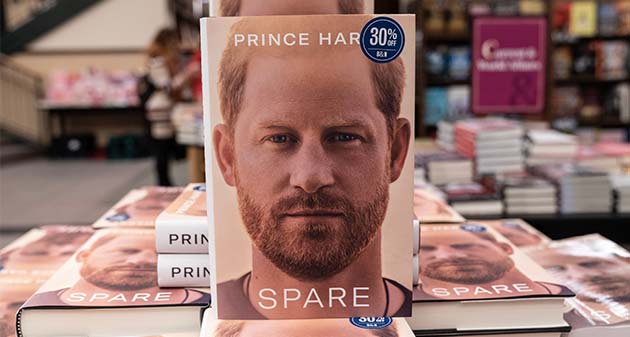
While Harry have not made any comments about his uncle’s arrest on suspicion of misconduct in public office, many online revisited what the Duke of Sussex wrote about his uncle Andrew Mountbatten-Windsor in his all-tell memoir, Spare.

Shutterstock

The passage occurs toward the end of the book, as Harry explains when he and Meghan realized they had to leave the UK.

“We were taking first steps, trying to be positive. Doesn’t really matter where we live, we said, so long as the Palace fulfills its obligation—and what I felt was its implicit promise—to keep us safe,” Harry writes. “Meg asked me one night: You don’t think they’d ever pull our security, do you? Never. Not in this climate of hate. And not after what happened to my mother.

He continues, “Also, not in the wake of my Uncle Andrew. He was embroiled in a shameful scandal, accused of the sexual assault of a young woman, and no one had so much as suggested that he lose his security. Whatever grievances people had against us, sex crimes weren’t on the list.” 

People reported last week that Prince Harry has consistently been frustrated by comparisons to his uncle.

“It was never fair to lump them together,” an insider told the magazine. “Harry served his country, did the job well and never engaged in misconduct — yet lost security and housing, while Andrew was protected for years.”

Samir Hussein/WireImage

While all eyes are on Andrew and his alleged connections to disgraced financier Jeffrey Epstein, Harry and Meghan are far from spared from public scrutiny for living their lives the way they do.

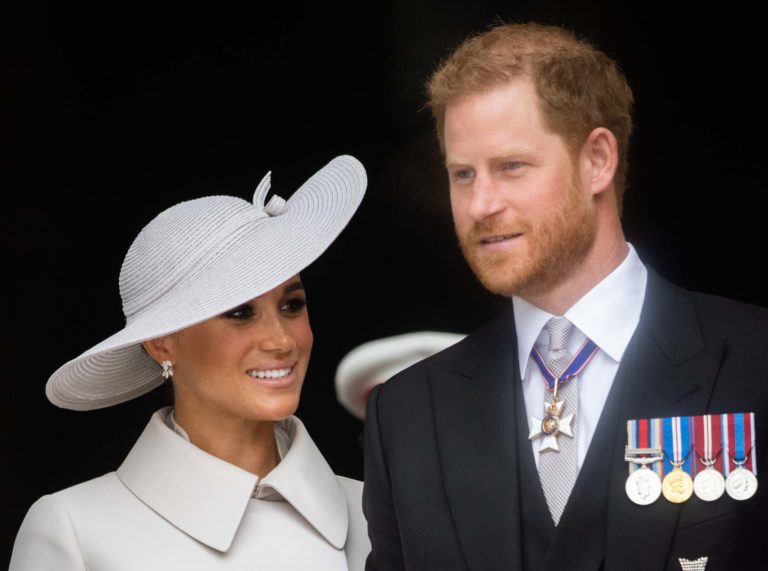
Namely, following their separation from the royals, the couple claimed the reason for stepping down from their duties and settling in sunny California was to get away from the media and stay out of the spotlight. As we know already, that didn’t happen. On the contrary, both Harry and Meghan used every opportunity to be under the limelight and gave plenty of interviews in which they discussed the British royals and the things that were happening behind closed doors. And maybe that’s one of the reasons why they receive constant backlash for almost everything they do.

During many of their international trips, Harry and Meghan are treated as though they are still working royals, which angers the royals.

Commenting on the couple’s trip to Nigeria in 2024, royal commentator Tom Quinn told the Mirror, “William is absolutely furious and determined to find a way to stop this happening in the future. Charles is said to be angrier than anyone has ever seen him.

“It’s as if Harry and Meghan have gone rogue—their Nigeria trip is a bold statement that they refuse to accept they are no longer working royals. William and Charles are scratching their heads and thinking, ‘How are we going to control this nightmare situation?’”

None of this stopped the Duke and Duchess of Sussex to continue with what many dub “royal outings.”

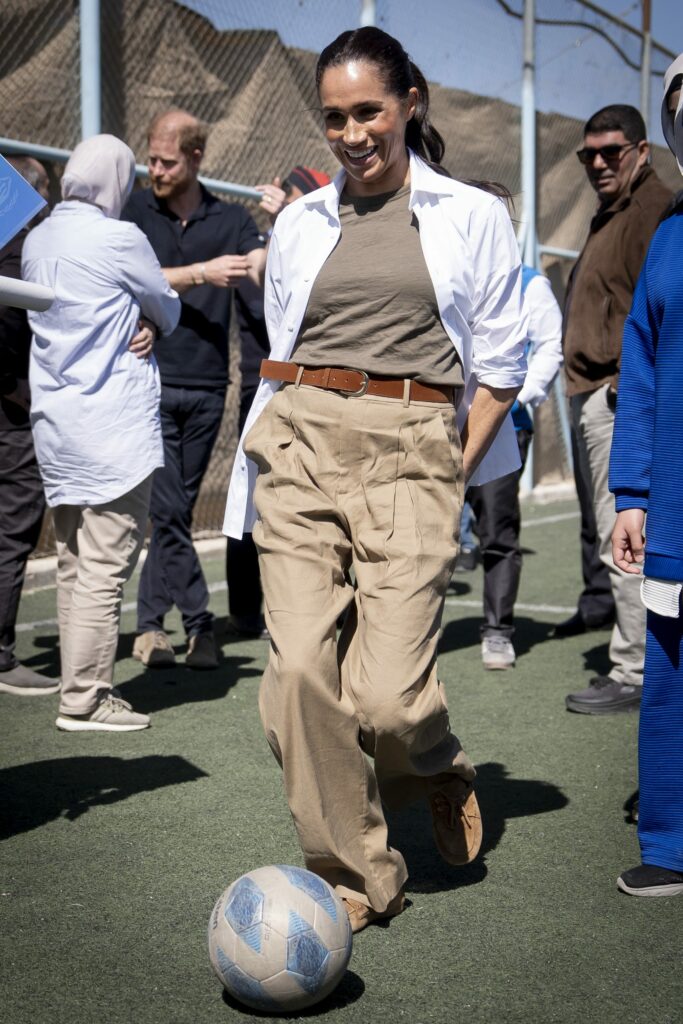
The Duchess of Sussex dribbles with a football during a visit to the QuestScope Youth Center at the Za’atari refugee camp, home to displaced Syrians, near Mafraq in northern Jordan. Picture date: Wednesday February 25, 2026. (Photo by Aaron Chown/PA Images via Getty Images)

Currently, they are taking a two-day trip to Jordan where they travelled at the invitation of the WHO’s director-general Dr Tedros Adhanom Ghebreyesus, according to the Express.

Among their activities were a visit to a refugee camp and meetings with children from Gaza receiving medical care. One particular moment, however, drew mockery online. While visiting the QuestScope Youth Center at the Za’atari refugee camp near Mafraq in northern Jordan, Meghan Markle was seen playing football with children.

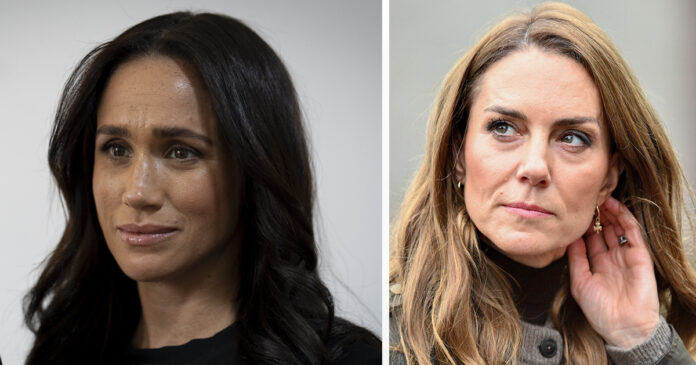
The photos quickly prompted comparisons to Kate Middleton, with some fans accusing Meghan of copying the Princess of Wales.

Per Express, “Cosplaying Catherine again. Meghan is obsessed with Catherine.”

Another wrote: “Ok this is actually kind of funny… never kicked a ball in her life.”

A third person said, “OMG !!!! They are trying so hard to be William and Catherine !! They left RF because they hated this kind of events and now look at them, they are soooo ridiculous !!! Look at her.”

A fourth added: “Look, I’m sporty too, you know!!! Wow she’s obsessed with Catherine.”

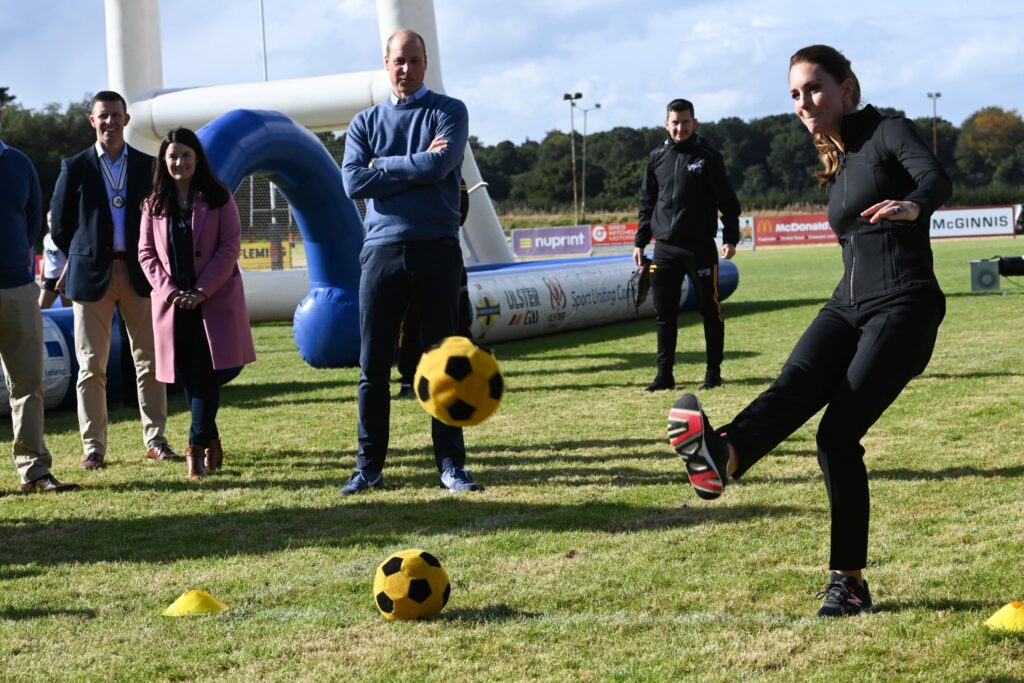
LONDONDERRY, NORTHERN IRELAND – SEPTEMBER 29: Catherine, Duchess of Cambridge kicks a football as Prince William, Duke of Cambridge looks during a visit to City of Derry Rugby Club on September 29, 2021 in Londonderry, Northern Ireland. (Photo by Pool/Samir Hussein/WireImage)

Kate Middleton is well known for her interest in sports and is frequently seen taking part in athletic activities during royal engagements. She is a patron of the Rugby Football Union and has previously joined professional players from Maidenhead Rugby Club in rugby training sessions.

She is also a keen tennis fan. In a similar moment to Meghan’s recent visit, Kate was photographed kicking a football during an engagement at the City of Derry Rugby Club in Northern Ireland in September 2021.

Please SHARE this article with your family and friends on Facebook.

Bored Daddy

Love and Peace
A stranger covered the $50,000 surgery for my son— and I was shocked to learn what he truly had in mind

0

My son needed a surgery that cost $50,000 and I couldn’t even possibly think of any ways of ever finding that much money. Well, until the entire sum showed up in my account out of thin air along with a note that sent chills down my spine. The surgery helped save his life and the person behind the transfer didn’t stay in the shadow for long.

I’m Nora, a desperate mother of a ten-year-old boy named Adam. For as long as I remember, my life has been measured in the beeping of hospital machines and hours of waiting at hospital corridors.

Despite being just ten, my son knows the children’s ward like the back of his hand. From the moment he was welcomed into the world, his health has been fragile. Adam knows things no child his age should know; where the nurses hide extra treats, which vending machine at the hospital works and which doesn’t, and the names of nearly every member of the staff.

While he struggled almost all his life, this last year was the worst we’ve both ever experienced. As his health deteriorated, it’s been all about hospital visits and conversations which end with “we’ll see.”

The worst thing of all, I have no one except for him. My parents passed away years ago, and Adam’s father vanished the second I told him I was expecting a baby.

Unsplash

I’ve been working hard and still struggle to make ends meet. Trust me when I tell you that I work every job that comes along the way; cleaning offices from dusk till dawn, doing shifts at the local restaurant every now and then, and taking on odd jobs for people in the neighborhood, you name it. Still, things get as hard as they could get.

When Dr. Patel called me in the small room where they broke bad news to patients, I knew things were not good.

“Nora, if we don’t operate… He’ll only have months to live.”

I asked the question I already knew the answer to. And the answer was the same. When he told me the cost, my brain froze. And then he added, as if it was an afterthought, “You’re short $50,000.”

That night, I was beside Adam, listening to him breathe.

I signed all the forms I could find. I begged. It was all happening too slowly, and Adam had no time.

I sold the little jewelry I had, skipped meals, and even missed rent one month and promised myself I’d make it up. But nothing I did was enough.

And then, during my lunch break, sitting in my car, my phone beeped. I expected another message telling me my balance was low. Instead, it read Deposit—$50,000.

I called the bank, thinking it was some kind of mistake. It wasn’t.

“From who?” I asked. “Please. I need a name.”

However, the person on the other side of the phone refused to give me any details. “I’m not authorized to disclose that,” she said, “But I can read the memo attached to the transfer.”

“Read it,” I said, still unable to believe that Adam would be getting his surgery.

There was a pause, then: “It says, ‘Sorry for everything I did.’”

I immediately though to myself, “Sorry is never a word that means anything good. It means guilt and shame. It means an attempt to make something right that couldn’t be made right.” And for a brief moment, I even questioned if I should accept that money. But with Adam’s life at stake, I didn’t really have much of a choice.

So, I accepted it, and the surgery was scheduled for that very same day.

When I told Dr. Patel that we finally had the money, he didn’t question where it came from, not even a raised eyebrow. Why? Well, I guess doctors simply learn not to question miracles closely, especially when it comes to desperate parents who pray for those miracles to come along their way.

The surgery was over in what felt like an instant. Too quickly for my nerves to catch up with me, honestly, and at that time, it was a good thing.

When Dr. Patel came out, there was a smile on his face, and I thanked God for that smile.

“It went well,” he said. “He’s stable.”

I started crying and I didn’t care if anyone saw me. Those tears were tears of joy and relief. My son was alive, and nothing else mattered.

Over the next few days, the color on Adam’s sweet face finally returned. The machines beeped less loudly and less urgently. At that moment, I felt like they were also happy about my boy.

And then, one night, long after the visiting hours had passed, Adam fell asleep and I could finally rest. But then, out of nowhere, there was a knock on the door. I looked up, expecting to see one of the nurses, but instead, there was a man standing there, a man I didn’t recognize until he called my name.

“Hello, Nora,” he said with a huge grin on his face.

My mouth went dry. “No,” I whispered, trying not to wake my son.

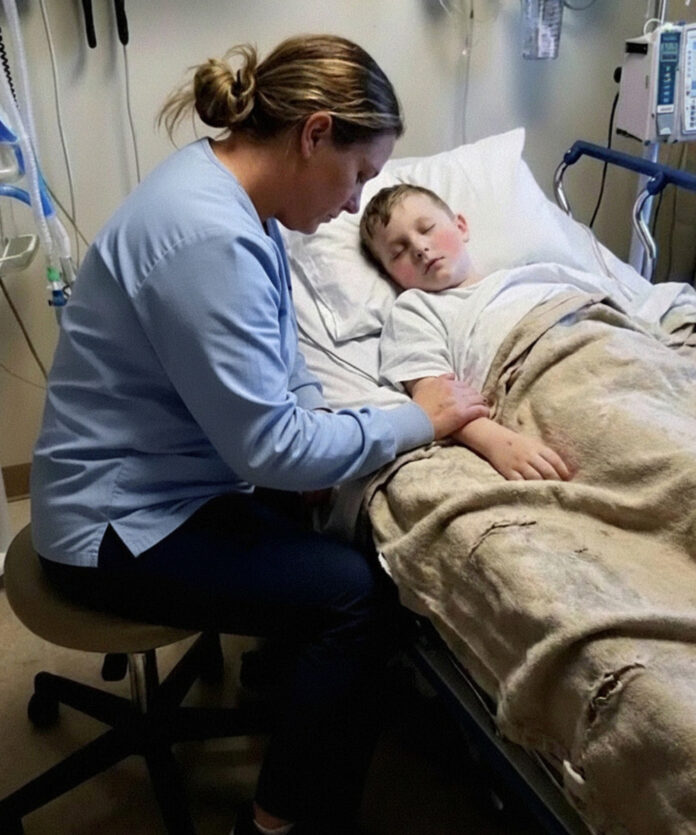
For illustrative purposes only/ Unsplash

It was Caleb, Adam’s father. I hadn’t seen him in ten years, and still, there he was, standing beside me all dressed up.

I stood up so quickly that the chair scraped loudly on the floor. “You can’t be here.”

His eyes shifted to Adam, then back to me. “I can. I am his father.”

“You don’t get to call yourself that.”

He took a step closer to me. “You didn’t think the money came without strings attached, did you?”

My hands tightened around the rail of the bed. “You sent it.”

“Yes,” he replied, “And now we need to talk.”

I immediately put myself between him and Adam. “Get out.”

But Caleb didn’t plan of leaving that room. It was obvious he was there for a reason, and it seemed like he was there to stay. “Sit down. Don’t make this any more dramatic than it has to be,” he said.

In those moment of hysterics, I let a laugh. “You’re standing in my son’s hospital room after being gone for ten years. It’s already dramatic.”

“I paid for his surgery,” he went on, as though he didn’t care I didn’t want him there. “I provided for his future. I’m the one who saved his life.”

“You are not,” I said, trying to stay as calm as possible.

“I’m taking my place now. I want custody. Full custody.”

“No.”

Unsplash

He cocked his head, examining me as if I were a puzzle he’d already figured out. “You’re tired. You’re broke. Courts prefer consistency.”

“How do you even know—”

“I know enough,” he interrupted. “Think carefully.”

“You don’t love him. You don’t even know him,” I cried.

“Love doesn’t win cases,” Caleb replied. “Easy way or hard way, you choose.”

And then he left and closed the door behind him, just like that.

The following morning, I spotted Tessa near the nurses’ station. She was a social worker who had that composed, down-to-earth presence of someone who had witnessed too many families break under pressure.

I begged her to help me, and she was ready to listen to the whole story. “We will keep a record of all our interactions. Visits can be monitored. We will keep Adam safe,” she assured me.

The following afternoon, Caleb came to the hospital carrying a bunch of toys. He didn’t even know what Adam loved, and it was certainly not kids’ toys. He was 10 for God’s sake.

“Hey, buddy,” he told Adam. “I brought you something.”

Adam struggled to sit up. “Are you really my dad?”

“Yes,” Caleb answered proudly. “I am.”

After he left, Adam looked at me and say, “He said he’s coming every day.”

“We’ll see,” I answered, as my heart broke into a million pieces.

Caleb kept coming, and each time, he was speaking of the newest consoles, games, and even life streaming, something Adam loved. It was obvious he did his homework of learning a thing or two about his son whom he wanted to take from me.

I knew deep down that Caleb’s intentions weren’t pure. For ten long years he was nowhere to be seen, he never contacted me, not once, and now, all of a sudden, he was interested in his son.

That night, I looked Caleb online, and my fears were confirmed.

There were a bunch of photos from charity events and gala nights from his non-profit organization. And then, I stumbled upon a post he shared two weeks prior captioned, “A miracle story soon. A reunited father. A brave child.”

He had planned everything and only wanted to use Adam to show the world he cared, that he was a devoted father, which was so far from the truth.

I confronted him the following day, and he didn’t deny it.

“You’re turning my son into content,” I said.

“I’m turning him into a story,” he corrected. “People donate to stories.”

“He’s a child.”

“This is bigger than you,” Caleb said. “And custody makes it possible.”

At one point, he even referred to Adam as “asset,” and that’s when I snapped.

Unsplash

I told Tessa everything, and she set boundaries. The visits became less frequent, and once Adam became aware his father only wanted him for photos and self-promotion, he didn’t want to see him at all, and that’s when visits stopped completely. Everything was carefully documented.

Eventually, Adam and I returned home.

As Adam mixed cake batter at the table, he looked up and said, “Mom?”

“Yeah.”

“I don’t want to be famous. Can we just be normal?”

“Yes,” I said. “We can.”

Please SHARE this article with your family and friends on Facebook.

Bored Daddy

Love and Peace

What your pick in a simple ‘odd one out’ quiz says about your thinking style and what your brain prioritizes

0

If you’ve ever scrolled through a website or an app and stumbled upon one of those “odd one out” quizzes, you’ve probably seen them as just brain teasers.

Amazingly enough, these quizzes aren’t just games. In fact, they can reveal a lot about your mind and tell you what it prioritizes, how fast it notices certain patterns, and how quick it makes judgements.

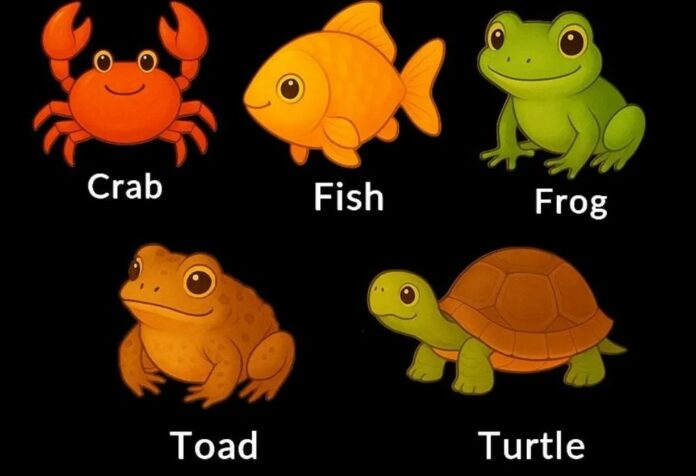
For instance, let us take a simple example of a row of cute little cartoon animals, such as a crab, a fish, a frog, a toad, and a turtle. While for many people it would seem pretty obvious at first glance which of these animals doesn’t really belong into this group, the truth is that different people perceive things differently, so no matter how awkward that sounds, the answers vary… a lot.

The type of animal that stands out to you, or the “odd one out,” can reveal a lot about the way your brain works. Are you looking at the type of environment they live in, the way they look, or perhaps the way they move?

Now comes the fun part: there is no right answer! Each of these animals have certain traits that can place them in the room with the rest of them, while one would appear as it simply doesn’t belong. The trick is to go with your intuition and choose without taking a lot of time.

Once you choose your odd animal out, take a look behind the scenes and and see what your choice reveals about your thinking patterns, problem-solving abilities, and even how your brain maps the world around you. This might seem like a simple test, but it can definitely reveal more than you anticipate.

If you picked the crab: the structural thinker

Noticing form and structure

If you went straight to the crab, it says you are attuned to form and structure, or that you are a “shapes and outlines” kind of person. This means you tend to focus on the physical characteristics before anything else.

In this lineup, the crab really stands out, and this is partly due to the fact that, whereas all of the other animals in this lineup are vertebrates and have a similar body type, the crab is a completely different kind of animal altogether. It is small, has a hard shell, is rounded in shape, has claws, and has multiple legs, basically, a complete structural anomaly.

What it says about you

This choice shows that you are a bottom-up thinker, meaning you approach problems in a logical and precise manner, and you are able to process a great deal of information in a short amount of time.

At work or in social situations, you are probably seen as that one person who brings order to the chaos. You are someone who appreciates systems, rules, and order because they provide you with a framework for making decisions.

Those around you probably think of you as a straight shooter, someone who cuts through confusion, makes things clear, and comes up with solutions. Your brain is wired to think in terms of order and consistency, and you are quick to point out whenever things don’t make sense for the sake of offering a better way to have the job done.

If you picked the fish: the big-picture thinker

Noticing connections and context

If the fish was your first pick, your mind is capable of noticing how things are related to one another. All the animals, except the fish, can be in both the water and on land. However, the fish is limited to the water. Your mind quickly picked up on this and focused on how it relates to its surroundings.

What it says about you

Choosing the fish indicates that you are a holistic thinker. You spot relations and and how things interact with each other, and how one single piece affects the whole. Your mind won’t stop asking, “How does this relate to everything else?”

This is what gives you an edge in life. Your mind is able to solve things creatively and in an intuitive manner because it is not limited to to the surface level. You can see the long-term effects and how everything is related.

You thrive in rather complex and dynamic surrounding. Your brain naturally focuses on relationships and balance, always aware that nothing exists in isolation.

If you picked the frog: the evolutionary empath

Awareness of change and transformation

In terms of biology, the frog is the epitome of transition. Unlike the rest of the animals in the category, which tend to retain the same physical blueprint from birth to maturity, the frog undergoes a complete transformation. It starts its life as completely aquatic, gill-breathing tadpole, and then transforms its entire anatomy to become a lung-breathing terrestrial adult. Choosing the frog means your brain prioritizes “becoming” over “being.”

What it says about you

You are a process-oriented thinker to whom the world is not composed of static objects but of stages of development. You have a natural sensitivity to the “trajectory” of things, whether it’s a project, a person, or your personal development.

In terms of your social and professional life, you are considered to possess a very high level of emotional intelligence. You pay attention on how experiences shape individuals and value progress over immediate results. You are a compassionate listener and mentor who values the journey as much as the destination. Your particular mental orientation to the world is centered on the concept of potentiality, or the hidden capacity for change in every given circumstance.

If you picked the toad: the nuance specialist

An eye for subtle differences

Most people would just group frogs and toads together without giving it a second thought. But since you chose the toad, your mind immediately went to the minute details that most people fail to notice. Toads have drier, more wart skin, a stockier built, and live more on land than their cousins the frogs. By choosing the toad, you disregarded the obvious classification on “amphibian” and zoomed in on what really makes it unique.

What it says about you

Making the choice about the toad shows you are a granular thinker who automatically picks up on the “details” that matter, the “signal” in the “noise.” While others are making general observations, you are the one who picks on the little quirks that characterize the situation.

At work and in social situations, you are the person that others turn to because you are the one who picks up what others miss. Whether it is looking at a project, reading between the lines in a conversation, or untangling a tricky social situation, you instantly focus on the details that matter the most. Your edge is your precision: you understand that the key to grasping the larger picture is to get the small stuff right.

If you picked the turtle: the systematic architect

Seeing order in the details

If the turtle was the first one that caught your eye, then your brain probably honed in on categorization. Although the other animals range from crustaceans to fish to amphibians, the turtle is the only reptile. Its shell—a completely integrated skeletal system—is like nothing else in this category. By choosing the turtle, you weren’t concerned with colors, shapes, or surface characteristics; you automatically looked for defining characteristics.

What it says about you

Choosing the turtle makes you a meticulous thinker. You don’t just rely on a hunch, but you like to classify, to know the rules, and to draw conclusions solely on facts. Tough problems don’t scare you easily, because you simply solve them one step at a time, by analyzing them and put them into logical pieces.

When it comes to your work and your social life, others turn to you for clarity and order. Other count on you to lay out a plan, check for inconsistencies, and make sure all the pieces are in the right place. You’re a thinker who likes to build on a foundation—you like to start with the basics and work from there. Your mind is always looking for a sound structure: all of your conclusions are based on logic and facts.

Conclusion

At the end of the day, this simple “odd one out” quiz isn’t designed to offer any kind of psychological evaluation. In fact, its purpose, which a rather fascinating by the way, is to celebrate the fact and each and every one of us perceives the world around us in a unique way. Five different individuals may glance at the same photo and come up with five completely different answers, each one correct in its own way. The beauty of perception is that that is rarely one “right” answer.

Some may see shapes and structures first, while other may see the environment and the entire eco system. Some may be wired to see categories or classifications, while others may see change or transformation. There are also those individuals who notice what everyone else might miss.

Please SHARE this article with your family and friends on Facebook.

Bored Daddy

Love and Peace

Viewers spot odd details In Erika Kirk’s appearance at State of the Union

0

Following the tragic passing of her husband, Charlie Kirk,  the right-wing activist and co-founder of Turning Point USA, Erika Kirk has been under the spotlight.

Kirk was shot in the neck on September 10, 2025, during a debate event while speaking before a large crowd at Utah Valley University (UVU). He and Erika shared two children together, a daughter and a son.

In the meantime, Erika has been present in the media as never before, continuing her husband’s legacy.

In fact, shortly after the tragic event during which Charlie lost his life, Erika announced she would be taking the position of a CEO of her late husband’s non-profit organization.

The Charlie Kirk Show is not going anywhere,” Erika Kirk said at the time. “My husband’s voice will live on. The show will go on. We will have rotating hosts, rotating casts, rotating people coming on. It is going to be continually the north star of the conservative movement, of the voice of the youth, of the voice of the base, and that will not end.”

Most recently, Erika Kirk appeared at the State of the Union event in the United States on Tuesday night.

During the event, President Donald Trump, who had been very close to late Charlie Kirk, praised him in his address to the nation.

Trump stated that Charlie was a “martyr” for his faith, crediting him with renewing religion in the US.

“I’m very proud to say that during my time in office, both the first four years, and in particular this last year, there has been a tremendous renewal in religion, faith, Christianity and belief in God,” Donald Trump said. “This is especially true among young people, and a big part of that had to do with my great friend Charlie Kirk, great guy.”

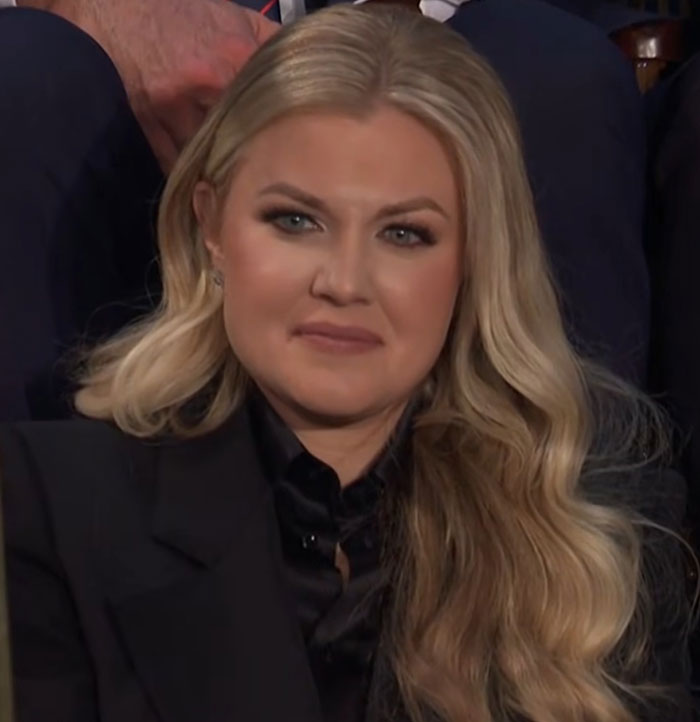
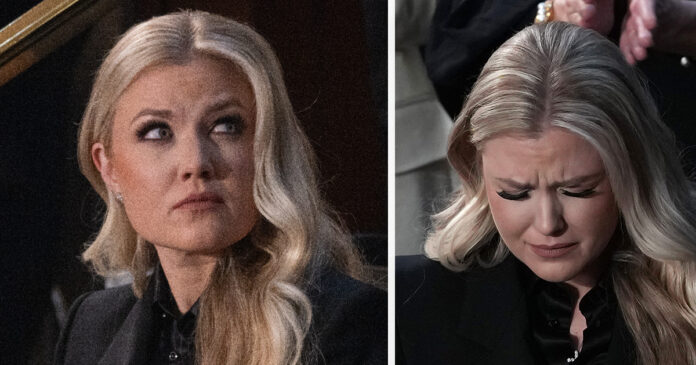
As Trump talked about Charlie, the cameras cut to Erika, who could be seen wiping her tears. Trump then asked her to stand up so that the audience could see her.

“Erika has been through a lot. In Charlie’s memory, we must all come together to reaffirm that America is one nation under God, and we must totally reject political violence of any kind,” Donald Trump said.

While Erika’s tears and emotional reaction seemed genuine to many, there were also those who claimed that something about her tears and her facial expression suggested something was off.

One person wrote: “She knows the camera is on and she starts acting. Right on cue.”

“She goes from calm to trying to cry… so embarrassing and cringe,” another wrote.

A third asked: “Can anyone tell me she is crying or happy?”

Others used harsh words, such as calling Erica Kirk’s reaction “fake.”

One user even claimed, “It was PR stunt knowing sht comes out tm, and it’s really gross they are using Charlie’s death like this.”

As expected, there were also those who were quick to defend Erika on the social media.

“Will you all stop hating on this woman … seriously. Not all people grieve the same,” one person commented.

“Extremely unpopular opinion: I think Erika really just deals with pain through faith and that looks weird to people,” another added.

This isn’t the first time Erika Kirk to be criticized by the public. At one point, she received backlash for her smiling demeanor when she’s in public.

Among those who questioned Erika’s behavior was conservative commentator Candace Owens, who claimed she has been focusing on photoshoots shortly after her husband died instead of demanding public accountability for his death.

Erika responded to the criticism, saying there’s “no linear blueprint for grief.”

“One day you’re collapsed on the floor crying out the name Jesus in between labored breaths,” she wrote. “The next you’re playing with your children in the living room, surrounded by family photos, and feeling a rush of something you can only attempt to define as divinely planted and bittersweet joy as a smile breaks through on your face.”

She continued: “They say time heals. But love doesn’t ask to be healed. Love asks to be remembered.”

Charlie Kirk’s widow added: “I carry my Charlie in every breath, in every ache, and in every quiet act of day-to-day living as I attempt to relearn what that rhythm will be.”

Kevin Dietsch/Getty Images

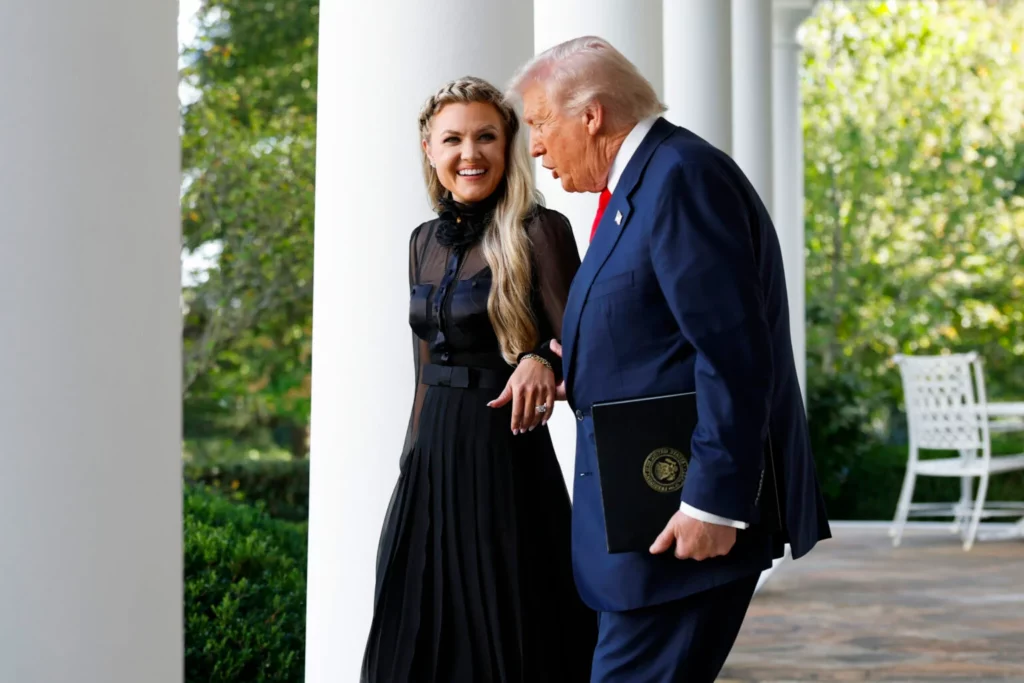
During an appearance on Megyn Kelly Live at the Desert Diamond Arena, Erika appeared in a black lace suit featuring sheer sleeves and trousers. She finished her look with bold, oversized rings on every finger and stacks of layered bracelets.
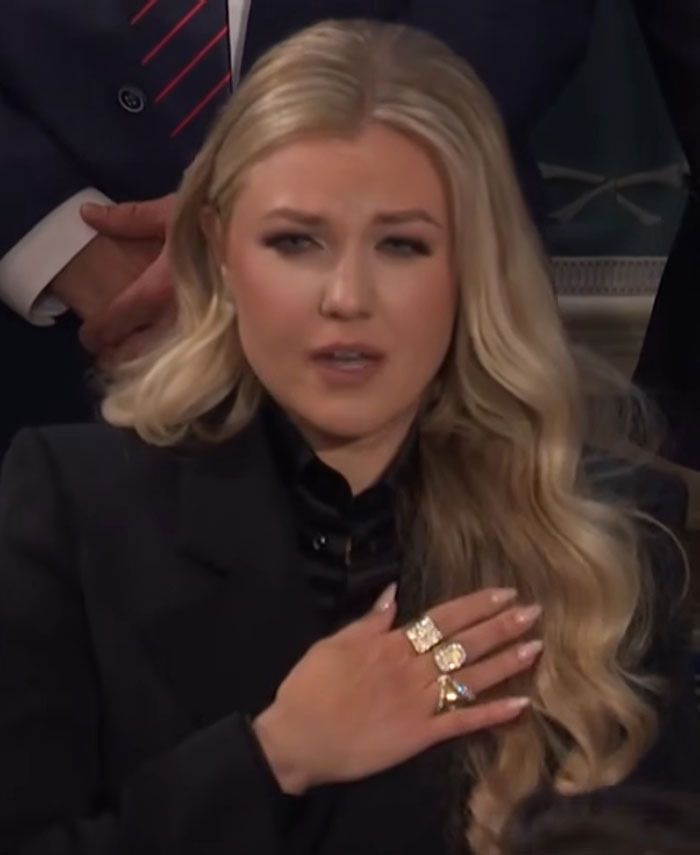
“Is this a lace pantsuit?” one person asked. Another added: “Erika Kirk is wearing a full on see through lace pant suit btw [sic].”

 “It’s odd to wear see-through lace black outfits while ‘mourning’ your husband and never actually crying real tears,” one person wrote on X.

“Why does she sound like she’s reading from a script?” another remarked.

People also commented on the size of her many rings. “Those big golden rings are too much, aren’t they? I try to empathize with her but it is hard,” one viewer commented. Another added, “What is with the gaudy rings?”

Erika also received backlash when she and Vice President JD Vance shared an emotional hug and she touched the back of his head, a moment she discussed with Kelly. “Anyone whom I have hugged, that I have touched the back of your head when I hug you, I always say, ‘God bless you,’” she said. “Whoever is hating on a hug needs a hug themselves.”

Please SHARE this article with your family and friends on Facebook.

Bored Daddy

Love and Peace