

My son needed a surgery that cost $50,000 and I couldn’t even possibly think of any ways of ever finding that much money. Well, until the entire sum showed up in my account out of thin air along with a note that sent chills down my spine. The surgery helped save his life and the person behind the transfer didn’t stay in the shadow for long.
I’m Nora, a desperate mother of a ten-year-old boy named Adam. For as long as I remember, my life has been measured in the beeping of hospital machines and hours of waiting at hospital corridors.
Despite being just ten, my son knows the children’s ward like the back of his hand. From the moment he was welcomed into the world, his health has been fragile. Adam knows things no child his age should know; where the nurses hide extra treats, which vending machine at the hospital works and which doesn’t, and the names of nearly every member of the staff.
While he struggled almost all his life, this last year was the worst we’ve both ever experienced. As his health deteriorated, it’s been all about hospital visits and conversations which end with “we’ll see.”
The worst thing of all, I have no one except for him. My parents passed away years ago, and Adam’s father vanished the second I told him I was expecting a baby.

I’ve been working hard and still struggle to make ends meet. Trust me when I tell you that I work every job that comes along the way; cleaning offices from dusk till dawn, doing shifts at the local restaurant every now and then, and taking on odd jobs for people in the neighborhood, you name it. Still, things get as hard as they could get.
When Dr. Patel called me in the small room where they broke bad news to patients, I knew things were not good.
“Nora, if we don’t operate… He’ll only have months to live.”
I asked the question I already knew the answer to. And the answer was the same. When he told me the cost, my brain froze. And then he added, as if it was an afterthought, “You’re short $50,000.”
That night, I was beside Adam, listening to him breathe.
I signed all the forms I could find. I begged. It was all happening too slowly, and Adam had no time.
I sold the little jewelry I had, skipped meals, and even missed rent one month and promised myself I’d make it up. But nothing I did was enough.
And then, during my lunch break, sitting in my car, my phone beeped. I expected another message telling me my balance was low. Instead, it read Deposit—$50,000.
I called the bank, thinking it was some kind of mistake. It wasn’t.

“From who?” I asked. “Please. I need a name.”
However, the person on the other side of the phone refused to give me any details. “I’m not authorized to disclose that,” she said, “But I can read the memo attached to the transfer.”
“Read it,” I said, still unable to believe that Adam would be getting his surgery.
There was a pause, then: “It says, ‘Sorry for everything I did.’”
I immediately though to myself, “Sorry is never a word that means anything good. It means guilt and shame. It means an attempt to make something right that couldn’t be made right.” And for a brief moment, I even questioned if I should accept that money. But with Adam’s life at stake, I didn’t really have much of a choice.
So, I accepted it, and the surgery was scheduled for that very same day.
When I told Dr. Patel that we finally had the money, he didn’t question where it came from, not even a raised eyebrow. Why? Well, I guess doctors simply learn not to question miracles closely, especially when it comes to desperate parents who pray for those miracles to come along their way.
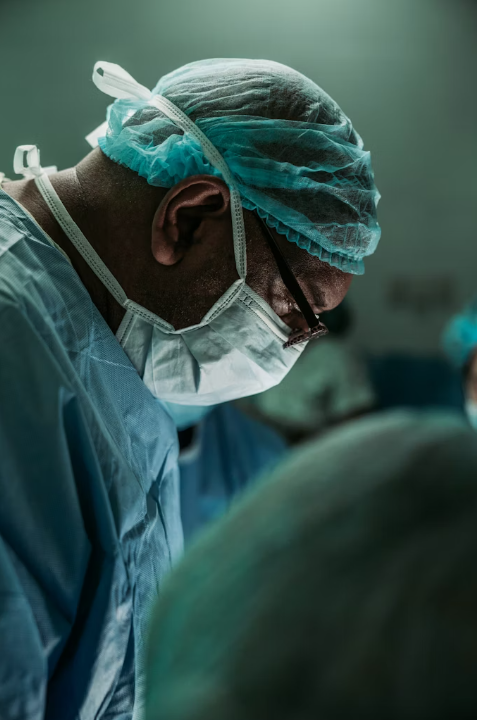

The surgery was over in what felt like an instant. Too quickly for my nerves to catch up with me, honestly, and at that time, it was a good thing.
When Dr. Patel came out, there was a smile on his face, and I thanked God for that smile.
“It went well,” he said. “He’s stable.”
I started crying and I didn’t care if anyone saw me. Those tears were tears of joy and relief. My son was alive, and nothing else mattered.
Over the next few days, the color on Adam’s sweet face finally returned. The machines beeped less loudly and less urgently. At that moment, I felt like they were also happy about my boy.
And then, one night, long after the visiting hours had passed, Adam fell asleep and I could finally rest. But then, out of nowhere, there was a knock on the door. I looked up, expecting to see one of the nurses, but instead, there was a man standing there, a man I didn’t recognize until he called my name.
“Hello, Nora,” he said with a huge grin on his face.
My mouth went dry. “No,” I whispered, trying not to wake my son.

It was Caleb, Adam’s father. I hadn’t seen him in ten years, and still, there he was, standing beside me all dressed up.
I stood up so quickly that the chair scraped loudly on the floor. “You can’t be here.”
His eyes shifted to Adam, then back to me. “I can. I am his father.”
“You don’t get to call yourself that.”
He took a step closer to me. “You didn’t think the money came without strings attached, did you?”
My hands tightened around the rail of the bed. “You sent it.”
“Yes,” he replied, “And now we need to talk.”
I immediately put myself between him and Adam. “Get out.”
But Caleb didn’t plan of leaving that room. It was obvious he was there for a reason, and it seemed like he was there to stay. “Sit down. Don’t make this any more dramatic than it has to be,” he said.
In those moment of hysterics, I let a laugh. “You’re standing in my son’s hospital room after being gone for ten years. It’s already dramatic.”
“I paid for his surgery,” he went on, as though he didn’t care I didn’t want him there. “I provided for his future. I’m the one who saved his life.”
“You are not,” I said, trying to stay as calm as possible.
“I’m taking my place now. I want custody. Full custody.”
“No.”
He cocked his head, examining me as if I were a puzzle he’d already figured out. “You’re tired. You’re broke. Courts prefer consistency.”
“How do you even know—”
“I know enough,” he interrupted. “Think carefully.”
“You don’t love him. You don’t even know him,” I cried.
“Love doesn’t win cases,” Caleb replied. “Easy way or hard way, you choose.”
And then he left and closed the door behind him, just like that.
The following morning, I spotted Tessa near the nurses’ station. She was a social worker who had that composed, down-to-earth presence of someone who had witnessed too many families break under pressure.
I begged her to help me, and she was ready to listen to the whole story. “We will keep a record of all our interactions. Visits can be monitored. We will keep Adam safe,” she assured me.
The following afternoon, Caleb came to the hospital carrying a bunch of toys. He didn’t even know what Adam loved, and it was certainly not kids’ toys. He was 10 for God’s sake.
“Hey, buddy,” he told Adam. “I brought you something.”
Adam struggled to sit up. “Are you really my dad?”
“Yes,” Caleb answered proudly. “I am.”

After he left, Adam looked at me and say, “He said he’s coming every day.”
“We’ll see,” I answered, as my heart broke into a million pieces.
Caleb kept coming, and each time, he was speaking of the newest consoles, games, and even life streaming, something Adam loved. It was obvious he did his homework of learning a thing or two about his son whom he wanted to take from me.
I knew deep down that Caleb’s intentions weren’t pure. For ten long years he was nowhere to be seen, he never contacted me, not once, and now, all of a sudden, he was interested in his son.
That night, I looked Caleb online, and my fears were confirmed.
There were a bunch of photos from charity events and gala nights from his non-profit organization. And then, I stumbled upon a post he shared two weeks prior captioned, “A miracle story soon. A reunited father. A brave child.”
He had planned everything and only wanted to use Adam to show the world he cared, that he was a devoted father, which was so far from the truth.
I confronted him the following day, and he didn’t deny it.
“You’re turning my son into content,” I said.
“I’m turning him into a story,” he corrected. “People donate to stories.”
“He’s a child.”
“This is bigger than you,” Caleb said. “And custody makes it possible.”
At one point, he even referred to Adam as “asset,” and that’s when I snapped.

I told Tessa everything, and she set boundaries. The visits became less frequent, and once Adam became aware his father only wanted him for photos and self-promotion, he didn’t want to see him at all, and that’s when visits stopped completely. Everything was carefully documented.
Eventually, Adam and I returned home.
As Adam mixed cake batter at the table, he looked up and said, “Mom?”
“Yeah.”
“I don’t want to be famous. Can we just be normal?”
“Yes,” I said. “We can.”
Please SHARE this article with your family and friends on Facebook.
Bored Daddy
Love and Peace