Don’t cheat: Pick the odd one out to see how ‘lucky’ you really are

0

At first glance, the task behind this photo of six clovers placed side by side seems too simple to be taken seriously. What you need to do is simply pick the odd one out, that’s it. It’s one of those images that can simply flash across your screen and you wouldn’t even notice it, or you may even spend a second or two to play along without thinking too much about it. But you look at it, like really look at it, something interesting starts to happen.

Your eyes start to dart from one clover to another and you start to compare shapes, notice details, and even question your initial assumptions. And out of nowhere, this task looks more complex that it first seemed. Maybe one of the clovers is different at a first glance, but then another one starts to look completely different from the rest because of another reason. And then you start to hesitate and look at the clovers all over again.

This is the point when you realize that this isn’t just a simple game but something that pulls you into your own way of thinking and seeing things.

Why something so simple can feel so tricky?

You see, the human brain is wired to look for patterns. In fact, it does it all the time, but we are not always aware of it. When we are presented with a challenge such as to find the odd one out our brain immediately goes into a comparison mode. It automatically searches for differences in things like color, shape, texture, and size. And here comes the fun part. Not everyone’s brain spots the same difference first. Some people are immediately struck by differences in color. Is one clover a little darker or a little brighter than the others? It’s like it’s screaming for attention. Others don’t notice differences in color right away. Instead, they notice differences in shape. Is one leaf different from the others in shape? Is it not symmetrical?

Then there are those whose brain notices texture first. Perhaps one of the clovers appears smoother, shinier, or more artificial. It might be a slight difference, but to some, this difference can’t be ignored.

Also, there are those people who cannot really justify their choice, they simply choose one for no obvious reason.

What’s fascinating isn’t just the choice you make, but how quickly you make it.

Some people make their choices almost immediately. They look at the picture, look at the four options, and pick one without hesitation.
Others, of course, take their time, looking back and forth, thinking, analyzing, and comparing. That, in itself, says a lot.

When people make their choices quickly, it’s often because of instinct. It doesn’t mean they’re not thinking, just that they’re relying on their initial reaction, their inner confidence that comes from “just knowing.”

When people make their choice slowly, that’s usually a result of analysis. They want to be certain so they double-check, question their assumptions, and make sure their choice holds up before they settle on it.

And while neither of these ways of making a choice is better or worse than the rest, it does say a lot about how a person interacts with the world.

What your choice might say about you?

If you chose the clover that looks the most natural of all, clover number one, it suggests you might be a type of person who values authenticity above all else. You are not easily distracted by surface-level differences, and you prefer what feels real, what feels grounded, what feels honest.

If your attention was initially attracted to the clover that looked like it was balanced but not quite right, or the second clover, you’re probably a person who is aware of subtlety. You don’t just see what’s obvious; you see how things relate to each other. You weigh your choices carefully, considering details that others might not notice. You’re probably a logical decision-maker who takes their time.

If the bold and shiny clover caught your eye because it stood out, then chances are you have a thing for uniqueness. You are someone who tends to focus on things that break away from the norm but in a more obvious way. In life, you are probably always up for trying something new and not afraid of what is different.

If your attention to detail was caught by something with texture, something a little more complex, like the clover number four, chances are you have a creative way of seeing the world. What this means is you’re not just seeing what’s in front of you; you’re seeing deeper. You’re seeing patterns within patterns, details within details. Perhaps you’re someone who enjoys thinking outside the box.

Clover number five shows that you make your choices based on your instincts alone. You simply trust your gut even when you can’t logically explain why. Such a decision-making process is incredibly powerful, especially in situations where overthinking only makes things more confusing and more complicated.

If your first choice was clover number six, you are likely someone who’s incredibly practical. You prefer those things that make sense and aren’t overly complicated, which makes you efficient. When you notice that something needs to be done, you are simply doing it.

The truth about “right” and “wrong”

Not this is what surprises most people: There isn’t a correct answer.

You believe that when there’s a puzzle or a quiz you need to solve, there would be this one final answer that would tell you if you’ve nailed it or failed it. But “quizzes” like this one don’t tell you that. Why? Because the answer itself depends on what you are looking at.

It’s a different question now. It’s no longer about “what’s the right answer?” but about “why did I choose this one?”

What does this have to do with real life?

Well, a lot actually. Each and every one of us is faced with the challenge of making plenty on decisions on a daily basis. Just think about it, we choose what to focus on, determine what’s important, and interpret the world in our own way.

Two people can witness the same event and walk away with two completely different perceptions. One person might see it as an opportunity, and another one might see it as a risk.

While one person focuses on what’s missing, another one focuses on what’s present. And they both might be right. That’s exactly what happens when you make a choice of choosing one of the clovers.

Rethinking luck

It is a common belief that four-leaf clovers bring luck. Why? Because they are rare and usually connected to the notion that good things come by chance. But this quiz debunks that notion in a way because the choice you made wasn’t based on pure luck but more on awareness. It’s about how quickly you notice differences and how you interpret them.

People who notice opportunities are more likely to act upon them, and people who trust their instincts are more likely to move forward instead of hesitating.

From the outside, it might look like luck. But from the inside, it’s a way of thinking.

Conclusion

At the end of the day, it’s not about the “odd clover.” What matters is the process, the way you looked, the way you decided, the way you trusted (or didn’t trust) your initial reaction.

You see, life doesn’t usually present us with a clear-cut choice. Most of the time, we’re dealing with limited information, fine gradations, a combination of logic and intuition. Just like with the clovers. Perhaps, therefore, the real question isn’t: “Am I picking the right one?”
Perhaps the real question should be: “What made me pick the one I did?” Because the answers to that will reveal far more about you than the puzzle ever could. And perhaps, in a way… that’s where your real “luck” begins.

Please SHARE this article with your family and friends on Facebook.

Bored Daddy

Love and Peace

I gave my pregnant neighbor $200—and uncovered something about my husband

0

I’ve been sitting here, staring at the wall, trying to wrap my head around everything that has happened during the last month. You know how sometimes you think you know someone, like you know that person you wake up next to every single morning, and then just one random quiet Tuesday everything goes BAM! Yeah, that’s pretty much where I’m at right now. I have got to tell you the whole thing, from the beginning, because if I don’t, I might actually go crazy.

It was just after sunset. You know, that specific time of day, that “blue hour” when the sky is just this deep, bruised blue, and everything outside feels weirdly muffled? I just finished doing the dishes. I remember it because the water on my hands was still warm, and I was just standing there in the kitchen, drying a plate with a worn-out dish towel, looking at the crumbs on the counter, thinking about absolutely nothing in particular. Just the usual mid-week autopilot.

And then I heard a knock, and it wasn’t one of those “hey I’m here”kind of knocks. Honestly, it sounded as though the person behind the door was afraid to make any sound.

I walked to the door, my gut telling me something wasn’t right, and when I opened it I saw my neighbor, the one living two houses down in the gray house.

The two of us aren’t really friends. To be honest, I don’t even know what her last name is. I’d just wave “hi” to her occasionally and maybe give her a little nod or say a “nice weather today” if we are both grabbing the mail at the same time, but beyond that, nothing. She’s always quiet, so I have never really tried to make friends with her anyways.

But that day, she looked like a ghost.

Her heavy and round belly told me she’s pregnant, unmistakably so. She looked so fragile standing there in the fading light of day with her face a mess of total flushing and swelling. To me, it seemed as if she’d been crying for three days running and had finally cried dry. But still had pain to leak out.

There was a long moment of silence between us. The crickets were loud, the evening air was cooling down nicely, and we just looked at each other. And then I took one step forward. Just one. And she just fell apart.

“I’m so sorry,” she cried. “I don’t know where else to go. I just… I don’t know.”

Honestly, my heart broke for her. I dopped the towel, took her by the hand, and led her to the bench at the porch. I then hugged her, I don’t even know why myself. I guess I didn’t know what else to do, and she didn’t hug me back, she just collapsed. I wasn’t sure if I should ask any questions, because I was puzzled by the entire situation.

I kept repeating that whatever was bothering her could somehow be fixed and that everything was going to be just fine, and then I heard this sound of someone dragging a chair. It was my husband. When he saw us, he didn’t really approach closer, he stood by the door and then leaned against it. After a couple of seconds he said, “What is this now?”

I was surprised that he didn’t show that he was worried by our neighbor’s crying. He didn’t ask if she was okay or of we needed to call help. No, he acted as though we interrupted his favorite show. He was just annoyed, and that’s it.

When she finally managed to collect herself, she finally told me what had happened. It turned out her fiancé, the guy I’d seen a few times when he came to unload groceries, just left. And not like, “We got into a fight, he’s at a hotel.” He’d spent the day packing up every single thing he owned in his car, in front of her, and then he just drove away. The baby “wasn’t part of the plan anymore.” No goodbye, no “Let’s talk later.” Just a clean cut.

She then told me she had no family within five hundred miles of her and she had no friend to call who wouldn’t think she was a failure. So she just wandered around the neighborhood until she spotted the lights at my house.

“I just… I didn’t know where else to go,” she said again.

I really felt sorry for her, and just as I wanted to tell her that she could stay with us until she starts feeling better, my husband spoke up again, and this time, his voice was loud.

“Some women are born to be burdens,” he said. “Tell this drama queen to go cry somewhere else. I’m trying to relax.”

I swear to you, I didn’t even process what he said. It was as if my brain wasn’t registering the words because they were so ugly. I turned to face him, thinking that maybe he’d had a bad day, that maybe he was confused, that maybe he’d had too much to drink…I was looking for any reason. But he was serious. His face was closed off and he looked bored.

“Go inside,” I said. Trying to stay as cal as possible.

He rolled his eyes at me as though I was the “difficult”one and went inside the house without saying another word.

I looked at her, and the look on her face? Pure humiliation. She started apologizing again, trying to stand up, acting as if she was going to run away into the dark.

“Hey,” I said, grabbing her hand and making her look at me. “You’re not going anywhere. You’re okay.”

We stood there for almost two hours, and I listened to her speaking about the nursery she was preparing for her child, and the fear of not having any support system whatsoever. She was paralyzed of fear by the idea of being a single mother. And as much as I wanted to tell her that everything happens for a reason just to calm her down, I knew it was just a pure lie. So I just sat there and listened.

Finally, she began to calm down and started breathing normally. But still, I was aware she needed something more than just a hug, so I entered the house and totally ignored my husband who was on the couch watching TV, and grabbed my wallet. I then took $200 out of it.

Look, I know the budget. That wasn’t “extra” money. That was the grocery bill for the next two weeks and the gas for the car. It was money I had to move things around to account for. But looking at her, it didn’t feel like a sacrifice. It felt like the only thing in the world that made sense.

I went back out and pressed it into her hand. She tried to fight me on it, of course. But I wouldn’t let her.

“Please,” I said. “Just take it. For the baby. For a taxi, for food, for whatever you need tonight.”

She looked at me with this expression… I can’t even describe it. It was like I handed her a life vest in the middle of the ocean. “Thank you,” she said for the tenth time. “You have no idea what this means.”

Perhaps I didn’t, or maybe I actually did.

Unsplash

A month passed by, and everything was normal. But for whatever reason, whenever I would see my husband’s face, I recalled his words that some women are born to be burdens. That day, I saw that part of him, the empty space inside where compassion ought to reside, and I simply couldn’t “unsee” it.

And then, last Saturday morning, everything changed again.

I was upstairs, making the bed, when my husband rushed into the room saying, “Look outside. There’s your drama queen. But why the hell does she look rich?”

When I looked out of the window I saw this luxury black car, and there she was, my neighbor, wearing a coat that probably cost more than my car. She spotted me and smiled, and I barely recognized her.

I went outside, and she stood by my door. “I hoped you’d be home,” she said.

She handed me an envelope with $200 inside and told me that she never really needed money because she had a job and her family has always been well off. But she was in a state of total emotional shock that night. She had not been able to think straight. But my kindness, the kindness of a stranger who cared enough to give her their last bit of security? That was what brought her back to life.

She then gave me another gift, an expensive necklace she wanted me to have. “Just a thank you,” she said, squeezing my hand. “Your kindness is worth more than any stone. If you ever need anything—and I mean anything—you call me.” And that was that. She then left and drove away in her expensive car.

Unsplash

My husband was shocked by what he witnessed. “Who knew that gray mouse was some rich charity girl?” he said. He sounded almost impressed now. He was smiling, looking at the necklace like it was a trophy we’d won.

I didn’t say a word to him. I just looked at him.

In that moment, everything changed for me. Completely. I realized that, to him, she was only worth something now because she had a car, a driver, an expensive necklace. That night, out there on the porch, she was a “burden” to him. Now that she was “someone,” he was interested.

I realized I don’t want to be with someone who thinks a person’s worth comes from what they have, not who they are. I realized I deserve a life that isn’t so… cold.

My neighbor moved on, and I’m standing there with the necklace and wonder if my life would ever be the same.

I honestly don’t know what to do anymore. Am I crazy for wanting to leave over this, or do you see it too?

Please SHARE this article with your family and friends on Facebook.

Bored Daddy

Love and Peace

The only color you should never use in your house

0

Do most of us spend plenty of time thinking about the color our walls are painted in? Honestly, I don’t think so. That’s because most of us pick a color just because it was on sale, or simply because our landlord picked it. Or, I don’t know, maybe because it was neutral enough not to be an eyesore.

However, once the furniture is moved and the boxes are unpacked, the wall color is no longer just a designer choice but the background noise of our lives. We become so accustomed to our surrounding, that we no longer even see it, even though we can always feel it.

When you think about it, our place of living is in a way a sensory map. It is a set of tiny stimuli such as light, texture, but especially color, that we navigate through every time we enter our home. And while we want to think about ourselves as above the aesthetic of our home, the truth is that our environment is always working on our nervous system – it can be the difference between finally being able to relax after a long day of work or feeling like the walls are closing in on us.

Why color matters more than you think

It’s an interesting thing that you don’t need to be an interior designer to feel the difference as long as you step foot inside a room.

Colors are one of those things that affect us in a way we don’t really take the time to think about. A light blue color can be the breath of fresh air you needed all day long. A dark room can leave you feeling drained without any logical explanation as to why.

We all fall victim to choosing colors based on what’s “in” or what looked good in a showroom or magazine. What we don’t take the time to consider is how those colors will affect us six months down the road. Six months from now, those colors are not just a part of the walls in your house, they are the actual emotional space of your life. If you’re spending more time than not inside a room, it’s your mental space, and it’s more powerful than you could ever imagine.

So, maybe instead of scrolling through Pinterest asking “Does this look cool?” just ask yourself “How does this actually make me feel?”

Green: The feeling of life moving again

When we step into the woods, there is a reason why we feel a collective exhale. Green is the color of growth, renewal, and resilience. It is the color that we associate with moving forward, maybe because it’s the color we first see after the long winter.

When we bring the green color into our home, whether through a velvet armchair, a linen throw, or a few plants, we create a sense of movement. So, whenever you feel like your life has been a little stagnant lately, or as though you’ve been stuck in a loop of same old, same old, bring something green into your home and welcome the energy back.

And let me tell you, plants do a lot more than just sit there and look pretty. They bring a living element into your living space. Even the smallest of plants have the power to change the “frequency” in the room. It seems subtle, but trust me, you’l definitely feel it.

Gold: Just a reminder that you deserve more

Gold is a bit of a divisive design element. Many of us tend to steer clear of the stuff because we associate it with the word “luxury” or with trying too hard. But when you use the right amount of gold, you aren’t trying to show off so much as you are declaring your worth.

A small pop of gold—maybe a lamp base, a picture frame, or a small tray—changes the way you look at the space around you. Yes, it adds warmth and light to the room, but it also adds the idea of a space that is cared for.

I think there is a tremendous psychological play here. When you surround yourself with the idea of intention and care, you can’t help but believe you deserve a life that is full and rich, not just “functional.” And you don’t even need a lot of it to do the trick. In fact, the best way to use gold is to use just enough to catch the light and remind you that the space you’re sleeping in is a place where you matter.

Red: The energy you didn’t know you were missing

Many people try to avoid the red color when it comes to their home, because honestly, it does feel too much when you think about it. However, sometimes “too much” is exactly what we need, especially when we find ourselves in a place that feel dull.

Red is action, the spark that breaks you out of a rut. Whenever you feel like your days resemble one another way too much, that the color red might be exactly what you need. This doesn’t mean you should give the color an entire wall, because that’s too much for any person to handle, I guess. It’s enough to just have a “moment” of red. Maybe a cushion, a vase, or a piece of art.

This color is like a spark plug. You won’t even know it’s there, yet it will give a sense of urgency to a room that is otherwise boring.

Blue: The space to breathe again

Blue is the color of clarity and silence. In a world that’s screaming to your attention and energy from the top of its lungs, the blue provides the type of sanctuary that allows the mind to relax. This is one of the reasons why many opt for it wen it comes to their bedroom. Have you ever walked into a room and you felt like your shoulders dropped an inch? Chances are there was some blue color there.

Blue doesn’t ask anything from you nor it pushes you to do anything, and in today’s world, the greatest luxury is a place where nothing is expected from you, at least for a while.

White: Fresh Start

While many people opt to have their walls painted in white, there are also those who believe this color is boring and somehow unfinished. But white is the color that “creates” space, both visually and emotionally. If you have recently gone through a stressful situation or you simply feel “off” for no reason, including some white in your living space can definitely give you that feeling of opening a window in a stuffy room.

Just a white bedsheet or a fresh coat of paint over a dark shelf can give you the feeling of starting over, even if nothing really changed in your life and daily routine. Think of it as of a reset button for your eyes.

The color that can quietly drain you

And now here’s the color you probably didn’t see coming: Dark Gray!

Dark gray seems to be everywhere nowadays since it’s rather modern and sort of “safe.” While this color is sleek and sophisticated in small doses, as a room-filling color, dark gray changes the vibe.

It doesn’t energize like white, and it doesn’t make you calm like a deep wood or a soft, earthy color. It just… exists. It’s a dense, emotionally neutral color that can, over time, start to feel draining. It’s like living under a gray sky. You don’t really notice it at first, but over time, the conversations feel a little more serious, the energy a little more flat, and the room a little colder.

You don’t need to start over

The good thing is that you don’t need to spend wealth on contractors or replace everything there is in your home just to get that “vibe” right.

So, if you are currently living in a gray-scale world, there’s no room for panic. No one says you should replace all your furniture or repaint all of your walls. All you need to do is add some color. Whether it is a red cushion, some greenery in the form of plants, or some gold pieces, it would be enough to get some life back in there.

At the end of the day, your home should have your back. It should give you energy when you’re tapped out, calm you down when the world is just too much, and be a reflection of your life that feels thoughtful.

You don’t need perfect. You just need to be aware. Listen to your gut – if the room feels “off,” it probably is. And if the color makes you feel happy, there’s a reason for that too.

Your home is always speaking to you. Maybe it’s time to listen.

Please SHARE this article with your family and friends on Facebook.

Bored Daddy

Love and Peace

Family with mysterious facial condition are becoming an internet sensation – now they’re inspiring millions worldwide

0

Ever since we were little children, our parents taught us to never judge people based on their physical appearance. Sadly, there are still those who make assumptions about others based on their looks. 

Although being different means being special and unique, those people who don’t fit the ‘standards’ imposed by the society can easily fall victims of stares and bullying.

A family from Indonesia, the Manurung family, are unlike the rest of the people from their village.

Four out of six siblings, together with their father, suffer from a mysterious facial condition.

Their faces look exactly the same, and according to them, they changed over time.

Youtube/Truly

Unfortunately, they hadn’t visited a doctor in order to try to detect the cause of their condition until they became famous on TikTok. Even then, no one was able to detect the exact reason which lead to these people’s faces to change drastically.

Recently, sisters Sri, Mairani, Tiur, and their brother Surya appeared on camera for the YouTube channel Truly where they spoke of their condition and how it affects their lives. After considering a number of theories, the siblings settled on the idea that their condition is a result of genetics.

“I always used to think about it; Why am I so different to my sisters and brother?” Tiur, the only sibling without the condition, told Truly.

“But when I got older, what I realized was that it must be genetics from our parents. My sisters and brother inherited it from my father, and I am more like my mother.

“We think that their condition right now isn’t a problem day-to-day. If it did cause problems, like tiredness, they would go to the doctor for a check-up,” Tiur explained. “Now, their condition doesn’t affect their lives, so it’s not an issue.”

Youtube/Truly

As they haven’t been provided with a diagnosis, because doctors are unable to find out what exactly caused these siblings’ faces to change, there are a few possible explanations.

According to some, the members of this family might be suffering from a rare condition called Parry-Romberg Syndrome which according to the National Institute of Neurological Disorders and Stroke is a condition “where the tissue of one side of the face gradually wastes away.” This condition is incurable but “immunosuppressant drugs and other medicines may help treat some neurological symptoms. Other treatment focuses on treating other symptoms.”

Another possible condition the Manurungs might be suffering from is Treacher Collins, a genetic disorder resulting in congenital craniofacial malformation which affects the development of bones and other tissues of the face. 

A third possibility could be the so-called Barber Say Syndrome, which is usually present from birth and causes malformations in a newborn’s body.

Youtube/Truly

The siblings are well accepted by the people who live in the village, but when they go to the town, they usually get stared at.

“When we walk around our village, we don’t have any problems. No one makes fun of us, no one insults us in our village,” Surya said.

“But if we leave here and go out of town, people who never seen us before for sure, they look surprised when they do. The fact is our faces changed, but we accept it and just live with it. We are thankful for it, it’s a gift from God. That’s how we see it.”

Youtube/Truly

Tiur added: “I feel bad that they’re not like me. I have a normal life without bullying, without being mocked, without being ridiculed by others. When they feel sad because of that, I do too.”

The family decided to use their specific looks to gain the attention of people worldwide and spread a message that we should all embrace our physical appearance and learn to love ourselves they way we are.

Youtube/KeluargaManurung

They decided to start posting videos on TikTok where have over 2.9 million followers. They post videos of themselves dancing and show the world how they live. At the same time, they use the platform as a way of earning money.

“We went viral on TikTok,” mother Mardiah Manurung said. “Since then people thought we did it for pity, but that’s not true. We’ve used this as an opportunity of going viral of hoping to earn a living to raise our living standards.”

Since the documentary about this family aired on Truly some 18 months ago, Surya got married to a beautiful woman named Shasa Puspita Dew.

This family inspires many and they are the perfect proof that appearance is not everything.

Please SHARE this article with your family and friends on Facebook.

Bored Daddy

Love and Peace

The old man, his bed, and a faithful dog

0

Arthur didn’t mind the weird metallic smell of air conditioning and bleach any longer. Who knew, maybe being in a place that smells like that for too long forces you to get used to it. Or, maybe his nose didn’t work that well at ninety-nine as it used to. Anyway, I guess that even that awful smell was better than the one in the old house, especially after the pipes started backing up.

It’s weird, but Arthur spent a lot of time thinking of those pipes, and it’s fun how he wouldn’t instead think of bigger events he experienced, maybe the war, or the Great Depression, or even that one time he got promoted. Arthur spent his time thinking of that day the kitchen sink overflowed in 1984 and he spent hours under the cabinets, trying to fix the issues, while Martha stood in the doorway and wouldn’t stop complaining about the hardwood floors. He even remembered how Martha looked that day, with her floral apron on, and her hair in a bun as she always styled it. Truth was, Arthur missed her yelling during those quiet days at the hospital room. The silence of the hospital was polite, it really was, but for this old man, polite meant empty.

The nurses were young. Actually, everyone was young. They had bright, garish scrubs with owls and cartoon characters on them, and rushed around with incredible energy, so Arthur’s head spined if he looked at them for too long. They’d come in and say, “How are we doing today, Arthur?” and he’d think, “Who is ‘we’? You’re doing all right, and I’m a wreck,” but he’d just smile and nod at them because they were trying, and they’d always be taking his blood pressure.

And then, of course, there was the food, and to Arthur, that food looked disguising. The thing was that he was used to colors when it came to his diet, and the hospital’s food had all shades of beige, and that was it. He was served mashed potatoes he didn’t like, and some mystery meat that was supposedly a Salisbury steak, which he also didn’t like because to him it tasted like cardboard. So, Arthur would play with the food using the plastic fork, because he wasn’t even hungry, because hunger is for people with a future, and to him, eating was just a chore.

Richard was the only thing that felt solid. The dog was a mess, really. The fur on his back had been shedding in clumps from the stress of going to the hospital, and there was one spot on his elbow where his fur had all been licked off. But when Richard put his weight against the side of the bed, it was a real weight. It wasn’t the “gentle” touch of a nurse or the “supportive” pat of a doctor. It was seventy pounds of living, breathing, slightly-smelly dog who didn’t care a thing for medical charts.

Arthur recalled the day Richard entered his home. It was hid daughter who brought that ball of fluff over to him and said, “Dad, you need a companion.” Arthur also recalled how he thought his daughter had lost her mind. He told he that she was crazy and that he hated the idea walking a dog outside. But the dog ran towards Arthur and then chewed on his mahogany table and that made him smile. It was then that Arthur smiled after many months. He was lonely and didn’t really smile after Martha died.

At that moment, something about that puppy made him feel a bit better.

Richard wasn’t a puppy anymore. He was twelve, maybe thirteen—they’d lost track. His muzzle was almost entirely white, and he had these fatty lumps under his skin that the vet said were nothing to worry about, just “old dog things.” Arthur knew all about old dog things. He had his own lumps and bumps, his own creaky joints that popped every time he tried to shift his weight.

The nights were the longest, and that’s when the hospital felt like a waiting room. The lights in the halls were dim, but never off.

Arthur would lay there, trying to think of the names of all the people he used to know. It was a game, of sorts. He thought about his first-grade class. Tommy Miller, Sarah Jenkins, he wondered what they were doing now. Probably under a headstone somewhere, or in a place just like this one, staring at a Kidney-bean-shaped spot on the ceiling.

Then he thought of his kids who called on Sundays. They talked about the weather in Chicago, or the traffic in LA. The also told him about their own kids, his grandkids, who were doing a bunch of youngsters’ stuff he was too old to understand. One was a “social media manager,” which Arthur thought was a title concocted out of thin air. He’d nod and say, “That’s nice, real nice,” trying to remember which one liked dinosaurs or which one played the flute.

The calls however became less frequent during the final years of Arthur’s life, and he somehow felt left behind, you know, like the last guest standing at a party and feels like he overstayed his welcome by a decade.

One day, the sun hit at a particular angle and it reminded Arthur of his old porch. He could have sworn he could smell the fresh cut grass and the charcoal from his neighbor’s grill. He used to spend hours on that porch, having his iced tea, and watching the world go by. Richard would spend hours on that porch too. He was mostly lying on the cool concrete, snapping at flies that weren’t even there. It was a boring life, you know, but to Arthur it was this cool kind of boring, and he somehow didn’t realize that until it was gone.

Arthur’s breathing became even harder over time, he struggled to inhale and exhale, and every breath felt painful. But Richard was still there. He was fully on the bed and had his head on Arthur’s chest.

“You’re a good boy,” he said. He’d said it a million times, but it felt like something he should say again. Richard wagged his tail once.

Arthur then closed his eyes and stopped starring at the ceiling. All he did at that moment was feel Richard’s fur that felt soft and rough at the same time. And he thought of his life once again. He thought of his wife, of the chewed leg of the mahogany coffee table, of the smell of rain when it hit the pavement during the hottest of days.

Arthur was many things, and afraid wasn’t one of them. He knew fear asked for a lot of energy; energy he no longer had. He then felt Richard shift and press closer, and it felt like the dog’s weight became a part of Arthur’s own body.

There is that specific kind of quiet when the end is nearing. And it doesn’t really feel like the absence of sound, but like the absence of need. He didn’t need that phone call from his kids and grandkids, nor he needed the nurses to come into the room and check on him. Arthur didn’t need the hospital’s boring food. What he really needed was this moment with his furry friend, the only living being who stood by his side until the very end. It somehow felt awkward to Richard that all he needed at that moment was the dog.

When the nurse finally got to Arthur’s room, she sensed the moment, because she’s witnessed moments like that before. Arthur somehow looked younger, and the wrinkles on his forehead seemed smoothened. And Richard, it looked like he was sleeping next to his favorite human.

Arthur was gone. There was no heartbeat. So, the nurse tried to wake the dog up and get him out of the room. But Richard wouldn’t move either. His body was still warm, but he wasn’t breathing either.

It felt strange, almost impossible. The dog was perfectly fine that morning, he even had his food and water. The nurse remembered he even licked the bowl. To her, logic had no place in that room.

And then she thought of her own dog, a scruffy terrier mix who waited at the door every night and acted as though she was his entire world. And that’s the only truth about dogs, really. To them their humans really are their whole world. And Richard no longer had purpose, not after his owner died.

She didn’t call for help right away. She just pulled the curtain closed and gave Arthur and Richard some more time.

Out of the hospital, the world moved on. But in room 412, the promise was kept. No one went anywhere alone. It wasn’t a tragedy just the end of a very long, messy, real day.

Arthur and Richard. Just two old souls who’d decided they’d had enough of the bleach and beige food and thought it was time to go see if there were any flies to snap at somewhere else. And honestly, as the nurse turned off the monitor and the screen went dark, she couldn’t think of a better way for the story of these two souls to have ended.

Please SHARE this article with your family and friends on Facebook.

Bored Daddy

Love and Peace

Mom, 47, diagnosed with early-onset Alzheimer’s disease reveals the first symptoms she noticed

0

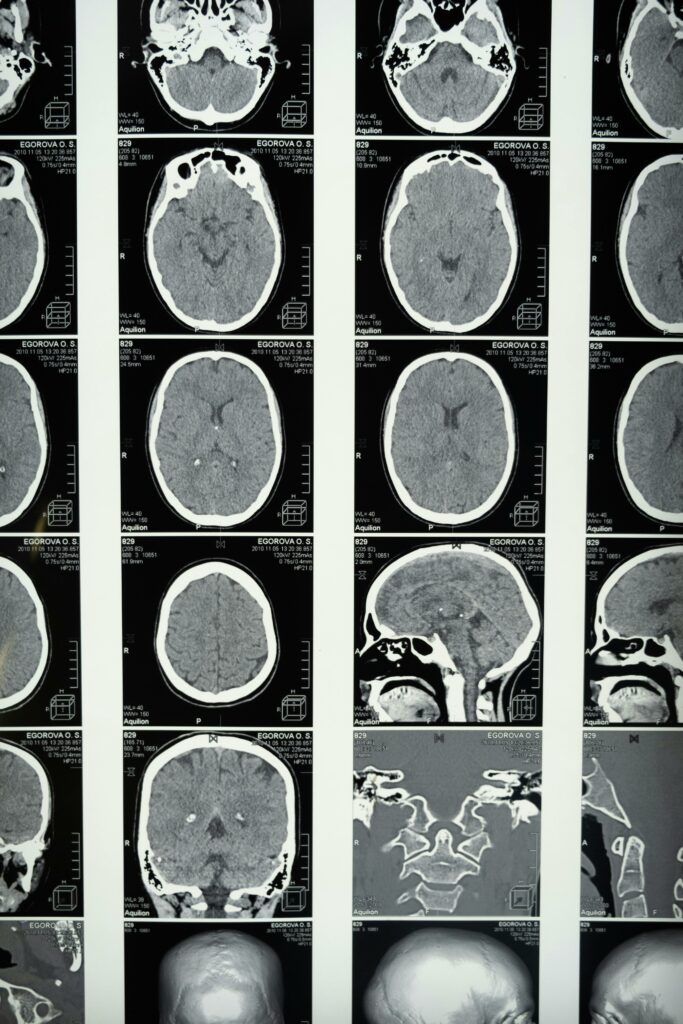
According to NHS, Alzheimer’s is the most common cause of dementia in the UK. The exact cause of it is not fully understood, although medical professionals list potential factors that can lead to it, such as increasing age, untreated depression, a family history of the condition, and lifestyle factors and conditions related to cardiovascular diseases, among the rest.

Alzheimer’s is a “brain condition that slowly damages your memory, thinking, learning and organizing skills. It’s the most common cause of dementia. Symptoms usually first appear in people older than 65,” the Cleveland Clinic notes.

“People with memory loss or other Alzheimer’s symptoms may have difficulty recognizing changes in their own mind and body. These signs may be more obvious to loved ones,” the clinic’s website explains.

While this disease affects everyone differently, common symptoms are weakened or complete elimination of memory, reasoning, language, personality and behavior, and spatial understanding.

Staci Marklin, a mother-of-one from Knoxville, Tennessee, shares her journey with early-onset Alzheimer’s and the first symptoms she experienced.

Namely, Marklin first noticed switching words around at the age of 47 but brushed it off believing it was due to being just a busy mom to a toddler. Speaking to Uniland, she recalled saying things like, “move the carpet,” instead of “move the curtain.”

“There would be times when things would just disappear from my brain. Someone once asked me about a co-worker, and I had absolutely no idea who they were talking about. I could tell it was someone I should know by the way they were talking. It was a few days later when I realized it was a co-worker that I had worked really closely with.”

Marklin decided to consult with a doctor due to the fact that her grandmother also suffered from the disease. She was then told that although it’s rae for someone her age to have Alzheimer’s, it’s not impossible.

In 2024, she was diagnosed with the disease after an amyloid PET scan revealed amyloid plaques in her brain.

SWNS

Marklin and her family were well-aware that the diagnosis would change their lives, but Marklin accepted it and she’s very open about it, sharing her journey with her TikTok followers.

“People generally see this as an older person’s disease and view people with Alzheimer’s as if they can’t do anything for themselves,” she said. “It was difficult for me to get people to believe me and to trust the results I had gotten.”

What makes Staci Marklin’s story hit so sharp is the fact that everything sounded normal at first. We’ve all been there, haven’t we? You are tired, juggling a career, have a kid with about a million times more energy than you have, you are running around and make sure everything is just fine. And then you just mispronounce a word, or say something else instead of what you wanted initially, and you just laugh at it and brush it of, not realizing it could mean something serious or something you should be worried about.

But that’s exactly the trap of early-onset Alzheimer’s.

In Marklin’s case, the signs were linguistic. The brain is a massive, high-speed switchboard. To say a simple sentence, your brain has to navigate complex networks to retrieve the right “files.” Alzheimer’s acts like a vandal in that switchboard, cutting wires at random.

SWNS

Why younger people are misdiagnosed?

Perhaps one of the greatest hurdles in patients under 50 is the “Dismissal Phase.”

The reason for this is that since early-onset or “younger-onset” Alzheimer’s is less common, people and their physicians are inclined to seek any possible explanation for their condition rather than even considering it could Alzheimer’s.

According to the Alzheimer’s Association, early signs of Alzheimer’s in younger patients do not necessarily resemble the “classic” memory loss experienced by the elderly. Rather, the signs and symptoms of Alzheimer’s disease in early onset patients appear as:

Aphasia: Having trouble finding the right words and using incorrect words.

Executive Dysfunction: Having trouble planning and organizing tasks that were once automatic.

Spatial Confusion: Having trouble judging distances and losing their way in familiar areas.

Given that these symptoms are similar to the effects of chronic stress, perimenopause, or depression, many women in their 40s have spent years being told they need “more sleep” or “less coffee.” This is a dangerous delay.

For Marklin, the defining moment was her family’s history. Her grandmother had gone through this same “fog,” and this was the only thing that gave Staci the courage to fight back against the “you’re too young” argument.

In 2024, Marklin had an amyloid PET scan. To understand the severity of this, you have to understand what this scan is actually detecting. Our brain naturally produces a protein called beta-amyloid. Normally, this is broken down and washed away. However, for a brain suffering from Alzheimer’s, this protein actually turns to “plaques,” sitting in between brain cells and actually “choking” the brain’s communication with itself, Dementias Platform UK explains.

When Marklin’s scan came back positive for these plaques, the “mom-brain” excuse evaporated.

When an 85-year-old patient is diagnosed, society expects them to gradually withdraw from public life. But when you’re 47, you still have a child to raise, a mortgage to pay, a digital footprint to maintain. Marklin’s choice to take her journey to TikTok wasn’t just to document her life, but a bold statement of visibility.

The National Health Service (NHS) explains that while the disease is progressive, life doesn’t stop overnight. Early diagnosis allows for lifestyle adjustments that can support cognitive “reserve.” This includes:

Cardiovascular Management: ‘What’s good for the heart is good for the brain.’

Social Engagement: Being socially engaged can help create new ‘paths’ in the brain to compensate for damaged areas.

Mental Stimulation: Learning new skills and staying mentally challenged can slow down the perceived effects of the decline.

The legal and medical systems are not always equipped to handle patients in their 40s. How do you tell a toddler that Mommy’s brain is “changing”? How do you prepare a future that is being erased one word at a time?

Unsplash

Marklin’s openness is a bridge to the thousands of people currently “waiting” to see a physician because they think they are “too young” to have their symptoms taken seriously. Stories like that of Marklin shift the paradigm on Alzheimer’s from a “death sentence for the elderly” to a “chronic condition for the young.”

It begins with a word. A curtain becoming a carpet. A colleague becoming a stranger. But as Marklin’s case illustrates, the end of the word is merely the beginning of a new, much tougher kind of heroism.

As research into treatments targeting amyloid deposits goes forward, stories of people like Marklin are crucial. They help the medical world remember that behind every PET scan, behind every “factor,” is a mother, a worker, a human being who is still very much present, fighting to keep the lights on for as long as possible.

*Medical Disclaimer: This content is for informational purposes only and does not constitute medical advice, diagnosis, or treatment. Always consult a qualified healthcare professional regarding Alzheimer’s disease or any medical concerns. Never ignore or delay professional advice based on this information.

Please SHARE this article with your family and friends on Facebook.

Bored Daddy

Love and Peace

She took my grandson from me after I brought him up — years later, he came back a different person

0

Raising kids at my age? That was the last thing that could cross my mind, but somehow, it just happened. One day, I’m looking at retirement, and the next one, my grandson is two years old and the world around him is falling apart. My son had been gone in spirit long before he was physically away from his son’s life. And the boy’s mother? She was never really there… I guess. When she left, she didn’t even say goodbye, just disappeared.

And now, out of the blue, I have this tiny human in the middle of my living room, holding a stuffed rabbit, and looking at me as though I have any answers. I didn’t, yet, I started moving around, since one doesn’t have much time to contemplate life when a two-year-old says he’s starving.

And just like that,I got used to a completely new routine, and learned that pancakes need to be square, not round, and I also learned when the cry says “I’m bored and I want something,” and “I’m scared.”

My grandson and I became “us” and I witnessed that small boy grow up. I still keep wondering how fast the time has passed. He was just a thumb-sucking little kid, and now all of a sudden, he’s 12. Looking at him, I truly believed that the two us made it.

Well, it turned out I was wrong.

Ten years after vanishing from his life, his mother suddenly reappeared. She didn’t resemble the woman I remembered. She was elegant, polished, expensive, and cold. Like someone who’d rebuilt their life and made sure everyone knew they’d gotten the receipts. She didn’t even say “hi” or called the boy by his name, she just grabbed him and said, “I guess I should say thank you for your service, but I’ll take it from here.”

She made it sound like I was a hired baby-sitter and those ten years of looking after my grandson were just a long shift.

I remember I had a hard time processing her words. Then the man next to her, wearing a fancy suit and a briefcase, started speaking. It turned out he was her lawyer who started showing me some papers and spoke of custody and legal rights. All those words he said had no connection whatsoever to life as I knew it inside my home. All I heard were: She can have him.

Once I was able to collect my self from the shocked, I started arguing. I was the one who raised that boy, and my house was the place he knew as his home. I wanted him to at least have a choice. But no. No one seemed to care about the years I spent reading bedtime stories,promising everything would be just fine. All they cared for was biology and signatures. At the end of the day, that woman was his mother.

I will never forget the day my grandson was told he needed to leave my house. The poor boy had no idea what was happening. I remember him looking straight at me, expecting me to stop whatever was going on from happening.

I couldn’t, and that’s what hurt me the most.

Unsplash

They took him to the car, and he was crying so hard that he didn’t even sound like himself anymore. He pressed his face against the window of the car, his hand flat against the glass as they drove away. I stood on the porch, watching until the car was out of sight. And then I stood there some longer. Just stood there. Not sure of anything else to do.

After that, nothing. No calls, no cards, no pictures, no updates. It felt like my grandson and all those years with him never existed.

My house was so silent that I thought I was going mad. All I did was waited. I though he would call my name from the other room, and I thought I was hearing his footsteps. His room remained untouched, all his things were where he left him. The posters remained on the walls, and I just went inside once a week to clean it and have the windows opened to make sure it didn’t feel abandoned.

I have no idea why I did it. Maybe for me, maybe for him, or maybe for both of us.

Birthdays were the worst. I’d swear to myself that I’d just pretend it was any other day, skip it, don’t even acknowledge it, whatever. But I never could. I’d bake a little cake, light a candle, and just sit there for a while. It sounds ridiculous when I say it out loud, but it felt wrong not to.

Years went by and I somehow got used to the silence, but I still couldn’t get used to the absence.

Unsplash

When my grandson turned eighteen, I convinced myself it would be for the best if I didn’t expect anything because I already learned my lesson the hard way.

But that afternoon, there was a knock on the door. The moment I heard it, my hands started shaking. As I went to open it, I kept telling myself, “Don’t do this to yourself.”

But when I opened that door, there he was. My grandson was standing right in front of me.

He wasn’t a boy anymore. No, he was taller than me, his shoulders broad, and his face a bit different. But it was him, there was no doubt about that in my mind. I’d recognize those eyes from miles away. For a split second, we starred at each other, and then he hugged me as hard as he could.

And then he started crying, and it seemed to me that at that exact moment, he cried all the tears he had been keeping all those years.

“I thought about you every day.” I could tell it was true.

Unsplash

I though he was just visiting and that he was there to stay for the day, hopefully for the weekend. And although it had been just minutes of me seeing him after 6 years that felt like eternity, I already felt the pain of him leaving again. He hugged me again, and wiped the tears off my face.

“You’re still my favorite person,” he said. “The one I respect most.”

And then he handed me keys. “I’m eighteen now,” he said. “I get to choose where I want to live.”

Honestly, I had no idea what that meant or what he was talking about. I just starred at those keys.

“I want to live with you,” he said. “I rented us a place. It has an elevator. No stairs. Remember, you had a hard time with those.”

Those words broke me. Out of everything that he could have done with his freedom and youth, he thought of me.

I asked him how he had managed to find money for rent. And he said he had been saving for years, money he got for his birthdays, allowances, holidays. He had been planning this from the moment his mom forced him out of my place.

Then it finally hit me. All those years I spent believing that I had lost my grandson… I hadn’t.

Unsplash

Now he and I have all this time for ourselves before he goes off to college and pursues his dreams. I am well aware it’s not forever, but it’s still something, and I know I will not take for granted any of the seconds I get to spend with him.

We sit and watch films together, and we talk about everything. He told me everything about what his life had been before he turned eighteen, everything he went through, and all the things he couldn’t say to me during those years.

While there are gaps and years that cannot be recovered, what matters most is that he’s here for at least now.

Sometimes, I’ll catch him sitting there in the quiet, and the way he looks when I see him is though as he’s making sure the floor isn’t going to vanish from beneath his feet again. And in moments like those, I can’t help but look at him and see right through the man with the broad shoulders. I see a small, shell-shocked kid holding a tattered stuffed animal, wondering where the hell everyone is.

Life has a way of stretching a relationship until it’s as thin as a thread, messing with your head, breaking things so badly that you’re sure they’re beyond repair. You think the story’s over, that the pages have been ripped out, but I’ve come to realize that some things don’t care about time, or distance, or some judge’s verdict written down on a piece of paper. They don’t go anywhere. They just sit there quietly, waiting for the right moment to wake up.

Please SHARE this article with your family and friends on Facebook.

Bored Daddy

Love and Peace
The incredible story of Victoria Wright: She inspires millions with her rare genetic condition

0

Forget beauty standards, this is the face that literally broke the mold.

Victoria Wright was just four when her life took a dramatic turn that most people couldn’t even imagine. It all started with a subtle change in her jaw, but it quickly spiraled into a rare genetic mystery that had her doctors scratching their heads and made many stare.

Imagine carrying the weight of a bowling ball in your lower face every single day.

Sadly, that has been the reality of Victoria Wright who grew up battling cherubism, a condition that causes the jawbone to expand into an abnormal, stony overgrowth.

From brutal comments from bullies on the school bus to constant side-eye from complete strangers, she had every right to hide. But Victoria? She had other plans. This brave woman never let her condition to define who she is, and she turned her uniqueness into a powerhouse platform. Today, she’s a spokesperson for anyone who just like herself, feels “different.”

Let’s take a closer look at Victoria’s life journey, her condition, and her bravery to stand against a world fascinated by beaty standards determined by the media.

BBC

Imagine a picture-perfect start: a beautiful family, a baby girl, and a future full of promise. For Victoria, the perfect “normal” childhood took a sharp turn at the age of just four.

“My mum was brushing my teeth, and she noticed they weren’t in the right place,” Victoria Wright told the NHS.

What her mother had noticed was just the first crack on the glass. It was the beginning of cherubism, an ultra rare genetic condition characterized by variable degrees of abnormal bony overgrowth of the lower face. Ironically, named after chubby-cheeked “cherubs” found in Renaissance paintings, the condition is far from angelic for those suffering from it.

Victoria’s face changed as much as her life did. From a toddler with a slightly “off” smile, to a woman carrying a burden as heavy as a bowling ball, her journey is an epitome of a transformation that makes headlines.

Facebook/Changingfaces

Her family took her to a number of doctors who eventually did diagnose her with cherubism. The told her that the condition would regress after puberty, but that is not what happened. Instead, her jaw grew so large that is started affecting her eyes and she had undergone a surgery that helped release the pressure. Luckily, the surgery was a huge success and saved her eyesight, but even today, she suffers from severe headaches.

“Cherubism isn’t a painless condition. I do get twinges of pain. My head is very heavy. Doctors say it’s as heavy as a bowling ball,” Wright explained.

“I’ve been offered surgery on my jaw to make it smaller, but I don’t think it would improve my appearance. I’m used to the way I look.”

In a piece she penned for The Guardian, this brave woman opened up of her struggles with bullying, threats of violence, intimidation, and verbal abuse.

Kids at school called her names such as Fat Chin, Buzz Lightyear (the astronaut character from Toy Story), and Desperate Dan (a wild west character from the Scottish comic magazine The Dandy).

“A girl used to draw pictures of me in class and share them around,” Victoria said.

And people started all the time. Whether it was at school, on the streets, at the mall, she could feel everyone was looking at her, and it did bother her, but she eventually realized that it’s in the human nature to stare.

“I try not to take it too personally. We all stare, even me,” Wright said.

Facebook/Jeansforgenes

“As a teenager, I used to get angry, but that doesn’t do any good to you or the person staring. It just reinforces the stereotype that people with disfigurements must be angry, tragic, or scary. If I find myself being stared at in an aggressive way, it can be unsettling. But I don’t let it get to me.”

She continued, “If someone’s staring out of curiosity, I just smile and nod to show them I’m a human being and there’s nothing to be scared of. Most of the time, people smile back. That’s a good feeling, because I know I’ve made a small connection with them.”

Her life started to change when she reached her teenage years and discovered the Changing Faces charity, which is now the UK’s leading charity for people with a scar, mark, or condition on their face or body. According to their website, they “provide life-changing mental health, wellbeing, and skin camouflage services” and “work to transform understanding and acceptance of visible difference, and campaign to reduce prejudice and discrimination.”

It was through this charity, founded in 1992, that Victoria found huge support. It helped her understand that beyond her looks, she was worth just as much as everyone else.

“As a teenager meeting them, I felt, ‘Wow, you can have a career and be happy and confident with a disfigurement,” she told the NHS.

“Sometimes you can feel isolated, especially if you have a rare condition. It’s difficult if you don’t see anybody else in the street like you. Getting peer support is so important. For every person who stares, there are a hundred others who don’t and who will like and respect you for who you are.”

Through the charity, she didn’t only found a new perspective but also a sense of humor. In a move that caught the media totally off guard, she told 60 Minutes Australia that she “adores” Buzz Lightyear, jokingly referring to the square-jawed hero of Toy Story as her long-lost brother.

Victoria also spoke of the questions she constantly gets about undergoing plastic surgery, “Why don’t you just get plastic surgery?”

Some even started saying that she’s some sort of crusader against cosmetic surgery, but Victoria is finally setting the record straight. It’s not that she’s all against plastic surgery, she just doesn’t think everyone needs to undergo one. What’s more important is to be satisfied with yourself, and at the moment she’s perfectly satisfied with the reflection she sees in the mirror.

“I’m certainly not against people with disfigurements having surgery, but I’m fine with the way I look. Why should I have the surgery for other people?” Victoria Wright asked.

“I’m happy with my face most days. After all, I’m a woman, and no woman is completely happy with the way she looks. But I’m not going to change myself to make other people happy.”

She added, “I don’t want to hide at home, afraid to go out and afraid of other people. If they have issues about how I look, it’s their problem, not mine.”

By 2016, Victoria wasn’t only a spokesperson but a breakthrough TV star. She was part of the BAFTA-nominated mock documentary Cast Offs, a hard-hitting comedy-drama that saw six disabled individuals stranded on a remote British island as part of a fictional reality TV show.

Twitter/victoriamwright

Among the characters were a blind man, a paraplegic man, and Victoria, who has cherubism. As noted by The Guardian, all were played by actors who share those disabilities, and one even raised concerns about non-disabled actors taking on similar parts.

“There is likely to be a storm of comment from disabled people and non-disabled people alike over Cast Offs. Some disabled people will find it funny and real – portraying disabled people as adults who swear, drink, and have sex. A real break from covering disability with kid gloves or not covering it at all. Others may well find it offensive,” Liz Sayce, chief executive of the Royal Association of Disability Rights, told the newspaper.

Victoria loved doing the show, and during a Q&A occasion with directors Miranda Bowen and Amanda Boyle, a funny story about her was shared, which once again showed her humorous side.

“I remember in your casting Victoria, you had to invent a secret. You claimed that you’d had plastic surgery to become funny-looking. I remember the look on the face of the person you were acting with. It was a brave, bold, and funny moment – everything we were looking for,” Boyle said.

Miranda added, “I often forgot that neither of you [Victoria and co-star Peter Michell] had acted before. You both performed with great professionalism and proficiency, and it was a joy working with such a talented group of actors.”

Youtube/Jeansforgenes

Today, Victoria Wright is a loving mother and leads a fulfilling life. She’s also a productive disability rights campaigner.

What’s more, she has become the spokesperson for Jeans for Genes in the UK, which is the annual fundraising event for the genetic condition community.

“Throughout my life, I’ve met people who assume that because of how I look, I must live a depressing, isolated life, but I have a good life. I’m a charity campaigner and public relations professional, and I’m blessed with a young daughter who makes me laugh every day,” she said.

This incredible woman’s story teaches us resilience, and serves as an inspiration for many people out there both with and without disabilities.

Please SHARE this article with your family and friends on Facebook.

Bored Daddy

Love and Peace