I called my sister ‘nobody’ after she raised me—then I learned how wrong I was

0

When we speak of success, we tend to measure it by the stuff we can show off: diplomas hanging up on the walls, impressive titles attached to our names, or even the cheering crowds.

Truth is, however, that there is much more than that lying at the bottom of everything that happens in our life, since the real foundation of our existence is often built in the shadows, fueled by the sacrifices of people we’ve grown used to overlooking.

This one is for my sister – the person who raised me and worked herself to the bone so I could chase my dreams.

I guess we all know all too well that there comes a point in life when something shifts, yet we don’t really feel that while it’s happening. At least not consciously. For me, that moment came when my younger sister stopped being a teenager and became my caretaker, provider, and source of everything. She dropped out of college without telling anyone, took two jobs, and learned to stretch a single grocery list across an entire week. She mastered the art of a fake smile, telling me, “Everything will be okay,” and somehow making me believe her.

My sister didn’t choose this path because she wanted to; she had no other options.

At the time, I didn’t understand that. All I noticed was her hard work and her constant effort to keep us afloat. Meanwhile, I was entirely focused on my grades and climbing the ladder of success.

Honestly, I was thriving and took everything thrown at me because of ambition and simple curiosity. Grad school, internships, and then a career that others would envy; that was my story. On the day of my graduation when everybody around was clapping their hands, I scanned the crowd, searching for her. I saw her sitting somewhere way behind in the last row, clapping quietly. She had the look of pride on her face like the whole celebration was hers, not mine.

After embracing her, I felt the surge of pride from achieving it all. But in an instant of absolute and sheer arrogance, I told her, “See, I’ve made it; I have climbed up the ladder. You chose the easier route and here you are, nobody.”

She didn’t lash out at me. No, she just smiled at me and said, “I’m proud of you,” and then she walked away. For a moment, things seemed okay. After all, I had my own kingdom to build. So what if she could take care of hers? I just thought that was how it worked when you got older.

A few months went by, and then I found myself visiting her in her town while attending a conference there. I wanted to see her, mainly because I needed reassurance that things were fine. However, once I got within a stone’s throw of the house, I knew something was wrong. It was open, lifeless, barren, and all the coziness and warmth of her home was stripped away from it.

There was an eerie noise, which led me to the living room where she lay on the ground, pale, trembling, and barely breathing. She looked so weak and vulnerable that I realized she had let her spirit drain away over time. My mind raced as I fell to my knees, feeling completely helpless. Through gritted teeth, she smiled and said, “I didn’t want you to worry.”

In the sterile, brightly-lit corridor of the hospital, my entire reality fell apart. It began with the truth being revealed in painstaking detail by a doctor who regarded me with a combination of pity and bewilderment. It involved a chronic autoimmune disorder she had been ignoring all along, a series of missed appointments, and medication she had not taken due to her inability to pay for it. She sacrificed her health so that I would not have to interrupt my studies because of medical bills.

It was followed by the harsh financial truth that made me sick to my stomach. That inheritance that I assumed we had set aside from our parents’ savings? It did not exist. Our parents left us with very little in savings and an enormous amount of debt. All of those dollars she had given me for tuition, textbooks, and rent? They were the fruits of her labor, which she had endured in secret, working late hours and taking on extra jobs. In my academic bliss, I did not realize how I had deprived her of everything else she had.

With these details in mind, my whole concept of love and family unraveled. I came to understand that in my pursuit of recognition, she had been eroding her own life. She had sold everything – the heirloom jewelry that once belonged to our mother, the massive oak furnishings passed down through generations, even the trinkets that were our cherished childhood memories – to ensure I could stand on my feet. She had compressed her own essence, well-being, and happiness into a tiny space to give me room to grow.

Perspective hit me overwhelmingly. While I measured my life in degrees and achievements posted on LinkedIn, she had measured hers in patience, suffering, and sacrifice. I had been shaped by years of her hunger, fatigue, and pain.

And after she finally got some sleep from her medications, I walked to the waiting area where I just lost it. It was not because I feared that something bad would happen to her – there was another kind of grief within me. My arrogance about all the things I had achieved made me walk around with pride and never once stop to look at the very ground I was standing on, which happened to be the woman carrying me on her shoulders.

She slowly opened her eyes, and even though she was hooked up to all sorts of machines and IVs, she gave me her usual tired yet achingly sweet smile. And then it dawned on me – something no teacher, mentor, or CEO ever taught me in my life – that true greatness doesn’t need a megaphone or a platform to be heard; it doesn’t require media coverage at all. Greatness is found in simple and often mundane acts of service that make the world go round while other people try to get their fifteen minutes of fame.

Her affection did not give me just an opportunity to advance my career – it offered me a master class on the meaning of kindness and bravery beyond the reach of any television camera. While I used to consider success to be the final destination, my understanding of this word changed dramatically in that hospital room. True success is the capacity to help others quietly and protect them without expecting anything in return except the happiness of those people. She did this for me for half of her lifetime, and I only started to realize the full scope of her generosity.

This is not only a tribute to my sister; it is also a call for each of us to take a second glance at the individuals in our lives, particularly those who appear to be “fine” or “unassuming.” There is a tendency to believe that those who provide us with aid and support are invincible, that they are a part of the landscape. They are not. More often than not, the individuals whom we consider to be fortunate, or worse yet, those who lead “simple lives,” are shouldering burdens which would cripple us in less than an hour.

It is a sobering reminder of the toxicity of pride and the limitations of our perceptions. My pride had clouded my judgment so much that I failed to see the individual who made my achievements possible. I mistakenly equated visibility with significance and noise with importance. It is perilous to place value on an individual based on their accomplishments without taking into account the sacrifices they make to attain such successes.

Lastly, this is about the necessity of being grateful. We often take those who love us for granted, assuming they have an inexhaustible source of strength. We think they will always be there, unseen yet steadfast in the background. Yet they have limits. They can grow tired in body and spirit. That is why we must appreciate and value them before something forces us to realize it.

Conclusion

I eventually learned that the true measure of a person’s greatness isn’t in what the world sees, but in what they do when they think no one is watching. My sister’s life was never defined by a resume or a high-paying job; it was defined by the quiet, incredible sacrifices she made so I could have the luxury of choice.

I also realized that recognition doesn’t need to be a public event. It doesn’t require a plaque. Sometimes, the most profound recognition comes in a quiet, private moment when you finally acknowledge someone’s struggle and choose to honor it with your presence and your help. By stepping into her world and truly seeing her—not as my “caretaker” but as a human being with her own dreams deferred—I finally understood the depth of her courage.

Real success, it seems, doesn’t lie in standing on a podium, looking down upon an audience. Rather, it lies in standing by the side of another person, catching them just in time before they fall, and shaping the world around us through our strength. Today, I no longer measure my success by the degrees or diplomas I hold, because I realize I’ve found myself thanks to the loving support and resilience of my sister, who took upon herself the burden of holding up the sky so that I could fly.

Please SHARE this article with your family and friends on Facebook.

Bored Daddy

Love and Peace

The doctor who held my hand! A story of loss, healing, and hope!

0

Leo, Elena’s 7-year-old son, was playing on the climbing structure at their local playground. It was something he really enjoyed; one of his favorite things to do during the day. And the day was a beautiful one. The son was shining, the place was filled with children, and Leo had plenty of fun. Unfortunately, soon after, a tragedy struck, and Elena’s world shattered into a million pieces.

There was no scream or loud noise, just a dull thud and a child who never opened his eyes again.

Somehow, Leo fell, and he was rushed to the hospital.

Doctors did everything in their power to save his young life. Leo was placed on life support, while his scared mother prayed to God to save her son. Doctors spoke with careful compassion, but their words felt distant, muffled, as if Elena were watching events unfold from beneath water.

When life support was off, the silence that ensued was devastating. In that moment, Elena could finally understand what “never again” really meant. Never again would Leo leave his shoes by the door. Never again would he ask for one more story tonight. She knew she would never again hear his laughter echo through the house.

Loss did not come alone but brought aftermath.

Mark, her husband, had his own kind of meltdown. He had taken Leo to the park that day, and he was wracked with guilt. Instead of bringing the couple together, the loss and the grief solidified into resentment. Within weeks, he left. He couldn’t look at Elena without reliving the moment he wanted to unsee.

Elena stayed behind and was surrounded by reminders of a life ended too soon. Leo’s backpack was still where he’d left it, his shoes by the door, his crayons all over his room.

In the ICU’s last hours, one calm presence kept her grounded. Dr. Aris was Elena’s silent company. She took her hand, and said, “Hold on. Don’t give the pain the victory.”

The months to come were filled with grief and mourning. Some days Elena was unable to get out of bed; other times she went outside just to show that she could.

She went to a grief support group and started small rituals. She planted her son’s favorite flowers, and wrote letters to him about the things he would never see again.

Two years later, at a symposium on trauma and child protection, Elena recognized a familiar voice. Dr. Aris was at the lectern. She was speaking on empathy in medicine. When they reunited, the doctor shared her own story. She told Elena how her own daughter had survived a similar accident, forcing her to better understand the meaning of loss and purpose.

That reunion led to Leo’s Light, a program supporting families facing medical trauma and working toward prevention.

Elena started sharing her story, helping other parents who lost as child as much as she could. Without Leo, her life was never the same.

Please SHARE this article with your family and friends on Facebook.

Bored Daddy

Love and Peace

I gave my coat to a woman in the cold—two weeks later, everything changed

0

If you’ve ever walked down Fifth Avenue at the tail end of winter, then you know precisely the kind of morning I am talking about. You likely remember the particular feeling of hopelessness that sets in on such mornings, when the city seems stripped bare of everything pleasant and good. Not a trace of snow anywhere, let alone any Christmas decorations, just gray concrete, gray slush, and a sky that resembles nothing so much as an old, ragged piece of wool. And the wind… it’s not just a gust; it’s a hunt, finding the smallest point where your scarf meets your chin.

I was doing what most of us do when we are overwhelmed by the situation, dwell on small, trivial matters so that we would not have to face the bigger and scarier ones. I was practically lecturing myself about how stupid it was for me to wear such thin socks, instead of the thick ones I should’ve picked. Then I made promises to myself that once I had received my bonus, I would invest in a proper coat because until then, I had no intention of spending money on anything fancy. These were the “safe” things that I told myself, which meant that I did not have to confess how exhausted I really was. I was already feeling drained before I had even reached the office and started working.

Well, that’s when I saw her, curled up in the space between the marble of our lobby and the sidewalk. Security guards generally run people off, but at such an early hour and in such freezing temperatures, I guess everyone was trying to stay indoors for warmth. She sat so close to the stone that it seemed as if she was trying to blend into it, as if by pressing herself further against the wall she might find traces of warmth from the building’s radiators. The woman was dressed in what I could only describe as a threadbare purple sweater, covered in the tiny balls of fluff that appear after multiple washes. She wasn’t even wearing a coat.

At that moment I acted like a true New Yorker and did the “polite ignore.” We all know what I mean by that. There you are, and there is a person right in front of you going through hell, and your mind just blocks them out. This is the way nature works, no? You would never get to work if you had to stop for everybody that is suffering. And I had certainly passed that girl by dozens of times over the week, but I didn’t even recognize that she was a living person.

However, as I approached her, the “pocket shuffle” kicked in. This is that unconscious reflex in which we search our pockets for anything and everything that we can offer so we do not look like a complete jerk. The old trick was well-rehearsed. I would give an appreciative nod and perhaps even a dollar if I had it, followed by a sympathetic half-smile, before disappearing into the comfort of the building’s lobby. However, all I could find was some pocket lint, a torn receipt from the bodega deli, and a gum wrapper.

When she spoke, it caught me off guard. Her voice wasn’t high or shaky or desperate. It was just… flat. Neutral. She asked if I had any spare change, but it didn’t sound like a plea. It sounded like she was just taking a poll, checking to see if kindness was still a thing that existed in the world, but not really expecting a “yes.”

I told her my standard line of “Sorry, I am tapped out” and headed towards the door. However, something made me pause. In fact, I did stop and look back at her. But, more importantly, I actually paid attention to her. It’s not because she looked cold. Instead, it was because of her face. She wasn’t looking down or looking into thin air. Her eyes were observing everything around her with such intensity.

At that moment, the gust of wind blew through the street, and it was like somebody had smacked me in the face with a piece of ice. I was bundled up in three layers and a scarf, but I still felt terrible. This woman had only a tattered sweater and a wall. It struck me that I would be okay. I would be indoors in thirty seconds. I would be at a heated bus stop shortly. A couple of minutes of freezing wouldn’t hurt me, but it seemed like she was about to die from the cold right now.

For some reason, I took an action that wasn’t part of the plan. I unzipped my coat. As soon as I took it off, the air seemed to have a certain weight, just pressing out all the warmth from my body. I refused to think about it because otherwise, I wouldn’t do it. I only held out my coat to her.

She didn’t snatch it from me. Instead, she just gazed at it as if it was some venomous snake that I was holding in front of her eyes. She was completely stunned. Finally, I had to bump her shoulder with it so that she took it and held it, but her fingers were literally cold like ice. She made me jump when she laid her hands on mine. And despite the fact that the coat hung below her wrists because it was far too large for her, it felt good.

She never said “thank you.” At least, not right away. She just smiled and it was an “I see you’re still alive” smile—not a “thank you for the coat” smile. Then she thrust something into my palm. It was a coin. Old, rusted, heavy. Like it would be in a museum or a 1920s junk drawer. And I wanted to give it back to her. But she shut my hand around it, and she had that look in her eye, that utter confidence, that made me know that it was mine now.

And that’s when the heavy glass doors slid open, and Mr. Harlan emerged. The thing is, at this point, you need to visualize what Mr. Harlan looks like to understand just how awful the next minute and a half became. Harlan is one of those men who seems like he was created in a factory specializing in making lobbyists look good. His charcoal suit is flawlessly cut, his hair hasn’t moved from wherever it was in 1994, and the man has such an inflated ego that it practically needs its own zip code. He saw me—the guy standing in front of him, shivering in just his dress shirt, berating a “loiterer,” and his face went purple.

There was no private conversation about the matter, he just began shouting. In Harlan’s book, I hadn’t just done something inappropriate or rude; I had made myself into a “liability” and a “bad look” for the firm’s image. He even mentioned having to navigate through “this kind of element,” as if the woman I gave my coat to was some sort of dangerous weather condition. Before I could explain anything about how my coat had ended up on her in the first place, he cut me off. “Clear your desk,” he said. “Effective immediately.”

He used those exact words as if he’d read them from some kind of corporate script he kept beneath his pillow. There was no discussion, no mention of a Human Resources meeting, none of the things you’d expect when firing an employee. He simply did it. And then, as if he’d just dealt with a minor annoyance, he walked inside.

There I was, standing outside in the wind as the glass doors closed on my career. I had just traded a 401k for a rusty coin and a $200 jacket. She, still wrapped in my oversized coat, apologized and said something that stuck with me: “You knew what you were doing.”

I left feeling like an utter fool. The next two weeks saw me doing “pasta math” while recruiters stayed silent on the phone. I froze in my apartment to save money, and constant anxiety became my only roommate. I was falling, and time was running out.

Fourteen days later, a small velvet box appeared on my front doorstep—no stamps, no return address. I retrieved the rusty coin from my junk drawer and slid it into a narrow slot on the side of the box. It clicked, opening to reveal a card: she wasn’t homeless at all, but a CEO testing who would really give something up.

But below that was an offer of employment with a salary that seemed like a typographical error. It was life-altering.

Within days, I was falling apart, but the new office was sleek, made of glass, and filled with expensive silence. I walked into the boardroom, and there she was—without her pilled sweater, dressed in a business suit, and with that same piercing stare. No long explanation was necessary. She understood how close I’d come to tossing the coin; I understood that she had saved my life.

On the fiftieth floor, I came to understand that by removing my suit jacket, I had not only done a good turn for a stranger but had prevented myself from turning into yet another empty suit like Harlan. I was finally warm. I think I’m going to enjoy this place.

Please SHARE this article with your family and friends on Facebook.

Bored Daddy

Love and Peace

Top 10 safest places in case World War 3 breaks out

0

If global tensions ever erupt into a full-scale warfare, one can’t help but wonder if there would be anywhere in the world safe enough to seek refuge. While the idea of a world war is frightening to say the least, it does raise a number of questions about geography and survival. In today’s climate, these concerns feel more relevant than ever. Following reports that Ali Khamenei was killed during large-scale US and Israeli strikes in late February 2026, the situation in the Middle East has intensified dramatically. The subsequent retaliation, particularly disruptions around critical global trade routes like the Strait of Hormuz, has underscored just how quickly regional conflict can escalate into a crisis with worldwide consequences.

Just this week, on April 7–8, a fragile two-week ceasefire was brokered by Pakistan, Time reported. Although this last-minute deal has put on hold the looming danger of “infrastructure demolition” as President Trump has dubbed it, the economy around the world continues to suffer because of the energy crisis. The best places to be at this stage would surely be those that are distant from military and economic centers, as well as from complicated alliances.

Truth is, however, that no place on Earth would be completely untouched by the effects of a possible global war.

Still, some locations are far better positioned than others to handle widespread instability. Research in geopolitics and disaster management often points to three key factors that can improve a region’s chances of staying secure during a crisis: distance from major conflict zones, political neutrality, and a strong level of economic self-sufficiency. Countries that combine these qualities are not only less likely to become direct targets, but are also better equipped to endure long-term disruption. With that in mind, here are ten places often considered safer options during a global conflict, along with the reasons behind their resilience.

1. New Zealand

Being situated in the southwestern part of the Pacific Ocean, New Zealand is one of the most geographically isolated industrialized countries in the world, so it doesn’t come as a surprise it comes on the top of the list.

It is unlikely that any of its neighbors will engage in warfare against it, especially considering the fact that the two main conflict zones of the contemporary world are currently the Middle East and Eastern Europe. Also, its foreign policy is rather low-key, and it does not have any geopolitical rivals.

However, aside from its geographical isolation, the country has all the necessary conditions to be entirely independent. Indeed, New Zealand boasts an exceptionally productive agricultural industry, which allows it to produce vast amounts of food, while its power supply is based mainly on renewable sources, including hydropower plants and geothermal energy stations.

Pixabay

2. Switzerland

Switzerland has long been synonymous with neutrality. It has managed to stay uninvolved in any major war for well over two hundred years. The topography of Switzerland also contributes heavily to its defense, being surrounded on all sides by the Alpine mountains.

Furthermore, Switzerland boasts a very elaborate system of civil defense. It is also among the few nations with enough underground shelters for the population to withstand nuclear fallout. When coupled with its economic stability and local food production capabilities, it can be safely said that Switzerland is well-prepared to weather any storm.

Pixabay

3. Iceland

The reason why Iceland gets on this list is because it’s an island nation located in the North Atlantic Ocean, away from other continents that are highly populated and regions affected by war. It has no active military forces, and its relations with other nations are rather peaceful. Most importantly, Iceland uses renewable sources to generate all of its power needs, which come from geothermal sources and hydroelectric power stations. Having no military importance, Iceland is even less likely to become a target. In a world where oil supplies are currently being choked by the closure of the Strait of Hormuz, Iceland’s energy independence is a massive survival advantage.

Pixabay

4. Antarctica

Even if it cannot be considered a destination, Antarctica offers complete isolation. As it is stated by the Antarctic Treaty, the place is used for scientific purposes, while any military operations are banned there. There are no permanent residents in Antarctica, just rotating teams of scientists and support staff.

Its extreme climate makes survival challenging, requiring careful planning and logistical support. Nevertheless, because of its isolated nature, Antarctica lacks important strategic value, making it less likely to become the center of any confrontation. Though impractical for most individuals, it shows that complete isolation can bring about security.

Pixabay

5. Argentina

Being spatially remote from numerous centers of power around the world, especially those located in the northern hemisphere where most of the disputes have traditionally occurred, Argentina enjoys certain advantages.

Also, the country is a major agricultural producer, capable of feeding its population through domestic means. At the same time, it has significant natural resources and energy potential. The Andes Mountains form a natural barrier along its western border, adding a layer of protection. Research into global food security consistently points to countries like Argentina as being better positioned to withstand disruptions due to their agricultural capacity.

Pixabay

6. Ireland

Another country that fits this pattern is Ireland. It is not a part of NATO and maintains a long-held position of military neutrality. As it is located on the western edge of Europe, Ireland is not a focus of any potential conflicts in the region.

Ireland enjoys the advantage of having a peaceful political climate, availability of fresh water, and an operational agricultural economy. It is also engaged in global business but not in any military blocs, which makes it less vulnerable. In today’s tense climate, Ireland has continued to act as a peace advocate rather than taking part in any conflicts.

Pixabay

7. Canada

When it comes to larger countries, the one that stands out is Canada, more specifically its northern and interior areas. Being the second-largest country in terms of land area, Canada has vast stretches of sparsely populated areas that are far removed from major cities and potential military targets.

Also, these areas provide natural resources such as water, forested regions, and agricultural land. Though Canada is part of the NATO alliance—making some areas potentially a target for military actions—the vastness of its interior makes these regions difficult to target effectively.

Pixabay

8. The Pacific Island Nations

Island states in the Pacific like Tuvalu, Samoa, and Kiribati do not play a significant role in world geopolitics. The fact that these island nations are very remote means they are not likely to become targets during war situations.

Many of these islands rely on fishing and small-scale agriculture, which could sustain local populations. Nevertheless, due to their remoteness, some specialized healthcare facilities may not be available. In addition, it can be difficult for goods from outside to reach these areas. Thus, during a world war, these island nations would largely have to rely on themselves, which is both a risk and a form of protection.

Pixabay

9. Bhutan

Bhutan is a country located in the Himalayas that offers a rare combination of geography and political ideology. This tiny nation concentrates on ensuring the welfare of its citizens via the notion of Gross National Happiness, which stresses sustainability and community rather than swift industrialization.

The nation has been able to steer clear of international disputes and follows a prudent approach to foreign policy. Its mountainous terrain provides a natural barrier, making Bhutan less accessible. Bhutan’s reliance on agriculture and hydroelectric power helps shield it from the current global energy crisis.

Pixabay

10. Chile

Finally, an excellent example from South America is Chile. Situated on the west coast of the continent, it is bordered by the Pacific Ocean and the Andes Mountains, both serving as natural barriers. The country enjoys political stability as well as a diverse economy that includes agriculture, mining, and green energy production.

The southern regions of Chile, especially Patagonia, are highly isolated and sparsely inhabited. These areas could provide sanctuary during international unrest, as they are far removed from major conflict zones around the world.

Pixabay

Conclusion: What makes a place safe?

Various studies have found that several factors must be considered. For example, distance from military superpowers and critical assets reduces the likelihood of being attacked. Political neutrality helps a nation avoid involvement in conflicts. Access to sufficient food, water, and energy allows a country to survive independently if international supply chains fail, as is currently evident due to the maritime blockade. Finally, strong physical and social infrastructure is essential for maintaining stability during a crisis.

Ultimately, although it is impossible to predict exactly what future wars might look like, history and geopolitical analysis can help us make informed guesses. Isolated countries that are self-sufficient and politically neutral are generally safer. Still, it should be noted that no country is completely safe. Even remote nations remain vulnerable to the indirect effects of major conflicts, such as economic disruption, climate impacts, or large-scale migration.

Of course, it would be ideal if the current two-week ceasefire between the USA and Iran could evolve into a long-lasting peaceful relationship and prevent further war. Nevertheless, it is important to prepare for all possibilities. Understanding which countries are relatively safer can help individuals feel more prepared. While the ten countries listed above are not entirely risk-free, they represent some of the best options available today.

Please SHARE this article with your family and friends on Facebook.

Bored Daddy

Love and Peace

Turkish woman claims to be Donald Trump’s daughter, requests DNA test

0

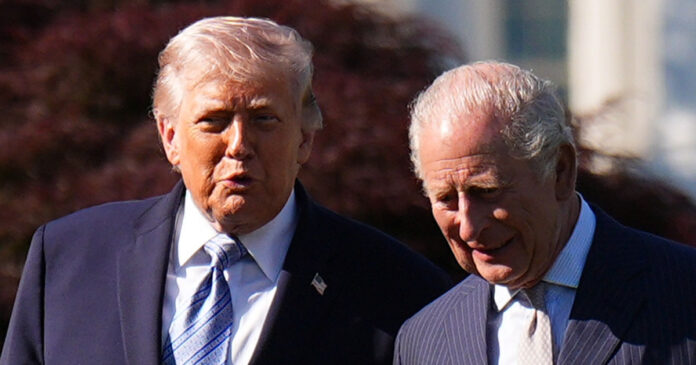
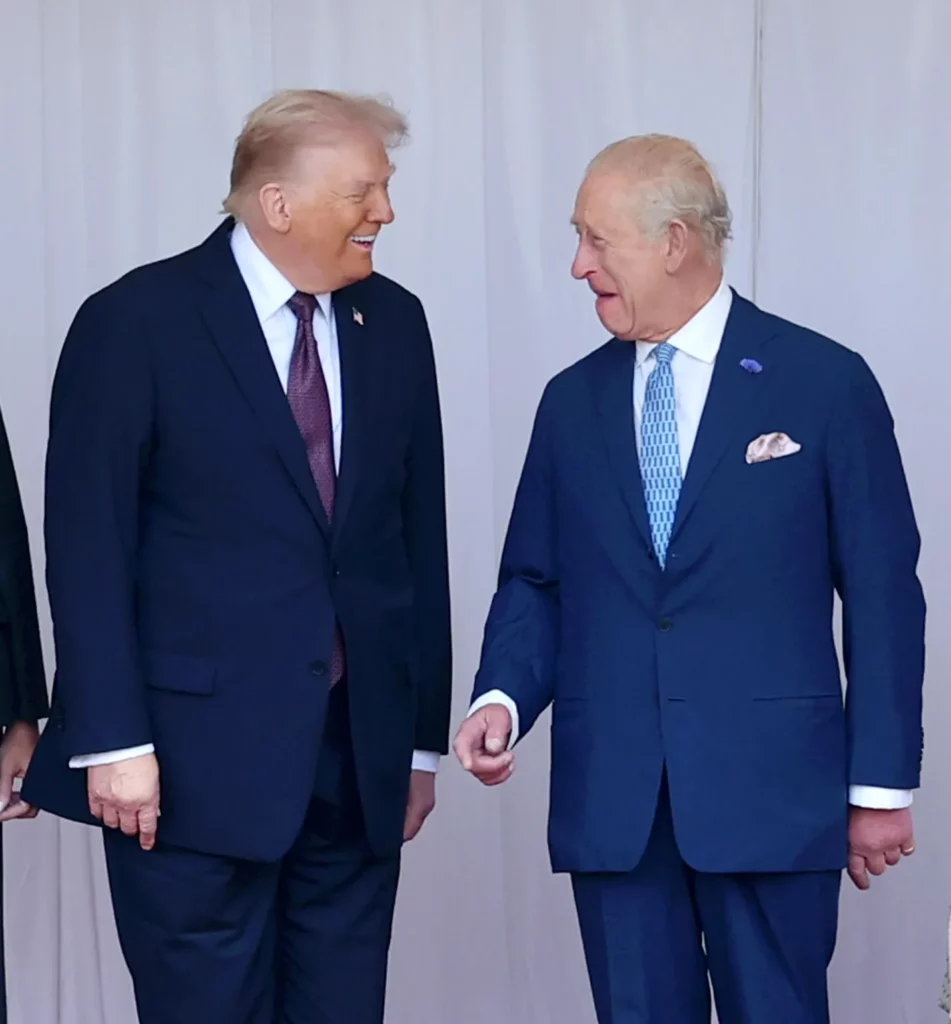
A court in Ankara, Turkey, has formally rejected the paternity lawsuit filed by Necla Özmen, 55, who made a claim that she is US President Donald Trump’s biological daughter. Although the court stated that there were no “concrete evidence,” its ruling did not stop Özmen, who is taking her search for identity to the international stage.

Özmen, an Ankara resident, has spent her whole life knowing to be the biological daughter of Satı and Dursun Özmen. Her father Dursun passed away in 2009 without any hint of a family secret. According to Necla, however, her life changed drastically in 2017 after her mother Satı, who brought her up, supposedly revealed the truth of her birth while on her deathbed. The story Özmen shared is a complex one, which makes for fascinating reading. In 1970, as she says, Satı gave birth to a stillborn child at a hospital. At the same time, she continues, there was another woman, Sophia, a United States citizen, who was in the hospital. As Necla tells it, Sophia got pregnant through an illicit affair with Donald Trump, who was, according to her, then part of the NATO forces stationed in Turkey.

Allegedly, Sophia handed her child to Satı to raise Necla on her own.

The turning point for Necla came years later when she saw Donald Trump on the news. She recounts that Satı pointed to the screen and identified him as the man from the photograph Sophia had shown her decades earlier. This revelation sparked a nearly decade-long emotional journey that eventually led to the doors of the Ankara 27th Family Court.

Upon filing her case in September, Necla demanded a DNA test as well as legal recognition of paternity. Unfortunately for her, the Turkish judicial system appeared to be a barrier too high to overcome. Indeed, on October 10, the court rejected the case, arguing that the claim lacked “concrete evidence.”

The court noted that the issues with the case were “substantive rather than procedural.” From a legal perspective, this implied that there was no room for extending the period for submission of evidence, because there were no grounds at all to hold the trial, i.e., there was no evidence in terms of documents (e.g., travel documents, hospital reports, confirmed letters).

Despite the legal rejection, Necla has been vocal about her intentions. In emotional interviews with Turkish media outlets, including a televised appearance where she burst into tears, she has insisted that her motivation is not financial or political.

“I don’t know how accurate it is. I want to find out if he is my father,” she stated. “I don’t want to cause him any trouble, knowingly or unknowingly. I just want to know the truth. I can prove through a DNA test that he is my father, if he agrees.”

She refers to Trump as a “good father” to his other children and believes that had he known her, he would have embraced her into his fold. This case is not about suing a world leader; rather, she sees this as a journey for finding a part of herself that she lost along the way. She has gone on record addressing him as “my father” and requesting his help in finding herself.

However, Necla Özmen has not accepted the Turkish court’s decision as the final one. She has lodged an appeal in the Turkish appeals court, while at the same time taking further legal action in America. Collaborating with Turkish-American attorneys, she has sent her requests to the American Embassy, and it has been reported that she has even made efforts to lodge a case with a “competent American court.”

The double track approach indicates that she has a tough battle ahead of her. Although the Turkish court was concerned about the absence of evidence in her claims, Necla seems to be banking on the possibility that the American court could see her claim as an individual’s right to know their biological parents.

If her claim turn out to be true, the consequences are huge. She was born in 1970, which would make her the oldest daughter of Donald Trump, even preceding Donald Trump Jr.

It would mean the president has children with four different women, stretching back to a period of his life that has remained largely outside the public record.

Please SHARE this article with your family and friends on Facebook.

Bored Daddy

Love and Peace

Popular beliefs and interpretations: 6 zodiac signs likely to become rich after march 2026

0

Vangeliya Pandeva Gushterova, or widely known as Baba Vanga, was a Bulgarian mystic whose prophecies are so accurate they are chilling and go far beyond the year we now live in.

Among the predictions she made was the 9/11 attack on the Twin Towers, the same one believed to be also made by Nostradamus himself.

She also predicted the death of Princess Diana, the Chernobyl disaster, as well as her own death.

And now, with the new year just around the corner, many of her claims linked to the year 2026 started circulating, attracting the attention of many.

So what did the “Balkan Nostradamus” predicted for the year 2026?

One of the most dramatic claims the blind mystic made was that humanity may come into contact with extraterrestrial life, often interpreted as a massive craft approaching Earth in November 2026. Popular roundups link the prediction to discussions surrounding the interstellar object 3I/ATLAS, suggesting unusual activity in the skies.

Another popular prediction linked to Baba Vanga says that in 2026, massive earthquakes, violent volcanic eruptions, and extreme weather could affect up to 8% of the planet’s land area, and while it lacks clear locations or dates, recent global disasters have helped it gain traction.

Baba Vanga is also said to have warned that the changes linked to 2026 would unfold gradually and would reveal themselves through subtle signs.

She described a shutting down of a long cycle of prosperity, notably one that started in the late 80s, and maintained that we’re already living out its endgame in escalating economic volatility, hobbled systems that were once taken for granted, and mass moves away from careers that offered lifelong certainty. Not collapse, but cleansing: these were the words used to describe such changes in the book Redemptive Communitarianism.

She had also named the meteoric rise of wealth in areas that had previously been dismissed as laughable. Emerging technologies, nontraditional platforms, and creative endeavors are starting to generate income in ways that would once have seemed implausible, which she described as a “first signal” of expanding abundance. Along with these external changes, she highlighted an internal one too, a growing feeling of dissatisfaction many people have with their current financial path and an instinctive draw toward change.

NDTV

The essence of financial astrology lies in knowing how to time things right. And as we left March 2026 behind, there are some signs which are experiencing an alignment of hard work, strategizing, and luck, in their favor. Obviously, no astrologer can write you a check for your good luck or fortune, and wealth will not be guaranteed by simply relying on the positions of the stars. What will come in handy however are the opportunities presented through the current movement of the planets and Baba Vanga’s predictions, for a few particular signs.

It is important to understand that the coming prosperity is not about some sort of lottery winnings, nor the sudden rise to fame. The coming prosperity will be earned as a reward for perseverance, wise thinking and acting, and making decisions when necessary. Let us see what signs of the zodiac will benefit from the changes taking place after March 2026.

This period will signal a well-deserved watershed for those born in the sign of Capricorn. They have earned their reputation for legendary self-control by working tirelessly for decades, yet their efforts produce no immediate results. But once March 2026 ends, all this hard work begins to bear fruit. It may manifest in the form of leadership, career advancement, or even owning one’s own company. It is not about luck catching up with them, but simply a consequence of years of effort being acknowledged for what it really is. The net worth of a Capricorn will soar with intent and experience.

Taurus is likely to experience development through a combination of stability and good judgment. Being a sign that loves to be secure, a Taurus doesn’t really indulge in risky endeavors. After March 2026, the celestial conditions favor them in the sense that they can increase their wealth without being reckless. It could be through owning property, saving a lot of money, or accumulating assets in general. If a Taurus opts to venture beyond his or her limits but within reason, they stand to gain quite a bit from their ventures.

But Leo faces another kind of change—driven by visibility. Post-March 2026, Leos will be under the limelight, either in terms of a high-profile career move or an entrepreneurial pursuit. Leo’s charm is a force that pulls him towards experiences which not only inflate his ego but also put money in his pocket. The key to financial gain lies in gaining attention and respect; leadership positions and personal branding form the core of his journey. Rather than working hard in anonymity, Leo’s road to riches relies on stepping into the limelight.

The pursuit of prosperity by Scorpio is a lot more subtle but certainly no less dramatic. Scorpio is known for its ability to perform behind the scenes, and post-March 2026, the sign will become even better at understanding people and the market trends. Success can happen through smart business partnerships or investments that take time. Even if the process does not look glamorous initially, the ultimate outcome will be nothing short of revolutionary for Scorpio. This period in Scorpio’s life is all about playing the “long game” and knowing precisely when to act.

Innovation will become the golden key for Aquarius. As the revolutionaries of the zodiac signs, they succeed when they shake things up a little bit. Following March 2026, any sources of income associated with technology, digital media, or innovative business ideas should do well. It is not the path that everyone walks on; it is one of the paths less traveled by. But for those willing to venture out into this uncharted territory, there are new income opportunities that nobody else even knows about.

The road map for success of the Virgos is lined by precision. The way they think and how they work is their biggest strength. Once the post March 2026 period starts, all that translates into earning money for themselves. They can become good consultants, data analysts, and even management specialists, which will bring them money on a regular basis. For them, the concept of becoming successful means doing things perfectly and reliably.

Conclusion

Though these six astrological signs might have the “wind at their back” from March 2026 forward, it is important to note that astrology is akin to a weather forecast, rather than a predetermined script. Intentionality serves as the common denominator between the disciplined nature of Capricorn, the attention to detail of Leo, and the creativity of Aquarius. These three signs are not likely to discover money by sheer luck, but only when all of their hard work pays off.

This period represents the “slow burn” method to riches. For most people, this means receiving “green light after green light” in those places where they once had barriers. This isn’t about the universe giving you things without rhyme or reason; this is about the world finally giving you something in exchange for your unique strengths. This can mean “time wealth” or getting a job promotion.

In the end, the stars set the tempo, but you do the dancing. For these six star signs, after March 2026, the melody gets much easier to understand, but you must still get up on the dance floor. With cosmic timing and down-to-earth action, this period is not only a prediction but also a road map for your future.

Please SHARE this article with your family and friends on Facebook.

Bored Daddy

Love and Peace
A simple act of kindness that made a lasting difference

0

I can remember that day very well. There was nothing strange about the store itself; just the typical dull drone of fluorescent lighting that makes its way into such small stores. It was a typical supermarket where everything is packed in rows and covered in plastic, giving off a distinct sterile smell.

Everything seemed normal until I walked down to the baby department.

There I simply wanted to waste some time by browsing through the aisles, but suddenly something caught my attention. Not too far from me there was a woman, cradling a baby tightly as if protecting him from everybody in the store. But it was her expression that made me stop.

She did not seem to be shopping at all; she was only staring around at people who seemed completely out of place in such a setting. There was no hysterical scream of horror. You could tell she was carrying way more than just the baby.

I attempted to return to my shopping, yet the voice of my inner instinct persisted to ring inside of me. It is a feeling when your common sense screams at you to concentrate despite not caring much about other people’s affairs.

After several seconds, she started walking towards us. She was moving slow, like she was second-guessing every step.

“Excuse me,” she said, looking back and forth between me and my husband.

My husband, a typical guy, responded politely but cautiously to her inquiry. His response was brief, as men tend to be polite but also unwilling to engage in lengthy conversations.

But I had been watching more closely. Her hands were trembling as she straightened out the blanket of the baby. She was picking her words carefully. There was no matter of what she was saying, but rather it was the vibration of everything around us.

I interrupted before I thought better of it.

“It’s alright,” I said softly. “Take your time.”

She gazed at me right then, and in that moment, her “everything is okay” mask just broke down. No show at all, but just enough to realize how much she was going through.

The problem is that sometimes what someone needs isn’t a moral or a cure-all. What they really need to hear is that they are not invisible to the world around them.

I didn’t think too much about it. I didn’t do a psychological assessment of the situation. I simply heard what she had to say and when it seemed appropriate, I offered my assistance with something simple. I reached into my bag, I pulled out $200 and handed it to her, telling her to use it for baby formula and whatever else they needed. It felt like the right thing to do, even if it wasn’t something anyone else in the store would have noticed or cared about.

There were no other words exchanged, except her “thank you.” They echoed through the room like a huge load being lifted from her shoulders.

There was no exchange of pleasantries. No prolonged interaction to make the whole thing a little more memorable than it had been. There was only an odd silence between two people who barely knew each other. But the air somehow shifted.

My husband looked at me after she left.

“You don’t even know her,” he told me. He did not mean to insult me. “Sometimes, you have to be careful, you know?”

I understood what he meant. This world is crazy, and people are taking advantage of others. He did make a valid point.

However, all I could do was nod. “Yes, I do understand that, but sometimes, it’s just… you know.”

He had no other choice than to leave me alone with this one. For me, however, everything seemed alright because I was not guided by logic anymore.

Time passed by, and weeks later, the incident in the store was just something else that ended up being another memory.

But somehow, it was always there.

I began taking notice of people. How someone holds back from talking, that certain glimmer in a stranger’s eye because they were having a particularly terrible day. This realization showed me just how much we walk right on by and do not see anything.

Everyone has a story we know nothing about.

Pexels

This experience taught me that kindness does not have to be this grand gesture to mean something. More often than not, it is the smaller things that make all the difference.

A couple of months after the first experience, I was in another store in a completely different area. It was larger and busier. I had walked around for a while just getting a few things without really paying any mind.

As I stood at the counter, I looked up, and suddenly stopped dead in my tracks.

Recognition can be a strange thing; you get that feeling for just a second.

It was her.

She was at the register, hair tied back, in a uniform. She seemed entirely different from before; she seemed calm and sure of herself, and she was simply doing her job. She was talking to people and genuinely seemed like she enjoyed being where she was.

She took a little while to notice me.

However, when she did, everything changed about her face.

Her eyes got wide, and she smiled at me like I’d never seen anyone smile before.

“You,” she said. It almost seemed unbelievable.

“Hi,” I replied.

The sounds from the store momentarily fell away, just as they had the last time I saw her.

“I had hoped that I might see you again,” she said. She sounded much more assured than before. “Unfortunately, there were things I didn’t get to say that first time.”

I assured her it wasn’t a problem, but she would not let it go.

“Absolutely not,” she said. “It most certainly is.”

She glanced behind me in the line, leaning forward slightly.

“On that day, what happened… It was much more important to me than you can possibly imagine,” she said. “I was in a very tough place in my life, and I really wasn’t sure what I was going to do. I almost didn’t even ask for your help.”

I listened.

“And yet you didn’t turn away,” she continued. “You didn’t make me feel like a burden, and that meant a great deal to me at that time.”

“‘What was that?’” I asked.

“‘Hope,’” she replied.

The word hung there.

It seems that one encounter was enough to push her into seeking help, to begin looking for work, and to start putting everything in order again. Of course, that was not easy, but that first experience became the beginning.

“This small gesture,” she said, “was enough to believe that maybe hope was not impossible.”

I could not really respond.

To be honest, I never thought that such a simple action would make such an impact on another person’s life. After all, it was my decision, made in a store.

But now I understand that kindness does not always come with such loud signals. Sometimes, its influence on people is imperceptible.

That doesn’t mean it is not powerful, however.

“I am so glad you are feeling better,” I told her.

She looked genuinely happier and smiled once more. “I am too.”

After leaving the store, I felt… lighter. Not proud. Just realized. We underestimate the small things we do all the time. They think we have to do something big and impressive to make a difference. But most often, small things, unnoticed things, end up meaning the most.

That is one thing I try not to forget.

To take a few more seconds and truly pay attention to the person right in front of me. Because we all carry our burdens and worries around us. You just don’t realize it until you are looking into their eyes.

Sometimes, even a little bit of kindness goes a long way.

Please SHARE this article with your family and friends on Facebook.

Bored Daddy

Love and Peace