Amish buggy and Jeep collide in Berne, father airlifted to hospital, children injured

Late on October 7, tragedy struck the quiet Amish community of Berne, Indiana, when a Jeep crashed into a horse-drawn buggy along State Road 218.

Emergency crews arrived around 11:20 p.m. to a devastating scene. The buggy was torn apart across the pavement and the Jeep was in a ditch. According to the residents, this is one of the most heartbreaking accidents the town has witnessed in years.

There were nine people in the buggy and seven of them were injured, including six children.

Adams County Sheriff’s Department

They were all transported to nearby hospitals for treatment. The driver, 32-year-old Ruben L. M. Schwartz, sustained serious injuries and was airlifted to Lutheran Hospital for urgent care, according to Amish America. Two others — Saraetta L. Schwartz, 32, and a 2-year-old child — declined medical treatment at the scene but were visibly shaken.

Authorities identified the driver of the Jeep as 33-year-old Bradley J. Ocilka of Burlington, Kentucky, who was traveling east when he collided with the slower-moving buggy. Ocilka was taken to the hospital for a mandatory blood test but declined further care.

The investigation is ongoing and until this moment no charges have been filed. Sheriff Dan Mawhorr described the scene as “chaotic but well-coordinated,” praising the quick response of multiple agencies, including Adams County EMS, Indiana State Police, and local fire departments.

Adams County Sheriff’s Department

Photos from the crash show the buggy shattered across the road and emergency crews working under flashing lights. The Amish community has since come together, gathering in homes and churches to pray for the Schwartz family’s recovery. For a community built on faith and unity, the tragedy serves as a sobering reminder of the dangers Amish travelers face on modern roads shared with fast-moving vehicles.

Local officials and safety advocates urge drivers to slow down, stay alert, and give extra space when approaching horse-drawn buggies, especially at night. Amid the investigation, Berne residents remain focused on healing and supporting one another.

Please SHARE this article with your family and friends on Facebook.

Bored Daddy

Love and Peace
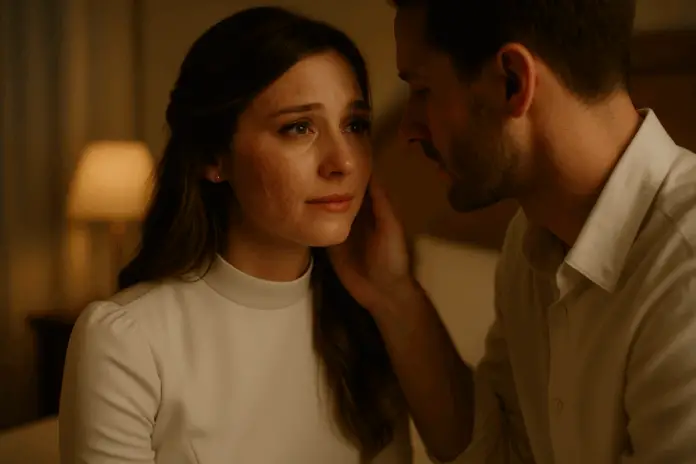
They’re Using More Tongue Lately—Here’s What Your Partner’s Kisses Might Be Telling You

What It Means When Your Partner’s Kisses Start Getting More Tongue-Involved

Lately, your partner’s kisses have shifted—they’ve grown deeper, more intense, and the tongue is making a bolder appearance. Is this just a spark of renewed passion, or is there a deeper message being conveyed without a single word spoken? The way someone kisses can reveal shifts in feelings, desires, and the very heartbeat of your relationship.

Here’s what that more tongue-forward kisses might really be saying:

Growing Emotional Intimacy

When kisses start involving more tongue, it often means your partner is opening up emotionally. These aren’t casual pecks but vulnerable gestures of trust and connection. They’re inviting you into a closer space, signaling a desire to deepen your bond beyond the surface.

A Surge of Physical Desire

Tongue kisses speak loudest when desire intensifies. If your partner’s kisses have become more urgent or passionate, it’s a sign their attraction is heating up. They’re craving closeness, responding to chemistry that’s growing stronger and more magnetic.

Revealing Their True Self

Kissing styles often mirror personality. A confident, assertive tongue kiss suggests boldness and passion; a playful flick hints at spontaneity and fun; a slow, tender French kiss shows a romantic who cherishes emotional connection.

Through their kiss, they’re sharing pieces of who they are.

Feeling Safe and Free With You

More uninhibited, tongue-filled kisses usually mean your partner feels secure and comfortable. They’ve let down their guard and are expressing genuine affection—no reservations, no holding back.

Tuned Into Your Emotional Rhythm

If your partner’s tongue kisses are responsive—matching your pace, reading your reactions—it’s a sign they’re emotionally in sync with you. This sensitivity shows care, empathy, and a desire to make you feel just as connected and cherished.

Keeping Things Fresh and Playful

Sometimes, increased tongue action comes from a playful spirit, wanting to keep your relationship exciting. Trying new ways to kiss signals curiosity and investment in sustaining intimacy—both physical and emotional.

Exuding Confidence and Initiative

When your partner confidently leads with deep, tongue-filled kisses, it’s a declaration of self-assurance—not just in the bedroom, but in your partnership. They’re unafraid to express affection boldly and take charge of your shared passion.

Savoring the Sensual Moment

Slow, deliberate tongue kisses aren’t rushed—they’re about savoring connection. This style signals a partner who values presence, tenderness, and sensuality, turning every kiss into a meaningful experience.

A Silent Emotional Declaration

A deep, lingering kiss can speak volumes without words. It’s often your partner’s way of saying, “I’m here. I see you. I care deeply.” These moments are powerful expressions of love and emotional closeness.

Testing the Waters Gently

If tongue involvement is light or tentative, your partner might be easing into deeper intimacy. This cautious approach often reflects respect, thoughtfulness, and a desire to build trust gradually.

Closing Thoughts

Every kiss holds a story—sometimes it’s playful, sometimes passionate, often deeply emotional. When your partner’s tongue takes a more prominent role, it reveals layers of feeling: desire, trust, confidence, vulnerability, or curiosity. Paying attention to these subtle changes helps you understand their heart in ways words can’t capture. Because at its core, a kiss is often the purest form of unspoken truth.

Please SHARE this article with your family and friends on Facebook.

Bored Daddy

Love and Peace

From Countryside Girl to Dubai Bride: The Scandal That Went Viral Overnight

Something about the story didn’t sit right. How could a young woman from rural England go from quiet village life to becoming a Dubai bride and rubbing shoulders with Emirati high society in just a few years? The lavish wedding, the designer gowns, the million-dollar smiles – it all seemed too perfect. And then came the twist: within 24 hours of the ceremony, the internet was buzzing with gossip, accusations, and theories about what really happened behind those golden gates.

Soudi Al Nadak was raised in the peaceful English countryside, far from the glittering skylines of the Middle East. By her early twenties, she had relocated to Dubai to finish her studies. It was there, among the sleek skyscrapers and luxury malls, that she crossed paths with Jamal Al Nadak – a successful, soft-spoken Emirati businessman from an affluent family.

Their love story was swift but deliberate. Jamal admired Soudi’s confidence and her fresh, Western outlook on life, while she was drawn to his world of private jets, five-star dining, and understated wealth. In 2020, they wed in a stunning ceremony blending British charm with Emirati tradition.

But as soon as the wedding video surfaced online, it became a viral sensation. People everywhere were captivated – and divided.

Was Soudi living every girl’s dream? Or was she just another opportunist flaunting her good fortune?

🏁 Conclusion
Soudi and Jamal’s whirlwind romance continues to stir debate, with some seeing their union as a modern-day fairytale and others labeling it a transaction dressed up in couture. Whether you view it as love at first sight or a calculated climb into high society, one thing is certain – their story has captured the world’s attention, leaving everyone eager to know what comes next.

Please SHARE this article with your family and friends on Facebook.

Bored Daddy

Love and Peace

The reason behind children not visiting their parents

Family bonds are among the most powerful and emotional connections we form, yet they’re not always easy to maintain. In many families, parents find themselves hurt or confused when their adult children rarely call, visit, or show interest in their lives. While this distance can feel cold or painful, it often has deep roots.

Some children pull away after years of unresolved tension, emotional neglect, or misunderstandings that were never properly addressed.

Others step back simply to protect their mental health or set long-overdue boundaries. Though the reasons vary, from generational differences to past conflicts, the result is often the same: sadness, guilt, and confusion on both sides.

This article looks at the complex reality behind why some adult children choose distance over connection.

Changes in Family Dynamics

As children grow older, some start their own families and many have demanding careers that leave little to know time for family gatherings and maintain bonds with their parents, especially if they move away from their parents’ home. These changes in family dynamics can be a huge factor in children and parents alienating from each other.

Unresolved Conflicts and Difficulties

Unresolved tension or old emotional wounds between parents and children often play a major role in why visits become rare and even inexistent. These issues from the past can heavily affect the present and the future and are a sign that deeper issues need to be addressed.

Honest, respectful conversations can help clear the air and begin rebuilding a more genuine, healthy bond, although that is definitely easier said than done.

Lack of Communication and Clear Expectations

Sometimes, the distance is simply a result of misunderstanding or poor communication between the children and the parents. While the parents assume their children know they are welcome any time they wish to visit, the children may be hesitant about how often they should call or stop by. Sadly, this silence can lead to distance that is later hard to fix.

Lack of Emotional Support

When parents fail to acknowledge their children’s emotions while growing up, it can have a lasting negative effect. Over time, many adult children carry a sense that their emotional needs were ignored, which can lead to resentment and a reluctance to stay close or engage regularly with their parents.

Parental Narcissism

Narcissistic parents often put their own needs before their children’s, which can stand on the way of creating a healthy relationship. These parents usually fail to provide empathy, which leads to distance in the future.

When children visit less often, parents should respond with empathy and open communication to understand the reasons and find solutions. Children on the other hand can seek family therapy or honest conversations to resolve conflicts.

While it’s normal for visits to change as children grow, staying emotionally connected is key to a healthy relationship.

Please SHARE this article with your family and friends on Facebook.

Bored Daddy

Love and Peace

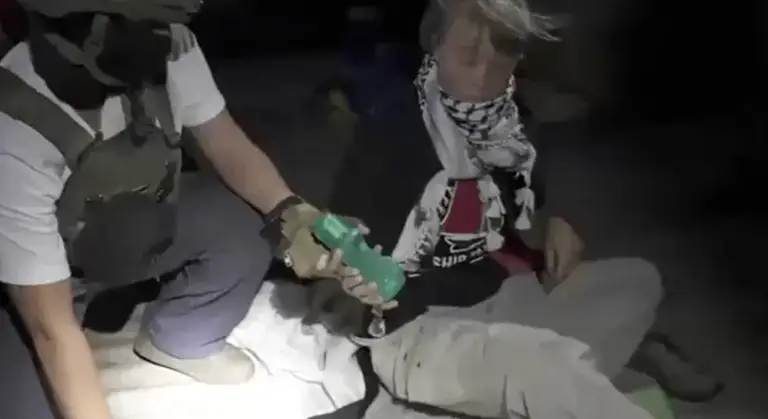
Caught on Camera: Suspect Attacks Cop, Instant Karma Follows

Split-Second Heroics and Lasting Legacies: Stories of Courage From Across America

What began as an ordinary evening in a quiet suburban neighborhood quickly erupted into a moment of raw intensity. A security camera captured the shocking instant when a shirtless man charged at a police officer in what appeared to be a premeditated ambush. In mere seconds, instinct, training, and split-second reflexes transformed potential tragedy into a display of controlled force.

Viral Footage Captures Instant Action

The video, now widely shared online, shows the suspect barreling toward the officer near a front doorway.

Without hesitation, the officer met the charge with remarkable precision, grabbing the aggressor mid-lunge and slamming him against a nearby wall. Witnesses nearby gasped in disbelief as the confrontation unfolded in the blink of an eye.

Viewers across social media have hailed the takedown as “instant karma,” highlighting both the dangers officers face daily and the life-saving importance of rapid, decisive action. Commentators praised the officer’s poise under pressure, noting that such reflexes are honed through years of rigorous training, experience, and situational awareness.

Bị tội phạm đâm trọng thương police Mỹ quyết định vẫn bắt sống chứ không bắn
byu/Kaytee_206 inVietnamToanCau

A Stark Contrast: Honoring Fallen Aviators

While one story captured the adrenaline of immediate heroism, the nation has also been reflecting on a quieter but equally poignant form of courage. In Dallas, tragedy struck during a historic air show when two vintage World War II aircraft—the B-17 Flying Fortress and the P-63
Kingcobra—collided mid-flight, claiming the lives of six crew members. These pilots, many of them volunteers, devoted themselves to preserving America’s aviation heritage.

Across the country, tributes poured in. Communities, veterans’ groups, and aviation enthusiasts honored their memory, celebrating the dedication, skill, and passion that brought history to life for countless spectators. Though the Dallas disaster underscored the inherent dangers of flying decades-old aircraft, it also highlighted the commitment required to preserve history and educate future generations.

Two Faces of Courage

These two events—one unfolding in seconds, the other across a lifetime of service—offer striking lessons about the human capacity for courage:

Split-Second Decision-Making: The police officer’s rapid response prevented serious injury, showing how instinct and training converge to protect lives in unpredictable moments.

Enduring Dedication: The aviators’ commitment to preserving history demonstrates bravery on a different scale, where passion and perseverance meet risk over years of effort.

Both scenarios remind us that courage takes many forms. Sometimes, it’s the reflex that stops an attack before it happens. Other times, it’s a lifelong devotion to a cause greater than oneself, even in the face of mortal danger.

Reflecting on Risk and Responsibility

The viral police encounter also sparks discussions about law enforcement preparedness and the importance of community trust. Officers operate in high-stakes environments where hesitation can have severe consequences, yet their commitment ensures public safety every day.

Meanwhile, the Dallas air show tragedy serves as a cautionary tale for enthusiasts and regulators alike. Preserving history is a noble endeavor, but it must be balanced with stringent safety measures to protect both participants and spectators.

Conclusion

From a suburban street to the skies above Dallas, these stories capture the spectrum of bravery in America. Instant heroics and enduring commitment remind us that courage is not confined to a single moment—it can be immediate, like a police officer intercepting danger, or lifelong, like pilots safeguarding history for future generations.

Whether in a split-second reaction or across decades of dedication, human resilience manifests in remarkable ways. These events challenge us to recognize and honor courage in all its forms, and to appreciate the sacrifices—both immediate and enduring—that shape the safety, legacy, and spirit of our communities.

Please SHARE this article with your family and friends on Facebook.

Bored Daddy

Love and Peace

Neck Collapse Alert: Young Man Hospitalized with Dropped Head Syndrome

Imagine waking up one morning and realizing your neck can no longer support your own head. For a 23-year-old in Isfahan, this frightening scenario became a medical reality. The young adult was recently diagnosed with a rare condition often seen in seniors—raising concerns about how modern habits might be silently compromising spinal and muscular health in younger generations. Could endless hours hunched over screens and poor posture be setting the stage for serious neuromuscular problems?

The patient was diagnosed with Dropped Head Syndrome (DHS), a disorder in which the muscles that hold the head upright weaken, causing it to fall forward.

While typically associated with older adults, this unusual case highlights that DHS can occur in younger people as well.

Possible Causes:

Though DHS is commonly linked to neuromuscular diseases such as myasthenia gravis or ALS, lifestyle factors like poor posture, extended screen time, and underdeveloped neck muscles may play a role, especially in younger patients.

Symptoms to Watch For:

Persistent neck fatigue and soreness

Head tilting forward or difficulty holding it upright

Limited neck mobility

Shoulder discomfort

Tingling or numbness in the arms

Diagnosis Methods:

Doctors use a combination of neurological exams, muscle strength assessments, MRI imaging, and electromyography (EMG) to confirm DHS.

Treatment Strategies:

  • Targeted physical therapy to strengthen neck muscles
  • Posture training and ergonomic adjustments
  • Neck braces or supports when necessary
  • Lifestyle changes, including exercise and screen-time management

Preventive Measures:

  • Position screens and devices at eye level
  • Take regular stretching breaks
  • Sleep with supportive pillows
  • Seek medical advice for chronic neck pain rather than ignoring it

Dropped Head Syndrome, though rare, is a serious condition that can affect young adults, especially in an era dominated by screens and poor posture habits. Early detection, proper ergonomics, and strengthening routines are key to maintaining neck and spinal health. This case serves as a wake-up call: everyday habits that seem harmless—like prolonged screen use—can have long-term consequences on musculoskeletal well-being if left unchecked.

Disclaimer: This article is not intended to be a substitute for professional medical advice, diagnosis or treatment and is for informational purposes only.

Please SHARE this article with your family and friends on Facebook.

Bored Daddy

Love and Peace

Eric Dane hospitalized after a fall related to his ALS condition

Gray’s Anatomy star Eric Dane missed this year’s Emmys. He was expected to join the series’ cast for their 20th anniversary, but was absent from stage due to a fall related to his ASL diagnosis.

ASL, Dane was diagnosed with, is a “rare, terminal neurodegenerative disorder that results in the progressive loss of both upper and lower motor neurons that normally control voluntary muscle contraction,” according to ASL Association

Speaking to Washington Post, Dane said of his diagnosis he disclosed with the public in April 2025, “ALS is a nasty disease. So I was in the hospital during the Emmys getting stitches put in my head.”

He wasn’t thrilled he missed the event, leaving co-star Jesse William present the award for Outstanding Directing in a Drama Series alone, but added that “there was nothing I could do about it.” He said: “It would have been great to see Jesse and get reunited with some of my peers, and to be able to present in front of my colleagues, I thought, would have been a special moment.”

Eric Dane disclosed his ALS diagnosis in April, 2025/ Jon Kopaloff/FilmMagic for HBO

Dane’s friend and former co-star, Jesse, praised him during the awards ceremony. He told Entertainment Tonight on the red carpet: “He’s solid. The man’s just solid, and we have to be careful, you know, as men to still, you know, take care of ourselves and he’s got a perfect balance going.”

The actor, aka Dr. McSteamy, spoke about his initial hesitation to go public with his diagnosis.

“It wasn’t something I ever really wanted to do, it was something I felt like I had to do,” he told Washington Post. “It was getting increasingly difficult to hide what was going on. And instead of letting people speculate what was happening, I just said it. … And I’ve never experienced a bigger outpouring of love and support than I have after I announced that.”

Eric Dane with his daughters/ Lisa OConnor/AFF-USA.com / MEGA

Dane is now on a mission to raise awareness of ALS, advocating for the renewal of the ACT for ALS, legislation designed to support essential research on ALS and related neurodegenerative conditions.

On September 29, he travelled to Washington DC to meet with US Rep. Frank Pallone of New Jersey, alongside members of the nonprofit I AM ALS.

In a TikTok by US Rep. Eric Swalwell, Dane reflected on his battle with the disease and the long, difficult road to getting diagnosed.

“ALS is the last thing they want to diagnose anybody with,” he explained. “So often, it takes all this time for these people to be diagnosed; well, then it precludes them from being a part of these clinical trials.”

Speaking of his condition, Dane told People in April, “I am grateful to have my loving family by my side as we navigate this next chapter,” adding he was feeling “fortunate” to be “able to continue working.”

He said he was “looking forward to returning to [the] set of Euphoria” to film the show’s long-awaited third season.

He previously shared that he has “one functioning arm.”

“My left side is functioning, my right side has completely stopped working,” he told Diane Sawyer in June. “I feel like maybe a couple more months and I won’t have my left hand either. It’s sobering.”

Please SHARE this article with your family and friends on Facebook.

Bored Daddy

Love and Peace

Constant coughing or mucus buildup? Try this powerful onion remedy

Onions aren’t just a kitchen favorite, they can also be a surprising ally for your lungs. Traditionally used to ease coughs and congestion, onions contain compounds like quercetin and sulfur that help reduce inflammation, clear mucus, and support overall respiratory health.
If you’ve been dealing with a stubborn cough or heavy chest congestion, a simple onion remedy could make a real difference. Whether roasted, juiced, or brewed into a warm drink, onions can help your lungs detox and breathe easier in just a few days.

Quercetin is a strong antioxidant that helps calm inflammation in the airways and works like a natural antihistamine. The sulfur compounds in onions assist the body’s detox processes and can boost immune function. Combined, these elements make onions a simple but effective way to ease congestion and persistent coughs.

Below is a recipe of an onion remedy you can try at home to soothe your lungs and feel relief naturally.

How to Make the Simple Onion Lung-Cleansing Remedy

This homemade remedy combines the natural power of onions with honey for immune support, lemon for vitamin C, and turmeric for its anti-inflammatory benefits.

Ingredients:

  • 1 large onion, finely chopped
  • 2 cups water
  • 1 tablespoon raw honey (optional, adds sweetness and antimicrobial support)
  • Juice of ½ lemon
  • ½ teaspoon turmeric powder

How to Prepare:

  1. Simmer the chopped onion in water for 10–15 minutes.
  2. Let it cool slightly, strain, and stir in honey, lemon juice, and turmeric.
  3. Drink about ½ cup warm, 2–3 times a day.

For best results use this remedy for at least three days.

After the first day, your bronchial passages would be cleaner. By day two, the lemon and turmeric would provide you with immune and anti-inflammatory support. By day three, many people notice easier breathing, less mucus, and reduced coughing.

This drink would be even more effective if you stay hydrated, try steam inhalation, avoid mucus-heavy foods, and practice deep breathing.

It is also important to pick fresh and organic onions and lemons, and high-quality turmeric.

With a few days of consistent use and simple habits, you can feel less congested, cough less, and breathe easier.

Disclaimer: This article is not intended to be a substitute for professional medical advice, diagnosis or treatment and is for informational purposes only.

Please SHARE this article with your family and friends on Facebook.

Bored Daddy

Love and Peace