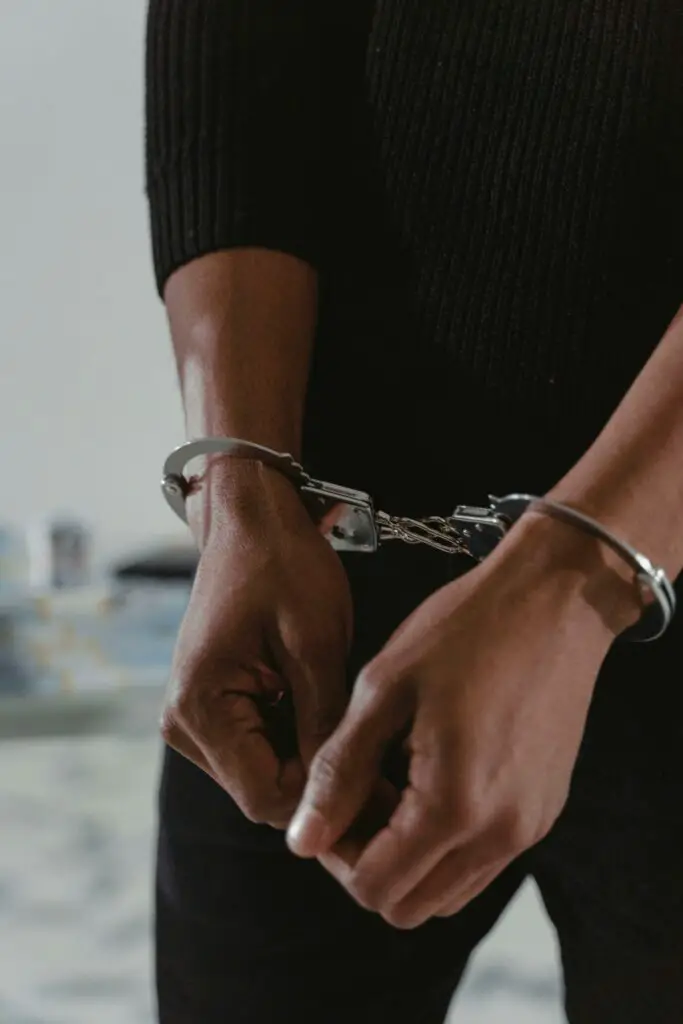
Major Break in Charlie Kirk Murder Probe: Prosecutors Cite Massive Evidence File Against Suspect

0

“The Trial of Tyler Robinson: A Nation Watches as Truth Battles Perception”

What began as a politically charged tragedy has become one of the most intensely scrutinized criminal cases in the country — not just for what happened, but for what it says about the era we live in.

Charlie Kirk, a firebrand conservative activist and lightning rod for ideological warfare, was shot dead on a rooftop in Salt Lake City. The man now accused of killing him — 24-year-old Tyler Robinson — once dreamed of public service and held an academic scholarship. Today, he
stands at the center of a legal maelstrom where fact, fear, and digital manipulation are colliding in real time.

And while federal prosecutors claim to have a “mountain” of evidence — one that, if true, could bury Robinson — legal insiders caution: not everything is as bulletproof as it seems.

A Government Flex

In a tense Monday hearing, Utah County Chief Deputy Attorney Chad Grunander told the court his office has gathered a “voluminous” body of evidence. That phrase — echoed in nearly every media headline since — appears to serve more than just a logistical purpose. It’s a message to the public, the press, and perhaps the jury pool: We’ve got this guy nailed.

According to leaked summaries and confirmed filings, that evidence reportedly includes:

  • Surveillance video placing Robinson on a nearby rooftop around the time of the shooting
  • A handgun traced to his late grandfather — allegedly used in the assassination
  • Shell casings cross-referenced with discussions on extremist message boards
  • Encrypted social media messages in which Robinson reportedly admits to the crime
  • Fingerprint and shoeprint matches from the crime scene
  • DNA confirmation via FBI forensic teams
  • Text messages alluding to intent, ideology, and a growing sense of disillusionment
  • The case, at least on paper, appears overwhelming. But the paper is only part of the picture.

The Defense Strikes Back

Robinson’s legal team — led by Kathryn Nester, Richard Novak, and death-penalty specialist Michael Burt — has signaled it won’t let the narrative write itself. Early filings suggest their strategy hinges on three key challenges: the integrity of the searches, the reliability of the
forensic chain, and the authenticity of the digital trail.

In a post-truth world dominated by deepfakes, bot accounts, and AI-generated video, they plan to exploit a growing cultural anxiety: what if none of this is real? “Jurors are going to see videos that look authentic,” said defense expert Dan Gerl. “The defense will argue that in 2025, that doesn’t mean they are.”

And it’s not an entirely fringe idea. Already, corners of the internet have begun speculating whether the surveillance footage was manipulated — or whether Robinson’s accounts were hacked to generate a false confession.

In a courtroom increasingly shaped by perception, the line between reasonable doubt and weaponized skepticism is thinner than ever.

A Mind in Decline — or in Crisis?

Then comes the human question: who is Tyler Robinson?

Friends once described him as brilliant, soft-spoken, and “deeply idealistic.” But in recent years, that idealism curdled. His social media footprint shifted from political theory to conspiracy-laden posts. A college expulsion followed. Isolation. Then, silence.

While prosecutors are building a case around motive and malice, the defense may counter with mitigation: mental illness, radicalization, or untreated trauma. The courtroom could become a forum not just for criminal justice, but for a nation’s uneasy reckoning with what happens when digital pressure meets psychological fragility.

Conclusion: A Trial for the Times

The State vs. Tyler Robinson is no ordinary criminal trial. It is a crucible for a divided nation — a high-wire act between overwhelming evidence and the unsettling possibility that even “evidence” can be manipulated.

On one side: a man dead, a movement shaken, and a prosecution determined to leave nothing to chance.

On the other: a defense team ready to question everything — including the very nature of truth itself.

As cameras wait, courtrooms fill, and America holds its breath, one thing is certain: This trial won’t just decide guilt or innocence. It will decide what it means to believe anything at all.

Please SHARE this article with your family and friends on Facebook.

Bored Daddy

Love and Peace

Trump’s Latest Financial Blueprint Sends Shockwaves Across America — What His ‘Private Accounts’ Really Mean

0

Whispers began long before the announcement. Quiet conversations in political circles, stray comments from economic insiders, and unexplained hints dropped in interviews all painted the same unsettling picture—something big was coming. Reports suggested meetings behind closed doors, analysts claimed they saw unusual shifts in policy planning, and influential voices hinted that an unexpected economic experiment was being prepared for the public eye. By the time Donald Trump finally revealed his proposal, many Americans were already bracing themselves, sensing that whatever was coming wouldn’t be ordinary policy—it would be something bold, disruptive, and shrouded in questions from the very first moment.

Cola 2025 Benefits and Changes

America is buzzing with disbelief and heated debates after former President Donald Trump introduced a sweeping new economic idea that he claims could reshape how future generations build wealth. The proposal—already trending across social networks and dominating political
talk shows—centers on the creation of what he calls “Trump Accounts,” government-funded investment portfolios designed to give newborn American babies a financial head start unlike anything seen before in U.S. policy.

Under this plan, every American child born within a specific four-year window would automatically receive a $1,000 government-funded investment account. This isn’t a savings account, nor a traditional bond—it’s tied directly to the performance of the stock market. From
the moment a child takes their first breath, the account begins compounding, theoretically growing year after year until that child enters adulthood with a financial cushion many families today could only dream of.

For millions of families locked out of home ownership, investment opportunities, and generational wealth, the idea feels revolutionary. Supporters of the proposal argue that this could fundamentally shift America’s wealth foundation, giving young people something
tangible—a starting point, a safety net, a seed that grows with them. Imagine turning 18 and already having a nest egg: money to put toward college, a first home, starting a business, or simply surviving rising economic uncertainty. For many parents already stretched thin, the concept of a government-backed investment waiting for their child feels like the closest thing to hope they’ve heard in years.

But as electrifying as the proposal sounds, the country isn’t just cheering. Beneath the enthusiasm lies a storm of questions that economists, analysts, and skeptics are now picking apart. Perhaps the biggest red flag: tying a child’s future financial stability to the unpredictability of Wall Street. Market highs can make fortunes grow quickly—but market crashes can wipe them out overnight. The same volatility that builds wealth can destroy it, raising troubling concerns about whether these future accounts could collapse during recessions, pandemics, or sudden economic downturns.

Critics are also demanding clarity on who would manage these accounts. Would they be controlled by private investment firms, government bureaus, or a combination of both? What rules would regulate them? Who decides how the funds are invested? And what transparency would parents have as the accounts grow—or shrink? These questions are not just technical; they touch on trust. When taxpayer dollars are being invested on behalf of millions of newborns, Americans want ironclad safeguards, not vague promises wrapped in patriotic branding.

Beyond the financial risks, another looming concern is political whiplash. Policies of this scale rarely stay constant. What happens to the accounts if a future administration modifies or dismantles the program? Will children born during the four-year window have an advantage their slightly younger siblings don’t? Will Congress support long-term funding, or will it become a political football thrown back and forth every election cycle? These uncertainties are already fueling debates in Washington and carving sharp lines between supporters and opponents of the proposal.

Even with all these concerns, one thing is undeniable: Trump’s proposal has forced America to confront a question that has lingered in the background for decades—how does a nation fix a wealth gap that expands every single year? Some believe Trump Accounts are the first bold step in the right direction. Others insist it’s an experiment that risks turning newborn citizens into unwilling players in the highest-stakes financial game on earth.

Whether this idea becomes law or vanishes after a wave of media attention, it has already done something rare in American politics: it made both supporters and critics stop, think, and argue about what real economic opportunity should look like in the 21st century. Is it
government-funded investment? Is it education reform, and is it tax restructuring? Or is it something else entirely? Trump Accounts don’t just propose a policy—they pose a question that America can’t ignore anymore.

As the debate continues, one reality stands out above every argument: this proposal has ignited a nationwide conversation about wealth, risk, and the future our youngest generation will inherit. For some, Trump Accounts represent empowerment. For others, danger. But for all, it’s a reminder that the stakes are high, the questions are complex, and the path forward is anything but simple.

Conclusion

As the nation continues to dissect every detail of the Trump Accounts concept, the discussion has grown far beyond the boundaries of simple policy critique. It now stretches into the heart of what Americans believe economic security should mean in a rapidly changing world. The
proposal has peeled back layers of long-standing inequality, exposing the uncomfortable truth that countless families are still starting from zero while wealth concentrates at the top. Whether this policy is the solution, a partial step, or a misstep altogether, it has undeniably cracked open a national dialogue that politicians have avoided for decades.

For supporters, the plan represents a rare injection of hope into a system that often seems rigged against ordinary people. They envision a future where every child begins life with something—however small—that can grow into opportunity. For skeptics, the idea looks like a high-stakes wager with America’s children placed at the center of financial volatility, raising fears that the promise of generational wealth could collapse the moment markets turn.

Yet even in this tug-of-war, one truth stands out: America is being pushed to reimagine what it owes its future citizens. Is it stability? Is it innovative economic risk, is it protection from inequality or permission to challenge it? The answers are neither simple nor universal, but the debate sparked by Trump Accounts has forced the country into a moment of introspection it can no longer avoid.

And so, the nation watches. Some with anticipation, others with unease. But all with the knowledge that whatever direction this idea takes—whether it becomes a historic turning point or a fleeting headline—it has already reshaped the conversation about wealth, opportunity, and
the American dream. The final outcome remains uncertain, but one thing is unmistakable: the stakes have never been higher for the generation that has yet to take its first breath.

Please SHARE this article with your family and friends on Facebook.

Bored Daddy

Love and Peace

The biker who became family and helped me teach my kids a lesson they’ll never forget

0

After years of serving the country, a 73-year-old veteran found himself forgotten by his own family and the world.

He took care of his daughter and two sons all by himself following his wife’s sudden passing at a young age. His children were his world, everything he ever worked for, but during the last years of his life, they weren’t around. They never paid a single visit nor called their old father. He didn’t ask much, just a simple phone call that would remind him he mattered to them. But it never happened.

Eventually, he ended in hospice, waiting for his life to end, and the feeling was a nasty one. Not because he wouldn’t live longer, but because he was forgotten and abandoned.

One day, a biker entered the hospice room of the old man, a chance encounter that changed everything.

He was looking for someone else, but he noticed the man’s purple heart placed next to the bed and decided to stay and learn more about his life.

“Thank you for your service,” the biker said, and for the first time in many years, the man felt appreciated and seen.

The two chatted for a while and the biker promised to return the following day. The man smiled, but he didn’t expect the biker to really appear again. He knew that people rarely kept their promises. But, the biker, Marcus, was different.

The following day, he returned indeed, and this time, he brought for of his friends with him. They made the man company, shared stories, laughed, and made him feel alive.

In the days that followed, the bikers stood by the man’s side, asking him if he needed anything. And yes, there was indeed something he needed them to help him with. He asked to see his lawyer and change the will he made years ago. The will that states all his money and possessions went to his children.

Instead, he only left his children letters in which he wrote, “I loved you. I raised you. But when it mattered, you weren’t here,” and left everything he had to three different charities that worked with homeless veterans forgotten by their families and the society, just like himself.

Eventually, the man passed away and his funeral was attended by his biker friends. His children were also there, too ashamed to look at the dead body of the man whose love and dedication they betrayed.

Over time, they all got involved with the charities their father supported. The three of them volunteered in order to help the veterans in need. Whether it was redemption or regret that pushed them didn’t matter. The important thing was that they became kinder, more understanding, just as their father had always wanted.

Please SHARE this article with your family and friends on Facebook.

Bored Daddy

Love and Peace

Flight attendant shares how common in-flight sex really is — and what happens when people get caught

0

When a flight lasts for too long and starts getting more and more boring, some passengers actually decide to have some fun by joining the mile high club. However, according to a flight attendant who’s been in the job for too long not to witness all sort of things passengers come up with in order to kill boredom, all that bathroom-door jiggling doesn’t happen as often as you’d think.

In her book Cabin Fever: The Sizzling Secrets of a Virgin Air Hostess, flight attendant Mandy Smith goes into details about many aspects of working on a plane, including how often passengers try to hook up.

“I would say one in twenty or thirty flights,” she said. “Not really that often.”

Writing how the crew acts in such awkward situations, Smith explained that they simply knock on the toilet’s door and ask them to stop doing what they are doing.

“It’s worse when you’ve got children on board and it’s in the daytime,” she said.

Sometimes, when the passengers are more discreet, the crew don’t even react in any way.

“If it’s on a night flight and they’re being discreet, I probably wouldn’t even interrupt them if I’m honest.”

She did note, though, that a friend had an uncomfortable incident involving a passenger determined to join the mile-high club.

“One of my friends had a situation where there was a young lady of 18 who was quite determined to join the mile high club, and she just grabbed anyone,” she said.

The flight attendant told her to return to her seat, but the girl wouldn’t listen.

“She sat back down in her seat, and then about half an hour later she was back up with another chap trying to join the mile high club again,” Smith explained.

“My friend said she went to speak to her parents, because she was actually travelling with her mom and dad.

“She was only 18 bless her, she didn’t do it again.”

Please SHARE this article with your family and friends on Facebook.

Bored Daddy

Love and Peace

Harrowing final words of man who suffered ‘worst death ever’

0

John Edward Jones, a 26-year-old medical student and a father of one, suffered the worst death ever when he got stuck into a claustrophobic passageway just 10 inches high and 18 inches wide in November 2009.

Jones, his brother, and a group of friends went cave exploring at Utah’s Nutty Putty Cave, a passion of Jones, when he somehow turned to the unmapped space which was so tight that he was unable to move or free himself. His brother got outside of the cave and raised the alarm which triggered a rescue operation that lasted more than 27 hours.

Rescue teams worked around the clock, taking turns as they tried to free him from the narrow passage and his difficult position. But as the hours passed, Jones’ condition worsened. Hanging upside down for so long caused blood to surge toward his head and placed tremendous stress on his heart.

“Seeing his feet and seeing how swallowed he was by the rock, that’s when I knew it was serious,” Jones’ brother Josh told the Salt Lake Tribune. “It was really serious.”

Josh even managed to lift his brother an inch, but the moment he let go of him, Jones slid back into the narrow passage.

Creepy Dot Org / X.

One of Jones’ friends, Brandon Kowallis, explained that Jones drifted in and out of consciousness. During the rescue mission, rescuers brought down a radio so Jones could speak to his family who prayed for him and assured him everything was going to be all right, Metro reported.

“I think it was his father, mother, and wife who spoke to him,” Kowallis recalled. “They told him they loved him and were praying for him. His father gave him a blessing. His wife mentioned a feeling of peace, that everything would be OK.”

According to the rescuers, they tried to tied ropes around his feet in order to pull him out. That’s when a rescuer asked him how he was, to what Jones responded, “It sucks. I’m upside down. I can’t believe I’m upside down. My legs are killing me.”

At one moment, the rope suddenly lost tension and threw the team backward. A pulley had snapped and sent Jones even deeper. After more than 25 hours stuck, John had become unresponsive and his body was shutting down.

John Edward Jones/ Family Archive

According to Kowallis, the scene looked “very bleak,” and the hopes of rescue were bleak. “It looked like he could only be lifted another foot or two in his current position,” he explained, per LadBible. “His feet would hit the ceiling, with no room to manoeuvre.”

Eventually, Jones suffered a cardiac arrest and suffocated. His body was never retrieved because it was deemed too dangerous. Authorities sealed the passage with explosives, making Nutty Putty Cave a permanent tomb.

Even today, there is a memorial plaque at the cave’s entrance which serves as a reminder of that tragic day.

Please SHARE this article with your family and friends on Facebook.

Bored Daddy

Love and Peace

Doctors remove life support as family says farewell to newborn, but then he starts breathing

0

Life is unpredictable. The truth is that we are never aware of the obstacles and challenges that can get on our way, but what we should never forget is that we must never stop fighting and believing that things would eventually get a turn for the better.

Chelsea Hough couldn’t wait to meet her baby. Her pregnancy was a normal one, and just as she reached 36 weeks, she gave birth to a baby boy whom they named Karson Jax Hough.

During the first moments of his life, Karson resembled a perfectly healthy baby, but then, all of a sudden, his heart beats slowed down and his heart stopped. Doctors tried skin to skin contact with his mother and that’s when his heart started beating again, but that didn’t last long. The sweet bundle of joy was in need of a ventilator to help his heart work and to facilitate his breathing.

“The only way to describe what has happened is that this beautiful baby boy has suffered two very rare conditions that are completely unrelated to one another. One being unidentifiable as to a cause,” Karson’s Nana, Lisa Hough, wrote. What doctors suspected was that sweet Karson suffered from a hemorrhage in his left temporal lobe, as well as nonketotic hyperglycinemia (NKH), a rare genetic disorder which causes accumulation of glycine in the body’s tissues and fluids.

According to the doctors, the chances of survival were slim. After some time, they advised the family to switch Karson off life support.

They considered that carefully, and decided it would be for the best to do what doctors advised. The family united in prayer after doctors told them they would only have around 10 minutes with Karson before he passes away.

Once the life support was turned off, the newborn baby suddenly started breathing on his own. The doctors were stunned and dubbed it a miracle.

“Today, we witnessed a miracle!!” Lisa Hough wrote. “We were given 10 minutes after withdrawing intensive care and the ventilator and told he would not breath on his own and to expect his heart to stop within those 10 minutes… Well God and Karson had other plans!

“I’m not sure why I ever thought we were so undeserving of a miracle.. and I’m not sure how long we have with him, but we have him now. And now we will take,” Lisa said.

Once home, Karson thrived. His weight is healthy and his heart rates are stable. The Glycine levels in his body have dropped dramatically and he’s beating the odds each and every day.

We wish this beautiful baby a happy and healthy life ahead of him.

Please SHARE this incredible story with your family and friends on Facebook!

Bored Daddy

Love and Peace

FBI ‘withheld information’ about Donald Trump assassination attempt

0

During Donald Trump’s campaign rally in Butler, Pennsylvania on July 13, 2024, prior to the presidential elections he won, the now president of the US was shot at by a 20-year-old man named Thomas Crooks.

The president wasn’t injured with any life-threatening injuries but was only hit in the ear. Sadly, Crooks claimed the live of a volunteer fire chief. Two other people were wounded in the incident in which Crooks fired eight rounds from an AR-15-style rifle from a nearby building’s roof.

“For 15 seconds, time stood still,” Trump told the crowd. “This vicious monster unleashed evil. The villain did not succeed in his goal.”

Trump was “fine and being checked out at a local medical facility,” a spokesperson said at the time.

In his inauguration speech, Trump said, “I was saved by God to make America great again.”

Following the shooting, FBI claimed they had no to little information about the shooter, whom they arrested shortly after. However, there have speculations that the bureau withheld information about Crooks and the entire incident.

Rep. Pat Fallon of Texas told The National News Desk that the congressional task force he led was not given access to certain key information, even though its role was to examine the assassination attempt.

“We definitely got stonewalled,” Fallon claimed. “When we finally got answers that we thought were fully forthright, now it seems like they weren’t.”

The investigation led the task force to conclude that the attack was, in fact, preventable.

Anna Moneymaker/Getty Images

During a 2024 briefing, former FBI Deputy Director Paul Abbate said investigators found over 700 online comments they believe Crooks wrote between 2019 and 2020, many reflecting antisemitic or anti-immigrant views. Fallon, however, claims that none of this material was ever provided to the task force.

“They didn’t share any of the information with us,” he said, as per CBS Austin. “It was either deliberate or incompetence.”

Further, Fallon said he intends to talk with Chairman James Comer about having Abbate appear again before the committee.

Meanwhile, Tucker Carlson suggested last week that officials are hiding what they knew about Crooks. Taking to X, he wrote he can “prove” the FBI misled the public by looking at Crooks’ online history. Carlson also went after FBI Director Kash Patel, along with former officials Christopher Wray and Dan Bongino, pointing to Crooks’ digital footprint and and questioning how Trump’s would-be assassin slipped past scrutiny.

 U.S. Rep. Pat Fallon/ Samuel Corum/Getty Images

Patel on the other hand insisted the FBI conducted a thorough review, pointing to the sheer volume of evidence collected: 1,000+ interviews, 2,000 tips, 13 devices, 500k digital files, hundreds of hours of video, 10 bank accounts, and data from 25 profiles.

Former FBI Special Agent in Charge Jody Weis believes the FBI failed at detecting the threat before the shooting took place.

“For them to say we just didn’t see much there, that we couldn’t identify a motive – I can’t understand why,” Weis said.

Please SHARE this article with your family and friends on Facebook.

Bored Daddy

Love and Peace
The Hidden Language of Color: How Your Preferences Reflect Your Mind and Mood

0

Do Colors Choose Us More Than We Choose Them?

We like to think we pick colors—the calming blue, the energizing red—but what if the truth is reversed? What if the colors we’re drawn to, and those we shy away from, are actually selecting us? These silent shades whisper secrets about our emotions, desires, and fears long before we utter a single word.

The Unspoken Language of Color

Colors speak in a language that bypasses logic and reason. They stir emotions, trigger memories, and shape moods in subtle, sometimes surprising ways. What seems like a simple preference—“I love green” or “I avoid yellow”—often reflects deeper currents within our psyche.

Take red, for example. Bold and fiery, it radiates passion and intensity. It can awaken energy, inspire confidence, or expose inner turmoil and restlessness. People often turn to red when seeking to break free from emotional dullness or fatigue.

In contrast, blue offers calm and clarity, a tranquil refuge for the mind. Yet, this peaceful hue can also hint at emotional distance or solitude, reflecting a need for space or healing.

Purple, with its mysterious and transformative aura, tends to appear when we’re in transition—navigating change and embracing new growth. It’s the color of introspection and spiritual evolution.

The Brain’s Silent Response to Color

Our reactions to color are instinctive, hardwired into the brain. Light, shadow, and tone subtly influence how we feel and behave. The colors we choose to wear or surround ourselves with can make us feel powerful, invisible, or shielded. Culture adds layers of meaning: white can represent purity in one place and mourning in another; red can signal love, danger, or celebration depending on context. But beyond cultural
codes, color remains intensely personal.

Color as Emotional Compass

That sage-green wall, the cozy black sweater, the vibrant burnt-orange scarf—these aren’t just aesthetics. They often mirror our subconscious needs for comfort, safety, or renewal. When our favorite colors shift, it’s often a sign of emotional change—perhaps after a heartbreak, a big move, or the start of a new chapter.

Even the colors we avoid tell stories. Shying away from red might reveal a discomfort with intensity, while steering clear of white could hint at grief or vulnerability. Color expresses what words cannot.

Conclusion / Closing Summary

Colors aren’t just visual choices—they are reflections of our inner world. From the hues we embrace to those we reject, each shade offers insight into our hidden emotions and desires.

Paying attention to these silent signals can unlock a deeper understanding of ourselves, revealing that sometimes, color understands what we feel before we do.

Please SHARE this article with your family and friends on Facebook.

Bored Daddy

Love and Peace