
Inside the Debate: What Really Happened in Harambe’s Last Moments at the Cincinnati Zoo

- Advertisement -

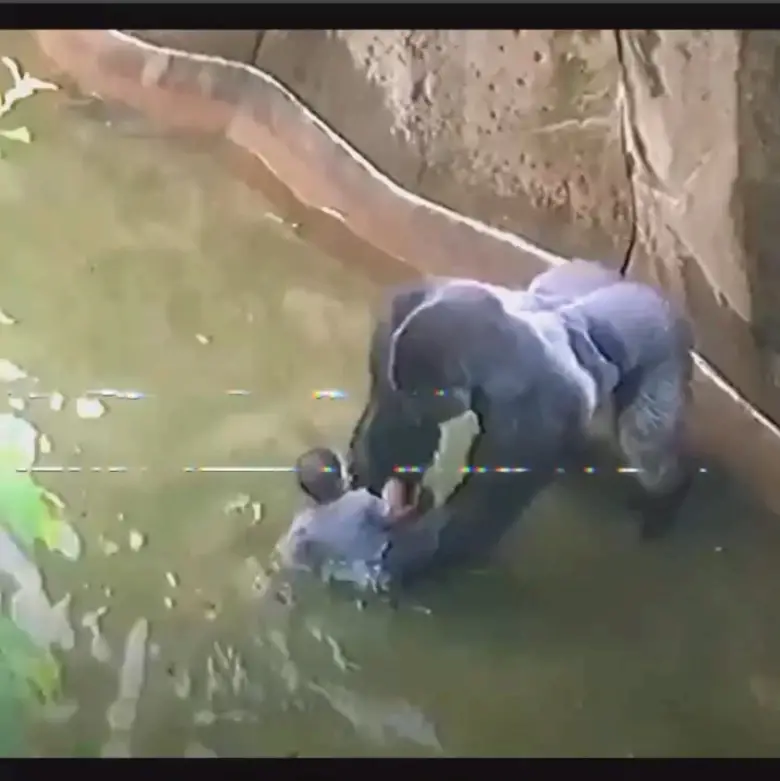
Something about the Harambe footage still unsettles those who revisit it. Was the gorilla truly a threat to the child, or were his movements misread in a moment of fear and urgency? Nearly ten years later, the debate has not faded — if anything, it has deepened, drawing in experts, ethicists, and ordinary people still haunted by a few unforgettable minutes of chaos inside the Cincinnati Zoo.
A Tragedy That Sparked a Global Reckoning

When Harambe was shot in 2016 after a young boy fell into his enclosure, the world reacted with shock and outrage.

What seemed like a split-second decision by zoo officials quickly spiraled into a worldwide conversation about the ethics of captivity, the limits of human safety,
and how we interpret the behavior of animals we can never fully understand.

Behaviorists who studied the footage remain divided. Some point to Harambe’s posture and movements as signs of curiosity and possible protection — a silverback acting with control rather than aggression. Others argue that regardless of intent, his raw strength meant the child
was in constant danger, leaving keepers with no choice but to act.

Beyond One Gorilla

But Harambe’s death became more than an isolated tragedy.

It cracked open bigger questions about the very idea of zoos. Should highly intelligent, emotionally complex animals like gorillas be confined at all? Critics insist that enclosures, no matter how advanced, can never replicate the richness of life in the wild. Supporters counter that modern zoos are essential for conservation, breeding programs, and teaching the public to value species that might otherwise vanish.

- Advertisement -

The incident also exposed weaknesses in safety planning. In its aftermath, zoos worldwide revisited enclosure designs, reexamined barriers, and strengthened training for staff and visitors alike. The hope was simple: that no family, and no animal, would ever again be caught in such a devastating situation.

A Legacy That Endures

What remains most powerful about Harambe’s story is its symbolism. His death crystallized the fragile balance between protecting human life and honoring animal welfare. It forced us to see that our relationship with captive wildlife is not just about spectacle or science — it is about responsibility.

Conclusion

Harambe’s name endures, not as a meme alone, but as a reminder of an uneasy truth: when humans and wild animals share space, tragedy is always a possibility. His death pushed zoos, policymakers, and the public to confront hard questions about safety, ethics, and compassion.
And as those conversations continue, Harambe’s legacy remains — a call to rethink not just how we confine animals, but how we coexist with them.

Please SHARE this article with your family and friends on Facebook.

- Advertisement -

Bored Daddy

Love and Peace

- Advertisement -
- Advertisement -
- Advertisement -

Something about the Harambe footage still unsettles those who revisit it. Was the gorilla truly a threat to the child, or were his movements misread in a moment of fear and urgency? Nearly ten years later, the debate has not faded — if anything, it has deepened, drawing in experts, ethicists, and ordinary people still haunted by a few unforgettable minutes of chaos inside the Cincinnati Zoo.

A Tragedy That Sparked a Global Reckoning

When Harambe was shot in 2016 after a young boy fell into his enclosure, the world reacted with shock and outrage.

What seemed like a split-second decision by zoo officials quickly spiraled into a worldwide conversation about the ethics of captivity, the limits of human safety,
and how we interpret the behavior of animals we can never fully understand.

Behaviorists who studied the footage remain divided. Some point to Harambe’s posture and movements as signs of curiosity and possible protection — a silverback acting with control rather than aggression. Others argue that regardless of intent, his raw strength meant the child
was in constant danger, leaving keepers with no choice but to act.

- Advertisement -

Beyond One Gorilla

But Harambe’s death became more than an isolated tragedy.

It cracked open bigger questions about the very idea of zoos. Should highly intelligent, emotionally complex animals like gorillas be confined at all? Critics insist that enclosures, no matter how advanced, can never replicate the richness of life in the wild. Supporters counter that modern zoos are essential for conservation, breeding programs, and teaching the public to value species that might otherwise vanish.

The incident also exposed weaknesses in safety planning. In its aftermath, zoos worldwide revisited enclosure designs, reexamined barriers, and strengthened training for staff and visitors alike. The hope was simple: that no family, and no animal, would ever again be caught in such a devastating situation.

A Legacy That Endures

What remains most powerful about Harambe’s story is its symbolism. His death crystallized the fragile balance between protecting human life and honoring animal welfare. It forced us to see that our relationship with captive wildlife is not just about spectacle or science — it is about responsibility.

Conclusion

Harambe’s name endures, not as a meme alone, but as a reminder of an uneasy truth: when humans and wild animals share space, tragedy is always a possibility. His death pushed zoos, policymakers, and the public to confront hard questions about safety, ethics, and compassion.
And as those conversations continue, Harambe’s legacy remains — a call to rethink not just how we confine animals, but how we coexist with them.

Please SHARE this article with your family and friends on Facebook.

Bored Daddy

Love and Peace

- Advertisement -
Bryan Seal
Bryan Seal
Bryan is an American novelist and Veteran of the United States Marine Corps. Between those careers, he’s worked as a deckhand, commercial fisherman, divemaster, taxi driver, construction manager, and over the road truck driver, among many other things.

More from author

Related posts

Advertisment

Latest posts

A year after my divorce my ex MIL told me her son did the right thing leaving me

Every divorce is painful in its own way, and mine wasn't an exception. Around a year following my separation with my ex-husband, I found...

My husband let his secretary ride in the front seat of my car and called me sensitive—so I sold his house, took his car,...

When people ask me at what point did I realize my marriage was over, I don't really overshare. But I knew exactly what that...

Donald Trump’s niece Mary claims he’s in a ‘downward spiral’ and reveals what he’s ‘terrified’ from

That Mary Trump isn't fond of her uncle, President Donald Trump, isn't anything new. In fact, it looks like she's using every chance she...

Want to stay up to date with the latest news?

We would love to hear from you! Please fill in your details and we will stay in touch. It's that simple!