

It was just past midnight when I stepped into the bank and spotted a woman along with a little girl sleeping on one of the lobby’s marble benches. Initially, it looked like they were merely taking a quick break, but the longer I watched, the clearer it was that this wasn’t the case. They appeared to have no other place to go. The woman seemed to be no older than thirty, with wet clothes from the rain and deep circles under her eyes. Next to her, the little girl held a ragged stuffed rabbit; both its button eyes were missing.
The kid woke up first. She stared at me, clung to her bunny, and whispered if I was a security guard. This got her mom jumping too; wide-eyed, the woman sat up pronto, tugged the little one close, and they were ready to bolt before I said anything. Glancing around, I saw the lobby was totally deserted. The cleaning crew had just gone home, and only the pale light from the ATM was stretching across the floor. Plus, lying by the bench, a lone paper cup held a couple coins jingling around inside. When I asked how often they stayed, she replied only tonight – though she stuttered a bit after that. Her face clearly showed struggle–between her pride and sheer exhaustion.
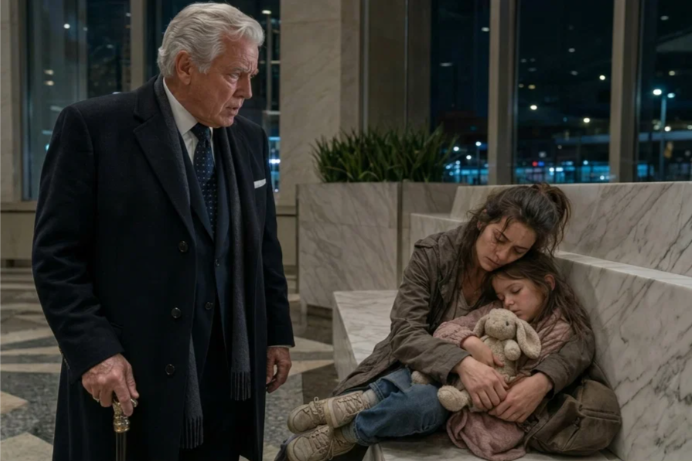
My driver was waiting outside. I’d only stopped by after a fundraising dinner to check on some paperwork before going home, which isn’t something I normally do. But something drew me there that night – maybe luck, maybe fate. When I introduced myself, the lady said her name was Lena, and her daughter was called Maya. Leaning on my cane, I bent down carefully to ask the little girl if she had eaten. She glanced at her mom first, shook her head slightly, and Lena got tense, stating they didn’t want charity. I explained that wasn’t what I was offering. That’s when she actually looked at me, not at what I wore but at me.
I pointed at the bank logo on the wall and asked why they picked this place. She chuckled, but it was more like something breaking. The laugh didn’t sound happy at all. Then, she explained that this particular bank handled every payment for her apartment. Perplexed, I frowned and asked which apartment she meant. Her voice was so lifeless when she replied.
She went on to share her story. For twelve years, she cleaned offices, took extra shifts, sewed uniforms on weekends, and even skipped meals. All this while saving every penny. It was all for the apartment payments. Finally, just the week before, she signed the last ownership papers. Curious, I asked what happened next. Her eyes fixed forward and she muttered that they had taken it.
I first assumed it was about money being frozen or something like identity theft. Maybe a glitch at the bank?

When I asked who took it, she said her landlord, his lawyer, and someone at the bank who’d helped them. My stomach tightened at her words. Maya buried her face in her stuffed rabbit and whispered that their beds were now outside. This hit me harder than anything her mom said. “When I tried to argue,” Lena said, swallowing hard, “they just laughed and told me that poor people should learn to read before signing things.”
I’ve spent decades dealing with fraud cases, and her story didn’t sound that distant. I’ve seen people trying to take advantage of others, believing they are smarter than their victim.
The next morning, Lena and Maya were in mi kitchen, with my housekeeper making pancakes for them. And I? I was going through the papers Lena gave me for over two hours and combed every line signature, every signature. You name it. And that’s when I figured out how the pieces fit.
I asked if Kroll was her landlord. He was. Then she asked if I knew him. Said I did, knowing full well about Victor Kroll. When the name Daniel Voss came up, I wasn’t surprised either since some players just show up too often in these stories.
I kept reading and the deeper I dug, the worse it got. A missed payment from six years ago led to a penalty clause that somehow transferred ownership. It had been approved already too. Forged documents usually look legit on the surface, but things come to light upon close inspection.
That afternoon, Victor Kroll turned up at my building, dressed in a white suit and grinning. Along with him were his lawyer and the bank manager’s niece, Marina Bell. She was the one who had signed off on Lena’s transfer. All three were beaming with self-satisfaction.
Victor instantly saw Lena and mocked her presence, saying it was sad. Then Marina chimed in, telling her to try a shelter.
Lena looked away, but I kept my gaze steady. When I asked about the notary who’d done the transfer, Daniel Voss simply smiled and called it irrelevant. “Actually,” I shot back, “I’d say it’s pretty important.” Victor’s chuckle cut through the tension, suggesting I should buy her dinner instead. For a moment, I locked eyes with Victor, and then I made sure they heard me loud and clear: “You picked the wrong person to mess with.” Marina rolled her eyes and asked what that even meant. I explained that greed makes people careless. They all laughed, thinking they were too clever, which actually worked to my advantage since people usually let their guards down—and chatter way more—when they feel they’ve already won.
That evening, I took Lena to one of the best law firms downtown. Within hours, investigators were pulling records and got the results super quick. It turned out there was no missing payment; the penalty clause was added much later. Also, the notary stamp was from a woman who had passed away months before the document was supposed to be signed. Plus, the bank authorization should not have been approved in the first place. The lawyer then looked up, slid another file across the table, and said it got even worse.

Victor did almost the same thing to several other families, using different names and properties but the same old tricks—forged papers and threats. Lena looked at the documents and, for the first time since I’d met her, didn’t look defeated. She was angry, and anger could be useful if pointed in the right direction. When she asked what happened next, I closed the folder and said we’d make them think they were safe.
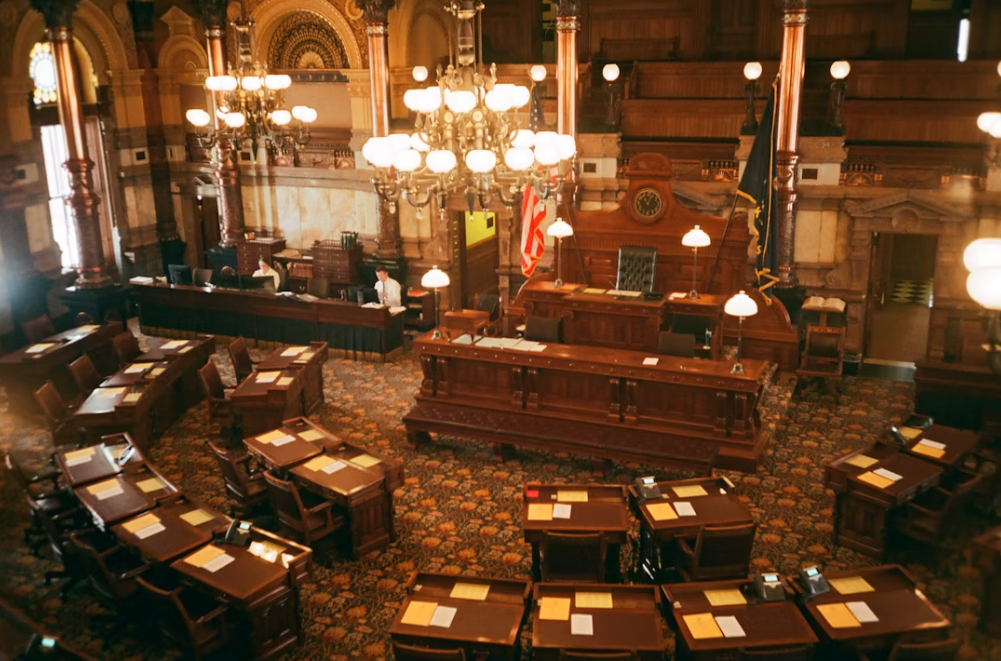
The courtroom was crowded. Victor arrived with a smile for the cameras, while Marina wore pearls. Daniel carried a thick “FINAL NOTICE” folder; the three of them exuded confidence. Lena sat quietly by my side, and Maya doodled in a children’s book as we waited. When the judge called the case, Daniel was the first to stand. His speech was polished and professional, covering contracts, obligations, and property law. After he finished, the judge looked over and asked for our response. So I stood up.
The room shifted when people heard my name, not because of my money, but from chairing the state’s housing fraud commission back in the day. After retiring from the bench, you see, it still carried some weight. Daniel got a little twitchy, though, which worked to my advantage. I projected both the original and the altered contract on the screen; once you noticed the changes, well, they were glaring. Formatting differed, along with metadata and timestamps. From there, I showed the notary records, bank approvals, emails, and financial transfers. Their false story collapsed piece by piece.

The judge’s face got darker with each document we showed. Victor’s smile vanished, Marina looked like she might throw up, and Daniel started sweating in his suit. Then came the recording. Victor heard his own voice saying Lena had paid for the apartment while he made fun of her for not being rich. That tape killed whatever small hope there was left. The judge quickly froze their accounts, halted the transactions, and flagged several issues for criminal probes. Soon after, the sheriff arrived, and that’s when the real panic began. Victor tried to pin it on Daniel, Daniel blamed Marina, and Marina pointed the finger at both of them. Seeing them turn on each other was close to pitiful—but not really.
Three months later, Lena owned her apartment instead of just renting it. Other families got their properties back too; the fraud investigation continued to grow. Victor sat waiting for his trial, Daniel lost his law license, and Marina was unemployed. One bright morning, I dropped by Lena’s place for some tea. As I entered, I saw Maya laughing in the living room with her rabbit. Her apartment finally seemed to be a true home.
Lena served me a cup and asked me why I helped them out. We both looked out the window at the city skyline. I could picture the bank where I first spotted them, slumped asleep on a cold marble bench. The reason was straightforward. Guys like Victor assumed no one would catch them, no one would care, and no one would stand up against them. They didn’t think someone would step in and help her, thinking she was alone. Lena smiled this time, and there was no sadness in her eyes.
Please SHARE this article with your family and friends on Facebook.
Bored Daddy
Love and Peace