


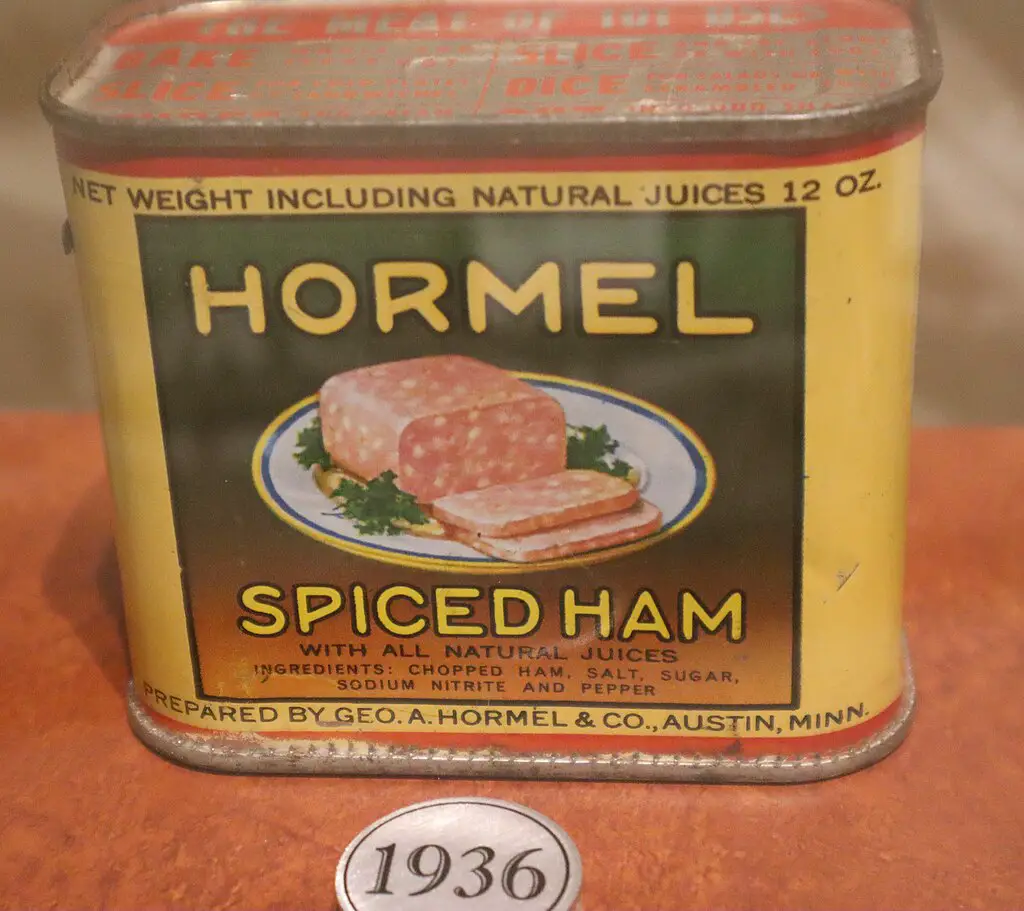
Ever since Hormel Foods Corporation introduced it in 1937, SPAM, the canned cooked meat known for its long shelf life, became a must-have pantry item in every household in America.
The name of the brand stands for ‘Spiced Ham’ — or at least, that’s the popular belief. Some speculate that it stands for ‘Shoulder of Pork And Ham,’ while others suggest it could mean ‘Specially Processed American Meat.’
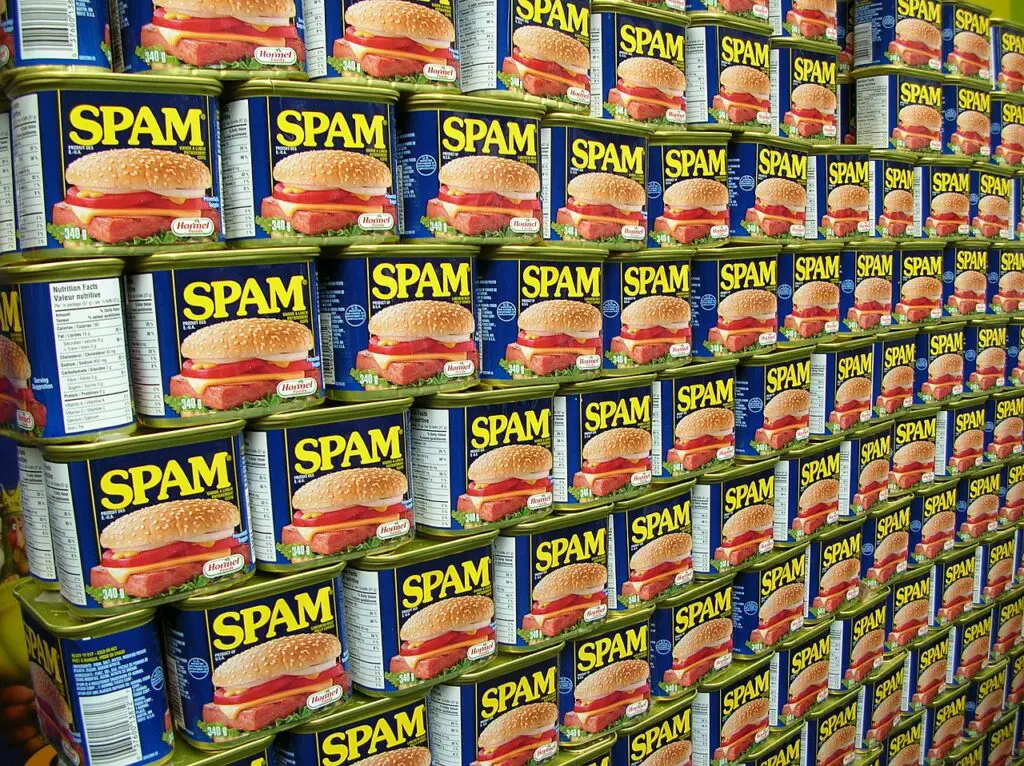
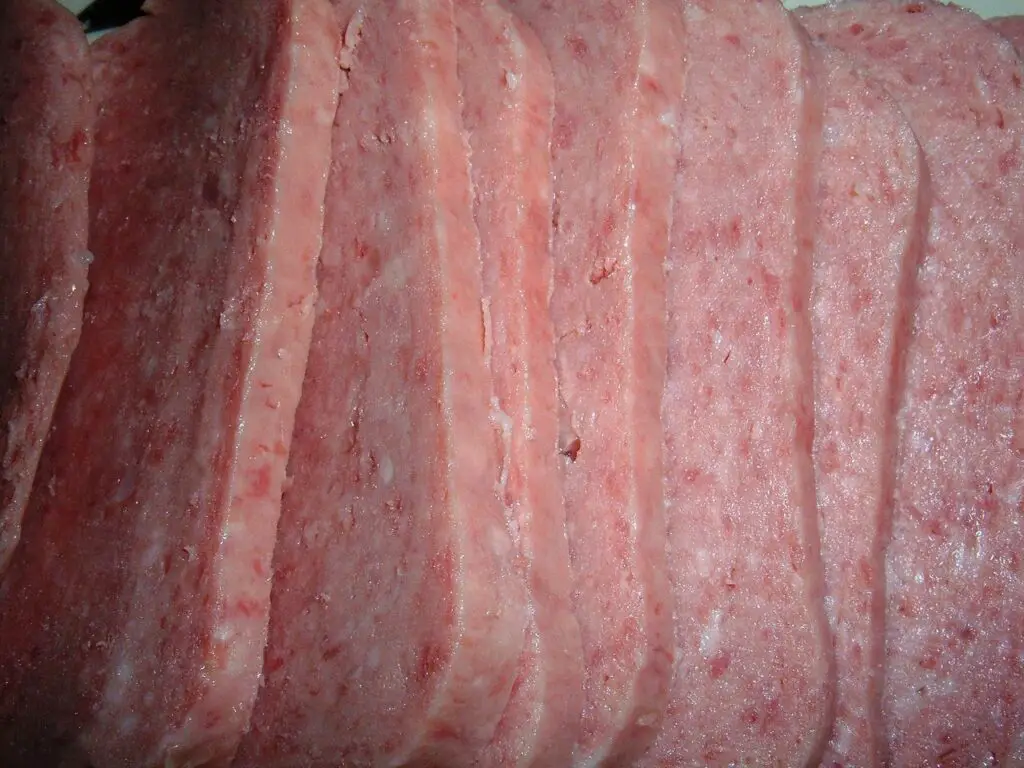
It’s taste and texture are rather unique, which makes many question what ingredients the company uses to make the popular product.
SPAM gained popularity during the WWII, when it was used to feed the troops. Even today, it is a staple food in places like Hawaii, South Korea, and the Philippines.
It comes in various flavors and varieties, satisfying diverse food preferences. From the classic original SPAM to flavors like Hickory Smoke, Hot & Spicy, and even SPAM with Cheese, there’s a SPAM for everyone’s taste.
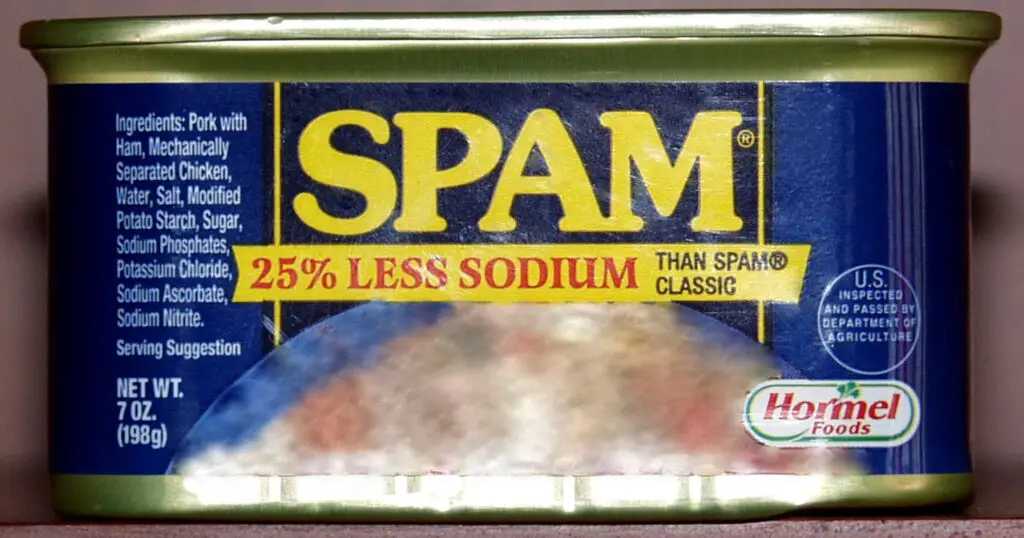
If you’ve ever wondered exactly what ingredients SPAM is made of, these are the ones used in the classic can: pork (with ham), salt, water, sugar, potato starch (used as a binder), and sodium nitrate, a common preservative used in cured meat to keep it look fresh, extend shelf-life, and preserve the pink color.
In fact, sodium nitrate is found is certain vegetables such as spinach and celery, as well as in unregulated drinking water. It is a chemical compound of nitrate and sodium.
While nitrates are a natural part of any normal diet, excessive consumption can lead to health risks. Research suggest that high levels can cause colorectal cancer. Also, high intake is linked to diseases such as leukemia, non-Hodgkin lymphoma, heart disease, and ovarian, stomach, esophageal, pancreatic and thyroid cancers.
The Centers for Disease Control and Prevention (CDC) suggests the daily intake of sodium nitrate to be limited to 3.7 milligrams per kilo of body weight. The issue is that this ingredient is not listed on food labels, making it difficult to track the amount you are getting on a daily basis.
Please SHARE this article with your family and friends on Facebook.
Bored Daddy
Love and Peace