

I received that envelope on a Thursday, and nothing about it screamed trouble. I didn’t recognize the handwriting, yet, when I saw the return address, my stomach tightened: Riverside Memorial Hospital.
It contained one small note only. It said: “Mr. Davidson, your ex-wife Maya has listed you as her emergency contact. She has been hospitalized and requires your presence.” At that point, it was exactly three months since my divorce was finalized and since I left that courthouse convinced the hardest chapter of my life was finally behind me. I was wrong!
The drive to the hospital did feel like a journey back in time – to years gone by, which I tried desperately to forget, but only brought out yet another memory every time there was a red light on the road. I recalled how happy Maya was when we met for our first date – how badly she sang yet was happy when doing the coffee in her bare feet. There were also the more sinister memories about us growing apart despite living in the same house. By the time I got to the hospital, I was squeezing the steering wheel so hard that it started hurting.
She was sitting next to a window at the cardiac unit when I found her, and for a split second, I did not recognize her. Maya always seemed confident and maintained an air of assurance, even during tough times, but here she appeared small, tired, and vulnerable. It felt like life had been gradually eroding parts of her without anyone realizing it, myself included.
“You came,” she said in surprise not because of the weakness of her voice but rather out of complete relief.
“Hospital called me,” I stammered, sounding as if we were strangers going through the motions of idle chatter. I remained by the doorway while she fidgeted with her blanket. Eventually, I made myself ask the obvious question: “What happened?”
Maya sat in silence for a couple of seconds before she finally spoke, “My heart stopped.”
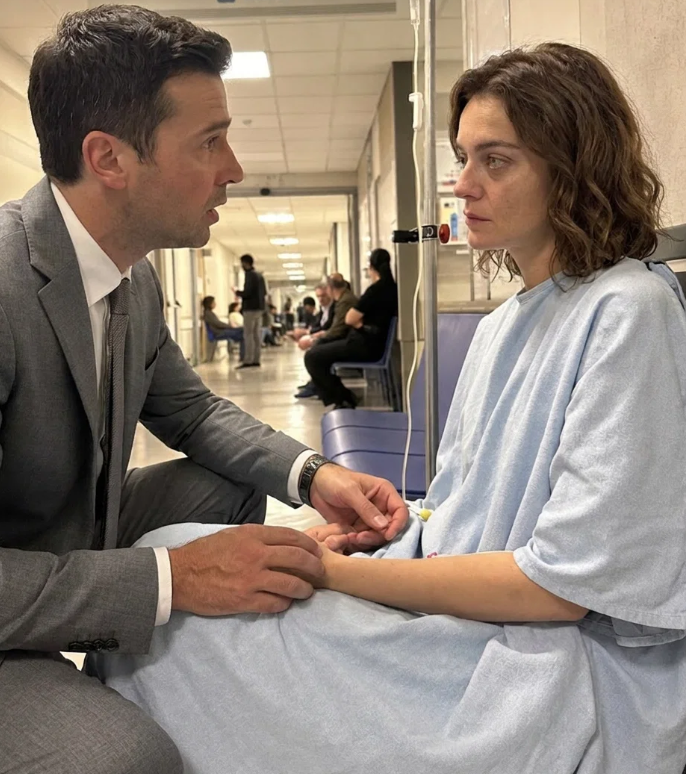
She had gone through a health crisis at work due to what doctors believed to be connected to prescription medications she had been taking too often, in too high a dose, and for far too long.
“What prescriptions?” I asked, puzzled. But she didn’t give me any immediate answer. The only thing Maya did was look totally drained, not physically but emotionally, as if carrying a burden that weighed too heavily on her all along.
That’s when the truth began to emerge, little by little, and then all at once. She talked about anxiety, panic attacks, nights without sleep, and an unrelenting fear that never really went away. She confided that it had been there since her days in college and accompanied her through all her adult life – including our marriage – and most of the places she ever stayed in. At first, the drugs helped; but once the fear came back, she kept looking for other ways of dealing with it.
“I thought I was managing it,” she said. “Really, I was just hiding it.”
Sitting there shocked me to the core because nothing about what I was hearing was remotely close to what I knew about Maya – perhaps it was, but I had never comprehended it. As she spoke, the pictures inside my mind began changing their order. All of those early mornings when she couldn’t bring herself out of bed, the dinners she didn’t come to, the invitations she refused, and all of her tiredness and withdrawal and lies flashed through my mind. I had assumed that it was all a form of distance, of lack of effort, of lack of love – until today, of course.
“There were signs,” I whispered.
Maya smiled sadly. “Sure.”
“Why didn’t you tell me?” The question slipped out.
Maya looked at me straight on for the first time since we began our conversation, and I could see the years worth of pain inside her eyes. “Because I was scared.”
“Of what?”
“That you’ll leave me. And then I became afraid you’d stay only because you felt sorry for me.”

It was a long, heavy silence that made me reflect upon the things that were best left unsaid. The more she spoke, the more I saw our marriage in a new light. I recalled fights that appeared to be without cause, moments where I would accuse her of throwing in the towel, moments where she walked out on me without a reason. At one time, I thought that she simply did not care; however, now I could see that she was drowning and did not want anyone to know just how deep the water really was.
That thought stung, in part because somewhere deep inside me, a voice kept insisting that it was my fault even though the reality was not so clear-cut. Mental illnesses can come in many forms; sometimes they show their face through irritation, fatigue, or complete isolation. Maya had been acting normal for years, and I had spent years believing the performance, without either of us understanding the true cost.
In the latter half of that day, one of her doctors found me and explained to me that it could have been much worse, and that she had lucked out. This illness had not just been physical in nature; it required healing through therapy, treatment from physicians, changes in lifestyle, and, most importantly, someone to support her in her efforts.
“Do her relatives live close by?” the doctor asked.
I realized I didn’t know the answer to that question and that bothered me more than anything else in a long while. Our marriage had lasted seven years, but somewhere along the way, I lost track of where she found her strength, among other things. It is how people grow apart; the distance between them is so gradual, and one day, there stands an entire person across from you, and you don’t even know them anymore.
That evening, I stayed not out of obligation, but because I physically could not get away. We were divorced and Maya was no longer my responsibility legally, but it was far from straightforward on an emotional level. During the next few days, we communicated in ways that we hadn’t in years, without any need for lawyers, defense, or facades.

Maya recounted her first experience of having a panic attack on the second year of our marriage when driving herself to work and trying to avoid the overwhelming desire to park the car to cry. Also, she shared the experience of sitting through social events and counting the minutes till she got to go home. However, most importantly, she shared the experience of feeling ashamed of herself and thinking that sharing her struggles would make her less of a person.
“What I always did was wait for normal to come back,” she told me. “But normal never came back.”
I remember how powerful of an impact those words had on me because many people do this very thing, convince themselves tomorrow will be easier, until years are lost.
The recovery process did not come easy; there were lots of bumps, tough days, and even days when no progress seemed possible at all. However, there were victories as well—small but significant achievements such as sleeping for a whole night, having a peaceful morning, or just shopping in a grocery store without being taken over by panic. These were everyday feats that suddenly became extraordinary. I started visiting her therapists not as a concerned husband trying to save his marriage but just as someone who wanted to learn more. Learning more meant seeing all my shortcomings; I was frustrated, I got critical and judgmental, she felt threatened, and that made her secretive.
The cycle fed itself, and though neither of us intended it, we both became trapped inside.
Time flew, but the tension went away— not because life became easier, but because the truth stepped in. Maya quit trying to look okay, while I stopped forcing explanations. It turns out that telling the truth was much easier than putting on a show.


Half a year later, our marriage was over, but friendship and mutual respect replaced it. Maya sought help from a special therapist, attended several support groups, and became stronger. She did not become who she used to be, but a new, better version of herself.
“Over the years, I was acting as if everything was fine, and this probably damaged me the most,” Maya said on a park stroll one day.
It takes a huge amount of energy to pretend. It wasn’t a lack of love that led to our divorce, but a lack of communication, overshadowed by fear, silence, and shame.
Now, Maya has been in recovery mode for over a year and dealing with her anxieties through treatment instead of silence. I’ve also changed – I am more conscious in listening, understanding that there is always a hidden narrative beneath any action.
Divorce was not the end; it was a new beginning. The hospital room in which Maya came close to losing her life turned out to be the place where we stopped pretending. Sometimes, endings are just new beginnings.
Please SHARE this article with your family and friends on Facebook.
Bored Daddy
Love and Peace