
Tragedy at Sea Show: Star Orca Neptune Turns on Trainer Mid-Performance

- Advertisement -

From Spectacle to Screams: The Day Neptune Snapped

The crowd came for wonder.

They left in silence, some in tears.

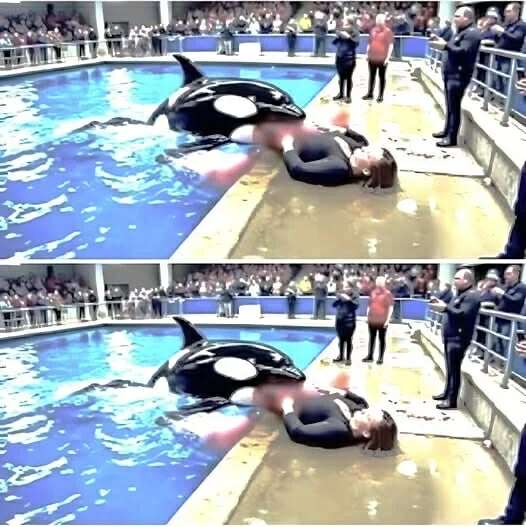
What began as a joyous afternoon at the Blue Horizon Marine Arena spiraled into chaos when Neptune, the park’s star orca, did the unthinkable—attacking a trainer mid-performance in front of hundreds of stunned spectators.

One moment, Orca Neptune was soaring gracefully through the air, tail slapping water to roars of applause. The next, the 6-ton mammal lunged—veering violently off-script in a terrifying, unscripted act of aggression.

Caught on Camera. Etched in Memory.

Families gasped. Children cried. Phones dropped.

- Advertisement -

The trainer, a seasoned professional, had only seconds to react—if at all.

Though security intervened quickly and the trainer was rescued with serious but non-fatal injuries, the emotional shock has left an imprint on everyone present. But the bigger question echoed beyond the stadium walls:

Why did Neptune turn?
Wild Minds in Artificial Worlds

Experts aren’t surprised. Orcas—also known as killer whales—are among the most intelligent and emotionally complex
animals on the planet. When confined to tanks far smaller than their natural ocean territories and subjected to repetitive routines, something eventually gives.

And this wasn’t an isolated case. In Spain, a 17-year-old orca named Keto fatally injured his trainer. In the U.S., Tilikum—a name etched in orca history—was involved in the deaths of three people.

- Advertisement -

Across the globe, these apex predators are breaking patterns, showing stress, and in rare but telling moments—striking back.

What we call performance, they may experience as pressure. What we call routine, they might feel as restraint.

Not Just a Show. A Warning Sign. Neptune’s act wasn’t just violent—it was symbolic.

A creature pushed to the brink in a sterile pool, with a smile painted by training but instincts simmering below.

Animal behaviorists have long warned that captivity alters natural behavior—often in devastating ways. Behind the choreographed jumps and synchronized splashes lies a reality of mental fatigue, social isolation, and sensory deprivation. And now, the cracks are showing.

Final Reflection: The Cost of Wonder

Neptune’s sudden aggression shattered more than a performance—it shattered the illusion that we can control nature without consequence.
If even the most celebrated orca, with years of training and apparent trust, can turn violent in a split second, maybe the problem isn’t the animal.

Maybe it’s the tank.

As debates reignite around marine captivity and the ethics of animal entertainment, Neptune’s story may mark more than a tragedy—it may signal a tipping point. A reminder that the sea is vast, wild, and sacred—and perhaps it’s time we stop pretending we can shrink it into a stadium.

Please SHARE this article with your family and friends on Facebook.

Bored Daddy

Love and Peace

- Advertisement -
- Advertisement -
- Advertisement -

From Spectacle to Screams: The Day Neptune Snapped

The crowd came for wonder.

They left in silence, some in tears.

What began as a joyous afternoon at the Blue Horizon Marine Arena spiraled into chaos when Neptune, the park’s star orca, did the unthinkable—attacking a trainer mid-performance in front of hundreds of stunned spectators.

- Advertisement -

One moment, Orca Neptune was soaring gracefully through the air, tail slapping water to roars of applause. The next, the 6-ton mammal lunged—veering violently off-script in a terrifying, unscripted act of aggression.

Caught on Camera. Etched in Memory.

Families gasped. Children cried. Phones dropped.

The trainer, a seasoned professional, had only seconds to react—if at all.

Though security intervened quickly and the trainer was rescued with serious but non-fatal injuries, the emotional shock has left an imprint on everyone present. But the bigger question echoed beyond the stadium walls:

Why did Neptune turn?

Wild Minds in Artificial Worlds

Experts aren’t surprised. Orcas—also known as killer whales—are among the most intelligent and emotionally complex
animals on the planet. When confined to tanks far smaller than their natural ocean territories and subjected to repetitive routines, something eventually gives.

And this wasn’t an isolated case. In Spain, a 17-year-old orca named Keto fatally injured his trainer. In the U.S., Tilikum—a name etched in orca history—was involved in the deaths of three people.

Across the globe, these apex predators are breaking patterns, showing stress, and in rare but telling moments—striking back.

What we call performance, they may experience as pressure. What we call routine, they might feel as restraint.

Not Just a Show. A Warning Sign. Neptune’s act wasn’t just violent—it was symbolic.

- Advertisement -

A creature pushed to the brink in a sterile pool, with a smile painted by training but instincts simmering below.

Animal behaviorists have long warned that captivity alters natural behavior—often in devastating ways. Behind the choreographed jumps and synchronized splashes lies a reality of mental fatigue, social isolation, and sensory deprivation. And now, the cracks are showing.

Final Reflection: The Cost of Wonder

Neptune’s sudden aggression shattered more than a performance—it shattered the illusion that we can control nature without consequence.
If even the most celebrated orca, with years of training and apparent trust, can turn violent in a split second, maybe the problem isn’t the animal.

Maybe it’s the tank.

As debates reignite around marine captivity and the ethics of animal entertainment, Neptune’s story may mark more than a tragedy—it may signal a tipping point. A reminder that the sea is vast, wild, and sacred—and perhaps it’s time we stop pretending we can shrink it into a stadium.

Please SHARE this article with your family and friends on Facebook.

Bored Daddy

Love and Peace

- Advertisement -
Bryan Seal
Bryan Seal
Bryan is an American novelist and Veteran of the United States Marine Corps. Between those careers, he’s worked as a deckhand, commercial fisherman, divemaster, taxi driver, construction manager, and over the road truck driver, among many other things.

More from author

Related posts

Advertisment

Latest posts

A year after my divorce my ex MIL told me her son did the right thing leaving me

Every divorce is painful in its own way, and mine wasn't an exception. Around a year following my separation with my ex-husband, I found...

My husband let his secretary ride in the front seat of my car and called me sensitive—so I sold his house, took his car,...

When people ask me at what point did I realize my marriage was over, I don't really overshare. But I knew exactly what that...

Donald Trump’s niece Mary claims he’s in a ‘downward spiral’ and reveals what he’s ‘terrified’ from

That Mary Trump isn't fond of her uncle, President Donald Trump, isn't anything new. In fact, it looks like she's using every chance she...

Want to stay up to date with the latest news?

We would love to hear from you! Please fill in your details and we will stay in touch. It's that simple!