Renee Nicole Good was shot dead by ICE officer Jonathan Ross in Minneapolis, Minnesota, on January 7. The incident triggered public outrage and demonstrations while US officials claimed Ross acted in self-defence, with Trump dubbing her a “professional agitator” who “violently, willfully [sic], and viciously” ran over an ICE officer.
An actual footage from the tragic incident showed Good attempting to drive away from the officers, including the one who pointed the gun at her. So it’s simply an attempt to flee rather than a deliberate attack at the officer.
Renee Good/ X
Speaking to People, the Romanucci and Blandin law firm representing Good’s family said Good and her partner, Rebecca, were driving home when they spotted a group of ICE agents and stopped to “observe, with the intention of supporting and helping their neighbors” at the time she was shot.
The Romanucci and Blandin law firm represented the family of George Floyd, the 46-year-old man who died in Minnesota after former police officer Derek Chauvin pressed his knee against his neck for more than nine minutes, and won a $27 million settlement with the city of Minneapolis.
Following Renee Good’s killing, the family requested an independent autopsy and a private investigation into her death.
The law firm has since released the report of the independent autopsy conducted by a “highly respected and credentialed medical pathologist.” The report showed that Good was hit by three gunshots, one to her left forearm and another through her right breast that did not damage any major organs, neither of which was immediately life-threatening, and a third that entered near her left temple and exited the right side of her head, Peoplereported.
There was also a fourth wound, which the pathologist described as a graze wound consistent with a firearm injury, but with no penetration.
Lead attorney Antonio M. Romanucci said the evidence the firm has so far gathered “and will continue to gather” will help “prove [their] case.”
ROBERTO SCHMIDT / AFP via Getty Images
“The video evidence depicting the events of January 7, 2026, is clear, particularly when viewed through the standards of reasonable policing and totality of circumstances,” Romanucci told People.
“Additionally, our legal team will continue its unwavering and proactive advocacy for Renee’s life and her family.”
Please SHARE this article with your family and friends on Facebook.
With age, air travel can get more demanding due to reduced mobility, change of energy levels, and the need of assistance and accommodation.
While numerous airlines and airports do provide assistance, it is not consistently standardized. Some rights are guaranteed by law, some depend on the airline or airport, and many only apply if you request them in advance.
As the rules are different for every country and airline, many passengers over the age of 65 are often not aware of the type of assistance they can get.
So, being aware of what is standard, when you have to ask for it, and when you shouldn’t expect it at all can make travel much easier and far less stressful.
A number of airports allow a companion to accompany a passenger who has requested assistance through security and to the gate, but again, this depends on airport and security authority rules, not just the airline. You are usually expected to request assistance in advance or ask at check-in and the airline or airport will link your reservation with your companion under mobility assistance.
Priority boarding without a wheelchair
Though this is available in most places, it is not automatic. Most airlines do offer priority or assisted boarding to passengers who, for various reasons, need a little extra time to get on the plane (limited mobility, pain, fatigue, or balance concerns). However, you must ask for it either during booking or at the gate. In cases like this, medical details are usually required.
Quiet or accessible waiting areas
Some airports offer quieter seating areas adapted for people with accessibility needs, but this can vary greatly. These areas are not airline lounges and are not necessarily signposted so you have to ask the airport staff. Also, availability is subject to space and local facilities.
Passengers who travel with medication, medical liquids, CPAP machines, supplements, or other health devices may bring them through the checkpoint. It’s standard practice, covered under security rules in most countries, including TSA regulations in the US. Medically needed liquids can exceed the standard size limits, but you’ll usually need to inform the security officer about them, and they may still take a look during screening.
Additional medical bag
Most major airlines permit you to bring an extra bag of medical supplies—such as insulin, CPAP equipment, nebulizers, blood-pressure monitors, supplements, or cooling containers—that does not count against your carry-on limits, but the bag can contain only medical supplies. Best to check with your airline to avoid issues at boarding.
In-cabin refrigeration for medications
Before boarding, people who carry medications on board should have in mind that airlines do not have a universal obligation to refrigerate passenger medications. Some crew members may help if possible, but travelers should always plan to manage temperature themselves using approved cooling containers.
While airlines may offer seats that are more suitable for mobility or health needs when available, free extra-legroom or premium seats cannot be guaranteed everywhere. Seating must be requested under the accessibility needs option you see on the bottom right of the seating chart, and availability may be limited by aircraft configuration and local legislation.
Health and mobility devicesstay with you
This is highly regulated in many countries. Necessary mobility aids and medical equipment are typically permitted in the cabin and are not considered regular baggage. However, certain equipment must be requested or approved in advance, oxygen equipment being one of them.
Hidden fee exemptions for seniors
Some airlines do provide senior citizen discounts or waive certain fees that are usually promotional and offered at their choice. This means you have to ask for them specifically, and many airlines don’t offer them at all because they are not guaranteed and not part of accessibility law.
Please SHARE this article with your family and friends on Facebook.
Men will be men, they say, and I never questioned it and that’s why when I got married I didn’t have any huge expectations when it came to sharing household tasks or other similar commitments.
But then, one day, my husband ran out to the store, and before he left I asked him to grab sanitary pads. Honestly, I knew that simple request could easily turn into chaos. You know how it goes, texts from the aisle, photos of random packages, maybe a phone call asking, “Is this the one?”
But instead, he came home with the exact brand and type I always buy. No questions. No guessing.
I actually laughed and asked him how he even knew which ones to get. He then smiled a bit, and said he’s seen me buy them so many times that he just remembered. To him, it didn’t feel like it was a big deal, but honestly, to me it mattered.
And it wasn’t some huge romantic gesture or anything, but it hit me way more than I expected. It made me realize he actually pays attention and notices the small stuff because it matters to me.
While we were putting the groceries away, he casually mentioned that he wants to start doing more of the everyday things I usually take care of without thinking about it.
Later, while we were cooking, he admitted that the personal-care aisle totally overwhelmed him. He said he never noticed how many tiny decisions I make in a day until he had to make just one of them for me. That made me smile.
That supermarket moment somehow stuck with me.
I kept thinking about it the entire day because it felt like things became a bit easier and I wasn’t doing everything on my own as I sometimes assumed.
Please SHARE this article with your family and friends on Facebook.
Her entire life, Mara believed that love is all about giving, so when her mother poured all the savings to save Mara’s sister who got seriously ill, Mara felt betrayed.
She knew her sister’s life mattered the most, yet, she felt like the part of her mother’s assets and money that should have been given to her was in a way taken away from her.
When medical bills piled up, her mother sold her home in order to cover the expenses, and for Mara, that act felt like her future was wasted away.
A couple of months after Mara’s sister’s passing, her mother came at her door. She was exhausted, frail, and still mourning the loss. All she had in her hands bas a small bag. When Mara looked at her mother, something inside her snapped. Out of nowhere, she started uttering words she always meant to spill. She accused her mother of wasting her future when she spent every dollar for her sister’s medical bills.
Her poor mother didn’t argue. She just gave Mara a smile, as though she was there to say goodbye and disappear from her life forever, but all Mara cared for was the money she never got but assumed belonged to her.
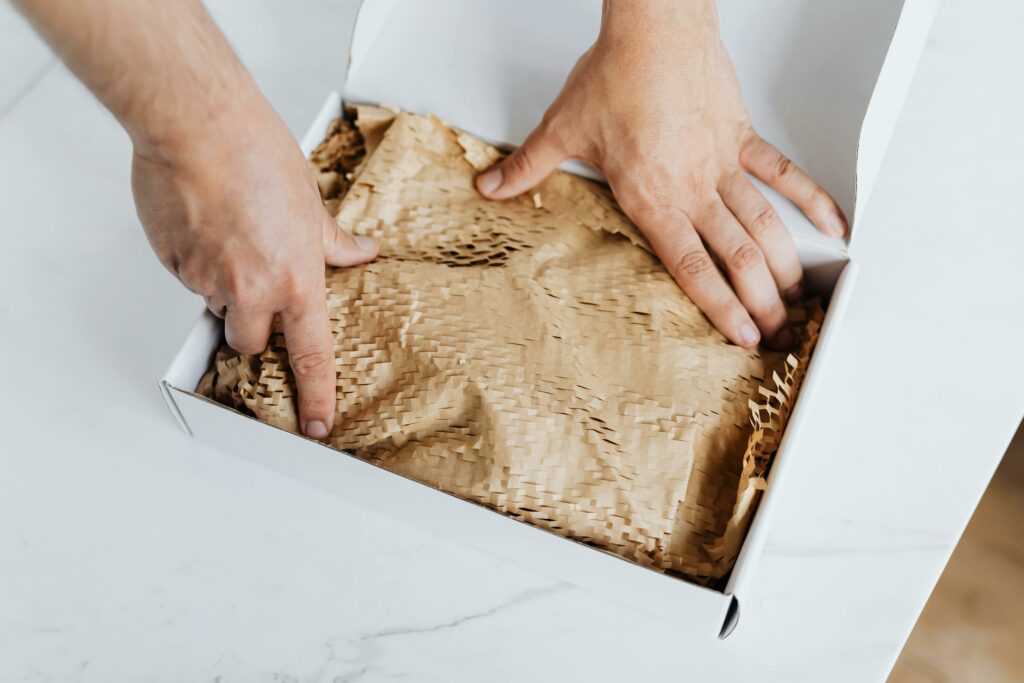
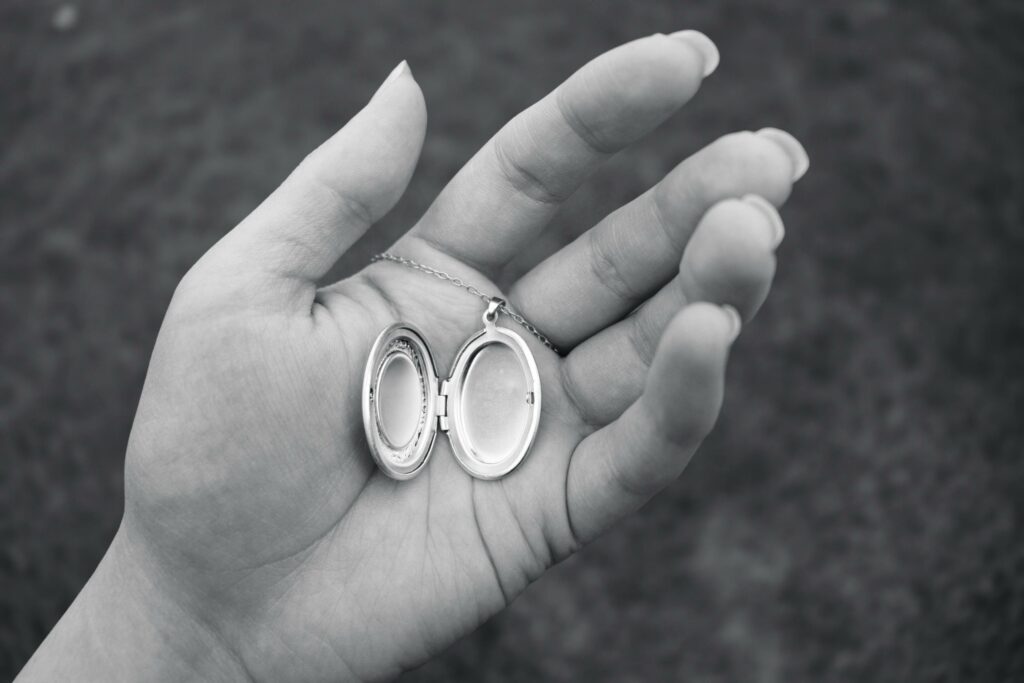
The following morning, Mara’s husband told her a package arrived for her. It was from her mother. Inside was a note that read, “I never used your inheritance. I spent only what was mine. The account is still in your name. I kept the locket for when you were ready,” and an address.
Mara followed the address right away. It led her to a shelter located on the outskirts of town. The receptionist recognized Mara’s name and said she left the place the previous night but didn’t say where she was going.
Mara was overwhelmed by guilt. She started searching the streets, the nearby motels, but her mother was nowhere to be seen. When she returned to the shelter, she was handed her late sister’s locket her mother left for her.
In the days after, Mara finally accessed the inheritance account. As she looked through the records, she had to stop and breathe. The money was all still there, and there was more than she expected. Over the years, extra deposits had been added, one by one, each with a short note attached: “For Mara’s education, for Mara’s wedding, for Mara’s future.”
She broke down as it sank in. Her mother hadn’t taken anything from her. She had been saving for her all along, and protecting her future.
Sadly, Mara’s mother never returned, and Mara still scans faces wherever she goes, hoping to catch sight of that familiar, tired smile.
And every night, in the quiet moments before she falls asleep, Mara whispers an apology into the darkness, hoping that somehow her mother can still hear her.
Please SHARE this article with your family and friends on Facebook.
There is probably nothing greater in life than mother’s love. From the moment she welcomes a child in her life, that little creature becomes her entire world, a world she tries to protect no matter what it takes.
Having a mom by your side means having stability, a shoulder to lean on when times get rough, and someone who celebrates your accomplishments as winning the lottery. A mother’s love doesn’t end when her life does. Instead, it remains eternal; a feeling that never fades away, no matter how much time passes by.
The moment your mother is gone, something in the way you think changes.
You don’t only grieve her absence but begin to question things that never crossed your mind before. You are now left with questions that only she could answer had she still be around.
You find yourself wondering where she is, over and over. Some days she feels impossibly close, as if she’s just stepped into the next room. You wake from a dream with the sense that you’ve just seen her face or heard her voice, and for a second, your body believes she’s still here.
Then there are other days when she feels unreachable. So distant that even your memories struggle to remember her. You try to recall the exact warmth of her hug, the comfort of her presence, and it slips through your fingers. Those who have experienced this loss know that that distance can be harder than the grief itself.
You wonder if she can still hear you when you cry, when the pain comes suddenly and steals your breath. You wonder if she knows how much you miss her, how time won’t pass without her, how ordinary days feel heavier than they used to. Then you question whether she would come back if she could, whether the bond still feels real to her now that you can’t touch or speak to one another.
You replay conversations in your head and wonder if she truly knew how deeply she was loved.
But then, out of the blue, something shifts. You begin to understand that the wondering is part of loving her. Over time, it becomes clear that while you question and reach and ache, she doesn’t need to. She already knew.
A mother’s love never dies, even when she does. It becomes who you are and resides in your instincts, your compassion, your power.
You are still her child. That never changed.
Please SHARE this article with your family and friends on Facebook.
Motivational speakers and productivity experts believe that making your bed after waking up is the “first win of the day.” In fact, for most of us, the habit of making our bed is something we learned from early age and we are simply doing it because we are used to it. However, there are also people who tend to leave their bed unmade and it doesn’t necessarily mean they are lazy or unmotivated. On the contrary, psychologists believe that these people tend to share certain characteristics related to how the mind prioritizes control, flexibility, and meaning.
People who don’t make their bed in the morning place greater importance on mental freedom than social expectations. Instead of bothering themselves about how they living space looks, they care more about how spending time there feels. They simply don’t see an unmade bed as an issue since it doesn’t affect their comfort or daily routine. Their focus tends to be on ideas, feelings, or work that matters more to them.
2. They Resist Arbitrary Rules
Psychologists argue that certain people tend to question the rules, and those who don’t make their bed in the morning fall in that category. These people make their own rules and develop habits that suit their personal needs without worrying what the society expects from them. Also, they are considered free-thinkers not bothered by social pressure.
3. They Show Higher Cognitive Flexibility
People who don’t make their bed just seem more comfortable with things being less-than-perfect or complete. They appear to adapt on the fly, work on two or more tasks one after another before feeling they have things ordered up front.
That sort of adaptability also enables them to do well in environments where plans unexpectedly change or are not able to be predicted. Instead of being distracted by a small amount of visual chaos, they focus their attention on the things that are more important to them.
One thing often seen in people who skip bed-making is that they don’t relate their sense of self to how productive they are. They’re less likely to judge themselves based on how much they get done first thing in the morning.
Since they don’t really attribute moral value to trivial habits, they have less guilt or self-criticism about them. This attitude has also been associated with reduced stress and risk of burnout, particularly in those who are already mentally burdened.
5. They May Be More Intuitive Than Structured
These people rely more on intuition than on schedule. Most of the decisions they make are based on their emotional and mental state.
Not a Flaw, but a Mental Style
Leaving the bed unmade isn’t a sign of laziness. For many people, it simply reflects independence and flexibility. There’s no single formula for well-being. While some people need order, others need space. At the end of the day, what matters most is what actually works for you.
Please SHARE this article with your family and friends on Facebook.
I got to hold my newborn in my hands for barely an hour. He was the most beautiful baby I’ve ever seen, and then he was gone, and doctors couldn’t provide me with answers.
At those moments at that cold hospital room where my dreams crashed and my world turned upside-down, I could see my mother-in-law smiling. If I hadn’t known what type of a woman she was, I would have thought I was imagining things, because who would smile after losing a grandson. But my mother-in-law was a cruel woman who believed I was nowhere near the level of her precious son.
At one moment, while I was still dizzy from the anaesthetics, she leaned towards her daughter and whispered, “God protected this family. That bloodline was supposed to end here.”
Her daughter, Melissa, didn’t show compassion either. The worst of all, neither my husband.
The three of them just stared at me as though I was guilty for losing my son.
And then, right there and then, my 8-year-old son Oliver, who hadn’t said a word that day, which wasn’t like him, asked: “Am I supposed to give the doctor what Grandma put in my baby brother’s milk?”
The nurse froze and the doctor went pale. It felt like in that second, calm turned into controlled chaos. Phones started ringing behind closed doors, security appeared without a word, and a senior nurse knelt down, gently guiding Oliver away. Another carefully lifted the bottle.
Eleanor, my mother-in-law started praying aloud and Melissa started sobbing. Were they sorry I lost my newborn all of a sudden or they were crying over their own fate?
My husband stood in the corner and started saying my name over and over again, as if he had just remembered I was there.
Police arrived shortly after and separated the family, questioning each one of us about what Oliver had said.
The test results from the bottle came quickly, almost too quickly, and showed the presence of substance in the milk that wasn’t harmful to adults when used properly, but for a newborn—hours old—it was lethal.
The drug was the same one Eleanor was taking for year for a condition she suffered from.
The sudden death of my baby wasn’t an accident, and she didn’t deny it. She claimed she was protecting the family of the weakness that run in my blood and that God would forgive her.
Law enforcement certainly didn’t. She was taken to the station for further questioning and was later charged with murder of my newborn baby.
My husband, who has always been enchanted by his dear mother, stood by her side, still believing she was innocent, although he knew she wasn’t.
Eight months later, Eleanor was found guilty and sentenced to life in prison. Her daughter, who saw her mother putting something in the bottle but stood silent, accepted a plea deal.
The divorce papers were signed shortly after and I am still struggling to understand how someone could be so cruel as to take a baby from a mother. Today, Oliver and I are away from my ex-husband and his family, doing our best to rebuild our life while still mourning the loss of his baby brother.
Please SHARE this article with your family and friends on Facebook.
With eight Grammy awards under his belt, Genesis drummer and lead singer Phil Collins is one of the most prominent musicians there are. He is one of only three musicians, alongside Michael Jackson and Paul McCartney, who have sold more than 100 million albums both as a solo act and a member of a band.
Born on January 30, 1951 in London, England to parents who possessed creative spirits, Collins fell in love with making music.
When he was just five, his uncle made him a drum kit out of tambourines, triangles, cymbals and toy drums, Collins recalled. “The old cliché is, ‘Well, at least it will keep him quiet’,” he told Interview Magazine.
Soon after, he found himself performing in shows at his parents’ boating club.
“When I started playing seriously, the English beat thing was just happening, the Shadows and bands like that. It was the very early ’60s,” Collins recalled.
“I remember buying Please Please Me. I used to put the record player on very loud and set up my drums so I was facing the mirror, that way you don’t look at what you’re doing.
“Then when I was fourteen I went to a teacher to learn to read drum music. I figured when this rock-and-roll thing finished I would have to make a living playing in a dance band or in an orchestra pit. So I learned to read drum music, but I found that my capacity for reading was not anywhere near as good as actually playing by instinct.”
Youtube/LiveAid
It was in the 1970 that Collin’s life changed forever. He was already playing in some bands when he came across an ad by a group called Genesis which was looking for a drummer. He decided to get in touch with them and the rest is history. In the first years of Collins being part of it, the group released five albums with singles that reached the charts.
After the founder and lead singer of Genesis left the group, Collins took his place. He was both a singer and a drummer. Speaking of his new role, he said he didn’t really feel comfortable, but as the group failed to find a singer, he simply stepped in.
Besides being a member of Genesis, Collins also had a very impressive solo career. With smash hits such as In The Air Tonight, You Can’t Hurry Love and I Don’t Care Anymore he soon became one of the best in the music industry.
When he decided to leave the group and focus on his solo career, Collins said: “Having been with Genesis for 25 years, I felt it time to change direction in my musical life.
“For me now it will be music for movies, some jazz projects and of course my solo career. I wish the guys in Genesis all the very best in their future. We remain the best of friends.”
However, in 2017, he decided to reunite with the band. A couple of years ago, they announced a world tour, The Last Domino, but had to put it on hold because of the pandemic.
Shutterstock/ Featureflash Photo Agency
And as fans were looking forward to seeing the group on stage together, Collins gave an interview with BBC Breakfast which made many concerned about his health. He and his band mates announced that it will be Collins’ son Nicholas who would do the drumming and Collins will only sing.
“Nic is a great drummer, but he is capable of sounding like early Phil. For Mike and I, that was always quite exciting,” Genesis band member Tony Banks said.
“It means you can play some of the songs that you haven’t played with Phil as the drummer for a long time.”
Youtube/7NEWS Spotlight
Speaking of why he’s not getting behind the drums, the musician revealed: “I’d love to but you know, I mean, I can barely hold a stick with this hand. So there are certain physical things that get in the way.
“I’m kind of physically challenged a bit which is very frustrating because I’d love to be playing up there with my son,” adding that he doesn’t know if he wants to be touring any longer.
“We’re all men of our age, and I think to some extent, I think it probably is putting it to bed,” he said. “I think yeah, I think just generally for me, I don’t know if I want to go out on the road anymore.”
Shutterstock/Jimmie48 Photography
During the past few years, Collins experienced certain health issues which left him struggling to get on his feet. Speaking to Billboard, he revealed that after a surgery in 2009, he was left with dislocated vertebra, nerve damage. He had also suffered a foot fracture that left him feeling like he’s walking “on sticks.”
In a rare interview interview he gave during an appearance on BBC’s Eras podcast ahead of his 75th birthday, Collins shared: “I have a 24-hour live-in nurse to make sure I take my medication as I should do. I’ve had challenges with my knee. I had everything that could go wrong with me, did go wrong with me.
“I can walk, albeit with assistance, you know, crutches or whatever,” he said.
The musician also revealed that he’s two years sober.
”I’d probably been drinking too much, and so my kidneys were messed up, you know,” he said.
“I enjoyed coming off tour. Coming off the road … I thought, right, I’m gonna do all those things that I couldn’t do,” he said. “I guess I had too much of it. I was never drunk, although I fell over a couple of times. But it is just one of those things that happened and it all caught up with me, and I spent months in hospital.”
The Grammy Award-winning artist admitted that the last few years have been “difficult, interesting, [and] frustrating,” but added, “It’s all right now.”