Barron Trump, the youngest of Donald Trump’s children, was speculated to be entering politics for quite some time, but it turns out he chose a different career.
Namely, the young Trump is one of the five co-founders and directors of Sollos Yerba Mate Inc., which is a newly formed company in the beverage industry, as reported by The Mirror.
Sollos Yerba Mate Inc. is developing a brand of beverages that include yerba mate, which is the most consumed drink in South America and consists of dried leaves and branches of the Ilex paraguariensis plant. The taste of this drink is slightly bitter but it contains high levels of caffeine; thus, it is considered to be a healthier substitute to coffee. Moreover, it is claimed that yerba mate contains higher caffeine levels compared to matcha. During the last few years, it has become increasingly popular in the United States.
Sollos, which is headquartered in Florida, is currently generating buzz for their upcoming release. Recently, the company announced the release through their LinkedIn account, posting promotional videos, such as an image of the drink cans creatively arranged on a surfboard, further emphasizing the casual brand. The startup has announced that the first flavor combo will be pineapple and coconut in the 12-pack. This product is set for release in May 2026, and will be marketed as a summertime beverage associated with a simple, outdoorsy way of life.
Getty Images
According to documents filed by the company and mentioned by sources like the Daily Mail, Barron has been officially named as one of the five directors in the company. The startup itself has been registered in both the state of Florida and the state of Delaware, which is often used by startups to gain maximum benefit and have the opportunity to attract investments. Sollos reportedly already managed to attract $1 million from private investors even without releasing its first product yet.
The company positions itself as a lifestyle-oriented drinks company with an emphasis on functional ingredients that are free of contaminants. In its communications, Sollos associates itself with the culture of South Florida and the year-round outdoor life. According to one of the descriptions of the company on LinkedIn, the idea behind its branding came from being brought up in a warm environment where outdoor pursuits were part of the daily routine. The name “Sollos” has an associated symbolism related to the sun; for example, SOL denotes the morning sun and a beginning, while LOS denotes the evening sun and an ending.
Apart from its marketing strategy, it is worth noting that Sollos has employed a unique method of product development, whereby it has decided to start off by introducing one perfected recipe rather than several varieties at the same time. As was revealed in interviews granted to news agencies, the beverage startup has chosen to put in all its effort in perfecting one type of drink as opposed to developing various types like many beverage startups.
It is pertinent to note that the drink in question has come at a time when there is a growing demand for natural sources of energy among beverages in the beverage market. Indeed, the use of yerba mate has been gaining popularity in the U.S. owing to its similarities with coffee in terms of stimulation effects despite being more natural or plant-based.
As per reports, Barron Trump, who is currently enrolled at New York University, has been actively involved in creating business plans for the past one year and has worked with his co-founders to develop the vision of the company. He is also believed to have utilized his study period to engage himself in entrepreneurial endeavors and partner with individuals from his personal connections. Several co-founders who hail from Palm Beach and Oxbridge Academy are also reported to be on leave from their educational institutions to concentrate entirely on their firm, whereas Barron still juggles between academics and entrepreneurship.
The venture itself is in line with other examples of family-based entrepreneurs, where the brand name can help create visibility initially. Though it is unclear how much of the actual business operations Barron takes part in, it is evident that his connection to the firm has attracted significant attention because of his family reputation.
With the planned launch of the brand in 2026, it will not be known how well Sollos will be able to compete in what has become a very competitive beverages market environment. That said, with financial backing already secured, along with a strong branding strategy and growing public interest, Sollos hopes to become a leading beverage brand for today’s lifestyle-oriented consumer.
Please SHARE this article with your family and friends on Facebook.
Growing up, so many of us quietly carried that same nagging insecurity, even if we never breathed a word of it out loud. It manifested in everyday, subtle ways—we wore padded bras, fiddled with our posture in front of mirrors, and waited for a “growth spurt” that seemed years overdue. We all harbored an underlying hope that one day, our body would catch up to what society expected of us. There was this anticipation of another puberty that would arrive, but never did according to magazines’ promises.
This pressure didn’t come from nowhere. It was everywhere—on screen, from peers, in passing remarks by family members, and in the way certain body types were held up as the pinnacle of attractiveness. Being younger meant your world was small, but the need to belong was huge. It was incredibly easy to see having a small chest as “behind” and somehow lacking that crucial ingredient that would make you a “true” woman. You see other girls who started developing early, and it’s hard not to feel a sense of both jealousy and confusion about why your body took such a different course.
However, time moves forward, and as the years pass, your point of view changes.
What once felt like a massive deal slowly begins to lose its weight. You start seeing your body differently—not as a project that needs to meet a deadline, but as something that simply is.
It turns out that the things you were afraid of for so long are far less significant than they seemed. On the contrary, having a smaller chest comes with quite a few advantages.
Pexels
Here are 13 of them:
1. Your body often feels lighter and more comfortable
An obvious advantage is the mere relief that comes from being physically comfortable. Big boobs can create quite a load for your neck and shoulders, especially after long, exhausting days. Since you do not have such a large mass up front, it will be much easier to move around and perform daily activities without struggling.
2. You won’t experience problems related to posture
It goes without saying that not having to balance an excessive burden will make it easier to maintain proper posture. Thus, you will never feel that constant urge to hunch, nor will you ever feel that uncomfortable stiffness in your upper back and neck.
3. The clothing fits the way it is supposed to
This is something most people don’t even think about on a daily basis. Those who have struggled with button-up shirts know how frustrating it is when the material pulls or gaps open. If you have a smaller chest, chances are the clothing will sit flat on your body without any issues.
If you have a smaller chest, there are countless opportunities when it comes to fashion choices. This includes wearing backless tops, spaghetti straps, and other cuts that can be harder to manage otherwise. It gives you the freedom to wear what you like without needing to build any kind of support or structure underneath the outfit.
5. Bras become a choice, not a cage
For many, wearing bras is a basic requirement. However, having a small chest means that you do not necessarily have to wear one; you can choose either comfortable bralets or wear no bra at all. Such freedom might seem unbelievable to other people.
6. Physical activities become easier and more enjoyable
Being physically active becomes a simpler experience. Regardless of whether you are jogging, practicing yoga or playing sports, you no longer have to worry about “bounces” and discomfort. Instead, you can concentrate on the physical activity itself, and feel your body better.
7. The overall wear and tear of your body becomes minimal
Having to support an excessive amount of weight on your chest may cause constant tension over time. Being free from such tension can be very beneficial for you, especially considering the long-term effects of this condition.
8. Aging changes become more subtle
It is absolutely natural that our body keeps changing all the time. But in the case of small breasts, gravity does not affect them as strongly. Hence, it is quite easier for small breasts to retain their original shape for much longer, which is one benefit that most women do not realize until their twenties.
9. People tend to view you as more youthful
Since ages, there has been an assumption that a smaller chest tends to make women appear youthful. In any case, even though it’s only a physical attribute, the reality remains that many women end up looking much younger than they actually are due to this physical trait.
In summer, everyone wants to dress light and wear less clothing. Since you will have less fat in your chest, you will easily wear swimsuits and backless dresses. There will be no need for you to think about how you can make your breasts look bigger.
11. Physical sensitivity can be different
Every body is a one-off, but some research suggests that sensitivity can actually vary by size. With less fatty tissue, some people find they are more responsive to physical touch and sensation, proving that size has nothing to do with how your body functions or feels.
12. Confidence becomes a state of mind rather than an absolute thing
Ultimately, you will come to understand that confidence does not depend on your measurements. Rather, it depends upon how you conduct yourself and whether you feel comfortable wearing a particular piece of clothing. In most cases, a smaller chest will become just another feature of your body.
13. You realize nothing was ever actually “missing”
And now for the main point. What once seemed like an obvious disadvantage actually turns out not to be that significant after all. As your perspective broadens, you realize that your body isn’t “deficient” in any way—it’s complete in its own right.
Ultimately, I think it is not the physical body itself but the perspective we have on our bodies that undergoes the transformation.
The issues we were concerned about so much before, things we thought were flaws that needed fixing, things we tried so hard to cover up or compensate for—the way they all gradually merge into the background and become just another part of who we are. They do not represent any defects anymore; they are no longer “pieces missing from the puzzle.” It almost feels like some kind of liberation when the realization dawns upon us, because, once and for all, it means an enormous burden lifted from our shoulders.
We have to admit that many of the ideas we have about ourselves, the things we believe are true, are simply imposed upon us by society. We are socialized from a very early age into the notion that some qualities are preferable to others, that there is only one “perfect” standard of beauty, and, as children, we cannot imagine challenging that dogma or even question its validity.
But here’s the beautiful thing about aging.
It seems like the individuals who don’t feel insecure about their bodies aren’t those who have achieved a certain level of “idealization.” Instead, they’re simply the individuals who have ceased evaluating themselves on such standards. They have dropped the comparison and the pressure to be someone different from what they already are. And thus, they have come to terms with their bodies and started embracing them.
This is precisely where the transformation lies.
Pexels
For once you stop perceiving your body as something that needs to be altered, you see the world in an entirely new light. You feel a sense of relaxation that allows you to make decisions according to how you feel rather than the supposed “norm.” You wear things just because you like them, without worrying whether they are flattering or cover up your flaws.
And each of those small victories—feeling at ease, flowing gracefully, not worrying about your appearance—that starts to mean much more than any insecurity ever could.
Eventually, you come to understand that there was nothing wrong with you to begin with. The sense that you were always lagging behind, that you weren’t quite good enough, wasn’t true of your body. It came from the pressures society put on your body—and the moment you stop playing along, even a little bit, those pressures will fall away.
All that remains is something far less complicated, and yet far more genuine. There’s a body that backs you up, a body that flows with you, a body that is truly yours.
Please SHARE this article with your family and friends on Facebook.
I can recall the day that marked a shift, although it wasn’t in any way a momentous event. It came with no warning, nor did it seem like there was any particular change in my circumstances at all—at least, not initially. I cannot say for certain when it began because, again, it did not happen overnight. Rather, it seems as if it happened subtly, like an unseen force stirring beneath the water’s surface.
At that time, my son was only eight years old. I was just taking him for his regular medical examination—the one we both knew by heart—just another routine appointment during a particularly busy Tuesday afternoon. There was nothing different from the usual: the crunching sound of the exam table paper, the antiseptic odor, the height markings. Nothing was out of the ordinary.
However, one thing did happen – a small inquiry from the doctor about the chart. And another question followed. There was a certain nuance in his voice – not an alarm bell ringing, rather some sort of caution. He recommended additional tests “just to make sure.” Nothing worried me; I had trust in the process and in the doctors like many other parents who assume that it is routine.
The news that came back several weeks later changed everything.
I clearly recall how I sat in that little office, trying to absorb the words and breathe in through my lungs, yet they seemed to go right through me. They felt like coming from very far away, like they were being told by someone else in someone else’s story – a story I had nothing to do with. The pronunciation was clear; however, it made no sense.
The equation ran through my mind again and again until I understood the math, which didn’t make any sense to me. The math didn’t relate to the years that we had spent together and it didn’t connect to my memories of midnight fevers, his first steps, and sleeping with his head right under my chin.
Everything suddenly became so surreal for me. I felt detached from myself, as if I wasn’t me anymore.
But then I saw him.
There he sat in the waiting room, half hidden behind the broken door as always, slightly fidgeting while rocking back and forth on his seat, making a soft thwacking sound with his sneakers hitting the chair. His eyes were wandering across the room, most likely wondering how much longer we would wait. As soon as his eyes met mine, he gave me a wide smile—his gap-toothed smile that was so pure and honest. He didn’t even realize the tectonic plates of my world were moving beneath my feet.
Before I realized what happened, I reached out and took his hand.
This was when everything made sense. Not the science, not the uncertainty, not the legal and biological questions that would surely follow. But that. His hand in mine. Tiny, warm, and trusting.
This is real. This is all that matters.
At that point, I made my choice, and it wasn’t complicated or difficult. In that instant, it seemed so natural, so right. Whether there were facts to uncover, whether the science said one thing or another, it wouldn’t make any difference. We were a family because we had been acting like a family every day for ten years. We were a family because of the time we had spent together. The burnt toast on Sundays, the scraped elbows, the shared love of some ridiculous cartoon—it all came down to the little things that mean nothing until you realize they’re everything.
I didn’t change anything in the way I felt. Nothing happened in the way I took care of him either.
Unsplash
It all continued to unfold as normal and I supported him in everything that mattered. I attended his school functions, seating myself awkwardly on the plastic seats, cheering him on when he saw me in the crowd and gave his signature wave. I assisted with his math homework, which was beyond my comprehension, and I would stay up late talking to him about everything he wanted to get off his chest, from the bullies at school to his own insecurities.
With each year that went by, I saw him become himself. He gained independence and self-reflection. He had developed his dry humor that would leave me surprised, along with his empathy, which made me feel I had done everything right. My son had his unique perspective on things, his unique energy, his unique direction in life. I was proud of him not for being like me physically, not for having my traits, but just because of who he was choosing to become.
His eighteenth birthday was a turning point.
That “truth,” which was revealed in the office of a certain doctor, didn’t go away; rather, it had been there all along and became part of his history. He found out about some kind of legacy left by someone related to him biologically. We didn’t discuss this very often, as we were both busy with our lives, but it was a door that could no longer remain closed forever.
This was a door I knew that he would want to go through someday.
It was hard for me when he decided he wanted to delve deeper into this aspect of himself, but I knew how he felt. It was a very quiet sort of selfishness that I could not help but be scared of. Not because he might leave me for good, but because maybe I’ll become nothing more than a blip in his life, a side character in a story he was writing, something he’d outgrow without looking back. But he was mine. And I loved him for it.
I let him go because I know love is not something you control by gripping tightly to your heart until bruises form on your knuckles. I’ve known that since before we were together, and I will always remember that.
And yet now, the house seems like an entirely different place. It’s no longer silent – it feels empty. When I pass his room, it’s like a pocket of air is missing from the rest of the world. The little noises have all disappeared. Nothing moves in the halls after midnight anymore, and no more soft, hushed music plays. There are no more conversations that start in the kitchen and end up in the living room.
It had been days without any word from him, then weeks.
I told myself that it was natural. He was getting his bearings straight, sorting out his life, making something of himself. I trusted him to do the right thing, but somehow the distance gnawed at me in the stillness of those times. I found myself looking at his vacant seat during dinner, the echo of silence magnified by the ticking of the clock. And I wondered whether he found what he sought, or whether he discovered that the grass was not greener than what he thought.
One day, several months after that, everything changed once more.
A friend phoned me to ask if I would step outside for a minute or two. There was an unusual inflection in her voice, a tone that was soft yet expectant enough to leave me no choice but to do as she requested. I felt my heartbeat slowly begin to beat inside my ribcage as I headed for the door.
I walked down the porch steps into the cool evening breeze.
He stood next to his car, having matured significantly since we last saw each other. He was physically stronger, his presence more confident, but most importantly, he looked like a man who went out there and returned knowing where everything was on the map. But when he turned those eyes towards mine, I saw something I never thought I’d see again—it was the same old kid.
Silence hung in the air as we stood there, waiting for some kind of magic. I saw my friend step closer and embrace me in the strongest hug I’ve ever gotten from him. It was an embrace like no others—a passionate reunion between two friends after so many long and silent months.
And there, right then and there, I understood—I knew he would always be mine.
Afterwards, during our conversations over tea in the kitchen, he explained to me what that trip had meant. He told me of the people that he had spoken with and the questions that he had answered. I learned from him that he required that kind of distance to be able to learn more about himself. The “other” side of the story would make him aware that this wasn’t his story.
Somehow, through the process, he came to an understanding. He understood that he is that person who was there when he got sick, who celebrated when he crossed the finish line and who worried about him during those sleepless nights. Family was not defined by genetics or paperwork.
That decision did not feel like winning anything. It did not even feel like regaining him because, for all those long years, nothing was ever lost. The decision brought me a profound and resonant confirmation of everything that I believed about him from the age when he turned eight.
Our lives were put to the test. We got hit by an unexpected event that would probably tear our family apart. However, in the end, what we faced was not strong enough to tear away something. On the contrary, everything we have gone through made us realize what was the truth about us. Our marriage was never fragile because it did not hinge on one single fact. Rather, it was formed over thousands of days, due to consistency, presence, and million other little things.
Please SHARE this article with your family and friends on Facebook.
In my world, twelve minutes is the difference between a deal closing and a litigation nightmare beginning. It’s the length of two billable increments. It’s also exactly how long it takes to lose the person you thought you were going to spend the rest of your life with, apparently.
Being late became the soundtrack of my life after making partner. It wasn’t something I decided consciously, but a gradual deterioration. You don’t simply wake up one morning deciding that a mezzanine loan trumps your anniversary; all it takes is a couple of minutes replying to one email at 6 PM before you realize that it’s already 7:15 PM and you are still staring at spreadsheets in your office, with an Uber waiting for you downstairs.
That particular Tuesday night had begun in the usual hectic routine of my life. At six o’clock that morning, I was on a phone call with my client, pacing about the wooden floor of my Gold Coast apartment. Technically, I was “ready”—I wore my stilettos and hung my coat over the couch—but I was still immersed in my work. The cell phone was pinned between my ear and my shoulder, where I would notice the pain later on, as I attempted to put in my golden hoop earrings with one hand, while I riffled through piles of closing binders with the other.
“The lender’s getting impatient, Claire,” he barked into the receiver. “They want to accelerate; we need thirty more days.”
“I will get you thirty more days,” I replied, even as my fingers wrestled with an obnoxious earring back. “But you have to send me your new pro-forma tonight.”
Unsplash
It was meant to be a quick check-in. Instead, it became a discussion that stretched from ten minutes to twenty, then from twenty to thirty. It’s how things go in restructuring law; nothing is ever neatly concluded there; rather, it is more a matter of pausing until one hopes the blaze will stop spreading.
By the time I reached the restaurant, I wasn’t sure I existed anymore. My body was inside The Alchemist’s Table restaurant, but my thoughts were trapped in a conference room on LaSalle Street. I clutched my cell phone, reading yet again another panicky text from my senior associate about a missing signature.
The restaurant was quintessential Evanston. Dark, sophisticated, and gleaming with an almost mirrorlike sheen. The scent of expensive bourbon and cedarwood hung heavily in the air. This was the type of place built for people wanting to look impressive without really putting in much effort. The air conditioning made the perfect temperature, a far cry from the frigid November gusts that had been swirling off Lake Michigan and burning my cheeks pink.
The warmth was almost non-existent. I was so involved in mentally drafting an e-mail to the vice president of a bank while the hostess collected my jacket. I introduced myself as Parker for a party of six and followed her into the dining area.
Well, I spotted them before they even saw me.
They were our “inner circle.” At least that was how Evan referred to them. These were the individuals whose company we filled our weekends with brunches and boat parties in the summers. I could not help but think of myself as something of a guest star in their lives, the “high-powered lawyer” who came in late and left early.
There was Evan, sitting at the head of the table. He looked good as always, and he made no attempt to conceal it. He possessed the knack of lounging in a chair with one hand holding a whiskey glass and making the rest of the world realize just how little he needed it to exist around him.
I stood around fifteen feet back, briefly hidden from view by a massive architectural fern and a glass partition.
There was no doubt about it; it was Evan’s voice. Not laced with regret, nor filled with anger, but matter-of-fact. It sounded just like how he would talk about something as insignificant as his golf handicap or changing plans for dinner.
For one split second, the room went silent. And then Mark released an exasperated chuckle.
“What?” Mark said. “Since when?”
“Dunno,” answered Evan. The clinking of ice in his glass could be heard as he took a sip. “These days, she’s… Dunno. Pathetic. Always worried, always late, always on the verge of breaking down about a footnote. It’s like cohabiting with a ghost always checking her watch.”
Again, there was laughter—laughter without shock but with relief that the truth had been laid bare.
“She’s a partner in one of the biggest law firms in the city, man,” said another voice. “She makes the bucks.”
“And she doesn’t spend them,” argued Evan, his tone filled with fresh disdain. “She’s too busy ‘restructuring’ stuff. Exhausting. I want someone who is there, you know? Not someone who sees me as just an item on the balance sheet.”
I When it comes to negotiation skills, there is always a lesson to be learned by keeping quiet. In negotiations, it’s the first one who speaks that gets outplayed. I’ve learned over my entire life not to raise my heart rate above ninety, even with a billionaire yelling at me. I had experience in being able to control my emotions.
This, however, was no negotiation. This was an autopsy.
I was already thirty-four. For ten years now, I’ve been dealing with companies’ inner demons and making them realize the consequences of their own actions. The moment everything became clear came without warning, as the stroke of lightning.
I wasn’t pathetic; I was his solid basis upon which he stood and complained.
I moved towards the table.
Dana, who’d been laughing only a moment ago, caught sight of me first. She didn’t have time to gasp—she was far too refined for that—but her eyes widened, and she froze. The noise at the table silenced itself in one fell swoop.
Unsplash
Evan looked up. His hand didn’t fly to his chest—he was too trained for that—but I could see the look of fear in his pupils, the grip he took on the glass that whitened his knuckles.
“Claire,” he breathed, just slightly, “you’re here. We were just… discussing how hard you’ve been working.”
The lie was so pathetic it wasn’t even funny.
I didn’t take a seat. My bag never made it from its spot slung over my shoulder to the vacant chair. I stood at the end of the table, looking down at him. There was an odd peace inside me.
“I know,” I said.
That silence was deafening. It was the silence that came just before the jury announced their verdict in a courtroom.
I did not shout at him, I did not scream or cry, I did not let him see my tears, and I did not give him the satisfaction of watching me throw a fit. Rather, I grabbed onto the ring that held an engagement stone he chose for me; a beautiful ring, which I had suggested him buy from that jeweler since I enjoyed a corporate discount.
I set the ring on the table. There was a loud, crystal sound as the ring hit the table next to his glass of whiskey.
“Claire, come on,” Evan stood halfway. “Don’t make a drama out of this. I was just blowing off some steam.”
“Sure,” I answered calmly, in the same way that I explained a Chapter 11 filing to a board of directors. “I will not force you to marry me. Your responsibilities are lifted now.”
A flicker of relief passed over his face. He believed he had escaped unscathed, that the “pathetic” girl was bowing out gracefully without any harm done to his ego.
He was mistaken.
“The whole idea about being invisible, Evan, is that they forget that you’re the one carrying the weight,” I continued, bending in close enough that the table would have had difficulty hearing anything beyond the conversation at their table. “Like your logistics company that was six months away from bankruptcy when you walked into my office in tears because no one was answering your calls from the bank.”
My tone remained calm, but the table held its breath. “Every contract keeping you above water was written by me. That debt-equity exchange? Worked out on my Sunday mornings. That forbearance? Negotiated during my lunch break. All for the simple reason that I thought we were building a life. However, since I am apparently so pathetic, I suppose you won’t need my help anymore.”
Unsplash
I took a breath to let it sink in. “If you want an extension from your banker, he needs a compliance statement which I will not be signing. Without it, by tomorrow morning, the bank defaults, do you remember? That default statement I made sure was quite easygoing? Without my signature, no?”
His cheeks grew pale. For once, Evan looked into my eyes and saw the woman who kept him going all these years.
“You might want to try some of the hors d’oeuvres, the tartare is supposed to be great.”
I started walking towards the exit, my heels echoing through the hall. Evan ran after me, grabbing my hand right before the door.
“Claire, please don’t ruin everything because of this little game.”
“Not a joke,” I replied, meeting his gaze as he released my hand. “A confession. You never liked me; you liked what I could do for you.”
“Sure, sure, I’ll apologize,” he began stammering. “Only… please don’t call the bank.”
“I’m not calling to ruin your life, Evan,” I replied softly. “I’m just not calling to save it.”
The cold of Chicago greeted me as I stepped out into the evening, feeling almost weightless. Sitting in the back of a taxi, my phone beeped, letting me know that an associate had sent me the following text message: “Lender extension? Should I tell the client we’re all set?”
To which I replied: “Things have changed. We’re heading in a new direction.” I was exactly on time for once in my life.
Please SHARE this article with your family and friends on Facebook.
Self-awareness is one of those characteristic that does not come naturally to all of us. There are some people who just naturally find deconstructing themselves and their behaviors easier to do. Others may require extra time and effort to gain an awareness of what goes on in their heads.
It is something that applies to almost everything we do. Self-awareness determines how we respond in a particular situation, how we communicate, and how we relate to others. Having a high level of self-awareness makes it much easier to recognize when we are being exposed to unhealthy situations or when there are some things that need to be changed. The best part about self-awareness is that it encourages self-improvement and personal development.
But when one turns inward, this does not necessarily mean that it will be a tedious process. In fact, sometimes it can be a fun activity. For example, there is something about optical illusions which gives an interesting peek into the human mind. It plays around with human perception, causing it to make choices about the things it sees. The item that one locks onto first may say much about their character and emotional makeup.
Below are eight optical illusions that may provide insight into one’s inner workings.
1. Which Direction Is the Figure Moving?
Awareness Act
This one is a classic illusion – a picture of a figure, either approaching towards you or going away from you. In spite of its static nature, your mind would pick which way the person is going depending the state of your mind.
If you find the person walking away from you, it means that you are an analyzer by nature. You tend to be logical and enjoy pondering over the situation before acting upon it. Such people have very good multitasking skills and have an excellent intuition about the results too.
On the other hand, if you find that the person is walking towards you, it means that you are highly focused on your work. You are very analytical in approach and like to go through all the intricacies of the issue. Such people have very systematic approach and take a lot of pride in their perfectionism.
Neither of these perspectives is right or wrong; it is simply interesting to know how differently two individuals perceive the very same picture.
2. What Do You Notice First: A Cat or a Mouse?
Illusion.com
The next image draws on that age-old hunter-prey relationship. Both subjects in the picture are concealed within the image, but there’s a tendency for our minds to focus more intensely on one subject or another.
If your mind focuses on the feline and then reacts to it as a threat, you are probably someone who is cautious, careful, and strategic. You like having everything in place before you do anything else. In other words, you like things to be stable and well thought-out before proceeding.
If you focused on the little rodent instead, you probably have an element of rebellion and adventure in your character. You believe in going for it rather than taking days to analyze every possible outcome or “what if” situation.
In short, it comes down to which part of your brain is presently attuned to either control or exploration.
3. Do You See Lips or a Sunset?
Vladimir Kush
It may seem quite basic, but this illustration actually highlights some very interesting differences between mindsets.
The illustration of lips would mean that you are a person who is pragmatic and who says what they think and how they feel. They tend to be less optimistic and more critical and analytical. They have a greater appreciation for the truth about a matter rather than its “dream.”
A person who views the sunset would probably be more optimistic, seeing the best side of things and people. They would be very energized by assisting other people in their tasks and problems. This kind of outlook is always characterized by high levels of empathy and openness emotionally.
This particular illustration can be considered a good litmus test for your realism or idealism.
4. Clouds or Fish?
TikTok | @mia_yillin
Some individuals perceive fluffy clouds on a landscape, whereas others see the curved body of a fish.
Those perceiving clouds in their interpretation will have a tendency to be incredibly adaptable. Individuals with this trait are comfortable being led by the wind and taking an adventurous turn in life without being bothered too much about the uncertainty involved. On the other hand, the lack of stability could be an issue with such individuals.
On the other hand, those perceiving the fish will be someone who cares more about their ‘school.’ They are known to build strong ties instantly but may face challenges leaving situations that have become toxic because of loyalty.
This is a perfect example of conflict in the human mind, with people wanting their independence and attachment at the same time.
5. A Wine Glass or Two Forks?
TikTok | @mia_yillin
This optical illusion is one that pits your mind’s attention to either the central image or the background.
If you were drawn first to the wine glass, then you are very likely someone who is highly goal-driven. You know what you want and you have the determination to work toward it. However, even as you pursue your goals, you still remain highly conscious of those watching from the sidelines.
If it is the forks that caught your eye, then you are more of a person who acts on emotions than logic. You may be highly empathetic and you are the type who would put everyone else ahead of yourself.
This optical illusion is an excellent predictor of how you balance ambition with empathy.
6. Shy or Outgoing?
TikTok | @psychologylove100
This one is not associated with any particular object but focuses more on how you scan a busy picture with your eyes.
If you are one of those people who pay attention to the small things that are often overlooked by others, then you tend to be more introverted. This means that you prefer a deeper conversation in a quiet place as opposed to competing in noisy surroundings.
On the other hand, if you instantly pay attention to the major parts of the picture, then you must belong to the outgoing types. You must feel comfortable among many people since you feel energized among them.
It is simply an illustration of how you respond to social stimuli.
7. Are You Too Hard on Yourself?
TikTok | @mia_yillin
This optical illusion delves deeper into your internal thoughts and how you perceive criticism.
If you tend to concentrate on the imperfections or “brokenness” within the image, then you are most likely very self-critical. You probably expect a lot from yourself and take your failures and mistakes very personally. While it is good for success, it can wear you out emotionally.
Conversely, if your thoughts continue to remain focused on the external aspect, then you could be harder on others than you think you are. This doesn’t mean that it is wrong; it only means that your expectations for others are relatively high.
In essence, the illusion highlights whether you criticize yourself or others.
8. What Does the Image Say About Your Love Language?
Olek Shupliack
This particular illusion is the most complex of the lot, and seeing what lies ahead first will probably tell you a lot about your emotional needs.
If you are the kind that sees physical closeness, the shared experience, or a simple act of service in the illusion, then you are someone who loves giving and receiving affection. There are those who see a show of love while there are others who see an urgent need for companionship.
Mastering this aspect of yourself will definitely take your relationships to the next level by enabling you to articulate what it means to feel loved.
What do Optical Illusions Really Reveal?
These aren’t clinical psychological tests. These are means of self-analysis. This is an entertaining way to observe how your brain values some patterns higher than others according to how you are wired at the moment.
According to psychology, what we see is greatly affected by our history, moods, and even personality. So what catches your eye is not by chance; rather, it’s a result of the “operating system” of your brain.
And by observing this process, you might learn something about yourself.
Conclusion
Self-awareness is not an accomplishment once attained. It is a continual process of learning and unlearning and evolving. Regardless of whether it comes naturally or is acquired through effort, self-awareness enables one to traverse life’s journey with a sense of poise.
Optical illusions serve merely as a fun, harmless way of igniting the curiosity within. They serve as a reminder that truth is relative and that the brain can give away its secrets in subtle ways. Although not everything is true, optical illusions make excellent thought provokers.
At the end of the day, self-awareness simply means having curiosity about oneself. At times, a quirky picture does the trick.
Please SHARE this article with your family and friends on Facebook.
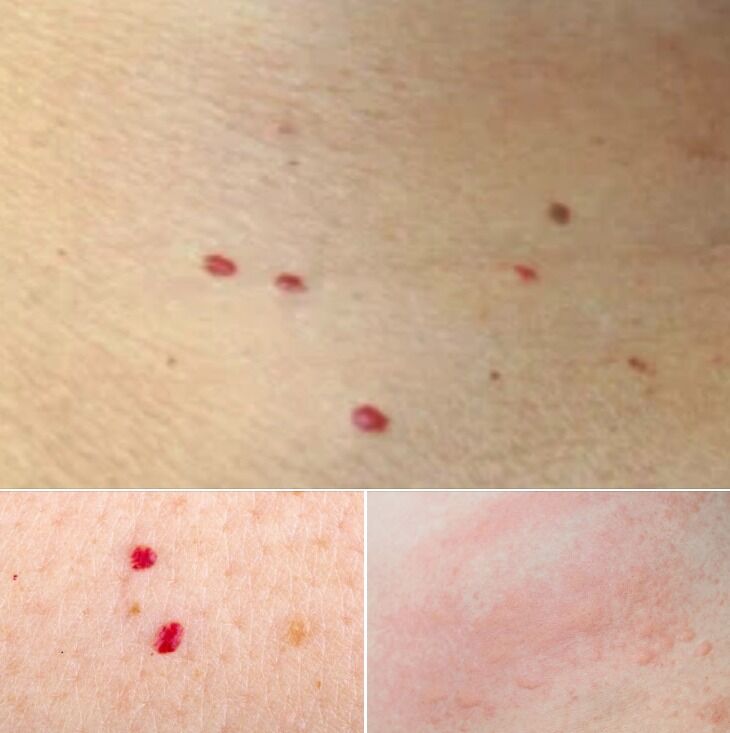
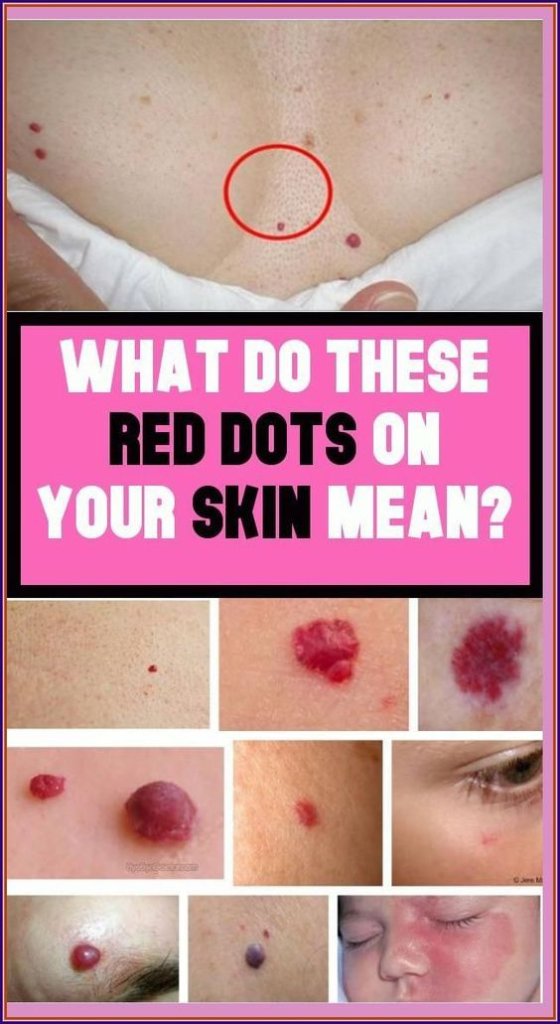
The reason why red dots appear on the skin can be various, and while some of them go away on their own, some require a suitable treatment.
Some of the most common reasons which lead to the red spots are allergic reactions, acne residual mark, vascular birthmarks, skin spots due to angiomas, protein overproduction, heat rash, insect bites, leaking capillaries, as well as autoimmune conditions.
1. Petechiae and Purpura
These are tiny red dots that appear on the skin due to damaged blood vessels or capillaries. They can be caused by stress, coughing, or certain medications. Although they are usually harmless, they can sometimes indicate underlying platelet disorders.
2. Cherry Angiomas
These small, raised, bright red bumps are a result from an overgrowth of blood vessels and are generally harmless. They usually appear at old age.
3. Heat Rash
Heat rash occurs when sweat becomes trapped in sweat ducts and causes itchy, red dots to appear on the skin.
4. Allergic Reactions
Redness can also occur in case of an allergic reaction to food, substances, medications, or insect stings or bites.
5. Folliculitis
Folliculitis is an inflammation of the hair follicles, usually caused by bacterial or fungal infections resulting in red, pus-filled dots on the skin that can be uncomfortable.
6. Cellulitis
Cellulitis is a bacterial skin infection that causes redness and swelling of the skin. It usually requires medical attention and treatment with antibiotics.
7. Impetigo
Impetigo is a contagious bacterial infection that primarily affects children and is characterized by red sores that open, ooze fluid, and later form a crust.
8. Vasculitis
Vasculitis is a condition associated with autoimmune disorders or infections that involves inflammation of blood vessels.
9. Hemangiomas
Hemangiomas are birthmarks that result from abnormal growth of blood vessels. While they are generally harmless, occasional medical intervention may be necessary.
Home remedies which help the prevention of spreading and getting rid of the red dots include some of the most widely used herbs and plants.
Below are three remedies you can try in case you notice red dots on your skin. Of course, it is always highly recommended to consult with a professional.
The Aloe Vera treatment consists of applying extract of fresh aloe vera gel on the skin twice a day. The gel should be left for 15 to 20 minutes.
Another helpful home remedy is massaging the freshly cleaned skin with coconut oil. For it to give the best results, the oil should be left overnight. Repeat the process until you notice any results.
Dandelion is another plant that helps with the red skin dots. The usage is as follows: Boil dandelion root powder in water and then strain and sip for detoxification.
In case you notice a change in the form of the red dots or patches consult a doctor and make sure to maintain a healthy lifestyle and a healthy diet which includes plenty of fruits, vegetables, juices, and healthy fats.
Please SHARE this article with your family and friends on Facebook.
A lot of people would say that romantic relations are literally the essence of human life. They offer comfort, understanding, companionship, and even self-development in some cases. If everything runs smoothly, modern research supports the idea of the honeymoon period, connecting healthy relationships with lower stress levels, improved heart rate, and overall well-being. However, there’s a dark side of it as well. Psychology warns about the dangers of turning a relationship into a breeding ground for unhealthy behavior.
The thing is, toxic traits hardly ever come with an alarm signal. On the contrary, at first, it can seem like passion, interest, and caring. However, as scientists from the field argue, recognizing these symptoms timely can help you to preserve your emotional integrity and stay safe.
Marcos Lacerda, a clinical psychologist, has made a name for himself by writing extensively on the dynamics involved in breaking down trust, emotional well-being, and self-respect. Lacerda’s theory coincides with the vast amount of scientific literature in psychology that proves beyond any doubt that certain behaviors are not mere “personality traits,” but rather indicators of an unhealthy or even psychologically abusive relationship.
1. Excessive Control and the Slow Loss of Individual Freedom
Perhaps one of the clearest indications that things may not be well within a relationship is when a sense of control becomes apparent. This usually does not begin with a dictate but with a suggestion. This could come from your partner telling you how to dress, whom to text, where to go, and even how to manage your money. In the beginning, it will always be about “concern”: “I only want you to be safe,” or “I do not like those people because they do not treat you the way I treat you.”
With time, these suggestions turn into rules, and the relationship becomes restrictive and suffocating.
Psychological Research: Research carried out in relation psychology indicates that control is the major indicator of psychological abuse. The theory of Coercive Control, coined by psychologist Evan Stark, explains that control is employed as a means for developing a state of entrapment through a process that begins with small choices and culminates in absolute loss of freedom.
Autonomy is the cornerstone of healthy relationships. In healthy relationships, partners encourage autonomy and do not seek to control their partner’s identity. When trust gives way to control, then the relationship is unbalanced from an emotional perspective.
2. Emotional Invalidation and the Erosion of Reality
Another important warning sign involves being continually ignored or belittled for your emotions or viewpoints. This can be described as invalidation, which entails a partner making fun of your feelings, dismissing your concerns (“It’s no big deal”), or constantly telling you that you are “overreacting” or being “too sensitive.”
Psychological Research: According to studies on Emotional Validation, being validated is crucial as it is the basis for our emotional stability. As you get used to your emotions being invalidated constantly, you become alienated with yourself – meaning you are no longer able to trust your instincts since you’ve been repeatedly told that you are “overthinking” or “making a drama out of it.”
When you enter into an intimate relationship, arguments will occur at some point, but mutual respect should remain a constant. Couples can disagree on the facts of the matter, yet not invalidate each other emotionally while discussing their differences.
Unsplash
3. Emotional Manipulation and Guilt-Based Control
An example of an almost invisible manipulation technique is emotional manipulation. The relationship ceases to be based on mutual respect and turns into a reward-and-punishment regime, including guilt manipulation, stonewalling, or love withdrawal in case of not complying with their demands.
In other words, there may be an attempt to convince the person to act by saying something like, “If you loved me, you would do this for me.” Also, emotional manipulation could mean a period of complete silence for several days as a way to punish the person.
Psychological Research: According to behavioral psychological research, guilt manipulation can lead to increased stress and emotional dependence. Gradually, a person who becomes subject to manipulation stops thinking about their needs and focuses only on avoiding conflicts, which results in the loss of one’s “self.”
Unsplash
4. Jealousy, Surveillance, and Trust Deterioration
Although jealousy is a human trait, it is detrimental to relationships if used as a justification for monitoring the activities of one’s partner. Questioning each other all the time, demanding access to passwords for social media accounts, searching the partner’s cell phone, and calling them a cheater out of thin air are some examples of behaviors that indicate absence of trust within the couple.
Psychological Research: According to Attachment Theory, jealous behaviors may occur in case a person experiences Anxious Attachment due to their underlying fear of being abandoned. Although it can be quite useful to know the reason behind such feelings, studies indicate that understanding the background of one’s partner does not give them right to control others’ actions. If there was genuine love between two people, then trust would have always been the default.
Unsplash
5. Gaslighting: The Most Extreme Mental Abuse
Gaslighting is among the most psychologically destructive actions noted in the clinical literature. This entails your partner making you second-guess your memory, judgment, and even sanity. Words such as “That never happened,” “It was all in your imagination,” and “You always forget things” are said to put you under psychological strain and make you rely solely on their interpretation of events.
Psychological Research: Gaslighting is known to be an extremely damaging psychological manipulation technique. Gaslighting leads to “cognitive dissonance,” a state of tension brought about by having conflicting beliefs. Studies show that gaslighting may result in depression and anxiety disorders.
Unsplash
6. Threats, Ultimatums, and Conditional Love
A good relationship is supposed to be a “secure base.” Nevertheless, in some cases, one partner may resort to making a threat or giving an ultimatum as a means of negotiation. A partner may constantly threaten to break up after every little argument or use the idea of leaving to get you to behave in a certain way. Thus, love becomes transactional. You will be loved and safe provided that you behave properly.
Psychological Research: According to Psychological Research on Relationship Stability, conditional affection can jeopardize emotional security. If love is seen as a bargaining tool, then the threatened person experiences chronic hyper-vigilance, making true intimacy impossible.
Unsplash
7. The Refusal of Mutual Growth and Responsibility
It is vital in any relationship to maintain a “maintenance mode”. This means that it needs both partners to show growth and reflect on it. A serious sign of potential failure is a lack of self-reflection and accountability by your partner. They may justify their actions either through upbringing, or ex, or you: “I was only shouting because you drove me nuts.”
Psychological Research: “The Four Horsemen”, which according to the research done at The Gottman Institute lead to relationship failure, include “defensiveness”. Couples that demonstrate positive problem-solving skills when facing arguments and can take responsibility during an argument show much higher levels of happiness and satisfaction in their relationships.
Unsplash
8. Social Isolation and Emotional Dependence
Among the most damaging psychological habits, social isolation takes the top spot. In cases of social isolation, your partner actively discourages any attempts you make to visit your loved ones. The partner may engage in arguments whenever you plan to see your friends and family or pretend to be hurt whenever you go away. The result is that you isolate yourself from the outside world, making your partner your only outlet for emotional validation.
Psychological Research: According to research on domestic violence, social isolation is the “infrastructure” of any abusive behavior. Social isolation eliminates the “reality check” provided by loved ones.
Unsplash
What to Do Once You Identify These Warning Signs According to Psychology
Identifying these signs can be incredibly challenging due to cognitive dissonance—the part of your brain that tries to convince you that the person you love is good despite their damaging behaviors. However, psychologists have identified some crucial steps:
Create firm boundaries: Boundaries are not requests but terms of engagement. It is essential to know what behaviors are not allowed and what will happen when you cross them.
External support is crucial: No matter who it is—therapist or friend—you must have someone outside of your bubble to give you perspective on the situation. Studies show that getting external input helps make better decisions when emotions are involved.
Apply the “safety first” rule: Any relationship that consistently causes stress, anxiety, or the loss of your own identity must come second to your safety and happiness.
Accept the end: Psychologists explain that leaving a toxic relationship is not a failure; it is an act of self-preservation.
Unsplash
Conclusion
Psychology does not expect perfection from any relationships. Conflicts occur in all sorts of connections. The huge gap between a rough phase and abuse is one thing that you should keep in mind. There should be no need for love to destroy your soul, make you feel weak, and rob you of your self-respect. True love cannot be constructed on the foundation of power, fear, and control. Noticing a red flag is a way of showing your respect to yourself, not an act of treachery towards your partner.
Please SHARE this article with your family and friends on Facebook.
As long as people have been around, the question of the “moment of death” has been humanity’s greatest mystery. In reality, this has always been viewed as an absolute state where something was either on or off. However, one incredible medical coincidence has shed some light on the issue, showing that death can happen in a “fade out,” complete with a highly complex internal process that we are only now starting to comprehend. The groundbreaking study, led by Ajmal Zemmar and published in Frontiers in Aging Neuroscience, shows for the first time EEG-recorded brain activity during the natural process of dying. What was found may suggest that the brain could provide a final glimpse into our lives.
What stands out in this experiment is that it was never meant to be conducted. It is very difficult for science to study the phenomenon of death, since there is no ethical way to arrange it in a laboratory setting. Most of the information about what happens in the mind during dying comes from interviews with people who experienced cardiac arrest and survived. Although valuable, these accounts tend to be subjective and can be influenced by cultural and religious background.
In this case, an 87-year-old man was brought to the hospital for observation after a fall, which caused a brain hemorrhage. Following surgery to remove the bleeding, he began to suffer epileptic seizures. To determine the origin of this activity in his brain, researchers performed an electroencephalography (EEG), which involves placing electrodes on the scalp. While the machine was recording his brain activity, the man suffered a heart attack and died.
The machine was already in operation, allowing researchers to collect 900 seconds of data, including the crucial 30 seconds before and after the heart ceased beating. As mentioned in the full article in Frontiers in Aging Neuroscience, this provided scientists with a highly detailed picture of how the human brain behaves during this transition—an observation that is extremely rare due to the nature of death.
Gamma Oscillations: The Brain’s High-Definition Signal
In essence, the brain stopped receiving oxygen from the moment the heart stopped working. It was long believed that, as a result, the brain would simply “crash,” like a computer deprived of power. In reality, however, the brain showed an increase in the frequency of gamma waves. Why is this such an important breakthrough? To understand that, one needs to consider what gamma waves actually do in a living, functioning brain.
The brain operates using several frequency bands. Delta waves are associated with deep sleep, while alpha waves are linked to relaxation. Gamma waves, on the other hand, are involved in processing and integrating information from different senses—such as vision, hearing, and memory—into a unified experience. They are also observed during intense concentration, lucid dreaming, and meditation. The presence of increased gamma activity in a dying brain suggests that, rather than shutting down abruptly, the brain may be engaging in complex and organized processes.
The “Life Recall” Hypothesis
The existence of such gamma waves makes it possible to create an organic foundation for “Life Review” experiences. For years, people have considered near-death experiences as nothing more than the brain’s hallucination due to oxygen deprivation or the intake of certain drugs. But according to Dr. Zemmar, the brain may be working to recall memories.
As mentioned earlier, since gamma waves are responsible for memory recall and sudden flashes, the dominance of such waves during death could indicate a “panoramic life review.” In other words, the brain appears to be reviewing the entirety of its hard drive for one final time. This implies that instead of being just an expression or poetic notion, “flash of your life” could actually be a physiological process. According to another study discussing the neural coherence of death experiences, it could be the brain’s last attempt to make sense of a fulfilled life.
Unsplash
Re-Defining “Moment of Death”
The question this study raises is both unsettling and profound: at what point are you truly gone? By conventional standards, clinical death is marked by the absence of a heartbeat and breathing. However, EEG results showed that even after the heart stopped, the brain continued to produce activity.
The fact that the brain remains active after the heart stops suggests that consciousness—or at least some form of neural activity—may persist beyond the point at which a person is traditionally declared dead. This issue is especially important in the context of medical assistance in dying and organ donation. Today, death by cardiac criteria allows doctors to retrieve organs shortly after the heart stops beating. However, if the brain is still undergoing complex activity, possibly related to memory processing, it raises ethical questions about how quickly such procedures should take place. As noted in Scientific American, this suggests that death may be better understood as a “transition” rather than a single moment.
Parallels in the Animal Kingdom
Another reason why this research is given so much weight is that it isn’t an isolated case of biological behavior. Prior to this discovery of the phenomenon in humans, there were other instances in which this had happened to animals. As described by a study conducted at the University of Michigan, it was noted that there was an enormous spike in brain activity in rats in the first 30 seconds following cardiac arrest.
There were many people who speculated whether this was simply a biological function unique to the rodent brain and that it might be a final attempt at survival. However, the findings presented by Dr. Zemmar demonstrate that this is a trait preserved by nature, meaning that all mammals have been programmed to do this one last thing before their neurons discharge any more electricity.
Unsplash
The Emotional Significance: Finding Peace in Science
Despite the cold facts, this discovery is highly significant on an emotional level, as Dr. Zemmar has explained in various interviews that as a neurosurgeon, he frequently had to inform grieving families about their loved ones’ death. In other words, this study can add another, more positive, element to the process.
It would make sense for the brain to activate the most “meaningful” circuits in its memory system. People generally do not have gamma-bursts of neural activity while remembering their lunch three years ago; rather, gamma-bursts happen when one feels love, experiences a significant lesson, or finds peace of mind. As a result, it can be argued that people do not leave this life in fear and agony; instead, they remember their lives peacefully, detached from physical sufferings. Based on The Lancet’s findings concerning near-death experiences, this seems to be the case, and the new study explains this phenomenon scientifically.
While the data presents an impersonal view of brain activity, the meaning behind Dr. Ajmal Zemmar’s findings goes much deeper on a human level. Speaking from the experience of many years of delivering bad news to bereaved families, the doctor claims that this research has changed his perception of the matter. This study brings hope to the medical definition of dying because now it appears that a dying brain does not just shut down; instead, it says goodbye using all its complex neural connections.
Unsplash
It is logical that in their last moments, people’s brains activate the neural processes that mean something to them. Our brain is selective in the process of retrieving memories – for instance, when thinking back about past events, we don’t usually have frequent gamma-bursts of electrical activity while remembering our uneventful lunch at grandma’s house. It happens only when recalling important moments in life like experiencing love, making a great realization, or finding inner peace.
The presence of similar bursts of gamma waves in the brain at the time of death suggests that the experience may not necessarily be characterized by fear or pain. Instead, it may involve a state of internal activity that could resemble peaceful reflection, where the body is no longer the primary focus and the mind may revisit meaningful memories.
Conclusion
These findings have led researchers to consider a possible explanation for the “life review” phenomenon reported in several studies published in The Lancet on near-death experiences (NDEs). For many years, NDEs have remained largely outside the scope of science and biology, often associated with spiritual interpretations. However, this discovery offers a potential biological basis, allowing scientists to begin exploring how the brain might generate such experiences by linking present activity with stored memories.
Please SHARE this article with your family and friends on Facebook.