Prince Harry and Meghan Markle made waves in Los Angeles after being spotted at Dodger Stadium on October 28, 2025, cheering on Game 4 of the World Series between the Blue Jays and the Dodgers.
The couple wore matching blue Dodgers caps. Meghan opted for dark pants and an oversized white shirt, while Harry wore a black blazer and T-shirt. They were sitting front row just ahead of baseball legend Sandy Koufax, who unexpectedly drew much of the crowd’s attention.
Fans online joked that “royalty was sitting behind Markle and Harry,” as the pair laughed, cheered, and looked perfectly at home in the spotlight.
AP
Later that week, they watched Game 7 from home with Meghan’s friend Kelly McKee Zajfen, celebrating the Dodgers’ 11-inning championship win while Meghan danced and Harry looked on with a grin.
Meghan was seen cheering and exclaiming, “Oh my God!” as she walked over to Harry, leaned down, and kissed him on the lips while Kelly McKee Zajfen applauded beside them. Moments later, Meghan and Zajfen jumped up and down in excitement before sharing a hug.
Some of Meghan’s critics dubbed her reaction not genuine.
“LOOKS SO FAKE,” one X user wrote along with a “Staged” GIF.
“So scripted,” another added.
“Load of performative fakery! She just so happened to have a camera set up,” a third chimed in.
The Sussexes’ night at the World Series came shortly after they gave fans a rare glimpse of family life in California. A video posted to Instagram showed Meghan, 44, with Harry and their children, Archie and Lilibet, visiting a Santa Barbara pumpkin patch and carving pumpkins at home.
DUBBO, AUSTRALIA – OCTOBER 17: Prince Harry, Duke of Sussex and Meghan, Duchess of Sussex visit a local farming family, the Woodleys, on October 17, 2018 in Dubbo, Australia. The Duke and Duchess of Sussex are on their official 16-day Autumn tour visiting cities in Australia, Fiji, Tonga and New Zealand. (Photo by Chris Jackson – Pool/Getty Images)
Earlier in the month, Harry and Meghan had attended Project Healthy Minds’ World Mental Health Day Festival in New York, where they represented their Archewell Foundation and spoke about youth mental health and social-media challenges.
Please SHARE this article with your family and friends on Facebook.
Grey’s Anatomy star Eric Dane has died aged 53, nearly a year after he disclosed his ASL diagnosis with the public.
The news of his passing has been confirmed by his family.
“With heavy hearts, we share that Eric Dane passed on Thursday afternoon following a courageous battle with ALS,” Dane’s family’s statement shared with People read. “He spent his final days surrounded by dear friends, his devoted wife, and his two beautiful daughters, Billie and Georgia, who were the center of his world.”
“Throughout his journey with ALS, Eric became a passionate advocate for awareness and research, determined to make a difference for others facing the same fight. He will be deeply missed, and lovingly remembered always. Eric adored his fans and is forever grateful for the outpouring of love and support he’s received. The family has asked for privacy as they navigate this impossible time.”
The ASL Association describes the condition as a “rare, terminal neurodegenerative disorder that results in the progressive loss of both upper and lower motor neurons that normally control voluntary muscle contraction.”
Speaking of his diagnosis, Dane told Peopleat the time, “I have been diagnosed with ALS.
“I am grateful to have my loving family by my side as we navigate this next… I kindly ask that you give my family and I privacy during this time.”
Eric Dane disclosed his ALS diagnosis in April, 2025/ Jon Kopaloff/FilmMagic for HBO
Dane missed this year’s Emmys. He was expected to join the series’ cast for their 20th anniversary, but was absent from stage due to a fall related to his ASL diagnosis. “ALS is a nasty disease,” he said. “So I was in the hospital during the Emmys getting stitches put in my head.”
He said he was “really upset” about missing the milestone moment, but added that “there was nothing I could do about it.
“It would have been great to see Jesse and get reunited with some of my peers, and to be able to present in front of my colleagues, I thought, would have been a special moment.”
Since his diagnosis, Dane had been seen a few times in Los Angeles. During an occasion, he was photographed with his wife, Rebecca Gayheart, and their 13-year-old daughter, Georgia, enjoying dinner at a sushi restaurant in West Hollywood. He was in a wheelchair.
Eric Dane with his daughters/ Lisa OConnor/AFF-USA.com / MEGA
Rebecca and Eric also shared 15-year-old Billie. In an interview with People magazine in September, Rebecca said the news had been especially hard on their daughters.
“I mean, it’s heartbreaking,” she told People. “My girls are really suffering, and we’re just trying to get through it. It’s a tough time.”
Back in June, Eric Dane opened up about the first ALS symptoms he experienced.
Appearing on Good Morning America, he revealed, “I started experiencing some weakness in my right hand, and I didn’t really think anything of it at the time.
“I thought maybe I had been texting too much or my hand was fatigued. But a few weeks later I noticed it had gotten a little worse, so I went and saw a hand specialist, and he sent me to another hand specialist.”
It was an honor to meet with @iamalsorg and my friend @RealEricDane to discuss the urgent need for progress in the fight against ALS. From investing in innovative treatments to ensuring access to quality care, we must do more to support patients, families, and researchers. pic.twitter.com/DFzjp4dK0o
The actor continued, “I went and saw a neurologist and they sent me to another neurologist and said this is way above [his] pay grade.”
Doctors were only able to diagnose him nine months after he had experienced the initial symptoms.
“I have one functioning arm, my dominant side is [my right], my left side is functioning, my right side is completely stopped working.”
Dane concluded. “My left arm is going, I feel like a couple few more months and I wont have my left either, it is sobering.”
He is the latest high-profile personality to pass away from ALS. Others who have suffered from the same disease include baseball legend Lou Gehrig, after whom the disease is often named Lou Gehrig’s disease, physician Stephen Hawking, Sesame Street co-founder Jon Stone, and jazz bassist Charles Mingus.
Brilliant Minds/ NBC via Deadline
Fellow actors paid their tributes, honoring the life and legacy of Dane.
Patrick Dempsey, who played Dr. Derek Shepherd, described him as being “a joy to work with.”
“He was the funniest man – he was such a joy to work with and I want to just remember him in that spirit because any time he was on set, he brought so much fun to it. He had a great sense of humour,” Dempsey told Virgin Radio. He added that Dane was “wickedly intelligent”, and also did “an incredible job at bringing awareness to this horrible disease.”
Kim Raver, who plays Dr. Teddy Altman in the series, wrote, “During filming he’d get this twinkle in his eye and with a mischievous look, he would deliver with perfect comedic timing, a line of dialogue that would floor you.”
Kevin McKidd, aka trauma surgeon Owen Hunt, posted on Instagram, “rest in peace, buddy.”
Among other actors who paid their tributes are Euphoria creator Sam Levinson, Alyssa Milano, Ashton Kutcher, and Nina Dobrev.
Eric Dane and wife Rebecca Gayheart/Jon Kopaloff/FilmMagic for HBO
In an interview for Netflix titled Famous Last Words filmed prior to his passing, Dane revealed his touching final words to his wife. The interview was set to be released following his passing.
“So with Rebecca, who you met and fell in love with quickly – how would you describe the essence of that relationship and that love affair?” the interview inquired.
As reported by Hello!, the late actor revealed, “Well, we still love each other deeply. I just think we don’t wanna live with each other. But there’s a lot of love there. I’ll never…I will have never, by the time anybody sees this, have fallen in love with another woman, as deeply as I feel in love with Rebecca. She’s the mother of my children and the whole way that thing came about it was so organic and fortuitous.”
He added: “I met Rebecca and I turned to her friend and I said: ‘I’m gonna marry that girl.'” The interviewer responded: “How did you know?”
“I have no idea. I have no idea how serious I was in that moment, but I said that ,and her friend said: ‘No way. She’s never breaking up with her fiancé. They’re getting married. They’ve been together since they were 15.’ You know, four years later, I married her. I knew that I wanted to spend the rest of my life with her. It was supposed to happen.”
His fans were deeply touched by his words and his strength.
Rest in peace, Eric Dane.
Please SHARE this article with your family and friends on Facebook.
The Bruised Toddler That Wasn’t: How a Fake Facebook Post Fooled Thousands
It was the kind of post that stops you mid-scroll — a haunting image of a bruised toddler, paired with a desperate plea for help. According to the viral Facebook story, the boy had been found wandering alone in the night by a police officer named “Deputy Tyler Cooper” in either Hereford or King’s Lynn. The message urged users to share widely, in hopes of reuniting the child with his family.
The problem? None of it was true.
Within days, local police departments were inundated with concerned calls — but not one report backed the story. West Mercia Police publicly confirmed there was no record of such an incident in Hereford, and no officer named Tyler Cooper on their force. Norfolk Constabulary echoed the same: nothing happened in King’s Lynn, and “Deputy” isn’t even a rank used in their system.
What appeared to be a heartbreaking cry for help was, in fact, a digital hoax — carefully engineered to spread rapidly through emotion, confusion, and misplaced compassion.
Why These Hoaxes Work — and Why They Keep Coming Back
These types of viral deceptions are nothing new, but they’re becoming more sophisticated. The formula is consistent: an emotional trigger, vague details, and a call to action that plays on urgency and goodwill.
What’s worse, these posts are often later edited — the emotional story swapped out for scam links, fake real estate ads, or bogus cashback offers. By the time the bait-and-switch happens, the post may already have thousands of shares. It’s a tactic that preys on empathy while building a huge audience for shady online marketers or fraudsters.
Digital Compassion Meets Caution
It’s easy to get caught up in stories like this. After all, what if it were real? No one wants to be the person who ignored a child in need. But that same instinct is exactly what hoax creators exploit.
To protect yourself and others:
Check local police or news pages before sharing. Reverse image search suspicious photos to see if they’ve been reused. Be wary of vague locations or unverifiable names. Report suspicious posts to the platform to limit their reach.
Final Thoughts: A New Kind of Vigilance
The false story of the “lost toddler” may seem like a harmless fluke, but it highlights a growing problem in the digital age: emotional manipulation masquerading as news. As platforms like Facebook continue to serve as both information hubs and rumor mills, it’s up to all of us to be thoughtful in what we share.
When compassion is used as clickbait, everyone loses — especially those who genuinely need help. Stay alert, verify first, and don’t let fake stories cloud real ones that deserve our attention.
Please SHARE this article with your family and friends on Facebook.
Pope Leo XIV’s Inauguration: A New Dawn for the Church Rooted in Tradition and Heartfelt Connection
The dawn of Pope Leo XIV’s papacy was marked by a powerful and symbolic ceremony in St. Peter’s Square, signaling the official start of his spiritual stewardship over the Catholic Church.
Clad in the traditional vestments, he received the Palio—a humble woolen band resting gently on his shoulders, symbolizing his pastoral duty—and was bestowed the Fisherman’s Ring, a sacred emblem linking him to Saint Peter and his mission as a “fisher of men.”
This solemn inauguration has ignited worldwide excitement, as faithful from across the globe eagerly anticipate how Leo XIV will carry forward the inclusive, youth-energized legacy championed by his predecessor, Pope Francis.
A Pontiff Bridging Two Worlds
As only the second Pope from the Americas, Leo XIV’s ascent resonates profoundly.
Though born in Chicago, his heart beats strongly for Latin America. In a poignant first address, he spoke warmly in Spanish, expressing gratitude to the people of Chiclayo, Peru—a place that shaped his formative years and spiritual journey.
His bond with Peru is not just historical but deeply personal. Leo XIV first traveled there in 1985, embarking on a path of unwavering dedication to the Church and its communities across the region. Reflecting on those early days, he intriguingly revealed that his eventual elevation to the papacy was, in some way, foretold over 26 years ago—a mystery that invites reflection and curiosity.
Looking Forward: Tradition Meets Renewal
Pope Leo XIV’s elevation signals the opening of a new chapter for the Catholic Church—one that honors ancient traditions while embracing renewal and hope. His authentic connections to Latin America and gestures toward inclusivity hint at a papacy poised to mirror the compassion and reformist spirit that Pope Francis inspired.
As the world watches, the unfolding of Leo XIV’s leadership promises to be a journey of faith, resilience, and connection. Rooted in decades of dedicated service and a genuine bond with diverse communities, his papacy begins not only with solemn reverence but also with an optimistic vision for the Church’s future.
Please SHARE this article with your family and friends on Facebook.
Suzanne Rees, an 80-year-old Australian woman from New South Wales, was found dead on Lizard Island after reportedly being left behind by her luxury cruise ship, the Coral Adventurer.
Rees had joined other passengers on a guided hike during the first stop of a 60-day voyage around Australia, with ticket prices reaching nearly $80,000. At some point, she became separated from the group, apparently stopping to rest, while the ship departed at sunset unaware she was missing.
It wasn’t until hours later that the crew realised she hadn’t returned and went back to the island, where a search team involving a helicopter discovered her body the next morning. Authorities have since launched a full investigation into the incident, raising serious concerns about safety procedures and passenger oversight on such high-end cruises.
Suzanne Rees
Reese’s daughter, Katherine, said her mother fell ill at the island and was asked to clamber back down the mountain on her own, The Sunreported.
“Then the ship left, apparently without doing a passenger count. At some stage in that sequence, or shortly after, Mum died, alone,” she told The Australian.
The tragic death of Reese left her family saddened and in shock.
The police are trying to determine whether Reese would have survived had she been reported missing earlier, wondering why the staff at the cruise took so long to realize a passenger was missing.
Lizard Island
The Australian Maritime Safety Authority (AMSA) confirmed that they are actively investigating the circumstances surrounding why the passenger was not accounted for during boarding. A spokesman stated, “We are currently investigating the circumstances surrounding why the passenger may not have been accounted for during boarding. It is critical to determine whether standard protocols were followed and what steps can be taken to prevent similar incidents in the future.”
Coral Expeditions CEO Mark Fifield said the company is fully cooperating with authorities investigating the tragedy but declined to provide further details, stating it would be inappropriate to comment while the official inquiries are still ongoing.
Coral Expeditions/ Facebook
“We have expressed our heartfelt condolences to the Rees family and remain deeply sorry that this has occurred,” Fifield said in a statement.
“We continue to provide our full support to the Rees family through this difficult time,” he added.
Please SHARE this article with your family and friends on Facebook.
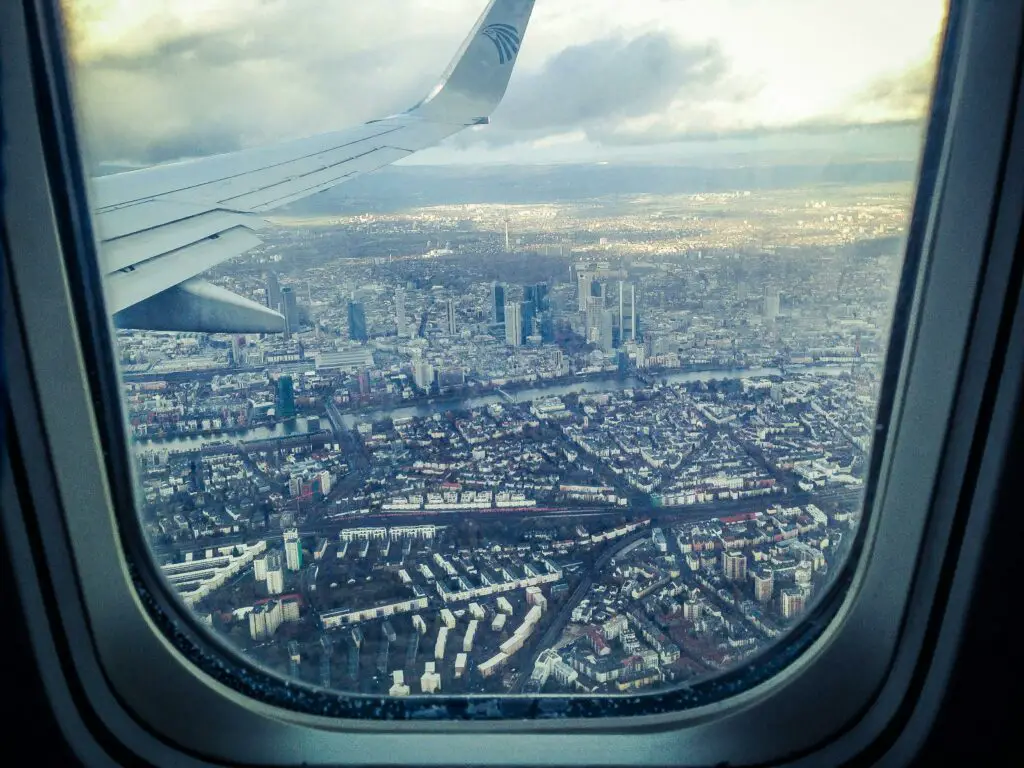
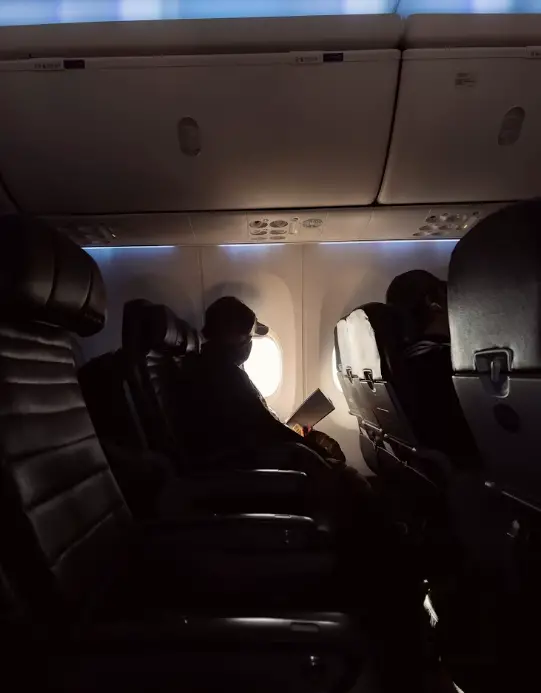
Air travel can bring out the best or the absolute worst in people. Most of the time, you get lucky if you get to sit next to a quiet “neighbor,” have an easy flight, or maybe a half-decent meal. But every now and then, fate seats you next to the kind of passengers who make you question why airplanes don’t come with eject buttons.
That’s exactly what happened to me on a 14-hour flight from Sydney to Los Angeles, where two honeymooners turned the cabin into their personal playground.
I’d been away for months and was counting down the hours until I could finally hug my wife and son. I paid extra for a premium economy seat. The flight boarded on time, the seat reclined just right, and for a brief moment, everything seemed fine. Then came Dave and Lia, a freshly married couple.
They were laughing too loudly, bumping into people’s seats, and snapping selfies like they were the stars of an in-flight romance movie no one wanted to watch.
As soon as they reached my row, Dave leaned over with that grin. “Hey, mate, mind switching seats with my wife? She’s a few rows back. It’s our honeymoon.” I asked where she was sitting, and when he pointed somewhere deep in economy, I almost laughed. “I paid extra for this seat,” I told him. “If you want to cover the upgrade, sure.” His face dropped. “You can’t put a price on love, man.” I smiled. “Apparently you can, about a thousand dollars.”
That’s when I became his sworn enemy. What followed was the most creative display of petty behavior I’ve ever witnessed. Dave started coughing, then he watched an action movie on his tablet without headphones. When other passengers complained, he said, “Sorry, folks, we’ll all enjoy it together!”
Unsplash
At first, I tried to ignore him, but Lia soon appeared, squeezing into his seat and whispering loudly between their annoyingly loud laughter.
Finally, I decided to involve the flight attendant, who was quick to come and witness the chaos the couple was making. “They’ve decided to turn this row into a honeymoon suite,” I said.
Dave tried to play the victim, but the attendant didn’t fall for his words. “You can’t sit on another passenger’s lap,” she said. “Actually, you both need to move — to the back.”
The rest of the passengers started applauding as Dave, who wasn’t happy at all, moved to the back of the plane. Needless to say, the rest of the flight was a true delight.
Please SHARE this article with your family and friends on Facebook.
Mystery on Rodovia do Sol: Was This Crash More Than Just Drunk Driving?
Witnesses say something about the deadly crash on Rodovia do Sol didn’t feel like a simple accident. Moments before impact, residents nearby reported hearing tires screeching violently, followed by the sight of a pickup swerving erratically down the highway. Some claim it looked less like careless driving — and more like someone fleeing in desperation.
When the dust settled, a young couple’s life had been torn apart, and questions began to swirl: was this merely another case of drunk driving, or does a deeper, darker story hide behind the wheel?
The Fatal Chain of Events
It began as an ordinary roadside mishap. A young couple in a Chevrolet Cruze had pulled over onto the shoulder of Rodovia do Sol to fix a flat tire. Alongside them was family — including Ingrid and her brother — who were helping get the car safely back on the road.
But as they worked, tragedy struck. A Chevrolet S10 pickup came barreling toward them at alarming speed, slamming into the parked Cruze. The impact crumpled metal and shattered glass, leaving behind a scene of devastation.
Emergency responders, including firefighters and police officers, rushed to the site. Three occupants of the Cruze sustained injuries and were quickly transported to nearby hospitals. Miraculously, some survived — but the emotional scars may last a lifetime.
The Vanishing Driver
When authorities arrived, they expected to find the S10’s driver awaiting questioning. Instead, the pickup was abandoned. Witnesses say the driver fled on foot, leaving behind chaos, injuries, and unanswered questions.
Police suspect alcohol was involved, but the mystery of the disappearance has only fueled speculation. Why run unless there was something more to hide? Was it fear of a DUI charge — or could the reckless swerve suggest the driver was escaping something else entirely?
A Community Demands Answers
The crash has reignited long-standing frustrations about reckless and impaired driving on Brazil’s highways. Residents say too many lives have been cut short by drunk drivers — and they’re demanding tougher enforcement before another family suffers the same fate. But this case has touched a deeper nerve. Social media is buzzing with theories about why the driver abandoned the scene so abruptly. Some believe it was sheer panic. Others insist there’s more to uncover, pointing to witness accounts of unusual behavior before the collision.
More Than Just a Statistic
For the families involved, this isn’t just another headline. Ingrid and her loved ones will carry the physical and emotional weight of this tragedy long after the investigation ends. Their story is a stark reminder that reckless decisions ripple outward, shattering lives in an instant.
Conclusion: Accident or Something More?
As investigators continue to search for the missing driver, the crash on Rodovia do Sol remains shrouded in questions. Was it simply drunk driving, or is there another layer of truth waiting to be uncovered?
For now, the community is united in grief and in a common demand: justice. Whether this tragedy sparks change in how road safety is enforced remains to be seen. But one thing is certain — the heartbreak on Rodovia do Sol will not be forgotten.
Please SHARE this article with your family and friends on Facebook.
Marines in ICE Uniform? The Florida Deployment That’s Raising Eyebrows
In a move that’s caught many off-guard, the U.S. military has deployed 200 Marines to Florida to assist Immigration and Customs Enforcement (ICE).
Though officials say their role is purely logistical, critics argue that this blurring of military and civilian lines is rife with risk — and symbolism.
What’s Actually Happening?
Earlier this summer, U.S. Northern Command confirmed that about 200 Marines from Marine Wing Support Squadron 272 (based in North Carolina) would be sent to Florida to provide “administrative and logistical support” for ICE operations.
The Marines, under Title 10 status, are explicitly barred from law enforcement functions. They are not allowed to interact with detainees or engage in the custody chain. Their work will be confined to tasks like data entry, vehicle maintenance, administrative processing, and other support roles.
This initial deployment is part of a broader authorization: up to 700 Department of Defense personnel may support ICE operations in Florida, Texas, and Louisiana.
Why It’s So Controversial
From a policy and optics standpoint, the decision has sparked fierce debate. Here are key tensions emerging:
Blurred Roles & Civil–Military Lines
The traditional separation between military and civilian law enforcement is a fundamental principle in U.S. governance. Even though these Marines aren’t meant to perform arrests, their presence raises hard questions about how far the military can be embedded in domestic policy enforcement.
Perception & Trust
For many communities, seeing uniformed Marines inside ICE operations may deepen distrust — especially in areas with fraught immigration histories.
Critics worry this move could be seen as intimidation, even if it’s labeled “non-combat support.”
Operational Risks
In fact, recent reports suggest that some Marine units were called off planned missions because the tasks involved close contact with detainees — something military officials deemed beyond their legal scope.
Stars and Stripes
Instead, National Guard units may fill in for those roles, especially since guard deployments can be more flexible under certain state-federal arrangements.
Legal & Constitutional Questions
Even with restrictions, this kind of deployment bumps up against concerns about the Posse Comitatus Act and the broader risk of militarizing domestic policy. Some veterans and pundits have publicly voiced alarm that shifting military roles into immigration enforcement threatens civilian oversight and public confidence.
Where This Fits in the Bigger Picture
This is not the first time the U.S. military has supported civilian agencies for logistics or infrastructure. What sets the current situation apart is the politically charged nature of immigration and deportation, and the moments when deployments teeter dangerously close to enforcement.
Earlier this year, nearly 700 Marines and National Guard troops were sent to Los Angeles to protect ICE agents during protests — another deployment that reignited questions about domestic military presence.
In many cases, the Pentagon has defended such moves by emphasizing that troops have no authority to detain or arrest — only to cover security and support functions.
Now, the Florida deployment is being held up as a test case: how well can the military walk the line between support and enforcement in such a climate?
Final Take
On paper, this is a logistical support mission — no guns drawn, no arrests made. Yet the symbolism is powerful. A uniformed presence within an immigration enforcement context is always going to stir tension, especially in communities already sensitive to authority and civil rights concerns.
If the government can square the legal, operational, and perceptual risks, this deployment may become a model for how the military aids complex civilian missions. But if missteps occur, it could be regarded as a dangerous precedent — a slide toward normalizing military involvement in civilian enforcement.
Please SHARE this article with your family and friends on Facebook.