

Imagine waking up to a reality where your brain is slowly losing its ability to fuel itself.
This is the reality for 5.4 million Americans living with Alzheimer’s disease. Even more concerning, the number of people affected is projected to reach 16 million by 2050, meaning as many as one in four Americans could be impacted by the condition in the future.
Due to the fact that medical treatments are limited right now, there has never been a greater need to explore means of preserving our brain health. It is this very need that has prompted both scientists and families to investigate some unconventional places—including the humble jar of coconut oil in your kitchen cupboard.

The coconut oil buzz
A few years ago, the USF Health Byrd Alzheimer’s Institute launched a clinical trial to study this exact connection. The pilot study was inspired in large part by the work of Dr. Mary Newport. Her late husband, Steve, suffered from early-onset Alzheimer’s and experienced noticeable behavioral and memory improvements after adding four teaspoons of coconut oil to his daily diet. According to Dr. Newport, it helped him regain the ability to read and perform daily tasks when standard medications weren’t working.
Although personal stories like Steve’s are compelling, the scientific community remains cautious about coconut oil as a treatment for dementia. The main reason is that large-scale clinical studies have not demonstrated that it is an effective therapy.
How is coconut oil supposed to work?
How does the “brain food” work? It has to do with energy utilization by our body. Normally, the brain gets its energy from glucose, which is a product of carbohydrate metabolism. In Alzheimer’s disease, however, the brain may experience impaired glucose uptake, a phenomenon that some researchers have referred to as “type 3 diabetes.”
This is where fats come in:
The Power of Ketones: When the body burns fat instead of carbs, it produces molecules called ketones. The brain can readily use ketones as an alternative fuel source.
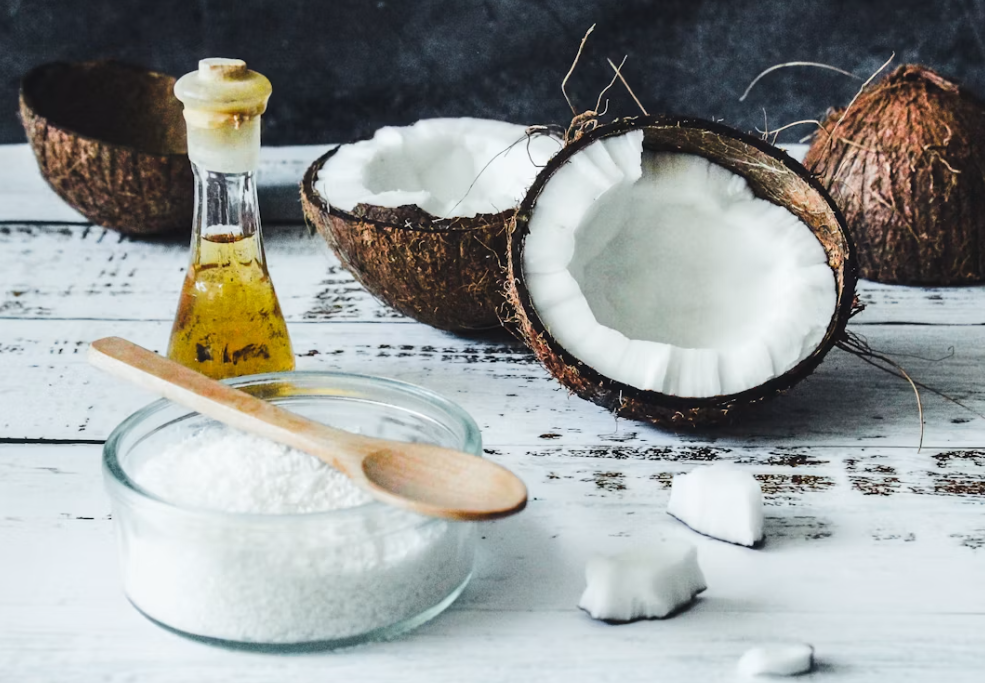
Medium-Chain Triglycerides (MCTs): Coconut oil is packed with MCTs. Unlike long-chain fats, MCTs go straight to your liver, where they are rapidly converted into ketones and released into the bloodstream.
The Neurological Impact: Some researchers hypothesize that supplying the brain with these ketones might help bypass the glucose block, keeping brain cells alive and functioning even after damage has occurred.
What do experts recommend?
Dr. Newport has previously claimed that just over two tablespoons of coconut oil contain about 20 grams of medium-chain triglycerides (MCTs), which she considers beneficial for neurological function.
However, if you decide to try coconut oil, health experts recommend taking a cautious and practical approach.
Start small: Coconut oil is heavy. To avoid an upset stomach, start with just one teaspoon a day and slowly work your way up.
Watch the saturated fat: Because coconut oil is highly saturated, mainstream organizations like the American Heart Association warn that consuming large amounts can spike LDL (“bad”) cholesterol, which might negatively impact your cardiovascular health.


Ultimately, incorporating some coconut oil into your meals is unlikely to cause harm for most people and may provide an additional source of energy. However, it should not replace evidence-based medical care or professional guidance. Be sure to consult your physician before making any significant changes to your diet.
Please SHARE this article with your family and friends on Facebook.
Bored Daddy
Love and Peace