

Despite all the hardship he experienced as a child, this man became one of the greatest stars that has ever walked the Earth.
He witnessed his brother die and battled addiction, but still managed to build a career many could only dream of.
Born on February 26, 1932, in Kingsland, Arkansas, he was raised in a crowded home with seven siblings, where hard work was simply part of daily life.
At just five years old, he was already picking cotton alongside his family, often singing as they worked beneath the unforgiving sun. Those early struggles helped shape the strength and spirit that would define him later on.
When the workday ended, life slowed down. The family would gather on the porch, his mother strumming her guitar as they sang hymns and old folk tunes late into the evening.
It was there that his love for music took root. Along with those moments came the sound of distant voices from a battery-powered radio. By the time he turned 12, he was already creating his own poems, songs, and stories.
Sadly, that’s when a tragedy struck. He was still just a boy when he lost his older brother Jack, the person he looked up to most, in a tragic accident involving an unguarded table saw.
Jack had taken a job at a local school, working in the agriculture shop. On one Saturday morning, he was asked to go fishing instead—but chose work over the trip. It would be a decision that ended in tragedy.
Jack spent a week at the hospital on high doses of painkillers, and there were even signs of improvement, according to Jack’s brother’s autobiography, but then doctors told the family not to keep their hopes high.
Within a week of the accident, Jack died. The tragedy left a lasting impact, filling him with guilt and sorrow that lingered for years. He often revisited that moment, saying he carried it with him and held onto the belief they would reunite one day, looking forward to “meeting [his] brother in Heaven.”

Looking back years later, he spoke about the admiration he had always felt for his older brother: “He was very strong. He was muscle bound. He worked out, and was in great shape for 14 years old. Jack had been called to preach. Being called to preach in our religion means that you have dedicated yourself to be a minister. Every night, he was at the table with his library, reading the Bible. He was a great influence on me.”
His brother’s death changed everything. It marked the loss of innocence and pushed him toward a more thoughtful, introspective way of seeing the world.
Music soon became his refuge. It gave him something to hold onto. As a teenager, he performed wherever he could, local radio stations, small contests, any place that would give him a chance.
By 14, he had taken his first job outside the farm, but his heart wasn’t in the work. It remained in the music he was creating and the dream he refused to abandon.
He bought his first guitar while stationed in Germany as part of the US Air Force during the war in Korea. He then formed a band with some fellow servicemen.
Once his service was over, he returned to Memphis where he sold appliances door-to-door by day, and continued pursuing music by night.
A small yet powerful record company took notice of him. They saw something different about him—something special. When given the opportunity to make a recording, he did not disappoint. His early release was a huge success, selling thousands of records and placing him in the limelight.
His popularity soared from there. His prison songs, his gospel songs, his love songs, his songs of hardship—all resonated with the listener in a deeply personal way. One of his songs stayed on the charts for an entire year, selling more than a million records. In a short time, he found himself performing on the biggest stages in country music, speaking for those people who were often ignored.

Success, however, would prove to be a mixed blessing.
As his fame grew, his addiction worsened. He suffered from alcoholism, as well as being addicted to stimulants like amphetamines and barbiturates.
Things seemed bleak for him at this point.
“I learned the hard way about drugs – not as hard as I could have learned, I guess. Because I courted death with it. For a long time I took my chances and tried a little bit of everything there was to try. Most any of it could have killed me while I was taking it, but I was lucky enough to survive. For anybody else, it probably would have meant certain death,” he once said.
He fought his way back with the help of a woman who would become his lifelong partner, and together they rebuilt what had nearly been lost.
His comeback was truly amazing. He would sell out shows, set records, and unite musicians from different styles in his TV show. Not only was he entertaining; he was uniting worlds.
Regardless of his success, he remained humble. He stood up for those who had no voice and performed at prisons, worked for charities, and advocated reforms. The music he created was full of compassion that came from suffering and salvation.
Despite his fame, those close to him always said he was the same man they have known since forever. Decades later, his influence only grew bigger. He won countless awards, entered multiple halls of fame, and kept reinventing himself late in life for new generations.
After decades together, he lost his wife in 2003, and he passed away months later.
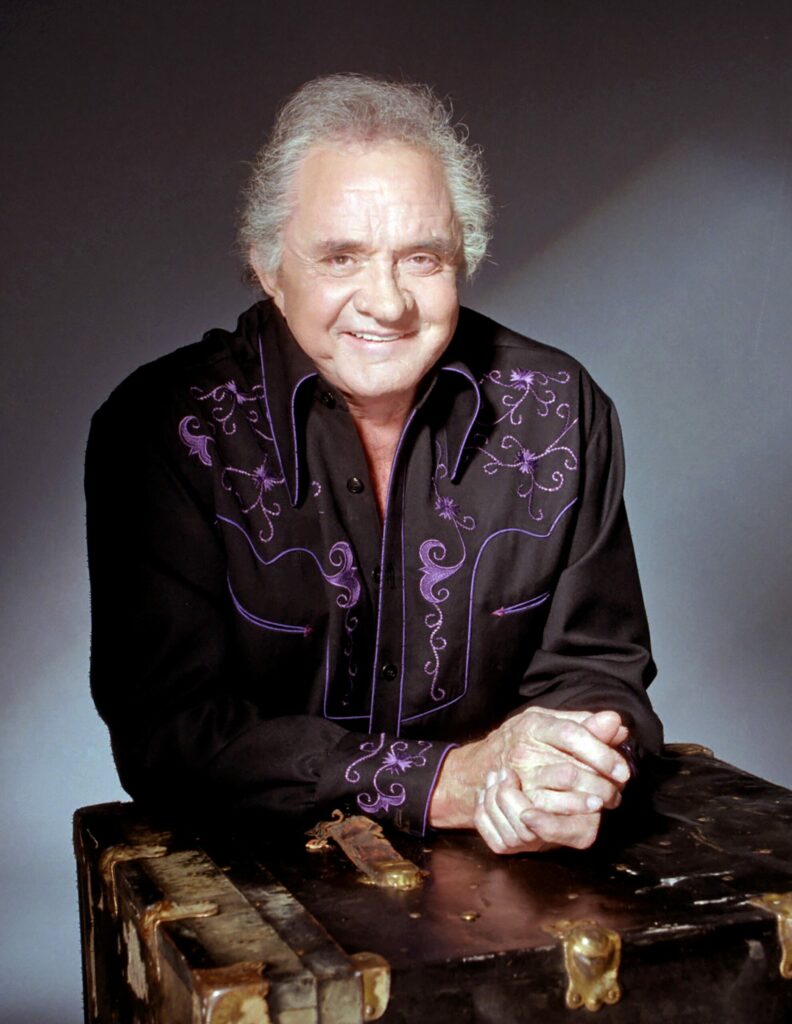
This legendary musician was never just a voice or just an artist. He was Johnny Cash, the Man in Black, a low-frequency rumble that shook the floorboards of American music and never truly stopped vibrating.
While others chased the spotlight, Cash stood in the shadows of prisons and cotton fields, carving a legacy out of gravel and grace. Decades later, that heavy, rhythmic “boom-chicka-boom” doesn’t just play on the radio—it haunts the DNA of modern storytelling.
Please SHARE this article with your family and friends on Facebook.
Bored Daddy
Love and Peace