

Following his wife’s sudden passing, Richard wasn’t the same man any longer. His entire life turned upside down, and he no longer spent his days attending meetings and answering calls.
No one inside the Wakefield mansion dared to say it out loud, but everyone could feel it. Richard’s daughter, Luna Wakefield, was fading away.
The little girl suffered from a medical condition that left her with three months to live.
Richard, who was a company owner and a multimillionaire, stared at his daughter but couldn’t do anything to help her. In moments like that, he knew money couldn’t buy everything.
The mansion was enormous. And it was rather quiet, but not in a way that makes you feel peaceful. No. On the contrary, that silence made everyone feel guilt for no particular reason. And yes, that mansion was filled with the best of the best. There were private doctors, state-of-the-art medical equipment, rotating nursing staff, therapy animals, gentle music, books, imported toys, bright blankets, and walls painted in Luna’s favorite color.
Sadly, the only thing that really mattered wasn’t there. And that was Luna’s mental presence.
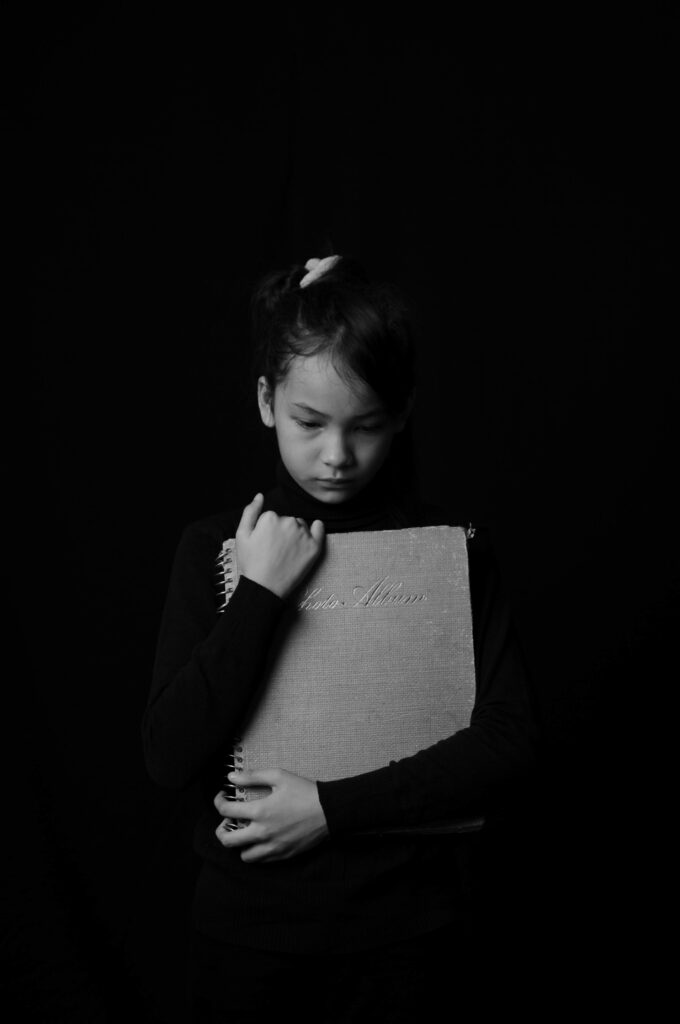
Her eyes were always distant and unfocused. It seemed as though she stared at nothing particular, and seeing her like that broke Richard’s heart into a million pieces over and over again. His face was no longer part of the magazine covers, and his “empire” could now survive without him. He needed to be there for Luna, despite her not even being aware he was right by her side.
He started every day with the same routine. He’s prepare breakfast for his daughter, despite there were plenty of staff at the house and the kitchen who could do that instead of him. However, Luna would barely touch the breakfast, and it went on every single morning.
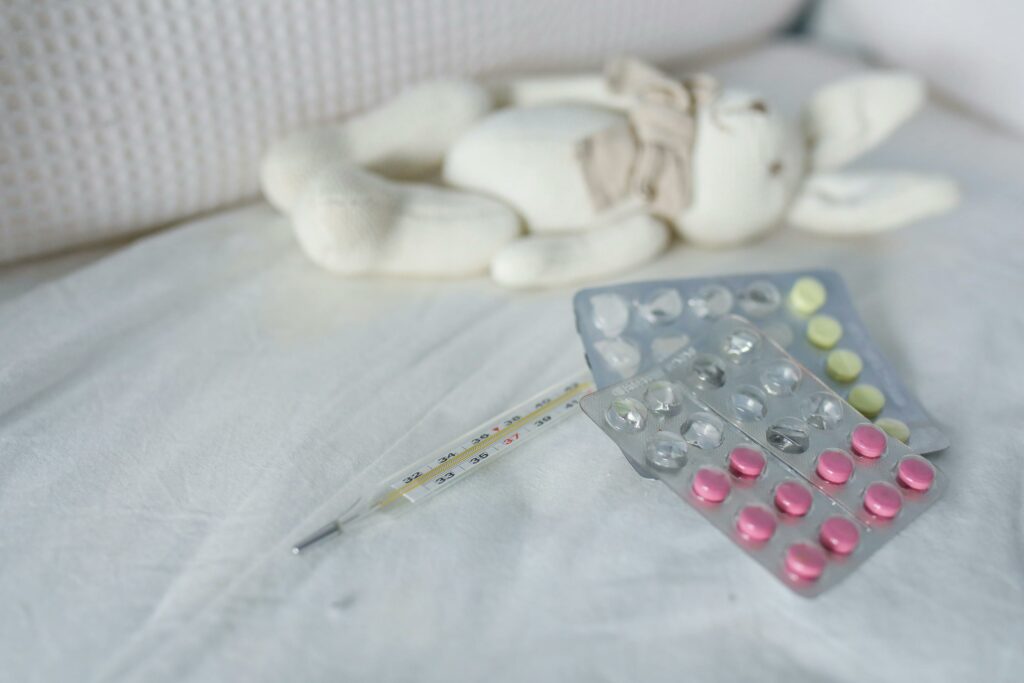
Next, Richard would give her the medications. Luna took plenty of meds prescribed by one of the best private doctors there was, Dr. Atticus Morrow, who was overseeing Luna’s care.
Richard would write down any change in his daughter’s behavior, even the slightest one. His notebook was filled with a bunch of notes he went through over and over again, hoping to notice a change that could help with her treatment.
But Luna barely spoke. She even barely nodded. All she did was staring at the window. Her father spoke to her anyway. He shared stories, made promises he knew he wouldn’t fulfill, and invented all sorts of fairy tales he believed Luna would like. Sadly, the distance between them was getting broader with each passing day.
But then, Julia Bennett arrived.
Julia was a woman who had experienced loss. Her newborn baby died, and she was never the same ever since that tragedy took place. So when she saw the advert in the newspaper that Mr. Wakefield was looking for a housekeeper, she thought there was nothing she could lose. The advert asked for someone to tend a large house, light duties, and to take care for a sick child. Because of reasons she couldn’t explain, Julia’s chests tightened. It felt as though life was offering her a second chance not to drown in grief.
She applied and got the job.
She was kind and calm, and Richard explained her the rules: distance, respect, discretion.
Julia was assigned a guest room at the far end of the house, where she placed down her simple suitcase like someone trying not to take up space. She spent the first couple of days observing the place.
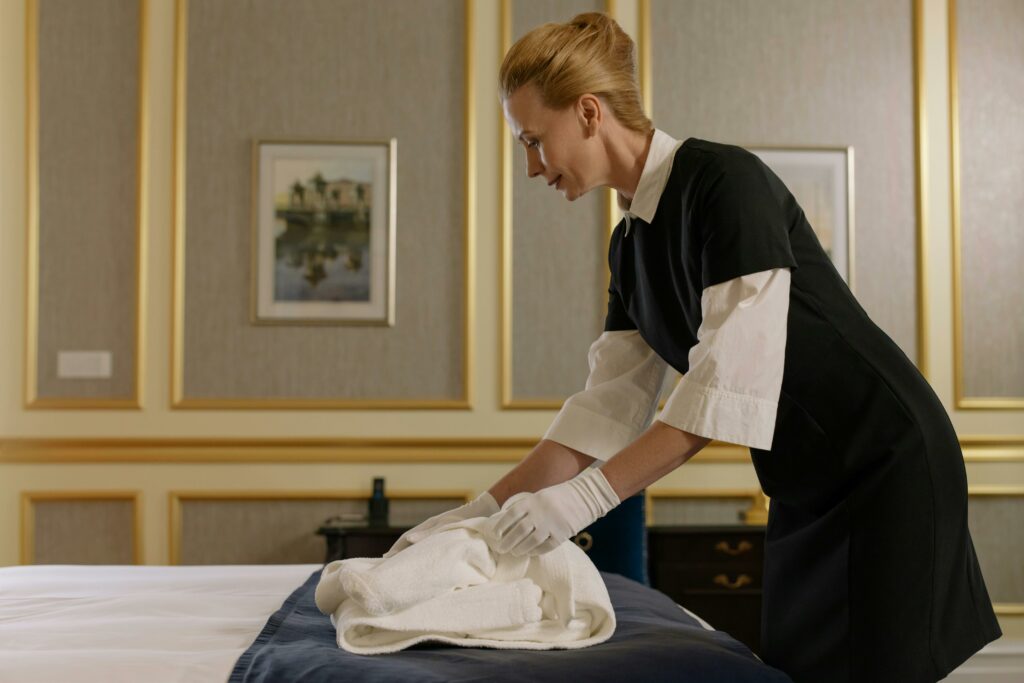
Julia moved silently through the room. She started tidying, straightening up, assisting the nurses with their supplies. She pulled back the curtains, added flowers in soft shades, routinely folded the quilts. What she didn’t do was go straight to Luna. Just she paused in the threshold, and saw a kind of loneliness for which no soothing phrase could ever serve as an antidote.
What lingered with Julia, however, was not Luna’s pale skin or the wispy hair regrowing. It was something she could not quite name that was missing from behind her eyes. It was the idea that Luna was right there but really far away at the same time. Julia was all too familiar with that sensation. She’s also known it once herself, coming home with nothing in her hands.
So she waited.
One day, she placed a little music box on Luna’s bed. When it was played, Luna would slightly turn her head, enough so she’d show awareness. Julia read from the hallway because she didn’t want to put any pressure on the girl.
A few weeks into it, Richard began to feel a shift he couldn’t quite put his finger on. Julia did not make the house noisy, but she made it warm. One evening he found Luna cradling the music box in her palms, and he thanked Julia for that gift that seemed like it mattered to his daughter.
Weeks passed, and trust began to establish itself. Luna let Julia brush her newly grown hair. Then, in a single still moment, all changed.
“It hurts… don’t touch me, mommy.”
Julia froze… This was the first time she heard the little girl speak.
Julia set the brush down gently and said nothing more than, “Okay. We’ll stop.”
Over the next few days patterns started to emerge. When someone walked and Luna would hear footsteps, she’d react to them and she’d turn her head around. It was the same with the voices. But one thing that Julia noticed and which worried her was that Luna’s mood declined after she received certain medication.

And then, one day, after paying Luna a visit together with nurses and other doctors, Dr. Morrow left behind the huge folder in which he was writing down the changes in Luna and her treatment after every visit.
Julia started calling his name with the folder in the hands, but the doctor had already left. So Julia’s curiosity arouse and she started reading the papers that were neatly piled one over another.
To her, the entire situation felt awkward from the beginning, and this was her chance calm her mind. But the moment she started going through the papers, she knew something was terribly wrong.
One of the documents read that the “trial” was founded by certain pharmaceutical companies. Julia had no idea Luna was part of a trial treatment, and it turned out that neither Richard was aware of that.
The files of the medications Luna was taking felt suspicious, too. Some of them were labeled “Restrictive use only,” although Luna was taking them every single day, sometimes even twice a day. Others were labeled “Clinical trial only.” There were dates that didn’t align with Luna’s current treatment plan. But Luna’s name was there, on every single one of the papers.
That night, Julia perched on the edge of her bed with her lap top on her knees.The glow lit up her hands as she typed the names of drugs she barely knew how to pronounce.
The results were worse than she feared.
One drug had been approved only for adults in late-stage trials. Another was removed from the market in several countries following reports of organ suppression. A third wasn’t even licensed at all but was still experimental, its data incomplete, its risks “under evaluation.”
The phrase repeated again and again on medical forums and in buried reports: “It should only be used if other options are unavailable.”
Julia hung on the screen. As she read, more and more pieces clicked into place. Luna had always had other options. There had always been a way to help her. And the drugs—those drugs—explained it all. The emptiness she’d glimpsed in Luna, the way she looked remote, even hollow… it wasn’t the disease. It was the medication.
Julia didn’t sleep that night. She replayed every nurse’s movements in her mind, every hush-hush command, every strange glance. One followed orders without question, another ignored the labels, one avoided her eyes entirely. And each time, her thoughts went straight to Dr. Morrow whose name appeared everywhere. It was on the approvals, the dosage increases, in notes justifying the continuation of treatment despite Luna’s worsening condition.
When Richard finally got around to reading the files, what Julia had already suspected became undeniable. They had been declaring Luna terminal too soon. That label had closed doors and offered no other options. Once that door was shut, anything could be sanctioned as “the last hope.”
And the test results confirmed the nightmare. The doses weren’t intended to cure; they were intended to suppress. Luna hadn’t been failing on her own. Her body had been kept in a kind of synthetic decline long enough for everyone to assume that it was untreatable.
“So she was never… she was never beyond salvation?” Richard asked. The response was calm, matter-of-fact—but it hit harder than anything: “No. She was never dying the way you were told.”
Someone had treated Luna as data, as collateral, and nearly got away with it. The worst part? How easily everyone had been persuaded not to ask questions. That silence, that blind faith… it had almost cost a child her life.
Please SHARE this article with your family and friends on Facebook.
Bored Daddy
Love and Peace